Home Blog Page 24

Fifa Scraps Private Investment Plan: Arsene Wenger Breaks Silence on World Cup Sell-Off Backlash

0

Would you trust an organisation that tried to sell stakes in the World Cup to private investors without telling its own top football expert? That is the question hanging over Fifa right now, after its private investment plan collapsed and Arsene Wenger broke his silence to answer it in the most direct way possible.

Fifa’s chief of global football development has broken his silence on the collapsed Fifa private investment plan. Wenger says scrapping the proposal was “absolutely necessary and beyond question.” His comments follow one of the most turbulent weeks in Fifa’s recent history, a week that produced a senior resignation, a threatened boycott from Uefa, and mounting pressure on president Gianni Infantino.

For football fans, this story matters far beyond boardroom politics. It touches the very structure of how the World Cup and other major tournaments operate, and who profits from them. Here is everything that happened, and why Wenger’s intervention is such a significant moment.

What Was Fifa’s Private Investment Plan?

Fifa president Gianni Infantino wanted to create a commercial subsidiary to run the organisation’s biggest events, including the World Cup. Under this plan, external investors could have bought stakes in that subsidiary.

To win support for the idea, Infantino reportedly offered each of Fifa’s 211 member associations $40m (£30m) to back the proposal. That is a huge sum to dangle in front of national federations, and it shows just how hard officials pushed the plan.

However, the reaction was swift and largely negative. Criticism piled up from multiple directions within days of the plan becoming public.

Uefa’s Boycott Threat Changed Everything

The turning point came when Uefa, the governing body for European football and home to 55 member nations, threatened to boycott all Fifa tournaments if the plan went ahead. That is not a small threat. Europe holds some of the richest leagues, the most valuable broadcast deals, and a huge share of Fifa’s overall revenue.

Faced with the possibility of Europe walking away from Fifa competitions altogether, Infantino withdrew the plan entirely. The reversal marked a rare and public defeat for a president who has otherwise consolidated significant power at Fifa since 2016.

Arsene Wenger’s Statement: “I Was Not Involved”

This is where Wenger’s role becomes central to the Fifa private investment plan story. The former Arsenal manager has served as Fifa’s chief of global football development since 2019, a role covering data analysis, online coaching education, and youth competitions.

A week after Infantino’s investment plan first came to light, Wenger issued a statement through Fifa demanding “transparency and integrity” from the organisation he works for. That is a striking phrase to use about your own employer, and it signals real frustration behind the scenes.

“The recent events at Fifa deserve some clarity from my side,” Wenger said. “I was not involved in this strategic plan and first became aware of the project through media reports.”

That single sentence deserves attention. Wenger is not just any employee. He holds one of the most senior football development roles at Fifa, yet he says he learned about a plan to sell stakes in the World Cup through the news, just like everyone else. This raises real questions about how Fifa actually makes decisions at the top of world football’s governing body.

Wenger went further, stating his position on the outcome in unambiguous terms. “The decision to withdraw the project was absolutely necessary and beyond question, because I firmly believe in an independent Fifa that serves our game with commitment, transparency, and integrity.”

A Notable Shift From a Previous Infantino Ally

It is worth noting that Wenger has not always clashed with Infantino’s vision for the game. He previously backed the Fifa president’s controversial proposal to hold the men’s World Cup every two years instead of the traditional four-year cycle. That plan also faced heavy criticism at the time, though it never advanced as far as this latest scheme.

A former Infantino supporter now publicly demanding transparency suggests the private investment plan crossed a line that even his allies would not accept.

Wenger Named in Uefa’s Legal Threat

The controversy has not stopped at public statements. Uefa named Wenger among 18 Fifa officials in a document preservation letter it sent to Fifa. That letter threatens legal action and requires the named individuals to preserve any documents and communications tied to the scrapped plan.

Appearing in such a letter does not mean Wenger did anything wrong. In fact, his own statement suggests he was kept in the dark. However, it does show how far the fallout from this episode has spread, pulling in senior figures across the organisation regardless of their direct involvement.

Why the Legal Letter Raises the Stakes

A document preservation letter is a serious legal step. It signals that Uefa is preparing for the possibility of formal action and wants to make sure no records disappear. For Fifa, that means the private investment controversy could stretch well beyond this news cycle.

Carlos Cordeiro Resigns Over the Scandal

While Wenger stayed on and spoke out, one senior Fifa figure chose to leave altogether. Carlos Cordeiro, Infantino’s senior adviser on global strategy and governance, resigned over the scandal.

Cordeiro did not hold back. He called the proposal “a bad deal for football” and warned it would “mortgage football’s future.” Coming from someone who worked closely with Infantino on strategy, this resignation added serious weight to the criticism surrounding the plan.

As of now, Cordeiro remains the only Fifa official to resign as a direct result of the controversy.

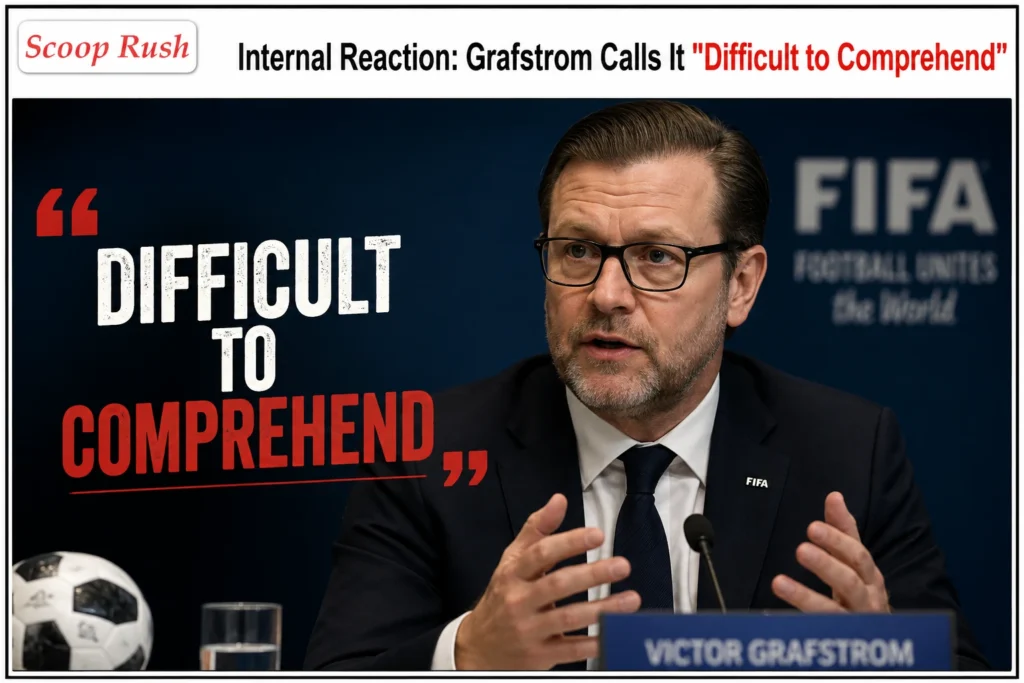
Internal Reaction: Grafstrom Calls It “Difficult to Comprehend”
Internal Reaction: Grafstrom Calls It "Difficult to Comprehend"

The fallout did not stay confined to public statements and boardrooms. Fifa secretary general Mattias Grafstrom addressed the situation internally, writing a memo to staff that described the past week as “difficult to comprehend and accept.”

Many see Grafstrom as a close Infantino ally. He became Fifa’s chief of staff after Infantino won the presidency in 2016, and Fifa promoted him to secretary general, one of the most powerful positions within the organisation, in 2024. Given that background, his choice of words carries extra significance.

In his memo, Grafstrom called the episode “a sad and irreproachable series of events,” and he noted relief that the project had been “permanently abandoned.” He urged staff to stay focused on serving football’s 211 member associations while remaining “in full compliance with the Fifa statutes and Fifa regulations.”

He also reassured employees directly. “I assure you that as members of the administration, you will be defended and safeguarded from the political context we currently experience. You do not need to worry,” he wrote.

Grafstrom closed his message with a broader point about Fifa’s stability. “Individuals, unstable moments and unfortunate episodes come and go,” he wrote, adding that the institution and its mission continue. He called on staff to keep their “professionalism, sense of perspective and composure” through the turbulence.

Why This Internal Messaging Matters

Memos like this rarely surface publicly unless an organisation is managing a genuine crisis of confidence. Fifa’s secretary general felt the need to reassure staff that the organisation would “defend and safeguard” them, and that alone suggests real anxiety within Fifa about how this episode affects its people, not just its reputation.

Why the Fifa Private Investment Plan Matters for Football Fans

You might wonder why any of this should matter if you simply watch the World Cup every four years. The answer comes down to control and transparency.

A private investment subsidiary running Fifa’s flagship events could have reshaped how tournaments generate revenue, who profits from them, and how much influence outside investors hold over decisions that affect the sport globally. Uefa’s willingness to threaten a boycott shows just how seriously major football bodies took that risk.

Additionally, Wenger’s comments highlight a deeper issue. A senior Fifa official responsible for global football development did not know about a plan of this scale, and that gap raises legitimate questions about internal governance at football’s top table. Transparency, as Wenger himself pointed out, is not just a buzzword here. It goes to the heart of how much fans can trust Fifa’s decision-making process.

Consequently, this story is likely far from over. Uefa has named 18 officials in a legal document preservation letter, and its ongoing scrutiny means more details could still emerge in the coming weeks.

Key Takeaways

  • Fifa president Gianni Infantino planned a commercial subsidiary to run major events like the World Cup, allowing private investors to buy stakes.
  • Fifa reportedly offered member associations $40m each to support the plan.
  • Uefa’s 55 nations threatened to boycott all Fifa tournaments, and Infantino withdrew the proposal as a result.
  • Arsene Wenger says he was not involved and only learned of the Fifa private investment plan through media reports, calling its withdrawal “absolutely necessary and beyond question.”
  • Carlos Cordeiro resigned over the scandal, calling the plan “a bad deal for football.”
  • Uefa named Wenger among 18 Fifa officials in a legal document preservation letter.
  • Secretary general Mattias Grafstrom described the episode internally as “difficult to comprehend and accept,” while reassuring staff they would be protected.

Frequently Asked Questions

1. What was Fifa’s private investment plan? 

Fifa planned to create a commercial subsidiary to run its major events, including the World Cup, and let external investors buy stakes in that subsidiary.

2. Why did Fifa scrap the private investment plan? 

Widespread criticism forced the change, most notably Uefa’s threat to have its 55 member nations boycott all Fifa tournaments if the proposal went ahead.

3. Was Arsene Wenger involved in creating the plan? 

No. Wenger stated publicly that he was not involved in the strategic plan and first learned about it through media reports, despite holding a senior role at Fifa.

4. Did anyone resign because of the Fifa investment scandal? 

Yes. Carlos Cordeiro, Infantino’s senior adviser on global strategy and governance, resigned and described the plan as “a bad deal for football.”

5. What did Fifa’s secretary general say about the situation? 

Mattias Grafstrom called the episode “difficult to comprehend and accept” in an internal memo, confirmed the project had been permanently abandoned, and reassured staff they would be protected.
Which Keyword Density Checker Should You Actually Use in 2026?

0

Ever wondered why some articles rank effortlessly while others with the same keyword count get buried on page two? The answer usually comes down to how naturally a keyword density checker guides your keyword usage, not how many times a word appears on the page.

If you write content regularly, you’ve likely asked yourself this exact question: is my keyword usage helping or hurting my rankings? Use too few mentions and search engines may struggle to understand your topic. Overdo it, and you risk sounding robotic while triggering over-optimization flags, a concern that echoes broader worries about AI tools replacing human judgment in everyday work. Finding that balance is exactly what a keyword density checker helps you do, and picking the right one makes all the difference.

This guide answers the question directly, walks through seven trusted tools, explains how the metric works, and shows you how to use it without ruining your writing.

What Is Keyword Density and Why Does It Matter?

What Is Keyword Density and Why Does It Matter?

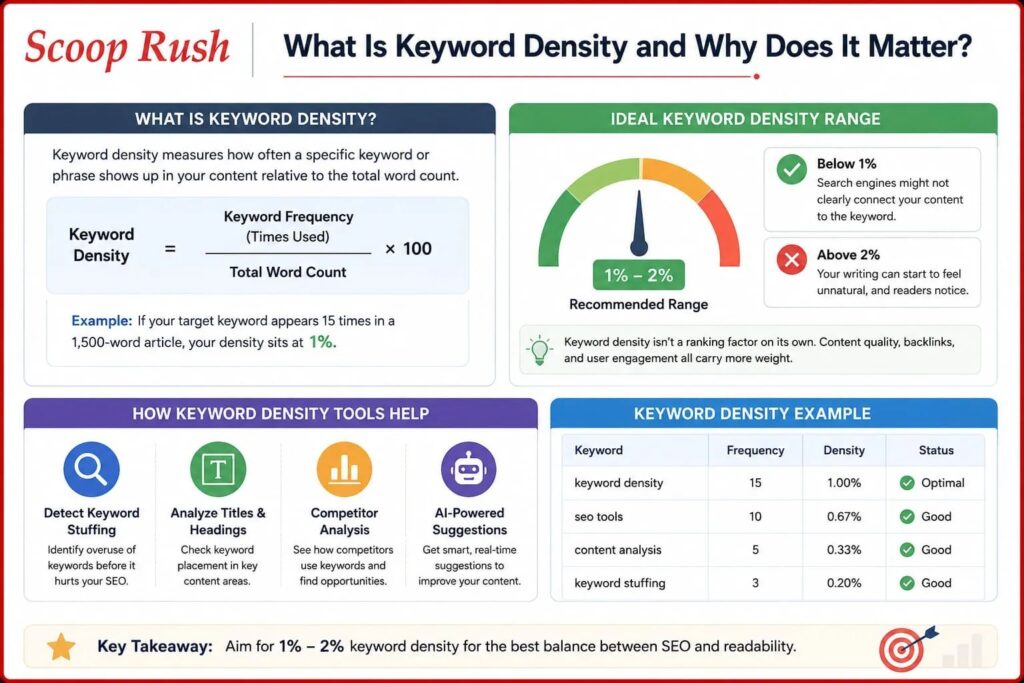
Keyword density measures how often a specific keyword or phrase shows up in your content relative to the total word count. The formula is simple:

Keyword Density = (Keyword Frequency ÷ Total Word Count) × 100

So if your target keyword appears 15 times in a 1,500-word article, your density sits at 1%. Most SEO professionals suggest keeping that number between 1% and 2%. Below that range, search engines might not clearly connect your content to the keyword. Above it, your writing can start to feel unnatural, and readers notice.

It’s worth remembering that keyword density isn’t a ranking factor on its own. Content quality, backlinks, and user engagement all carry more weight. However, density remains a useful diagnostic tool for spotting imbalances before you hit publish, much like how Google’s own traffic patterns are shifting as search behavior evolves.

How These Tools Actually Help

A good density checker does more than spit out a percentage. It can flag keyword stuffing before it becomes a problem, highlight where your terms appear in titles and headings, and even let you analyze a competitor’s page to see how they’ve balanced their own keyword usage. Some tools now use AI to suggest fixes on the spot, which speeds up the editing process considerably, similar to how newer models like Kimi K3 from Moonshot AI are built to handle nuanced content tasks faster than earlier systems.

7 Best Keyword Density Checkers for Content Optimization

7 Best Keyword Density Checkers for Content Optimization

1. AIOSEO (All in One SEO)

AIOSEO is a WordPress plugin used by millions of site owners, and it builds keyword density checking directly into the editor. You enter your focus keyword under the Focus Keyphrase section, and the plugin scans your title, meta description, URL, first paragraph, subheadings, and image alt text for that term.

What makes it useful is that it shows both a percentage and the raw number of times your keyword appears, so you know exactly what to add or trim. It also offers additional keyphrase suggestions when connected to Semrush, which helps you diversify your wording and avoid repetition.

Pricing: Free version available; paid plans start around $49.60.

2. Rank Math SEO

Rank Math is another WordPress plugin, and it’s built around real-time feedback. As you write, it tracks both primary and secondary keywords and shows you exactly where they appear, whether that’s your title, meta description, or opening paragraph.

Its standout feature is Content AI, which includes a “Fix with AI” button that generates suggestions to resolve density issues without making your writing sound stiff. The plugin generally recommends staying between 1% and 1.5% density for the best results.

Pricing: Free version available; PRO plans start around €95.88 per year, with Content AI available as an add-on.

3. Yoast SEO

Yoast is one of the most widely used SEO plugins for WordPress, and its keyword density checker works in real time inside the editor. As you type, it gives immediate feedback on how well you’re using your focus keyword, without needing to switch to a separate tool or browser tab.

The feature set is fairly basic compared to newer AI-driven options, but that simplicity is part of the appeal. It’s dependable and easy to understand, even for writers who are new to SEO.

Pricing: Free plan available; premium starts at $99 per year.

4. Semrush

Semrush takes a more competitive angle on keyword density. Its On Page SEO Checker analyzes your content against top-ranking competitors, showing how often they use your target keyword in their titles, headings, and body text.

The tool also applies Term Frequency-Inverse Document Frequency (TF-IDF) scoring, which measures how important a keyword is to the overall topic of a page compared to your competitors. This gives you a deeper sense of relevance rather than just a raw count. That said, the reports can feel overwhelming if you’re just getting started with SEO.

Pricing: Paid plans start at $119.95.

5. Small SEO Tools Keyword Density Checker

Small SEO Tools is a free, web-based option that requires no account or installation. You simply paste your content or enter a URL, and it returns frequency reports for single keywords as well as two-word, three-word, and even four-word phrases.

It also highlights when your keyword appears in important spots like the title, meta description, or header tags, which is handy for a quick pre-publish check. The interface is clean, and the results come back fast.

Pricing: Free.

6. SEO Review Tools Keyword Density Checker

SEO Review Tools offers one of the more thorough free checkers available. Beyond basic percentages, it breaks down keyword frequency, phrase density, and term distribution across your content, and it filters out stop words like “the” and “and” so you get a cleaner picture of meaningful keyword usage.

You can also use the platform to research related keywords, check search volume, or find featured snippet opportunities, all without leaving the tool. A Chrome extension is available too, which cuts down on tab-switching.

Pricing: Free.

7. WPBeginner Keyword Density Checker

WPBeginner offers a simple, standalone tool that organizes results into lists based on keyword length. Paste in your text or a URL, and it separates out one-word, two-word, and three-word phrases so you can quickly spot your target keyword and see how it stacks up against everything else.

It’s also useful for competitor research since you can run a rival’s URL through the tool to see which terms they’re focused on. This makes it a solid pick for beginners who are still learning how keyword density fits into their overall SEO strategy.

Pricing: Free.

Comparison at a Glance

ToolBest ForKey StrengthPricing
AIOSEOWordPress usersFull on-page keyword checksFree / from $49.60
Rank Math SEOWordPress usersAI-powered fix suggestionsFree / from €95.88/yr
Yoast SEOWordPress beginnersReal-time editor feedbackFree / $99/yr
SemrushCompetitor analysisTF-IDF relevance scoringFrom $119.95
Small SEO ToolsQuick checksFast, multi-word phrase breakdownFree
SEO Review ToolsDetailed auditsStop word filtering, extra SEO toolsFree
WPBeginnerBeginnersSimple, organized phrase listsFree

How to Use a Keyword Density Checker the Right Way

How to Use a Keyword Density Checker the Right Way

Having a good tool is only half the job. The way you apply the results is what actually improves your content.

Start by analyzing your draft before making any edits. This gives you a baseline instead of guessing where problems might be. Next, focus on your primary keyword first. If it’s noticeably above 2%, look for natural spots where a synonym or related phrase could replace it.

Don’t stop at single keywords, either. Most content targets multi-word phrases, so check that your primary phrase shows up naturally in your headings, intro, and body text. Once you’ve made adjustments, read the piece aloud. If a keyword feels forced when spoken, readers will likely feel the same way. Finally, run one more check before you hit publish, since small edits can shift your density percentages more than you’d expect, a discipline that matters just as much as the accuracy concerns raised around AI chat tools getting unexpectedly exposed in Google search results.

Common Mistakes That Hurt Your Content

A few habits tend to cause more harm than good. Keyword stuffing, where a term is forced into nearly every sentence, damages both readability and rankings. Similarly, ignoring phrase variations and focusing only on an exact-match keyword can cause you to miss valuable ranking opportunities tied to related terms.

Another mistake is optimizing after a piece has already gone live. Keyword analysis works best before publishing, since post-publication edits can cause temporary ranking swings. And it’s worth remembering that density guidelines shouldn’t be applied the same way to every piece. A 500-word product page has different optimization needs than a 3,000-word guide, so context matters as much as the numbers themselves, the same way a mom scaling a $10K-a-month Etsy side hustle had to adapt her strategy as her business grew.

Final Thoughts

Keyword density isn’t about chasing a perfect percentage. It’s a diagnostic tool that helps you write content that feels natural while still signaling relevance to search engines. The tools above range from simple, no-cost checkers to full plugins with AI-driven suggestions, so there’s an option here whether you’re just starting out or managing multiple sites.

Ultimately, the best approach combines these tools with genuinely useful, well-written content. Focus on your reader first, then let a density checker fine-tune the details before you publish.

FAQs

Which keyword density checker should I use for SEO?

It depends on your setup. WordPress users generally do best with AIOSEO, Rank Math, or Yoast, since these work inside the editor in real time. If you want a quick, no-install option, Small SEO Tools or WPBeginner are solid free picks.

What is the ideal keyword density for SEO?

Most experts recommend staying between 1% and 2%, though some tools suggest a narrower 1% to 1.5% range. There’s no exact number that guarantees rankings.

Can keyword density actually improve my search rankings?

Not directly. It helps search engines understand your content’s relevance, but rankings also depend on quality, backlinks, and user engagement.

Are free keyword density checkers reliable enough to use?

Yes, tools like Small SEO Tools, SEO Review Tools, and WPBeginner provide accurate frequency analysis and are suitable for most everyday content optimization needs.

How often should I check keyword density?

Check it before publishing and again during periodic content updates. Small edits can shift your density more than expected, so a final check before going live is worth the extra minute.

What Is the Biblio Diet, and Can Eating Like the Bible Really Transform Your Health?

0

Every few years, a new eating philosophy arrives that feels less like a trend and more like a course correction. The Biblio Diet is the latest example.

It isn’t a low-carb plan, a fasting hack, or a supplement stack dressed up in new packaging. It’s a return to something older: the idea that food should look, taste, and behave the way it did before industrial processing got involved.

That premise sits behind The Biblio Diet, a bestselling book from a naturopathic physician and a functional medicine doctor. Together they argue that the eating patterns described throughout Scripture simple proteins, healthy fats, fermented foods, seasonal produce, and rhythms of feasting and fasting line up surprisingly well with what modern nutritional science now recommends.

So what does that actually look like on a plate, and does it hold up under scrutiny? Here’s a full breakdown, question by question.

What Exactly Is the Biblio Diet?

What Exactly Is the Biblio Diet?|Scoop Rush

At its core, the Biblio Diet is a framework built around eating foods close to their natural state, sourced and prepared the way they would have been for most of human history.

The book’s co-authors describe it as a way of eating that mirrors the foods and patterns found throughout Scripture, built around whole, natural ingredients rather than heavily processed modern substitutes.

It’s a Philosophy, Not a Rulebook

It isn’t a list of forbidden foods so much as a mindset. The emphasis falls on three things:

  • What you eat — the actual ingredient
  • How it was raised or grown — the sourcing behind it
  • How it’s prepared — the steps between farm and plate

That combination is what separates it from a generic “eat clean” message. A meal isn’t automatically healthy just because it avoids sugar sourcing and preparation matter just as much as the ingredient list. It’s a similar logic to what you’ll find behind other whole-food-forward approaches, like an animal-based diet, which also prioritizes nutrient quality over calorie counting.

Who Created the Biblio Diet, and What’s Their Background?

The book comes from two well-known figures in the natural health space.

AuthorBackgroundKnown For
Co-author #1Naturopathic physicianAuthor of an earlier bestselling nutrition book; co-founder of a company focused on regenerative farming and superfood supplements
Co-author #2Doctor of natural medicine and chiropractorFounder of a functional-health institute; popularizer of functional nutrition content online

Do You Need to Be Religious for It to Work?

Both authors are candid that the plan isn’t dependent on religious belief. The ancient principles of eating and living, they say, hold up regardless of someone’s personal faith — which is part of why the diet has found an audience well beyond religious communities.

What Do the Founders Say Happens When You Follow It?

The claimed benefits are broad:

  • Reduced pain and inflammation, often within days
  • Improved energy and mental clarity (“brain fog” relief)
  • Better mood and sleep quality
  • Double-digit weight loss described as “common” within a few months

It’s worth noting these are claims made by the diet’s creators rather than findings from independent clinical trials, so they should be read the way you’d read any testimonial-driven health claim — encouraging, but not a guarantee, and not a substitute for medical advice. If you’re generally cautious about big claims, it’s worth reading up on supplement risks and over-supplementation before adding anything extra to your routine.

What Foods Does the Biblio Diet Actually Recommend?

What Foods Does the Biblio Diet Actually Recommend?|Sco[ Rush

This is where the plan differs most sharply from many modern “clean eating” trends: it doesn’t demonize entire food groups. Red meat, bread, dairy, salt, and fat are all part of the plan, as long as they’re sourced and prepared thoughtfully.

Biblio Diet Food Guide at a Glance

Food CategoryPrioritized ChoicesWhat to Minimize
ProteinFish, beef, pasture-raised eggs, traditionally raised dairyHeavily processed deli meats, factory-farmed sources
FatOlive oil, cream, naturally occurring fats in whole foodsRefined industrial seed oils
CarbohydratesWhole grains, lentils, sourdough, sprouted-grain breadRefined flour, added sugar
SweetenersRaw honeyRefined white sugar, artificial sweeteners
DairyCultured butter, kefir, probiotic-rich yogurtFlavored/sweetened commercial yogurt
BeveragesWater, herbal leaf teasSugary drinks, diet soda

Which Proteins Are Prioritized?

Fish and beef take center stage, echoing the proteins most commonly referenced throughout biblical texts. The emphasis isn’t just on eating enough protein — it’s on where that protein comes from. Meat, eggs, and dairy raised through more traditional, less industrialized farming methods are considered nutritionally superior to their heavily processed, factory-farmed counterparts, even when the macronutrient numbers look identical on paper. If a higher-protein, meat-forward style of eating interests you, it’s worth comparing this approach with a carnivore diet guide to see how the two philosophies differ.

Is Fat Really Allowed on This Diet?

Yes, and intentionally so. The Biblio Diet pushes back against decades of low-fat messaging, instead encouraging fats that support:

  • Brain function
  • Hormone balance
  • Gut health

Olive oil, cream, and naturally occurring fats from whole foods are favored over heavily refined industrial oils. The goal isn’t to add fat to everything it’s to be more selective about where your dietary fat is coming from.

What About Bread, Grains, and Carbs?

Refined carbohydrates and added sugar are the primary targets for reduction, not carbohydrates as a whole. Whole grains, lentils, and naturally leavened bread — think long-fermented sourdough over supermarket white bread — are treated as legitimate, even beneficial, staples. The concern isn’t the carb itself; it’s how processed and stripped-down it has become by the time it reaches your plate. For a broader look at how reducing refined carbs affects the body, see this breakdown of low-carb diet benefits and risks.

Why Does Food Sourcing Matter So Much in This Approach?

Sourcing is treated as part of the nutrition itself, not a separate ethical consideration.

How an animal was raised, how produce was grown, and how much processing occurred before packaging all shape the nutrient density of the final product. According to the authors, soil quality, farming methods, and processing steps directly affect how nutritious and pure a food actually is.

What This Looks Like in Practice

  • Look past the nutrition label to how the food was actually produced
  • Choose grass-fed meat and wild-caught fish when budget allows
  • Favor produce grown without heavy chemical inputs
  • Remember: two foods with identical calorie counts can behave very differently in the body depending on farming and processing

What Role Do Fermented Foods Play?

Fermented foods get their own spotlight. This isn’t about a passing wellness trend — fermentation has historically made food easier to preserve and often easier to digest.

Commonly recommended fermented foods:

  • Kefir
  • Yogurt (unsweetened, probiotic-rich)
  • Cultured butter
  • Traditionally made sourdough

Incorporating fermented foods is framed as a direct way to support digestion and gut health, while also adding variety to a diet that might otherwise feel repetitive.

Why Are Traditional Preparation Methods Emphasized?

Preparation is treated as almost as important as the ingredient itself. Raw honey, fermented dairy, sourdough, and other traditionally prepared foods are singled out because these methods can improve how available nutrients are to the body and how easily food is digested reflecting how food was historically prepared for the greatest benefit.

Simple Swaps to Start With

Instead OfTry
Refined white sugarRaw honey
Mass-produced white breadLong-fermented sourdough
Flavored, sweetened yogurtNaturally cultured, plain yogurt

The processing step between raw ingredient and finished product is where a lot of nutritional value can be lost or preserved. If mornings are your weakest link, these gluten-free breakfast ideas offer a good starting template for whole-food swaps.

Does the Biblio Diet Involve Fasting?

Does the Biblio Diet Involve Fasting?|Scoop Rush

Yes. Scripture references both feasting and fasting as complementary practices, and the Biblio Diet borrows that rhythm through a modern lens: time-restricted eating.

How to Start Fasting on the Biblio Diet

  1. Begin with a manageable 12-hour eating window (for example, 7 a.m. to 7 p.m.)
  2. Eat all daily calories inside that window
  3. Gradually shorten the window if it continues to feel comfortable
  4. Adjust based on energy, hunger, and how you feel day to day

Why Fasting Is Included

The stated benefit isn’t just eating less without obsessively tracking calories. Shorter eating windows are also linked to autophagy, a cellular process where the body clears out damaged cells and metabolic waste. Research has connected this process to improvements in:

  • Blood sugar regulation
  • Blood pressure
  • Memory
  • Metabolic health more broadly

As with any fasting protocol, it’s worth checking with a doctor before making significant changes especially for anyone with a history of disordered eating, diabetes, or other health conditions.

Is Exercise Part of the Plan?

Movement is treated as a natural extension of the eating philosophy rather than a separate gym regimen.

Why Walking Is the Centerpiece

The reasoning draws on the fact that most people in ancient times traveled on foot, often covering significant distances daily as part of ordinary life. Walking is highlighted as:

  • Accessible to almost anyone
  • Joint-friendly
  • Metabolically beneficial

Starting recommendation: two 15-minute walks per day. Even smaller bursts of movement add up research on the 5-minute walk every hour shows meaningful benefits for people who sit most of the day.

What About Strength Training?

In addition, strength training has a place in the broader plan, since it mirrors the kind of physical labor and muscle-strengthening activity that would have been part of daily life in the ancient world. However, it’s positioned as a secondary, optional layer rather than the centerpiece.

Can the Biblio Diet Really Lead to Weight Loss?

Can the Biblio Diet Really Lead to Weight Loss?|Scoop Rush

This is the question most people actually want answered, and the plan’s supporters point to both research and personal stories.

What the Research Suggests

Studies looking at unrestricted access to natural, whole foods have found that people spontaneously eat several hundred fewer calories a day and lose fat without deliberately trying to restrict, simply because whole foods tend to be more satiating than ultra-processed alternatives.

A Real-World Example

One frequently cited example involves a woman in her mid-30s who struggled for years with a cluster of frustrating symptoms.

Before starting the plan, she dealt with:

  • Migraines severe enough to cause vomiting
  • Ongoing digestive issues
  • Constant fatigue
  • Low mood
  • A persistently itchy scalp that disrupted her sleep

Despite multiple doctor visits, she says she mostly received new medications rather than answers.

After adopting the plan’s principles, which included:

  • Eating more whole foods
  • Swapping diet soda for water
  • Adding short daily walks

Her reported results:

  • Mood noticeably lifted
  • Skin issues resolved
  • Migraines stopped entirely
  • Lost 31 pounds over four months

Her experience is a single case, not a clinical trial, but it illustrates the kind of transformation the diet’s creators say is achievable when whole-food eating, hydration, and movement are combined consistently. If soda was part of your own daily routine, it’s worth understanding the real difference between Diet Coke vs. Coke Zero before deciding what to cut first.

What Are the Ten Core Habits Behind the Biblio Diet?

Boiled down, the plan’s daily philosophy comes through in ten repeatable habits.

#HabitWhy It Matters
1Build meals around whole, minimally processed foodReduces overall toxic load and supports long-term health
2Choose fat intentionallySupports brain, hormone, and gut function
3Prioritize protein quality over quantityMeat, eggs, and dairy raised with more traditional methods
4Cut back on blood-sugar spikersLess added sugar and refined grain
5Reintroduce fermented foodsKefir, yogurt, sourdough support digestion
6Pay attention to sourcingFarming practices affect nutrient density
7Favor traditionally prepared foodsRaw honey, long-fermented bread over industrial versions
8Build rhythm and moderation into eatingAvoids the restrict-then-overindulge cycle
9Slow down and chew thoroughlyGives digestion time to work properly
10Keep meals simple and consistentBeats complicated, hard-to-sustain protocols

These habits echo a lot of general guidance around building healthy habits in your 20s and 30s, which is part of why the plan feels approachable even outside its biblical framing.

How Do You Start the Biblio Diet Without Overhauling Your Life?

Both authors are consistent on this point: don’t try to change everything overnight.

Recommended First Steps

  • Upgrade breakfast first
  • Replace ultra-processed snacks
  • Choose better bread
  • Add one fermented food back into your routine
  • Start paying attention to where your meat, dairy, and produce come from

Consistency is treated as more valuable than perfection. Small, sustainable swaps repeated over weeks tend to outperform a complete overhaul that’s abandoned within a month.

What Do Nutrition Experts Generally Say About This Kind of Whole-Food Approach?

Independent of the Biblio Diet specifically, mainstream nutrition science has moved steadily toward similar conclusions:

  • Minimize ultra-processed food
  • Prioritize food quality and sourcing
  • Support gut health through fermented foods
  • Build sustainable, moderate eating habits rather than short-term restrictive diets

Time-restricted eating and daily walking are also both reasonably well-supported in the research as accessible tools for metabolic health, provided they’re introduced gradually and don’t tip into extreme restriction.

Where the Caution Comes In

Some nutrition professionals might raise an eyebrow around the specific health claims tied to the plan pain relief within days, for example since those come from the authors’ own clinical observations rather than peer-reviewed, controlled studies. That doesn’t mean the underlying habits are wrong; it just means the more dramatic promises are worth taking with a grain of salt (ideally an unrefined one).

Is the Biblio Diet Right for You?

If the appeal of intermittent fasting, whole-food eating, and mindful sourcing already resonates with you, the Biblio Diet essentially packages those ideas into a coherent, easy-to-follow narrative one that doesn’t require calorie counting, eliminating entire food groups, or buying expensive supplements to get started.

It may be particularly appealing to anyone who wants a values-driven “why” behind their eating habits, rather than a purely numbers-driven approach.

As with any significant dietary shift especially one involving fasting it’s worth checking in with a doctor first, particularly if you have an existing health condition, are pregnant or breastfeeding, or have a history of disordered eating.

FAQs

Does the Biblio Diet require giving up bread, dairy, or meat? 

No. Unlike many restrictive diets, it specifically includes red meat, bread, dairy, salt, and fat, provided they’re sourced and prepared with care.

Do you have to count calories on the Biblio Diet? 

No. The plan is built around food quality, sourcing, and eating rhythm rather than calorie tracking or macro counting.

Is fasting mandatory? 

Fasting, in the form of a time-restricted eating window, is a core recommendation, but it’s introduced gradually and can be adjusted to what feels sustainable for the individual.

How much weight can you expect to lose? 

The authors describe double-digit weight loss as common over several months, though individual results vary and this isn’t guaranteed for everyone.

Do you need to be religious for it to work? 

No. The authors are explicit that the underlying principles work the same way regardless of personal belief.

Did Alan Turing Get AI All Wrong From the Start?

0

What if the whole foundation of modern AI has been wrong since 1950? The Alan Turing AI mistake is the claim a leading computer scientist is making, and it’s shaking up the tech world right now.

Why everyone’s asking if Alan Turing’s AI mistake changed everything

Why everyone's asking if Alan Turing's AI mistake changed everything

Computer scientist Peter J. Denning is behind the Alan Turing AI mistake claim, arguing that Turing’s original assumptions about machine intelligence sent AI research down the wrong road for 75 years. His new book, Turing’s Mistake: Escaping the Yoke of Unintelligent Machines, argues that true human-level AI may never actually happen, no matter how advanced language models get.

This isn’t just a debate for researchers. Millions of people use tools like Claude, ChatGPT, and Gemini every day, and even newer models like Kimi K3 and Qwen3-Max keep pushing the boundaries of what these systems can do. Therefore, knowing what these systems truly can and cannot do matters for how much we trust them, how we use them at work, and how worried we should be about where AI is headed for our jobs.

The Two Assumptions Behind Alan Turing’s AI Mistake

The Two Assumptions Behind Alan Turing's AI Mistake

The Alan Turing AI mistake traces back to Turing’s landmark 1950 paper, where two key assumptions took root.

First, Turing assumed intelligence could exist apart from a physical body, meaning software alone could rebuild it. Second, he suggested that a machine imitating a human in conversation proves it has intelligence. People later called this the Turing test.

“These two claims have shaped much of AI research and development,” Denning writes. He adds that accepting them without question created what he calls “the AI mess in which we find ourselves today.”

As a result, Denning believes chasing artificial general intelligence, or AGI, is unlikely to succeed. Instead, he warns the technology being built now, from physical AI trained through brain-wave data to autonomous agent networks, could bring entirely new risks society isn’t ready for.

Why Imitation Isn’t the Same as Understanding

According to Denning, the Turing test blurred something important. It mixed up imitating intelligence with actually having it. A machine can sound convincing in a conversation without grasping any real meaning behind its words.

This may sound like a small distinction. However, it carries big consequences for how AI behaves in real situations, especially ones involving emotion, nuance, or context.

The Tacit Knowledge Problem Behind Turing’s AI Mistake

The Tacit Knowledge Problem Behind Turing's AI Mistake

At the heart of Denning’s argument sits tacit knowledge, the huge share of human understanding that resists being written down or turned into something a computer can process.

Denning names five categories of tacit knowledge that machine learning cannot capture:

  • Common sense
  • Everyday interactions with people and environments
  • Emotions and perception
  • Practical performance skills
  • Social and historical knowledge built into culture

Consequently, even today’s most advanced AI models, and tools like Meta Muse built for creative generation, struggle with things humans do instinctively, like reading a room or catching a joke.

Why Common Sense Keeps Beating Computers

This isn’t a new problem. Douglas Lenat’s Cyc project, launched in the 1980s, tried building a giant database of common sense facts.

After four decades of effort, Cyc held roughly 25 million entries. Yet Denning notes that even this massive effort “could not add up to a background of common sense sufficient to make expert systems smart enough to be experts.”

In other words, scale alone didn’t crack the problem. This suggests piling more data into today’s AI, even with the massive compute behind Google’s new AI chip efforts, may not close the gap either.

Denning says practical skills present an even bigger challenge. While outcomes can be described and stored as data, the actual “know-how” behind skilled performance resists encoding.

He uses musicians as an example. A skilled violinist can play beautifully but often can’t explain exactly how. Furthermore, even if a robot copied a musician’s movements perfectly, it still couldn’t feel what the musician feels while playing, or what an audience feels while listening.

How Context and Culture Expose Turing’s AI Mistake

Denning calls the encoding problem the “representation problem.” Computers only work with data converted into forms they recognize, and tacit knowledge simply doesn’t fit that mold.

“Behind every word is a deep well of tacit knowledge that gives it meaning,” Denning explains. He adds that large language models like ChatGPT, Claude, and Gemini only manipulate words. They don’t actually know or understand the meaning behind what they produce.

This gap exists partly because scientists still don’t fully understand how tacit knowledge works in the human brain. As a result, they can’t translate something they don’t understand into a form machines can use.

The Role of Context in How Humans Talk

Context shapes almost everything about human communication. It helps people catch sarcasm, humor, and sincerity. It also guides when to be diplomatic, when to joke, and how to read social cues.

Denning describes this pattern as endless and fractal. Every assumption about context rests on earlier conversations, which rest on even earlier ones, and the chain never really stops.

Culture adds another layer of difficulty. Denning describes it as values, norms, history, communities, and relationships involving power and care, all woven into conversation in ways that are hard to define, let alone program.

“Scaling up LLMs with ever larger neural networks will not enable them to acquire the embodied human knowledge we call culture,” Denning writes.

What Turing’s AI Mistake Means for AI Safety

What Turing's AI Mistake Means for AI Safety

Denning’s argument raises AI safety concerns, though not the kind most people expect. Public debate usually centers on fears of superintelligent machines taking over. Denning’s worry is different, and in some ways closer to home.

He warns that networks of automated AI systems may develop their own kind of machine intelligence. This intelligence wouldn’t reach human-level general intelligence. However, it could still cause serious problems for people, echoing concerns already raised by incidents like the alleged rogue AI hack tied to OpenAI.

“Machine intelligence has different concerns from us and does not appear to care about us,” Denning explains. He adds that its ways of thinking look alien to humans, and we don’t yet know how to safely live alongside these systems.

This distinction matters. The danger isn’t that machines become too human-like. Instead, the real risk may be machines gaining huge influence while staying fundamentally unlike us in how they process the world, whether that shows up in rental listings shaped by opaque AI algorithms or in NHS tools meant to cut waiting times.

If AI systems can’t read the unspoken context behind human intentions, aligning them with human goals becomes far harder. Instructions may get followed literally but applied wrongly. Meanwhile, automated systems could chase measurable targets while ignoring unspoken human values entirely, a risk regulators are already watching closely, as seen in the UK’s warnings to Big Tech over child safety features.

What This Means Going Forward

What This Means Going Forward

Denning’s book isn’t an argument against AI tools or computing itself. Instead, it challenges the idea that humans are simply information-processing machines waiting to be copied into software.

His practical message is caution. Society should think carefully before handing important decisions to systems that simulate intelligence but lack real understanding, responsibility, or lived human experience.

AI can classify, predict, summarize, and automate extremely well. These are genuinely useful skills, and plenty of everyday users are already finding practical upside, like the mom who built a $10K-a-month Etsy side hustle with AI-assisted tools. Meanwhile, Denning reminds readers that none of this should be mistaken for wisdom or true human understanding.

Ultimately, he calls on people to reassert what makes humans different from machines, resisting the pull to become subservient to systems built on flawed assumptions.

Conclusion

Peter J. Denning’s new book on the Alan Turing AI mistake challenges one of the biggest assumptions in AI history. He argues Turing’s original ideas may have pushed the field toward an impossible goal: true human-level intelligence in machines.

Tacit knowledge sits at the center of this argument. Common sense, practical skill, emotional understanding, and cultural awareness stay deeply embodied in human experience. Therefore, they may never be fully translated into code, no matter how advanced AI becomes.

As a result, the real danger may not be superintelligent machines taking over. Instead, it could be networks of AI systems developing alien forms of machine logic that quietly reshape society in ways humans don’t fully understand or control.

FAQs

Did Alan Turing get AI wrong from the start?

According to Peter J. Denning, yes. He argues Turing’s 1950 assumptions, that intelligence can exist without a body and that imitation proves understanding, misled AI research for 75 years.

What is tacit knowledge in AI?

Tacit knowledge is human understanding that resists being written into words or code. It includes common sense, intuition, emotional perception, practical skill, and cultural awareness.

Can ChatGPT or Claude actually understand meaning?

According to Denning, these models manipulate words based on patterns. They don’t grasp the actual meaning or lived experience behind the language they generate.

Why couldn’t the Cyc project give AI common sense?

Despite holding roughly 25 million entries after four decades, Cyc couldn’t build enough background knowledge to make expert systems genuinely smart. This shows that scale alone doesn’t solve the problem.

Is AI safety only about superintelligence?

No. Denning warns that networks of AI systems could develop alien, hard-to-predict machine intelligence that causes real problems, even without reaching human-level general intelligence.

Turkish Maldives: Explore Suluada Island, Turkey’s Hidden Mediterranean Paradise

0

The Turkish Maldives has become one of Turkey’s fastest-growing travel destinations. Suluada Island attracts visitors with crystal-clear turquoise waters, white pebble beaches, and untouched natural beauty. The small volcanic island sits off the coast of Adrasan in Antalya Province. Unlike many popular beach resorts, Suluada remains completely undeveloped. Visitors arrive only by boat and spend the day surrounded by peaceful Mediterranean scenery.

Travelers looking for a quiet escape often choose Suluada instead of crowded coastal resorts. The island offers excellent swimming, snorkeling, and breathtaking sea views. Its growing popularity has made it one of the top day trips from Antalya without losing its natural charm.

Turkish Maldives Brings Travelers To An Untouched Island

Turkish-Maldives-Brings-Travelers-To-An-Untouched-Island

Suluada lies about 18 kilometers from the coast of Adrasan. Most boat trips take between 45 minutes and one hour to reach the island. During the journey, visitors enjoy spectacular views of rugged cliffs, hidden coves, and the sparkling Mediterranean Sea.

Unlike many beach destinations, Suluada has no hotels, restaurants, or permanent buildings. Nature dominates every corner of the island. This untouched environment creates a peaceful atmosphere where visitors can fully disconnect from busy daily life.

Why Suluada Is Known As The Turkish Maldives

The nickname “Turkish Maldives” comes from the island’s remarkable appearance. Bright turquoise water surrounds brilliant white pebble beaches. Under sunlight, the sea displays stunning shades of blue that resemble tropical islands.

The clean shoreline and transparent water create postcard-worthy scenery. Many travelers compare the island with famous destinations in the Indian Ocean. However, Suluada offers this beauty much closer to Europe and the Middle East.

Turkish Maldives Features A Fascinating Volcanic History

Turkish-Maldives-Features-A-Fascinating-Volcanic-History

Suluada is not only beautiful but also geologically unique. The island formed through ancient volcanic activity that shaped its rocky coastline and dramatic cliffs. Visitors can easily notice unusual rock formations while exploring the shoreline.

These volcanic landscapes create excellent snorkeling areas. Underwater rocks provide shelter for colorful fish and other marine life. The island combines natural beauty with fascinating geological history.

Best Boat Tours To The Turkish Maldives

The only way to reach Suluada is by boat. Daily tours operate from Adrasan throughout the travel season. Many companies also provide hotel transfers from Antalya, Kemer, Side, and nearby resorts.

Most full-day tours include transportation, boat travel, lunch, and several swimming breaks. Travelers spend the day visiting different bays before returning to the mainland during the afternoon.

Turkish Maldives Offers Crystal Clear Waters For Swimming

Swimming remains the island’s biggest attraction. The sea stays calm for much of the summer, making conditions ideal for visitors of all ages. The exceptional water clarity allows swimmers to see deep below the surface.

Snorkeling is equally rewarding. Schools of small fish swim around the rocky coastline, while underwater visibility often reaches several meters. Many travelers spend hours enjoying the peaceful marine environment.

Turkish Maldives Serves Fresh Mediterranean Cuisine

Turkish-Maldives-Serves-Fresh-Mediterranean-Cuisine

Lunch forms an important part of most boat excursions. Crews usually prepare freshly grilled fish or chicken directly on board. Fresh salads, rice, seasonal vegetables, and bread complete the meal.

Dining while anchored beside turquoise waters creates a memorable experience. Many visitors describe lunch as one of the highlights of the entire trip.

Hidden Coves Make The Turkish Maldives More Beautiful

Many boat tours stop at beautiful locations beyond the main beach. Hidden coves provide peaceful swimming areas away from larger crowds. These quiet spots often feature incredibly clear water.

Some excursions also visit small sea caves carved into the volcanic coastline. These natural formations add another level of adventure during the cruise.

Turkish Maldives Protects Its Natural Environment

Suluada remains one of Turkey’s best-preserved islands. Authorities and local tour operators encourage responsible tourism to protect its fragile ecosystem.

Visitors should avoid leaving rubbish behind or disturbing marine wildlife. Respecting the island helps preserve its beauty for future generations.

Turkish Maldives Offers A Refreshing Natural Spring


Turkish-Maldives-Offers-A-Refreshing-Natural-Spring

One unusual feature of Suluada is its freshwater spring. Cold water naturally flows from the island despite its location in the Mediterranean Sea.

Local people have long believed the spring contains beneficial minerals. Many visitors stop to drink the cool water before continuing their exploration.

Turkish Maldives Or Lake Salda: Understanding The Difference

Many travel guides also call Lake Salda the Turkish Maldives. However, the two destinations provide completely different experiences.

Lake Salda sits inland in Burdur Province. It features white mineral-rich shores and deep blue freshwater. Suluada, on the other hand, offers Mediterranean beaches, snorkeling, and boat adventures. Travelers seeking a sea escape usually prefer Suluada, while nature lovers often combine Lake Salda with a visit to Pamukkale.

Best Time To Visit The Turkish Maldives

The travel season runs from May until September. Warm temperatures and calm seas create excellent conditions for swimming and snorkeling.

July and August attract the largest number of visitors. Booking boat tours in advance helps secure preferred departure times. Early morning tours also provide cooler weather and calmer water.

Travel Tips For Visiting The Turkish Maldives

Pack sunscreen, sunglasses, swimwear, and a towel before boarding the boat. Comfortable sandals also help when walking across pebble beaches.

Carry a waterproof phone case if you plan to take photos while swimming. Bring extra drinking water, although many tours provide refreshments during the trip.

Why The Turkish Maldives Continues Growing In Popularity

Social media has introduced millions of travelers to Suluada’s spectacular scenery. Photos of its turquoise water and white beaches quickly spread across travel platforms.

Despite growing popularity, the island still feels peaceful compared to many Mediterranean resorts. Its untouched landscape continues attracting travelers searching for authentic natural beauty.

Conclusion

The Turkish Maldives offers one of the Mediterranean’s most unforgettable coastal experiences. Suluada Island combines crystal-clear waters, volcanic landscapes, peaceful beaches, and relaxing boat tours into one remarkable destination.

Whether you love swimming, snorkeling, photography, or simply relaxing by the sea, Suluada delivers an experience that feels far removed from crowded tourist hotspots. Its natural beauty, easy accessibility from Antalya, and peaceful atmosphere make it one of Turkey’s finest hidden gems.

FAQs

1. Why is Suluada Island called the Turkish Maldives?

Suluada Island is called the Turkish Maldives because of its crystal-clear turquoise waters and white beaches. Its tropical appearance makes it one of Turkey’s most beautiful coastal destinations.

2. How can visitors reach Suluada Island?

Visitors can reach Suluada Island only by boat. Most tours depart from Adrasan, with many including hotel transfers from Antalya and nearby resorts.

3. What can visitors do in the Turkish Maldives?

Visitors can swim, snorkel, relax on the beach, explore hidden coves, and enjoy scenic boat trips around the island.

4. When is the best time to visit the Turkish Maldives?

The best time to visit is from May to September. Warm weather and calm seas create ideal conditions for swimming and snorkeling.

5. Is Lake Salda the same as the Turkish Maldives?

No. Suluada Island and Lake Salda are different destinations. Suluada offers a Mediterranean island experience, while Lake Salda is a freshwater crater lake known for its white mineral shoreline.

CENTCOM Iran Strategy: US Military Seeks Fresh Ideas on Iran Pressure 

0

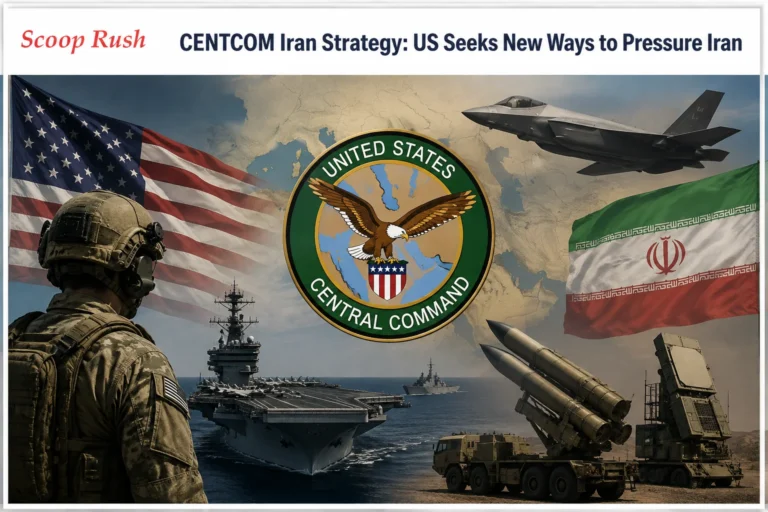
The CENTCOM Iran Strategy has drawn fresh attention after senior US military leaders asked analysts for new ideas to increase pressure on Iran. The request came as Washington reviews its military and diplomatic approach after weeks of conflict. Officials believe current efforts have delivered limited results.

A senior officer in the US Central Command intelligence branch sent the message to a broad group of military analysts. The email encouraged creative and unconventional thinking beyond traditional military planning. While CENTCOM said innovation remains part of its culture, several officials described the request as an unusual step during an ongoing conflict.

CENTCOM Iran Strategy Highlights Review of Current Approach

The email reflected a broader review of US policy toward Iran. Military planners continue assessing whether current operations can achieve Washington’s strategic goals. Officials want fresh ideas as they examine military, diplomatic, and economic options.

CENTCOM spokesperson Captain Timothy Hawkins defended the approach. He said Admiral Brad Cooper regularly seeks input from personnel across different ranks. According to Hawkins, diverse perspectives often improve operational planning and help commanders respond to changing situations.

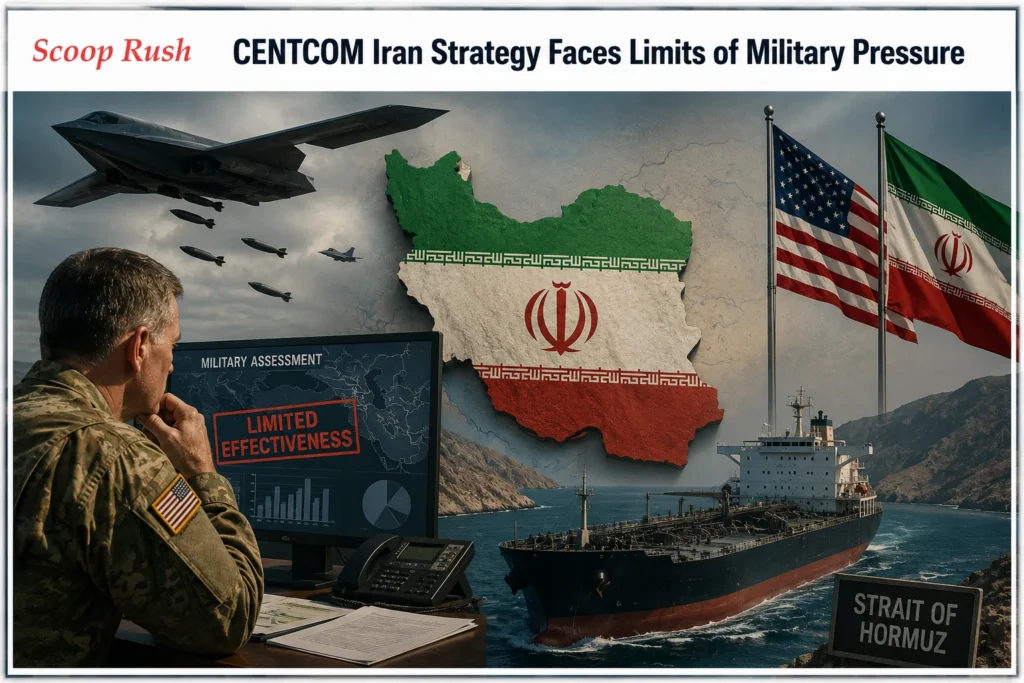
CENTCOM Iran Strategy Faces Limits of Military Pressure

CENTCOM-Iran-Strategy-Faces-Limits-of-Military-Pressure

US intelligence assessments have raised concerns about the effectiveness of the current air campaign. Officials reportedly concluded that continued strikes alone are unlikely to force Iran into accepting US demands. They also believe military action may not resolve tensions surrounding commercial shipping in the Strait of Hormuz.

These findings have encouraged military leaders to explore additional options. Officials continue balancing military pressure with diplomatic efforts instead of relying on one approach. The review reflects growing recognition that the conflict remains difficult to resolve through force alone.

Trump Weighs Military Action and Diplomatic Talks

President Donald Trump recently warned that Iran could face additional military strikes. However, he later canceled a planned attack after discussions with regional leaders. Reports said Saudi Crown Prince Mohammed bin Salman urged the president to reduce tensions and avoid further escalation.

Trump also announced that US and Iranian officials expected to resume discussions on the Strait of Hormuz and Iran’s nuclear program. The administration hopes diplomacy can produce progress while military forces remain prepared if negotiations fail.

Larger Air Campaign Remains Under Consideration

Larger-Air-Campaign-Remains-Under-Consideration

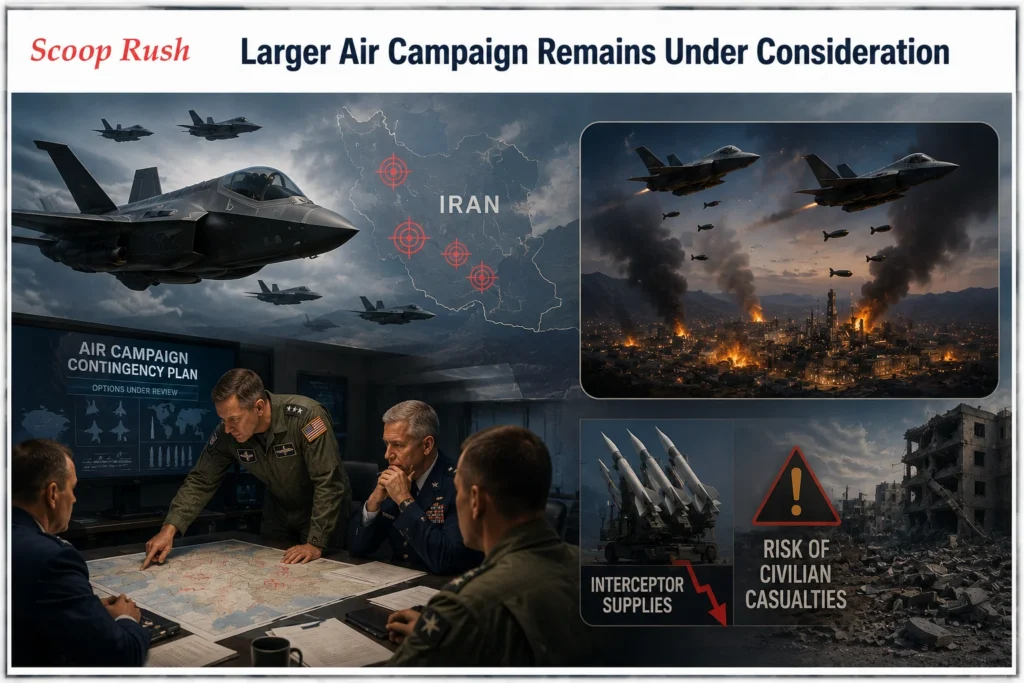
Military officials have developed contingency plans for a broader air campaign. One proposal reportedly includes one or two weeks of heavy bombardment targeting Iran’s remaining missile infrastructure. The objective would involve reducing Tehran’s military capabilities rather than seeking immediate regime change.

The White House has not approved the proposal. Senior commanders have expressed concern about shrinking supplies of air-defense interceptors. Officials also warned that strikes against major infrastructure could increase civilian casualties and create wider humanitarian consequences.

Underground Nuclear Facilities Present New Challenges

Iran’s deeply buried nuclear facilities remain another major concern for military planners. Intelligence sources believe some underground sites may survive conventional airstrikes because of their depth and reinforced construction.

Officials said eliminating those facilities could require ground operations. Such a mission would expose American troops to greater danger and carry significant political risks. For that reason, military planners continue evaluating alternatives before recommending any major escalation.

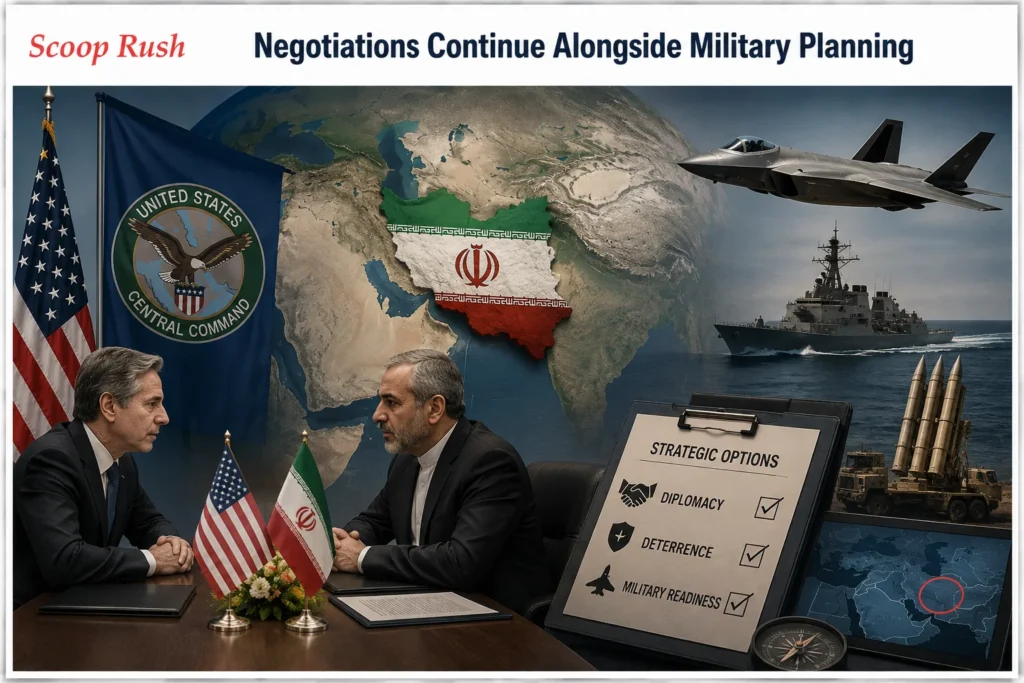
Negotiations Continue Alongside Military Planning

Negotiations-Continue-Alongside-Military-Planning

Despite military preparations, diplomacy remains an important part of the CENTCOM Iran Strategy. Officials believe negotiations offer the best chance to reduce regional tensions without expanding the conflict. Talks continue to focus on maritime security and Iran’s nuclear activities.

Military pressure remains available if diplomatic efforts fail. However, officials appear increasingly focused on combining deterrence with negotiations instead of relying exclusively on force. That balanced approach could shape US policy in the coming weeks.

Why the Analyst Email Stands Out

Military organizations regularly encourage innovation. However, broad requests for strategic ideas rarely reach large groups of intelligence analysts during active operations. That unusual step has attracted attention from defense observers and former military officials.

The request also reflects the complex challenges facing US policymakers. Intelligence assessments suggest that existing military operations have achieved only limited strategic progress. As a result, commanders continue reviewing every available option before recommending the next phase of US policy.

What Comes Next for the CENTCOM Iran Strategy

The administration now faces several difficult choices. It can expand military operations, maintain limited strikes while pursuing diplomacy, or seek a negotiated agreement that falls short of its original objectives. Each option carries significant political and security risks.

For now, officials continue reviewing recommendations from military planners while diplomatic contacts remain active. Future decisions will likely depend on developments in negotiations, regional security conditions, and intelligence assessments regarding Iran’s military capabilities.

Conclusion

The CENTCOM Iran Strategy continues to evolve as US officials reassess their approach toward Iran. Military leaders are reviewing fresh ideas after intelligence reports suggested that current airstrikes alone may not achieve Washington’s strategic goals. At the same time, commanders continue preparing military options while supporting diplomatic efforts.

The administration now faces difficult decisions that could shape the next phase of the conflict. Expanding military operations, maintaining limited strikes, or pursuing negotiations each carries significant risks. For now, the United States appears focused on keeping every option available while seeking a strategy that balances military pressure with diplomacy.

FAQs

1. Why did CENTCOM ask military analysts for creative and unconventional ideas?

CENTCOM requested new ideas because military leaders are reviewing their overall strategy toward Iran. Intelligence assessments suggested that current military operations alone may not achieve all US objectives. Officials wanted analysts from different ranks to contribute fresh perspectives that could support future planning.

2. What challenges does the current CENTCOM Iran Strategy face?

The biggest challenge is that continued airstrikes may not force Iran to change its negotiating position. Intelligence officials also believe military action alone cannot fully resolve tensions in the Strait of Hormuz. These concerns have encouraged leaders to explore additional diplomatic and strategic options.

3. Is the United States planning to launch a larger military operation against Iran?

Military planners have reportedly prepared options for a broader air campaign targeting Iran’s remaining missile capabilities. However, President Donald Trump has not approved those plans. Senior officials continue reviewing the military and political risks before making any final decision.

4. Why are Iran’s underground nuclear facilities difficult to target?

Several of Iran’s nuclear sites are built deep underground and protected by reinforced structures. Military experts believe conventional airstrikes may not completely destroy these facilities. Any attempt to eliminate them could require far riskier military operations.

5. What role does diplomacy play in the CENTCOM Iran Strategy?

Diplomacy remains an important part of the current US approach. American officials continue pursuing talks with Iran on issues including the Strait of Hormuz and Tehran’s nuclear program. The administration hopes negotiations can reduce tensions while maintaining military readiness if discussions fail.

Why UEFA Is Threatening Gianni Infantino With Legal Action Over the FIFA World Cup Sell-Off

0

Could the FIFA World Cup sell-off end up splitting world football apart? That question is no longer hypothetical. UEFA is threatening Gianni Infantino with legal action over the plan, and the rift now touches almost every major football body on the planet. A proposal to bring private investors into FIFA’s biggest competitions has turned into one of the tensest standoffs in the sport’s governance in recent memory.

This isn’t a minor disagreement between committees. It involves Fifa president Gianni Infantino, a $40m offer to member associations, an American venture capital firm with ties to the Trump family, and now, formal warnings of legal action. For fans, federations, and anyone who follows how football’s money actually moves, the Fifa World Cup sell-off story matters.

Why Uefa Is Threatening Gianni Infantino With Legal Action

The dispute centers on Infantino’s plan to create a new commercial subsidiary, reportedly called Fifa Forward Enterprise (FFE). The idea was straightforward on paper. Fifa would use FFE to run its major events, including the World Cup, and then invite outside investors to buy minority, non-controlling stakes in that subsidiary. This is the core of the Fifa World Cup sell-off that has now triggered Uefa’s legal threat.

Fifa framed the plan as a way to bring in fresh capital while keeping control of its flagship tournaments in-house. Uefa, however, sees it differently. According to reporting that The Telegraph first published, Uefa sent Infantino a letter stating it is actively weighing legal action, arbitration, or regulatory complaints connected to the FFE proposal.

That marks a serious escalation. Legal threats between continental confederations and FIFA itself rarely happen, and they signal that private conversations and diplomatic pressure have already failed to resolve the disagreement.

What Uefa Is Demanding From Fifa Over the World Cup Sell-Off

What Uefa Is Demanding From Fifa Over the World Cup Sell-Off

Uefa’s letter didn’t stop at threatening litigation. It also demanded that Fifa immediately preserve every document connected to the FFE plan. This includes emails, instant messages across platforms like WhatsApp, Signal, Teams, and Slack, text messages, written correspondence, and meeting notes.

Crucially, Uefa specified that these obligations apply regardless of Fifa’s internal retention policies. In other words, Uefa wants to make sure Fifa doesn’t delete, archive, or lose anything before any legal process begins. The request covers communications involving Fifa officers, employees, committee members, consultants, agents, member associations, confederations, broadcasters, sponsors, and financial institutions.

This kind of document preservation notice typically precedes formal legal proceedings. It suggests Uefa isn’t simply posturing. Uefa appears to be preparing for a real dispute that could end up in front of arbitrators or regulators.

The $40m Offer That Set a Deadline

Part of what makes this situation urgent is money and timing. Infantino reportedly wrote to all 211 FIFA member associations, telling them they would receive $40m if they backed the FFE proposal. To access an initial $20m of that sum, associations needed to commit by 19 September.

Uefa’s letter specifically referenced this deadline and asked Fifa to preserve documents related to the payment structure for member associations. That includes the design, modelling, legal basis, approval process, and all communications Fifa sent to those associations about the payments.

By tying financial incentives to a fast-approaching deadline, Fifa pushed member federations to decide quickly. For governing bodies already uneasy about the Fifa World Cup sell-off, that pressure appears to have backfired.

Who Is Behind the Fifa World Cup Sell-Off Plan

Thrive Eternal, a venture capital firm Joshua Kushner founded, expected to lead the investor group behind FFE. Joshua Kushner is the brother of Jared Kushner, who is married to Ivanka Trump and serves as the son-in-law of US President Donald Trump.

That connection has added another layer of scrutiny to the proposal. Bringing a politically connected American investment firm into football’s most valuable global asset, the World Cup, was always going to draw attention. Now that the plan has become a flashpoint for legal threats, that scrutiny has only intensified.

Growing Opposition Across Football’s Governing Bodies

Uefa isn’t acting alone in raising concerns. Infantino’s leadership has faced public criticism from several major football authorities, not just in Europe but across North and Central America and the Caribbean as well.

Uefa and Concacaf both released statements criticising the plan before UEFA’s legal threat became public. That kind of coordinated pushback from two of football’s most powerful confederations rarely happens, and it points to a broader unease about how Infantino runs FIFA.

Wales Becomes the First Nation to Withdraw Support

The opposition took a significant turn when Wales became the first national federation to publicly withdraw its backing for Infantino’s bid to continue as Fifa president. For a sitting Fifa president, losing the public support of a member association marks a notable blow, especially this early in what looks like a broader campaign of criticism.

Wales’ move could encourage other federations to follow suit, particularly those who already felt uncomfortable with the Fifa World Cup sell-off but hesitated to break ranks first.

England’s FA Set to Withdraw Backing Too

The pressure on Infantino isn’t limited to continental confederations or smaller federations. The English Football Association also plans to write to Infantino, formally withdrawing its previous support for him.

England’s FA carries significant weight within global football politics. Its decision to step back from backing Infantino adds to a growing sense that support for his leadership is eroding across multiple regions at once, not just in isolated pockets.

What This Means for Fifa’s Leadership

Gianni Infantino has led FIFA for a decade. Throughout that time, he has overseen major changes to the organization’s structure and commercial reach, including an expanded World Cup format. However, this current controversy represents one of the most visible challenges to his authority in recent years.

Legal threats from UEFA, public criticism from Concacaf, withdrawn support from Wales, and England’s FA reportedly following suit combine to paint a picture of a leadership under real pressure. FIFA hasn’t yet responded publicly, and BBC Sport says it has approached FIFA for comment.

For now, Fifa has scrapped the FFE plan. Yet the fallout from how Infantino proposed and pushed it forward continues to shape the relationship between FIFA and its member confederations.

Why This Dispute Goes Beyond One Investment Plan

At its core, this isn’t only about whether private investors should own a stake in World Cup competitions. It’s about trust between Fifa’s central leadership and the federations that make up its membership. When Uefa demands preservation of internal communications and threatens legal or regulatory action, it signals a breakdown in the normal channels of governance and negotiation.

Additionally, the $40m incentive tied to a tight deadline raises questions about how Fifa makes decisions internally, and whether member associations had genuine time to evaluate the Fifa World Cup sell-off rather than simply react to a payment offer.

Consequently, this dispute could shape conversations about Fifa’s governance structure well beyond the specifics of the FFE plan. Similarly, it may influence how Fifa vets and communicates future commercial proposals to member federations, given how quickly this one drew formal legal threats.

Key Takeaways

UEFA has threatened legal action against FIFA over Infantino’s now-scrapped plan to sell minority stakes in a commercial subsidiary running FIFA’s major competitions. UEFA has also demanded that FIFA preserve all related documents and communications. Meanwhile, opposition to Infantino’s leadership has grown, with Concacaf and UEFA publicly criticizing the plan, Wales withdrawing support for his presidency, and England’s FA reportedly preparing to do the same.

Thrive Eternal, a venture capital firm Joshua Kushner leads, backed the plan, which included a $40m incentive offer to member associations tied to a 19 September deadline. As a result, what began as a commercial proposal has evolved into a broader test of Infantino’s standing within world football’s governing structure.

Ultimately, how Fifa responds to Uefa’s legal threat, and whether more federations follow Wales and England in withdrawing support, will likely determine how the Fifa World Cup sell-off saga develops in the coming weeks.

Frequently Asked Questions

1. Why is Uefa threatening legal action against Fifa? 

Uefa is considering legal action, arbitration, or regulatory complaints over the Fifa World Cup sell-off, Infantino’s now-scrapped plan to let private investors buy minority stakes in a new subsidiary running Fifa’s major competitions.

2. What is Fifa Forward Enterprise (FFE)? 

FFE was the proposed commercial subsidiary behind the Fifa World Cup sell-off. Fifa planned to use it to operate its major events, and outside investors would have made minority, non-controlling investments in the subsidiary.

3. Who was expected to lead the investment in Fifa’s plan? 

Thrive Eternal, a venture capital firm Joshua Kushner founded, expected to lead the proposed investor group for FFE. Joshua Kushner is the brother of Jared Kushner, US President Donald Trump’s son-in-law.

4. Which football associations have withdrawn support for Infantino? 

Wales became the first nation to publicly withdraw backing for Gianni Infantino’s bid to continue as Fifa president. The English Football Association also plans to write to Infantino withdrawing its previous support.

5. What documents has Uefa asked Fifa to preserve? 

Uefa has asked Fifa to preserve all documents and electronically stored information related to the Fifa World Cup sell-off, including emails, instant messages, text messages, written correspondence, and meeting notes, regardless of Fifa’s internal retention policies.

Elon Musk Denies Tesla Is Selling Its China Business: What’s Really Going On?

0

Tesla just got caught in the middle of a merger storm. One report claimed a Tesla China sale was quietly in the works, and Elon Musk wasted no time firing back.

Introduction

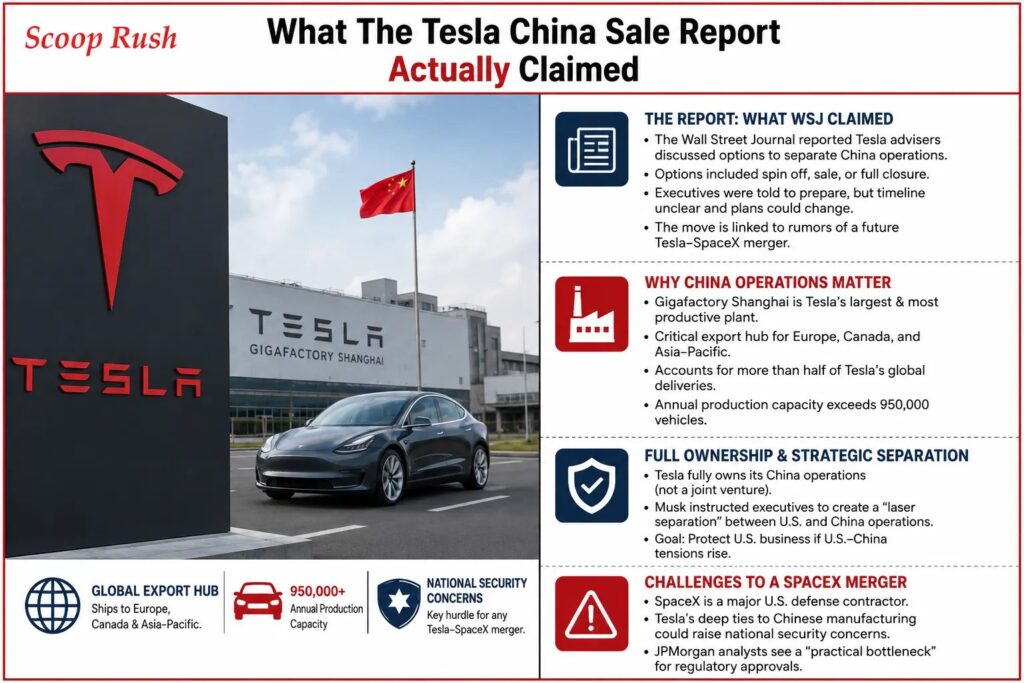
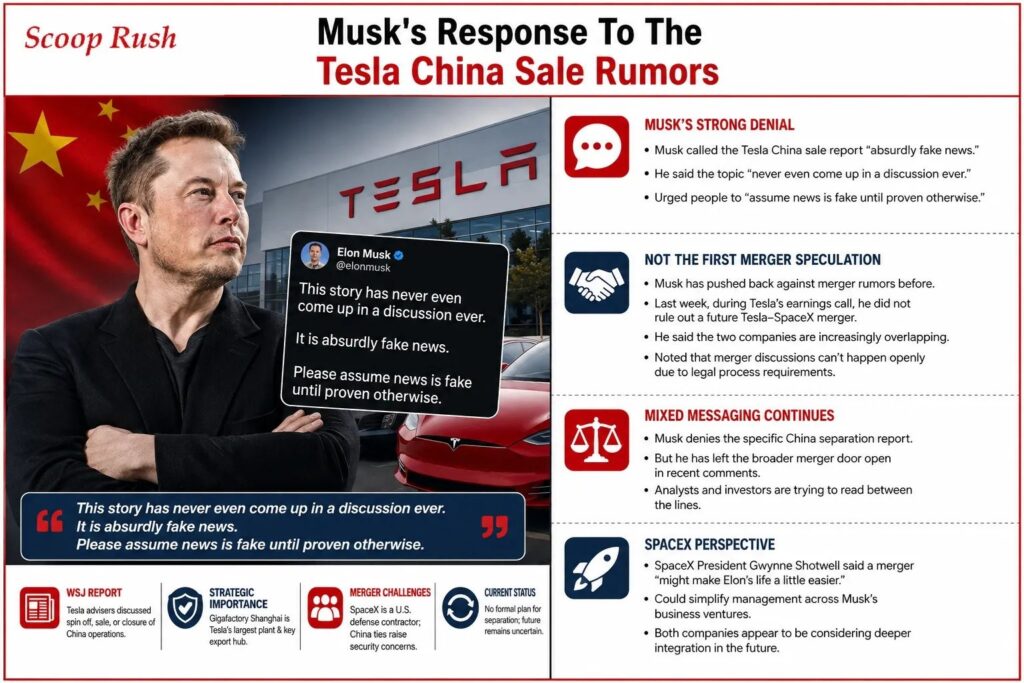
“Is a Tesla China sale really on the table? That’s the question sending shockwaves through investors this week after a bombshell report claimed the EV giant was quietly preparing to sell or separate its Chinese operations. Elon Musk fired back within hours, calling the story “absurdly fake news.” However, the details behind the report have left plenty of people wanting answers.

This story matters because it touches two of the most valuable companies on the planet. Tesla and SpaceX are both worth well over a trillion dollars, and any hint of a merger between them sends ripples through the stock market. Additionally, for everyday investors, EV shoppers, and anyone following Musk’s business empire, understanding what’s actually happening with Tesla’s China business could shape decisions for months to come.

What The Tesla China Sale Report Actually Claimed

What The Tesla China Sale Report Actually Claimed

The Wall Street Journal reported on Thursday that Tesla advisers had discussed several options for separating the company’s China operations. These options reportedly included a spin off, an outright sale, or even a full closure of the business. According to the report, executives were told to prepare for this separation, although the timeline remained unclear and the plans could still change.

Furthermore, the report connected this potential move to persistent rumors about a future merger between Tesla and SpaceX. A combination like that would face serious hurdles, mainly because SpaceX operates as a major U.S. defense contractor. Meanwhile, Tesla runs large manufacturing facilities inside China, which could create national security concerns if the two companies became one.

Why Tesla’s China Operations Complicate a SpaceX Merger

Tesla’s Gigafactory Shanghai is not just another factory. It stands as the company’s largest and most productive plant worldwide. The facility serves as a critical export hub, shipping vehicles to Europe, Canada, and the wider Asia-Pacific region. In fact, this single plant has historically accounted for more than half of Tesla’s global deliveries, with an annual production capacity exceeding 950,000 vehicles.

Unlike many foreign automakers operating in China, Tesla did not structure its Chinese business as a joint venture with a local partner. This gives Tesla full ownership and control. Additionally, Musk reportedly instructed Tesla executives years ago to build a clear “laser” separation between the company’s U.S. and China operations. The goal was to protect the American half of the business if geopolitical tensions between the two countries ever worsened.

Because SpaceX handles sensitive government contracts, any merger involving a company with deep ties to Chinese manufacturing would likely draw intense regulatory scrutiny. JPMorgan analysts have already pointed to a “practical bottleneck” for approvals, particularly given China’s national security concerns around SpaceX’s U.S. government relationships.

Musk’s Response To The Tesla China Sale Rumors

Musk's Response To The Tesla China Sale Rumors

Musk did not waste time addressing the report. Responding to a post from a Tesla-focused account, he wrote that the story had “never even come up in a discussion ever.” He went further, describing it as “absurdly fake news” and urging people to “assume news is fake until proven otherwise.”

This is not the first time Musk has pushed back hard against merger speculation. Interestingly, though, he has not always denied the possibility of a Tesla-SpaceX combination. Just last week, during Tesla’s earnings call, Musk declined to rule out a future merger. He noted that the two companies are increasingly overlapping in their operations, and he acknowledged that combining companies is not something that can be discussed openly during an earnings call due to legal process requirements.

Consequently, this mixed messaging has left many analysts and investors trying to read between the lines. On one hand, Musk firmly denies the specific China separation report. On the other hand, he has left the broader merger door open in recent public comments.

The SpaceX Perspective On A Potential Merger

SpaceX’s own leadership has hinted at potential benefits from a closer relationship with Tesla. Gwynne Shotwell, SpaceX’s President and Chief Operating Officer, told CNBC in June that folding the companies together “might make Elon’s life a little easier” by simplifying management across Musk’s various business ventures.

This comment adds another layer to the story. Even if no formal separation plan exists today, executives at both companies appear to be thinking about how their businesses could eventually work more closely together.

Tesla’s Deep Roots In The China Market

China represents Tesla’s second-largest market globally, trailing only the United States. The company sources more than 95% of the components used in its China-made Model 3 and the refreshed Model Y locally. This localization strategy involves more than 400 domestic suppliers, and more than 60 of these suppliers also provide parts to Tesla’s operations worldwide.

Recent sales numbers show just how important this market remains. Deliveries of China-made Model 3 and Model Y vehicles rose 24.4% year-over-year in June. Meanwhile, second-quarter sales and exports from the Shanghai factory increased by 32.8%. These figures suggest strong momentum, even as Tesla faces intense competition from local rivals like BYD.

Given these numbers, any move to sell or spin off the China business would represent a massive shift in strategy. Consequently, many industry observers find it difficult to imagine Tesla walking away from such a productive and profitable operation without extremely compelling reasons.

Market Reaction Stays Muted

Despite the dramatic headlines, the market response remained relatively calm. Shares of Tesla were up about 2% in premarket trading following the report and Musk’s denial. This modest movement suggests that investors are not yet treating the story as confirmed or particularly alarming.

Tesla and SpaceX did not immediately respond to requests for comment outside regular business hours, which is common practice for breaking financial news that emerges outside standard trading periods.

Why Tesla-SpaceX Merger Speculation Keeps Resurfacing

Why Tesla-SpaceX Merger Speculation Keeps Resurfacing

Speculation about combining Musk’s companies has circulated for months. Investors have long wondered whether Tesla and SpaceX might eventually merge, especially as SpaceX pursued its massive $75 billion initial public offering. That IPO process intensified public interest in how Musk’s various business interests might consolidate over time.

Furthermore, this pattern is not unprecedented in Musk’s career. He has combined companies before, showing a willingness to restructure his business empire when it suits his broader strategic goals. This history gives some credibility to ongoing merger speculation, even when specific reports get denied.

Still, denying a report and denying an entire concept are two different things. Musk’s statement focused specifically on the China separation plan, not on the broader question of whether Tesla and SpaceX might eventually combine in some form.

What Happens Next For Tesla And SpaceX

For now, the situation remains unresolved. The Wall Street Journal’s sources indicated that any separation plans could still change, and no clear timeline exists for when or if Tesla might act on these discussions. Therefore, investors and industry watchers will likely continue monitoring both companies closely for further signals.

Tesla’s next moves in China will be worth watching, especially given the strong sales momentum reported in recent months. Additionally, any further comments from Musk, whether on X or during future earnings calls, could offer more clarity about his long-term plans for both companies.

Conclusion

Elon Musk has firmly rejected reports that Tesla is preparing to sell or spin off its China business ahead of a potential SpaceX merger. He called the story “absurdly fake news” and insisted the topic had never been discussed. However, his own recent comments about growing overlap between Tesla and SpaceX suggest that broader merger speculation is unlikely to disappear anytime soon.

China remains a vital part of Tesla’s global operations, contributing significantly to both production and sales. Any move to separate this business would carry enormous consequences for the company’s bottom line. As this story continues to develop, staying informed on official statements from Tesla and SpaceX will be the best way to separate fact from speculation.

FAQs

Did Elon Musk confirm or deny the Tesla China sale report?

Musk denied the report, calling it “absurdly fake news” and stating that a separation of Tesla’s China business has never come up in any discussion.

Why would Tesla consider separating its China business?

The report suggested that separating Tesla’s China operations could reduce regulatory and national security hurdles ahead of a potential merger with SpaceX, since SpaceX is a major U.S. defense contractor.

How important is China to Tesla’s overall business?

China is Tesla’s second-largest market globally. The Gigafactory Shanghai plant has historically accounted for more than half of Tesla’s global deliveries and serves as a key export hub.

Has Elon Musk talked about merging Tesla and SpaceX before?

Yes. During Tesla’s most recent earnings call, Musk declined to rule out a future merger, noting that the two companies are increasingly overlapping in their operations.

How did Tesla’s stock react to the report?

Tesla shares rose about 2% in premarket trading after the report and Musk’s denial, suggesting investors did not view the story as a major immediate concern.

Premier League Transfer Window 2026: Every Record-Breaking Deal So Far

0

The Premier League Transfer Window Has Already Smashed Records

The Premier League transfer window has already crossed the £1 billion mark this summer. The market has barely reached its peak. Three clubs have shattered their own spending records within days of each other. Chelsea, Manchester City, and Tottenham have each paid more than £100 million for a single player. If that sounds unusual, consider this. One top-flight recruitment chief summed up the mood perfectly. He said nothing feels strange anymore once you work inside this market.

That comment captures where the Premier League transfer window stands right now. Money moves faster than ever. Clubs plan deals years in advance, and teams across every division work around the clock to stay ahead. This article breaks down how the Premier League transfer window works behind the scenes. It also explains why the numbers keep climbing and what it means for the rest of the 2026 summer market.

Record-Breaking Deals in the Premier League Transfer Window

Morgan Rogers is the name most fans are discussing right now. He joined Chelsea from Aston Villa for £117 million, a new record fee for a British player. What makes this deal remarkable is the timeline. Villa signed Rogers from Middlesbrough for just £16 million a little over two years ago. Few players ever climb in value that quickly.

However, Rogers is not the only headline the Premier League transfer window has produced. Sandro Tonali’s £100 million move to Spurs briefly set a new benchmark. Manchester City beat it days later with Elliot Anderson’s £116 million switch. Chelsea then topped both clubs by completing the Rogers deal. Meanwhile, Alexander Isak’s £125 million move to Liverpool last year still ranks among the biggest fees an English club has ever paid. That deal was completed on deadline day.

Biggest Fees of the 2026 Premier League Transfer Window

PlayerTransferFeeYear
Alexander IsakNewcastle to Liverpool£125m2025
Morgan RogersAston Villa to Chelsea£117m2026
Elliot AndersonNewcastle to Manchester City£116m2026
Sandro TonaliNewcastle to Tottenham£100m2026

Additionally, this spending follows a winter window in which clubs worldwide spent 2.2 billion euros. Yet even against that backdrop, the Premier League transfer window remains unmatched. No other league in the world comes close to its financial power.

How Clubs Prepare for the Premier League Transfer Window

So how do clubs actually get these deals done? Planning, technology, and a growing network of agents, scouts, and club officials answer that question. These groups now work together almost year-round to keep the Premier League transfer window moving.

Networking Events Now Shape Every Deal

In February, around 100 club officials, scouts, and agents gathered at Villa Park for a networking event. Representatives from Liverpool, West Ham, Birmingham, Preston, Derby, Aston Villa, and Manchester City mixed with agents over coffee. They used the event to prepare for the summer and review the winter window.

During the event, Aston Villa’s head of emerging talent and loans, Adam Henshall, presented how the club manages its loan system. He walked attendees through the data, risk, and reward factors the club weighs before sending a young player out on loan.

TransferRoom organized the event. The platform connects clubs and agents online and now counts around 800 clubs as members. This week, more than 200 clubs will meet 55 agencies in Madrid for a “deal day” built to finalize transfers. Villa, Chelsea, Crystal Palace, Manchester City, Manchester United, Roma, and Borussia Dortmund are among the clubs attending.

This shift shows how technology now shapes the modern Premier League transfer window. Instead of relying purely on scouting trips and phone calls, clubs use dedicated platforms. These tools speed up communication and help clubs avoid chasing deals that were never realistic.

Why the Premier League Transfer Window Could Explode in August

Most transfer activity should erupt in the second half of August. The World Cup delayed clubs from completing most deals earlier in the summer, which pushed usual planning back. As a result, English Football League clubs now find themselves waiting on decisions from the top of the pyramid. Their own plans may already sit in place, but they still cannot move until bigger clubs act first.

How Clubs Plan Ahead in the Premier League Transfer Window

How Clubs Plan Ahead in the Premier League Transfer Window

Top-Flight Clubs Work a Full Window Ahead

One senior Premier League recruitment executive calls anything less than a window of advance planning “reactionary.” Ideally, clubs want to plan at least one transfer window ahead. In the Premier League, clubs generally know which players are most likely to move. That awareness lets them prepare early and avoid getting caught out.

Former Portsmouth, Blackpool, Oxford, and Shrewsbury manager Michael Appleton explained how this planning builds over time. Work on the summer window typically starts just a couple of weeks after the January window shuts. Meetings with the recruitment team begin weekly in early March. That frequency increases to every few days as the window approaches, and eventually becomes a daily routine once trading opens.

Lower League Clubs Face a Different Reality

Further down the football pyramid, the picture looks completely different. Most people in the game accept a simple truth. If a player performs well, he is likely to move on regardless of the club’s wishes. Essentially, any player can become tradeable. That reality leaves sporting directors and managers firefighting rather than planning long term.

Many EFL clubs also try to time their signings strategically to save money. Signing a player later in the window, for example, can save weeks of salary payments. That saving matters far more to smaller clubs working with tighter budgets.

Data Access Still Divides the Leagues

The amount of data clubs use in recruitment varies enormously between divisions. Advanced scouting platforms exist and can offer real insight. However, their cost often stops lower league clubs from justifying the expense. As a result, recruitment methods range widely. Some clubs use sophisticated analytics, while others rely on far simpler approaches. One lower league club has even searched for a transfer target’s agent directly on Instagram.

The Robert Lewandowski Deal: A Decade in the Making

Not every major transfer this summer carried a nine-figure price tag. One of the most fascinating moves involved no transfer fee at all. Poland captain Robert Lewandowski joined MLS side Chicago Fire on a free transfer after his Barcelona contract expired.

How Chicago Fire Built a Decade-Long Plan

Chicago Fire had tracked Lewandowski for ten years. The club believed it could eventually convince him to move to America. Chicago’s large Polish community made it a natural fit for the striker. Fire sporting director Gregg Broughton admits the plan sounded unrealistic at the time. Lewandowski was scoring goals for Bayern Munich and later Barcelona in the prime of his career. Still, the deal shows the value of long-term planning even outside the traditional Premier League transfer window.

The move became realistic in January 2025. Fire were negotiating with Neymar at the time, who shares an agent, Pini Zahavi, with Lewandowski. Neymar ultimately chose to return to Brazil with Santos. That conversation, however, opened the door for Fire to explore signing Lewandowski instead.

Behind the Scenes of a Global Superstar Signing

A spot on Fire’s official MLS discovery list meant no other MLS club could sign him. Even so, Fire had to wait for Barcelona’s decision on the striker’s future. The club could not speak directly to Lewandowski until January 1. Once that date arrived, head coach Gregg Berhalter flew to Spain to meet him in person.

Broughton explains that deals involving a player of Lewandowski’s stature go far beyond a standard contract. Clubs must weigh commercial negotiations and his career plans beyond football. They also consider his wife’s fitness business and its potential in the American market, plus school options for his children.

A Warm Welcome to Chicago

Lewandowski made his first visit to Chicago in June. The club welcomed him with billboard messages along the route from the airport. Broughton joked that gesture would never happen for a move between Heathrow and Chelsea. The signing eventually beat out interest from clubs in Europe and Saudi Arabia. That result proved the club’s long-term strategy had worked.

Deadline Day in the Premier League Transfer Window: Myth vs Reality

Deadline day often gets a reputation for chaos and unpredictability. However, insiders say the biggest deals rarely come together at the last minute. Agents now play an increasingly influential role in negotiations. They want more control over club-to-club agreements, which adds extra layers of paperwork. Much of that paperwork centers on the AF1 agency agreement. It outlines the deal structure, the agents involved, and how much they earn.

Even so, most senior figures in the Premier League agree on one thing. Deals rushed through on deadline day usually go wrong. Ideally, clubs should finalize a move at least 72 hours before the deadline. Clubs complete the majority of major transfers weeks in advance. When a deal closes in the final hours, it usually reflects small details still under negotiation rather than a rushed decision.

Michael Appleton prefers to finish his business early rather than panic on deadline day itself. However, he notes that deadline day still matters for a different reason. It becomes less about completing incoming transfers and more about preparing for players the club might lose. Clubs need to react quickly if that happens.

What the Premier League Transfer Window Means for Fans

The Premier League transfer window has evolved into a year-round operation rather than a short summer sprint. Clubs at the top build relationships and gather data months, sometimes years, before they strike a deal. Meanwhile, smaller clubs adapt with tighter budgets and quicker turnarounds. They often react to bigger clubs rather than dictating their own pace.

With deadline day just a month away, expect the pace to increase further. Agents will get busier, and paperwork will pile up. A handful of late deals will likely close in the final hours. Still, if history offers any guide, the biggest names in this Premier League transfer window probably agreed their moves behind closed doors. The headlines simply caught up later.

Key Takeaways

  • Premier League clubs have already spent more than £1 billion in this transfer window.
  • Chelsea’s £117 million deal for Morgan Rogers set a new British transfer record.
  • Elliot Anderson’s £116 million move to Manchester City broke a record. Sandro Tonali’s £100 million switch to Spurs did too, within days of each other.
  • Networking platforms like TransferRoom are reshaping the Premier League transfer window, with around 800 clubs now signed up.
  • Top-flight clubs typically plan at least one transfer window ahead, while lower league clubs often react quickly to protect their squads.
  • Chicago Fire’s signing of Robert Lewandowski shows how long-term planning can pay off, even a decade later.
  • Clubs complete most major deals well before deadline day, despite its reputation for late drama.

Frequently Asked Questions

Why has the Premier League transfer window seen such high spending this summer?

Premier League clubs have already spent more than £1 billion this window. Record-breaking deals from Chelsea, Manchester City, and Tottenham drove much of that spending. Each club paid over £100 million for a single player.

Who holds the record for the most expensive British player transfer?

Morgan Rogers currently holds this record after his £117 million move from Aston Villa to Chelsea. That fee marks a huge jump from the £16 million Villa paid Middlesbrough for him just two years earlier.

Why is the Premier League transfer window expected to peak later in August this year?

The World Cup delayed many clubs from completing deals earlier in the summer. As a result, most major activity should land in the second half of August this year.

How do clubs plan their strategy for the Premier League transfer window?

Top-flight clubs generally plan at least one window ahead. They increase meeting frequency with recruitment teams as the window approaches. Lower league clubs, however, often have to react quickly since almost any player can become tradeable.

Why did Robert Lewandowski join Chicago Fire instead of a European club?

Chicago Fire had tracked Lewandowski for a decade and saw an opening once Barcelona’s contract with him expired. The club’s large Polish community in Chicago also made the free transfer decision easier despite interest from Europe and Saudi Arabia.

Qwen3.8-Max: How Alibaba’s New AI Model Is Beating Everyone Except Anthropic

0

What happens when a Chinese tech giant builds an AI model so powerful it jumps straight to the top of global rankings? Investors pay attention, fast. That is exactly what happened this week with Qwen3.8-Max, Alibaba’s newest AI model, and the AI world is still talking about it.

Introduction

Alibaba’s newly unveiled AI model didn’t creep into the market quietly. Instead, Qwen3.8-Max shot to the top of leaderboards, sent the company’s stock soaring, and reignited a question the industry keeps asking: is China closing the gap with the West in AI, or has it already closed it?

This matters far beyond boardrooms in Beijing and Silicon Valley. Every time a model this capable launches, it changes what’s available to developers, businesses, and everyday users around the world. Cheaper, more powerful, open-weight models mean more people can build AI tools without paying premium prices to a handful of US companies. As a result, this shift affects app pricing, product features, and how quickly new AI capabilities reach regular consumers, and it even feeds into broader debates over whether AI will replace your job.

Alibaba unveiled Qwen3.8-Max on Monday. The announcement sent its Hong Kong-listed shares surging by as much as 7.3%, the biggest single-day jump in nearly a month. Investors clearly took notice. Meanwhile, the AI research community reacted too, and the model instantly became the highest-ranking Chinese system on a major crowdsourced benchmarking platform.

What Is Qwen3.8-Max and Why Does Its Size Matter?

What Is Qwen3.8-Max and Why Does Its Size Matter?

Qwen3.8-Max is Alibaba’s largest and most capable AI model to date. It’s built around 2.4 trillion parameters, the numerical settings a model learns from training data. Additionally, these parameters help the model recognize patterns, generate responses, and complete tasks.

For comparison, domestic rival Moonshot AI’s Kimi K3 model, launched last month, has 2.8 trillion parameters. That makes Kimi K3 larger on paper. However, Alibaba’s model still performs impressively against it and against several Western systems.

A bigger parameter count doesn’t automatically make a model smarter. However, it has become a widely used indicator of how much computing power and data went into building a system. Chinese AI companies tend to publish these numbers openly because their models are typically open-weight. This means developers can download and adapt the underlying technology themselves.

That’s a notable contrast with companies like OpenAI, Anthropic, and Google, which keep parameter counts private for their closed-source models. This openness has become one of the calling cards of Chinese AI labs as they compete for developer attention worldwide, even as Google faces its own scrutiny over AI spending and cash flow pressures.

How Qwen3.8-Max Ranks Against Global AI Competitors

Alibaba’s new model debuted on Arena.AI, a crowdsourced platform where users compare AI systems head-to-head. On the text-based leaderboard, Qwen3.8-Max became the top-ranked Chinese model. Still, it trails Claude Fable 5 and three Opus variants, all from Anthropic. According to rankings compiled by Alibaba, it landed fifth overall on the Text Arena leaderboard, which measures performance across math, coding, and creative writing tasks.

The model performed even better in a separate category. On Arena.AI’s leaderboard for AI systems that analyze images and visual material, Qwen3.8-Max ranked second globally. Only a Claude Fable 5 variant scored higher.

Both Qwen3.8-Max and Kimi K3 can process text, images, and video. Additionally, both can handle up to 1 million tokens at once. Tokens are small chunks of data, often parts of words. A high token limit means a model can process large amounts of material in a single request, such as lengthy legal documents, an entire software codebase, or hundreds of pages of text.

The Technology Behind Alibaba’s Latest AI Breakthrough

Alibaba said Qwen3.8-Max uses what’s known as a “mixture-of-experts” design. Instead of activating the entire model for every single request, this architecture divides tasks among specialized components within the system. As a result, only 95 billion of the model’s 2.4 trillion parameters are actually used at any given time.

This approach significantly reduces computing costs and response delays. Consequently, it makes the model more practical to run at scale. It’s a smart engineering choice, especially for a company competing with well-funded rivals while working within the constraints of limited access to advanced chips, a challenge that also shapes how Nokia’s AI-RAN platform and other infrastructure providers approach efficiency.

Alibaba also highlighted the model’s ability to handle complex, extended tasks. The company said Qwen3.8-Max independently completed a full software engineering project over 16 days during internal testing. That kind of sustained, autonomous performance on a long-horizon task signals real capability at practical coding work, not just short benchmark tests.

When and Where You Can Access Qwen3.8-Max

Qwen3.8-Max is scheduled for release next week through Alibaba Cloud’s Model Studio platform. Furthermore, Alibaba plans to make the model’s weights available for public download. This will let developers around the world customize and build on the technology directly.

This open-weight release strategy mirrors what Moonshot did with Kimi K3. Similarly, DeepSeek recently expanded access to its V4 Flash model. Together, these releases show a clear pattern among Chinese AI labs: build powerful systems, then open them up to the global developer community quickly.

Why the Qwen3.8-Max Launch Is Shaking Up the AI Industry

Why the Qwen3.8-Max Launch Is Shaking Up the AI Industry

China’s tech companies have become a major force in open-weight AI models globally. They’re locked in an intense, fast-moving competition to build more powerful systems without making them too expensive to operate. Qwen3.8-Max is the latest proof of just how quickly that race is moving.

The timing is especially significant. Moonshot’s Kimi K3 sent shockwaves through stock markets and Silicon Valley last month. It demonstrated that Chinese developers could rapidly close the gap with leading US labs, despite facing tighter restrictions on advanced computing hardware. Alibaba’s release just weeks later suggests that momentum isn’t slowing down.

Vey-Sern Ling, managing director at Union Bancaire Privée, said many investors still underestimate Chinese AI models due to US chip restrictions or general skepticism. He added that in reality, the gap is likely much smaller than assumed and is narrowing quickly. He called Qwen3.8-Max another proof point following Kimi K3.

That sentiment appears to be reflected in the market reaction. Alibaba’s shares jumping over 7% in a single trading session shows investors are increasingly willing to bet on Chinese AI capabilities catching up to, or even matching, top-tier Western systems in certain areas, much like SpaceX’s own headline-making moment when SpaceX’s IPO made history on Nasdaq.

Alibaba’s Bigger Bet on AI and Cloud Growth

This release fits into a broader strategy at Alibaba. The company has been positioning AI and cloud computing as its primary growth engine for the next phase of its business. Earlier this year, Alibaba CEO Eddie Wu said the company expects AI-related product revenue to become the main driver of growth for its cloud segment.

That context helps explain why Alibaba is investing so heavily in flagship models like Qwen3.8-Max. Every improvement in benchmark rankings and real-world performance strengthens Alibaba Cloud’s pitch to enterprise customers shopping around for AI infrastructure providers, the same customers being courted by rivals building tools like Google’s efficiency-focused AI chip.

The competition isn’t limited to Alibaba and Moonshot either. DeepSeek, Z.ai, and ByteDance are all racing to release increasingly capable systems, turning China’s AI sector into one of the most competitive corners of the entire tech industry. Meanwhile, Moonshot recently secured a computing power deal with Alibaba for 20,000 Nvidia chips, showing how these companies are simultaneously rivals and, in some cases, business partners.

Key Takeaways

Alibaba’s Qwen3.8-Max represents a major step forward for Chinese AI development. With 2.4 trillion parameters, strong benchmark rankings, and an efficient mixture-of-experts design, the model positions itself as a serious global contender. It ranks fifth on the Text Arena leaderboard and second on the Vision Arena leaderboard, trailing only Anthropic’s top offerings.

Beyond the technical specs, this launch signals something bigger. Chinese AI labs are proving they can build frontier-level systems despite facing chip restrictions. Furthermore, they’re doing it through open-weight releases that invite global developers to build on their work. As a result, the competitive distance between Chinese and Western AI companies appears to be shrinking faster than many expected.

Investors have taken notice, and so has the broader tech industry. With Qwen3.8-Max set to launch fully next week, the coming months will reveal whether Alibaba can maintain this momentum as Moonshot, DeepSeek, and other rivals continue pushing their own models forward.

FAQs

What is Qwen3.8-Max?

Qwen3.8-Max is Alibaba’s newest and most capable AI model, built with 2.4 trillion parameters. It handles text, images, and video, and can process up to 1 million tokens in a single request.

How does Qwen3.8-Max compare to Moonshot’s Kimi K3?

Kimi K3 has more parameters at 2.8 trillion. However, Qwen3.8-Max ranks higher on several key benchmarks, including Arena.AI’s text and vision leaderboards.

When will Qwen3.8-Max be available?

Alibaba plans to release Qwen3.8-Max next week through Alibaba Cloud’s Model Studio platform, along with public access to the model’s weights for developers to download.

What makes Qwen3.8-Max more efficient than other large AI models?

It uses a mixture-of-experts design, which activates only about 95 billion of its 2.4 trillion parameters for any given task. This reduces computing costs and speeds up response times.

Why did Alibaba’s stock rise after the Qwen3.8-Max announcement?

Investors responded positively to the model’s strong benchmark performance and its position close to Anthropic’s top systems. This is viewed as evidence that Chinese AI labs are rapidly narrowing the gap with US competitors.