
For nearly two decades, Google offered publishers a simple path to growth. Find a question people are searching for, create a helpful article, optimize it for the right keywords, and wait for visitors to arrive. That approach helped blogs, news websites, directories, affiliate publishers, and software companies build enormous audiences. Readers can follow more changes in online publishing through the Scoop Rush technology section.
The success also created a hidden weakness. In many cases, the audience did not truly belong to the publisher. Google decided which pages appeared, where they ranked, and how many people clicked. As long as the search engine continued sending visitors, the arrangement looked stable. Now that arrangement is changing.
Google is no longer only the road to information. Increasingly, it is becoming the place where the answer is consumed.
Watch the Full Google Traffic Analysis
This video explains why traditional search traffic is declining, which publishers face the greatest risk, and why brands need to become discoverable beyond Google.
What Is Causing the Google Traffic Collapse?
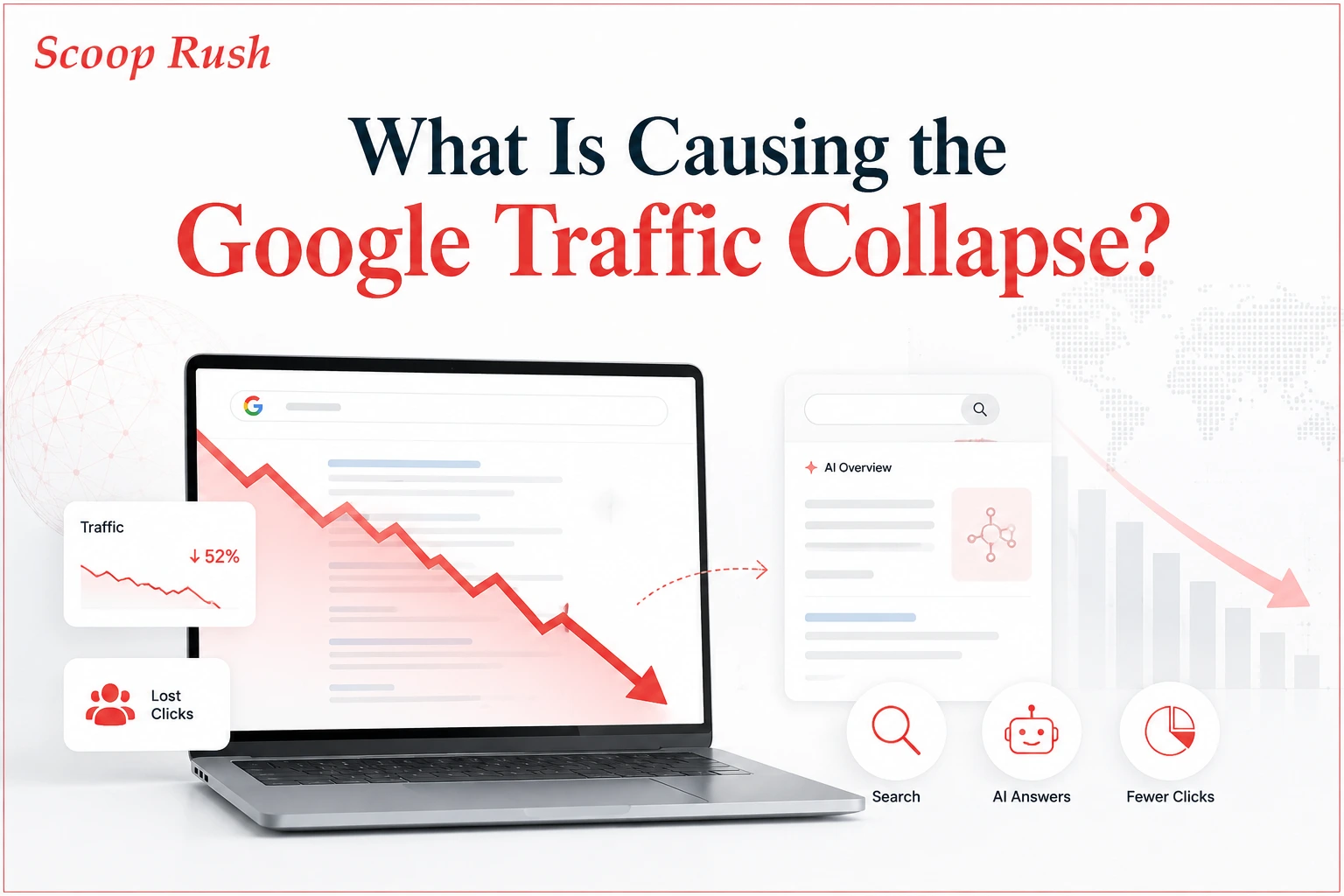
The decline is not the result of one algorithm update or one isolated search feature. It is part of a broader change in how people discover and consume information.
In the traditional search model, users entered a question, reviewed a list of links, and opened one or more websites. Publishers received traffic while Google earned advertising revenue around those results. Today, many users receive a usable answer before reaching the standard organic listings.
AI Overviews, featured snippets, knowledge panels, video results, shopping modules, local listings, and other rich search features can satisfy a query without requiring a visit to an independent website. This is known as a zero-click search.
The exact percentages vary by study, market, device, and query type, but the direction is clear. Search engines are keeping more user activity inside their own interfaces. Even pages that maintain strong rankings may receive fewer visits than they did under the old search layout.
Why Successful SEO Websites Are Especially Vulnerable
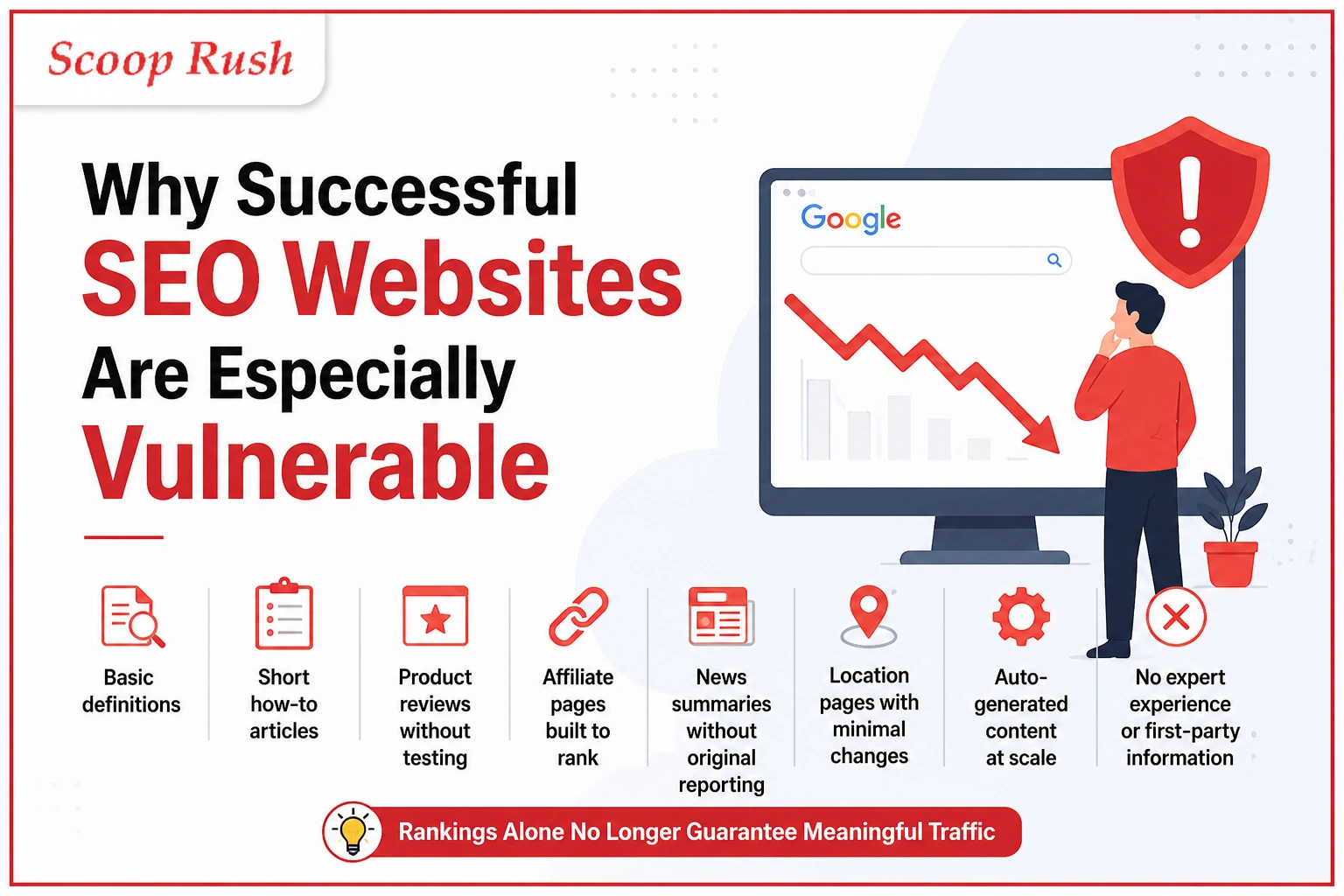
The websites facing the greatest risk are not necessarily the ones that ignored SEO. Many followed the old playbook extremely well. They researched thousands of keywords, built large content libraries, optimized headings, earned backlinks, updated older posts, and answered nearly every common question in their industry.
The weakness is that much of this content was designed to attract a search visit rather than create a lasting relationship. A user might search for a definition, read one paragraph, and leave without remembering the publisher’s name.
AI-generated search answers make that weakness easier to see. When hundreds of sites publish almost identical answers, a search engine can combine them into a short response. The user no longer needs to open several interchangeable pages.
Basic definitions
Pages that explain a common term without adding experience, evidence, examples, or a distinctive viewpoint.
Repeated how-to content
Instructions that closely resemble dozens of existing articles and provide no firsthand testing.
Untested reviews
Commercial pages that recommend products without original photographs, measurements, comparisons, or use.
Rewritten summaries
News and informational pages that repeat public facts without reporting, analysis, or exclusive context.
Generic information is easy for AI to summarize because it contains little that makes the publisher worth remembering.
The new problem is not simply ranking. It is becoming replaceable.Did HubSpot Really Lose 80% of Its Traffic?
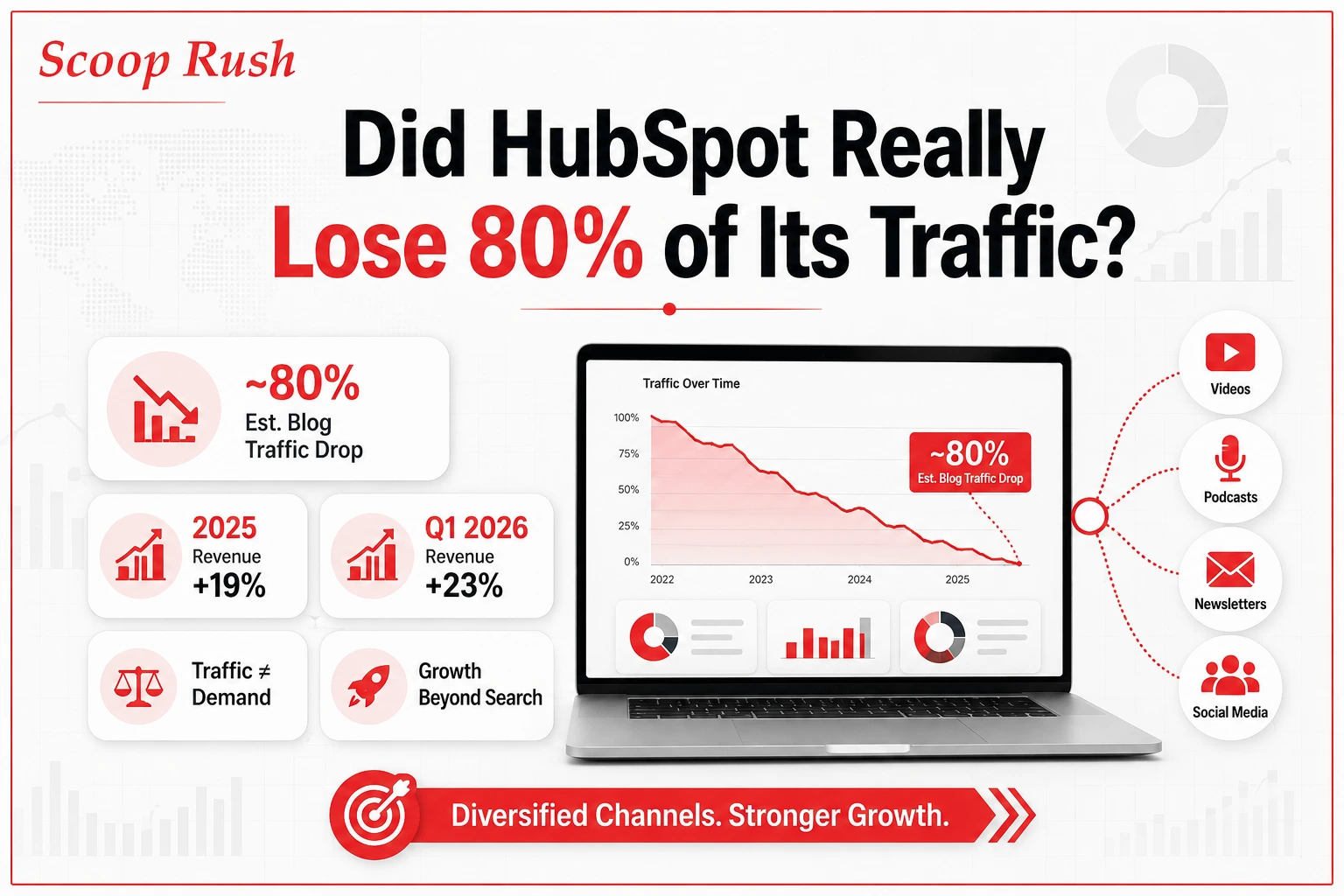
HubSpot became one of the most widely discussed examples of the changing search landscape. For years, its blog was treated as a model of content marketing. Third-party SEO platforms later estimated that the blog had lost close to 80% of its organic visibility or traffic from its peak.
That estimate attracted attention because HubSpot was not an inexperienced publisher. It had a powerful domain, a large content operation, years of authority, and thousands of links.
Case Study: HubSpot
Traffic vs. demandHubSpot acknowledged that its blog traffic declined, but the company also explained that it had begun moving away from broad, low-intent informational traffic. Its strategy expanded into YouTube, podcasts, newsletters, social media, HubSpot Academy, and other channels that can build influence without relying entirely on a Google click.
The lesson is not that traffic no longer matters. It is that traffic and demand are different. A company with strong brand demand can continue growing even when broad informational visits decline.
Traffic measures visits. Demand measures how many people actively want a product, service, publication, or brand. A business with strong demand can survive changes in distribution. A business built almost entirely on borrowed traffic may struggle when the platform changes its rules.
Search Traffic Was Always Rented
Many websites treated Google traffic as though it were a permanent business asset. It was not. A publisher owns its domain, content, products, customer relationships, email list, and first-party data. It does not own its rankings.
Search engines can change their layouts, ranking systems, policies, and features at any time. A page ranking first today may appear below an AI Overview, video carousel, forum discussion, map pack, shopping result, or another search feature tomorrow.
This does not mean publishers should leave Google. It means Google should be treated as one distribution channel rather than the entire audience strategy.
| Rented distribution | Owned relationship | Why it matters |
|---|---|---|
| Google rankings | Email subscribers | An email list can be reached directly without waiting for an algorithmic recommendation. |
| Social reach | Customer accounts or membership | A direct account creates a recurring relationship rather than a temporary impression. |
| Marketplace visibility | Direct website or app traffic | People intentionally choose the brand instead of discovering it by accident. |
| Platform followers | Events, communities, and newsletters | Multiple direct touchpoints reduce dependence on one company’s rules. |
How People Inc. Reduced Its Dependence on Google
People Inc., previously known as Dotdash Meredith, owns major brands including People, Investopedia, Better Homes & Gardens, Food & Wine, and Allrecipes. The company has faced a sharp reduction in Google referrals while continuing to expand other forms of distribution.
Case Study: People Inc.
DiversificationThe company expanded its reach through social platforms, Apple News, video, licensing, email, events, sponsorships, and owned products. Its experience shows that search traffic can fall without destroying the business when recognizable brands have multiple ways to reach audiences and earn revenue.
The Publishing Industry’s New Barbell
Condé Nast CEO Roger Lynch has described a publishing market shaped like a barbell. At one end are large, established brands with broad authority. At the other are smaller publishers that completely own a narrow niche and serve a highly loyal audience.
The most exposed publishers sit in the middle. They are not authoritative enough to become the default name in a broad category, but they are not specialized enough to dominate a focused subject.
A smaller publication does not need millions of readers to build a defensible position. It can become unusually valuable to a specific location, profession, community, industry, or interest group.
SEO Is Not Dead, but Generic Content Is Losing Value
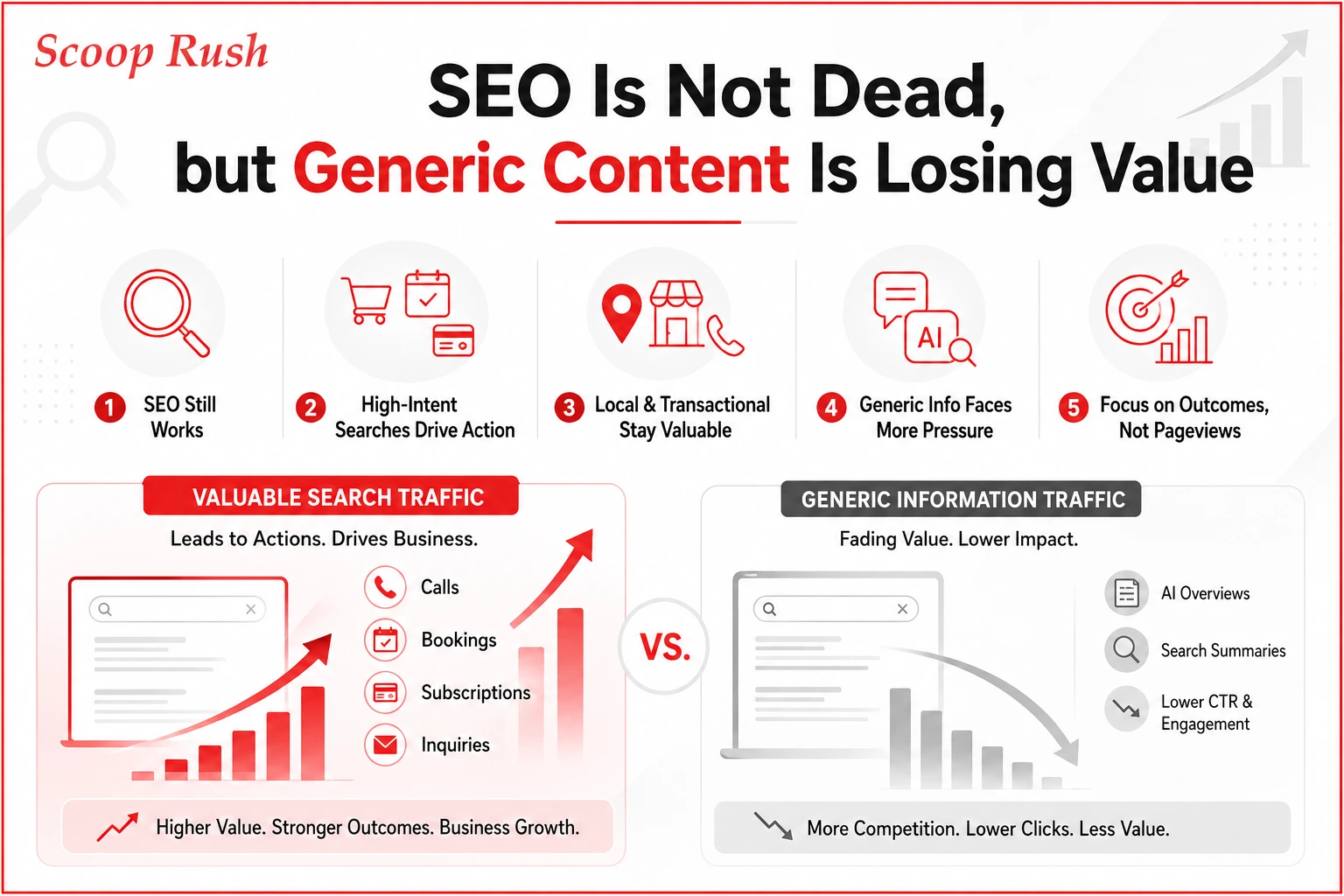
Claims that SEO is completely dead are exaggerated. People still use Google, and search can still generate valuable leads, bookings, purchases, subscriptions, and local visits.
Transactional and local searches may remain especially valuable because users usually need to take an action beyond reading a quick answer. Someone searching for a nearby urgent care clinic, catering service, hotel, software provider, or legal professional still needs to compare options, visit a website, call, or book.
Informational content faces greater pressure when a question can be fully answered in a short summary. This is why publishers should stop measuring all traffic as though it carries equal business value.
| Old SEO question | Better 2026 question |
|---|---|
| How many keywords can we rank for? | Which searches can create trust, demand, or a useful next action? |
| How many articles can we publish? | Which articles contain information people cannot get elsewhere? |
| How much traffic did the page receive? | Did the page produce subscribers, customers, citations, or returning readers? |
| Can AI help us write more? | Can we add experience, evidence, reporting, and editorial judgment? |
What Is Search Everywhere Optimization?
Search no longer happens in one box. People use Google for broad research, YouTube for demonstrations, TikTok and Instagram for discovery, Reddit and forums for candid opinions, marketplaces for products, review platforms for validation, and AI assistants for summarized answers. New tools such as Meta Muse Image also show how quickly AI-powered creation and discovery are moving into everyday social platforms.
Search everywhere optimization means making a brand useful and recognizable across the places its audience already uses. It does not mean pasting the same content onto every platform. Each piece should be adapted to the way people consume information there.
Google and AI search
Use clear structure, trustworthy sourcing, original information, and direct answers that are easy to cite.
YouTube and video
Show demonstrations, interviews, comparisons, explainers, and firsthand reporting that text cannot fully replace. Explore more multimedia reporting in the Scoop Rush videos section.
Social discovery
Turn strong ideas into concise visual stories, short clips, carousels, and discussions built for sharing.
Email and direct channels
Build a recurring connection that does not depend on a search ranking or social recommendation.
Businesses adapting to AI search may also need to consider answer engine optimization, generative engine optimization, technical SEO, and content distribution together. For a practical overview of these services, visit Solutions Limited AI.
Choose the platforms that match your audience, format, and business goal. Depth on the right channels is more valuable than shallow activity on all of them.
How to Create Content That AI Cannot Easily Replace
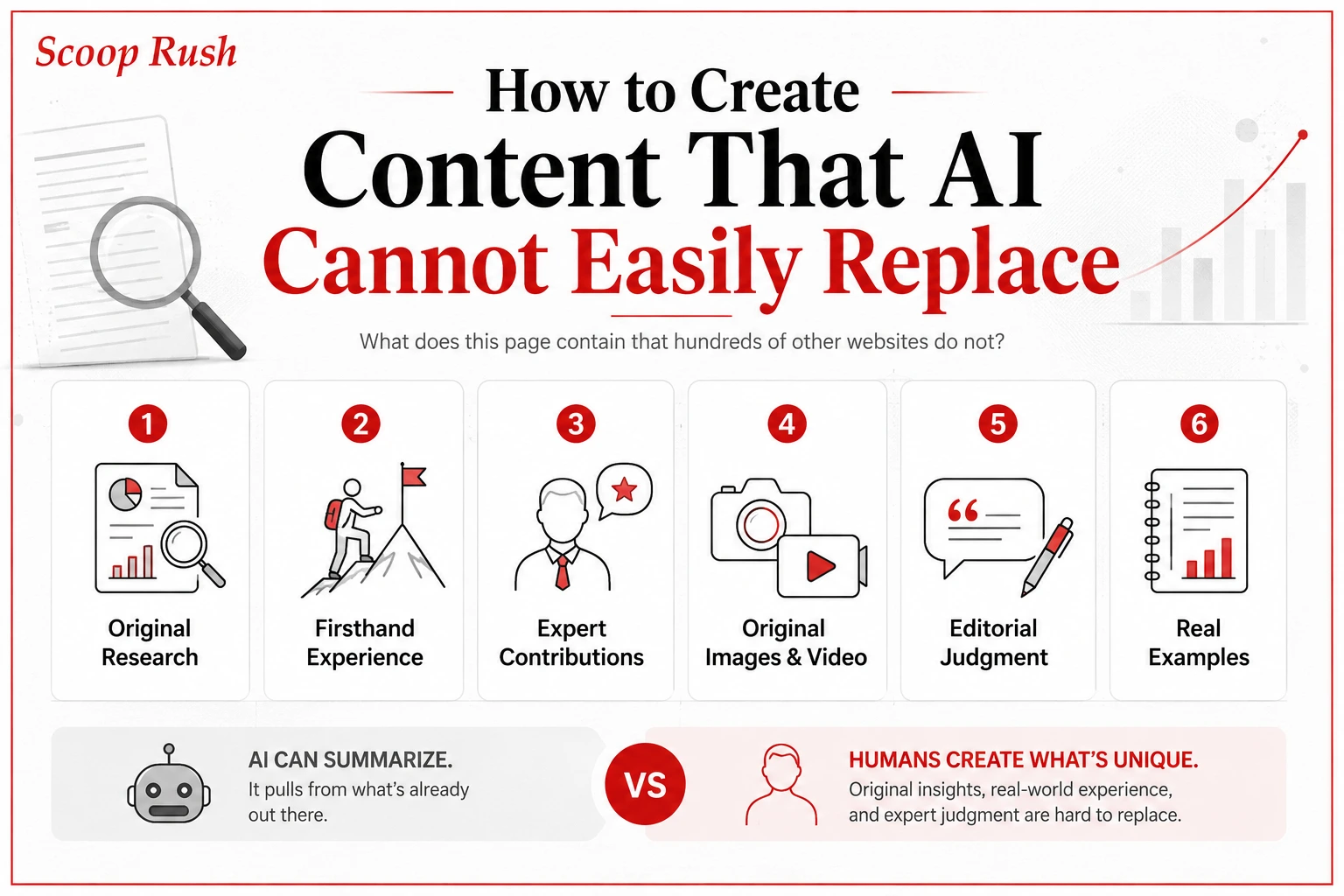
AI is effective at summarizing information that already exists. It has a harder time replacing genuine experience, original reporting, expert judgment, proprietary data, and a recognizable editorial point of view.
Before publishing, ask one direct question: What will this page contain that cannot be found on hundreds of other websites?
Original data
Publish surveys, internal trends, local statistics, experiments, or analysis drawn from information you collected.
Firsthand experience
Explain what happened when you used a product, visited a destination, followed a process, or tested an approach.
Expert contribution
Add professional context, warnings, disagreement, examples, and judgment from people with direct knowledge.
Original visuals
Create photographs, charts, diagrams, screenshots, video demonstrations, and illustrations that strengthen the reporting.
Editorial opinion
Help readers understand what matters, what is changing, and which decision is most reasonable based on the evidence.
Real case studies
Use specific outcomes, costs, timelines, mistakes, and results to turn general advice into practical guidance.
A Practical Search Strategy for Publishers
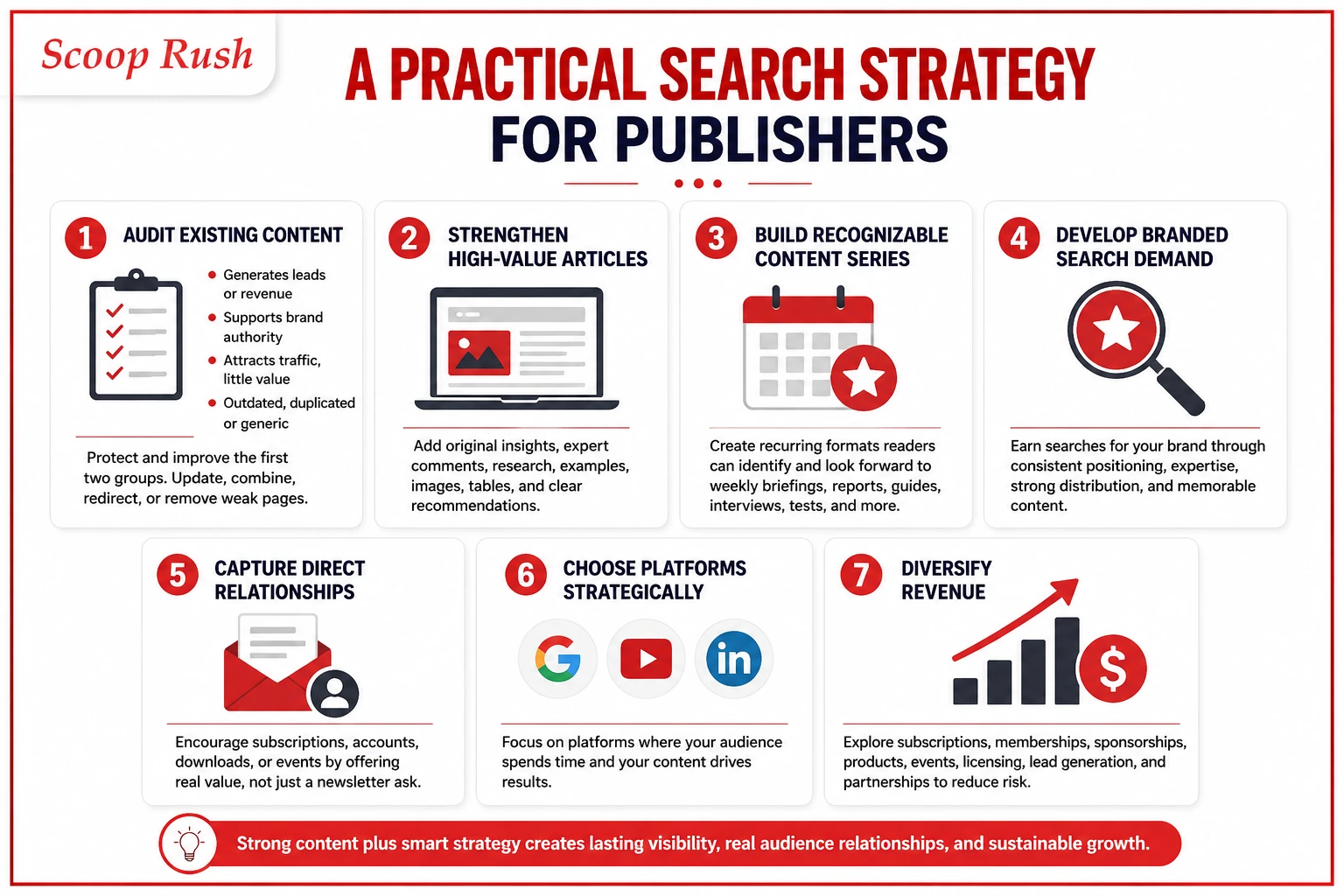
Publishers do not need to abandon their existing content operations. They need to rebuild them around stronger priorities and reduce the amount of work devoted to replaceable pages.
Audit the existing library
Separate content that generates revenue, supports authority, attracts low-value traffic, or has become outdated and repetitive.
Improve high-value pages
Add reporting, expert comments, current evidence, examples, original visuals, and clearer recommendations rather than changing only the date.
Create recognizable content series
Build repeatable formats such as weekly briefings, local reports, expert interviews, destination guides, product tests, or data studies.
Increase branded demand
Give audiences a reason to remember and search for the publication’s name through consistent quality, positioning, and visual identity.
Capture direct relationships
Offer useful newsletters, downloadable resources, memberships, accounts, events, or communities that create a reason to return.
Choose distribution channels strategically
Focus on the platforms that fit the audience and content instead of trying to maintain a weak presence everywhere.
Diversify revenue
Explore subscriptions, services, events, sponsorships, licensing, research, lead generation, and direct products where they fit the brand.
Which Metrics Matter in the New Search Era?
Organic sessions and rankings still provide useful information, but they should no longer be the only signs of success. The strongest measurements show whether a publication is building lasting demand and direct relationships.
Ten thousand visitors who read one paragraph and disappear may contribute less than 500 visitors who remember the brand, subscribe, request a quote, return later, or become customers.
The Future Belongs to Brands People Remember
Google traffic is not disappearing overnight, and SEO will continue to influence online discovery. What is disappearing is the assumption that a high ranking will always produce a dependable stream of clicks.
The old content model rewarded publishers for answering as many searchable questions as possible. The new environment rewards brands that offer information worth remembering, citing, sharing, and returning to.
That requires more than keywords. It requires original work, credible expertise, a clear identity, direct audience relationships, and a presence in the places where people actually search.
Final Takeaway
The safest publisher will not be the one with the largest collection of generic articles. It will be the one readers notice, trust, and actively look for.
Search traffic may continue to change. Platforms may adjust their rules, and new discovery tools will continue to appear. A recognizable brand can move with its audience.
Frequently Asked Questions
Is SEO still worth investing in?
Yes. SEO can still generate valuable visibility, leads, bookings, and sales. It should now be combined with brand building, original content, direct audience development, and distribution across other relevant platforms.
Why are website clicks decreasing?
More searches are being answered directly through AI Overviews, snippets, videos, maps, product listings, and other search features. Users can often get a usable answer without opening a separate website.
What type of content is most at risk?
Generic definitions, repetitive how-to articles, untested reviews, basic summaries, and pages with no original experience or information face the greatest risk of being replaced by search-generated answers.
How can a small website compete with large brands?
A smaller publisher can focus deeply on a narrow subject, community, location, profession, or audience. Specialized expertise and loyal readers can be more defensible than broad but shallow coverage.
What should publishers prioritize now?
Publishers should prioritize useful original content, branded demand, direct audience relationships, multiple distribution channels, and revenue sources that do not depend entirely on Google traffic.
Research Sources
- HubSpot: explanation of its blog traffic decline and channel strategy
- HubSpot investor results for 2025
- People Inc. Q1 2026 earnings call presentation
- People Inc. Q1 2026 earnings release
- Search Engine Land coverage of 2026 zero-click search research
- Search Engine Land coverage of AI Overview click-through research
- Search Engine Journal coverage of Condé Nast’s search strategy
Editorial note: Traffic figures attributed to third-party SEO tools are estimates. Public company revenue figures are based on company releases and regulatory filings available at the time of publication.

