
The holidays are a time for family, celebrations, travel, and plenty of good food. Between holiday dinners, desserts, snacks, parties, and drinks, it is easy to eat more than usual and become less active.
If you step on the scale after the holidays and see a higher number, do not panic. A short period of holiday eating does not have to derail your long-term health goals. Some of the change may also be related to extra water, sodium, and stored carbohydrates rather than body fat alone.
The best approach is not to follow a crash diet or try to make up for holiday meals by severely restricting food. Instead, focus on getting back to healthy habits that you can maintain.
At Family Urgent Care, we understand that weight loss can be difficult, especially when lifestyle changes alone have not produced the results you want. Our medical team can help you understand factors that may be affecting your weight and discuss whether a medically supervised weight loss program may be appropriate for you.
Why Is It Important to Lose Excess Weight?
Maintaining a healthy weight can support your overall health and may lower the risk of several weight-related health problems.
Depending on your individual health and how much weight you lose, healthy weight management may help support:
- Better blood sugar control
- Healthier blood pressure
- Improved cholesterol levels
- Better sleep
- Easier movement and physical activity
- Improved energy
- Lower risk of certain chronic health conditions
- Better overall quality of life
Weight loss does not have to mean reaching a specific number on the scale. Even modest, sustainable changes can be meaningful for some people.
Your health is also about more than your weight. Sleep, nutrition, physical activity, stress, medications, medical conditions, and other factors can all play a role.
Why Is Losing Weight So Difficult?
If losing weight were simply a matter of eating less and exercising more, it would be much easier.
Your body weight is influenced by many factors, including:
- Eating habits
- Physical activity
- Sleep
- Stress
- Age
- Genetics
- Medications
- Hormones
- Medical conditions
- Work and family routines
- Food environment
- Emotional eating
This is one reason a diet that works well for one person may not work the same way for someone else.
Weight Loss Plateaus Are Common
Many people lose some weight and then reach a point where progress slows down or stops. This is commonly called a weight loss plateau.
As your body weight changes, your calorie needs can change as well. Your appetite, activity level, eating habits, and other factors can also change during a weight loss journey.
A plateau does not necessarily mean that you have failed. It may simply mean that your current approach needs to be reviewed and adjusted.
Do Not Try to Undo the Holidays With a Crash Diet
After several large holiday meals, you may feel tempted to skip meals, drastically cut calories, eliminate carbohydrates, or follow a strict detox.
These approaches can be difficult to maintain and may leave you hungry, tired, or more likely to overeat later.
Instead of trying to compensate for every holiday meal, return to a balanced eating routine.
Focus on:
- Regular meals
- Vegetables and fruits
- Protein-rich foods
- High-fiber foods
- Whole grains and other nutritious carbohydrates
- Healthy fats in reasonable portions
- Plenty of water
- Consistent physical activity
The goal is to build habits that you can continue after January.
10 Tips to Help You Get Back on Track After the Holidays
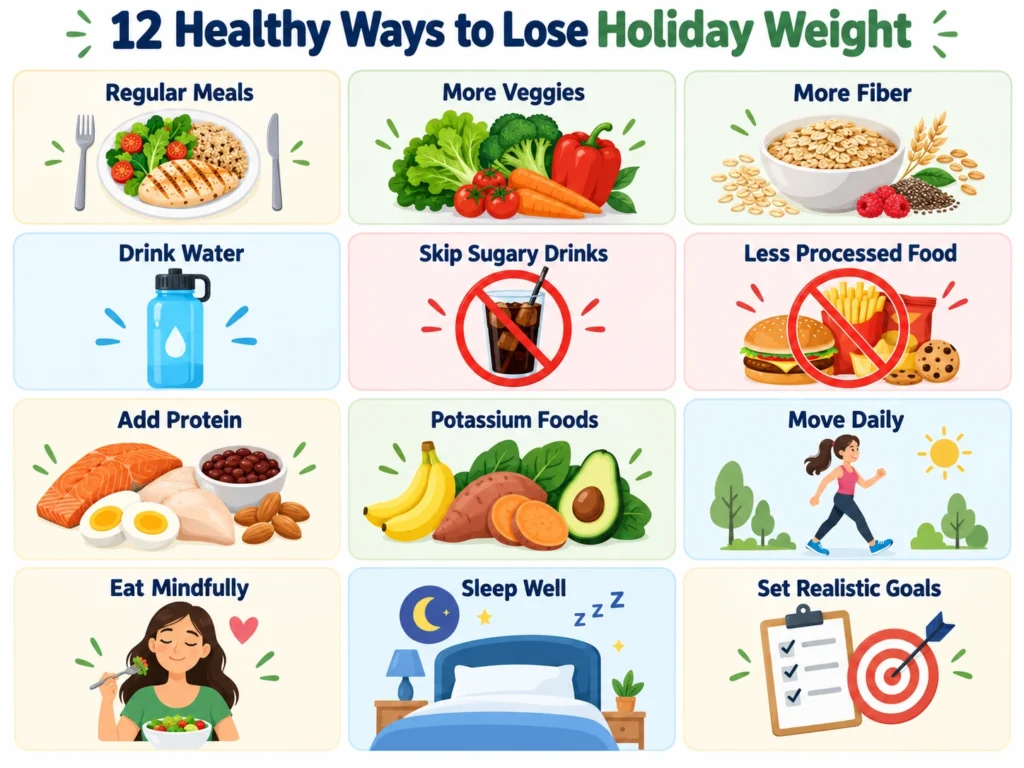
1. Return to Your Normal Eating Routine
You do not need to starve yourself after a holiday meal.
Return to regular meals that contain a combination of protein, vegetables or fruit, fiber-rich carbohydrates, and healthy fats.
Having a consistent routine can make it easier to manage hunger and avoid constantly grazing on leftovers and snacks.
If you are not hungry for a large meal, you do not need to force yourself to eat one. Listen to your hunger and fullness signals while maintaining a balanced overall eating pattern.
2. Make Vegetables a Bigger Part of Your Meals
Vegetables are naturally rich in vitamins, minerals, water, and fiber while many are relatively low in calories.
Try filling a large portion of your plate with non-starchy vegetables such as:
- Broccoli
- Spinach
- Green beans
- Peppers
- Tomatoes
- Mushrooms
- Brussels sprouts
- Cauliflower
- Carrots
- Leafy greens
You can pair vegetables with lean protein and a reasonable portion of whole grains or other nutritious carbohydrates.
3. Choose High-Fiber Foods
Fiber can help you feel satisfied after eating and is an important part of a healthy diet.
Good sources include:
- Beans and lentils
- Fruits
- Vegetables
- Oatmeal
- Whole-grain bread
- Brown rice
- Quinoa
- Nuts and seeds
Instead of completely removing carbohydrates, choose more nutrient-dense, fiber-rich carbohydrate sources and pay attention to portions.
4. Drink More Water
Holiday meals often contain more sodium than your usual diet. You may also drink more sugary beverages or alcoholic drinks than normal.
Replacing sugary drinks with water can reduce unnecessary calories and help you stay hydrated.
Water can also help you distinguish thirst from hunger in situations where you may otherwise reach for a snack.
Rather than forcing yourself to drink a specific amount, pay attention to your thirst and hydration needs. Your needs can vary based on your activity level, climate, health, and other factors.
If you have been told by a healthcare professional to limit fluids, follow their advice instead.
5. Cut Back on Sugary Drinks and Alcohol
Calories from drinks can add up quickly.
Soda, sweetened coffee drinks, energy drinks, fruit-flavored beverages, and alcoholic drinks can contribute substantial calories without making you feel as full as a meal.
You do not necessarily have to eliminate every favorite drink forever. Start by making water your main beverage and reducing high-calorie drinks.
If you drink alcohol, moderation is important. Alcohol can also make it harder to stick with healthy food choices.
6. Pay Attention to Portion Sizes
Healthy foods can still contribute more calories than you need when portions become very large.
You do not need to weigh every bite of food to eat well. Instead, use simple portion awareness.
For example, build meals around:
- A generous serving of vegetables
- A source of protein
- A moderate serving of whole grains or other carbohydrates
- A small amount of healthy fat
Eating slowly can also give your body more time to recognize fullness.
Try putting your fork down between bites, eating without distractions when possible, and checking in with yourself before going back for seconds.
7. Get Moving Again
You do not need to begin with intense workouts.
If your activity level dropped during the holidays, start with something manageable.
Try:
- Brisk walking
- Cycling
- Swimming
- Dancing
- Strength training
- Hiking
- Recreational sports
- Taking the stairs
- Short walks during work breaks
Regular physical activity supports overall health and can contribute to weight management.
If you have not exercised for a long time or have a medical condition, talk with a healthcare professional about the safest way to increase your activity.
8. Get Enough Sleep
Sleep is often overlooked when people are trying to lose weight.
Poor or inconsistent sleep can affect appetite, food choices, energy, mood, and daily activity.
Most adults need at least 7 hours of sleep each night, although individual needs can vary.
Try to:
- Keep a consistent bedtime
- Wake up around the same time each day
- Limit caffeine late in the day
- Keep your bedroom comfortable and quiet
- Reduce screen use before bed
- Give yourself enough time to sleep
If you regularly have trouble sleeping or feel excessively tired during the day, talk with a healthcare professional.
9. Manage Stress
Stress can make healthy habits harder to maintain. Some people respond to stress by eating more, reaching for high-calorie foods, drinking more alcohol, or becoming less active.
Instead of trying to make your routine perfect, find realistic ways to manage stress.
You might try:
- Taking a walk
- Practicing deep breathing
- Spending time with friends or family
- Reading
- Journaling
- Listening to music
- Spending time outdoors
- Taking short breaks during a busy day
If stress or emotional eating is interfering with your health goals, professional support may also be helpful.
10. Set Realistic Goals
One of the biggest mistakes people make after the holidays is expecting dramatic results in a very short time.
Instead of saying, “I need to lose all my holiday weight immediately,” set smaller goals.
For example:
- Drink water instead of soda during the week
- Walk for 20 to 30 minutes several days a week
- Add vegetables to lunch and dinner
- Cook more meals at home
- Get to bed at a consistent time
- Reduce frequent snacking
- Track your meals or activity if it helps you stay accountable
Small changes may seem insignificant at first, but they can become meaningful when you maintain them over time.
What About Holiday Weight Gain?
A higher number on the scale after the holidays does not automatically mean you gained the same amount of body fat.
Changes in your weight can be affected by:
- Increased sodium intake
- Higher carbohydrate intake
- More food remaining in your digestive system
- Changes in hydration
- Alcohol consumption
- Reduced physical activity
- Actual changes in body fat
For this reason, there is no need to panic over a single weigh-in.
Return to your normal healthy routine and look at your progress over time rather than focusing on one day’s number.
When Lifestyle Changes Are Not Enough
Sometimes weight loss is difficult even when you are making consistent efforts.
Certain medical conditions can affect weight management, including:
- Hypothyroidism
- Polycystic ovary syndrome (PCOS)
- Sleep apnea
- Certain hormonal conditions
- Some medications
This does not mean that every person struggling with weight has an underlying medical problem. However, if you have unexplained weight changes or are having persistent difficulty losing weight despite consistent lifestyle changes, it may be worth discussing your concerns with a healthcare professional.
Your provider can review your health history, medications, lifestyle, and other factors to determine whether additional evaluation may be appropriate.
How Medically Supervised Weight Loss Can Help
A medically supervised weight loss program takes a more individualized approach to weight management.
Instead of following a one-size-fits-all diet from social media, your provider can consider factors such as:
- Your current weight and health
- Medical history
- Medications
- Eating habits
- Activity level
- Dietary preferences
- Lifestyle
- Weight loss goals
- Other health factors
Depending on your individual situation, a medically supervised program may include nutrition guidance, physical activity recommendations, behavior support, and medication when appropriate.
Some patients may also be candidates for prescription weight loss medications. These medications are not right for everyone and should be considered with a qualified healthcare professional.
What May Be Included in a Weight Loss Program?
Depending on your needs, your personalized plan may include:
Nutrition Counseling
You can learn how to build balanced meals, manage portions, choose nutritious foods, and create eating habits that fit your everyday life.
Exercise Guidance
Your provider can help you identify realistic ways to become more active based on your current fitness level and health.
Behavior Support
Long-term weight management involves more than food and exercise. Identifying eating patterns, emotional triggers, stress, and other habits can make it easier to build lasting changes.
Weight Loss Medication
Some adults may benefit from prescription weight management medications when used as part of a comprehensive treatment plan.
Medication should not replace healthy eating and physical activity. Your provider can determine whether medication may be appropriate based on your health and individual circumstances.
Regular Follow-Up
Regular appointments can help you monitor your progress, discuss challenges, and make adjustments when needed.
What Should You Eat After the Holidays?
You do not need a special “detox” menu.
Build meals around simple, nutritious foods.
Breakfast
Consider options such as:
- Eggs with vegetables and whole-grain toast
- Oatmeal topped with fruit and nuts
- Greek yogurt with berries and seeds
- A vegetable omelet with fruit
Lunch
Try:
- Grilled chicken salad with beans
- Turkey and vegetable whole-grain wrap
- Lentil soup with a side salad
- Brown rice bowl with vegetables and lean protein
Dinner
Good options include:
- Grilled fish with roasted vegetables and a small serving of potatoes
- Chicken with brown rice and steamed vegetables
- Lentils with vegetables and whole grains
- Lean turkey with a large salad and roasted vegetables
Snacks
If you need a snack between meals, consider:
- Fresh fruit
- Greek yogurt
- A small handful of nuts
- Vegetables with hummus
- Apple with a small amount of nut butter
You do not have to eat the same foods every day. Choose foods you enjoy so your eating plan is easier to maintain.
Should You Completely Avoid Carbohydrates?
No.
Carbohydrates are an important source of energy and are found in many nutritious foods.
Instead of eliminating carbohydrates completely, focus on higher-fiber options such as:
- Oats
- Whole-grain bread
- Brown rice
- Quinoa
- Beans
- Lentils
- Fruits
- Potatoes and sweet potatoes
Portion size and the overall quality of your diet matter.
How Long Does It Take to Lose Holiday Weight?
There is no single timeline that applies to everyone.
Your rate of weight loss can depend on your starting weight, calorie intake, activity level, medical conditions, medications, sleep, genetics, and other factors.
A slower, sustainable approach is generally more realistic than trying to lose a large amount of weight in a few days.
Instead of focusing only on how quickly the scale changes, pay attention to habits you can maintain.
What If I Keep Losing and Regaining Weight?
Repeatedly losing and regaining weight can be frustrating.
If this has happened to you, it may be useful to look beyond the latest diet and identify what caused previous plans to stop working.
Ask yourself:
- Was the diet too restrictive?
- Did you become too hungry?
- Was the plan difficult to follow with your schedule?
- Did stress affect your eating?
- Were you getting enough sleep?
- Did you stop exercising?
- Were there medical or medication-related factors?
- Did you have a plan for maintaining your progress?
A healthcare professional can help you look at these factors and create a more practical approach.
When Should You Talk to a Healthcare Professional?
Consider talking with a healthcare professional if:
- You have repeatedly struggled to lose weight
- Your weight has changed unexpectedly
- You have symptoms that may point to an underlying medical issue
- You take medications that may affect your weight
- You have high blood pressure, high blood sugar, or other weight-related health concerns
- You are considering prescription weight loss medication
- You are unsure how to begin exercising safely
- Your eating habits are causing distress or interfering with daily life
Professional guidance can help you avoid extreme diets and choose an approach that fits your health needs.
Frequently Asked Questions
Is it normal to gain weight during the holidays?
Yes. Changes in eating, drinking, activity, sleep, and routine can cause temporary weight changes during the holidays. Some of the increase may also be related to water retention and food still being digested.
How can I lose holiday weight safely?
Start by returning to balanced meals, drinking water, getting adequate sleep, increasing physical activity gradually, and managing portions. Avoid crash diets and extreme calorie restriction.
Should I skip meals after overeating?
Skipping meals is not necessary to compensate for holiday eating. Instead, return to a regular, balanced eating routine and pay attention to hunger and fullness.
Does drinking water help with weight loss?
Water can support hydration and may help replace higher-calorie beverages. Drinking water instead of sugary drinks can also reduce calorie intake.
Should I stop eating carbohydrates to lose weight?
No. You do not have to eliminate carbohydrates to manage your weight. Choose nutritious, fiber-rich carbohydrate sources and keep portions appropriate for your overall eating plan.
How much exercise should I do for weight loss?
The appropriate amount depends on your health, fitness level, and goals. Start with activities you can maintain and gradually increase your activity. Adults should generally aim for regular aerobic activity along with muscle-strengthening activity each week.
Why am I not losing weight even though I am eating better?
Weight management can be affected by many factors, including calorie intake, activity, sleep, stress, medications, genetics, and certain medical conditions. If you have been making consistent changes without seeing progress, talk with a healthcare professional.
Can a medical weight loss program help me?
It may. A medically supervised program can provide individualized guidance and determine whether nutrition counseling, behavior support, exercise guidance, medication, or other approaches are appropriate for you.
Do I need weight loss medication?
Not necessarily. Weight loss medication is not appropriate for everyone. A qualified healthcare professional can review your health and determine whether medication is an appropriate option.
How can I stay motivated after the holidays?
Focus on small, measurable habits instead of expecting immediate results. Choose goals that fit your normal routine, track your progress if helpful, and do not treat one unhealthy meal as a reason to give up.
Ready to Get Back on Track?
You do not need to punish yourself for enjoying the holidays. You also do not need to wait for the perfect time to start making healthier choices.
Start with one change today. Drink more water, take a walk, prepare a balanced meal, improve your sleep routine, or schedule a visit with a healthcare professional.
If you have been struggling with your weight or want professional guidance, Family Urgent Care offers medically supervised weight loss services for eligible patients in the Chicago area.
Talk with our medical team about your goals and learn whether a personalized weight management plan may be right for you.

