
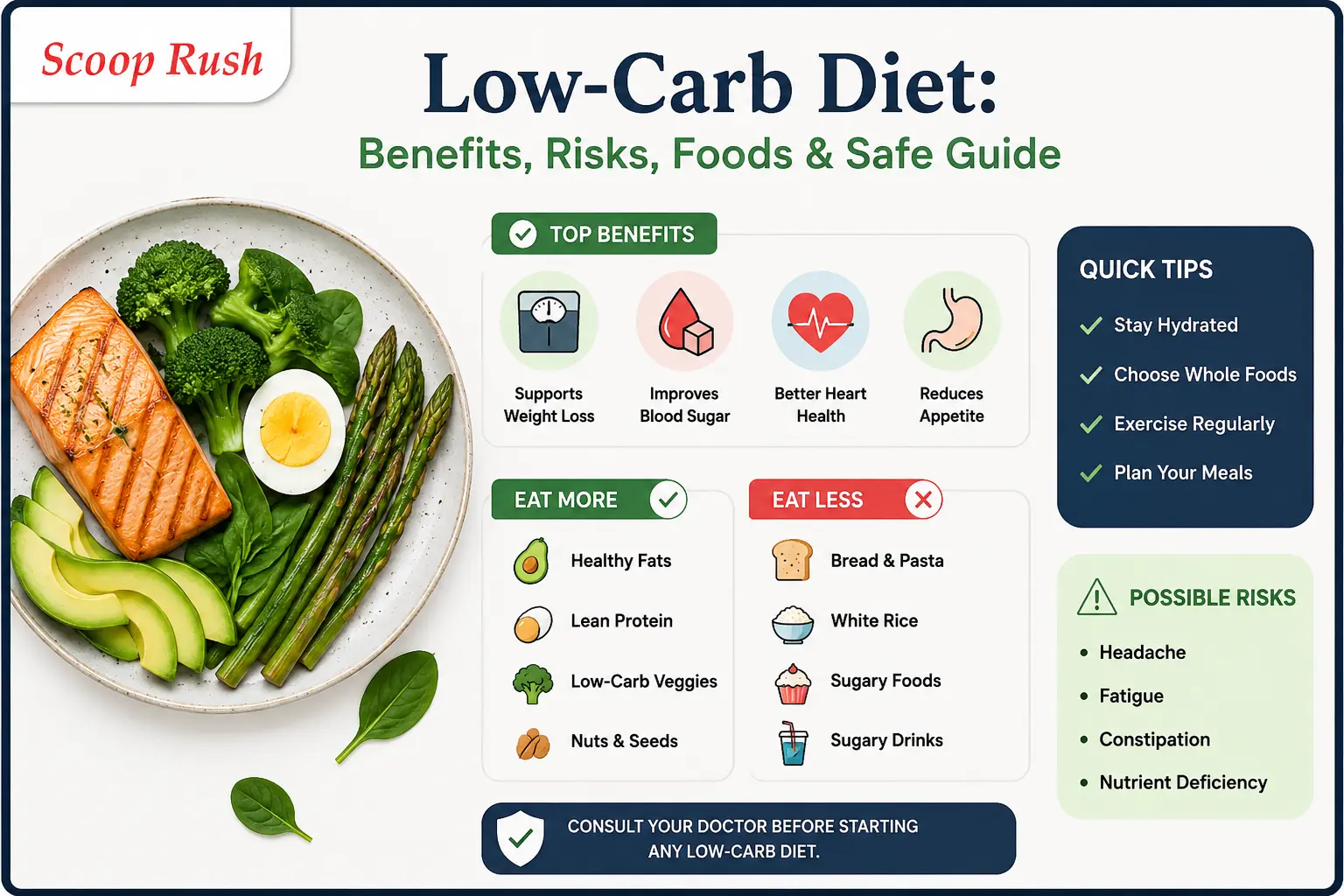
Low-carb diets have remained one of the most popular approaches to weight loss for years. Many people turn to them hoping to lose weight quickly, improve their blood sugar levels, or simply build healthier eating habits. While cutting back on carbohydrates can offer several real health benefits, it is not a one-size-fits-all solution the quality of the foods you choose, and your own medical history, matter just as much as the number of carbs on your plate.
Research from organizations such as the Mayo Clinic and the Harvard T.H. Chan School of Public Health suggests that a well-planned low-carb diet can support weight loss and improve certain health markers. However, replacing carbohydrates with healthy fats, lean proteins, vegetables, nuts, and legumes tends to produce far better results than relying heavily on processed meats and saturated fats. In other words, what you eat instead of carbs is just as important as how many carbs you cut.
This guide walks through what a low-carb diet actually is, how it works inside the body, its evidence-based benefits, the foods to eat and avoid, a sample meal plan, possible risks, who should be cautious, and practical tips for making it a sustainable long-term habit.
1. What Is a Low-Carb Diet?
A low-carb diet is an eating plan that reduces carbohydrate intake while placing more emphasis on protein, healthy fats, and non-starchy vegetables.
Carbohydrates are naturally found or added in foods such as:
- Rice
- Bread
- Pasta and noodles
- Potatoes
- Breakfast cereals
- Sweetened beverages
- Cakes and pastries
- Candy
- Many packaged/processed snacks
Depending on the specific approach, carbohydrate intake is typically limited to somewhere between 60 and 130 grams per day. Stricter versions, such as ketogenic diets, recommend fewer than 60 grams (often closer to 20–50 grams) daily.
The basic idea is simple: instead of relying mainly on carbohydrates for energy, the body is nudged toward gradually using stored fat as fuel, which over time can contribute to weight loss.
2. How Does a Low-Carb Diet Work?
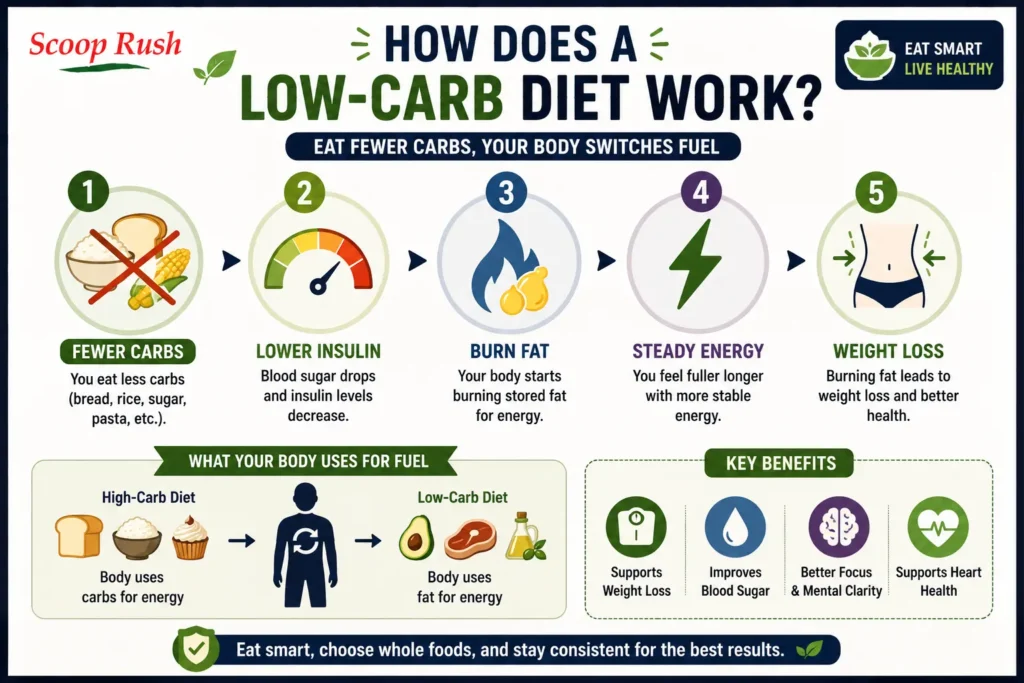
To understand why this eating pattern affects weight and blood sugar, it helps to know what happens after a typical carb-heavy meal.
Normally, carbohydrates are broken down into glucose, the body’s primary energy source. The pancreas then releases insulin, which helps move that glucose out of the bloodstream and into cells for use or storage.
When carbohydrate intake is reduced, several things tend to happen:
- Blood sugar levels rise less after meals, since there is simply less glucose entering the bloodstream at once.
- The body requires less insulin, because there is less glucose to manage.
- Stored fat becomes a larger source of energy, as the body looks elsewhere to make up the energy gap.
- Appetite often decreases, because protein and healthy fats are more satiating than refined carbohydrates and don’t cause the same blood-sugar spikes and crashes.
If carbohydrate intake becomes very low for a sustained period, the body may shift into ketosis a metabolic state in which the liver converts fat into molecules called ketones to supply energy, particularly to the brain, in the absence of enough glucose.
It’s worth noting that not every low-carb diet causes ketosis. Moderate low-carb diets (closer to 100–130 grams a day) usually don’t; only very low-carb or strict ketogenic diets typically push the body into that state.
3. Benefits of a Low-Carb Diet
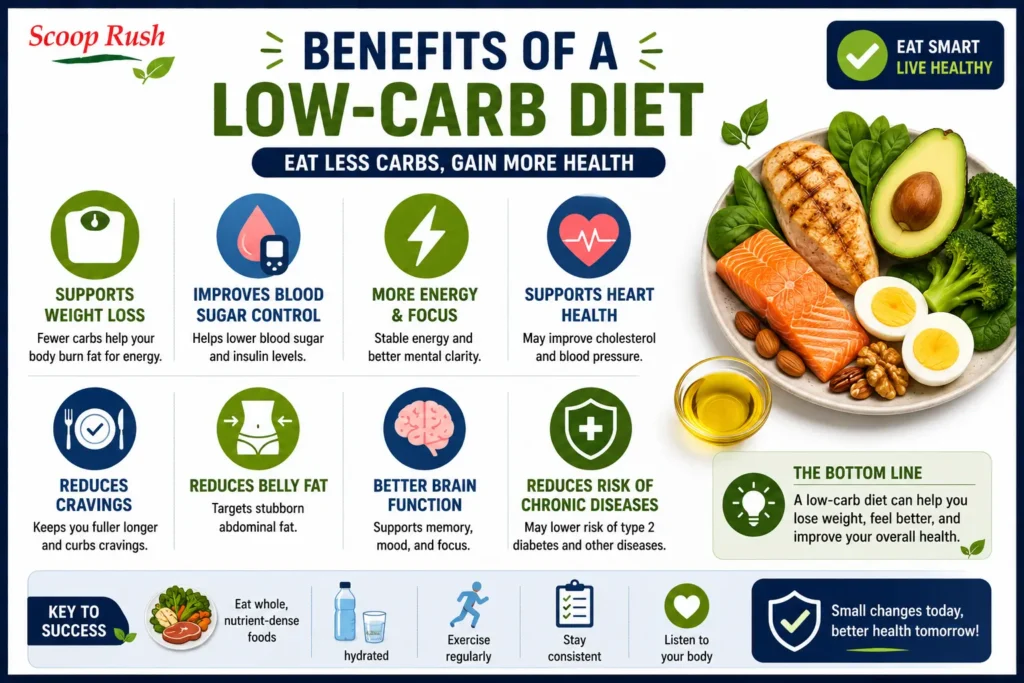
Supports Weight Loss
One of the biggest reasons people choose a low-carb diet is weight loss. Several clinical studies have shown that low-carb diets can produce greater short-term weight loss than low-fat diets, particularly during the first six to twelve months.
This tends to happen for a few overlapping reasons:
- Insulin levels decrease, which may make it easier for the body to access stored fat.
- The body increasingly burns stored fat for fuel.
- Higher protein intake increases satiety (the feeling of fullness).
- Many people naturally end up eating fewer overall calories, simply because they feel fuller for longer and cut out a lot of easy-to-overeat processed carbs.
That said, long-term success depends far more on building sustainable, healthy eating habits than on simply cutting carbohydrates as a short-term fix. Weight regain is common with any diet, low-carb included, if the underlying habits don’t stick. It’s also worth keeping an eye on preserving muscle while losing weight a concern that has come up a lot recently in discussions around GLP-1 medications and muscle loss, since rapid weight loss from any method can affect lean mass if protein intake isn’t adequate.
Helps Control Blood Sugar
Of all the macronutrients, carbohydrates have the single greatest effect on blood glucose levels. Reducing refined carbohydrates in particular may:
- Improve overall blood sugar control
- Reduce post-meal insulin spikes
- Improve insulin sensitivity over time
- Lower the risk of developing type 2 diabetes
For people already living with diabetes, this is a genuinely powerful tool — but any significant dietary change in this group should always be supervised by a healthcare professional, since carbohydrate reduction can affect medication needs (especially insulin and sulfonylureas) and may require dose adjustments. On a related note, research into newer treatments such as teplizumab for type 1 diabetes is also changing how blood-sugar management is approached for some patients.
May Improve Heart Health
People often worry that eating more fat on a low-carb diet will harm their heart, but research shows that the source of that fat is the critical factor not simply the total amount.
A healthy low-carb diet rich in:
- Olive oil
- Avocados
- Nuts
- Seeds
- Fatty fish (like salmon and sardines)
has been associated in studies with improvements in several cardiovascular risk factors, including:
- HDL (“good”) cholesterol
- Triglyceride levels
- Blood pressure
Broadly, replacing refined carbohydrates with healthy plant fats and omega-3-rich fish appears to be more beneficial for heart health than replacing them with large amounts of processed or red meat.
May Reduce the Risk of Metabolic Syndrome
Metabolic syndrome is a cluster of conditions including high blood pressure, high blood sugar, excess abdominal fat, and abnormal cholesterol levels that together raise the risk of heart disease, stroke, and diabetes.
A well-constructed low-carb eating pattern may help improve several components of this cluster at once, including:
- Blood pressure
- Waist circumference
- Fasting blood sugar
- Triglycerides
Because these factors tend to move together, improving even a few of them can meaningfully lower long-term disease risk.
Helps Control Appetite
Many people following a low-carb diet report feeling noticeably less hungry throughout the day. This is largely because protein-rich foods digest more slowly than refined carbs and promote a stronger, longer-lasting feeling of fullness.
Good examples of appetite-friendly, protein-rich foods include:
- Eggs
- Fish
- Chicken
- Greek yogurt
- Beans
- Lentils
Feeling satisfied for longer often makes it much easier to reduce overall calorie intake naturally, without the constant sense of deprivation that comes with many restrictive diets.
4. Foods to Eat on a Low-Carb Diet
A healthy low-carb diet should be built around nutrient-dense whole foods rather than heavily processed “low-carb” packaged products.
Lean Protein
- Chicken
- Turkey
- Fish (salmon, tuna, etc.)
- Eggs
- Lean beef
Healthy Fats
- Olive oil
- Avocados
- Almonds
- Walnuts
- Chia seeds
- Flaxseeds
Low-Carb Vegetables
- Broccoli
- Spinach
- Cauliflower
- Lettuce
- Cucumbers
- Cabbage
- Bell peppers
- Mushrooms
- Zucchini
These vegetables provide vitamins, minerals, antioxidants, and fiber while remaining relatively low in carbohydrates making them the backbone of most healthy low-carb meal plans.
Fruits (In Moderation) Many fruits are genuinely healthy but do contain natural sugars. Lower-carb options include:
- Strawberries
- Blueberries
- Blackberries
- Raspberries
Higher-carb fruits such as bananas, grapes, and mangoes may need to be eaten in smaller portions depending on your daily carbohydrate target.
Dairy Choose minimally processed dairy such as:
- Plain Greek yogurt
- Cottage cheese
- Cheese (in moderation)
5. Foods to Limit
A low-carb diet generally reduces foods high in refined carbohydrates and added sugar, such as:
- White bread
- White rice
- Pasta
- Sugary cereals
- Cakes and cookies
- Candy
- Soft drinks
- Sweetened coffee drinks
- Fruit juice
- Processed snack foods
It’s worth mentioning that cutting back on added sugar specifically is beneficial for almost everyone’s health even people who aren’t following a low-carb diet at all.
6. Sample One-Day Low-Carb Meal Plan
| Meal | Menu |
| Breakfast | Scrambled eggs with spinach and avocado |
| Morning Snack | A small handful of almonds |
| Lunch | Grilled chicken breast with mixed salad, dressed in olive oil |
| Afternoon Snack | Plain Greek yogurt with a few berries |
| Dinner | Baked salmon with roasted broccoli and cauliflower |
| Dessert | Fresh strawberries |
This kind of day keeps carbohydrate intake moderate while still delivering plenty of protein, healthy fats, fiber, and micronutrients the combination most likely to keep you full and energized.
7. Potential Risks and Side Effects
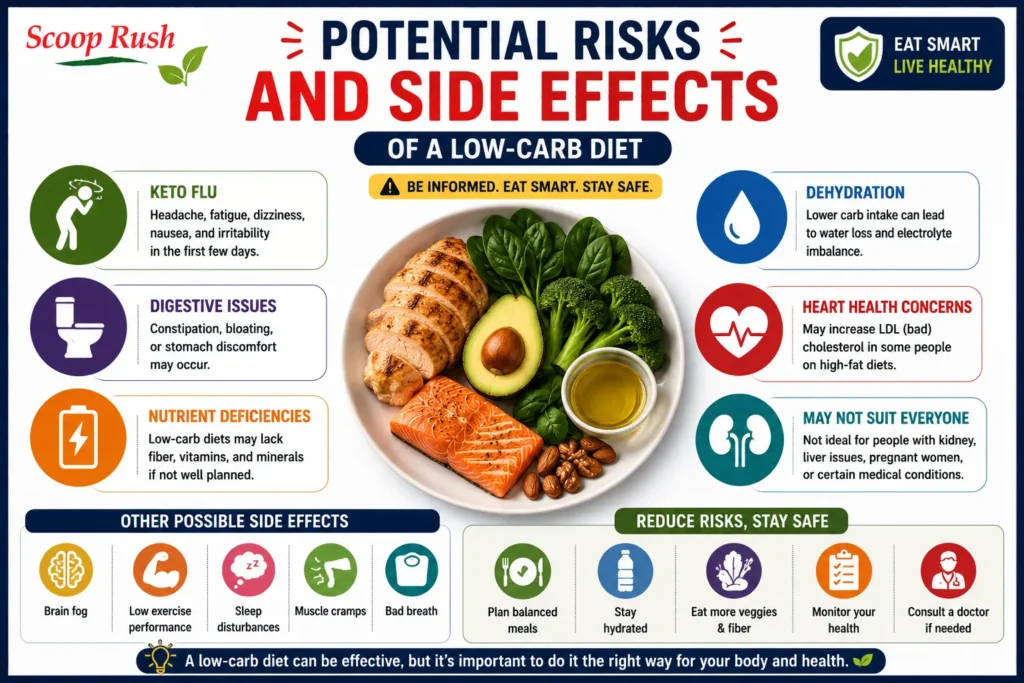
Although many people tolerate low-carb diets well, they are not risk-free for everyone, and it’s worth going into this with realistic expectations.
Short-Term Side Effects
In the first few days to weeks, some people experience:
- Headache
- Fatigue
- Constipation
- Muscle cramps
- Bad breath
- Weakness
- Dizziness
This cluster of symptoms is sometimes informally called the “keto flu” or “carb flu,” and it usually happens as the body adjusts to lower glycogen stores and shifts in electrolyte and water balance. These symptoms typically improve within one to two weeks as the body adapts.
Nutrient Deficiencies
Eliminating entire food groups especially whole grains and certain fruits can reduce intake of important nutrients, including:
- Fiber
- Vitamin C
- Potassium
- Magnesium
- B vitamins
Deliberately including a variety of vegetables, nuts, seeds, and some lower-carb fruits helps prevent these deficiencies from developing. If you’re considering supplements to fill any gaps, it’s worth reading about the risks of taking too many vitamins first, since over-supplementing can create its own set of problems.
Digestive Problems
Low fiber intake which can easily happen if grains and legumes are cut without being replaced by enough vegetables can lead to constipation. Choosing fiber-rich vegetables and drinking plenty of water throughout the day helps maintain healthy digestion.
Kidney Concerns
People with chronic kidney disease should consult a physician before significantly increasing their protein intake, since high-protein diets may place additional strain on kidneys that are already damaged or impaired.
Pregnancy
Pregnant women generally should not follow restrictive low-carb diets without medical supervision, because adequate carbohydrate intake plays an important role in supporting fetal development.
8. Is Ketosis Safe?
Ketosis is a natural, well-studied metabolic state — and it’s important not to confuse it with diabetic ketoacidosis, which is a completely different and dangerous condition.
For most healthy adults, nutritional ketosis is generally considered safe when it’s approached sensibly and, ideally, with some guidance. However, very restrictive low-carb or ketogenic diets may not be appropriate for:
- Pregnant women
- Children
- Individuals with a history of eating disorders
- People with certain existing medical conditions (such as kidney or liver disease)
As a general rule, it’s wise to seek medical advice before beginning a ketogenic or very low-carb eating plan, rather than diagnosing your own suitability for it.
9. Tips for Following a Healthy Low-Carb Diet
Choose whole foods. Base meals around fresh, minimally processed ingredients rather than packaged “low-carb” products, which are often highly processed and not necessarily healthier.
Eat plenty of vegetables. Non-starchy vegetables provide fiber, vitamins, and antioxidants while keeping carbohydrate intake moderate — they should make up a large portion of every plate.
Don’t fear healthy fats. Fats like olive oil, nuts, seeds, and avocados improve satiety and support heart health. Favor these far more often than processed or fatty meats.
Drink enough water. Good hydration supports digestion and may help reduce some of the early side effects of carbohydrate reduction. Aim for roughly eight glasses a day, unless your healthcare provider advises otherwise.
Stay physically active. Regular exercise — ideally a mix of strength training and aerobic activity — helps preserve muscle mass while improving weight loss and insulin sensitivity.
Avoid extremely restrictive dieting. Completely eliminating healthy carbohydrate sources like whole grains, beans, fruits, and vegetables is rarely necessary and can make the diet harder to sustain. A moderate reduction in refined carbohydrates is usually easier to maintain long-term than severe, total restriction.
Watch out for common mistakes. Some frequent pitfalls worth avoiding:
- Cutting out all carbs — including healthy sources like vegetables, legumes, and whole grains — instead of just refined ones
- Leaning too heavily on processed meats for protein
- Drinking too little water
- Neglecting fiber intake, which can lead to constipation and nutrient gaps
10. Who Should Talk to a Doctor Before Starting?
Medical advice is strongly recommended before starting a low-carb diet if you have any of the following:
- Diabetes
- Kidney disease
- Heart disease
- Liver disease
- A current pregnancy
- Breastfeeding
- A history of eating disorders
A healthcare provider or registered dietitian can help you work out a carbohydrate target that’s appropriate for your specific health needs, rather than following a generic number found online.
11. What Does the Research Actually Say?
Pulling together the evidence, a few consistent patterns emerge:
- Low-carb diets often outperform low-fat diets during the first year, particularly for short-term weight loss.
- Over the longer term, Mediterranean-style and moderate low-carb diets tend to produce fairly similar weight-loss outcomes.
- Healthy, plant-based low-carb diets appear to reduce the risk of heart disease and type 2 diabetes more than low-carb diets built around processed meats.
- Replacing refined carbohydrates with healthy fats and plant proteins consistently produces better health outcomes than replacing them with large amounts of processed meat.
Experts broadly agree that long-term success depends less on hitting a specific carbohydrate number and more on maintaining an overall eating pattern rich in vegetables, whole foods, healthy fats, and lean protein.
The Bottom Line
A low-carb diet can be an effective way to lose weight, improve blood sugar control, and support overall metabolic health but only when it’s planned carefully. The greatest benefits come from reducing refined carbohydrates specifically, while continuing to eat nutrient-rich vegetables, healthy fats, lean proteins, nuts, legumes, and select fruits.
Rather than eliminating carbohydrates entirely, many people achieve the best long-term results by choosing higher-quality carb sources and building a balanced, sustainable eating pattern around them one that includes regular movement, good hydration, and enough sleep.
Before making any significant dietary changes, especially if you have diabetes, kidney disease, heart or liver disease, or are pregnant or breastfeeding, it’s best to consult your healthcare provider or a registered dietitian to make sure the plan is safe and appropriate for your individual needs.
12. FAQs
1. What is a low-carb diet?
An eating plan that limits carbohydrate-rich foods such as bread, rice, pasta, sugary snacks, and soft drinks, while emphasizing protein, healthy fats, and non-starchy vegetables.
2. How many carbs can I eat on a low-carb diet?
Most low-carb diets allow between 60 and 130 grams of carbohydrates per day. Very low-carb diets may limit intake to under 60 grams daily, but these stricter versions should really only be followed with medical guidance.
3. Can a low-carb diet help with weight loss?
Yes. Many studies show it can promote short-term weight loss by reducing appetite, lowering insulin levels, and encouraging the body to burn stored fat for energy.
4. Is a low-carb diet good for people with diabetes?
It can help improve blood sugar control and insulin sensitivity when well-planned. However, anyone with diabetes should consult their healthcare provider first, especially if they’re on glucose-lowering medication, since dosages may need adjusting.
5. What foods should I avoid?
Foods high in refined carbohydrates and added sugar white bread, white rice, pasta, cakes and pastries, candy, sugary drinks, sweetened cereals, and processed snacks.
6. What foods can I eat?
Eggs, chicken and turkey, fish like salmon and tuna, leafy greens, broccoli and cauliflower, avocados, olive oil, nuts and seeds, and plain Greek yogurt.
7. Can I eat fruit on a low-carb diet?
Yes ,lower-carb fruits like berries fit comfortably into most low-carb plans. Fruits higher in natural sugar, like bananas and grapes, may need smaller portions depending on your daily carb goal.
8. Are there any side effects?
Some people experience temporary headaches, fatigue, constipation, muscle cramps, or bad breath in the first days to weeks. These usually ease as the body adjusts.
9. Is ketosis the same as ketoacidosis?
No. Nutritional ketosis is a normal metabolic state that can occur on a very low-carb diet. Diabetic ketoacidosis is a serious, unrelated medical emergency that affects people with uncontrolled diabetes.
10. Can I follow a low-carb diet long-term?
Yes,many people can safely maintain a moderate low-carb diet long-term, provided it includes plenty of vegetables, healthy fats, lean protein, and adequate fiber. Sustainability matters more than strict carb restriction.
11. Do I need to exercise on a low-carb diet?
Exercise isn’t mandatory for weight loss, but pairing a low-carb diet with regular physical activity helps preserve muscle mass, improve heart health, and support long-term weight management.
12. Who should avoid or be cautious with a low-carb diet?
People who are pregnant or breastfeeding, those with chronic kidney disease, heart or liver disease, or a history of eating disorders should speak with a healthcare professional before starting

