
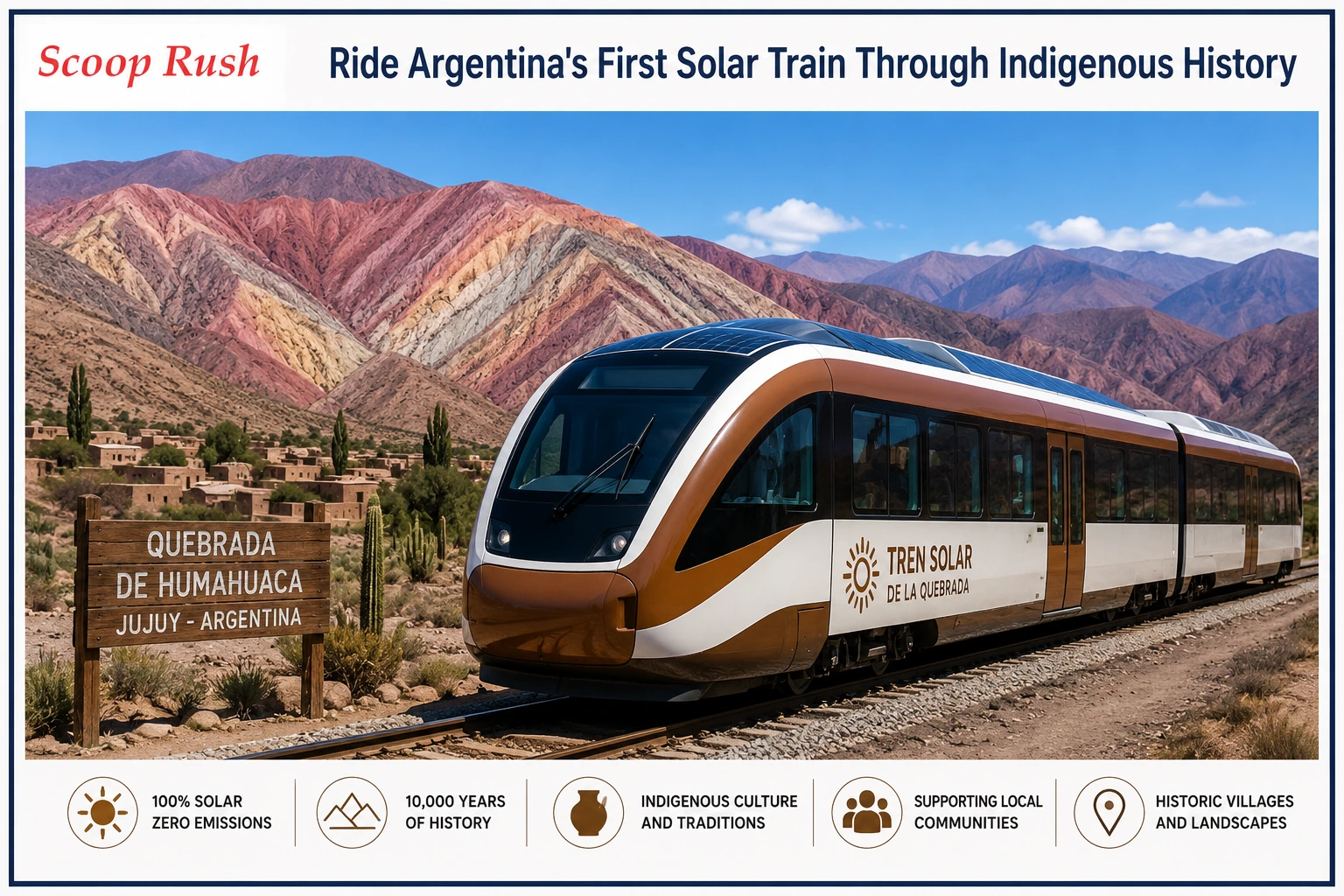
Ride Argentina’s First Solar Train and explore one of South America’s oldest cultural routes. The Quebrada Solar Train offers a unique journey through Argentina’s Jujuy province. It combines sustainable travel with thousands of years of Indigenous heritage. The zero-emissions train also supports local communities while showcasing breathtaking mountain landscapes.
Ride Argentina’s First Solar Train Across a 10,000-Year-Old Valley
Argentina introduced the Quebrada Solar Train in June 2024. It became Latin America’s first solar-powered passenger train. The project restored part of a historic railway through the Quebrada de Humahuaca.
The route follows a valley that people have used for more than 10,000 years. Hunter-gatherers first crossed this region around 9000 BC. Later, Indigenous traders, Inca messengers, and Spanish settlers also traveled here. Today, UNESCO recognizes the valley for its cultural importance.
Ride Argentina’s First Solar Train Through Historic Villages
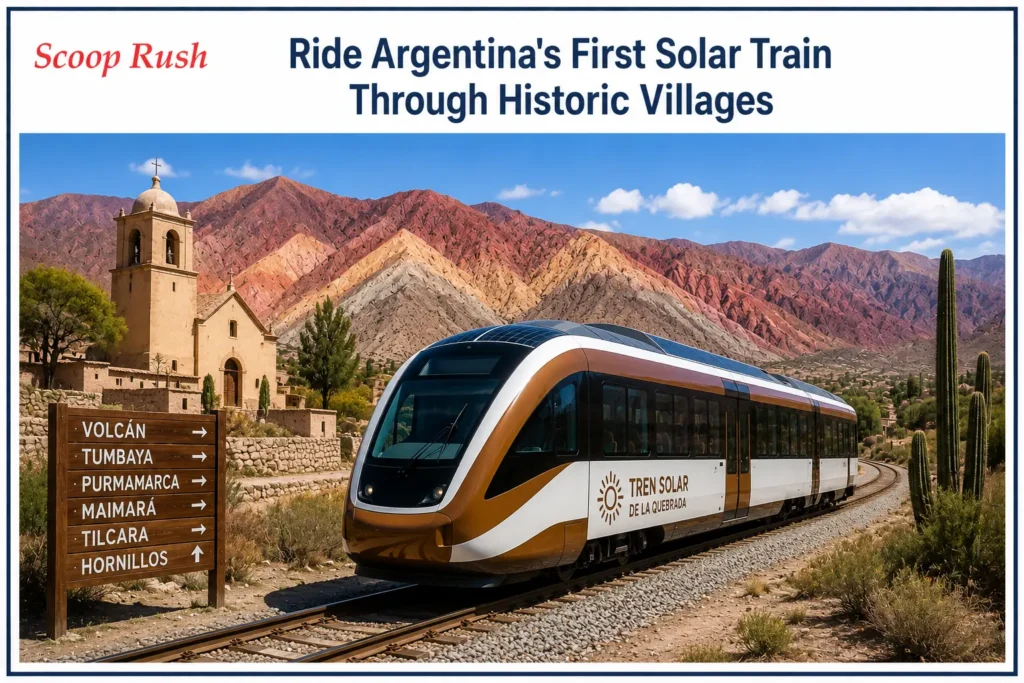
The train connects five traditional villages across a 42-kilometer route. These include Volcán, Tumbaya, Purmamarca, Maimará, and Tilcara. It also stops at Hornillos, a former colonial staging post that now serves as a museum.
Travelers can choose between two experiences. The shorter 180-degree tour lasts about 2.5 hours. Meanwhile, the 360-degree journey starts in Volcán and takes around 10 hours. It includes guided village visits and sightseeing stops.
Ride Argentina’s First Solar Train Past Rainbow Mountains
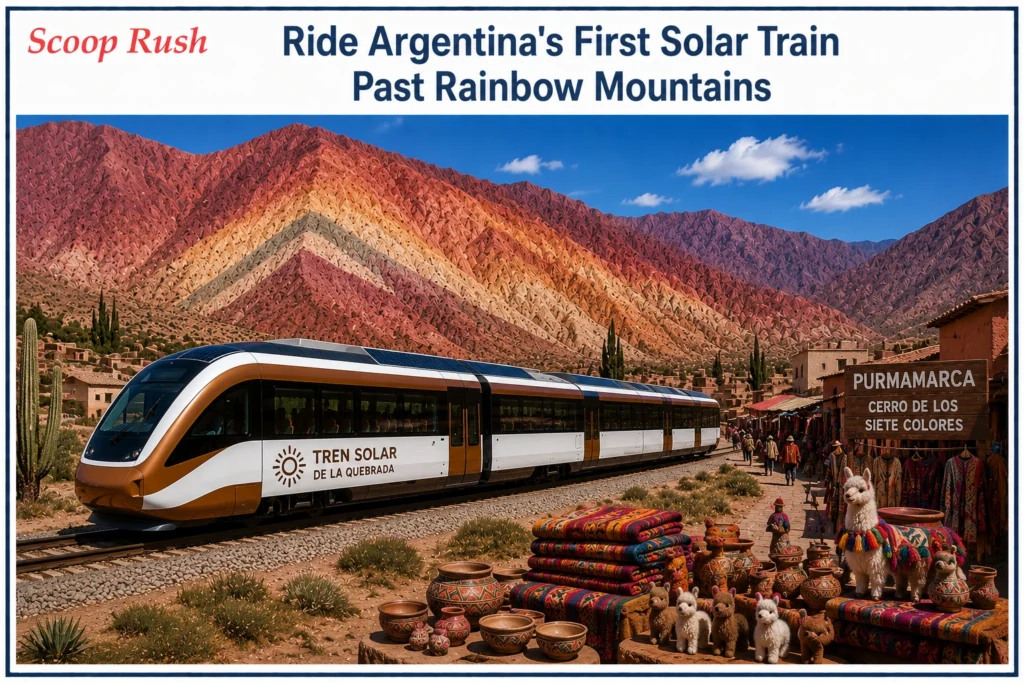
Large panoramic windows offer uninterrupted views throughout the journey. The train passes colorful mountains, cactus-covered hills, vineyards, and ancient farming terraces. It travels quietly at around 33 kilometers per hour.
One highlight is Purmamarca and its famous Cerro de los Siete Colores. The mountain displays striking layers of pink, red, purple, and ochre. Visitors also explore artisan markets filled with llama wool textiles, handmade pottery, and local crafts.
Ride Argentina’s First Solar Train to Discover Living Indigenous Culture
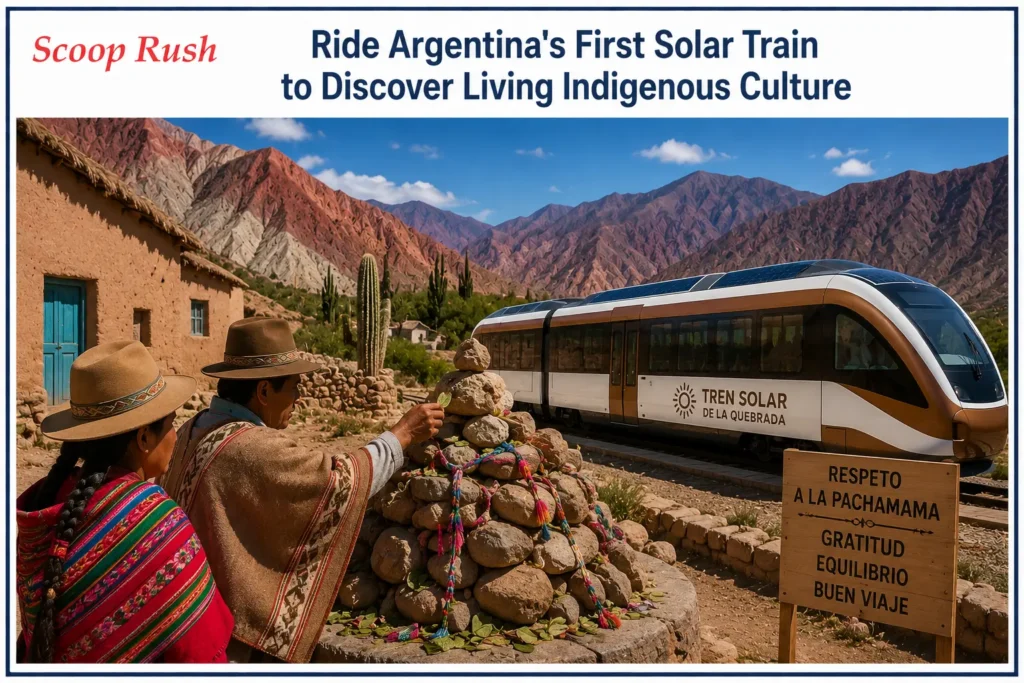
The journey highlights traditions that continue today. Visitors see adobe homes built with centuries-old techniques. Local guides also explain customs that honor Pachamama, known as Mother Earth.
Many travelers leave offerings at small stone cairns called apachetas. These include coca leaves and other symbolic gifts. Local people believe these traditions bring gratitude, balance, and safe journeys through the Andes.
Ride Argentina’s First Solar Train Supports Local Communities
The railway promotes sustainable tourism across Jujuy province. Officials designed the project to create jobs while protecting local heritage. As a result, many young residents now find opportunities without leaving their hometowns.
Local businesses also benefit from increasing visitor numbers. Restaurants, markets, guides, and artisans welcome more travelers each day. This steady tourism helps preserve traditional food, crafts, and Indigenous culture for future generations.
A Sustainable Journey Through Argentina’s Ancient Landscape
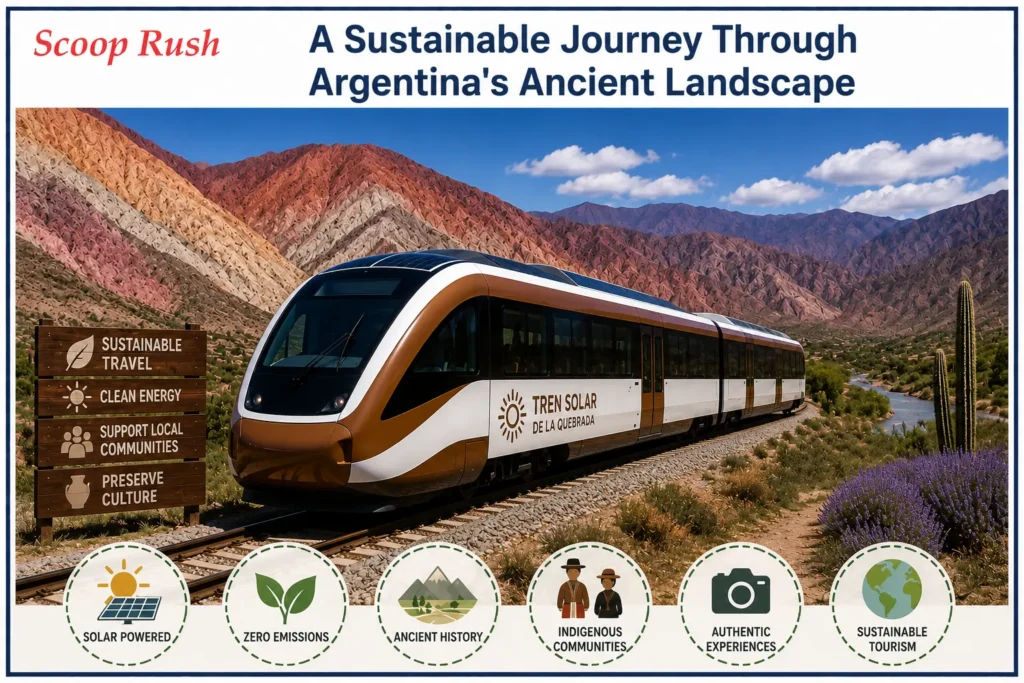
The Quebrada Solar Train combines modern technology with ancient history. It offers an environmentally friendly way to explore one of Argentina’s most remarkable cultural regions.
For travelers seeking authentic experiences, the journey delivers both history and stunning scenery. At the same time, every ticket helps strengthen Indigenous communities and supports sustainable tourism across the Quebrada de Humahuaca.
Argentina Solar Train Reveals Ancient Trade Routes
The railway follows part of the historic Qhapaq Ñan, the vast Inca road network. This route once connected communities across the Andes and supported trade for centuries.
Long before the Inca Empire, Indigenous groups used the valley to transport salt, pottery, and food. Today, the train allows visitors to follow the same historic path while learning about the region’s rich cultural heritage.
Argentina Solar Train Highlights Traditional Andean Food

The journey gives travelers a chance to enjoy authentic Andean cuisine in local villages. Popular dishes include quinoa empanadas, humita, and tamales, which remain part of everyday life.
Many ingredients come from nearby farms, including quinoa, corn, potatoes, and goat cheese. Local restaurants and food vendors also benefit as more visitors explore the valley.
Argentina Solar Train Preserves Archaeological Heritage
The final stop at Tilcara offers access to the famous Pucará de Tilcara archaeological site. The Omaguaca people built this hilltop fortress more than 1,100 years ago to protect their community.
Visitors can walk through restored stone buildings, narrow pathways, and ancient terraces. The site offers panoramic views of the valley while showcasing the area’s long Indigenous history.
Conclusion
The Argentina Solar Train offers much more than a scenic railway journey. It combines sustainable travel with rich Indigenous history and breathtaking landscapes. Visitors can experience colorful mountains, ancient villages, and living traditions while supporting local communities. As eco-tourism continues to grow, this unique railway stands out as one of Argentina’s most meaningful travel experiences.
FAQs
1. What is the Quebrada Solar Train?
The Quebrada Solar Train is Latin America’s first solar-powered passenger train. It operates in Argentina’s Jujuy province and follows part of a restored historic railway. The train offers a sustainable way to explore the UNESCO-listed Quebrada de Humahuaca.
2. How long is the train route?
The train travels about 42 kilometers through the scenic mountain valley. It connects several historic villages and includes stops where visitors can explore local attractions, markets, and cultural landmarks.
3. Which villages does the train visit?
The route includes Volcán, Tumbaya, Purmamarca, Maimará, and Tilcara. It also stops at Hornillos, where visitors can explore a historic museum that highlights the region’s long cultural history.
4. Why is the Quebrada de Humahuaca important?
The Quebrada de Humahuaca has served as a trade and cultural corridor for more than 10,000 years. Hunter-gatherers, Indigenous communities, the Inca Empire, and Spanish settlers all traveled through the valley. Today, UNESCO recognizes it as a World Heritage Site because of its historical and cultural significance.
5. How does the solar train help local communities?
The railway brings more visitors to local villages throughout the year. Increased tourism supports restaurants, artisans, guides, and small businesses. It also creates new jobs and encourages younger residents to stay and build their future within their communities.

