
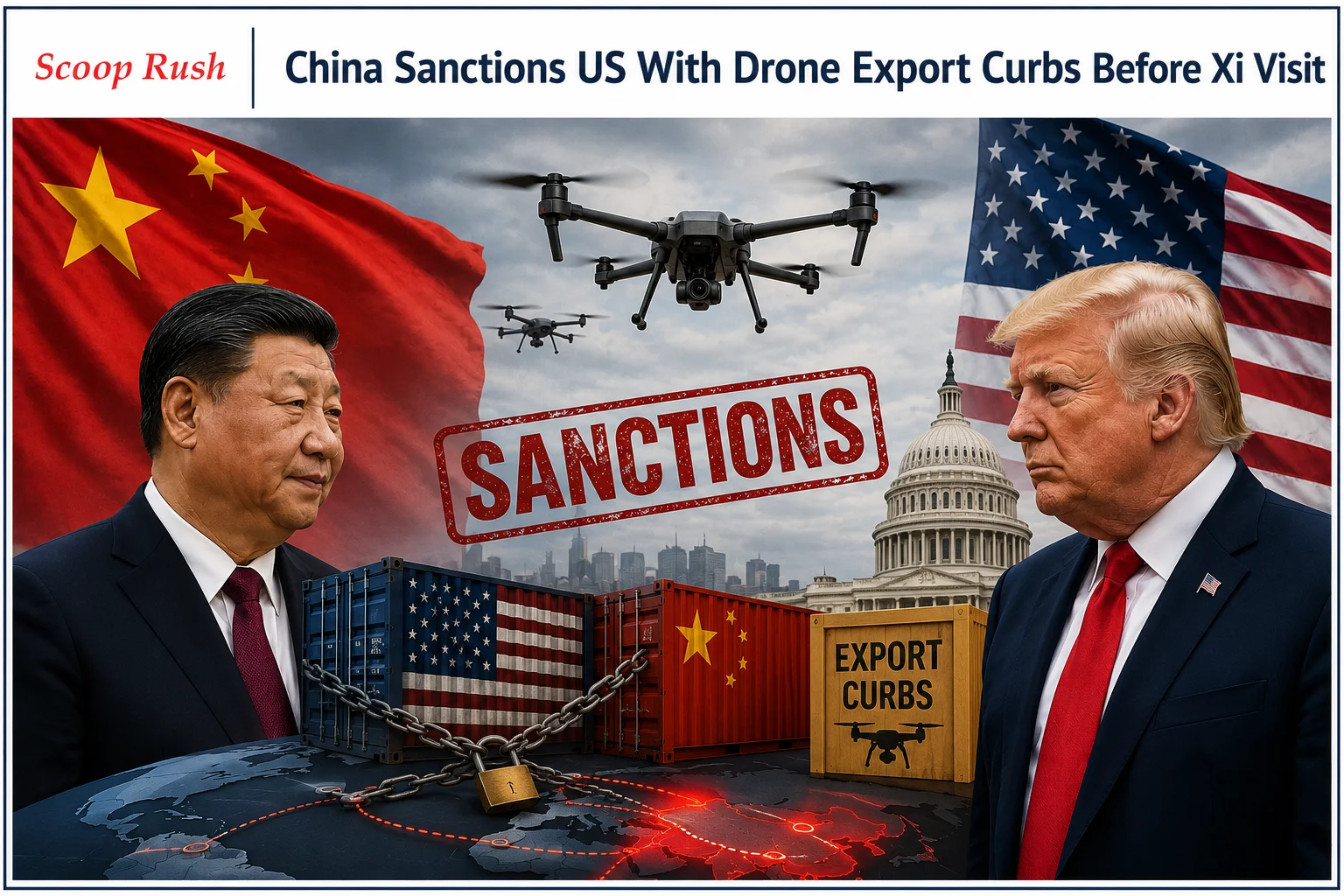
China sanctions US with new trade measures ahead of President Xi Jinping’s expected visit to Washington next month. Beijing announced export controls on drones, sanctions against several American organizations, and new restrictions on business cooperation. The move follows recent US actions targeting Chinese companies over national security and forced labor concerns. Both countries now face renewed trade tensions despite efforts to maintain stable relations.
The latest measures come after weeks of growing pressure between the world’s two largest economies. China says it acted to protect its national interests. Meanwhile, Washington continues expanding restrictions on Chinese technology and exports. Officials from both sides still plan to continue diplomatic talks before the expected summit.
China Sanctions US With New Trade Measures
China sanctions US companies through a series of economic restrictions announced by the Ministry of Commerce. Officials introduced tighter export controls on drones and several related technologies. The ministry said these products require case-by-case approval before shipment to the United States.
China also banned six American organizations from conducting business with Chinese entities. Another US company received separate sanctions over its cooperation with the US Federal Communications Commission. Beijing said these actions protect China’s sovereignty and national security.
Drone Export Controls Target US Market
China sanctions US access to important drone products through stricter export rules. The controls cover unmanned aerial vehicles, key components, and dual-use technologies. These items serve both civilian and military purposes.
China remains the world’s largest drone producer. Therefore, the new controls could affect companies that depend on Chinese drone parts. Businesses may now face longer approval procedures before receiving shipments.
Beijing Responds To Recent US Restrictions
Chinese officials described the measures as direct retaliation against recent US actions. Last week, the US added 43 Chinese companies to the Uyghur Forced Labor Prevention Act Entity List. Those listings restrict imports connected to alleged forced labor.
The US also expanded restrictions on Chinese technology. Recent actions included limits on certain robotics products, power converters, and drone imports. China argued these decisions harmed its legitimate rights and violated previous agreements between both governments.
Several American Organizations Face Sanctions
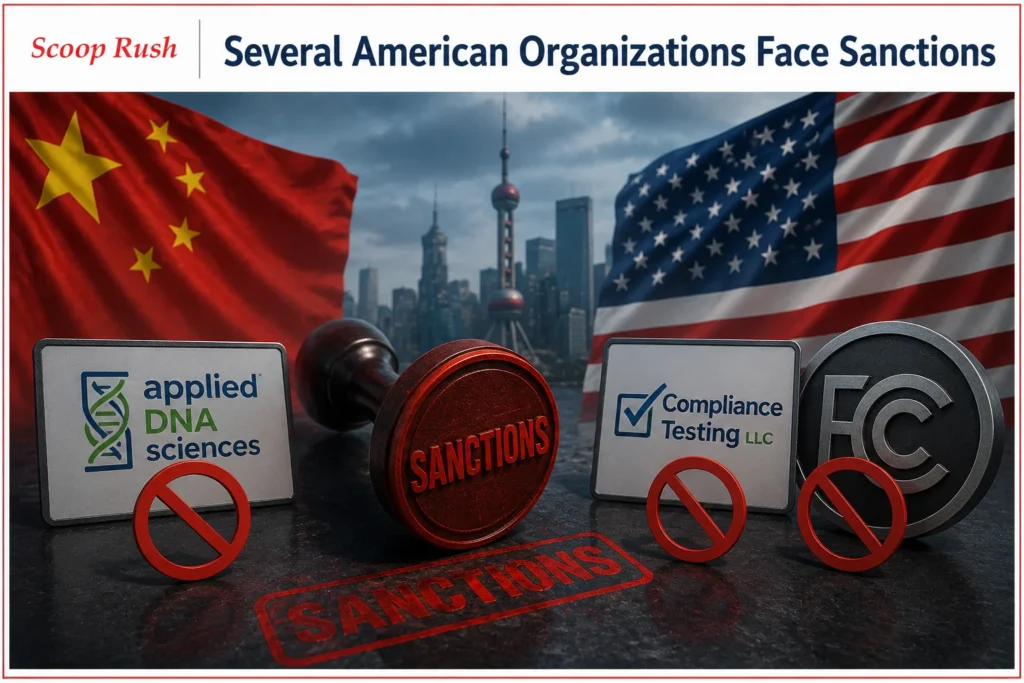
China sanctions US organizations by preventing Chinese individuals and businesses from cooperating with them. The restrictions affect several American firms and non-governmental organizations. Applied DNA Sciences is among the companies included.
Compliance Testing LLC also received separate restrictions. Chinese officials claimed the company worked with the FCC in ways that damaged China’s national security interests. Those organizations can no longer conduct normal business activities within China.
China Tightens Safety Certification Rules
China introduced new restrictions involving product safety certification. American inspection companies can no longer conduct follow-up factory inspections for China’s CCC certification process. Electronics manufacturers must now use inspection bodies outside the United States.
CCC certification confirms that electronic products meet China’s required safety standards. The rule change may increase compliance costs for American manufacturers selling products in the Chinese market. Companies will need alternative certification partners.
National Security Investigation Begins
China also launched a national security investigation into imported office equipment. Officials will examine products using foreign operating systems and related software. Authorities have not identified specific companies involved in the review.
The investigation focuses on imported printers, office equipment, and related software systems. Beijing says the review aims to protect national security. Further findings could lead to additional restrictions if officials identify potential risks.
Trade Dispute Expands Beyond Technology
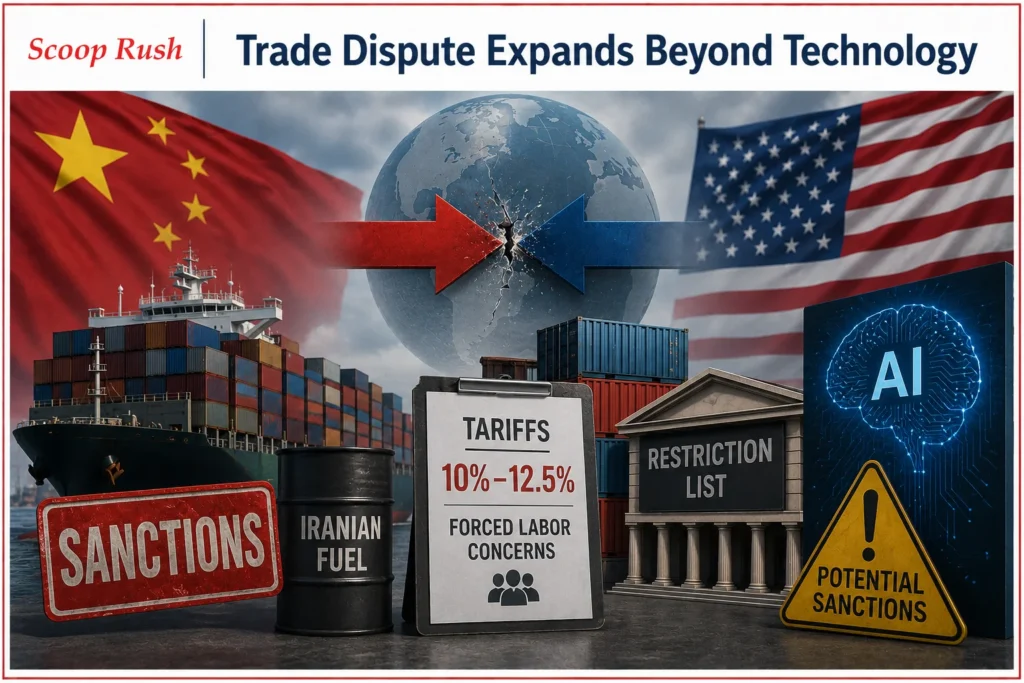
The latest dispute extends beyond drones and electronics. The Trump administration recently imposed sanctions on Chinese shipping companies accused of transporting Iranian fuel. Washington also placed additional Chinese institutions on government restriction lists.
The US further imposed tariffs between 10% and 12.5% on China and several other countries over forced labor enforcement concerns. Officials have also warned that additional sanctions could target Chinese artificial intelligence companies in the future.
Diplomatic Talks Continue Despite Rising Tensions
Despite the new restrictions, both governments continue preparing for high-level discussions. Chinese President Xi Jinping is expected to visit Washington next month. Officials hope the meeting will stabilize relations between both countries.
Senior economic officials from both sides recently held virtual trade talks. Earlier, Chinese diplomatic representatives visited the United States to prepare for the summit. Both governments continue balancing economic competition with diplomatic engagement.
China Warns Of More Countermeasures
China warned that further US restrictions could trigger additional responses. Officials urged Washington to remove existing sanctions and reverse recent policy decisions. Beijing said cooperation remains possible if both countries respect each other’s interests.
However, China also made clear it will continue responding to future restrictions. The latest measures show that both governments remain willing to answer economic pressure with new trade actions. The upcoming summit may determine whether tensions ease or continue rising.
Conclusion
China sanctions US companies at a sensitive moment before an expected leaders’ summit. The latest restrictions cover drone exports, business cooperation, product certification, and national security reviews. Beijing says the measures answer recent US actions targeting Chinese firms and technology.
Even with rising trade tensions, both governments continue diplomatic engagement. The planned Xi-Trump meeting could shape future economic relations between the two countries. Until then, businesses on both sides may face continued uncertainty as new restrictions emerge.
FAQs
1. Why did China sanction the US?
China introduced the measures after recent US restrictions on Chinese companies, technology products, and drone imports. Beijing says it acted to protect its national interests.
2. What products do the new Chinese export controls cover?
The controls apply to drones, important drone components, and related dual-use technologies. Companies now need approval before exporting these items to the United States.
3. Which US organizations face China’s sanctions?
China restricted six American entities from doing business with Chinese organizations. Compliance Testing LLC also received separate sanctions related to national security concerns.
4. How could these measures affect businesses?
Companies that depend on Chinese drone components may experience supply delays. American electronics firms could also face higher certification costs and new compliance requirements.
5. Will the Xi-Trump meeting still take place?
Both countries continue preparing for the expected summit in Washington next month. Officials also continue diplomatic and trade discussions despite the latest economic tensions.

