
TEHRAN | July 15, 2026
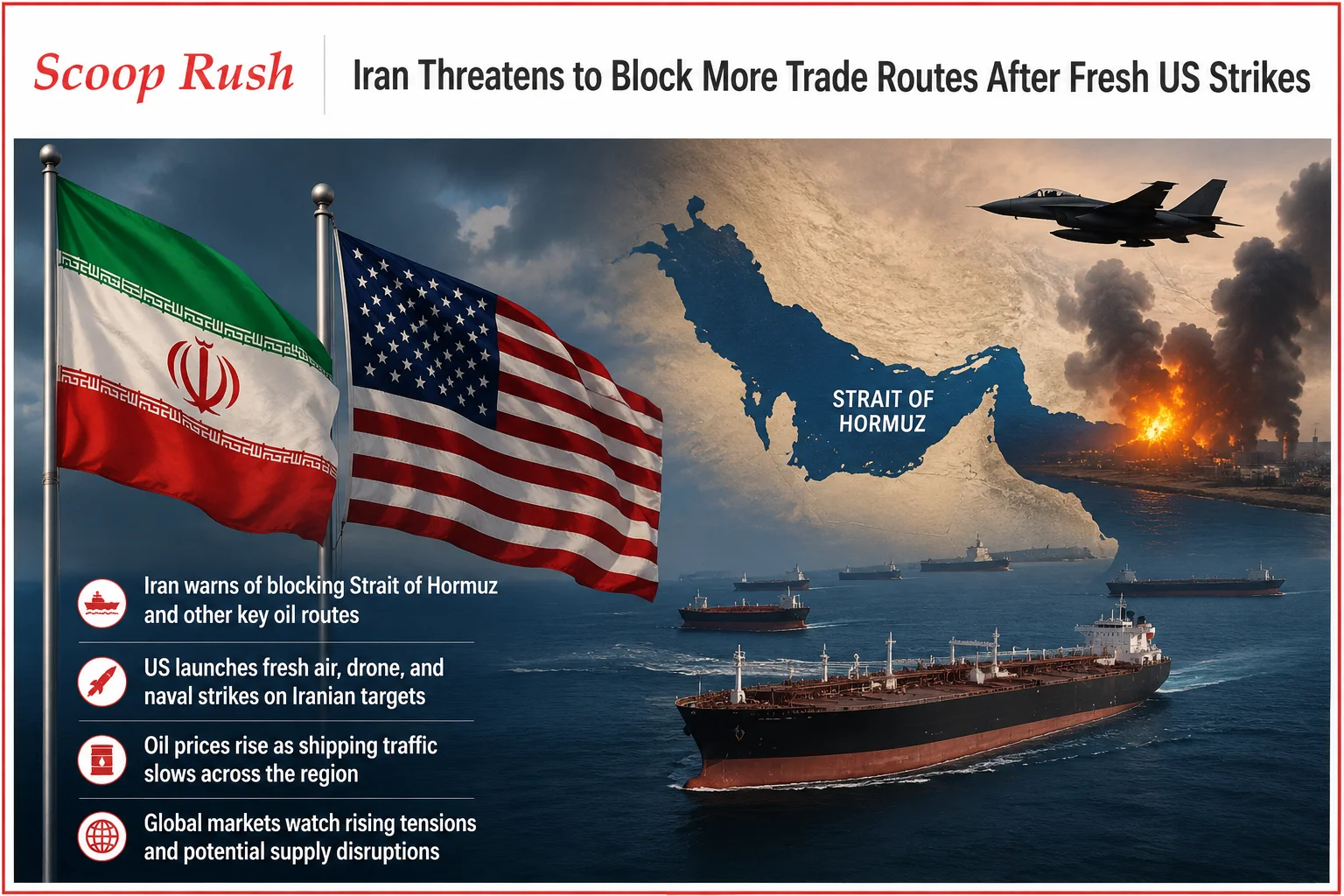
The Iran Trade Route Threat intensified after the United States launched another wave of air, drone, and naval strikes on Iranian military targets. The renewed military action has increased tensions across the Middle East. It has also raised fresh concerns about global oil supplies and international shipping through the Strait of Hormuz.
Iran’s Revolutionary Guard Corps (IRGC) warned that the Strait of Hormuz would remain closed until the United States stopped what it described as acts of aggression. The group also threatened to disrupt other regional oil and gas export routes that support US allies, increasing uncertainty across global energy markets.
Iran Trade Route Threat Rises After Fresh US Strikes
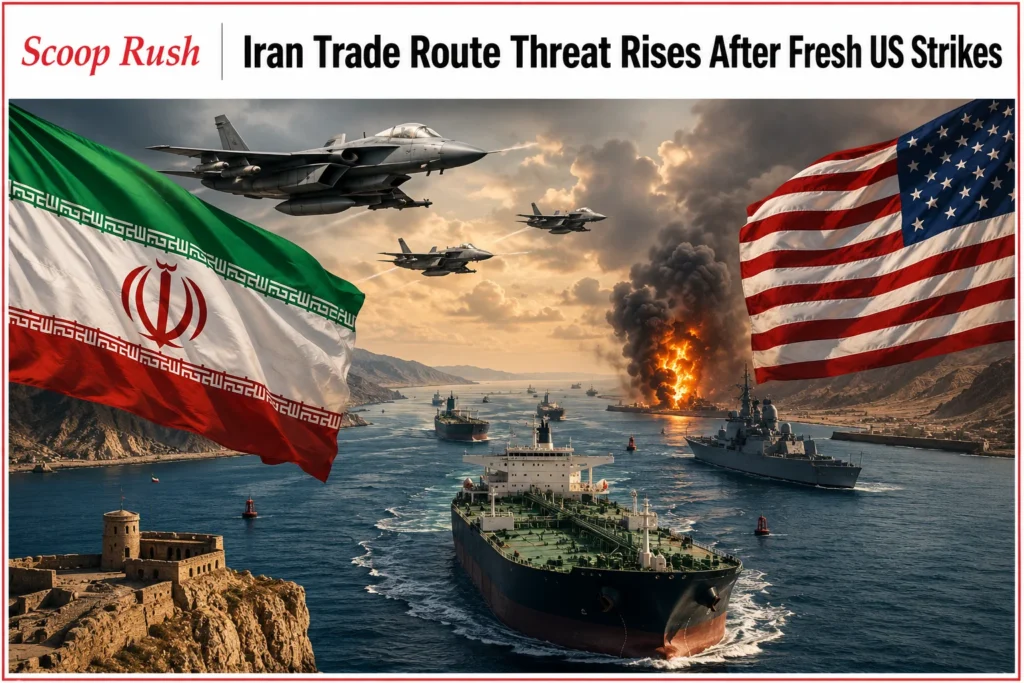
US Central Command (CENTCOM) confirmed it carried out a new round of coordinated strikes on Wednesday morning. The operation followed another seven-hour military campaign overnight against Iranian targets.
According to CENTCOM, the latest attacks targeted coastal defense systems and cruise missile storage and launch facilities on Greater Tunb Island. US officials said the operation reduced Iran’s ability to threaten commercial ships traveling through the Strait of Hormuz.
Iran Trade Route Threat Raises Shipping Concerns
The Strait of Hormuz remains one of the world’s busiest energy corridors. Millions of barrels of oil pass through the narrow waterway every day, making it vital for global trade.
As tensions increased, tanker traffic slowed across the region. Oil prices also climbed because traders feared longer shipping delays and possible supply disruptions if the conflict continued.
Trump Warns Iran to Resume Talks
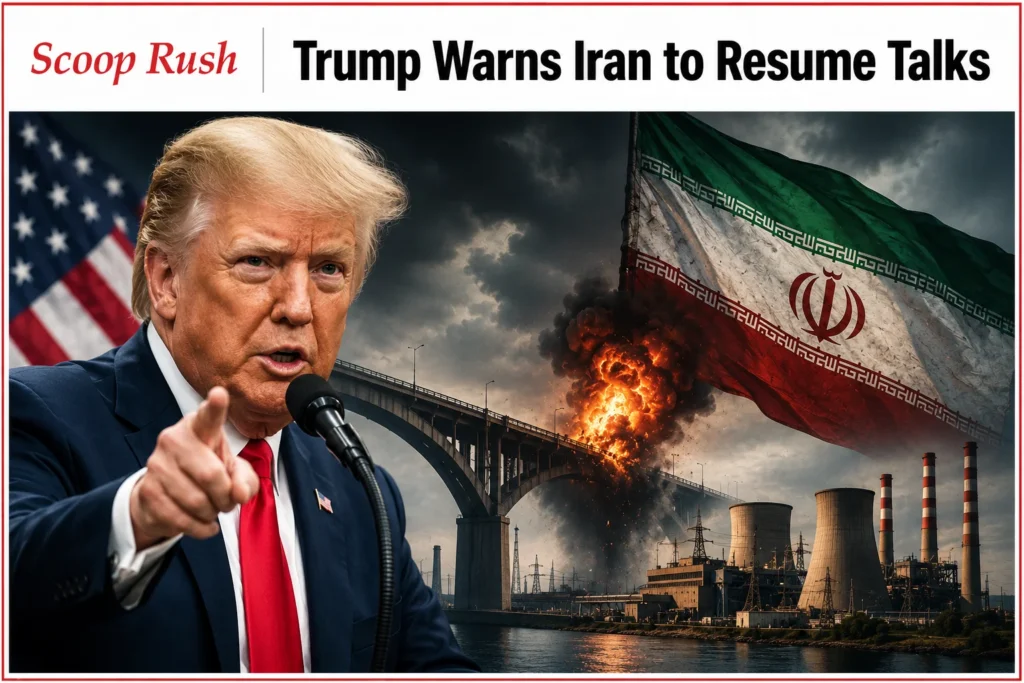
US President Donald Trump urged Iran to return to negotiations. He warned that the United States would strike bridges and power plants if Tehran refused to restart talks.
Trump also suggested energy infrastructure could become a future target. His comments added to growing concerns that the conflict could expand beyond current military operations.
US Restores Naval Blockade on Iranian Ports
The United States reimposed a naval blockade on Iranian ports on Tuesday. The measure prevents commercial vessels from entering or leaving Iranian ports and coastal waters.
The blockade replaced an agreement reached between both countries last month. That understanding had briefly eased tensions before recent disputes over the Strait of Hormuz ended the arrangement.
Iran Expands Regional Warnings
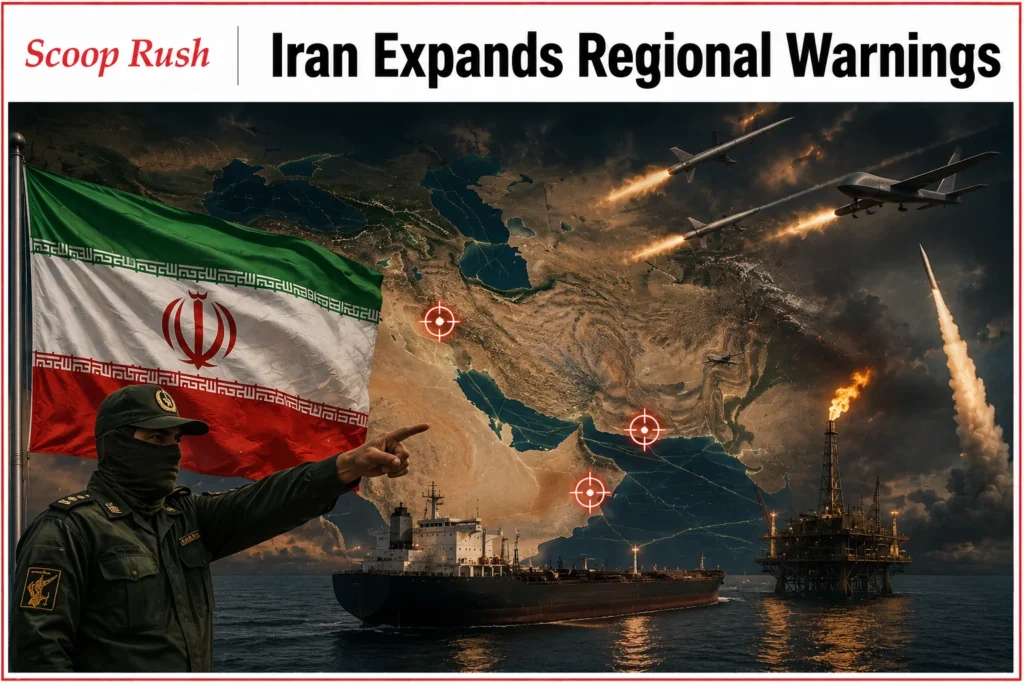
Iran’s Revolutionary Guard Corps warned that additional oil and gas export routes serving US interests could also face disruption. However, Iranian officials did not identify the specific routes they could target.
At the same time, Iran’s state broadcaster reported attacks on US-linked targets in Jordan, Kuwait, and Bahrain. American allies later said their defense systems intercepted drones and missiles launched from Iran.
Global Markets Monitor Rising Tensions
The latest confrontation has increased uncertainty across financial and energy markets. Investors continue watching developments around the Strait of Hormuz for signs of further escalation.
Several governments have strengthened security measures to protect shipping routes and regional infrastructure. Analysts believe any prolonged disruption could affect fuel prices, international trade, and economic stability.
Conclusion
The Iran Trade Route Threat continues to draw global attention as tensions between the United States and Iran increase. Fresh US military strikes, a renewed naval blockade, and Iran’s warnings have created uncertainty across the Middle East. The Strait of Hormuz remains the main point of conflict because it supports a large share of global oil shipments. Any further escalation could disrupt international trade, increase energy prices, and affect economies worldwide. Governments and shipping companies will continue monitoring the situation closely.
FAQs
1. What is the Iran Trade Route Threat?
The Iran Trade Route Threat refers to Iran’s warning that it could block the Strait of Hormuz and other regional oil and gas export routes. The warning came after the United States launched fresh military strikes and restored its naval blockade on Iranian ports.
2. Why is the Strait of Hormuz important?
The Strait of Hormuz is one of the world’s most important shipping routes for crude oil and natural gas. A significant share of global energy exports passes through the narrow waterway each day. Any disruption can affect fuel prices and international trade.
3. What did the latest US strikes target?
According to US Central Command, the latest strikes targeted Iranian coastal defense systems and cruise missile storage and launch sites on Greater Tunb Island. US officials said the operation aimed to reduce threats to commercial shipping.
4. Why did oil prices increase after the strikes?
Oil prices increased because investors feared that the conflict could interrupt energy supplies. Reduced tanker traffic through the Strait of Hormuz also raised concerns about possible shortages and higher transportation costs.
5. Which countries were mentioned in Iran’s reported attacks?
Iran’s state-run broadcaster reported attacks on US-linked targets in Jordan, Kuwait, and Bahrain. However, US allies said they intercepted drones and missiles before they reached their intended targets.

