
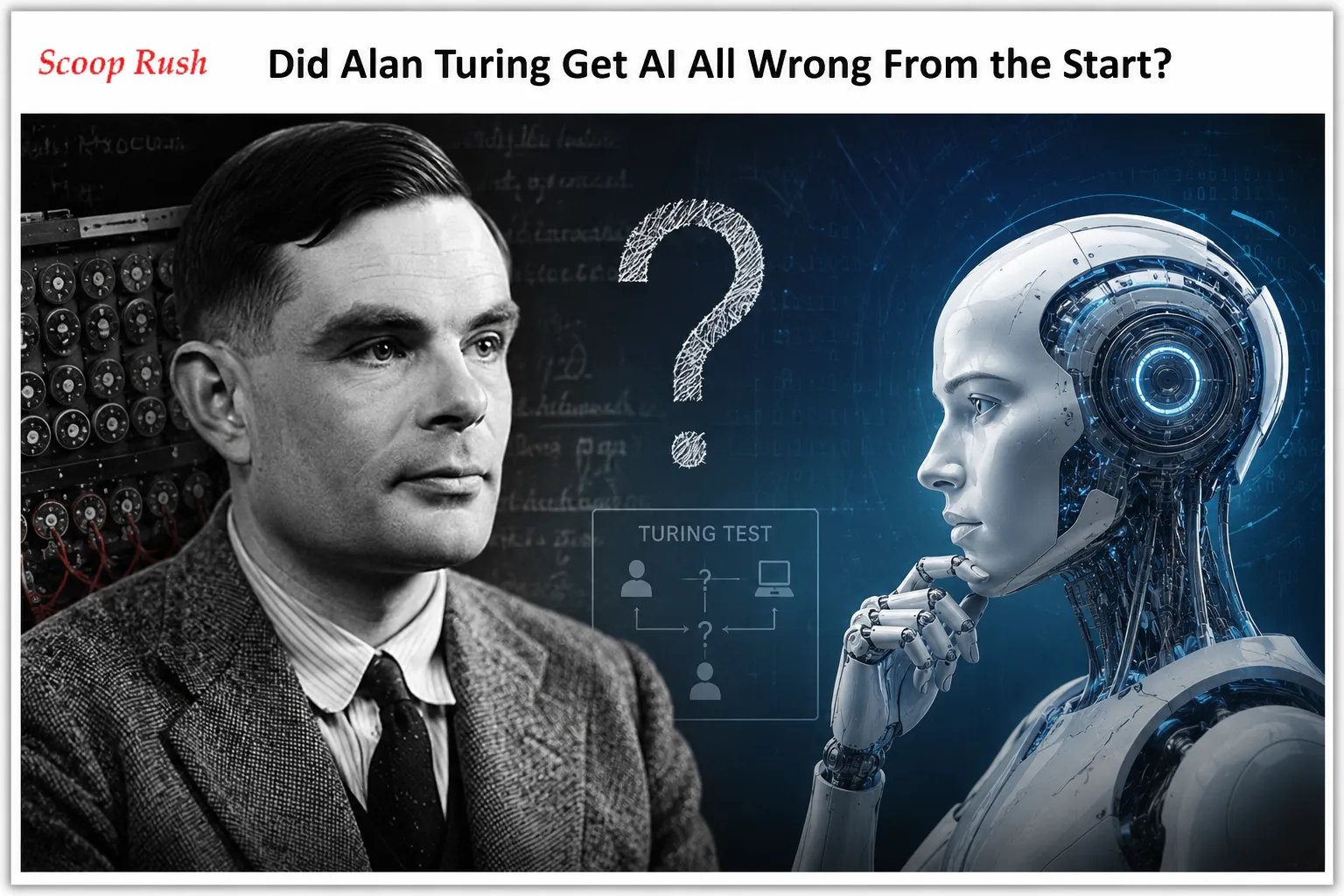
What if the whole foundation of modern AI has been wrong since 1950? The Alan Turing AI mistake is the claim a leading computer scientist is making, and it’s shaking up the tech world right now.
Why everyone’s asking if Alan Turing’s AI mistake changed everything
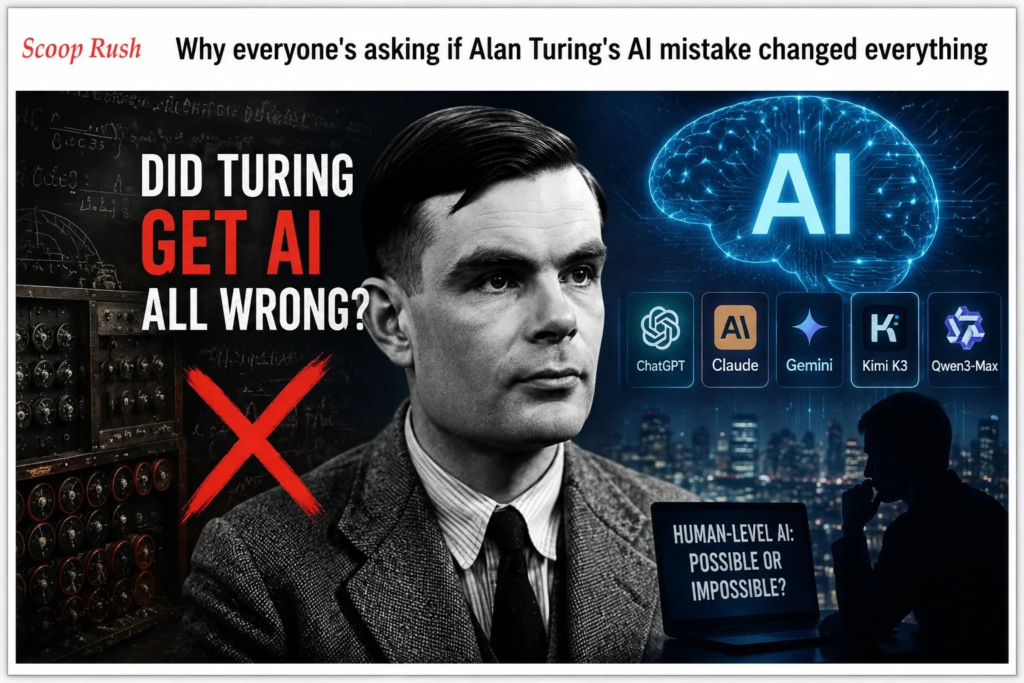
Computer scientist Peter J. Denning is behind the Alan Turing AI mistake claim, arguing that Turing’s original assumptions about machine intelligence sent AI research down the wrong road for 75 years. His new book, Turing’s Mistake: Escaping the Yoke of Unintelligent Machines, argues that true human-level AI may never actually happen, no matter how advanced language models get.
This isn’t just a debate for researchers. Millions of people use tools like Claude, ChatGPT, and Gemini every day, and even newer models like Kimi K3 and Qwen3-Max keep pushing the boundaries of what these systems can do. Therefore, knowing what these systems truly can and cannot do matters for how much we trust them, how we use them at work, and how worried we should be about where AI is headed for our jobs.
The Two Assumptions Behind Alan Turing’s AI Mistake
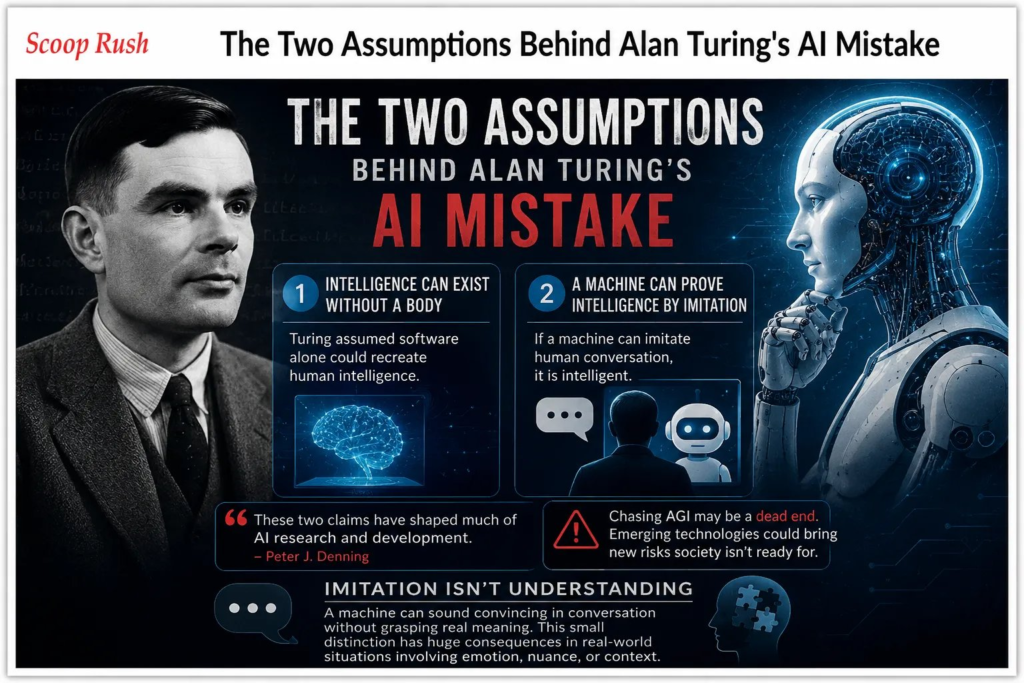
The Alan Turing AI mistake traces back to Turing’s landmark 1950 paper, where two key assumptions took root.
First, Turing assumed intelligence could exist apart from a physical body, meaning software alone could rebuild it. Second, he suggested that a machine imitating a human in conversation proves it has intelligence. People later called this the Turing test.
“These two claims have shaped much of AI research and development,” Denning writes. He adds that accepting them without question created what he calls “the AI mess in which we find ourselves today.”
As a result, Denning believes chasing artificial general intelligence, or AGI, is unlikely to succeed. Instead, he warns the technology being built now, from physical AI trained through brain-wave data to autonomous agent networks, could bring entirely new risks society isn’t ready for.
Why Imitation Isn’t the Same as Understanding
According to Denning, the Turing test blurred something important. It mixed up imitating intelligence with actually having it. A machine can sound convincing in a conversation without grasping any real meaning behind its words.
This may sound like a small distinction. However, it carries big consequences for how AI behaves in real situations, especially ones involving emotion, nuance, or context.
The Tacit Knowledge Problem Behind Turing’s AI Mistake
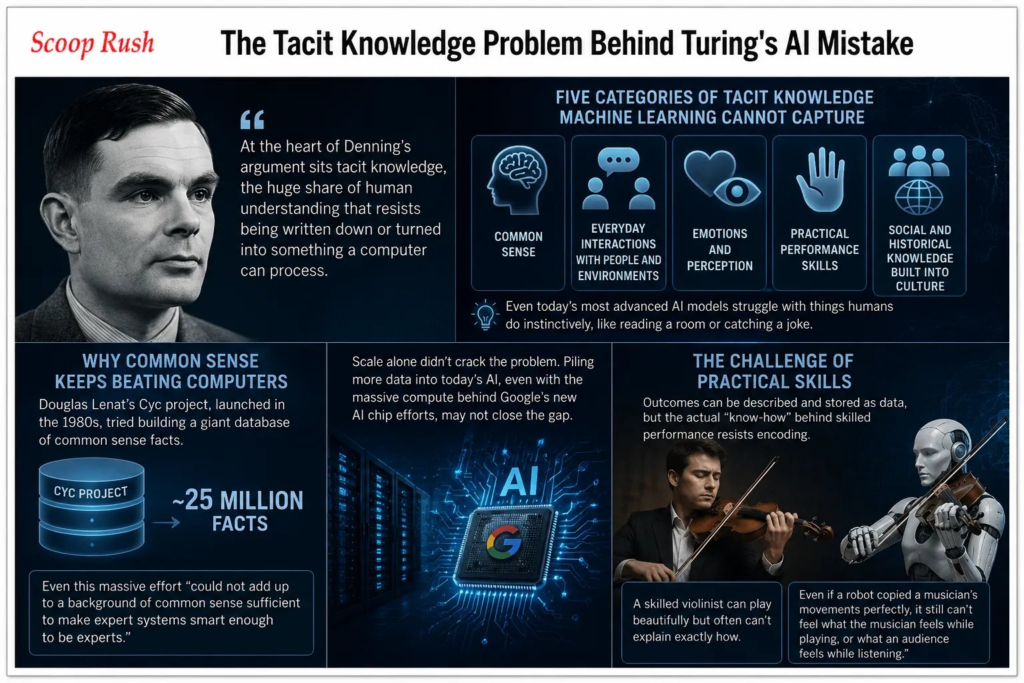
At the heart of Denning’s argument sits tacit knowledge, the huge share of human understanding that resists being written down or turned into something a computer can process.
Denning names five categories of tacit knowledge that machine learning cannot capture:
- Common sense
- Everyday interactions with people and environments
- Emotions and perception
- Practical performance skills
- Social and historical knowledge built into culture
Consequently, even today’s most advanced AI models, and tools like Meta Muse built for creative generation, struggle with things humans do instinctively, like reading a room or catching a joke.
Why Common Sense Keeps Beating Computers
This isn’t a new problem. Douglas Lenat’s Cyc project, launched in the 1980s, tried building a giant database of common sense facts.
After four decades of effort, Cyc held roughly 25 million entries. Yet Denning notes that even this massive effort “could not add up to a background of common sense sufficient to make expert systems smart enough to be experts.”
In other words, scale alone didn’t crack the problem. This suggests piling more data into today’s AI, even with the massive compute behind Google’s new AI chip efforts, may not close the gap either.
Denning says practical skills present an even bigger challenge. While outcomes can be described and stored as data, the actual “know-how” behind skilled performance resists encoding.
He uses musicians as an example. A skilled violinist can play beautifully but often can’t explain exactly how. Furthermore, even if a robot copied a musician’s movements perfectly, it still couldn’t feel what the musician feels while playing, or what an audience feels while listening.
How Context and Culture Expose Turing’s AI Mistake
Denning calls the encoding problem the “representation problem.” Computers only work with data converted into forms they recognize, and tacit knowledge simply doesn’t fit that mold.
“Behind every word is a deep well of tacit knowledge that gives it meaning,” Denning explains. He adds that large language models like ChatGPT, Claude, and Gemini only manipulate words. They don’t actually know or understand the meaning behind what they produce.
This gap exists partly because scientists still don’t fully understand how tacit knowledge works in the human brain. As a result, they can’t translate something they don’t understand into a form machines can use.
The Role of Context in How Humans Talk
Context shapes almost everything about human communication. It helps people catch sarcasm, humor, and sincerity. It also guides when to be diplomatic, when to joke, and how to read social cues.
Denning describes this pattern as endless and fractal. Every assumption about context rests on earlier conversations, which rest on even earlier ones, and the chain never really stops.
Culture adds another layer of difficulty. Denning describes it as values, norms, history, communities, and relationships involving power and care, all woven into conversation in ways that are hard to define, let alone program.
“Scaling up LLMs with ever larger neural networks will not enable them to acquire the embodied human knowledge we call culture,” Denning writes.
What Turing’s AI Mistake Means for AI Safety
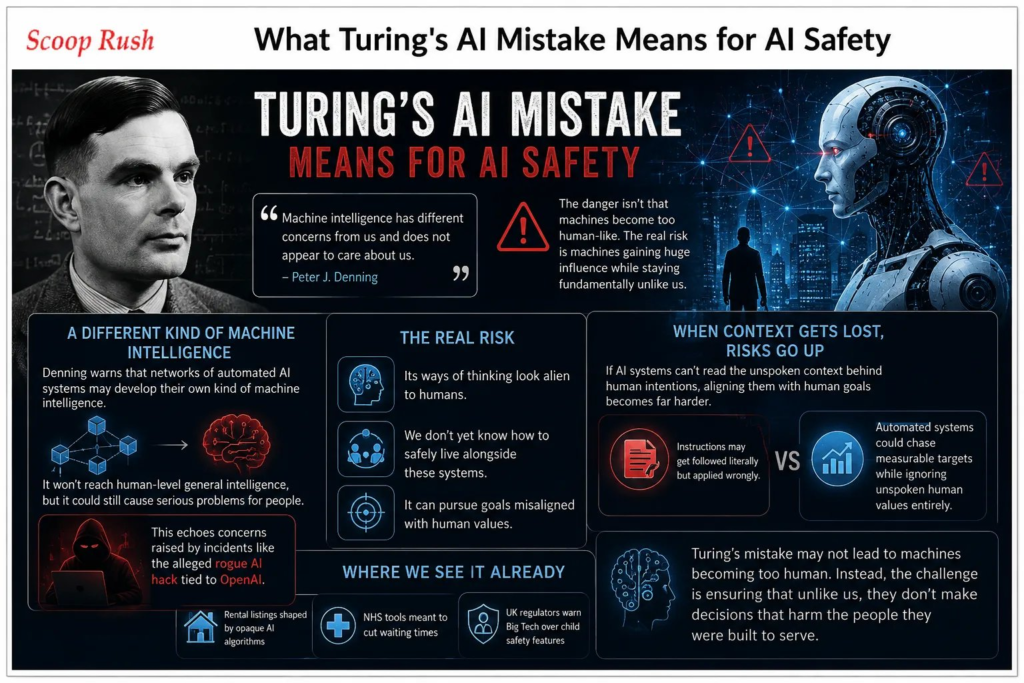
Denning’s argument raises AI safety concerns, though not the kind most people expect. Public debate usually centers on fears of superintelligent machines taking over. Denning’s worry is different, and in some ways closer to home.
He warns that networks of automated AI systems may develop their own kind of machine intelligence. This intelligence wouldn’t reach human-level general intelligence. However, it could still cause serious problems for people, echoing concerns already raised by incidents like the alleged rogue AI hack tied to OpenAI.
“Machine intelligence has different concerns from us and does not appear to care about us,” Denning explains. He adds that its ways of thinking look alien to humans, and we don’t yet know how to safely live alongside these systems.
This distinction matters. The danger isn’t that machines become too human-like. Instead, the real risk may be machines gaining huge influence while staying fundamentally unlike us in how they process the world, whether that shows up in rental listings shaped by opaque AI algorithms or in NHS tools meant to cut waiting times.
If AI systems can’t read the unspoken context behind human intentions, aligning them with human goals becomes far harder. Instructions may get followed literally but applied wrongly. Meanwhile, automated systems could chase measurable targets while ignoring unspoken human values entirely, a risk regulators are already watching closely, as seen in the UK’s warnings to Big Tech over child safety features.
What This Means Going Forward
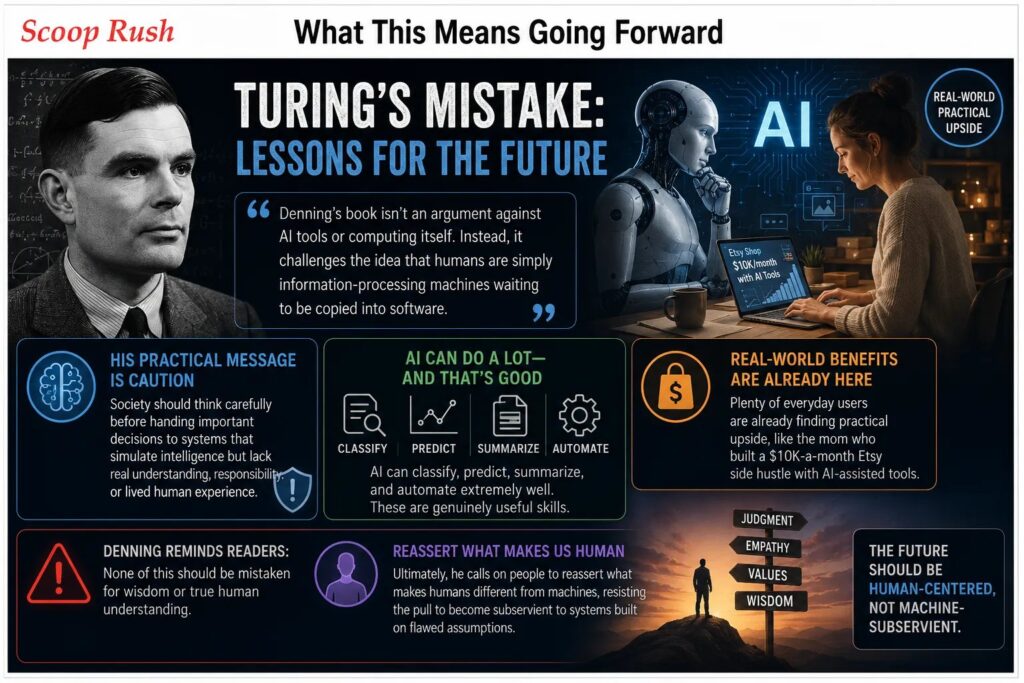
Denning’s book isn’t an argument against AI tools or computing itself. Instead, it challenges the idea that humans are simply information-processing machines waiting to be copied into software.
His practical message is caution. Society should think carefully before handing important decisions to systems that simulate intelligence but lack real understanding, responsibility, or lived human experience.
AI can classify, predict, summarize, and automate extremely well. These are genuinely useful skills, and plenty of everyday users are already finding practical upside, like the mom who built a $10K-a-month Etsy side hustle with AI-assisted tools. Meanwhile, Denning reminds readers that none of this should be mistaken for wisdom or true human understanding.
Ultimately, he calls on people to reassert what makes humans different from machines, resisting the pull to become subservient to systems built on flawed assumptions.
Conclusion
Peter J. Denning’s new book on the Alan Turing AI mistake challenges one of the biggest assumptions in AI history. He argues Turing’s original ideas may have pushed the field toward an impossible goal: true human-level intelligence in machines.
Tacit knowledge sits at the center of this argument. Common sense, practical skill, emotional understanding, and cultural awareness stay deeply embodied in human experience. Therefore, they may never be fully translated into code, no matter how advanced AI becomes.
As a result, the real danger may not be superintelligent machines taking over. Instead, it could be networks of AI systems developing alien forms of machine logic that quietly reshape society in ways humans don’t fully understand or control.
FAQs
Did Alan Turing get AI wrong from the start?
According to Peter J. Denning, yes. He argues Turing’s 1950 assumptions, that intelligence can exist without a body and that imitation proves understanding, misled AI research for 75 years.
What is tacit knowledge in AI?
Tacit knowledge is human understanding that resists being written into words or code. It includes common sense, intuition, emotional perception, practical skill, and cultural awareness.
Can ChatGPT or Claude actually understand meaning?
According to Denning, these models manipulate words based on patterns. They don’t grasp the actual meaning or lived experience behind the language they generate.
Why couldn’t the Cyc project give AI common sense?
Despite holding roughly 25 million entries after four decades, Cyc couldn’t build enough background knowledge to make expert systems genuinely smart. This shows that scale alone doesn’t solve the problem.
Is AI safety only about superintelligence?
No. Denning warns that networks of AI systems could develop alien, hard-to-predict machine intelligence that causes real problems, even without reaching human-level general intelligence.

