
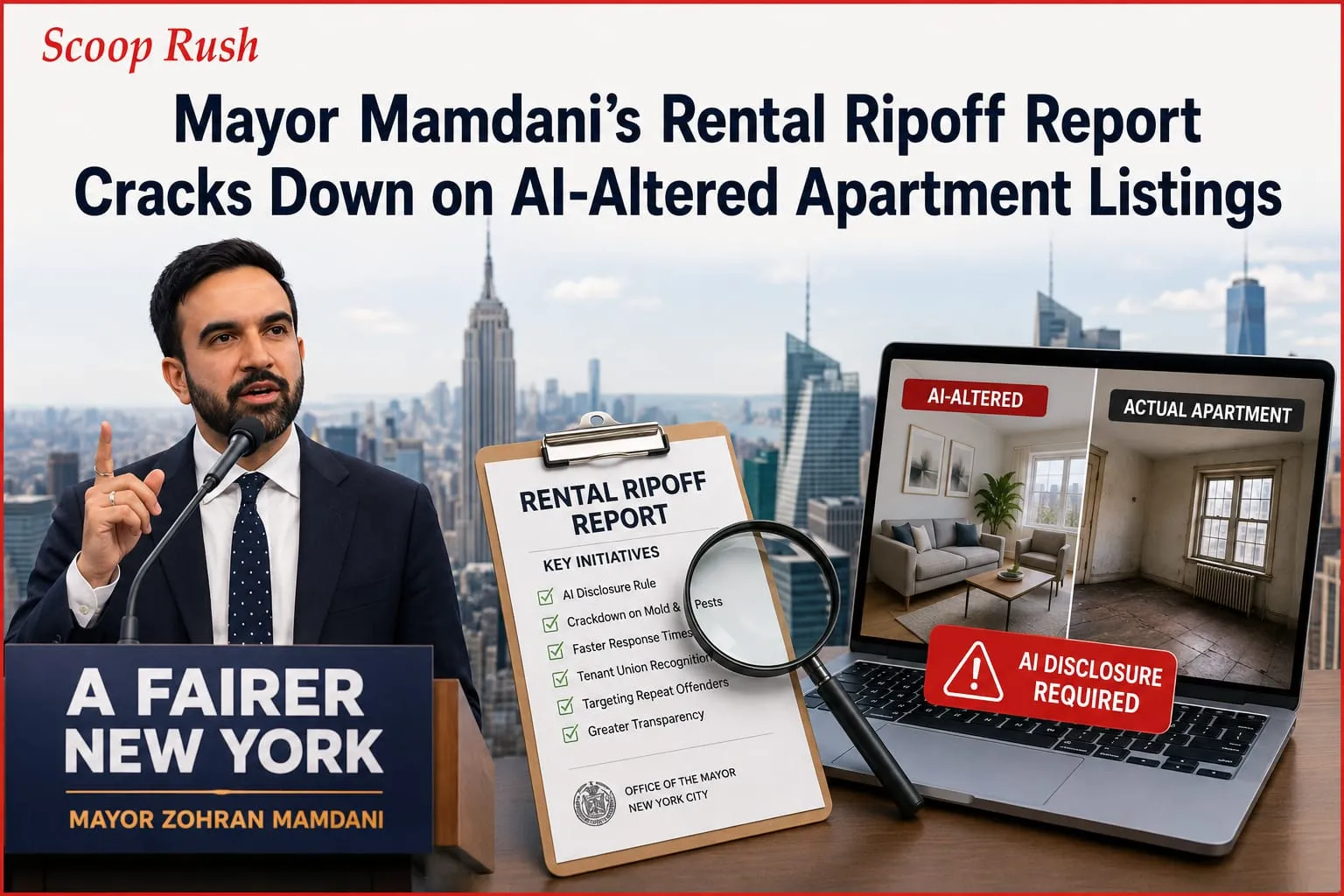
Ever scheduled an apartment viewing only to find the sparkling in-unit washer/dryer from the photos doesn’t actually exist? You’re not alone, and New York City’s new Rental Ripoff Report just declared war on the problem.
Mayor Zohran Mamdani unveiled a sweeping set of tenant protections on Thursday as part of his new Rental Ripoff Report. One item stands out for renters tired of dishonest listings: mandatory disclosure of AI-generated apartment images. The announcement came as part of the city’s newly released Rental Ripoff Report. It’s a 23-point policy package born from months of testimony at Mamdani’s Rental Ripoff Hearings. AI-generated content
What the Rental Ripoff Report Actually Covers
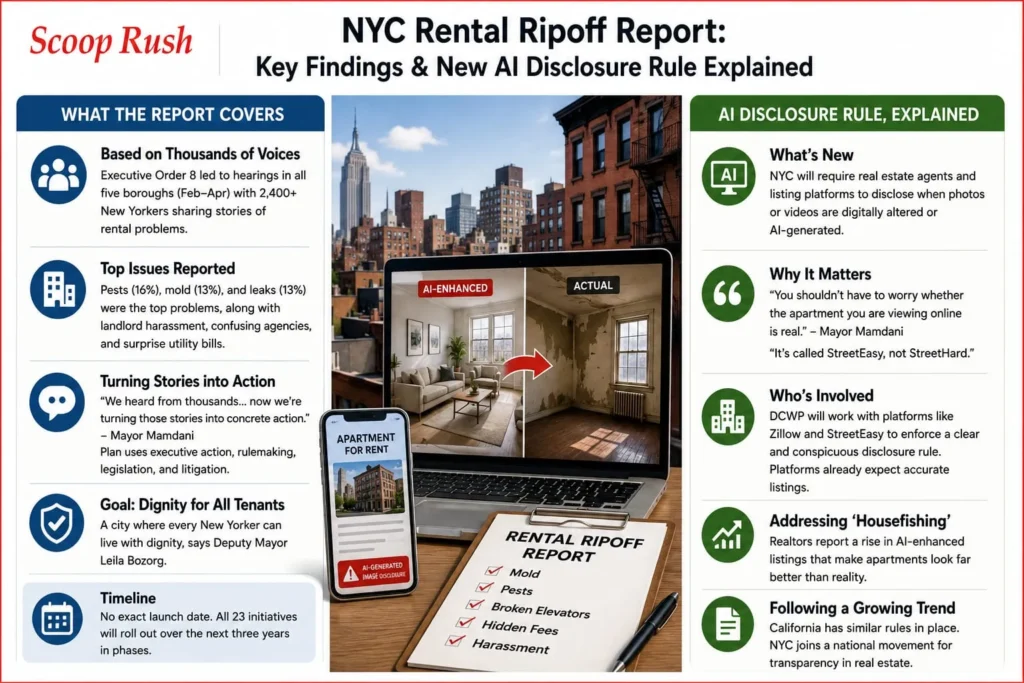
The report is the direct result of Executive Order 8, one of Mamdani’s first actions after taking office. Between February and April, his administration held hearings in all five boroughs and collected testimony from more than 2,400 New Yorkers. People showed up to describe mold that never got treated, pests that never got addressed, and mysterious fees nobody explained.
That feedback shaped the final document. According to the report, pests came up in 16% of testimony, while mold and leaks each accounted for 13%. Tenants also flagged landlord harassment, confusing agency interactions, and surprise utility bills as recurring headaches.
“At Rental Ripoff Hearings across the five boroughs, we heard from thousands of New Yorkers living with mold that was never treated, pests that were never addressed and fees that were never explained,” Mamdani said. He added that the report turns those stories into concrete action.
The plan leans on every lever the city has, including executive action, agency rulemaking, legislation, and litigation. Deputy Mayor for Housing and Planning Leila Bozorg said the goal is a city where every New Yorker can live with dignity, crediting both the tenants who testified and the city staff who ran the hearings.
The AI Disclosure Rule, Explained
Here’s where things get interesting for anyone house-hunting online. New York will now require real estate agents and listing platforms to disclose when rental photos or videos have been digitally altered or generated using AI. Mamdani didn’t hold back when explaining why.
“You shouldn’t have to worry whether the apartment you are viewing online is real,” he said. He then took a direct jab at one of the city’s most popular listing sites, quipping, “It’s called StreetEasy, not StreetHard.”
The Department of Consumer and Worker Protection will coordinate with major platforms, including Zillow and StreetEasy. Together, they’ll enforce what the report calls a “clear and conspicuous disclosure” requirement once it takes effect. A StreetEasy spokesperson responded that the company already expects listings to accurately represent a home, whether AI is involved or not. The spokesperson also encouraged users to report anything that looks misleading.
This isn’t happening in a vacuum.Realtors have reported a rise in what some call “housefishing.” This is where digitally enhanced or AI-generated photos make units look far nicer than reality. California has already implemented similar AI disclosure requirements for real estate listings. So, New York is following a growing national trend rather than inventing the wheel. This concern over AI misuse echoes broader scrutiny across the tech industry. For example, xAI is facing legal action over misuse of its Grok chatbot. Meanwhile, the UK is pushing to tighten child safety rules around big tech platforms.
However, don’t expect this rule to kick in overnight. The city hasn’t set an exact launch date, and the report notes that all 23 initiatives will roll out over the next three years on a staggered schedule.
Beyond AI: Mold, Pests, and Broken Elevators
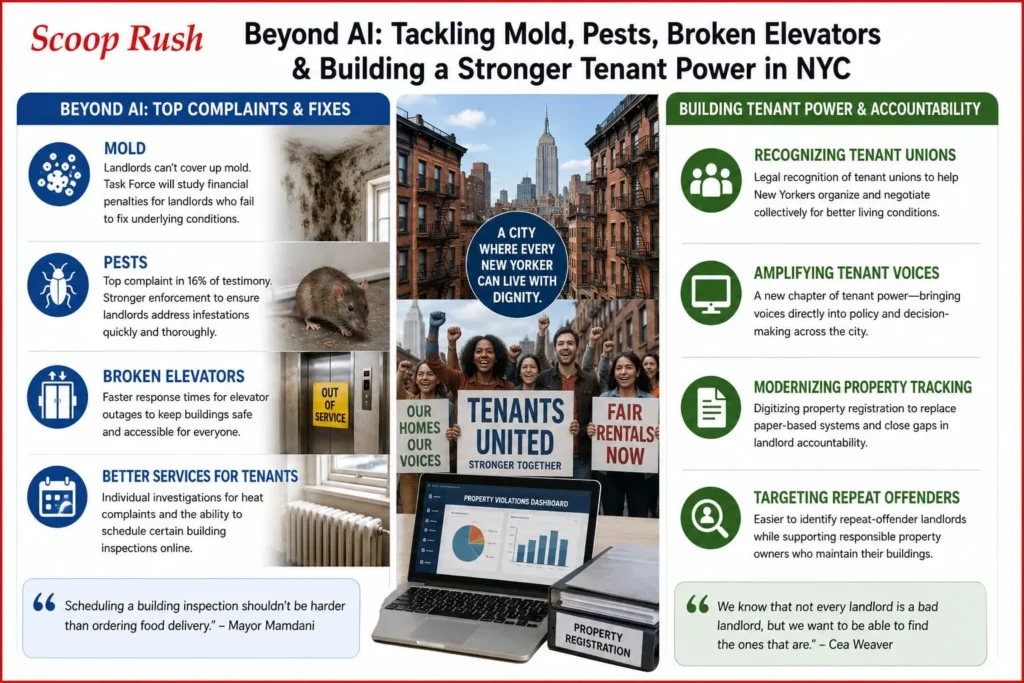
While the AI disclosure rule is grabbing headlines, it’s just one piece of a much larger puzzle. Mamdani identified pests, mold, and broken elevators as the three biggest complaints the city receives, and he laid out specific fixes for each.
“No longer will landlords be allowed to slap a new coat of paint over a wall of black mold and pretend that the issue is fixed,” Mamdani said during his announcement at the Tenement Museum. The Mayor’s Office to Protect Tenants convened a Legislative Task Force for this. It will study adding financial penalties to the Underlying Conditions Program. This would target landlords who fail to remediate mold.
The city also plans to investigate every heat complaint individually instead of bundling complaints from the same building together. That change alone could speed up response times for tenants stuck in cold apartments during winter months. Additionally, the administration wants to improve response times for elevator outages and let tenants schedule certain building inspections themselves.
Mamdani drew a relatable comparison to make his point.”New Yorkers have been able to schedule food deliveries and the time they pick up their clothes at the dry cleaner for years,” he said. He argued that scheduling a building inspection shouldn’t be harder than ordering dinner.
Recognizing Tenant Unions and Targeting Repeat Offenders
Perhaps the most structurally significant piece of the plan is the legal recognition of tenant unions. This move would expand tenants’ ability to organize and negotiate collectively over building conditions and shared concerns.Cea Weaver, Director of the Mayor’s Office to Protect Tenants, described the moment as a new chapter in tenant power. This power, she said, is now taking hold across New York City.
“By bringing tenants’ voices directly into policy and taking unprecedented steps to facilitate tenant organizing across the city, we are showing what governing with New Yorkers looks like,” Weaver said.
At the same time, the administration wants to modernize how it tracks landlord violations. Currently, property registration remains largely paper-based, and building owners aren’t even required to provide an email address. The report proposes digitizing this system. This way, the city can more easily spot “repeat-offender” landlords. At the same time, it can distinguish them from owners who maintain their properties responsibly. This push toward digital modernization mirrors broader shifts in infrastructure. For example, Nokia’s AI-powered network platform is helping industries move away from outdated systems too.
Weaver made that distinction clear during the hearings. “We know that not every landlord is a bad landlord,” she said, “but we want to be able to find the ones that are.” This balancing act, cracking down on bad actors without punishing responsible property owners, appears throughout the report’s language.
Reactions From City Officials and Tenant Groups
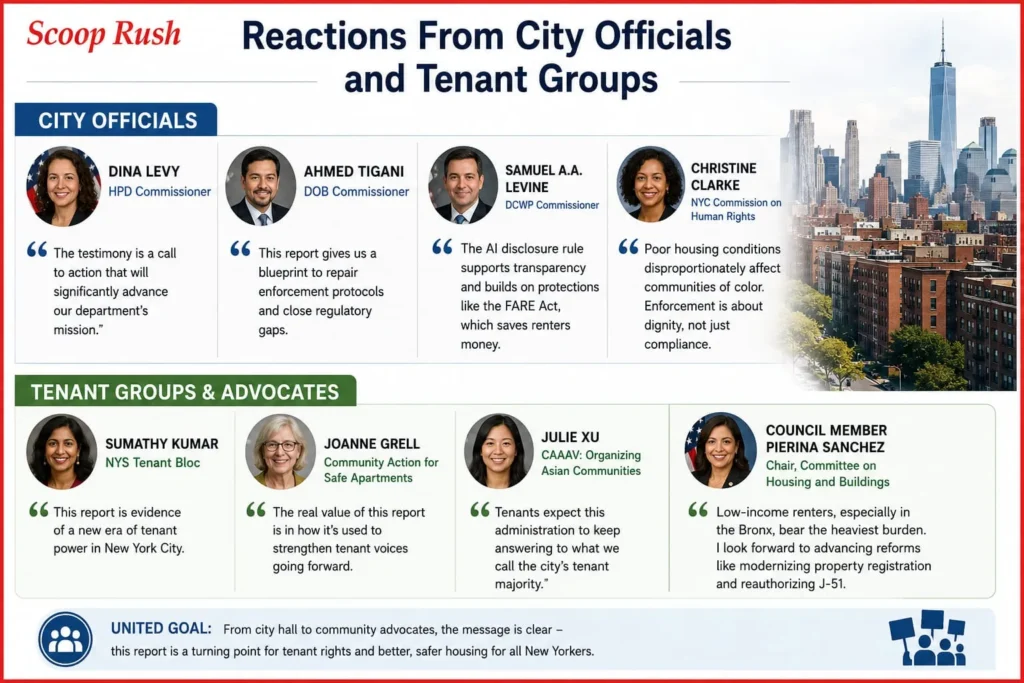
“The response from city agencies and advocacy groups to the Rental Ripoff Report has been largely enthusiastic.”
HPD Commissioner Dina Levy called the testimony a call to action that will significantly advance the department’s mission. Department of Buildings Commissioner Ahmed Tigani said the report gives his agency a blueprint to repair enforcement protocols and close regulatory gaps.
DCWP Commissioner Samuel A.A.Levine connected the AI disclosure rule to the agency’s broader push for transparency. He referenced the FARE Act, which already protects renters from broker fees when a landlord hired the broker. Meanwhile, Christine Clarke of the NYC Commission on Human Rights emphasized that poor housing conditions disproportionately affect communities of color. She framed enforcement as a matter of dignity, not just compliance.
Tenant advocacy organizations echoed similar themes. Sumathy Kumar of the NYS Tenant Bloc called the report evidence of a new era of tenant power.Joanne Grell of Community Action for Safe Apartments said the report’s real value lies in how it’s used going forward. She added that this will help strengthen tenant voices. Julie Xu of CAAAV: Organizing Asian Communities said tenants expect the administration to keep answering to the city’s tenant majority.
Council Member Pierina Sanchez, who chairs the Committee on Housing and Buildings, offered a more measured take. She emphasized that low-income renters, particularly in the Bronx, bear the heaviest burden of poor housing conditions. Sanchez said she looks forward to participating in the Legislative Task Force and pushing priorities like modernizing property registration and reauthorizing J-51, a property tax exemption program tied to housing improvements.
Why This Matters for Renters Right Now
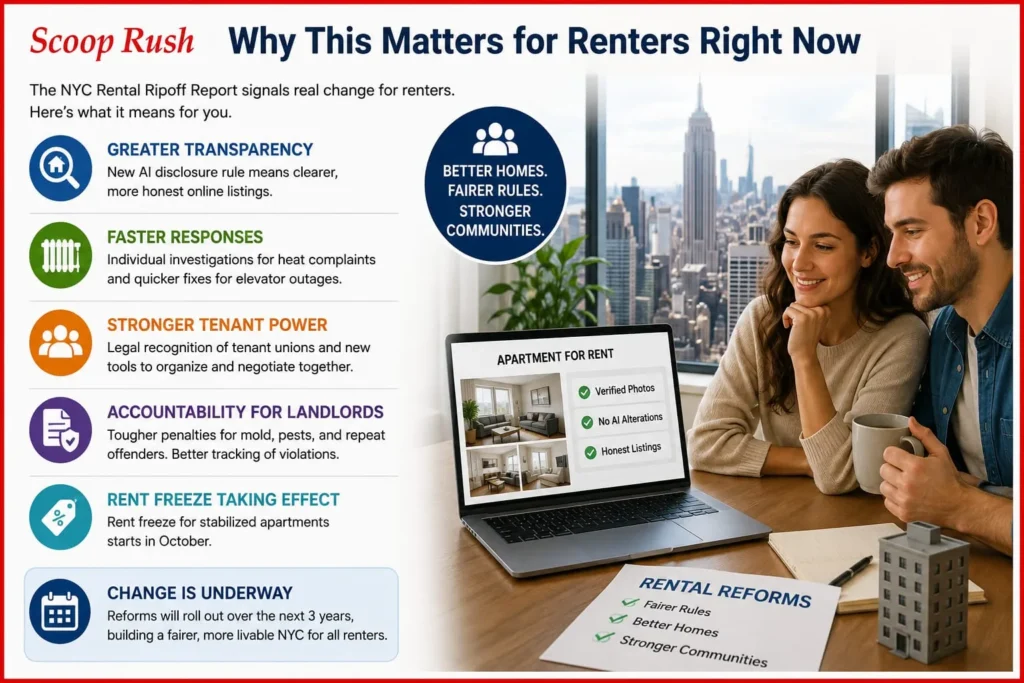
For everyday apartment hunters, the practical impact of this report will unfold gradually. Still, the direction is clear. Tenants can expect greater transparency in online listings, faster responses to heat and elevator complaints, and new legal tools for organizing collectively.
Rental reforms have been central to Mamdani’s platform since his campaign. He previously promised to freeze rent for stabilized apartments, and eligible tenants will see that freeze take effect in October. The Rental Ripoff Report builds on that momentum, extending his housing agenda beyond rent stabilization and into everyday quality-of-life issues like mold, pests, and misleading photos. For renters looking to boost their income while navigating a tough housing market, stories like this mom’s Etsy side hustle earning $10K a month show there are creative ways to stay financially afloat.
As a result, renters searching for their next apartment may soon have a clearer picture of what they’re actually looking at, both online and in person. The rollout will take time, but the direction the city is heading in is unmistakable.
Key Takeaways
New York City’s Rental Ripoff Report introduces 23 policy changes aimed at improving housing conditions and protecting tenants from deceptive practices. The standout provision requires disclosure of AI-altered rental listings, directly targeting the growing “housefishing” trend. Additional measures include legally recognizing tenant unions, modernizing landlord registration systems, and strengthening enforcement against repeat-offender landlords. While full implementation will stretch over three years, the report signals a clear shift toward greater transparency and accountability in New York’s rental market.
FAQs
What is the Rental Ripoff Report?
It’s a 23-point policy package released by Mayor Zohran Mamdani’s administration, based on testimony from over 2,400 New Yorkers collected during hearings held across all five boroughs between February and April 2026.
What does the AI-altered listing disclosure rule require?
Real estate agents and listing platforms like StreetEasy and Zillow will need to clearly disclose when rental photos or videos have been digitally altered or generated using AI, so prospective tenants know what they’re actually viewing.
When will the new rental protections take effect?
There’s no exact date yet. The city says all 23 initiatives will be implemented over the next three years, with launches staggered rather than happening all at once.
Does this policy apply only to StreetEasy and Zillow?
The Department of Consumer and Worker Protection will specifically coordinate enforcement with Zillow and StreetEasy, but the disclosure requirement is intended to apply broadly to misleading rental listings across the market.
What other tenant protections are included in the report?
Beyond AI disclosures, the report includes legal recognition of tenant unions, individual investigation of every heat complaint, faster elevator outage responses, tenant-scheduled inspections, and stronger enforcement tools against repeat-offender landlords.

