
Every few years, a new eating philosophy arrives that feels less like a trend and more like a course correction. The Biblio Diet is the latest example.
It isn’t a low-carb plan, a fasting hack, or a supplement stack dressed up in new packaging. It’s a return to something older: the idea that food should look, taste, and behave the way it did before industrial processing got involved.
That premise sits behind The Biblio Diet, a bestselling book from a naturopathic physician and a functional medicine doctor. Together they argue that the eating patterns described throughout Scripture simple proteins, healthy fats, fermented foods, seasonal produce, and rhythms of feasting and fasting line up surprisingly well with what modern nutritional science now recommends.
So what does that actually look like on a plate, and does it hold up under scrutiny? Here’s a full breakdown, question by question.
What Exactly Is the Biblio Diet?
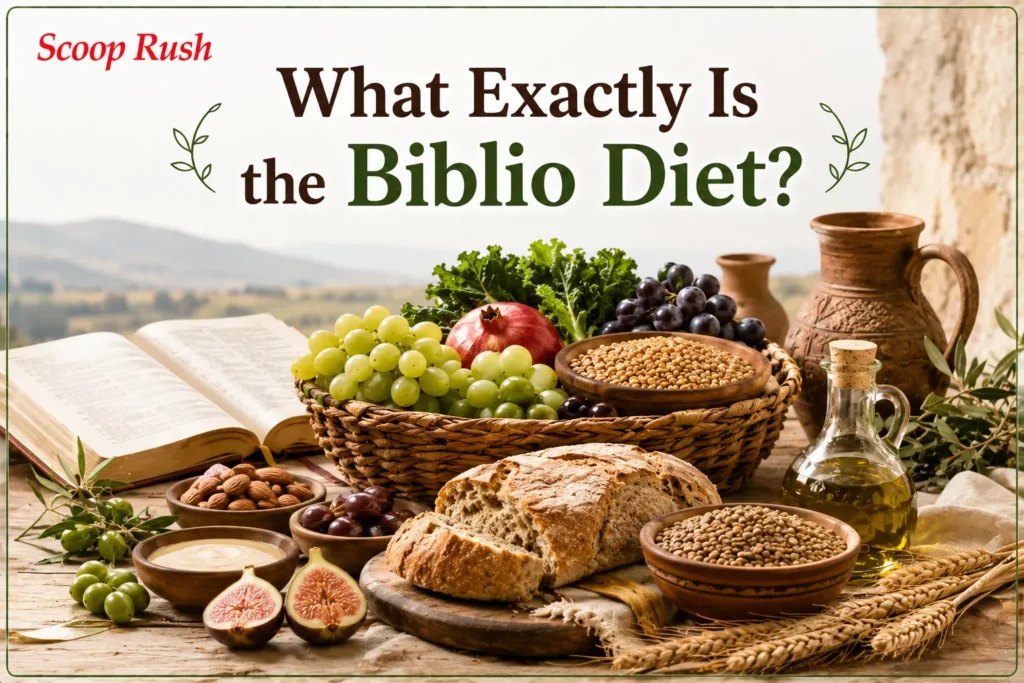
At its core, the Biblio Diet is a framework built around eating foods close to their natural state, sourced and prepared the way they would have been for most of human history.
The book’s co-authors describe it as a way of eating that mirrors the foods and patterns found throughout Scripture, built around whole, natural ingredients rather than heavily processed modern substitutes.
It’s a Philosophy, Not a Rulebook
It isn’t a list of forbidden foods so much as a mindset. The emphasis falls on three things:
- What you eat — the actual ingredient
- How it was raised or grown — the sourcing behind it
- How it’s prepared — the steps between farm and plate
That combination is what separates it from a generic “eat clean” message. A meal isn’t automatically healthy just because it avoids sugar sourcing and preparation matter just as much as the ingredient list. It’s a similar logic to what you’ll find behind other whole-food-forward approaches, like an animal-based diet, which also prioritizes nutrient quality over calorie counting.
Who Created the Biblio Diet, and What’s Their Background?
The book comes from two well-known figures in the natural health space.
| Author | Background | Known For |
| Co-author #1 | Naturopathic physician | Author of an earlier bestselling nutrition book; co-founder of a company focused on regenerative farming and superfood supplements |
| Co-author #2 | Doctor of natural medicine and chiropractor | Founder of a functional-health institute; popularizer of functional nutrition content online |
Do You Need to Be Religious for It to Work?
Both authors are candid that the plan isn’t dependent on religious belief. The ancient principles of eating and living, they say, hold up regardless of someone’s personal faith — which is part of why the diet has found an audience well beyond religious communities.
What Do the Founders Say Happens When You Follow It?
The claimed benefits are broad:
- Reduced pain and inflammation, often within days
- Improved energy and mental clarity (“brain fog” relief)
- Better mood and sleep quality
- Double-digit weight loss described as “common” within a few months
It’s worth noting these are claims made by the diet’s creators rather than findings from independent clinical trials, so they should be read the way you’d read any testimonial-driven health claim — encouraging, but not a guarantee, and not a substitute for medical advice. If you’re generally cautious about big claims, it’s worth reading up on supplement risks and over-supplementation before adding anything extra to your routine.
What Foods Does the Biblio Diet Actually Recommend?
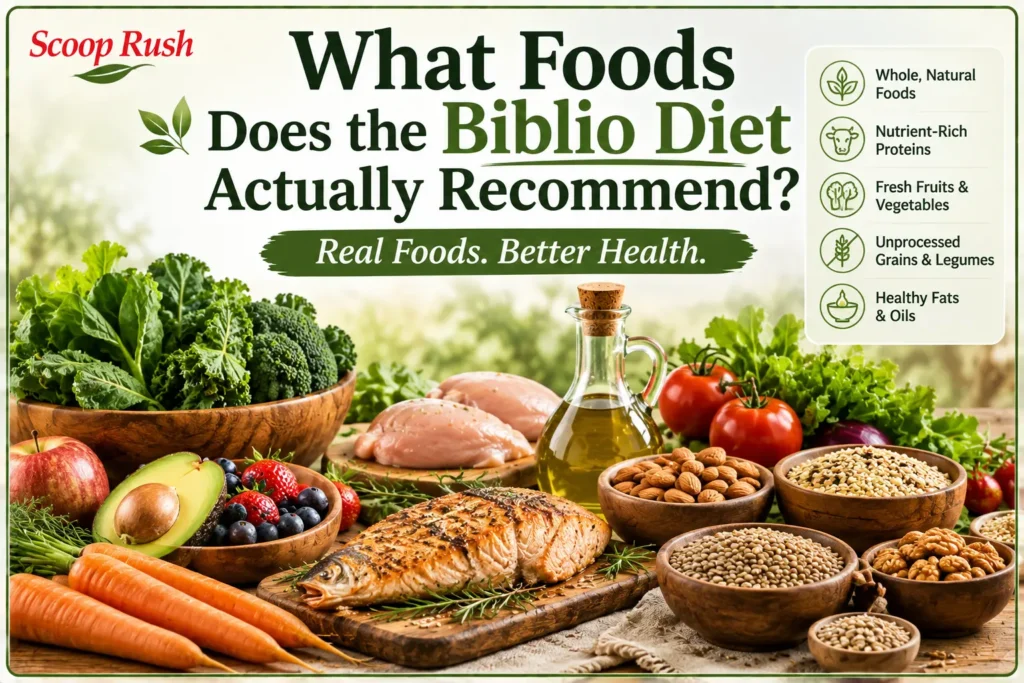
This is where the plan differs most sharply from many modern “clean eating” trends: it doesn’t demonize entire food groups. Red meat, bread, dairy, salt, and fat are all part of the plan, as long as they’re sourced and prepared thoughtfully.
Biblio Diet Food Guide at a Glance
| Food Category | Prioritized Choices | What to Minimize |
| Protein | Fish, beef, pasture-raised eggs, traditionally raised dairy | Heavily processed deli meats, factory-farmed sources |
| Fat | Olive oil, cream, naturally occurring fats in whole foods | Refined industrial seed oils |
| Carbohydrates | Whole grains, lentils, sourdough, sprouted-grain bread | Refined flour, added sugar |
| Sweeteners | Raw honey | Refined white sugar, artificial sweeteners |
| Dairy | Cultured butter, kefir, probiotic-rich yogurt | Flavored/sweetened commercial yogurt |
| Beverages | Water, herbal leaf teas | Sugary drinks, diet soda |
Which Proteins Are Prioritized?
Fish and beef take center stage, echoing the proteins most commonly referenced throughout biblical texts. The emphasis isn’t just on eating enough protein — it’s on where that protein comes from. Meat, eggs, and dairy raised through more traditional, less industrialized farming methods are considered nutritionally superior to their heavily processed, factory-farmed counterparts, even when the macronutrient numbers look identical on paper. If a higher-protein, meat-forward style of eating interests you, it’s worth comparing this approach with a carnivore diet guide to see how the two philosophies differ.
Is Fat Really Allowed on This Diet?
Yes, and intentionally so. The Biblio Diet pushes back against decades of low-fat messaging, instead encouraging fats that support:
- Brain function
- Hormone balance
- Gut health
Olive oil, cream, and naturally occurring fats from whole foods are favored over heavily refined industrial oils. The goal isn’t to add fat to everything it’s to be more selective about where your dietary fat is coming from.
What About Bread, Grains, and Carbs?
Refined carbohydrates and added sugar are the primary targets for reduction, not carbohydrates as a whole. Whole grains, lentils, and naturally leavened bread — think long-fermented sourdough over supermarket white bread — are treated as legitimate, even beneficial, staples. The concern isn’t the carb itself; it’s how processed and stripped-down it has become by the time it reaches your plate. For a broader look at how reducing refined carbs affects the body, see this breakdown of low-carb diet benefits and risks.
Why Does Food Sourcing Matter So Much in This Approach?
Sourcing is treated as part of the nutrition itself, not a separate ethical consideration.
How an animal was raised, how produce was grown, and how much processing occurred before packaging all shape the nutrient density of the final product. According to the authors, soil quality, farming methods, and processing steps directly affect how nutritious and pure a food actually is.
What This Looks Like in Practice
- Look past the nutrition label to how the food was actually produced
- Choose grass-fed meat and wild-caught fish when budget allows
- Favor produce grown without heavy chemical inputs
- Remember: two foods with identical calorie counts can behave very differently in the body depending on farming and processing
What Role Do Fermented Foods Play?
Fermented foods get their own spotlight. This isn’t about a passing wellness trend — fermentation has historically made food easier to preserve and often easier to digest.
Commonly recommended fermented foods:
- Kefir
- Yogurt (unsweetened, probiotic-rich)
- Cultured butter
- Traditionally made sourdough
Incorporating fermented foods is framed as a direct way to support digestion and gut health, while also adding variety to a diet that might otherwise feel repetitive.
Why Are Traditional Preparation Methods Emphasized?
Preparation is treated as almost as important as the ingredient itself. Raw honey, fermented dairy, sourdough, and other traditionally prepared foods are singled out because these methods can improve how available nutrients are to the body and how easily food is digested reflecting how food was historically prepared for the greatest benefit.
Simple Swaps to Start With
| Instead Of | Try |
| Refined white sugar | Raw honey |
| Mass-produced white bread | Long-fermented sourdough |
| Flavored, sweetened yogurt | Naturally cultured, plain yogurt |
The processing step between raw ingredient and finished product is where a lot of nutritional value can be lost or preserved. If mornings are your weakest link, these gluten-free breakfast ideas offer a good starting template for whole-food swaps.
Does the Biblio Diet Involve Fasting?
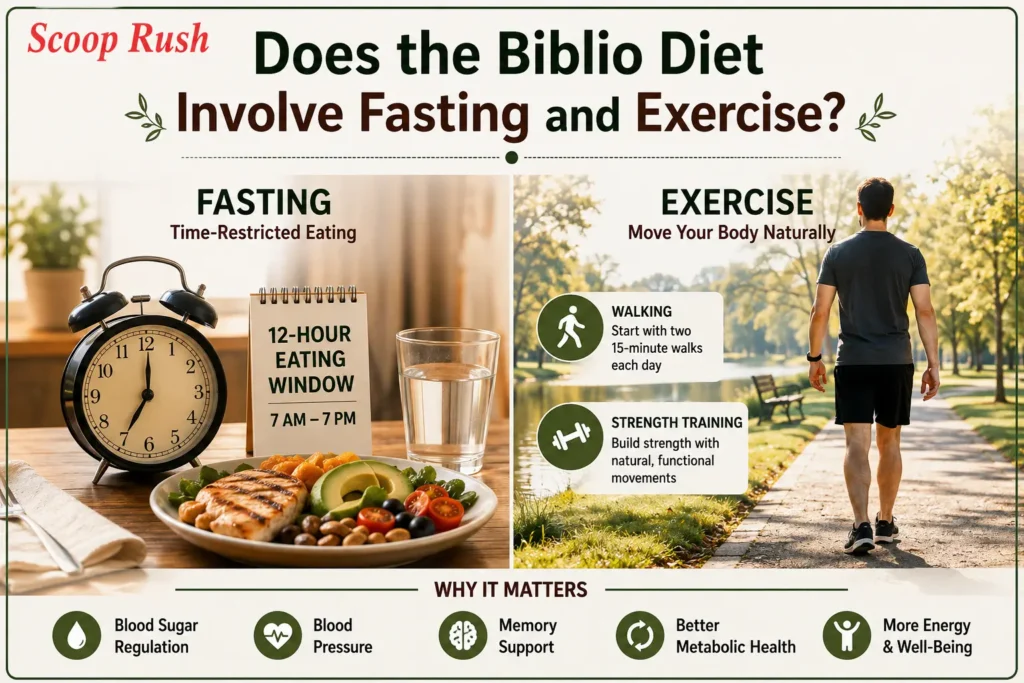
Yes. Scripture references both feasting and fasting as complementary practices, and the Biblio Diet borrows that rhythm through a modern lens: time-restricted eating.
How to Start Fasting on the Biblio Diet
- Begin with a manageable 12-hour eating window (for example, 7 a.m. to 7 p.m.)
- Eat all daily calories inside that window
- Gradually shorten the window if it continues to feel comfortable
- Adjust based on energy, hunger, and how you feel day to day
Why Fasting Is Included
The stated benefit isn’t just eating less without obsessively tracking calories. Shorter eating windows are also linked to autophagy, a cellular process where the body clears out damaged cells and metabolic waste. Research has connected this process to improvements in:
- Blood sugar regulation
- Blood pressure
- Memory
- Metabolic health more broadly
As with any fasting protocol, it’s worth checking with a doctor before making significant changes especially for anyone with a history of disordered eating, diabetes, or other health conditions.
Is Exercise Part of the Plan?
Movement is treated as a natural extension of the eating philosophy rather than a separate gym regimen.
Why Walking Is the Centerpiece
The reasoning draws on the fact that most people in ancient times traveled on foot, often covering significant distances daily as part of ordinary life. Walking is highlighted as:
- Accessible to almost anyone
- Joint-friendly
- Metabolically beneficial
Starting recommendation: two 15-minute walks per day. Even smaller bursts of movement add up research on the 5-minute walk every hour shows meaningful benefits for people who sit most of the day.
What About Strength Training?
In addition, strength training has a place in the broader plan, since it mirrors the kind of physical labor and muscle-strengthening activity that would have been part of daily life in the ancient world. However, it’s positioned as a secondary, optional layer rather than the centerpiece.
Can the Biblio Diet Really Lead to Weight Loss?
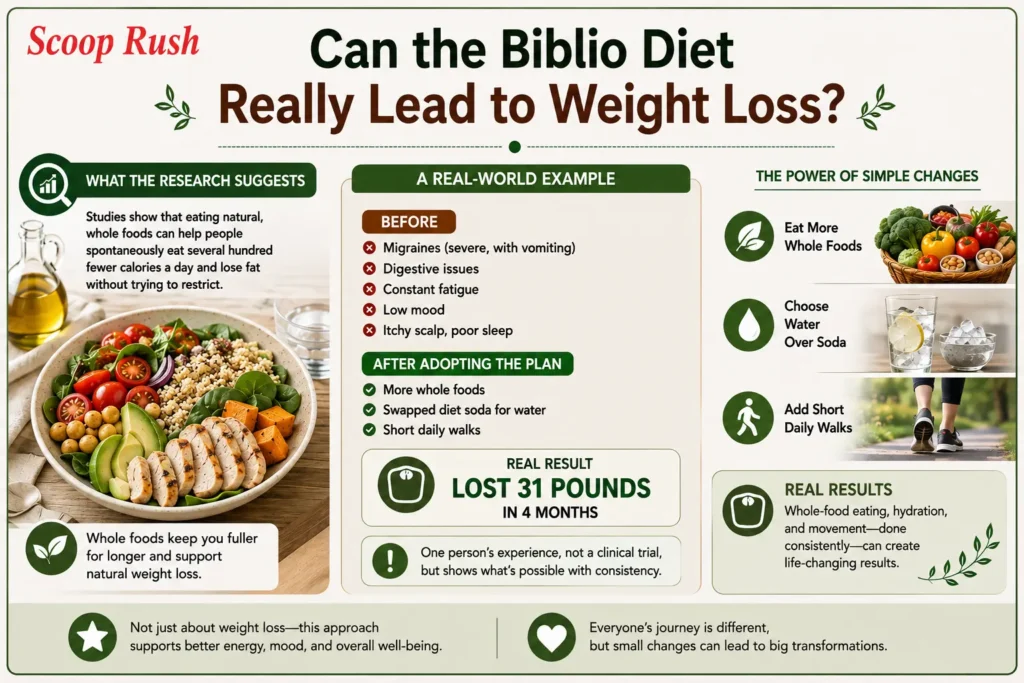
This is the question most people actually want answered, and the plan’s supporters point to both research and personal stories.
What the Research Suggests
Studies looking at unrestricted access to natural, whole foods have found that people spontaneously eat several hundred fewer calories a day and lose fat without deliberately trying to restrict, simply because whole foods tend to be more satiating than ultra-processed alternatives.
A Real-World Example
One frequently cited example involves a woman in her mid-30s who struggled for years with a cluster of frustrating symptoms.
Before starting the plan, she dealt with:
- Migraines severe enough to cause vomiting
- Ongoing digestive issues
- Constant fatigue
- Low mood
- A persistently itchy scalp that disrupted her sleep
Despite multiple doctor visits, she says she mostly received new medications rather than answers.
After adopting the plan’s principles, which included:
- Eating more whole foods
- Swapping diet soda for water
- Adding short daily walks
Her reported results:
- Mood noticeably lifted
- Skin issues resolved
- Migraines stopped entirely
- Lost 31 pounds over four months
Her experience is a single case, not a clinical trial, but it illustrates the kind of transformation the diet’s creators say is achievable when whole-food eating, hydration, and movement are combined consistently. If soda was part of your own daily routine, it’s worth understanding the real difference between Diet Coke vs. Coke Zero before deciding what to cut first.
What Are the Ten Core Habits Behind the Biblio Diet?
Boiled down, the plan’s daily philosophy comes through in ten repeatable habits.
| # | Habit | Why It Matters |
| 1 | Build meals around whole, minimally processed food | Reduces overall toxic load and supports long-term health |
| 2 | Choose fat intentionally | Supports brain, hormone, and gut function |
| 3 | Prioritize protein quality over quantity | Meat, eggs, and dairy raised with more traditional methods |
| 4 | Cut back on blood-sugar spikers | Less added sugar and refined grain |
| 5 | Reintroduce fermented foods | Kefir, yogurt, sourdough support digestion |
| 6 | Pay attention to sourcing | Farming practices affect nutrient density |
| 7 | Favor traditionally prepared foods | Raw honey, long-fermented bread over industrial versions |
| 8 | Build rhythm and moderation into eating | Avoids the restrict-then-overindulge cycle |
| 9 | Slow down and chew thoroughly | Gives digestion time to work properly |
| 10 | Keep meals simple and consistent | Beats complicated, hard-to-sustain protocols |
These habits echo a lot of general guidance around building healthy habits in your 20s and 30s, which is part of why the plan feels approachable even outside its biblical framing.
How Do You Start the Biblio Diet Without Overhauling Your Life?
Both authors are consistent on this point: don’t try to change everything overnight.
Recommended First Steps
- Upgrade breakfast first
- Replace ultra-processed snacks
- Choose better bread
- Add one fermented food back into your routine
- Start paying attention to where your meat, dairy, and produce come from
Consistency is treated as more valuable than perfection. Small, sustainable swaps repeated over weeks tend to outperform a complete overhaul that’s abandoned within a month.
What Do Nutrition Experts Generally Say About This Kind of Whole-Food Approach?
Independent of the Biblio Diet specifically, mainstream nutrition science has moved steadily toward similar conclusions:
- Minimize ultra-processed food
- Prioritize food quality and sourcing
- Support gut health through fermented foods
- Build sustainable, moderate eating habits rather than short-term restrictive diets
Time-restricted eating and daily walking are also both reasonably well-supported in the research as accessible tools for metabolic health, provided they’re introduced gradually and don’t tip into extreme restriction.
Where the Caution Comes In
Some nutrition professionals might raise an eyebrow around the specific health claims tied to the plan pain relief within days, for example since those come from the authors’ own clinical observations rather than peer-reviewed, controlled studies. That doesn’t mean the underlying habits are wrong; it just means the more dramatic promises are worth taking with a grain of salt (ideally an unrefined one).
Is the Biblio Diet Right for You?
If the appeal of intermittent fasting, whole-food eating, and mindful sourcing already resonates with you, the Biblio Diet essentially packages those ideas into a coherent, easy-to-follow narrative one that doesn’t require calorie counting, eliminating entire food groups, or buying expensive supplements to get started.
It may be particularly appealing to anyone who wants a values-driven “why” behind their eating habits, rather than a purely numbers-driven approach.
As with any significant dietary shift especially one involving fasting it’s worth checking in with a doctor first, particularly if you have an existing health condition, are pregnant or breastfeeding, or have a history of disordered eating.
FAQs
Does the Biblio Diet require giving up bread, dairy, or meat?
No. Unlike many restrictive diets, it specifically includes red meat, bread, dairy, salt, and fat, provided they’re sourced and prepared with care.
Do you have to count calories on the Biblio Diet?
No. The plan is built around food quality, sourcing, and eating rhythm rather than calorie tracking or macro counting.
Is fasting mandatory?
Fasting, in the form of a time-restricted eating window, is a core recommendation, but it’s introduced gradually and can be adjusted to what feels sustainable for the individual.
How much weight can you expect to lose?
The authors describe double-digit weight loss as common over several months, though individual results vary and this isn’t guaranteed for everyone.
Do you need to be religious for it to work?
No. The authors are explicit that the underlying principles work the same way regardless of personal belief.

