
Introduction
Picture your grocery cart with zero produce in it. No bananas rolling around, no bag of spinach wilting in the crisper drawer, no bread. Just meat, eggs, and maybe a block of cheese. For a growing number of people, that’s not a hypothetical it’s Tuesday.
The carnivore diet has become one of the most talked-about eating plans in recent years, and it’s easy to see why. In a world of confusing nutrition advice, contradictory headlines, and diets that require a spreadsheet just to plan dinner, the carnivore diet offers something almost rebellious in its simplicity: eat animals, skip everything else, and see what happens.
Unlike traditional diets that encourage a balance of carbohydrates, proteins, and healthy fats, the carnivore diet takes a completely different approach. It focuses exclusively on animal-based foods while eliminating all plant foods, including vegetables, fruits, grains, legumes, nuts, and seeds.
Supporters believe this way of eating can simplify nutrition, promote weight loss, improve blood sugar control, reduce inflammation, and increase mental clarity. Others argue that removing entire food groups may increase the risk of nutrient deficiencies and may not be suitable for everyone.
So which is it a nutritional shortcut worth exploring, or a fad riding a wave of social media hype? The honest answer is: it depends on the person, and the science is still catching up to the popularity.
If you’re curious about the carnivore diet, it’s important to understand both its potential benefits and its limitations before making any dietary changes.
This complete guide explains everything you need to know, including what foods you can eat, foods to avoid, possible health benefits, potential risks, a beginner-friendly meal plan, and practical tips to help you make informed decisions.
What Is the Carnivore Diet?
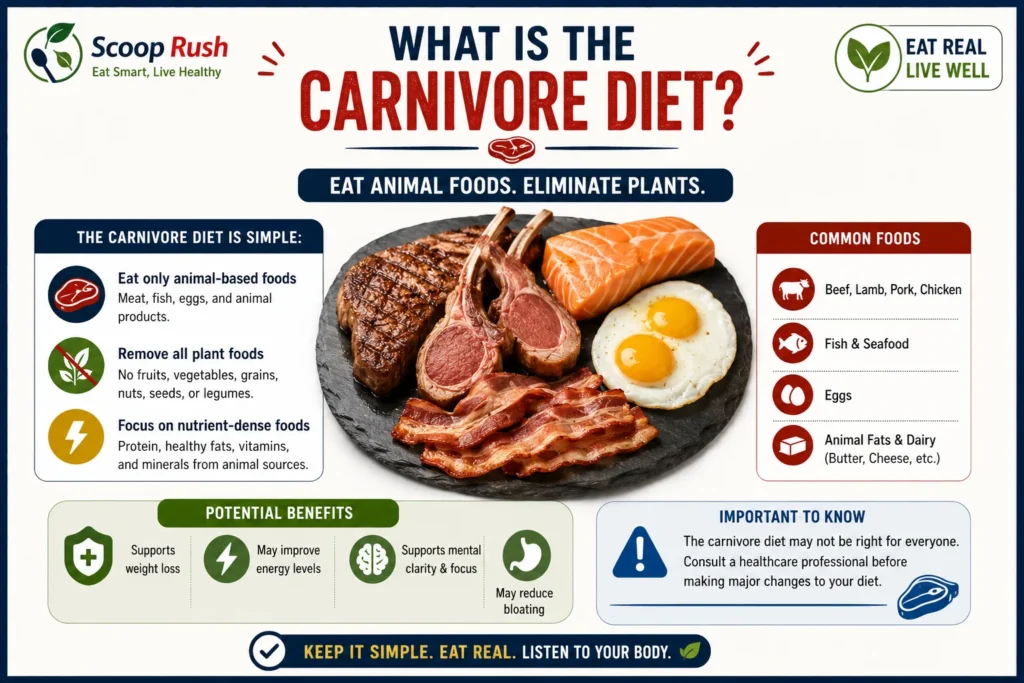
The carnivore diet is an eating pattern that consists entirely of animal-derived foods. Unlike low-carb diets that still allow vegetables and certain fruits, the carnivore diet eliminates all plant-based foods.
The goal is simple: consume foods that come from animals while avoiding carbohydrates almost completely.
People following this diet usually eat:
- Beef
- Lamb
- Pork
- Chicken
- Turkey
- Fish
- Seafood
- Eggs
- Animal fats
- Butter
- Ghee
- Certain dairy products (depending on individual preference)
Foods such as bread, rice, pasta, beans, vegetables, fruits, cereals, sugar, and vegetable oils are excluded.
Because carbohydrates are almost completely removed, the body gradually shifts from using glucose as its primary energy source to burning fat for fuel. This metabolic state is similar to ketosis, although the carnivore diet differs from the ketogenic diet because it focuses exclusively on animal foods rather than allowing low-carbohydrate vegetables. If you want to compare the two approaches side by side, this guide to low-carb diet benefits, risks, and foods breaks down how a more flexible low-carb pattern stacks up against carnivore’s stricter rules.
Think of it as keto’s stricter older sibling same general metabolic playbook, far fewer exceptions.
Why Has the Carnivore Diet Become Popular?
Interest in the carnivore diet has grown rapidly due to social media, podcasts, personal success stories, and online communities. Scroll through enough fitness content and you’ll eventually find someone holding up a “before” photo next to a steak dinner, swearing this is the thing that finally worked after years of failed attempts.
Many people report improvements in:
- Weight management
- Reduced hunger
- Better focus
- Stable energy levels
- Simpler meal planning
- Reduced cravings
However, it’s important to remember that many of these experiences are based on personal reports rather than large, long-term clinical studies. Scientific research on the long-term effects of the carnivore diet remains limited.
There’s also a psychological pull worth naming honestly: decision fatigue is real, and a diet with only one rule (“if it didn’t come from an animal, don’t eat it”) removes an enormous amount of daily mental friction. That alone can feel like relief, even before any physical changes show up.
How Does the Carnivore Diet Work?
Under normal circumstances, carbohydrates provide the body’s primary source of energy.
Foods like bread, rice, potatoes, fruit, and sugar are broken down into glucose, which supplies fuel for the brain, muscles, and organs.
When carbohydrate intake becomes extremely low, the body begins using stored fat for energy.
The liver converts fatty acids into ketones, which become an alternative fuel source for many tissues.
Because the carnivore diet contains almost no carbohydrates, many people experience:
- Lower insulin levels
- Reduced appetite
- Increased fat burning
- Less fluctuation in blood sugar
- More consistent energy throughout the day
Protein also helps increase feelings of fullness, making it easier for some individuals to reduce overall calorie intake naturally.
Foods You Can Eat on the Carnivore Diet
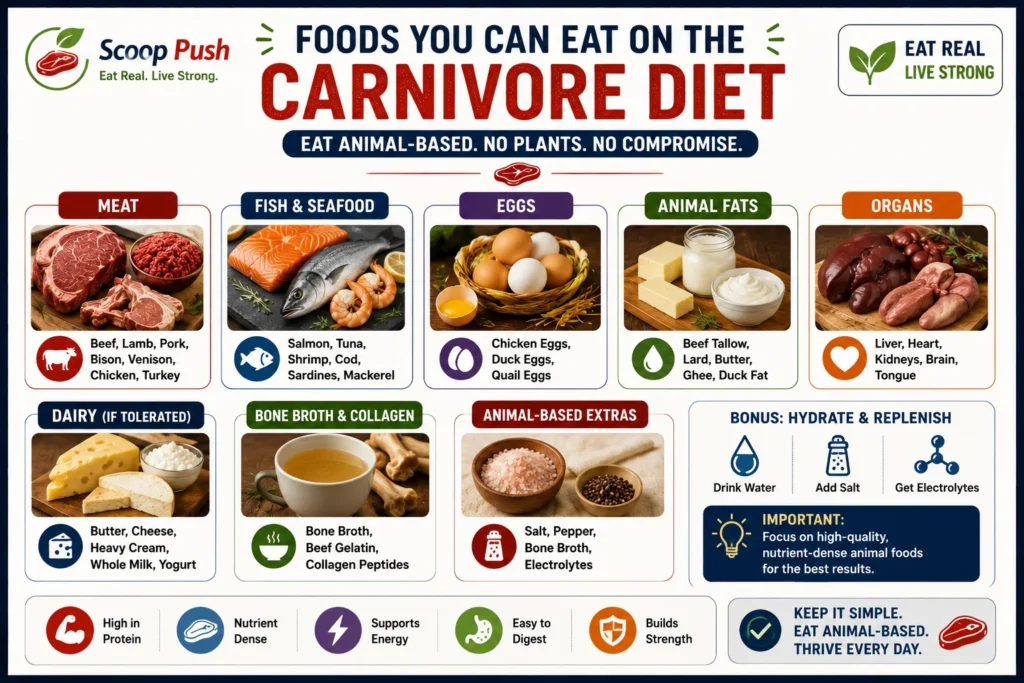
The carnivore diet revolves entirely around animal products. While the list may seem limited at first, there is actually considerable variety when choosing different types of meat, seafood, eggs, and animal fats. In fact, many newcomers are surprised at how many distinct meals they can build once they stop thinking in terms of “meat and vegetables” and start thinking in terms of “cuts and preparations.”
Beef
Beef is considered the foundation of many carnivore diets because it provides high-quality protein, healthy fats, iron, zinc, and vitamin B12.
Popular choices include:
- Ribeye steak
- New York strip
- T-bone steak
- Ground beef
- Chuck roast
- Brisket
- Short ribs
- Beef ribs
- Sirloin
- Flank steak
Fatty cuts are generally preferred because dietary fat becomes an important energy source when carbohydrates are removed.
Organ Meats
Organ meats are among the most nutrient-dense animal foods available. They provide vitamins and minerals that are often found in smaller amounts in muscle meat.
Examples include:
- Beef liver
- Heart
- Kidney
- Tongue
- Bone marrow
- Oxtail
Liver is especially rich in vitamin A, vitamin B12, folate, iron, and copper. Many experienced carnivore followers include organ meats once or twice each week rather than eating them daily. If the taste feels intense at first, some people find that mixing finely chopped liver into ground beef makes it far more approachable.
Pork
Pork offers excellent variety and can easily fit into the carnivore diet.
Common options include:
- Pork chops
- Pork belly
- Bacon
- Pork shoulder
- Ham
- Pork ribs
Choose minimally processed products whenever possible to reduce added sugars and preservatives.
Lamb
Lamb provides another nutrient-rich protein source.
Popular cuts include:
- Lamb chops
- Leg of lamb
- Ground lamb
- Lamb shoulder
- Lamb shanks
Lamb naturally contains healthy fats and offers excellent flavor for those wanting variety.
Poultry
Chicken and turkey are leaner than beef but still fit well within the carnivore diet.
Popular choices include:
- Chicken thighs
- Chicken wings
- Drumsticks
- Chicken breast
- Turkey legs
- Turkey thighs
Cooking lean meats with butter, ghee, or beef tallow helps increase fat intake.
Fish
Fatty fish provide important omega-3 fatty acids.
Excellent choices include:
- Salmon
- Sardines
- Mackerel
- Trout
- Herring
Including fish two or three times each week may help improve dietary fat quality.
Seafood
Seafood adds valuable minerals and variety.
Options include:
- Shrimp
- Lobster
- Crab
- Mussels
- Clams
- Oysters
- Scallops
Many shellfish are naturally rich in zinc, selenium, iodine, and vitamin B12.
Eggs
Eggs are one of the most versatile foods on the carnivore diet.
They contain:
- Complete protein
- Healthy fats
- Choline
- Vitamin D
- Vitamin B12
- Selenium
Many people enjoy eggs fried in butter, scrambled, boiled, or poached.
Animal Fats
Dietary fat plays an important role because carbohydrates are nearly eliminated.
Common cooking fats include:
- Butter
- Ghee
- Beef tallow
- Lard
- Duck fat
These fats help improve satiety and provide energy throughout the day.
Dairy (Optional)
Some carnivore followers include dairy products, while others avoid them due to lactose intolerance or personal preference.
Common dairy choices include:
- Butter
- Ghee
- Heavy cream
- Hard cheeses
- Cottage cheese
- Greek yogurt (less commonly)
If dairy causes bloating or digestive discomfort, limiting or avoiding it may be beneficial.
Foods to Avoid on the Carnivore Diet
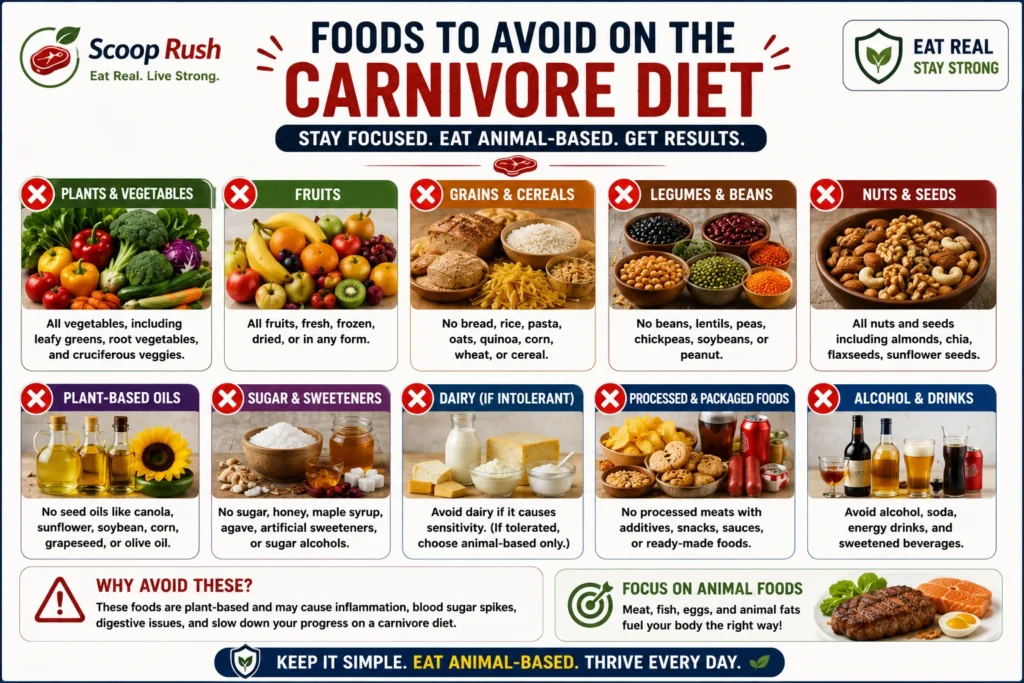
The carnivore diet excludes all plant-based foods.
Foods to avoid include:
Vegetables
- Broccoli
- Spinach
- Carrots
- Kale
- Lettuce
- Tomatoes
- Peppers
- Cucumbers
Fruits
- Apples
- Bananas
- Oranges
- Grapes
- Berries
- Mangoes
- Pineapple
Grains
- Rice
- Wheat
- Oats
- Corn
- Barley
- Quinoa
Legumes
- Beans
- Lentils
- Chickpeas
- Soybeans
- Peanuts
Nuts and Seeds
- Almonds
- Walnuts
- Cashews
- Chia seeds
- Flaxseeds
- Pumpkin seeds
Processed Foods
- Chips
- Cookies
- Cakes
- Candy
- Breakfast cereals
- Sugary drinks
- Fast food
Plant Oils
- Soybean oil
- Corn oil
- Sunflower oil
- Canola oil
Common Myths About the Carnivore Diet
Because the carnivore diet is so unconventional, it tends to attract strong opinions — and a fair number of myths on both sides.
Myth: “You’ll instantly get scurvy without fruit.” In reality, meat, particularly organ meats and fresh cuts, contains small amounts of vitamin C, and the body’s requirement for it may be lower when carbohydrate intake is minimal. That said, this is still a genuine area of nutritional debate, not a settled fact.
Myth: “All that protein will destroy your kidneys.” For people with healthy kidney function, higher protein intake hasn’t been shown to cause damage. However, anyone with existing kidney disease should absolutely avoid this diet without medical guidance, since impaired kidneys process protein differently.
Myth: “It’s basically keto, just with a new name.” Keto allows low-carb vegetables, nuts, and even some fruit. Carnivore is far more restrictive, cutting out every plant food entirely. The two overlap in mechanism but not in practice.
Myth: “Everyone feels amazing on it.” Some people report dramatic improvements. Others feel sluggish, constipated, or simply don’t enjoy eating this way long-term. Individual response varies enormously, and that’s worth taking seriously rather than dismissing.
Potential Benefits of the Carnivore Diet
The carnivore diet has gained attention because many people report improvements in their health after switching to an animal-based eating pattern. While some benefits are supported by research on high-protein or low-carbohydrate diets, many claims about the carnivore diet itself still require more scientific evidence. Understanding both the potential advantages and current limitations can help you make an informed decision.
1. May Support Weight Loss
Weight loss is one of the most common reasons people try the carnivore diet.
Several factors may contribute to this:
- High-protein foods increase feelings of fullness.
- Fat-rich meals may reduce hunger between meals.
- Eliminating sugary snacks and processed carbohydrates often lowers overall calorie intake.
- Stable blood sugar levels may reduce cravings.
Many people naturally eat fewer calories without intentionally restricting portions because protein and fat are highly satisfying.
However, sustainable weight loss still depends on total calorie intake, activity level, sleep quality, and long-term eating habits.
2. May Reduce Hunger and Cravings
One of the biggest challenges with many diets is constant hunger.
Animal proteins digest more slowly than refined carbohydrates, helping you stay full for longer periods.
People often report:
- Less snacking
- Fewer sugar cravings
- Better appetite control
- Longer periods between meals
This makes meal planning simpler for some individuals.
3. May Improve Blood Sugar Stability
Since the carnivore diet contains almost no carbohydrates, it produces minimal increases in blood glucose after meals.
Some people with insulin resistance notice:
- More stable blood sugar
- Fewer energy crashes
- Less frequent hunger
However, individuals with diabetes should never begin this diet without medical supervision because medication doses may need adjustment.
4. Simple Meal Planning
Unlike many diets that require counting carbohydrates, tracking points, or measuring ingredients, the carnivore diet is relatively straightforward.
Meals usually consist of:
- A protein source
- Animal fat
- Optional eggs or dairy
This simplicity appeals to people who prefer uncomplicated meal preparation.
5. High in Quality Protein
Protein supports many essential functions throughout the body.
Adequate protein intake helps maintain:
- Muscle mass
- Bone health
- Immune function
- Tissue repair
- Hormone production
Animal protein contains all nine essential amino acids, making it a complete protein source. Keeping protein intake high is also worth paying attention to if you’re managing weight with newer tools for context, this piece on GLP-1 medications and muscle loss explains why adequate protein matters so much during any period of rapid weight change.
6. Rich in Several Important Nutrients
Animal foods provide nutrients that are easily absorbed by the body.
Examples include:
- Vitamin B12
- Iron
- Zinc
- Selenium
- Choline
- Phosphorus
Organ meats such as liver also provide vitamin A and folate in high amounts.
Potential Risks and Side Effects
Although some people feel better on the carnivore diet, it also has potential drawbacks.
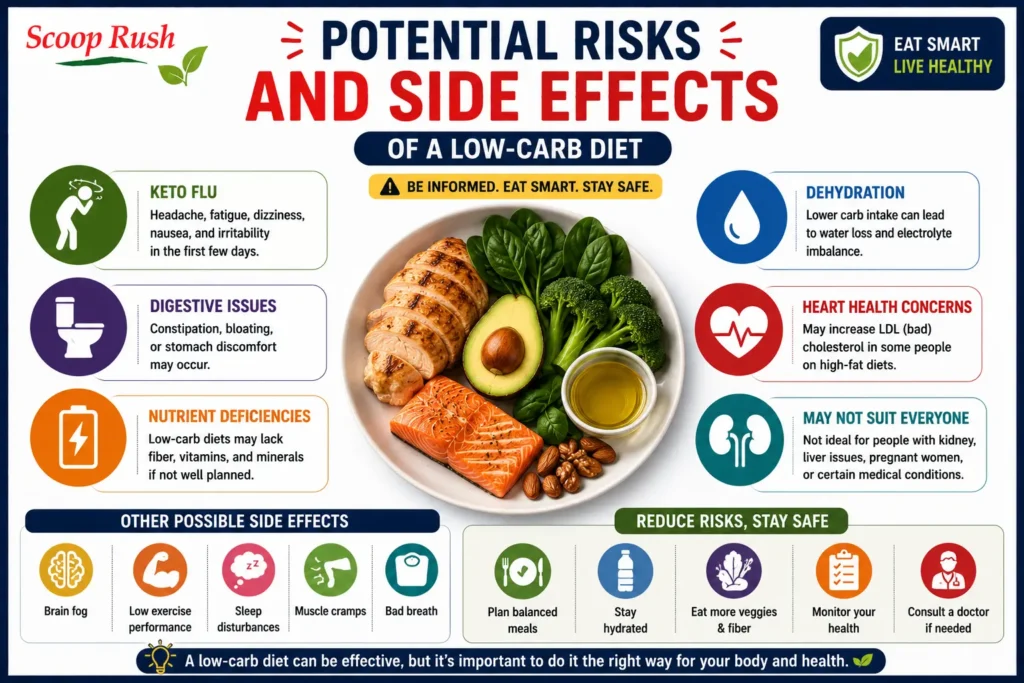
Removing entire food groups may reduce dietary variety and limit important nutrients.
1. Low Fiber Intake
The carnivore diet contains virtually no dietary fiber.
Fiber supports:
- Healthy digestion
- Regular bowel movements
- Beneficial gut bacteria
- Colon health
Some individuals experience constipation during the transition. Others report diarrhea while adapting to higher fat intake. Responses vary from person to person. If constipation or digestive discomfort becomes a persistent issue, this diet guide for managing hemorrhoids offers practical strategies that can help even when fiber intake is naturally low.
2. Nutrient Gaps
While animal foods are nutrient-dense, they contain little or none of certain nutrients found primarily in plant foods.
Potential concerns include:
- Vitamin C
- Magnesium
- Potassium
- Folate (if organ meats are not consumed)
- Certain antioxidants
Eating a variety of animal foods, including seafood and organ meats, may help reduce these concerns but may not completely eliminate them. If you’re considering supplements to fill any gaps, it’s worth reading about the risks of taking too many vitamins before reaching for a multivitamin as a quick fix.
3. High Saturated Fat Intake
Many carnivore meals contain large amounts of saturated fat.
Current research on saturated fat continues to evolve. Some individuals experience increased LDL cholesterol after following the diet. People with existing heart disease or high cholesterol should discuss dietary changes with their healthcare provider.
4. Digestive Changes
The body often needs time to adjust to significant dietary changes.
Temporary side effects may include:
- Constipation
- Diarrhea
- Bloating
- Nausea
- Fatigue
These symptoms often improve during the first few weeks as the digestive system adapts.
5. Limited Scientific Research
The carnivore diet remains one of the least studied dietary patterns.
Although thousands of personal success stories exist online, long-term clinical trials are still limited.
More research is needed to understand:
- Long-term safety
- Cardiovascular effects
- Gut health
- Kidney health
- Overall disease risk
The Social Side of Eating Only Meat
One thing rarely mentioned in carnivore diet guides is how it changes your social life. Dinner invitations, work lunches, birthday parties, holiday meals — most social eating revolves around shared plates of pasta, bread, dessert, and sides that carnivore eaters simply skip.
A few practical strategies help:
- Eat beforehand when unsure of the menu, so you’re not stuck with only bread and salad.
- Scan the menu for protein-forward dishes at restaurants — steakhouses, seafood spots, and Brazilian-style grills tend to be the easiest options.
- Communicate simply. “I’m doing a meat-and-eggs kind of diet right now” tends to get an easier reaction than a long explanation.
- Bring your own dish to gatherings when it’s appropriate, so you always have something to eat.
Social friction is one of the most common reasons people abandon restrictive diets, not lack of willpower. Planning for it in advance makes a real difference in how sustainable the diet feels.
Cost and Sustainability Considerations
A carnivore diet isn’t automatically expensive, but it can be if you build every meal around ribeye and salmon. Ground beef, chicken thighs, eggs, and canned sardines are some of the most budget-friendly animal proteins available, and buying larger cuts to portion and freeze yourself often costs less than pre-cut, individually packaged meat.
It’s also worth acknowledging that an all-animal diet raises questions for some people around environmental impact and food sourcing. If this matters to you, look into local farms, pasture-raised options, or bulk-buying from butchers, which can address both cost and sourcing concerns at once.
Exercise and the Carnivore Diet
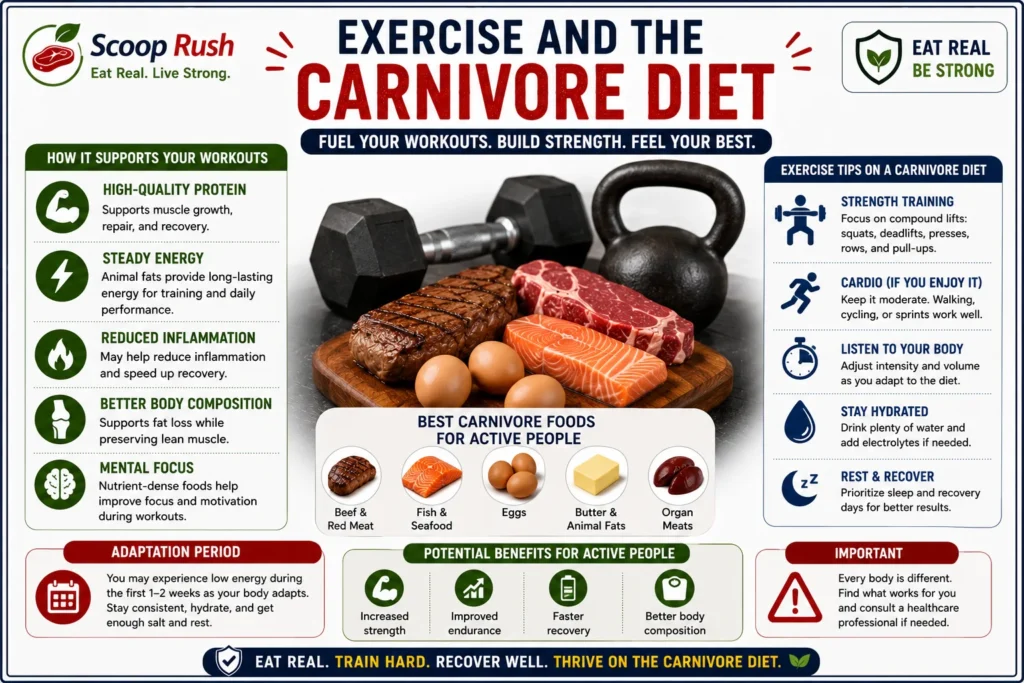
People who train regularly often ask whether performance suffers without carbohydrates. The answer depends heavily on the type of training:
- Strength and resistance training tend to adapt reasonably well, since the body can rely more on fat and protein for sustained effort.
- High-intensity or endurance activities that depend heavily on quick glucose availability may feel harder, at least until the body adjusts, and sometimes permanently for very glycolytic sports.
- Recovery may benefit from the high protein intake, which supports muscle repair.
Anyone training seriously for competition should think carefully and likely consult a sports dietitian before combining intense training with a zero-carbohydrate approach.
Even without formal workouts, movement still matters on any diet. Simple habits like taking a 5-minute walk every hour can support digestion and energy levels, which is especially useful during the adjustment period when the body is learning to run on a new fuel source.
Who Should Avoid the Carnivore Diet?
The carnivore diet may not be appropriate for everyone.
People who should seek medical advice before trying it include:
- Pregnant women
- Breastfeeding mothers
- Children
- Individuals with chronic kidney disease
- People with advanced liver disease
- Those with certain metabolic disorders
- Individuals recovering from eating disorders
Anyone taking medications for diabetes or blood pressure should consult a healthcare professional before making major dietary changes.
How to Start the Carnivore Diet
If you decide to try the carnivore diet, a gradual transition may be easier than making dramatic overnight changes.
Step 1: Remove Processed Foods
Begin by eliminating:
- Sugary drinks
- Candy
- Cakes
- Chips
- Fast food
Step 2: Reduce Carbohydrates
Gradually reduce foods such as:
- Bread
- Rice
- Pasta
- Breakfast cereals
- Potatoes
Step 3: Focus on Animal Foods
Build meals around:
- Beef
- Eggs
- Fish
- Chicken
- Lamb
- Pork
Step 4: Eat Enough Fat
Since carbohydrates are removed, dietary fat becomes an important energy source.
Choose naturally fatty cuts of meat and cook with butter, ghee, or beef tallow when appropriate.
Step 5: Stay Hydrated
Drink enough water throughout the day.
Many people also increase sodium intake during the first few weeks because low-carbohydrate diets can increase fluid and electrolyte loss.
Getting Through “Carnivore Flu”
Many people experience a rough patch during the first one to two weeks, sometimes nicknamed “carnivore flu” or “keto flu.” Symptoms can include headaches, fatigue, irritability, and brain fog as the body shifts its primary fuel source.
A few things tend to help:
- Increase salt intake, since sodium loss is common in the early low-carb transition.
- Drink enough water and consider bone broth for added electrolytes.
- Avoid restricting calories too aggressively during this adjustment window this isn’t the time to also try to eat less overall.
- Give it at least two to three weeks before judging how you feel, since early symptoms often resolve on their own.
If symptoms are severe or don’t improve, that’s a signal to check in with a healthcare provider rather than pushing through.
7-Day Carnivore Diet Meal Plan
Day 1
Breakfast: Scrambled eggs cooked in butter, bacon Lunch: Beef burger patties Dinner: Ribeye steak
Day 2
Breakfast: Fried eggs Lunch: Chicken thighs Dinner: Salmon with butter
Day 3
Breakfast: Omelet with cheese (optional) Lunch: Pork chops Dinner: Ground beef
Day 4
Breakfast: Bacon and eggs Lunch: Roast beef Dinner: Lamb chops
Day 5
Breakfast: Hard-boiled eggs Lunch: Sardines Dinner: Beef brisket
Day 6
Breakfast: Steak and eggs Lunch: Turkey thighs Dinner: Ribeye steak
Day 7
Breakfast: Eggs cooked in butter Lunch: Chicken wings Dinner: Slow-cooked beef roast
Carnivore Diet Shopping List
Meat
- Ribeye
- Ground beef
- Chuck roast
- Brisket
- Lamb
- Pork chops
- Bacon
Poultry
- Chicken thighs
- Drumsticks
- Turkey
Seafood
- Salmon
- Sardines
- Shrimp
- Oysters
Dairy (Optional)
- Butter
- Ghee
- Heavy cream
- Cheese
Other
- Eggs
- Salt
- Bone broth
Common Beginner Mistakes
Avoid these common errors:
- Eating only lean meat
- Not drinking enough water
- Ignoring electrolyte intake
- Expecting immediate results
- Avoiding organ meats completely
- Eating too little overall
How to Know If the Carnivore Diet Is Working for You
Instead of relying purely on the scale, it helps to track a broader set of signals over the first month:
- Energy levels throughout the day, not just right after meals
- Sleep quality and how rested you feel in the morning
- Digestion, including regularity and comfort
- Mood and mental clarity
- Strength and performance in workouts, if you train
- Bloodwork, ideally checked before starting and again after a few months, especially cholesterol markers
Weight loss alone doesn’t tell the whole story. Some people lose weight but feel worse overall; others maintain their weight but report better focus and fewer cravings. Paying attention to more than one metric gives a fuller, more honest picture of whether this way of eating actually suits you.
FAQs
Can I drink coffee on the carnivore diet?
Strict versions exclude coffee because it comes from plants, but many people continue drinking black coffee. If you go this route, it’s worth knowing how coffee on an empty stomach can affect digestion, especially during the first few weeks of adjusting to a low-carb way of eating.
Can I eat cheese?
Many people include hard cheeses, although some prefer to avoid dairy.
Can I eat eggs every day?
Yes. Eggs are a common part of the carnivore diet for most people.
Is the carnivore diet expensive?
It can be, but choosing ground beef, eggs, chicken thighs, and seasonal sales can help reduce costs.
How long should I follow the carnivore diet?
There is no universally recommended duration. If you choose to try it, regular checkups with your healthcare provider are advisable.
Can I ever add plant foods back in?
Many people use carnivore as a short-term reset or elimination protocol, then slowly reintroduce specific plant foods one at a time to see how their body responds. This can also be a useful way to identify personal food sensitivities.
How does carnivore compare to other restrictive diets?
Carnivore isn’t the only structured eating plan built around strict rules. If you’re curious how it stacks up against another short-term, rules-based approach, this military diet guide covers a very different style of restriction worth understanding for comparison.
Conclusion
The carnivore diet is one of the most restrictive eating patterns available, focusing entirely on animal-based foods while eliminating all plant foods. Some people report benefits such as weight loss, improved appetite control, and stable energy levels, but scientific evidence supporting many of these claims remains limited.
Because the diet excludes several food groups, it may increase the risk of nutrient gaps and may not be suitable for everyone. Before making significant dietary changes, especially if you have an underlying health condition, consult a qualified healthcare professional or registered dietitian.
Ultimately, the best diet is one that provides balanced nutrition, supports your health goals, fits your lifestyle, and can be maintained over the long term. Whether the carnivore diet becomes a long-term lifestyle, a short-term experiment, or simply an interesting chapter in your relationship with food, the most important step is making the decision with clear eyes not just enthusiasm.

