
Introduction
Hemorrhoids, also known as piles, are one of the most common digestive health complaints out there and yet almost nobody talks about them until they’re dealing with one. They develop when the veins around the anus or lower rectum become swollen and inflamed, and while they’re rarely dangerous, they can make everyday life genuinely uncomfortable: pain, itching, bleeding during bowel movements, and the simple misery of not being able to sit comfortably.
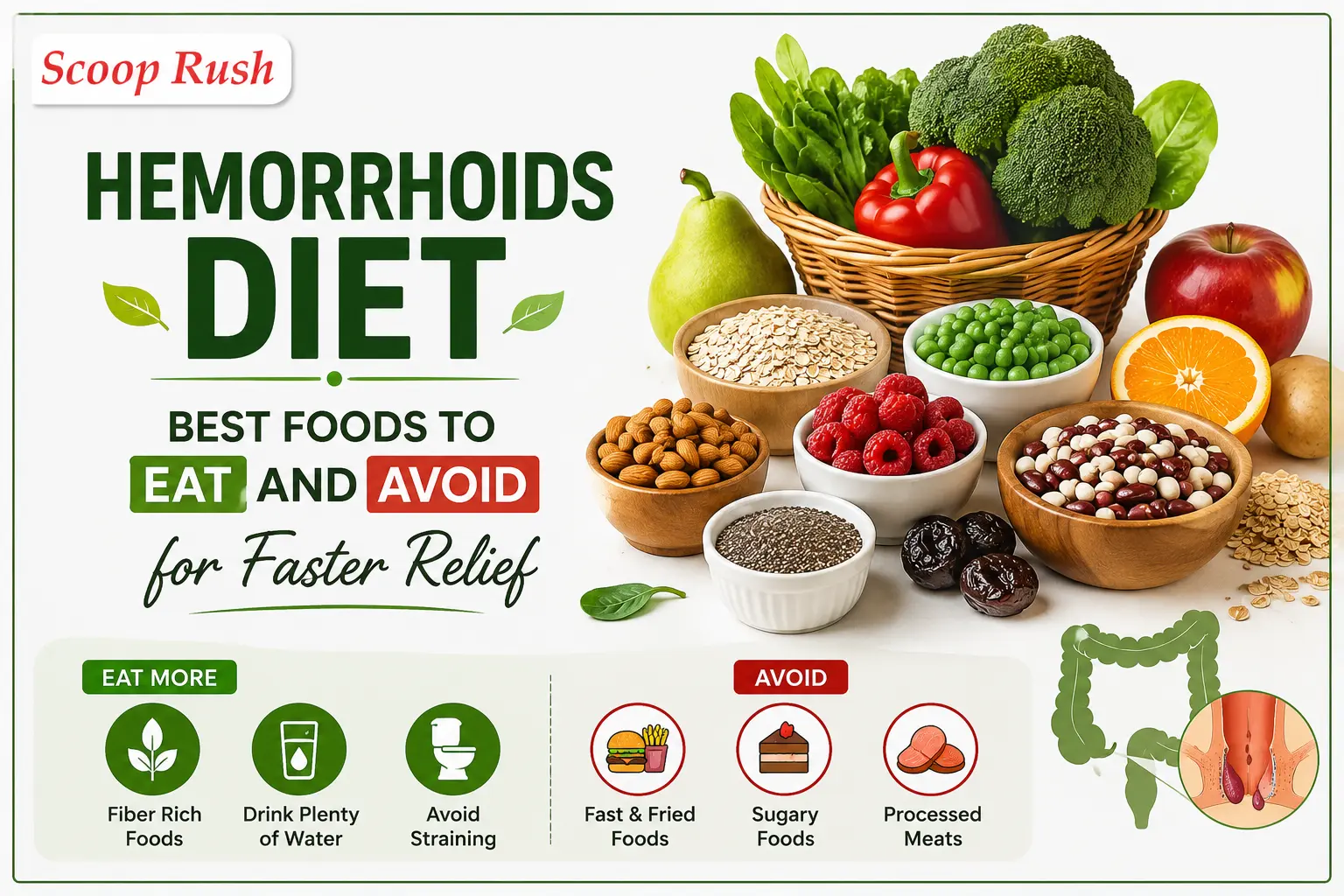
Here’s the encouraging part most hemorrhoids don’t need surgery. In a lot of cases, they respond well to something much simpler: what’s on your plate. A diet rich in fiber, paired with good hydration and regular movement, softens stool and takes the pressure off the veins that cause the problem in the first place.
This guide walks through how diet shapes hemorrhoid symptoms, which foods actually help, which ones tend to make things worse, and the everyday habits that keep flare-ups from coming back.
What Are Hemorrhoids, Exactly?
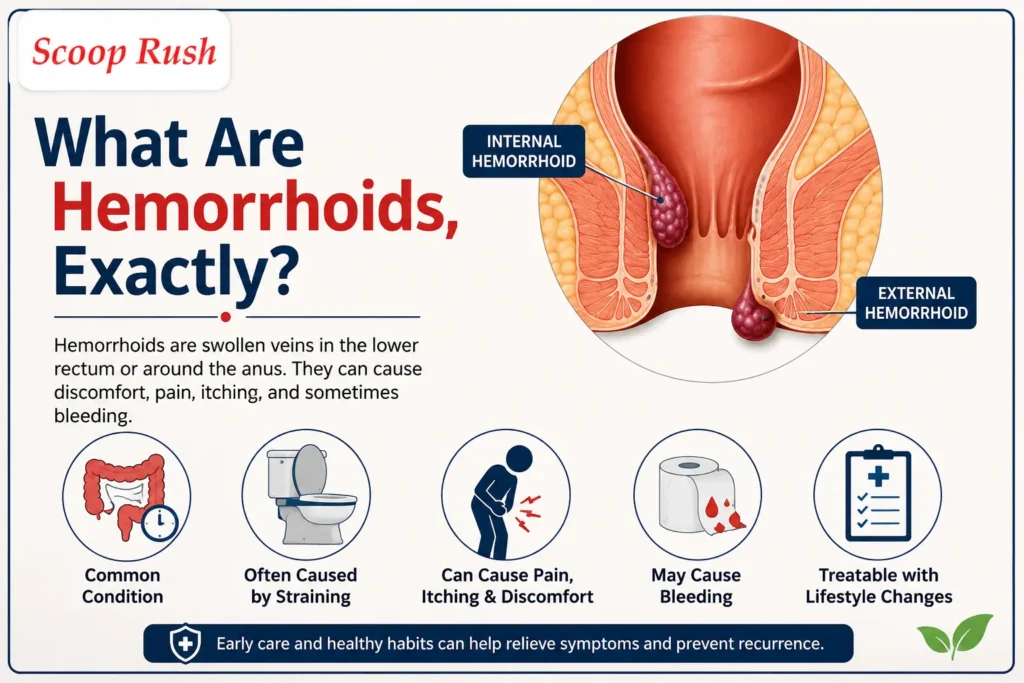
Think of hemorrhoids as the rectal equivalent of varicose veins swollen, stretched-out veins, just in a much less convenient location. There are two main types, and they behave quite differently.
Internal hemorrhoids form inside the rectum. Because there are fewer pain-sensitive nerves there, they’re often painless the giveaway is usually bright red blood after a bowel movement, a nagging feeling of incomplete emptying, or in more advanced cases, prolapse (where the hemorrhoid pushes outside the anus).
External hemorrhoids sit under the skin around the anus, and they’re the ones that actually hurt. Expect swelling, itching, burning, tender lumps, and occasionally a blood clot (a thrombosed hemorrhoid), which can be quite painful.
What Causes Them
A mix of everyday habits and life stages can tip the odds toward hemorrhoids:
- Chronic constipation — hard stools mean more pushing, and more pushing means more pressure on rectal veins
- Chronic diarrhea — frequent bowel movements irritate anal tissue over time
- A low-fiber diet — the root cause behind a lot of constipation
- Pregnancy — growing uterine pressure and hormonal shifts both raise the risk
- Obesity — extra weight adds pressure on pelvic veins
- Sitting for long stretches, especially on the toilet
- Heavy lifting without proper form
- Aging — the tissue that supports these veins naturally weakens over time
One cause worth dwelling on is simply how much of the day most of us spend seated. Desk jobs and long commutes keep people in a chair for eight-plus hours, and that adds up. Something as small as a five-minute walk every hour has been shown to meaningfully offset the health costs of prolonged sitting hemorrhoid risk included. It’s a habit worth building even if you’ve landed one of the purpose-driven, better-paying careers Gen Z increasingly favors plenty of those are still desk-based, so a more meaningful job doesn’t automatically mean a more active one.
Recognizing the Symptoms
- Bright red bleeding after bowel movements
- Pain during bowel movements
- Anal itching or burning
- Swelling and tender lumps around the anus
- Mucus discharge
- A feeling of fullness in the rectum
If bleeding is persistent, heavy, or comes with real pain, don’t just assume it’s a hemorrhoid — get it checked so other conditions can be ruled out.
Why Diet Actually Matters Here
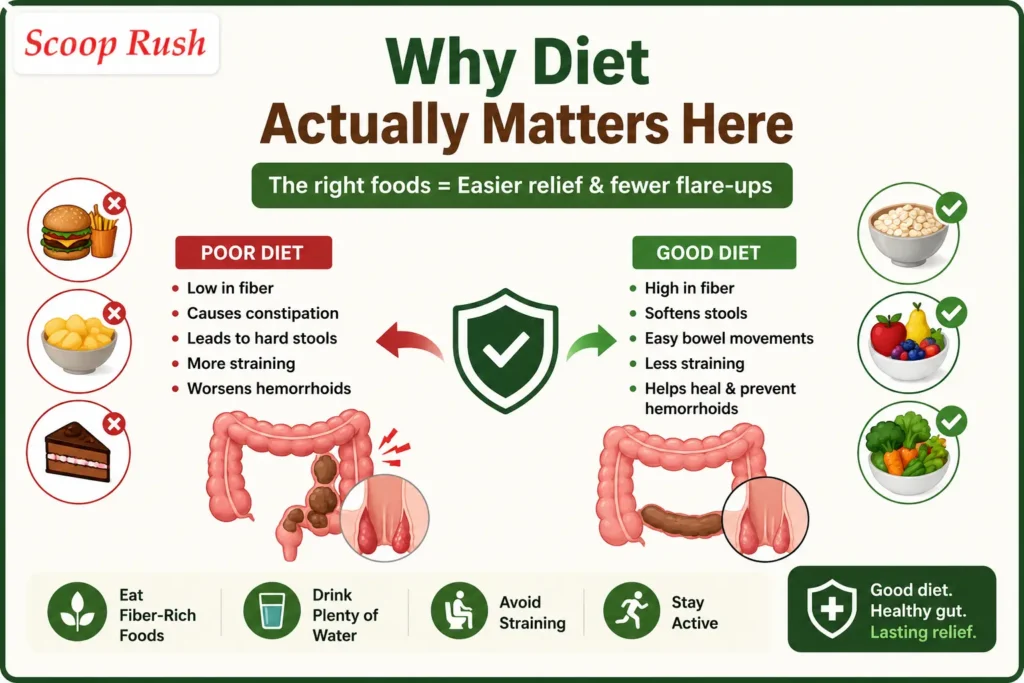
Chronic constipation is one of the biggest drivers of hemorrhoids, and it comes down to simple mechanics: dry, hard stool takes more effort to pass, and straining is exactly what puts pressure on the veins around the rectum until they swell.
Fiber addresses this directly. As it moves through your digestive tract largely undigested, it absorbs water, adds bulk to stool, softens it, and shortens the time waste spends sitting in the colon. The end result is a bowel movement that requires far less effort and far less strain.
Water matters just as much. Fiber needs fluid to do its job properly — without enough water, adding more fiber can actually backfire and make constipation worse rather than better.
Put simply, a diet built around fiber and fluids helps by:
- Softening stool
- Promoting regular bowel movements
- Reducing constipation
- Decreasing pressure on rectal veins
- Lowering the risk of future hemorrhoids
- Supporting overall gut health
So, How Much Fiber Do You Actually Need?
The general guideline from the Dietary Guidelines for Americans is about 14 grams of fiber for every 1,000 calories you eat:
| Daily Calories | Recommended Fiber |
| 1,600 | 22 grams |
| 1,800 | 25 grams |
| 2,000 | 28 grams |
| 2,500 | 35 grams |
Most adults fall well short of this. If you’re planning to close the gap, do it gradually over a few weeks rather than all at once — ramping up too fast tends to bring on gas and bloating, and drinking plenty of water along the way makes the whole transition much smoother.
The Best High-Fiber Foods to Add to Your Plate
Fruits
Fruit is one of the easiest ways to sneak more fiber into your day, especially if you eat the skin — that’s where much of the fiber actually lives.
| Fruit | Fiber (approx.) |
| Bran cereal (½ cup, high-fiber variety) | Up to ~14 g |
| Raspberries (1 cup) | ~8 g |
| Pear, medium (with skin) | ~5–6 g |
| Apple, medium (with skin) | ~4–5 g |
| Blackberries, oranges, kiwis, bananas, peaches, prunes | Good sources |
Apples bring pectin to the table, a soluble fiber that’s particularly good for digestion, and prunes have earned their reputation as a constipation remedy thanks to a combination of fiber and natural sorbitol.
Vegetables
- Green peas (cooked) — around 9 grams of fiber per cup, making them one of the highest-fiber vegetables around
- Sweet potatoes — a mix of soluble and insoluble fiber, plus vitamin A, vitamin C, and potassium (keep the skin on)
- Broccoli — fiber alongside vitamin C, vitamin K, folate, and sulforaphane
- Carrots — gentle on digestion, whether raw, steamed, roasted, or tossed into soup
- Winter squash (butternut, acorn) — soft texture that’s easy on the gut
- Potatoes — bake with the skin on, and skip the butter and cheese in favor of plain yogurt or steamed vegetables
Beans and Legumes
Beans are genuinely one of the best fiber sources you can eat, and they’re easy to work into meals you’re already making — soups, chili, burritos, curries, rice bowls.
| Legume (½ cup) | Fiber (approx.) |
| Navy beans | ~10 g |
| Lentils | Very high — among the top of any legume |
| Pinto beans | ~8 g |
| Kidney beans | High, plus lean protein |
Whole Grains
Refined grains lose most of their fiber during processing, so swapping them out makes a real difference: whole wheat bread and pasta, brown rice, oats, bran or shredded wheat cereal, and barley all deliver fiber along with B vitamins, magnesium, iron, and antioxidants.
Nuts and Seeds
Almonds, walnuts, pistachios, peanuts, chia seeds, and flaxseeds all bring fiber, healthy fats, and protein to the table. They’re calorie-dense, though, so a handful goes a long way.
Don’t Forget Hydration
Water is what lets all that fiber actually work it softens stool, eases digestion, and cuts down on straining. Sip consistently through the day rather than waiting until you’re thirsty. Clear soups, herbal tea, water infused with lemon or cucumber, and modest amounts of fruit juice (prune juice especially) all count toward the total.
Not every drink pulls its weight equally, though. Drinking coffee on an empty stomach can trigger a bowel movement for some people and irritate others, so it’s worth paying attention to how your own body reacts. And if soda is part of your routine, it’s worth knowing how Diet Coke actually compares to Coke Zero and what a Diet Dr Pepper really looks like nutritionally — neither replaces water, but understanding the differences helps you choose better when you do reach for something else.
Foods That Tend to Make Things Worse
Just as some foods help, others tend to work against you — usually because they’re low in fiber, slow to digest, or both.
- Fast food — heavy on fat, refined carbs, and salt; light on fiber
- Processed meats (hot dogs, sausages, bacon, deli meats) offer very little fiber
- Fried foods — take longer to digest than grilled, baked, or steamed alternatives
- Cheese and full-fat dairy in large amounts can worsen constipation for some people, though moderate portions balanced with fiber are usually fine
- Chips and salty snacks — low fiber, high sodium and fat
- Frozen ready meals — often sodium-heavy, light on vegetables
- Sugary foods (candy, cookies, cakes, pastries) tend to crowd out the higher-fiber choices you actually need
It’s worth knowing that a high-fiber diet is essentially the opposite of some short-term therapeutic diets. A clear liquid diet, a low-residue diet, or a bland diet is sometimes prescribed temporarily after a procedure or during an acute flare-up precisely because it minimizes fiber the reverse of what long-term prevention calls for. Restrictive plans like the military diet aren’t built with digestive fiber in mind either, so they’re not a substitute for the food choices above once you’re past an acute episode.
A Sample High-Fiber Day
If you’re not sure where to start, here’s what a full day might look like:
- Breakfast: High-fiber bran cereal, low-fat milk, sliced banana, glass of water
- Morning snack: Apple with skin, a small handful of almonds
- Lunch: Grilled chicken, brown rice, steamed broccoli, green peas
- Afternoon snack: Pear with plain yogurt
- Dinner: Lentil soup, baked sweet potato, mixed vegetable salad
- Evening snack: A few prunes
Home Remedies Worth Trying
Diet takes time to show results, so it helps to pair it with a few things that ease symptoms in the meantime.
A warm sitz bath sitting in a few inches of warm water for 10 to 15 minutes, two or three times a day, especially after bowel movements relaxes the muscles around the anus, improves circulation, and eases pain and itching. Skip the soaps and bubble baths, which tend to irritate rather than soothe.
Ice packs work well for swelling: wrap ice or a bag of frozen vegetables in a clean towel and apply for 15 to 20 minutes. Never apply ice directly to skin.
Gentle hygiene matters more than people expect. Clean the area after every bowel movement with soft, unscented toilet paper or fragrance-free wipes, and pat dry rather than rubbing. Avoid anything with alcohol or added fragrance. Good self-care habits extend beyond the bathroom, too — the same logic that governs how often you should brush your hair applies here: consistent but not excessive cleaning supports healing without causing irritation from over-washing.
For temporary relief, over-the-counter products like hemorrhoid creams, anti-inflammatory ointments, medicated wipes, witch hazel pads, and petroleum jelly can help — just follow the package instructions and check in with a provider if symptoms stick around past a week.
And if getting enough fiber from food alone is a struggle, a fiber supplement (psyllium, methylcellulose, or wheat dextrin) can fill the gap — taken, as always, with plenty of water. Before adding any supplement to your routine, though, it’s worth knowing the other side of that coin: taking too many vitamins or supplements carries its own risks, so more isn’t automatically better, even here.
Everyday Habits That Keep Flare-Ups Away
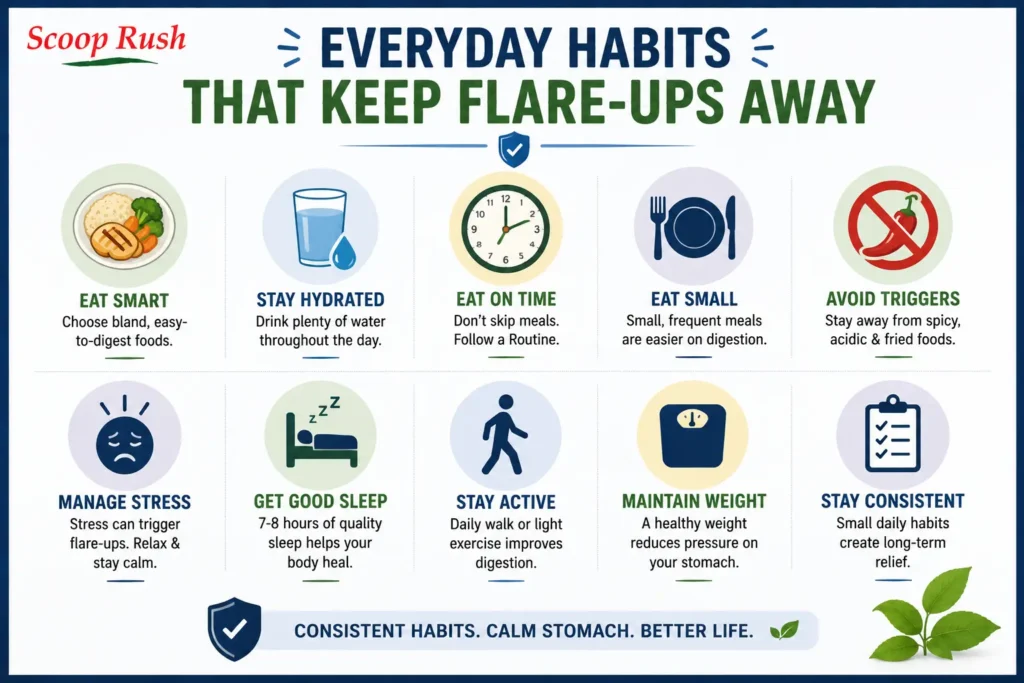
Diet does a lot of the heavy lifting, but a few daily habits matter just as much:
- Don’t delay bowel movements. Waiting lets the colon pull more water out of the stool, making it harder to pass later.
- Avoid straining. Let a high-fiber diet and good hydration do the work instead of forcing things along.
- Don’t linger on the toilet. Extended sitting phone scrolling included adds pressure to rectal veins. Once you’re done, get up.
- Stay physically active. Walking, swimming, cycling, yoga, and stretching all keep things moving. Aim for at least 150 minutes of moderate exercise a week, and skip heavy lifting or intense straining while symptoms are active. If you’re exercising outdoors, timing matters seniors in particular face real heat and humidity risks during vigorous activity, and knowing the basics of heat dome safety helps everyone plan smarter workout windows. On the hottest days, a few home cooling tips can turn indoor stretching into a solid substitute for an outdoor walk. And if consistency, not the weather, is your real obstacle, joining a class or studio can help — even something like browsing fitness studio name ideas might be the nudge you need if you’re thinking about starting or joining one.
- Maintain a healthy weight. Extra weight adds pressure to the pelvic floor and rectal veins, so pairing exercise with a balanced diet helps on both fronts. If you’re using a weight-loss medication, it’s worth knowing the trade-offs GLP-1 drugs have been linked to muscle loss alongside fat loss, which is worth a conversation with your doctor. More broadly, building healthy habits in your 20s and 30s fiber, movement, consistency tends to pay off far more than any single quick fix.
When It’s Time to See a Doctor
Most hemorrhoids clear up with home care, but certain signs shouldn’t be brushed off:
- Rectal bleeding that continues or becomes heavy
- Severe pain that doesn’t improve
- A large lump that keeps getting more painful
- Fever or pus (possible signs of infection)
- Symptoms lasting longer than a week despite home treatment
- Changes in bowel habits or unexplained weight loss
Persistent bleeding, in particular, deserves a proper look it can also be caused by colorectal polyps, inflammatory bowel disease, or colorectal cancer, so it shouldn’t be written off as “just hemorrhoids” without a professional check.
The same logic applies to health more broadly: catching things early tends to lead to better outcomes. Recognizing early lung cancer symptoms, or understanding how teplizumab is being used to delay type 1 diabetes, both illustrate how much earlier detection and treatment can change. And prevention itself can be just as powerful the HPV vaccine’s role in preventing cervical cancer deaths is one of the clearest examples of proactive care outperforming a reactive one.
The Bottom Line
Hemorrhoids are common, uncomfortable, and for most people very manageable. The formula isn’t complicated: more fiber from whole grains, fruits, vegetables, beans, and legumes softens stool and takes the pressure off the veins that cause the problem. Pair that with good hydration, regular movement, and a few small bathroom habits, and most people see real improvement without ever needing a prescription.
Simple self-care sitz baths, gentle hygiene, staying active, drinking enough water speeds things along further. But if bleeding persists, pain doesn’t let up, or symptoms simply won’t budge, that’s the point to bring in a healthcare professional rather than wait it out.
FAQs
Can hemorrhoids go away on their own?
Yes. Mild cases often improve within a few days once you increase fiber intake, drink more water, and stop straining. Larger hemorrhoids may need medical treatment.
Is drinking water actually important here?
Very much so. Water works hand in hand with fiber to soften stool and ease constipation — it’s one of the simplest, most effective things you can do.
Which fruits are best for hemorrhoids?
Apples, pears, raspberries, blackberries, prunes, oranges, and kiwis are all solid choices — eat the skin where you can for extra fiber.
Are bananas good for hemorrhoids?
Yes, they’re fiber-rich and easy to digest, making them a sensible everyday choice.
Can spicy food cause hemorrhoids? Not directly, but it can aggravate irritation if you already have them. If you notice a pattern, it’s worth cutting back until things settle.
Can exercise make hemorrhoids worse? Moderate exercise like walking or swimming is genuinely helpful. Heavy lifting or intense straining, though, can temporarily raise pressure on rectal veins so stick to gentler movement while you’re symptomatic.

