
Quick Answer
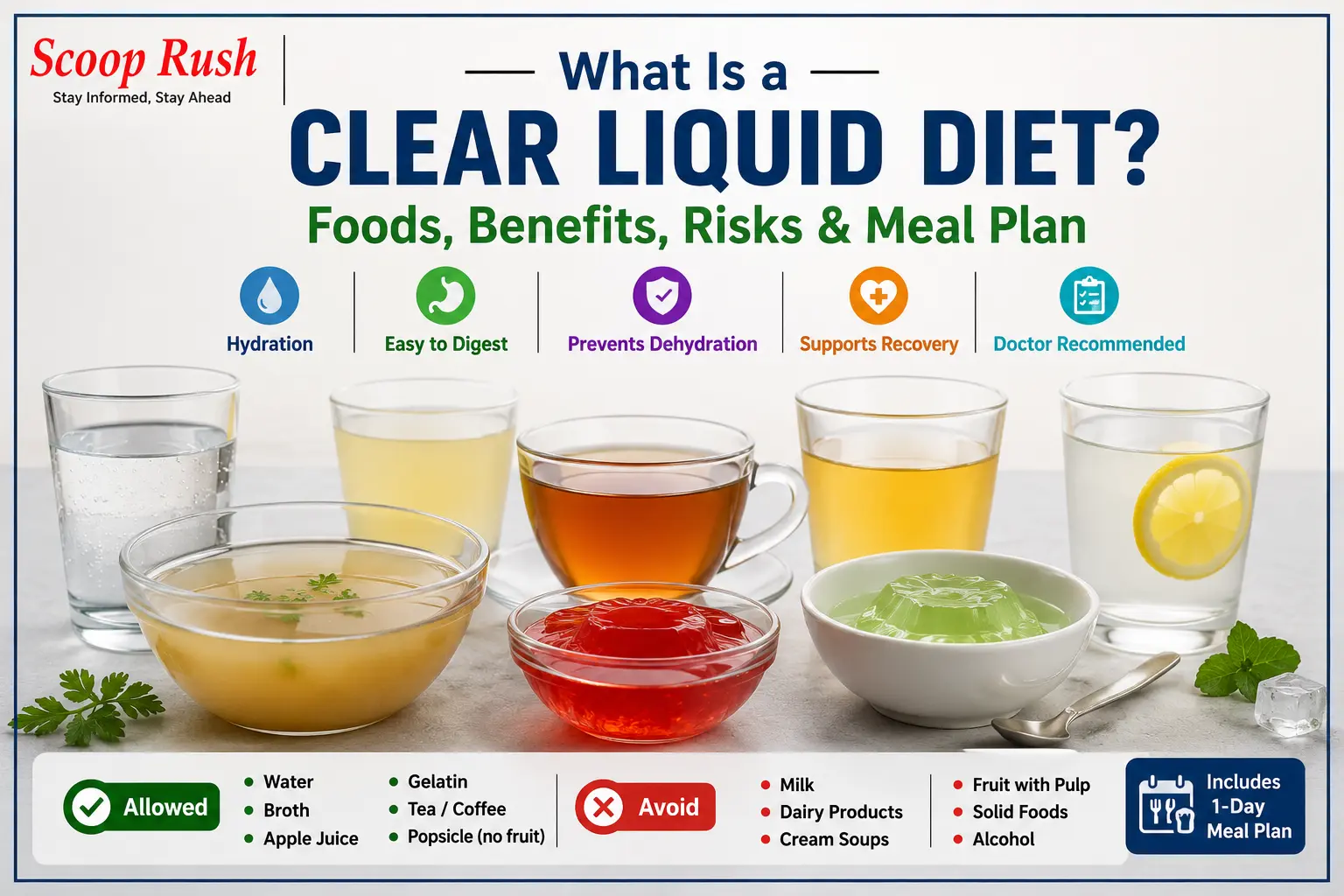
A clear liquid diet is a short-term medical diet that includes transparent liquids such as water, clear broth, apple juice without pulp, black coffee, tea, sports drinks, and plain gelatin. Doctors commonly recommend it before a colonoscopy, surgery, or during recovery from digestive illnesses. It helps keep you hydrated while allowing your digestive system to rest, but it should only be followed for a short period because it does not provide complete nutrition.
What Is a Clear Liquid Diet?
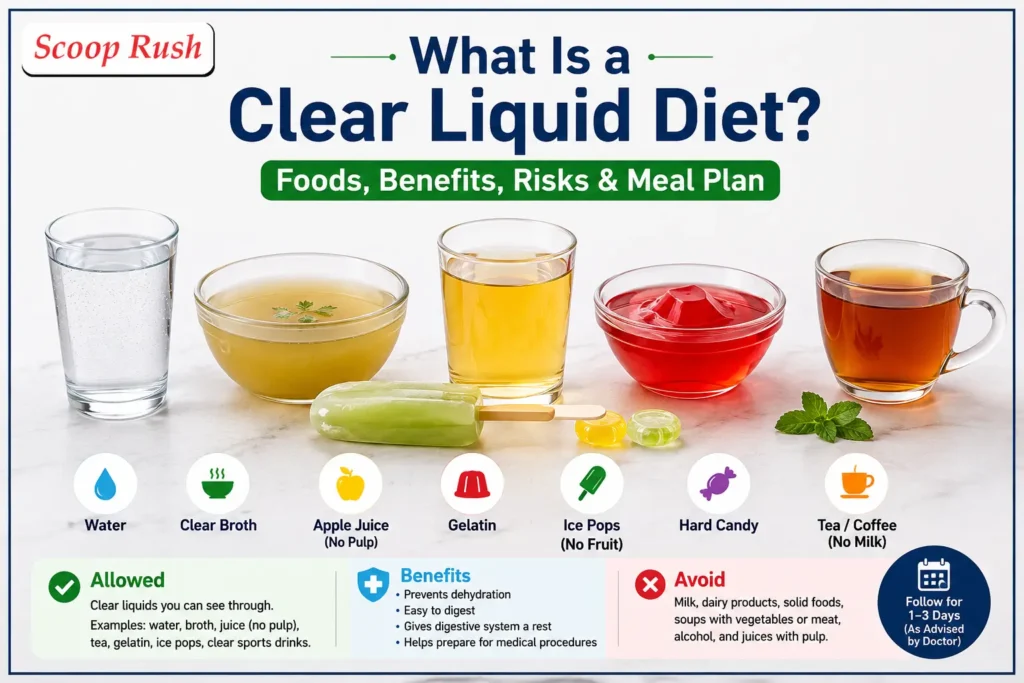
A clear liquid diet is a temporary eating plan that includes only liquids you can see through and foods that turn into clear liquids at room temperature. Unlike regular meals, these foods leave little or no residue in your digestive tract, making them easy to digest.
Doctors often recommend a clear liquid diet before medical procedures such as a colonoscopy or surgery. It may also be used when recovering from digestive problems like vomiting, diarrhea, or stomach infections.
Although the diet provides fluids, electrolytes, and a small amount of energy, it does not contain enough protein, healthy fats, vitamins, or minerals to meet your body’s nutritional needs. For this reason, it should only be followed for a short time and under the guidance of a healthcare professional.
In this guide, you’ll learn:
- What a clear liquid diet is
- Why doctors recommend it
- Foods and drinks you can have
- Foods to avoid
- Benefits and possible risks
- A sample meal plan
- Frequently asked questions
Who May Need a Clear Liquid Diet?
A healthcare provider may recommend a clear liquid diet in several situations, including:
- Before a colonoscopy
- Before surgery requiring anesthesia
- After stomach or intestinal surgery
- During severe vomiting or diarrhea
- While recovering from food poisoning
- During certain digestive illnesses
- Before some medical imaging tests
- During short-term bowel rest prescribed by a doctor
Always follow your healthcare provider’s instructions because the duration and allowed foods may vary depending on your medical condition.
Why Is a Clear Liquid Diet Recommended?
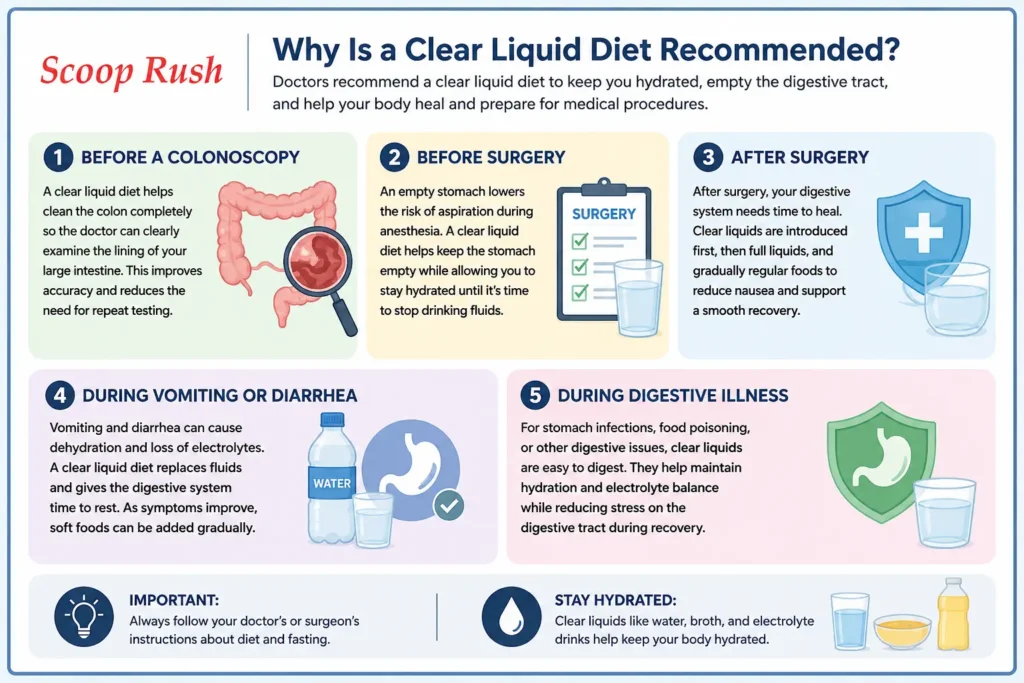
Doctors recommend a clear liquid diet because it helps empty the stomach and intestines while keeping the body hydrated. This lowers the risk of complications during medical procedures and gives the digestive system time to recover.
Below are the most common reasons why healthcare providers prescribe this diet.
Before a Colonoscopy
Before a colonoscopy, your colon must be completely clean so the doctor can clearly examine the lining of your large intestine.
Even small amounts of undigested food can hide polyps or other abnormalities. A clear liquid diet helps remove residue from the digestive tract, making the procedure more accurate and reducing the need for repeat testing.
Before Surgery
Many surgeries require an empty stomach before anesthesia. Food remaining in the stomach can increase the risk of aspiration, a serious complication in which stomach contents enter the lungs during surgery.
A clear liquid diet helps keep the stomach empty while allowing you to stay hydrated until it’s time to stop drinking fluids before the procedure. Always follow your surgeon’s specific instructions regarding fasting.
After Surgery
After operations involving the stomach or intestines, your digestive system needs time to heal.
Doctors often begin with clear liquids before gradually introducing a full liquid diet and eventually regular foods. This gradual approach helps reduce nausea, prevents digestive discomfort, and allows your body to recover more comfortably.
During Vomiting or Diarrhea
Vomiting and diarrhea can quickly lead to dehydration and electrolyte loss.
A clear liquid diet replaces fluids while giving your digestive system a chance to rest. As your symptoms improve, your healthcare provider will usually recommend slowly returning to soft foods and then your regular diet.
During Digestive Illness
People experiencing stomach infections, food poisoning, or other digestive conditions may temporarily benefit from a clear liquid diet.
Because clear liquids are easy to digest, they reduce stress on the digestive tract while helping maintain hydration and electrolyte balance during recovery.
Why Does a Clear Liquid Diet Work?
Many people wonder why doctors recommend a diet made mostly of water, broth, juice, and gelatin.
The answer lies in how the digestive system works.
Solid foods contain fiber, fat, and protein, which take several hours to digest and leave residue in the stomach and intestines. Clear liquids contain little or no fiber and very little fat, allowing them to pass through the digestive tract much more quickly.
This is especially important before procedures such as a colonoscopy, where even small amounts of food residue can affect the results. It also reduces the risk of complications during surgery by ensuring the stomach is empty before anesthesia.
In addition, clear liquids help replace fluids, sodium, potassium, and other electrolytes lost through vomiting, diarrhea, or bowel preparation, helping prevent dehydration during recovery.
What Can You Eat on a Clear Liquid Diet?
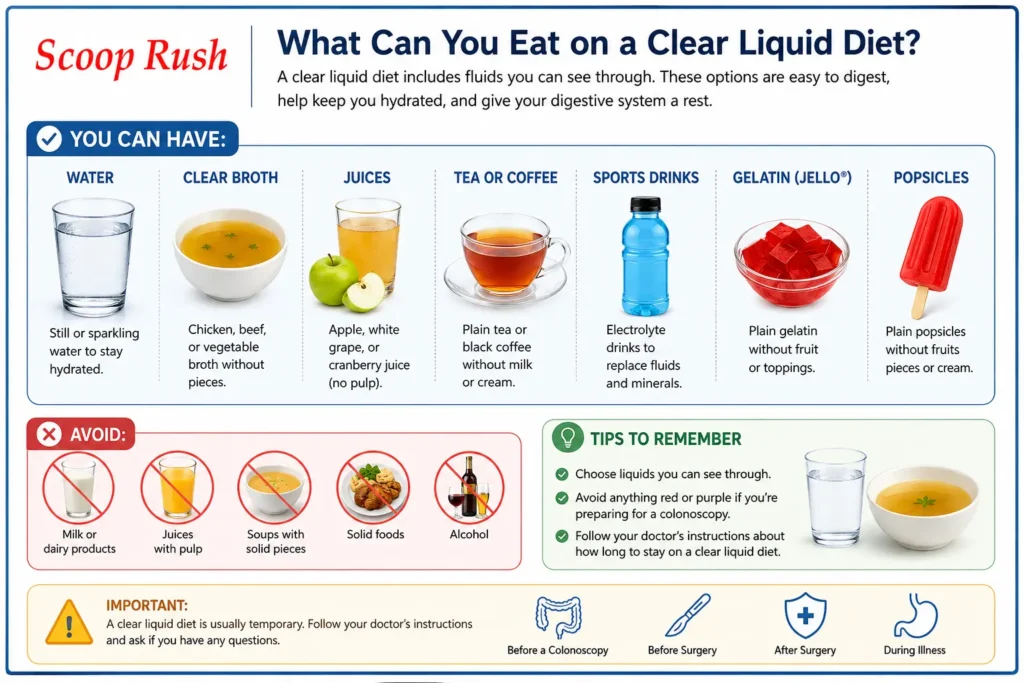
Although a clear liquid diet is limited, there are still several foods and drinks you can safely consume. The key rule is simple: if you can see through it and it leaves little or no residue in your digestive tract, it’s usually allowed.
These liquids help keep you hydrated and provide small amounts of energy while giving your digestive system time to rest.
Clear Liquid Diet Food List
The following foods and drinks are generally allowed on a clear liquid diet.
| Food or Drink | Examples |
| Water | Plain, sparkling, or flavored (without pulp) |
| Clear Broth | Chicken, beef, or vegetable broth |
| Fruit Juice | Apple juice, white grape juice, white cranberry juice (without pulp) |
| Tea | Black tea or herbal tea without milk or cream |
| Coffee | Black coffee without milk, cream, or non-dairy creamer |
| Sports Drinks | Gatorade®, Powerade®, or other electrolyte drinks |
| Clear Soft Drinks | Ginger ale, lemon-lime soda, or other clear sodas (if approved by your doctor) |
| Plain Gelatin | Lemon, orange, or lime gelatin without fruit pieces |
| Ice Pops | Clear ice pops without milk, fruit, or cream |
| Hard Candy | Peppermints, lemon drops, or clear hard candies |
| Sweeteners | Sugar or honey (if allowed by your healthcare provider) |
These foods provide fluids, simple carbohydrates, and electrolytes that help reduce the risk of dehydration during short-term use.
Foods That Melt Into Clear Liquids
Some foods are acceptable because they become clear liquids at room temperature.
These include:
- Plain gelatin (Jell-O®)
- Clear ice pops
- Fruit ice without pulp
- Ice chips
- Clear frozen treats without dairy
However, avoid frozen desserts that contain milk, yogurt, chocolate, fruit pieces, seeds, or nuts, as they are not considered clear liquids.
Foods and Drinks to Avoid
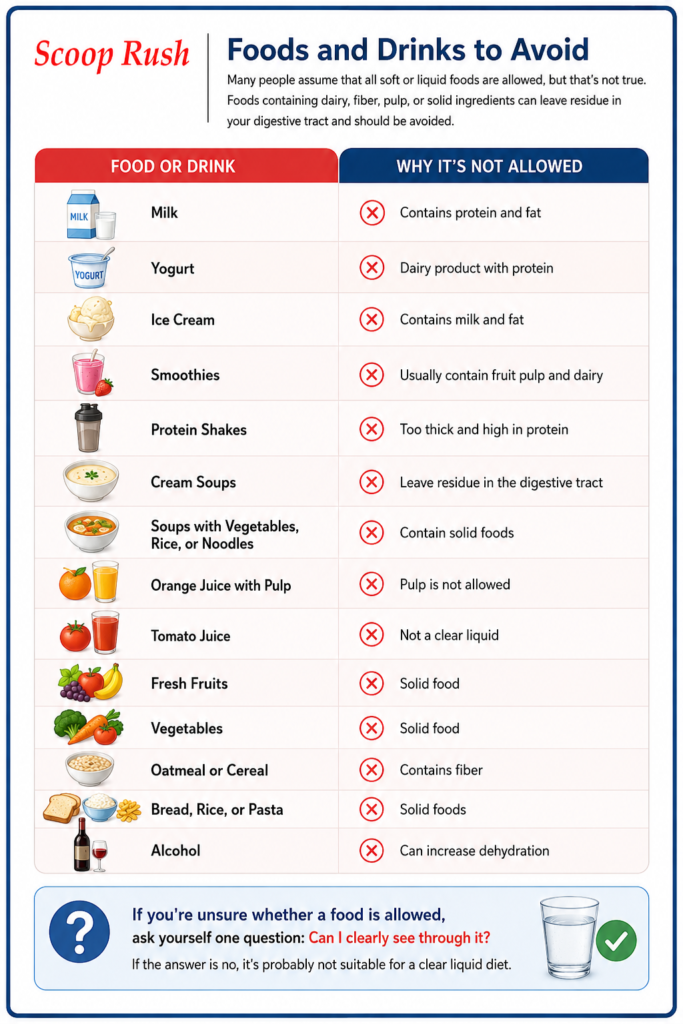
Many people assume that all soft or liquid foods are allowed, but that’s not true. Foods containing dairy, fiber, pulp, or solid ingredients can leave residue in your digestive tract and should be avoided.
| Food or Drink | Why It’s Not Allowed |
| Milk | Contains protein and fat |
| Yogurt | Dairy product with protein |
| Ice Cream | Contains milk and fat |
| Smoothies | Usually contain fruit pulp and dairy |
| Protein Shakes | Too thick and high in protein |
| Cream Soups | Leave residue in the digestive tract |
| Soups with Vegetables, Rice, or Noodles | Contain solid foods |
| Orange Juice with Pulp | Pulp is not allowed |
| Tomato Juice | Not a clear liquid |
| Fresh Fruits | Solid food |
| Vegetables | Solid food |
| Oatmeal or Cereal | Contains fiber |
| Bread, Rice, or Pasta | Solid foods |
| Alcohol | Can increase dehydration |
If you’re unsure whether a food is allowed, ask yourself one question: Can I clearly see through it? If the answer is no, it’s probably not suitable for a clear liquid diet.
Nutrition Facts of a Clear Liquid Diet
A clear liquid diet provides hydration but very little nutrition. That’s why it should only be followed for a short period unless your doctor advises otherwise.
| Nutrient | Amount |
| Calories | Very Low |
| Protein | Almost None |
| Fat | None |
| Fiber | None |
| Carbohydrates | Low to Moderate |
| Sodium | Small Amount (from broth and sports drinks) |
| Potassium | Small Amount |
| Vitamins | Very Limited |
| Minerals | Very Limited |
Because the diet lacks essential nutrients, following it for several days may lead to fatigue, weakness, and nutrient deficiencies.
Sample One-Day Clear Liquid Diet Meal Plan
If your healthcare provider recommends a clear liquid diet, the following sample menu can help you plan your day.
Breakfast
- 1 glass apple juice (without pulp)
- 1 cup black tea
- 1 serving plain lemon gelatin
Mid-Morning Snack
- Water
- Clear sports drink
Lunch
- Chicken broth
- White grape juice
- Plain gelatin
Afternoon Snack
- Clear ice pop
- Water
Dinner
- Vegetable broth
- Apple juice
- Plain gelatin
Evening
- Herbal tea (without milk)
- Water
Note: This meal plan is only an example. Your healthcare provider may recommend different foods depending on your medical condition or procedure.
Tips for Following a Clear Liquid Diet
A clear liquid diet can feel restrictive because it doesn’t provide the same fullness as regular meals. These simple tips can make it easier.
Drink Fluids Regularly Instead of drinking large amounts at once, sip clear liquids throughout the day. This helps maintain hydration and may reduce nausea.
Choose Different Flavors Alternate between water, broth, tea, fruit juice, sports drinks, and gelatin to avoid getting bored.
Prevent Dehydration Don’t wait until you feel thirsty. Drink fluids regularly to replace water and electrolytes lost through vomiting, diarrhea, or bowel preparation.
Get Plenty of Rest Since this diet is low in calories, you may feel tired or weak. Avoid strenuous activities and allow your body time to recover.
Follow Your Doctor’s Instructions If you’re preparing for surgery or a colonoscopy, carefully follow your healthcare provider’s instructions. Eating foods that aren’t allowed could delay or affect your procedure.
Benefits of a Clear Liquid Diet
A clear liquid diet may seem restrictive, but it serves an important medical purpose. When followed for a short period under medical supervision, it can support recovery, prevent complications, and prepare your body for certain procedures.
Here are some of its key benefits.
1. Helps Prevent Dehydration
One of the biggest benefits of a clear liquid diet is that it keeps your body hydrated.
Water, clear broth, electrolyte drinks, and fruit juices help replace fluids lost through vomiting, diarrhea, or bowel preparation. Staying hydrated also supports normal body functions and reduces the risk of dehydration, especially in vulnerable groups.
2. Gives Your Digestive System Time to Rest
When you’re experiencing digestive problems, eating solid foods can place extra strain on your stomach and intestines.
Clear liquids are easy to digest because they contain little or no fiber. This allows your digestive system to rest while your body begins to recover.
3. Prepares the Body for Medical Procedures
Doctors commonly recommend a clear liquid diet before procedures such as a colonoscopy or certain surgeries.
Keeping the digestive tract free of solid food helps improve visibility during examinations and reduces the risk of complications related to anesthesia.
4. Provides Small Amounts of Energy
Although a clear liquid diet is low in calories, drinks like apple juice, sports drinks, and plain gelatin contain carbohydrates that provide a small amount of energy.
This can help support your body until you’re able to return to a regular diet.
5. Reduces Nausea and Digestive Discomfort
After surgery or during stomach illnesses, eating heavy meals may worsen nausea or cause discomfort.
Clear liquids are generally easier to tolerate and can help ease the transition back to solid foods.
Risks and Side Effects of a Clear Liquid Diet
A clear liquid diet is generally safe when followed for a short period. However, because it provides very few calories and nutrients, it is not intended for long-term use.
Following it for too long may lead to several side effects.
Possible Side Effects
- Hunger
- Fatigue
- Weakness
- Dizziness
- Headaches
- Difficulty concentrating
- Low energy
- Nutrient deficiencies
- Muscle loss if followed for an extended period
If you experience severe weakness, fainting, or signs of dehydration, contact your healthcare provider immediately.
Can You Drink Coffee on a Clear Liquid Diet?
Yes.
Black coffee is generally allowed on a clear liquid diet as long as it does not contain:
- Milk
- Cream
- Non-dairy creamer
- Whipped cream
You may be allowed to add a small amount of sugar or honey, but always follow your healthcare provider’s instructions.
If you’re preparing for a colonoscopy or surgery, some doctors may ask you to stop drinking coffee several hours before the procedure. Always follow the instructions provided by your healthcare team.
Can You Drink Tea?
Yes.
Plain black tea and most herbal teas are usually allowed because they are clear liquids.
However, avoid adding:
- Milk
- Cream
- Coffee creamer
If you’re unsure whether a particular herbal tea is appropriate, check with your healthcare provider.
People with Diabetes Need Extra Caution
If you have diabetes, you should only follow a clear liquid diet under medical supervision.
Many approved liquids such as apple juice, sports drinks, and gelatin contain sugar, which can cause blood glucose levels to rise.
Your healthcare provider may recommend:
- Sugar-free beverages
- Frequent blood sugar monitoring
- Adjustments to diabetes medications
- Specific meal timing before procedures
Never make changes to your diabetes medication without consulting your doctor.
Who Should Avoid a Clear Liquid Diet Without Medical Advice?
Because this diet is very low in nutrients, some people should only follow it if their healthcare provider recommends it.
These include:
- Pregnant women
- Breastfeeding mothers
- Young children
- Older adults
- People with diabetes
- People with kidney disease
- People with liver disease
- Individuals with swallowing difficulties
- Anyone who is malnourished
If you have a chronic medical condition, always speak with your healthcare provider before starting a clear liquid diet.
How Long Can You Stay on a Clear Liquid Diet?
A clear liquid diet is designed for short-term use only.
Since it does not provide enough protein, healthy fats, vitamins, or minerals, following it for too long can increase the risk of nutritional deficiencies.
Recommended Duration
| Situation | Typical Duration |
| Before a colonoscopy | 1 day |
| Before surgery | As directed by your doctor |
| Vomiting or diarrhea | 1–3 days |
| After surgery | Until your doctor advances your diet |
| Maximum short-term use | Usually no more than 3–5 days |
If you need to remain on a liquid diet for longer, your healthcare provider may recommend a full liquid diet or nutritional supplements.
Clear Liquid Diet vs. Full Liquid Diet
Although their names sound similar, these two diets are quite different.
A clear liquid diet contains only transparent liquids and leaves almost no residue in the digestive tract.
A full liquid diet includes thicker liquids, dairy products, and blended foods that provide more calories and nutrients.
| Feature | Clear Liquid Diet | Full Liquid Diet |
| Transparent liquids | Yes | No |
| Milk | No | Yes |
| Yogurt | No | Yes |
| Smoothies | No | Yes |
| Cream soups | No | Yes |
| Leaves residue | Very little | More |
| Calories | Very Low | Higher |
| Nutrition | Limited | More complete |
| Typical Use | Before procedures and digestive illnesses | Recovery after surgery or transition to solid foods |
Doctors often recommend a full liquid diet as the next step after a clear liquid diet, allowing your digestive system to gradually adjust before returning to regular meals.
When Should You Contact a Doctor?
Although a clear liquid diet is generally safe for short-term use, you should contact your healthcare provider if you experience:
- Severe abdominal pain or cramping
- Persistent vomiting
- Difficulty swallowing
- Severe weakness
- Dizziness or fainting
- Signs of dehydration, such as dark urine, dry mouth, or extreme thirst
- Fever
- Bloody stools
- Worsening digestive symptoms
Seek immediate medical attention if you cannot keep any liquids down or develop severe symptoms.
Final Thoughts
A clear liquid diet is a short-term medical diet designed to give your digestive system time to rest while keeping your body hydrated. It is commonly recommended before a colonoscopy, before or after surgery, and during recovery from digestive illnesses such as vomiting or diarrhea.
Although this diet provides fluids, electrolytes, and small amounts of carbohydrates, it does not supply enough calories, protein, vitamins, or minerals for long-term health. That’s why it should only be followed for the amount of time recommended by your healthcare provider.
If you have diabetes, kidney disease, or another chronic health condition, speak with your doctor before starting a clear liquid diet. Once your digestive system has recovered, your healthcare provider will guide you in transitioning to a full liquid diet and eventually back to your regular meals.
When followed correctly, a clear liquid diet can help prepare your body for medical procedures, support recovery, reduce digestive discomfort, and lower the risk of complications part of building healthy habits that support long-term wellness.
FAQs
1. What is a clear liquid diet?
A clear liquid diet is a temporary eating plan that includes transparent liquids and foods that turn into clear liquids at room temperature. It is commonly recommended before medical procedures, after surgery, or during recovery from digestive illnesses to help keep you hydrated while allowing your digestive system to rest.
2. What foods can you eat on a clear liquid diet?
You can usually have:
- Water
- Clear chicken, beef, or vegetable broth
- Apple juice (without pulp)
- White grape juice
- White cranberry juice
- Black coffee
- Plain tea
- Sports drinks
- Plain gelatin
- Clear ice pops
- Hard candy
Avoid anything containing milk, cream, fruit pulp, or solid ingredients.
3. Can I drink coffee on a clear liquid diet?
Yes. Black coffee is generally allowed as long as it does not contain milk, cream, non-dairy creamer, or whipped cream. If you’re preparing for a medical procedure, follow your doctor’s specific instructions.
4. Can I drink tea?
Yes. Plain black tea and most herbal teas are allowed, provided they do not contain milk or cream.
5. Can I eat Jell-O® on a clear liquid diet?
Yes. Plain gelatin is usually permitted because it melts into a clear liquid. However, if you’re preparing for a colonoscopy, avoid red, blue, or purple gelatin unless your healthcare provider says it’s acceptable.
6. Can I drink soda?
Some clear soft drinks, such as ginger ale or lemon-lime soda, are generally allowed. However, always follow the instructions provided by your healthcare provider.
7. Can I drink milk?
No. Milk is not considered a clear liquid because it contains protein and fat, making it harder to digest.
8. Can I eat soup?
Yes, but only clear broth or bouillon. Soups containing vegetables, noodles, rice, beans, or meat are not allowed.
9. Can I lose weight on a clear liquid diet?
You may lose some weight because you’re consuming fewer calories, but most of the weight lost is water. Once you return to a regular diet, your weight will usually return. A clear liquid diet should never be used as a weight-loss plan.
10. Can people with diabetes follow a clear liquid diet?
Yes, but only under medical supervision. Many approved liquids contain sugar, which can affect blood glucose levels. Your healthcare provider may recommend sugar-free alternatives and frequent blood sugar monitoring.
11. Is a clear liquid diet safe?
Yes, when followed for a short period under medical supervision. Because it lacks essential nutrients, it is not suitable for long-term use.
12. How long should I stay on a clear liquid diet?
Most people follow a clear liquid diet for 1 to 3 days. Your healthcare provider will tell you how long you should continue based on your medical condition or procedure.
13. What happens if I accidentally eat solid food before a colonoscopy?
Eating solid food may leave residue in your digestive tract, making it difficult for your doctor to examine your colon properly. In some cases, your procedure may need to be postponed. Contact your healthcare provider for guidance.
14. Can children follow a clear liquid diet?
Children should only follow a clear liquid diet if recommended and supervised by a healthcare professional.
15. What’s the difference between a clear liquid diet and a full liquid diet?
A clear liquid diet includes only transparent liquids and leaves very little residue in the digestive tract. A full liquid diet includes thicker liquids, milk, yogurt, cream soups, and other foods that provide more calories and nutrients.
Medical Disclaimer
Disclaimer: This article is intended for educational and informational purposes only. It should not be used as a substitute for professional medical advice, diagnosis, or treatment. Always consult your doctor or another qualified healthcare provider before starting a clear liquid diet or making changes to your diet, especially if you have an underlying medical condition or are preparing for a medical procedure.

