
Introduction
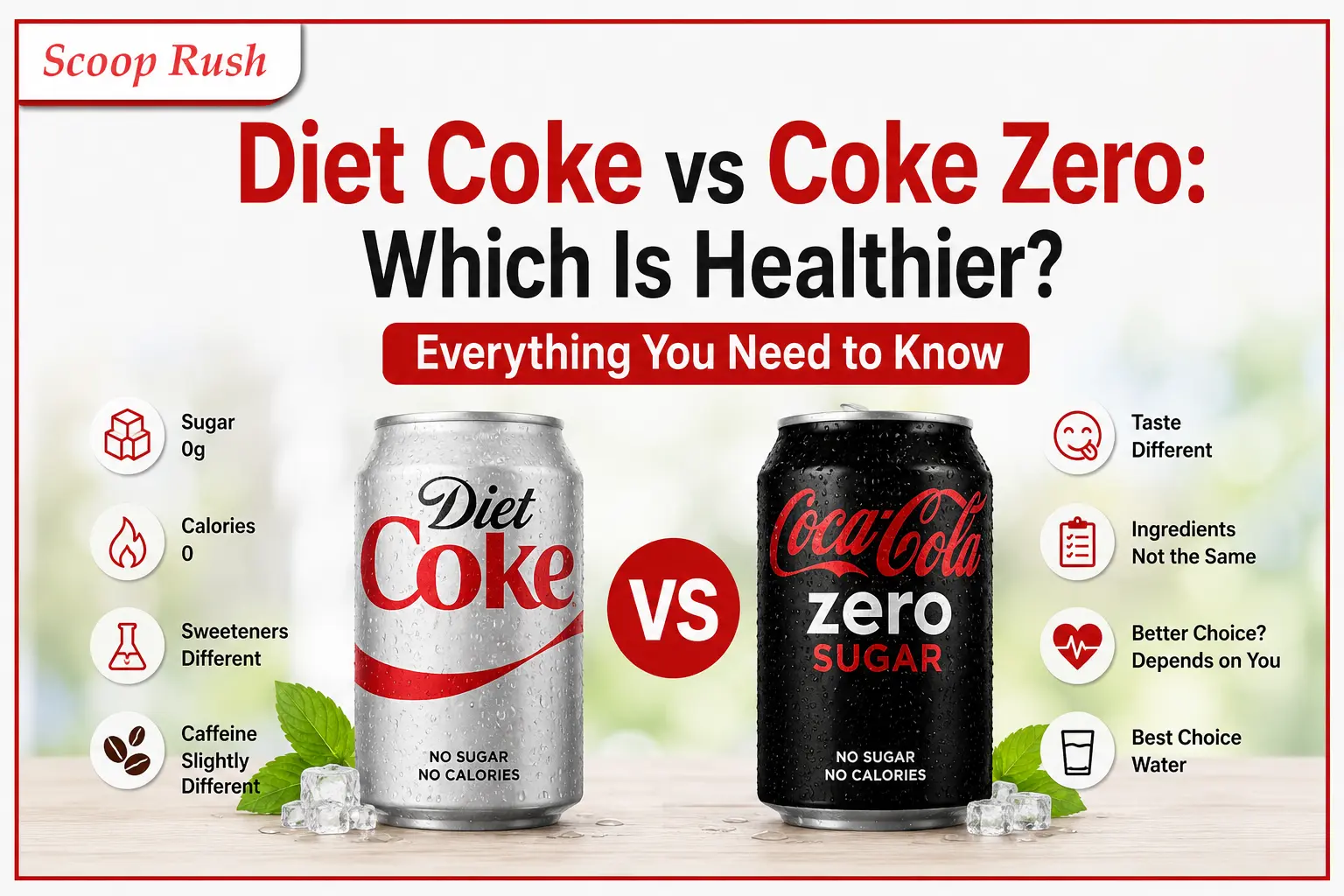
If you’re trying to cut back on sugar but still enjoy soft drinks, you’ve probably wondered whether Diet Coke or Coke Zero Sugar is the better choice. At first glance, the two drinks seem almost identical. Both contain zero sugar, zero calories, and are marketed as healthier alternatives to regular Coca-Cola.
However, there are important differences between them. They have different recipes, slightly different sweeteners, different caffeine levels in some countries, and most importantly, they were created for different tastes.
Many people also ask whether these drinks are actually healthy, whether they can help with weight loss, and if artificial sweeteners are safe to consume regularly. These are common questions, and fortunately, research has provided many answers.
In this guide, we’ll compare Diet Coke vs Coke Zero in detail, explain their ingredients, discuss their health effects, and help you decide which one fits your lifestyle.
What Is Diet Coke?
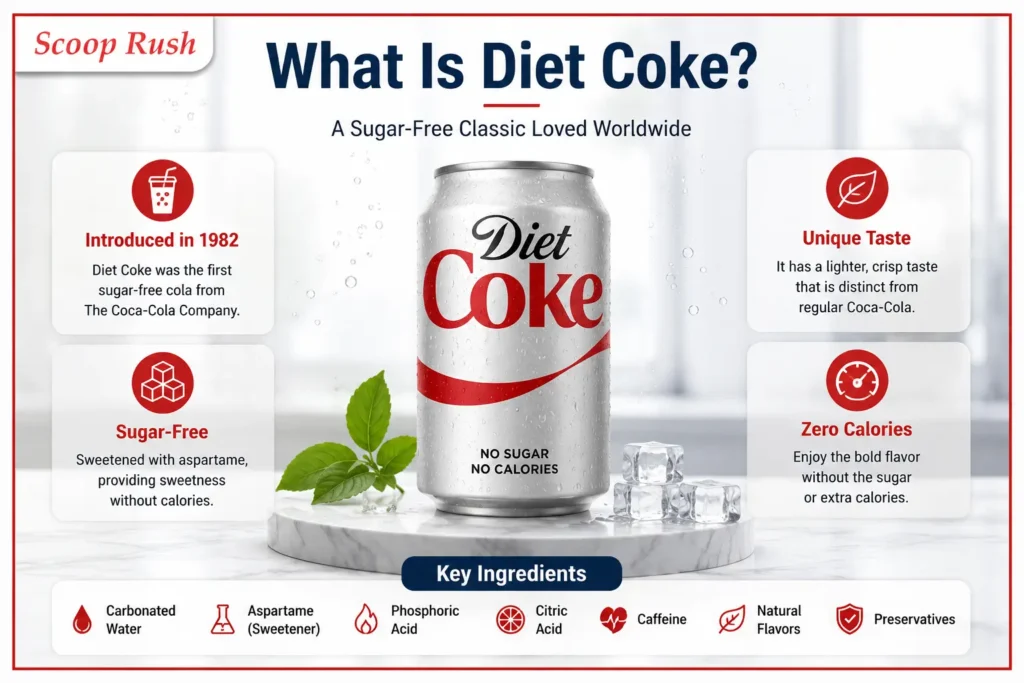
Diet Coke was introduced in 1982 as Coca-Cola’s first sugar-free soft drink. Unlike regular Coca-Cola, it wasn’t designed to taste exactly the same. Instead, Coca-Cola created a completely different flavor profile that quickly gained its own loyal fan base.
Diet Coke contains:
- Carbonated water
- Caramel color
- Phosphoric acid
- Aspartame
- Natural flavors
- Citric acid
- Potassium benzoate (preservative)
- Caffeine
Instead of sugar, Diet Coke uses aspartame, a low-calorie artificial sweetener that is around 200 times sweeter than sugar. Because only a tiny amount is needed, the drink contains virtually no calories.
Over the years, Diet Coke has become one of the world’s best-selling diet beverages and remains especially popular among people looking for a lighter-tasting cola.
What Is Coke Zero Sugar?
Coke Zero was introduced in 2005 and later reformulated as Coca-Cola Zero Sugar in many countries.
Unlike Diet Coke, Coke Zero was created to taste as close as possible to original Coca-Cola, while still containing no sugar.
Its ingredient list is similar but includes an additional sweetener:
- Carbonated water
- Caramel color
- Phosphoric acid
- Aspartame
- Acesulfame Potassium (Ace-K)
- Natural flavors
- Potassium benzoate (preservative)
- Potassium citrate
- Caffeine
Note: Some current formulations also include a small amount of stevia extract. Exact ingredient lists can vary slightly by country and have been updated over time (notably in 2017 and 2021), so it’s worth checking the label on your specific can.
The combination of Aspartame and Acesulfame Potassium creates a sweeter flavor that closely resembles regular Coke.
For many people, Coke Zero offers the familiar Coca-Cola taste without the sugar or calories.
Diet Coke vs Coke Zero: Quick Comparison
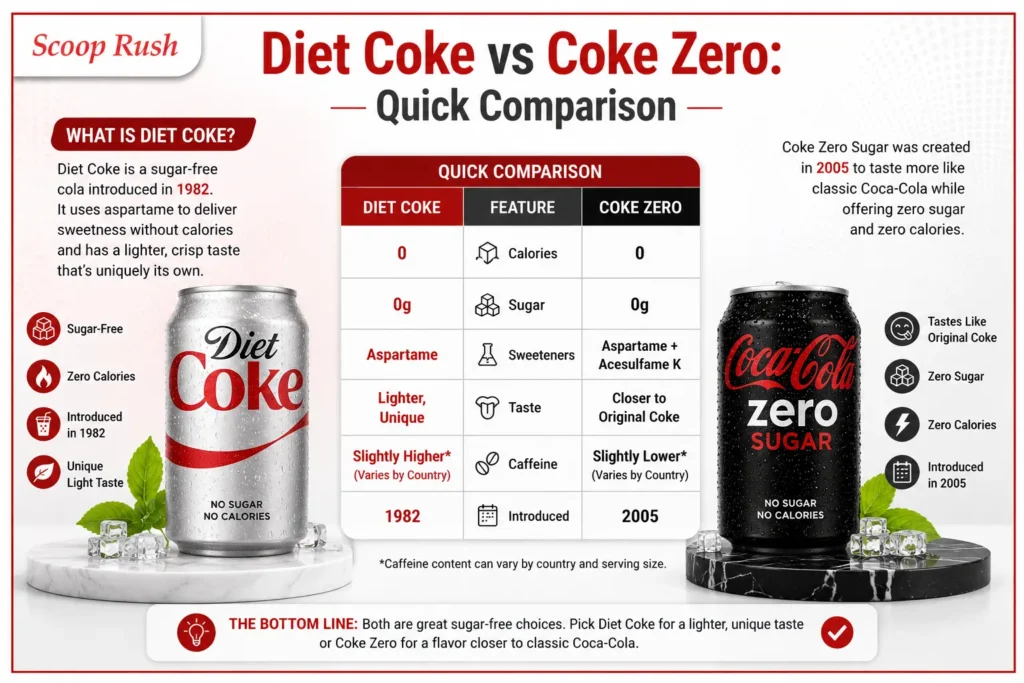
| Feature | Diet Coke | Coke Zero Sugar |
| Calories | 0 | 0 |
| Sugar | 0 g | 0 g |
| Fat | 0 g | 0 g |
| Carbohydrates | 0 g | 0 g |
| Main Sweetener | Aspartame | Aspartame + Ace-K |
| Taste | Lighter, unique | Similar to Original Coke |
| Caffeine | Slightly higher in some countries | Slightly lower in some countries |
| Purpose | Unique diet soda | Classic Coke taste without sugar |
Why Do They Taste Different?
Many people assume Diet Coke and Coke Zero are the same drink with different labels. They’re not.
The biggest difference is their recipe.
Diet Coke was never meant to imitate regular Coca-Cola. It has its own lighter, slightly crisp taste that millions of people enjoy.
Coke Zero, on the other hand, was carefully developed to recreate the taste of original Coca-Cola while removing the sugar.
That’s why many people who switch from regular Coke prefer Coke Zero, while longtime Diet Coke drinkers often continue to choose Diet Coke because they enjoy its unique flavor.
Why Does Coca-Cola Sell Both?
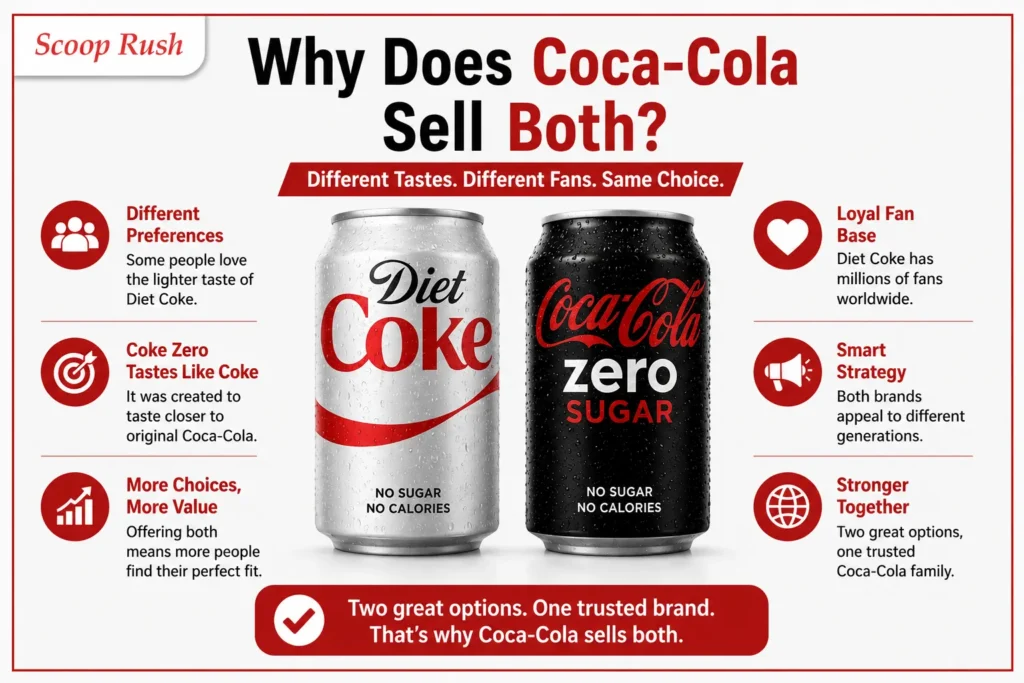
If both drinks contain zero sugar and zero calories, why hasn’t Coca-Cola replaced one with the other?
The answer is simple: consumer preference.
Diet Coke has millions of loyal fans who enjoy its distinctive taste. Removing it would disappoint many long-time customers.
At the same time, Coke Zero attracts people who want the familiar taste of classic Coca-Cola without the sugar.
Rather than competing against each other, the two drinks appeal to different groups of consumers.
This strategy has helped Coca-Cola maintain a strong presence in the sugar-free beverage market.
Ingredients Comparison
Although the ingredient lists look similar, there are a few notable differences.
Diet Coke contains:
- Carbonated water
- Caramel color
- Phosphoric acid
- Aspartame
- Natural flavors
- Citric acid
- Potassium benzoate
- Caffeine
Coke Zero contains:
- Carbonated water
- Caramel color
- Phosphoric acid
- Aspartame
- Acesulfame Potassium
- Natural flavors
- Potassium benzoate
- Potassium citrate
- Caffeine
The addition of Acesulfame Potassium (Ace-K) in Coke Zero helps create a flavor that’s closer to regular Coca-Cola. Note that both drinks contain potassium benzoate as a preservative — this is common across most Coca-Cola products and helps protect flavor over shelf life.
Artificial Sweeteners Explained
Many people worry about artificial sweeteners because they sound unfamiliar. However, these sweeteners have been studied for decades.
Aspartame
Aspartame is one of the most widely researched food additives in the world.
Health authorities, including the U.S. Food and Drug Administration (FDA) and the European Food Safety Authority (EFSA), consider it safe for most people when consumed within recommended daily limits.
The only people who should avoid aspartame are those with phenylketonuria (PKU), a rare inherited condition that prevents the body from properly processing phenylalanine.
Acesulfame Potassium (Ace-K)
Ace-K is another calorie-free sweetener commonly used in beverages and sugar-free foods.
It works well when combined with aspartame because the two sweeteners enhance each other’s taste and reduce any aftertaste.
Regulatory agencies around the world also consider Ace-K safe within acceptable daily intake levels.
Are Artificial Sweeteners Safe?
This is one of the most frequently asked questions.
Current scientific evidence suggests that approved artificial sweeteners are generally safe when consumed in moderation.
Researchers continue studying their long-term effects, particularly regarding:
- Appetite
- Gut bacteria
- Metabolism
- Blood sugar regulation
Some studies suggest possible links between frequent consumption of artificially sweetened drinks and certain health outcomes, while others find little or no significant effect. Because the evidence is mixed, experts generally recommend moderation rather than excessive intake.
If you drink an occasional Diet Coke or Coke Zero as part of a balanced diet, current evidence does not show that it poses a significant health risk for most healthy adults.
Diet Coke vs Coke Zero for Weight Loss
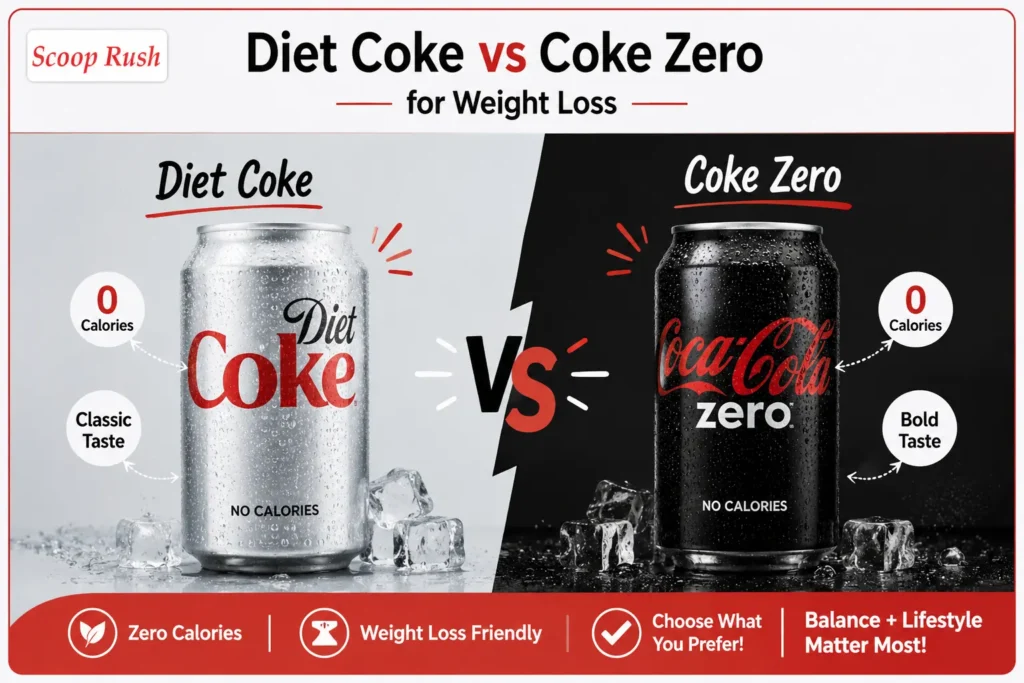
Many people switch from regular soda to Diet Coke or Coke Zero because they want to reduce their calorie intake. Since both drinks contain zero calories and zero sugar, they can help lower your daily calorie consumption if they replace sugary soft drinks.
However, they are not weight-loss drinks.
Losing weight depends on maintaining a calorie deficit through a balanced diet, regular physical activity, good sleep, and healthy lifestyle habits. Simply replacing regular soda with a diet version won’t guarantee weight loss if overall eating habits remain unhealthy. Small, consistent habits like the benefits of a 5-minute walk every hour often make a bigger difference than swapping one drink for another. If you’re building a broader routine, these healthy habits for your 20s and 30s are a good place to start.
Some research also suggests that artificial sweeteners may increase cravings for sweet foods in some people. While the evidence is mixed, experts recommend paying attention to how your body responds. If drinking diet soda makes you crave sugary snacks, it may work against your weight-loss goals. For people using newer weight-management medications, it’s also worth understanding the link between GLP-1 drugs and muscle loss, since diet alone including beverage choices isn’t the full picture.
The healthiest beverages for weight management remain:
- Water
- Sparkling water without added sugar
- Unsweetened tea
- Black coffee (in moderation)
Diet Coke and Coke Zero can be enjoyed occasionally, but they shouldn’t replace water as your main source of hydration.
Do Diet Coke and Coke Zero Affect Blood Sugar?
Since neither drink contains sugar, they generally do not cause the rapid rise in blood glucose that regular soft drinks do.
For people with diabetes, this makes them a better choice than sugar-sweetened beverages.
However, some researchers continue studying whether artificial sweeteners may indirectly affect insulin response or appetite over time. Results have been inconsistent, and there is currently no strong evidence that Diet Coke or Coke Zero significantly raises blood sugar in healthy individuals.
If you have diabetes or another medical condition, it’s always best to discuss beverage choices with your healthcare provider. For those newly diagnosed or at risk, it’s also worth staying informed about emerging treatments like teplizumab for type 1 diabetes.
Which Drink Has More Caffeine?
Both drinks contain caffeine, but the amount can vary by country and serving size.
In the United States, a 12-ounce (355 ml) can typically contains:
| Drink | Approximate Caffeine |
| Diet Coke | 46 mg |
| Coke Zero Sugar | 34 mg |
| Regular Coca-Cola | 34 mg |
This means Diet Coke usually contains slightly more caffeine than Coke Zero in the U.S. — a detail that surprises many people, since a “diet” version might be assumed to have less of everything.
Caffeine may help improve alertness and concentration, but too much can lead to:
- Difficulty sleeping
- Nervousness
- Increased heart rate
- Restlessness
If you’re sensitive to caffeine, check the nutrition label in your country, as formulations may vary. Both brands also offer caffeine-free versions for anyone who wants to avoid caffeine entirely. If you tend to reach for a caffeinated drink first thing in the morning, it’s also worth reading about the effects of coffee on an empty stomach, since the same caffeine-sensitivity principles apply.
Are Diet Coke and Coke Zero Bad for Your Teeth?
Even though these drinks don’t contain sugar, they are still acidic.
Both contain phosphoric acid and other ingredients that can gradually weaken tooth enamel over time.
To protect your teeth:
- Drink them in moderation.
- Avoid sipping throughout the day.
- Rinse your mouth with water afterward.
- Wait about 30 minutes before brushing your teeth to help protect enamel.
Water remains the best beverage for dental health.
Can They Replace Water?
No.
Diet Coke and Coke Zero can contribute to your daily fluid intake, but they shouldn’t replace water.
Water is essential for:
- Digestion
- Temperature regulation
- Joint lubrication
- Kidney function
- Healthy skin
- Overall hydration
Most health experts recommend making water your primary drink and enjoying diet sodas occasionally rather than relying on them every day. If you’re ever medically advised to focus solely on hydration, it helps to understand what a clear liquid diet actually involves and why water takes priority in it.
Proper hydration matters even more during hot weather. Diet soda’s caffeine and acidity make it a poor substitute for water when temperatures rise, which is especially important for seniors facing heat and humidity risks or anyone caught in a heat dome. Pairing good hydration habits with these home cooling tips for hot weather is a far better strategy than relying on any soda, diet or otherwise.
Pros and Cons
| Pros | Cons |
| Zero calories | Contains artificial sweeteners |
| Zero sugar | Acidic, which may affect tooth enamel |
| Better than sugary soda for reducing sugar intake | May increase sweet cravings in some people |
| Suitable for people reducing calorie intake | Contains caffeine |
| Available almost everywhere | Provides no vitamins or minerals |
Diet Coke vs Coke Zero: Which Is Healthier?
From a nutritional standpoint, there is very little difference.
Both drinks:
- Contain zero sugar.
- Have zero calories.
- Use approved artificial sweeteners.
- Contain caffeine.
- Offer little to no nutritional value.
The main difference is taste.
- Choose Diet Coke if you enjoy its lighter, unique flavor.
- Choose Coke Zero Sugar if you want something that tastes closer to classic Coca-Cola.
Neither drink is significantly healthier than the other.
Is Switching from Regular Coke Worth It?
If you regularly drink sugar-sweetened soft drinks, switching to either Diet Coke or Coke Zero Sugar can be a positive step toward reducing your daily sugar intake. A single can of regular Coca-Cola contains around 39 grams of added sugar, which can quickly contribute to excess calorie consumption if consumed frequently.
Replacing sugary soda with a zero-sugar alternative may help reduce overall calorie intake and lower the risk of consuming too much added sugar. This can be especially beneficial for people trying to manage their weight, control blood sugar levels, or improve their overall eating habits.
However, switching beverages alone isn’t enough to create lasting health improvements. A healthy lifestyle also includes eating plenty of fruits and vegetables, choosing whole grains, exercising regularly, getting enough sleep, and managing stress. Think of Diet Coke or Coke Zero as an occasional substitute rather than the foundation of a healthy diet.
How Your Taste Buds Can Change Over Time
One interesting fact about reducing sugar is that your taste preferences can gradually change.
People who regularly drink sugary beverages often become accustomed to very sweet flavors. When they first switch to Diet Coke or Coke Zero, the taste may seem unusual or different. However, after several weeks, many people find they become more sensitive to sweetness and begin enjoying drinks with less sugar.
This is one reason health professionals often encourage reducing added sugar gradually instead of trying to eliminate it overnight. Small, consistent changes are often easier to maintain than drastic dietary restrictions.
If your goal is to drink fewer soft drinks altogether, try alternating between diet soda and sparkling water with lemon or lime. Over time, you may naturally find yourself craving sweet beverages less often.
What Nutrition Experts Say About Moderation
Most registered dietitians agree on one important point: moderation matters more than perfection.
Enjoying a can of Diet Coke or Coke Zero once in a while is very different from drinking several cans every day. The occasional sugar-free soda is unlikely to have a major impact on your health if the rest of your diet is balanced.
Nutrition experts generally recommend focusing on overall dietary patterns rather than worrying about a single food or drink. If your meals include lean proteins, vegetables, fruits, healthy fats, and whole grains, having an occasional diet soda is unlikely to undo those healthy choices.
The key is balance. Water should remain your primary beverage, while sugar-free sodas can fit into a healthy lifestyle when enjoyed responsibly.
Common Myths About Diet Coke and Coke Zero
There are many myths surrounding sugar-free soft drinks. Let’s separate fact from fiction.
Myth 1: They Cause Instant Weight Gain Neither Diet Coke nor Coke Zero contains calories that directly cause weight gain. Weight gain occurs when you consistently consume more calories than your body burns. While some research has explored possible links between artificial sweeteners and eating habits, there is no evidence that these drinks alone automatically cause weight gain.
Myth 2: They Contain Sugar Both Diet Coke and Coke Zero Sugar are sugar-free. Their sweetness comes from approved low-calorie sweeteners rather than table sugar or high-fructose corn syrup.
Myth 3: They Are the Same Drink Although they look similar, the recipes are different. Coke Zero was designed to taste like classic Coca-Cola, while Diet Coke has its own unique flavor profile.
Myth 4: They’re Health Drinks Neither beverage should be considered a health drink. They provide almost no vitamins, minerals, protein, or fiber. They are simply lower-calorie alternatives to regular soft drinks. This is also a reminder that more isn’t always better when it comes to nutrition — the same logic applies to overdoing things in the other direction, as explained in this piece on the risks of taking too many vitamins and supplements.
Tips for Enjoying Soft Drinks More Mindfully
If you enjoy Diet Coke or Coke Zero, you don’t necessarily have to give them up. Instead, try drinking them more mindfully.
Here are a few practical tips:
- Drink water before reaching for a soft drink.
- Limit diet soda to one serving instead of multiple cans each day.
- Avoid drinking soft drinks late in the evening if you’re sensitive to caffeine.
- Pair your beverage with a balanced meal instead of sugary snacks.
- Choose smaller serving sizes whenever possible.
Simple habits like these can help you enjoy your favorite drinks while supporting healthier daily routines.
Environmental Considerations
When choosing any canned or bottled beverage, it’s also worth considering its environmental impact.
Aluminum cans are among the most recyclable beverage containers in the world. Recycling helps reduce waste, conserve natural resources, and save energy during manufacturing. Plastic bottles can also be recycled in many areas, although recycling rates vary by country.
If you regularly buy canned beverages, recycling every empty can is one small way to reduce your environmental footprint.
Many beverage companies, including Coca-Cola, have also announced goals to increase the use of recycled materials and improve packaging sustainability in the coming years.
When Should You Avoid Diet Soda?
Although Diet Coke and Coke Zero are safe for most healthy adults in moderation, there are situations where limiting intake may be a good idea.
You may want to reduce or avoid diet soda if you:
- Are highly sensitive to caffeine.
- Experience frequent acid reflux or heartburn.
- Have trouble sleeping after drinking caffeinated beverages.
- Have phenylketonuria (PKU), which requires avoiding aspartame.
- Notice that artificial sweeteners trigger cravings or digestive discomfort.
If you have any medical condition or dietary restrictions, it’s always wise to discuss your beverage choices with a healthcare professional.
The Bottom Line
When comparing Diet Coke vs Coke Zero, there isn’t a clear nutritional winner. Both drinks contain no sugar and virtually no calories, making them a better option than regular sugary soda for people looking to cut back on added sugar.
The biggest differences come down to taste, sweetener blend, and branding. Diet Coke offers a lighter, distinctive flavor that has remained popular for decades, while Coke Zero Sugar is crafted to closely resemble the taste of original Coca-Cola.
Ultimately, the healthiest choice isn’t necessarily deciding between Diet Coke and Coke Zero — it’s reducing your overall dependence on sweetened beverages and making water your everyday drink. If you enjoy a diet soda from time to time, current scientific evidence suggests that moderate consumption can fit within a balanced lifestyle for most people.
Rather than focusing on which can is in your hand, pay attention to your overall eating habits, physical activity, sleep quality, and hydration. Those everyday choices have a far greater impact on your long-term health than choosing between two sugar-free soft drinks.
FAQs
Is Coke Zero healthier than Diet Coke?
Not really. Both have similar nutritional profiles. The biggest difference is their flavor and sweetener blend.
Can I drink Diet Coke every day?
Most healthy adults can enjoy Diet Coke in moderation. However, it’s best not to rely on it as your primary beverage.
Is Coke Zero good for weight loss?
It may help reduce calorie intake if it replaces sugary soda, but it isn’t a weight-loss product.
Which tastes more like regular Coca-Cola?
Coke Zero Sugar was specifically designed to taste more like original Coca-Cola.
Which contains more caffeine?
In many countries, including the United States, Diet Coke contains slightly more caffeine than Coke Zero, although amounts vary by market.
Final Verdict
Diet Coke and Coke Zero Sugar are both popular sugar-free alternatives to regular soft drinks. They contain no sugar and almost no calories, making them a better choice than regular soda for people looking to reduce their sugar intake.
The biggest differences come down to taste, sweetener blend, and, in some regions, caffeine content. Diet Coke has a lighter, distinct flavor, while Coke Zero Sugar is formulated to closely match the taste of classic Coca-Cola.
Current evidence suggests that the artificial sweeteners used in these beverages are safe for most people when consumed within recommended limits. Still, moderation is important, as these drinks don’t provide essential nutrients and shouldn’t replace water or other healthy beverages.
If your goal is better overall health, focus on a balanced diet, regular exercise, quality sleep, and staying hydrated. Enjoy Diet Coke or Coke Zero occasionally if you like them, but remember that healthy habits matter far more than choosing one sugar-free soda over the other.

