
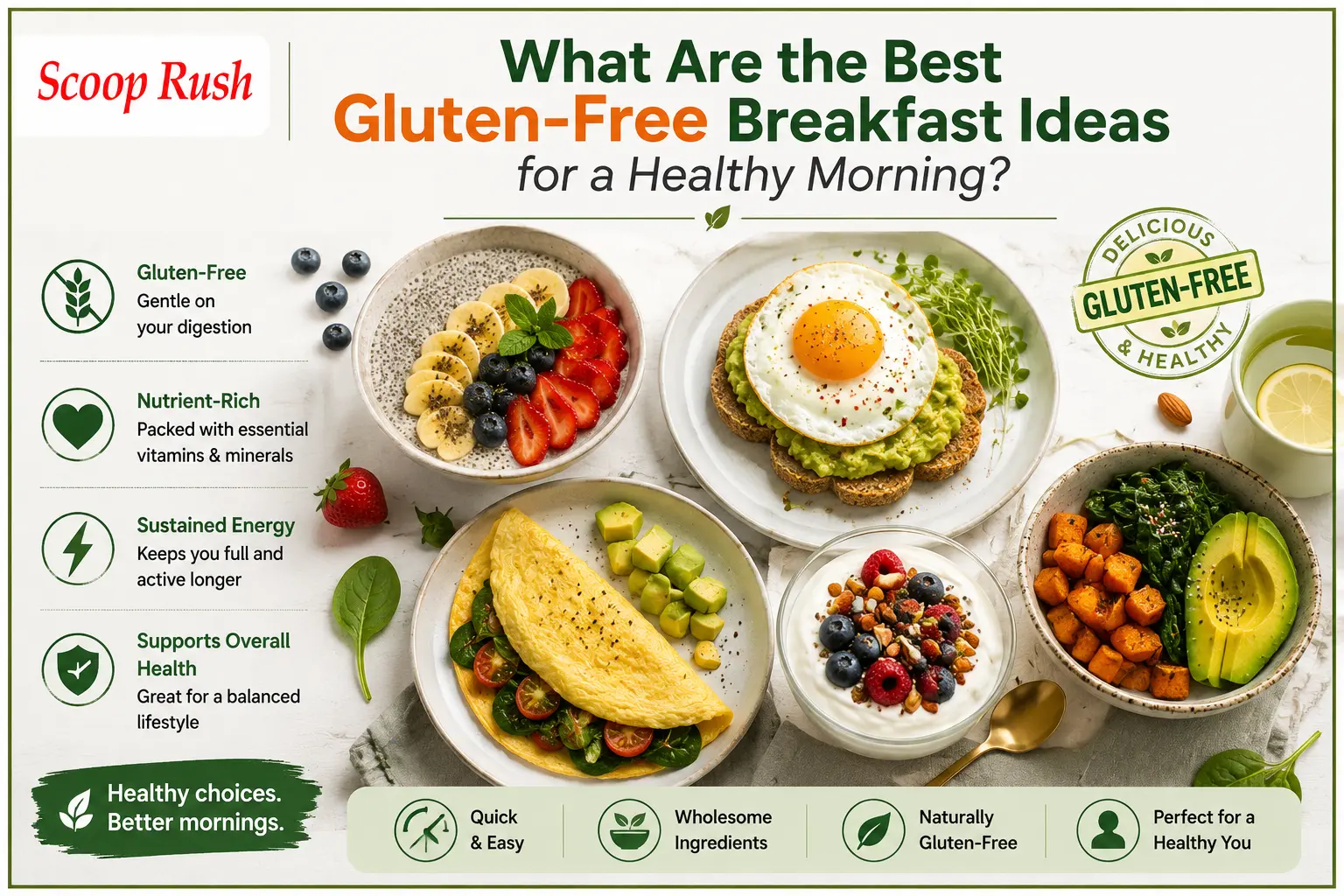
Breakfast sets the tone for the entire day, but for people avoiding gluten, mornings can feel limited. Regular bread, cereals, pancakes and pastries are usually off the table, which leaves many wondering what a satisfying gluten-free breakfast actually looks like. This guide answers that question with practical ideas, food lists and simple tips anyone can use.
Why Gluten-Free Mornings Feel Limiting at First
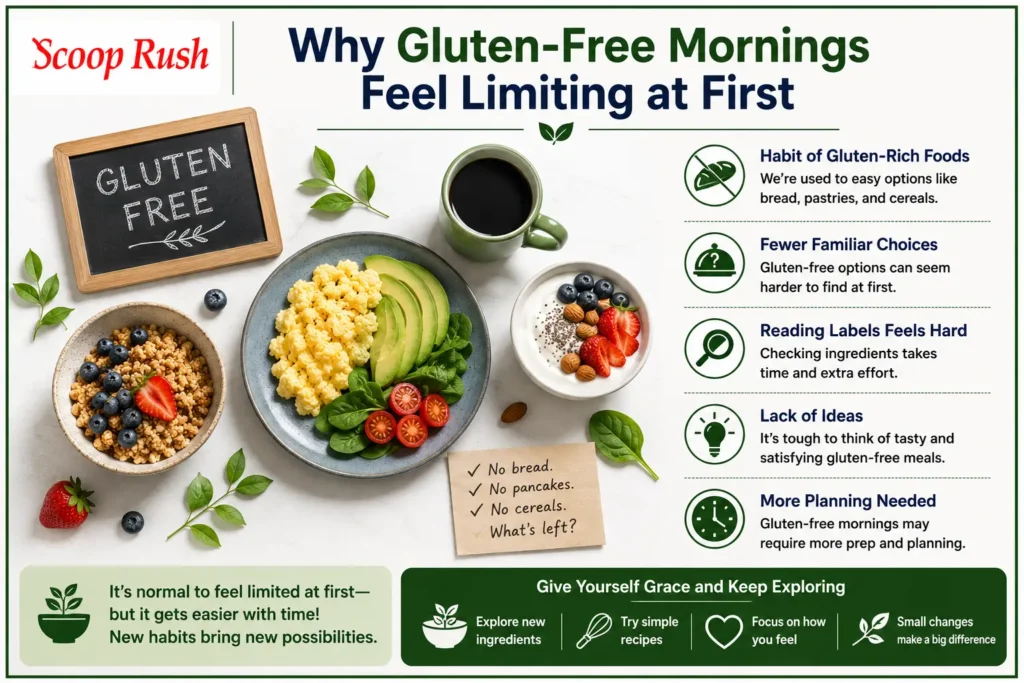
For most people, breakfast habits are built around wheat-based staples such as toast, cereal or pastries. When gluten is removed from the picture, it can initially feel like there is very little left to choose from. This is usually more about habit than actual food availability. Once someone starts looking beyond the bread aisle, the options open up quickly.
Plenty of Variety Is Still Possible
The truth is that going gluten-free does not mean giving up taste or variety. Eggs, fruits, vegetables, yogurt, nuts, seeds, quinoa and certified gluten-free oats can be combined into dozens of quick, healthy meals. Whether someone prefers a sweet start with fruit and yogurt or a savory plate built around eggs and vegetables, there is a gluten-free option to match almost any taste or schedule.
Balance Matters More Than the Gluten-Free Label
Beyond simply avoiding gluten, the real goal of a good breakfast is balance. The right mix of protein, fiber, healthy fats and complex carbohydrates keeps blood sugar steady, curbs mid-morning cravings and supports focus at work, school or the gym. Relying only on packaged gluten-free products, many of which are high in refined starch and added sugar, can actually work against these goals. Choosing whole, minimally processed ingredients makes a much bigger difference than the gluten-free label alone.
What This Guide Covers
This guide breaks down what makes a breakfast truly gluten-free, who actually needs to follow this way of eating, and which foods to choose or avoid, along with more than 20 practical breakfast ideas for busy weekdays and relaxed weekends. In addition, it covers meal prep tips, options for kids, weight-loss-friendly choices, common mistakes people make, and answers to the most frequently asked questions on the topic.
What Does Gluten-Free Breakfast Mean?
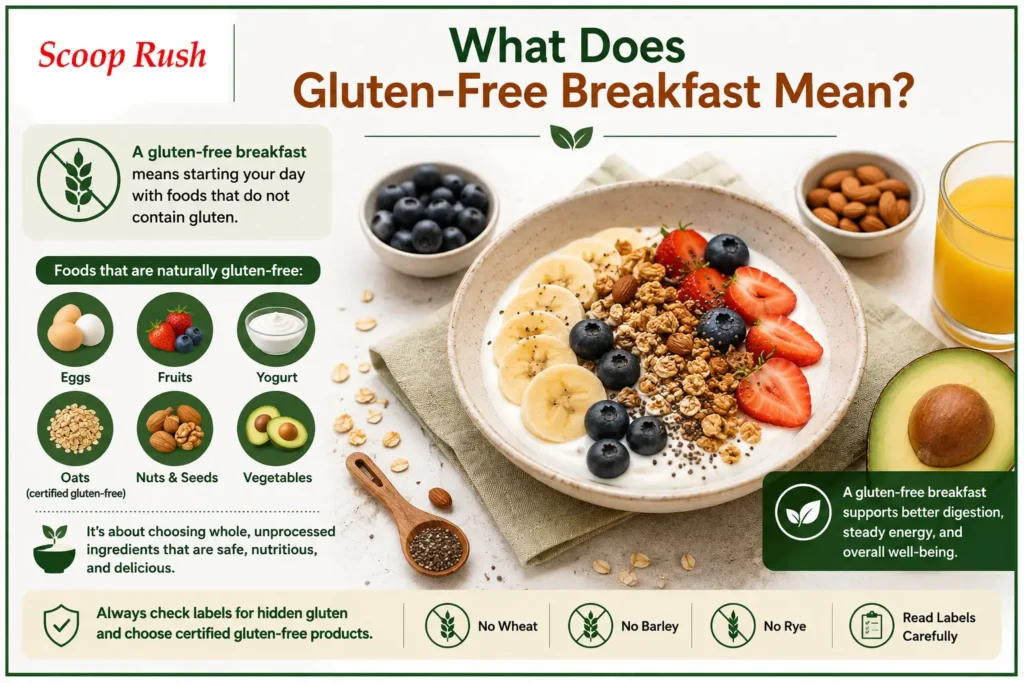
A gluten-free breakfast is any morning meal made without gluten, the protein found in wheat, barley and rye. Instead of these grains, people rely on naturally gluten-free foods or products that are certified gluten-free.
Naturally gluten-free staples include fresh fruits, vegetables, eggs, plain dairy, nuts, seeds, quinoa, millet, buckwheat and certified gluten-free oats.
Gluten-free alternatives such as gluten-free bread, pancake mixes, tortillas and granola let people recreate familiar breakfast dishes. When shopping, it is important to check labels and look for products marked “Certified Gluten-Free,” especially for anyone with celiac disease.
Who Actually Needs a Gluten-Free Breakfast?
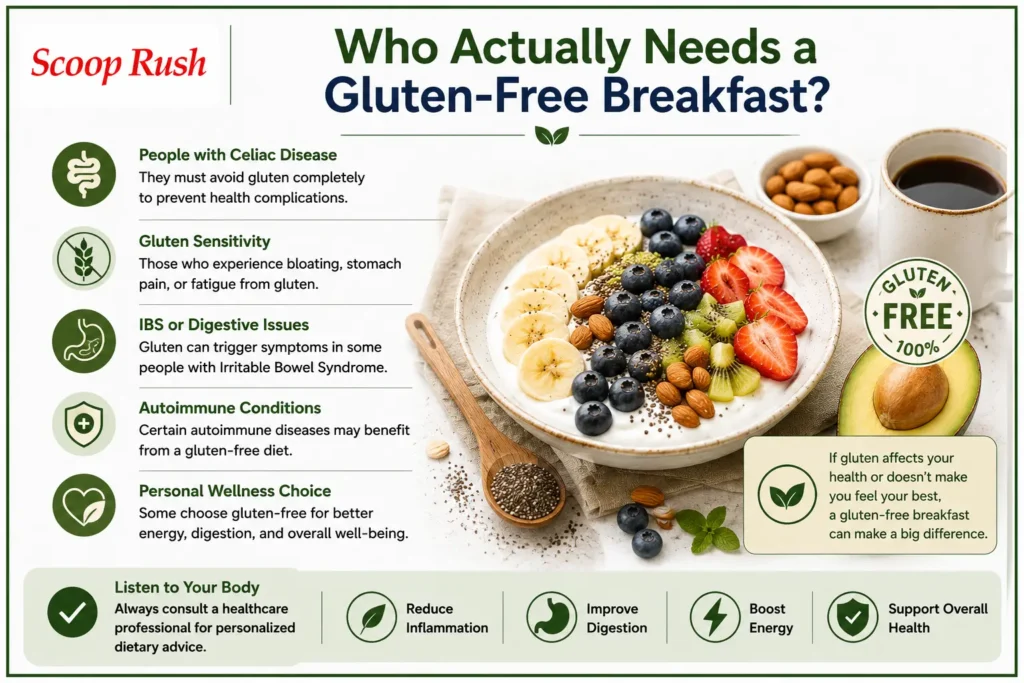
Gluten-free eating has become trendy in recent years, appearing on restaurant menus and grocery shelves everywhere, but it is medically necessary only for specific groups. Understanding these differences can help clear up confusion about who really benefits from cutting gluten out of their morning routine.
- Celiac disease: An autoimmune condition where gluten damages the small intestine, leading to poor nutrient absorption, fatigue and digestive issues. A strict gluten-free diet is the only known treatment.
- Non-celiac gluten sensitivity: People feel bloated, tired or foggy after eating gluten, even without testing positive for celiac disease. Many report improvement after cutting gluten under medical guidance.
- Wheat allergy: An allergic reaction to wheat proteins, ranging from mild skin irritation to severe reactions. Unlike celiac disease, some people with a wheat allergy can still tolerate other gluten grains.
For people without any of these conditions, going gluten-free is not automatically healthier, and cutting out whole grains without a medical reason can sometimes mean missing out on fiber and B vitamins. That said, many gluten-free breakfasts are naturally rich in whole foods, so they can still be a nutritious choice for almost anyone when built around real ingredients like eggs, fruit and vegetables instead of processed substitutes marketed simply as “gluten-free.”
Why Breakfast Matters on a Gluten-Free Diet
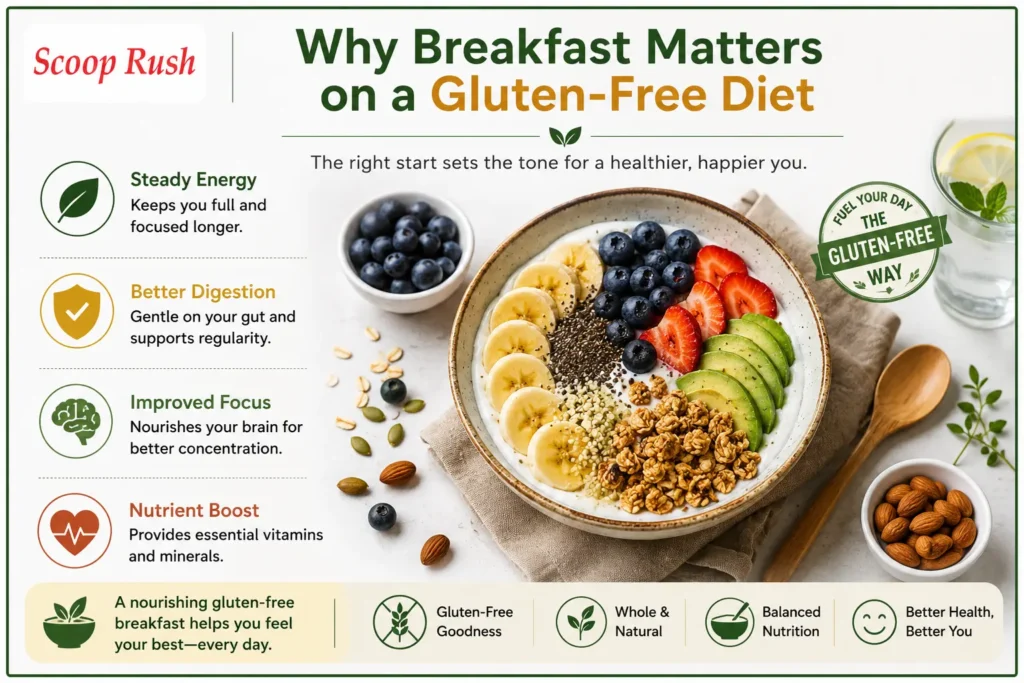
After hours of overnight fasting, the body needs fuel to restore energy and prepare for the day. A balanced gluten-free breakfast can:
- Replenish energy stores
- Support digestion through fiber-rich whole foods
- Keep hunger away for longer
- Improve focus and concentration
- Help stabilize blood sugar levels
- Add fruits, vegetables and whole grains to the daily diet
For people with celiac disease, choosing safe ingredients at breakfast is especially important, since accidental gluten exposure can trigger uncomfortable symptoms.
Building a Balanced Gluten-Free Plate
A healthy breakfast is not just about removing gluten. It should combine protein, complex carbohydrates, healthy fats and fiber to keep energy steady through the morning.
| Nutrient | Why It Matters | Gluten-Free Sources |
| Protein | Keeps you full, supports muscles | Eggs, Greek yogurt, cottage cheese, tofu, smoked salmon |
| Complex carbs | Provide steady energy | Certified gluten-free oats, quinoa, sweet potatoes, buckwheat |
| Healthy fats | Support heart and brain health | Avocado, nuts, seeds, nut butters |
| Fiber | Aids digestion, promotes fullness | Fruits, vegetables, chia seeds, flaxseeds |
| Vitamins and minerals | Support overall health | Fresh fruits, leafy greens, dairy |
A simple formula: pick one protein, one gluten-free carbohydrate, a source of healthy fat, and finish with fruit or vegetables.
Foods You Can Eat
- Protein: eggs, Greek yogurt, cottage cheese, tofu, smoked salmon, certified gluten-free turkey sausage, lean chicken
- Fruits: bananas, apples, blueberries, strawberries, oranges, kiwi, mango, grapes, pineapple
- Vegetables: spinach, tomatoes, mushrooms, bell peppers, onions, kale, avocado, sweet potatoes
- Grains: certified gluten-free oats, quinoa, buckwheat, millet, brown rice, sorghum, amaranth
- Healthy fats: almonds, walnuts, pistachios, pumpkin seeds, chia seeds, flaxseeds, peanut butter, almond butter
- Dairy and alternatives: milk, cheese, almond milk, certified gluten-free oat milk, soy milk
Foods to Avoid
| Food | Why It’s a Problem |
| Regular bread | Made with wheat flour |
| Bagels | Contain wheat |
| Traditional cereals | Often made with wheat or barley |
| Regular pancakes and waffles | Usually made with wheat flour |
| Pastries and muffins | Wheat-based recipes |
| Biscuits | Usually contain wheat flour |
| Malted cereals | Malt comes from barley |
| Breakfast sandwiches | Often served on regular bread |
Gluten can also hide in unexpected places, including some granolas, flavored oatmeal, breakfast bars, pancake mixes, sausage seasonings, soy sauce, gravy mixes and certain protein powders. Always check the label and look for a certified gluten-free mark.
What Are the Best Gluten-Free Breakfast Ideas?
Choosing a healthy gluten-free breakfast doesn’t have to be complicated. Whether you enjoy sweet, savory, or high-protein meals, there are plenty of delicious options that fit a gluten-free lifestyle. The ideas below use naturally gluten-free ingredients or certified gluten-free products, making them suitable for most people who avoid gluten.
Tip: Always check labels on packaged foods such as oats, granola, bread, and tortillas to ensure they are certified gluten-free, especially if you have celiac disease.
Greek Yogurt Parfait
A Greek yogurt parfait is one of the easiest gluten-free breakfasts you can make. It requires no cooking and takes only a few minutes to prepare. Simply layer Greek yogurt with fresh berries and certified gluten-free granola for a breakfast that’s rich in protein, calcium, and probiotics. This combination supports gut health while helping you stay full throughout the morning.
Overnight Gluten-Free Oats
Overnight oats are perfect for busy mornings because they can be prepared the night before. Combine certified gluten-free oats with your favorite milk, chia seeds, and a natural sweetener, then refrigerate overnight. By morning, you’ll have a creamy, ready-to-eat breakfast that provides fiber, protein, and long-lasting energy.
Vegetable Omelet
If you prefer a savory breakfast, a vegetable omelet is an excellent choice. Fill it with spinach, mushrooms, tomatoes, onions, or bell peppers for extra vitamins and minerals. Eggs provide high-quality protein that helps keep you satisfied while supporting muscle health and energy levels.
Quick and no-cook options
- Greek yogurt parfait with berries and gluten-free granola
- Overnight gluten-free oats with chia seeds and fruit
- Chia seed pudding topped with strawberries or mango
- Cottage cheese bowl with fruit and nuts
- Smoothie bowl with banana, berries and gluten-free granola
- Breakfast smoothie with spinach, fruit and protein
- Fresh fruit and yogurt bowl
- Peanut butter banana wrap using a certified gluten-free tortilla
- Breakfast trail mix made with gluten-free cereal, nuts and dried fruit
Warm and savory options
- Vegetable omelet with spinach, mushrooms and tomatoes
- Sweet potato breakfast hash with eggs and peppers
- Smoked salmon and eggs with avocado
- Gluten-free breakfast burrito with eggs, beans and cheese
- Tofu scramble seasoned with turmeric and vegetables
- Baked eggs with tomatoes, spinach and cheese
- Breakfast rice bowl with eggs, avocado and roasted vegetables
- Gluten-free breakfast sandwich on certified gluten-free bread
Grain-based bowls
- Quinoa breakfast bowl with almond milk, apple and cinnamon
- Apple cinnamon gluten-free oatmeal with pecans
- Buckwheat porridge with banana and honey
- Brown rice breakfast bowl with roasted vegetables
Quinoa deserves special mention here. It is not just a lunch or dinner grain. As a naturally gluten-free seed that also happens to be a complete protein, it contains all nine essential amino acids, which makes a warm quinoa bowl a genuinely filling way to start the day rather than just a trendy swap for oatmeal.
Baked and batch-cooked favorites
- Egg muffins with vegetables and cheese, great for meal prep
- Gluten-free pancakes or buckwheat pancakes
- Gluten-free waffles, made ahead and frozen
- Homemade gluten-free granola or muesli
- Peanut butter energy bites for grab-and-go mornings
- Gluten-free breakfast cookies made with oats and banana
These batch-cooked options are especially useful for households with more than one person to feed, since a single session in the kitchen can supply several days worth of breakfasts. Egg muffins, for example, keep well in the refrigerator for up to four days and can be frozen for as long as two months, which makes them one of the most practical options on this list.
Quick Comparison
| Breakfast | Prep Time | High Protein | Meal Prep Friendly |
| Greek Yogurt Parfait | 5 min | Yes | Yes |
| Overnight Oats | 5 min (night before) | Moderate | Yes |
| Vegetable Omelet | 10 min | Yes | No |
| Egg Muffins | 30 min (batch) | Yes | Yes |
| Quinoa Breakfast Bowl | 15 min | Yes | Yes |
| Smoked Salmon & Eggs | 15 min | Yes | No |
| Breakfast Burrito | 15 min | Yes | Yes |
| Tofu Scramble | 15 min | Yes | Yes |
| Homemade Granola | 30 min | Moderate | Yes |
| Gluten-Free Waffles | 25 min | Moderate | Yes |
Best Breakfasts for Weight Loss
For anyone focused on weight management, the goal is meals that are high in protein and fiber while keeping added sugar low. This combination increases fullness and reduces the urge to snack before lunch.
- Greek yogurt with berries
- Vegetable omelet
- Chia seed pudding
- Overnight oats
- Cottage cheese bowl
- Quinoa breakfast bowl
- Egg muffins
- Avocado toast with a boiled egg
- Tofu scramble
A few practical tips: choose whole foods over heavily processed gluten-free products, include protein in every meal, add fruit instead of sugary toppings, drink water alongside breakfast, and watch portions of calorie-dense foods like nuts and nut butters. It is worth remembering that simply buying gluten-free versions of chips, cookies or cereal does not automatically support weight loss. What actually helps is the overall pattern of eating whole, nutrient-dense foods at a portion size that matches your activity level.
High-Protein Options at a Glance
| Breakfast | Main Protein Source |
| Greek Yogurt Parfait | Greek yogurt |
| Cottage Cheese Bowl | Cottage cheese |
| Egg Muffins | Eggs |
| Vegetable Omelet | Eggs |
| Smoked Salmon & Eggs | Salmon and eggs |
| Breakfast Burrito | Eggs and beans |
| Tofu Scramble | Tofu |
| Quinoa Bowl | Quinoa |
| Breakfast Sandwich | Eggs and turkey bacon |
Breakfast Ideas for Kids
Children need balanced meals to support growth and concentration at school. Good gluten-free options include mini egg muffins, banana pancakes, fruit and yogurt parfaits, homemade breakfast cookies, peanut butter banana wraps, gluten-free waffles, smoothies, and apple slices with nut butter.
Parents can make mornings easier by letting kids choose their own fruit toppings, prepping breakfast the night before, and introducing new foods gradually alongside familiar favorites.
Meal Prep Tips for Busy Mornings
Preparing breakfast in advance is one of the easiest ways to stay consistent with a gluten-free diet, especially on hectic weekdays when there is no time to cook from scratch. Spending 30 to 45 minutes on prep over the weekend can save real time during the week and helps avoid the temptation of grabbing a less nutritious option on the way out the door.
- Prepare overnight oats a few nights in advance
- Bake a batch of egg muffins for the whole week
- Freeze pancakes and waffles in individual portions
- Wash and chop fruit ahead of time
- Keep boiled eggs ready in the fridge
- Cook quinoa or brown rice in advance for bowls
- Make smoothie freezer packs with fruit and greens
| Food | Freezer Storage Time |
| Egg Muffins | Up to 2 months |
| Gluten-Free Pancakes | Up to 3 months |
| Gluten-Free Waffles | Up to 3 months |
| Breakfast Burritos | Up to 2 months |
| Breakfast Cookies | Up to 3 months |
| Homemade Granola | 1-2 months, airtight container |
Common Mistakes to Avoid
- Assuming gluten-free means healthy. Many packaged gluten-free products are high in added sugar and refined starch. Compare labels and choose whole-food ingredients.
- Skipping protein. A breakfast of only fruit or gluten-free toast will not keep hunger away. Add eggs, yogurt, cottage cheese, tofu or nuts.
- Not getting enough fiber. Boost fiber with fresh fruit, vegetables, chia seeds, flaxseeds, gluten-free oats and quinoa.
- Ignoring labels. Gluten can hide in malt flavoring, some modified food starches, soy sauce, seasoning mixes, certain cereals and protein bars.
- Overlooking cross-contamination. Use a separate toaster for gluten-free bread, store gluten-free foods separately, and clean shared utensils and cutting boards before use. Avoid shared butter or jam jars where breadcrumbs from regular bread may have been left behind, and keep gluten-free flours and grains in clearly labeled, sealed containers away from wheat-based products.
Being mindful of these small details matters most for people with celiac disease, since even trace amounts of gluten can trigger a reaction. For those simply reducing gluten by choice, occasional cross-contact is far less of a concern, but building good habits early still makes daily cooking easier.
Final Thoughts
Following a gluten-free diet does not mean mornings have to be repetitive or restrictive. With so many naturally gluten-free ingredients available, from eggs and yogurt to quinoa and fresh fruit, it is easy to create breakfasts that are both nutritious and enjoyable. Choosing whole, minimally processed foods, reading labels carefully, and planning meals ahead of time can make gluten-free eating much simpler while supporting your overall health.
Whether you’re managing celiac disease, non-celiac gluten sensitivity, supporting your weight-loss goals, or simply looking for healthier breakfast options, the ideas in this guide can help you build satisfying meals that fit your lifestyle. Mix and match recipes based on your preferences, prepare a few breakfasts in advance, and keep your kitchen stocked with gluten-free staples. With a little preparation and consistency, a healthy gluten-free breakfast can become one of the easiest and most enjoyable parts of your daily routine.
FAQs
1. Can I eat oats on a gluten-free diet?
Yes, but only certified gluten-free oats. Regular oats are often processed in facilities that also handle wheat, barley or rye, which raises the risk of cross-contamination.
2. Is peanut butter gluten-free?
Most natural peanut butter is gluten-free, but flavored or processed varieties may contain additives. Always check the label before buying.
3. Are eggs naturally gluten-free?
Yes. Eggs are naturally gluten-free and offer high-quality protein, vitamins and healthy fats, making them one of the best breakfast choices.
4. What is the best gluten-free breakfast for busy mornings?
Greek yogurt parfaits, overnight oats, smoothies, egg muffins, peanut butter banana wraps and breakfast trail mix are all quick options that can be prepared in minutes or made ahead of time.
5. Can children eat a gluten-free breakfast every day?
Yes. If a child has celiac disease, a wheat allergy, or gluten sensitivity, a balanced gluten-free breakfast with fruits, vegetables, protein, and gluten-free whole grains can indeed fully support their growth and daily energy needs.

