
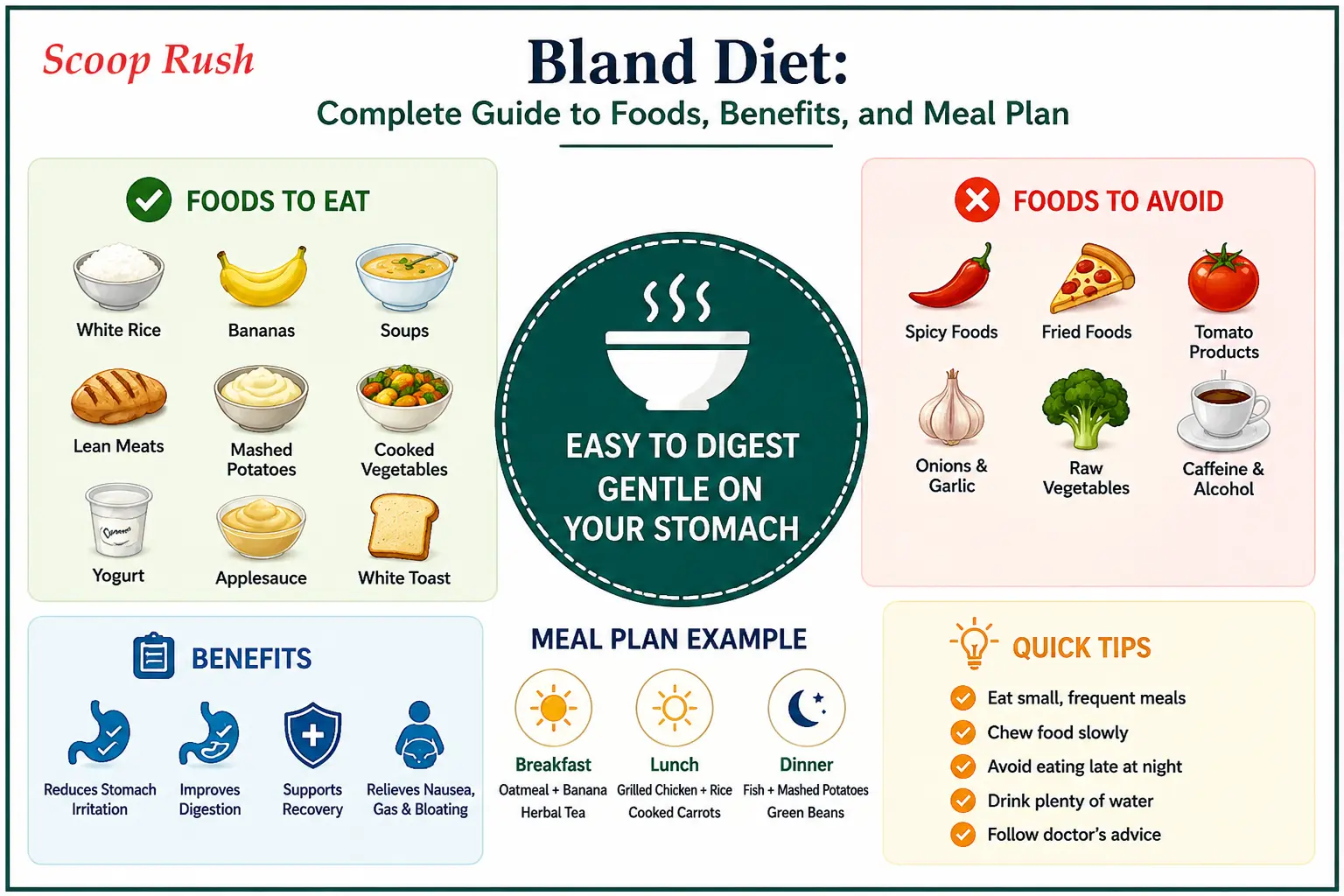
Digestive problems can make even your favorite meals feel uncomfortable. Whether you’re recovering from stomach surgery, dealing with acid reflux, recovering from food poisoning, or managing symptoms of ulcers or cancer treatment, choosing the right foods can make a big difference. A bland diet is designed to give your digestive system a chance to rest while still providing the nutrients your body needs.
Unlike many restrictive diets, a bland diet isn’t meant for weight loss. Instead, it’s a temporary eating plan that focuses on soft, low-fat, low-fiber, and mildly seasoned foods that are easy to digest. This guide explains everything you need to know about a bland diet, including its benefits, foods to eat, foods to avoid, meal ideas, and helpful tips for recovery.
What Is a Bland Diet?
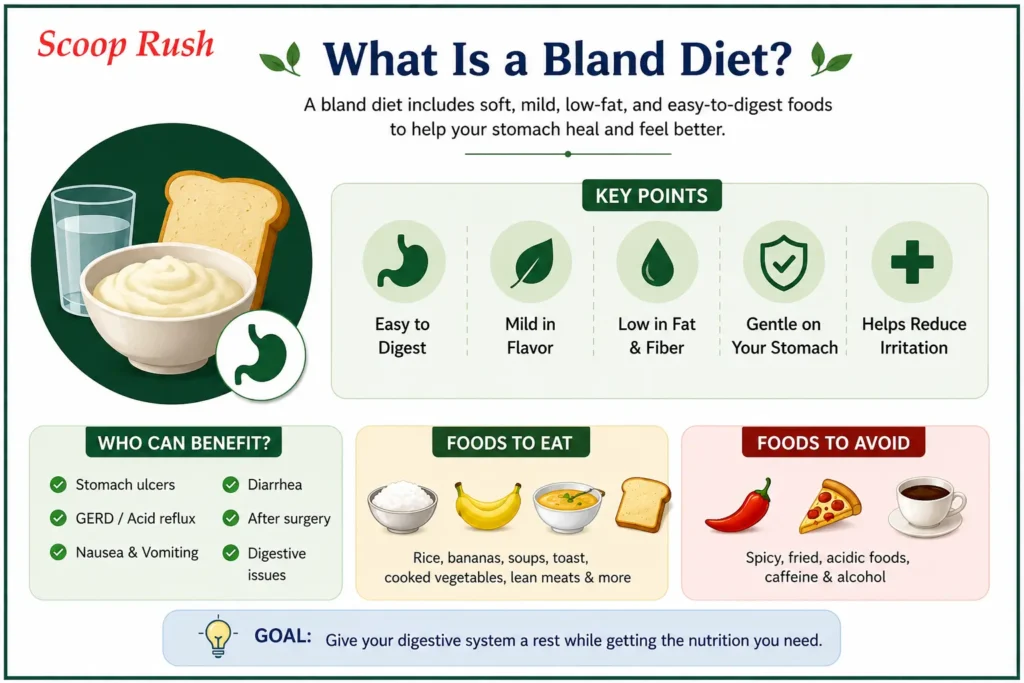
A bland diet is an eating plan made up of foods that are gentle on the stomach and digestive tract. The foods are generally:
- Soft and easy to chew
- Low in fat
- Low in fiber
- Mild in flavor
- Not spicy or heavily seasoned
- Easy to digest
The goal is to reduce irritation in the stomach and intestines while helping relieve symptoms such as heartburn, acid reflux (GERD), stomach ulcers, gastritis, nausea, vomiting, diarrhea, indigestion, and upset stomach.
Doctors may also recommend a bland diet after stomach or intestinal surgery or during recovery from digestive illnesses.
Is a Bland Diet the Same as the BRAT Diet?
Not exactly.
The BRAT diet stands for:
- Bananas
- Rice
- Applesauce
- Toast
It is a very limited version of a bland diet and is often used for short-term treatment of diarrhea or stomach viruses.
A bland diet includes these foods but also allows many other nutritious options such as lean meats, eggs, potatoes, yogurt, cooked vegetables, cereals, and soups, making it more balanced for longer use.
It’s also worth knowing how a bland diet differs from a clear liquid diet, which is even more restrictive and typically used right before or after surgery, or a low-residue diet, which limits fiber more strictly for conditions like IBD flare-ups.
Who May Benefit From a Bland Diet?
A healthcare provider may recommend a bland diet if you have:
GERD (Acid Reflux) — Bland foods help reduce stomach acid production and lower the chance of acid reflux.
Peptic Ulcers — Mild foods are less likely to irritate the stomach lining while ulcers heal.
Gastritis — People with inflammation of the stomach lining often experience less discomfort after eating bland meals.
Nausea and Vomiting — Soft, plain foods are easier to tolerate when the stomach feels unsettled.
Diarrhea — Low-fiber foods help reduce bowel movements and allow the digestive tract to recover.
After Surgery — Patients recovering from stomach or intestinal surgery often begin with a bland diet before returning to regular foods.
Cancer Treatment — Chemotherapy and radiation can cause nausea, taste changes, diarrhea, and mouth soreness. A bland diet can make eating more comfortable and help maintain nutrition. Early awareness matters too — knowing common lung cancer symptoms can help with earlier diagnosis and treatment planning.
Benefits of a Bland Diet
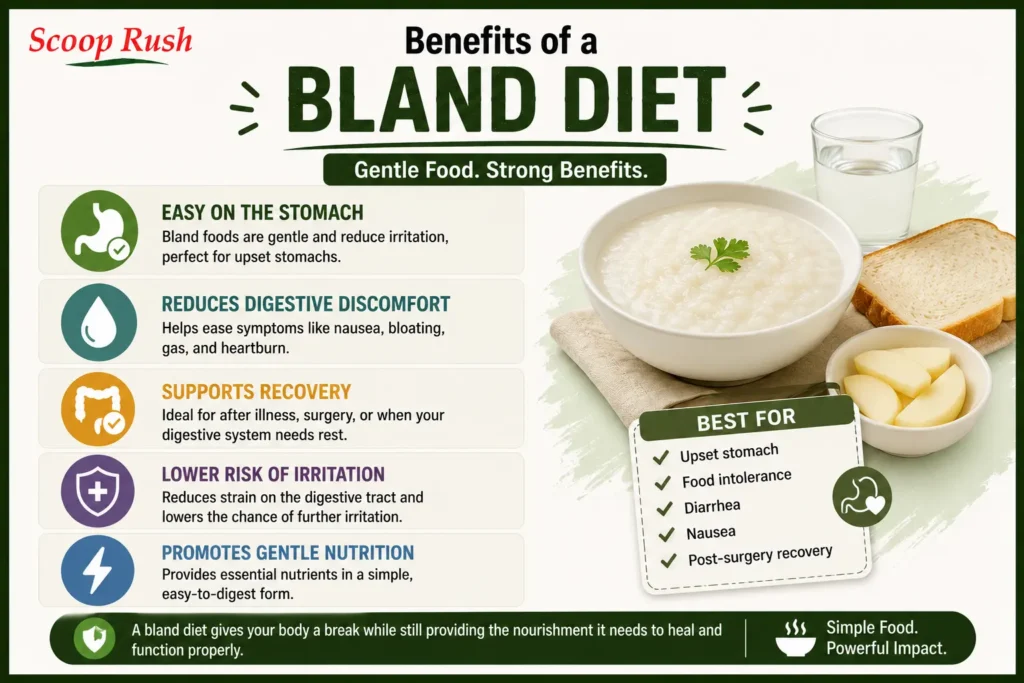
Helps Reduce Stomach Irritation — Avoiding spicy, acidic, and greasy foods allows the digestive system time to heal.
Improves Digestion — Soft foods are easier to digest and place less stress on the stomach and intestines.
Relieves Digestive Symptoms — Many people experience fewer symptoms such as heartburn, acid reflux, stomach pain, bloating, nausea, vomiting, and diarrhea.
Supports Recovery — After surgery or illness, a bland diet provides nourishment while reducing digestive discomfort.
Foods You Can Eat on a Bland Diet
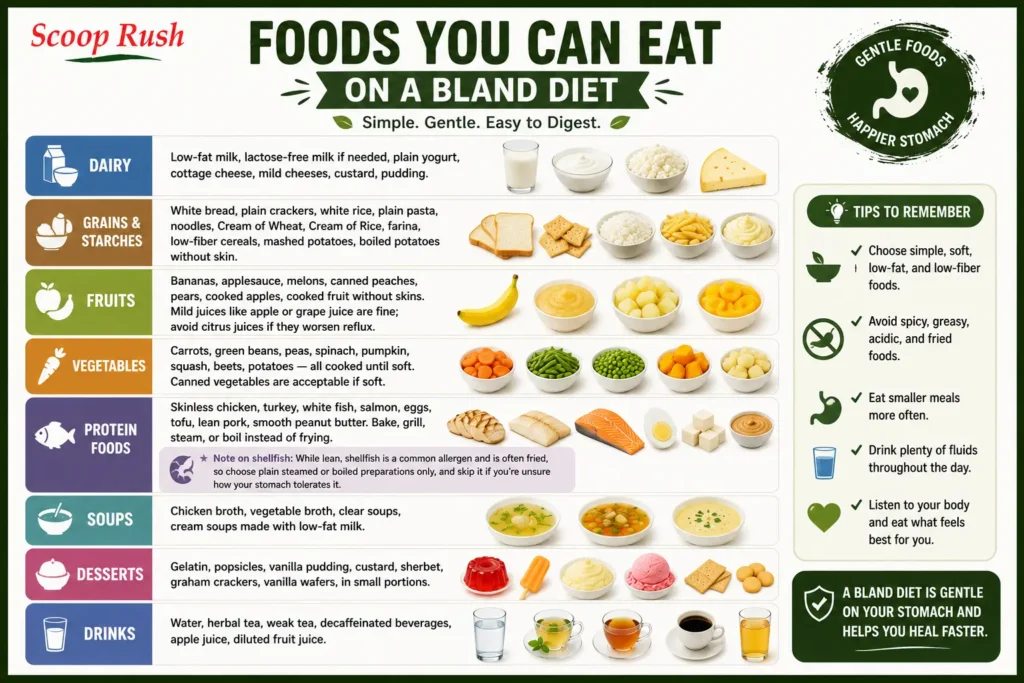
Dairy — Low-fat milk, lactose-free milk if needed, plain yogurt, cottage cheese, mild cheeses, custard, pudding.
Grains and Starches — White bread, plain crackers, white rice, plain pasta, noodles, Cream of Wheat, Cream of Rice, farina, low-fiber cereals, mashed potatoes, boiled potatoes without skin.
Fruits — Bananas, applesauce, melons, canned peaches, pears, cooked apples, cooked fruit without skins. Mild juices like apple or grape juice are fine; avoid citrus juices if they worsen reflux.
Vegetables — Carrots, green beans, peas, spinach, pumpkin, squash, beets, potatoes — all cooked until soft. Canned vegetables are acceptable if soft.
Protein Foods — Skinless chicken, turkey, white fish, salmon, eggs, tofu, lean pork, smooth peanut butter. Bake, grill, steam, or boil instead of frying. A note on shellfish: while lean, shellfish is a common allergen and is often fried, so choose plain steamed or boiled preparations only, and skip it if you’re unsure how your stomach tolerates it.
Soups — Chicken broth, vegetable broth, clear soups, cream soups made with low-fat milk.
Desserts — Gelatin, popsicles, vanilla pudding, custard, sherbet, graham crackers, vanilla wafers, in small portions.
Drinks — Water, herbal tea, weak tea, decaffeinated beverages, apple juice, diluted fruit juice.
Foods to Avoid on a Bland Diet
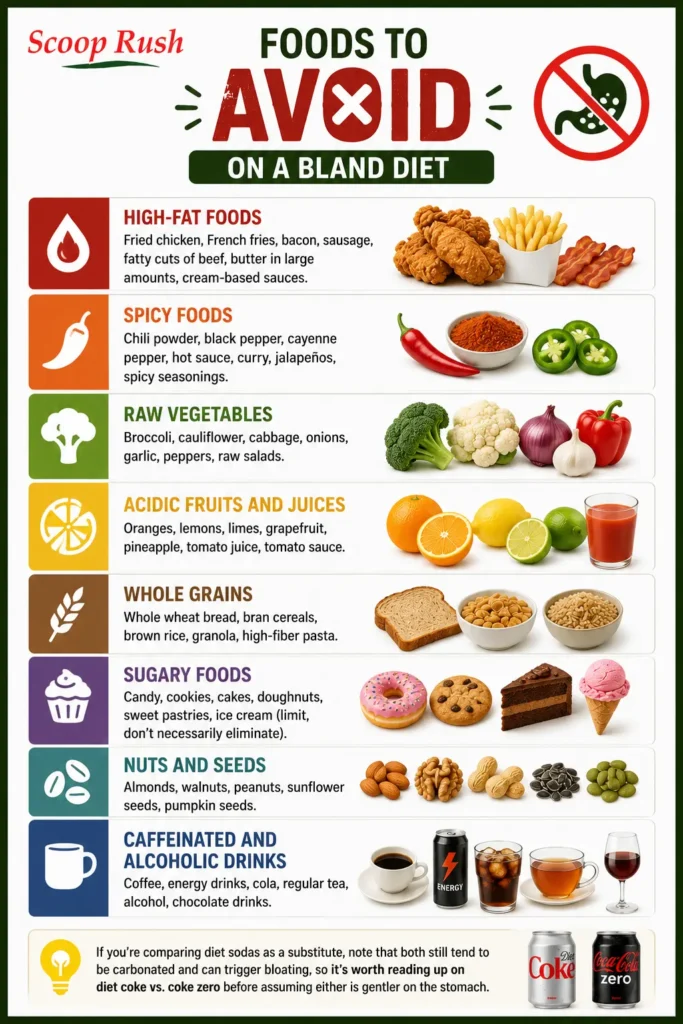
High-Fat Foods — Fried chicken, French fries, bacon, sausage, fatty cuts of beef, butter in large amounts, cream-based sauces.
Spicy Foods — Chili powder, black pepper, cayenne pepper, hot sauce, curry, jalapeños, spicy seasonings.
Raw Vegetables — Broccoli, cauliflower, cabbage, onions, garlic, peppers, raw salads.
Acidic Fruits and Juices — Oranges, lemons, limes, grapefruit, pineapple, tomato juice, tomato sauce.
Whole Grains — Whole wheat bread, bran cereals, brown rice, granola, high-fiber pasta.
Sugary Foods — Candy, cookies, cakes, doughnuts, sweet pastries, ice cream (limit, don’t necessarily eliminate).
Nuts and Seeds — Almonds, walnuts, peanuts, sunflower seeds, pumpkin seeds.
Caffeinated and Alcoholic Drinks — Coffee, energy drinks, cola, regular tea, alcohol, chocolate drinks. If you’re comparing diet sodas as a substitute, note that both still tend to be carbonated and can trigger bloating, so it’s worth reading up on diet coke vs. coke zero before assuming either is gentler on the stomach.
Sample 3-Day Bland Diet Meal Plan
Day 1
- Breakfast: Cream of Wheat, banana, low-fat milk
- Snack: Applesauce
- Lunch: Grilled chicken breast, white rice, cooked carrots
- Snack: Graham crackers
- Dinner: Baked white fish, mashed potatoes, cooked green beans
- Dessert: Vanilla pudding
Day 2
- Breakfast: Scrambled eggs, white toast, herbal tea
- Snack: Plain yogurt
- Lunch: Turkey sandwich on white bread, applesauce
- Snack: Vanilla wafers
- Dinner: Baked chicken, plain pasta, cooked squash
Day 3
- Breakfast: Oatmeal (if tolerated), banana
- Snack: Cottage cheese
- Lunch: Baked fish, white rice, spinach
- Snack: Gelatin
- Dinner: Turkey, mashed potatoes, cooked carrots
Simple Bland Diet Recipe Ideas
Chicken and Rice Soup — Chicken breast, white rice, carrots, low-sodium chicken broth. Cook until the chicken is tender and vegetables are soft.
Mashed Potato Bowl — Top mashed potatoes with grilled chicken and cooked green beans.
Banana Yogurt Bowl — Mix plain low-fat yogurt with sliced bananas.
Are There Medications to Avoid?
Some medicines can irritate the stomach, especially if you have ulcers or gastritis. Talk with your healthcare provider before using aspirin, ibuprofen (Advil, Motrin), or naproxen (Aleve). These belong to a group called NSAIDs, which may increase stomach irritation or delay ulcer healing. Never stop prescribed medication without medical advice.
Common Challenges on a Bland Diet
Constipation — Because the diet is lower in fiber, constipation may occur. Drink plenty of water, stay active if possible — even a 5-minute walk every hour can help keep digestion moving — and add fiber-rich foods back gradually once approved by your provider. Avoid reaching for fiber supplements on your own, since taking too many vitamins or supplements can cause its own digestive issues.
Boredom — Eating the same foods daily can feel repetitive. Rotate lean proteins, try different cooked vegetables, and use mild herbs like parsley or basil for flavor.
Reduced Appetite — Eat five or six small meals throughout the day, choose nutrient-dense foods, and avoid skipping meals.
Tips for Success on a Bland Diet
- Eat small meals every 3 to 4 hours
- Chew food slowly and thoroughly
- Avoid overeating
- Drink fluids between meals instead of with meals if nausea is a problem
- Stay upright for at least two hours after eating
- Avoid eating late at night
- Stop smoking if you smoke
- Introduce new foods one at a time as symptoms improve
- Keep a food diary to identify foods that trigger symptoms
Bland Diet Grocery Shopping List
Having a ready shopping list makes the bland diet much easier to stick to, especially in the first few days when appetite and energy are low.
- Grains: white bread, plain crackers, white rice, plain pasta, Cream of Wheat, low-fiber cereal
- Produce: bananas, applesauce, canned peaches, cooked carrots, green beans, spinach, potatoes
- Protein: eggs, skinless chicken breast, turkey, white fish, tofu, smooth peanut butter
- Dairy: low-fat milk, plain yogurt, cottage cheese, mild cheese
- Pantry: low-sodium broth, gelatin, graham crackers, vanilla wafers
- Drinks: water, herbal tea, apple juice
Keeping these staples on hand reduces the temptation to reach for something harder to digest when hunger strikes.
Hydration on a Bland Diet
Staying hydrated is just as important as choosing the right foods, particularly if diarrhea or vomiting is part of the picture. Sip water throughout the day rather than drinking large amounts at once, which can overwhelm a sensitive stomach. Oral rehydration solutions can help replace lost electrolytes after significant fluid loss. Avoid very cold or very hot drinks if they seem to trigger discomfort, and space fluids between meals rather than during them if nausea is an issue.
Bland Diet for Children and Older Adults
Children and older adults often need extra care on a bland diet because they’re more vulnerable to dehydration and nutrient gaps. For kids, offer small, frequent portions of familiar foods like plain rice, toast, and bananas, and involve a pediatrician if symptoms last more than a day or two. Older adults may already be managing reduced appetite or chewing difficulties, so soft-cooked vegetables, scrambled eggs, and smooth soups are often easier to manage than solid pieces of meat or raw produce. In both groups, weight loss or ongoing poor intake should prompt a call to a healthcare provider rather than waiting it out.
When to See a Doctor
A bland diet is meant to support short-term recovery, not replace medical care. Contact a healthcare provider if you experience:
- Severe or worsening abdominal pain
- Vomiting that lasts more than 24 hours
- Blood in vomit or stool
- Signs of dehydration, such as dizziness or very dark urine
- Unintentional weight loss
- Symptoms that don’t improve after a few days on the diet
These can signal something that needs more than dietary changes alone.
How Long Should You Stay on a Bland Diet?
A bland diet is usually recommended for a short period while your digestive system heals. The length of time depends on the reason you’re following it.
Your healthcare provider may advise returning to a regular diet once symptoms improve. Foods should be reintroduced gradually so you can identify anything that causes discomfort. Because the diet limits certain nutrients and fiber, it is not intended as a long-term eating plan unless directed by a healthcare professional.
Conclusion
A bland diet is a temporary eating plan that helps reduce irritation in the digestive tract by focusing on soft, low-fat, low-fiber, and mildly seasoned foods. It can be especially helpful for people recovering from stomach surgery, managing acid reflux, peptic ulcers, gastritis, nausea, vomiting, diarrhea, or cancer treatment.
Choosing gentle foods such as bananas, rice, cooked vegetables, lean proteins, yogurt, and white rice can help ease symptoms while giving your digestive system time to heal. At the same time, avoiding spicy foods, fried meals, alcohol, caffeine, and high-fiber foods may reduce discomfort and promote recovery.
Since everyone’s digestive system is different, it’s important to follow your healthcare provider’s advice and gradually return to your regular diet as symptoms improve.
Once you’re back to eating normally, building healthy habits in your 20s and 30s can help prevent future digestive flare-ups. And if you’re curious how a bland diet compares to other short-term eating plans, our guide to the military diet breaks down a very different approach built around weight loss rather than digestive recovery.
This article is for informational purposes only and is not a substitute for professional medical advice. Always consult a doctor or registered dietitian for guidance specific to your condition.
FAQs
Can I eat eggs on a bland diet?
Yes. Boiled, poached, or scrambled eggs are excellent sources of protein and are usually well tolerated.
Is peanut butter allowed?
Yes. Smooth peanut butter is generally recommended, while crunchy peanut butter should be avoided.
Can I drink coffee?
No. Regular coffee contains caffeine, which may irritate the stomach and worsen acid reflux. This is especially true if you tend to drink coffee on an empty stomach, which can intensify irritation.
Can I eat cheese?
Yes, but choose mild, low-fat cheeses such as cottage cheese. Avoid strong or highly seasoned cheeses.
Is oatmeal allowed?
Some people tolerate oatmeal well, while others may need to limit it because of its fiber content. Ask your healthcare provider if you’re unsure.
Can I lose weight on a bland diet?
Weight loss is not the goal of a bland diet. It is designed to reduce digestive irritation and support healing.

