
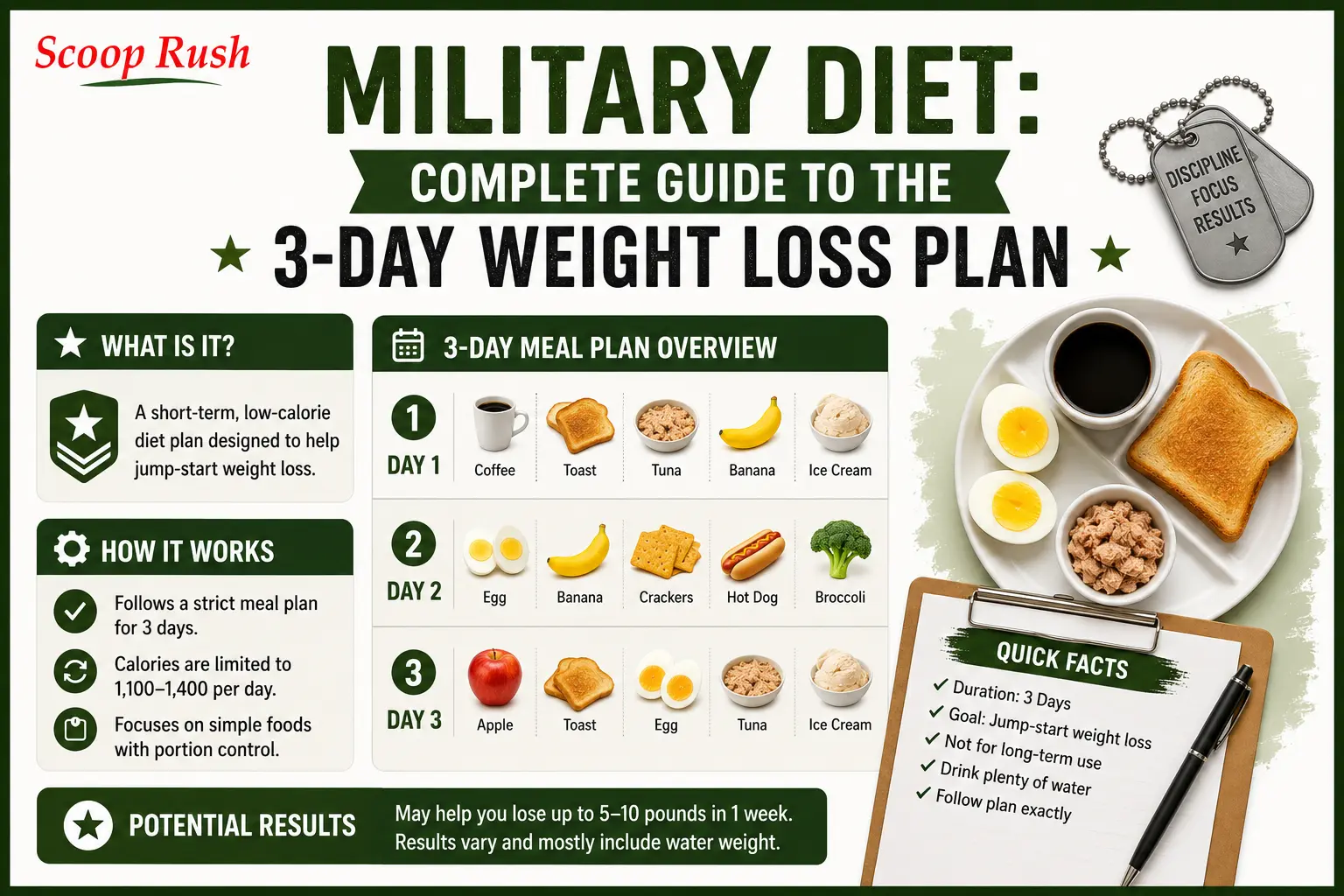
Losing weight quickly is a goal many people share, and it’s easy to see why the Military Diet has attracted so much attention. Social media, blogs, and online forums often claim this three-day eating plan can help people lose up to 10 pounds in a single week. The promise of rapid results with simple, inexpensive foods makes it appealing to anyone looking for a quick solution.
Despite its popularity, the Military Diet is surrounded by myths and misconceptions. It isn’t connected to any military organization, nor is there scientific evidence proving that its specific food combinations have special fat-burning properties. Still, many people try it because it is structured, easy to follow, and requires little meal preparation.
Before starting any restrictive eating plan, it’s important to understand how it works, what the research says, and whether it is a safe choice for your health. In this guide, we’ll explain everything you need to know about the Military Diet, including its meal plan, benefits, risks, substitutions, and practical tips for achieving healthy, sustainable weight loss. If your bigger goal is building better habits overall, our guide to healthy habits in your 20s and 30s is a good next stop after you finish this one.
What Is the Military Diet?
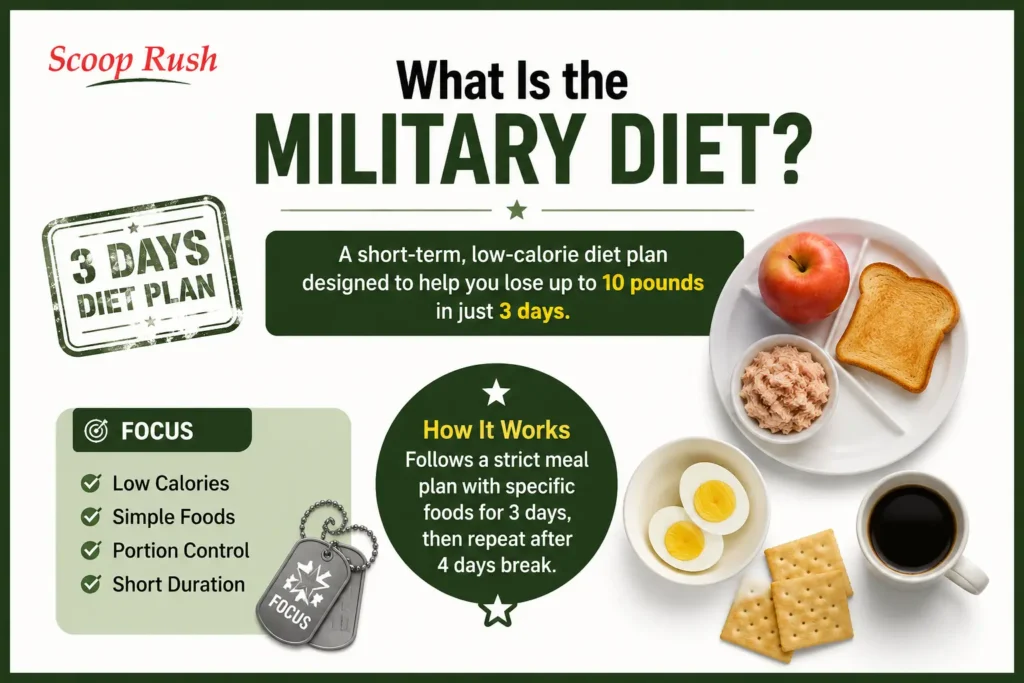
The Military Diet is a short-term eating plan built around two phases: three days of strict calorie restriction, followed by four days of more moderate, flexible eating. It’s designed to be repeated in weekly cycles, though most nutrition experts recommend against following it long-term.
Unlike many commercial weight-loss programs, the Military Diet doesn’t require supplements, expensive meal replacements, or special products. Instead, it relies on everyday grocery items such as eggs, tuna, toast, bananas, peanut butter, vegetables, crackers, and lean meat.
Although the diet is commonly called the “Military Diet,” it has no known connection with any military branch or government organization. Nutrition experts generally consider it another form of a very low-calorie diet intended for short-term use.
How Does the Military Diet Work?
The basic principle behind the Military Diet is simple: reducing calorie intake creates a calorie deficit. When your body uses more calories than you consume, it begins using stored energy, leading to weight loss.
During the first three days, calorie intake usually ranges between:
- Day 1: Approximately 1,400 calories
- Day 2: Approximately 1,200 calories
- Day 3: Approximately 1,100 calories
These calories come from carefully portioned meals with very few snacks.
For the remaining four days, followers are encouraged to continue eating moderately, generally keeping daily intake below 1,500 calories while choosing healthier foods.
Many websites claim certain food combinations “boost metabolism” or “burn fat.” However, there is currently no strong scientific evidence supporting these claims. Weight loss on the Military Diet primarily occurs because total calorie intake is significantly reduced.
Does the Military Diet Really Help You Lose Weight?
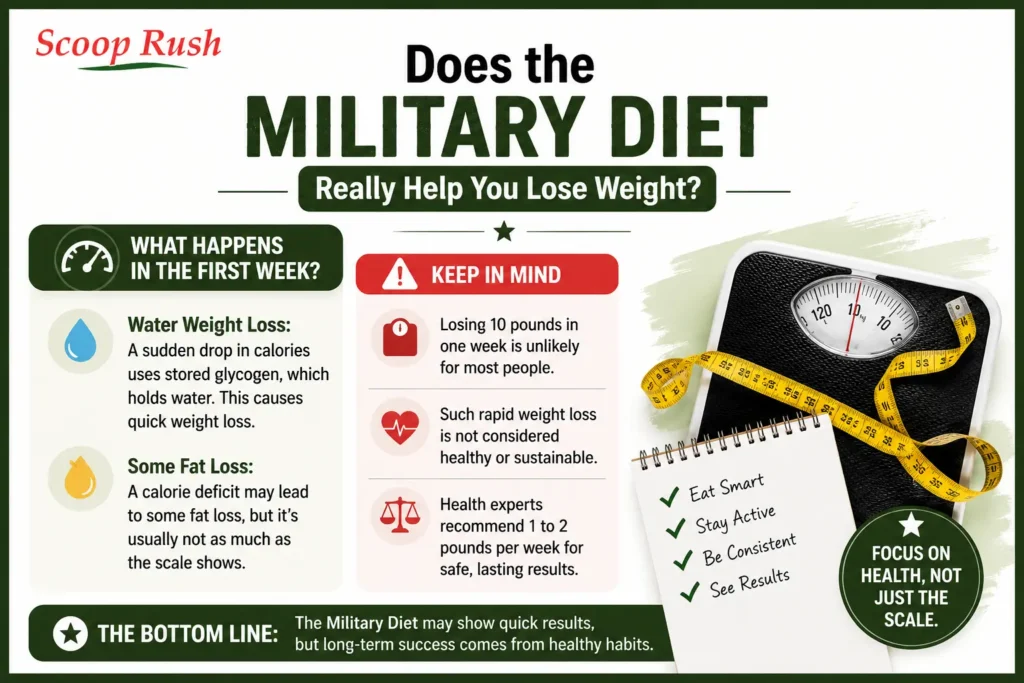
Many people notice weight loss during the first week of the Military Diet. However, it’s important to understand what that weight actually represents.
When calorie intake drops suddenly, the body uses stored glycogen for energy. Glycogen holds water, so using it causes a noticeable decrease in water weight. This often explains why the scale changes quickly during the first few days.
Some fat loss may also occur because of the calorie deficit, but experts caution that losing 10 pounds in one week is unlikely for most people and is generally not considered a healthy or sustainable rate of weight loss.
Health organizations typically recommend aiming to lose about 1 to 2 pounds per week through balanced eating and regular physical activity.
Who Should Consider the Military Diet?
Some adults may choose the Military Diet as a short-term approach if they want a simple eating plan for a few days. It may appeal to people who:
- Prefer structured meal plans
- Want inexpensive ingredients
- Don’t enjoy counting calories throughout the day
- Need a temporary eating schedule
However, it is not suitable for everyone. People managing chronic conditions should be especially cautious — for example, research into treatments like teplizumab for type 1 diabetes highlights just how carefully blood sugar and nutrition need to be managed in that population, which is one reason people with diabetes are advised to steer clear of very low-calorie plans like this one.
The Complete 3-Day Military Diet Meal Plan
Day 1
Breakfast
- Half a grapefruit
- One slice of whole-wheat toast
- Two tablespoons of peanut butter
- One cup of black coffee or plain tea
This breakfast combines fruit, healthy fats, and carbohydrates while keeping calories relatively low.
Lunch
- Half a cup of canned tuna
- One slice of whole-wheat toast
- Black coffee or plain tea
Tuna provides protein that may help keep you feeling full until dinner.
Dinner
- Three ounces of lean meat
- One cup of green beans
- Half a banana
- One small apple
- One cup of vanilla ice cream
Although ice cream surprises many people, it fits within the calorie target for the day.
Day 2
Breakfast
- One egg
- One slice of whole-wheat toast
- Half a banana
Eggs provide high-quality protein and several important vitamins and minerals.
Lunch
- One cup of cottage cheese
- One hard-boiled egg
- Five saltine crackers
Dinner
- Two hot dogs without buns
- One cup of broccoli
- Half a cup of carrots
- Half a banana
- Half a cup of vanilla ice cream
Broccoli and carrots contribute fiber, vitamins, and minerals, while the hot dogs add protein — though they are also high in sodium.
Day 3
Breakfast
- Five saltine crackers
- One ounce of cheddar cheese
- One small apple
This meal is simple and easy to prepare while staying within the day’s calorie limit.
Lunch
- One boiled or cooked egg
- One slice of whole-wheat toast
A light lunch helps keep the day’s calorie intake low.
Dinner
- One cup of canned tuna
- Half a banana
- One cup of vanilla ice cream
This final dinner completes the three-day meal schedule before transitioning to more flexible eating.
Why Are These Foods Included?
The Military Diet often claims these foods work together because of their “chemical compatibility.” According to supporters, combining certain foods may increase metabolism or encourage fat burning. There’s no credible research backing that idea, and it’s worth being just as skeptical here as you would be of any product or plan that promises a shortcut — the same caution applies to over-relying on pills and powders, since taking too many vitamins and supplements carries its own risks and won’t substitute for real food.
Instead, these foods likely appear because they:
- Are inexpensive
- Are widely available
- Require minimal cooking
- Help keep total calories low
- Provide moderate amounts of protein
The overall calorie deficit not any special food combination is the most likely explanation for any weight loss.
Can You Drink Coffee?
Yes. Black coffee is generally allowed during the three-day phase. Many followers also drink plain tea without sugar or cream. If you rely on your morning cup before eating anything, it’s worth knowing what drinking coffee on an empty stomach can do to some people’s digestion, especially on days when calories are already tightly restricted.
Water is strongly encouraged throughout the diet because staying hydrated supports overall health and may help reduce feelings of hunger. Artificial sweeteners are generally discouraged, although some versions of the diet allow small amounts of stevia.
Foods to Avoid During the Three Days
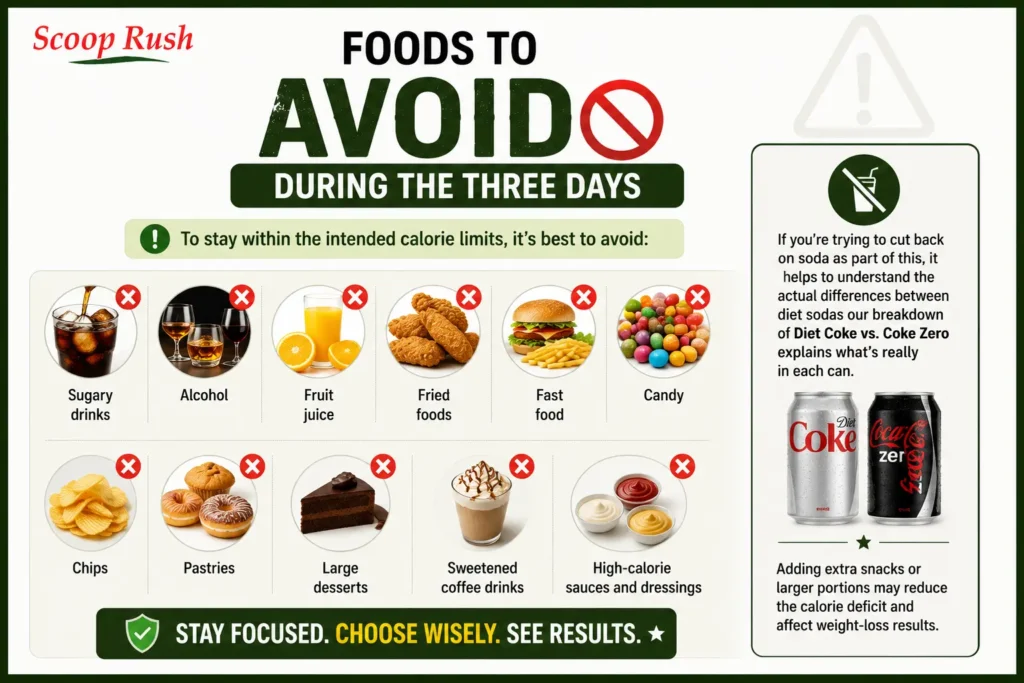
To stay within the intended calorie limits, it’s best to avoid:
- Sugary drinks
- Alcohol
- Fruit juice
- Fried foods
- Fast food
- Candy
- Chips
- Pastries
- Large desserts
- Sweetened coffee drinks
- High-calorie sauces and dressings
If you’re trying to cut back on soda as part of this, it helps to understand the actual differences between diet sodas our breakdown of Diet Coke vs. Coke Zero explains what’s really in each can. Adding extra snacks or larger portions may reduce the calorie deficit and affect weight-loss results.
Military Diet Shopping List
One reason the Military Diet remains popular is that it uses common grocery items that are affordable and easy to find. Preparing your shopping list before starting the diet can make meal planning much easier.
Protein Foods: Eggs, canned tuna, lean beef or chicken, hot dogs (preferably lower-sodium), cottage cheese, cheddar cheese, peanut butter
Fruits: Grapefruit, bananas, apples
Vegetables: Green beans, broccoli, carrots
Grains and Bread: Whole-wheat bread, saltine crackers
Dairy: Vanilla ice cream
Drinks: Black coffee, black tea, herbal tea, plenty of water
If possible, choose low-sodium canned foods, natural peanut butter with no added sugar, and whole-grain bread for slightly better nutrition.
The 4-Day Off Plan
The Military Diet is not meant to end after the first three days. The next four days are just as important because they help you maintain your calorie deficit while eating a more balanced variety of foods.
Most versions of the diet recommend keeping your daily intake around 1,500 calories during these four days. Instead of returning to unhealthy eating habits, focus on nutritious meals that include lean protein, whole grains, fruits, vegetables, and healthy fats.
Sample 4-Day Meal Plan
Breakfast Options (choose one each morning)
Perfect Yogurt: 1 cup plain Greek yogurt, mixed berries, small serving of granola, sliced almonds
Oatmeal Bowl: Rolled oats, low-fat milk, apple slices, cinnamon, chopped walnuts
Egg Toast: Scrambled egg, whole-grain toast, tomato slices, avocado
Banana Smoothie: Banana, unsweetened milk, oats, ground flaxseed
Lunch
Tuna Pita: Whole-wheat pita filled with tuna, lettuce, and beans
Chicken Salad: Grilled chicken over mixed greens with cucumbers, tomatoes, carrots, and olive oil dressing
Lentil Soup: A bowl of lentil soup served with whole-grain bread
Turkey Sandwich: Whole-grain bread with turkey, Swiss cheese, lettuce, tomato, and mustard
Dinner Options
Grilled chicken with brown rice and steamed vegetables
Whole-wheat shrimp pasta with garlic, olive oil, basil, and zucchini
Homemade black bean burger on a whole-grain bun with fresh salad
Baked white fish with herbs, broccoli, carrots, and roasted potatoes
Healthy Snacks (choose two each day)
Apple with almonds, Greek yogurt with berries, carrot sticks with hummus, cottage cheese and melon, air-popped popcorn, banana with peanut butter, pistachios, string cheese and whole-grain crackers.
These snacks provide protein and fiber, helping control hunger between meals.
Military Diet Food Substitutions
Many people have dietary restrictions or food allergies. Fortunately, most foods in the Military Diet can be replaced with nutritionally similar alternatives.
| Original Food | Substitutes |
| Peanut butter | Almond butter, sunflower seed butter, tahini |
| Tuna | Grilled chicken, salmon, tofu, chickpeas |
| Cottage cheese | Greek yogurt, ricotta cheese, plant-based yogurt |
| Ice cream | Frozen Greek yogurt, low-sugar frozen yogurt, banana “nice cream” |
| Hot dogs | Turkey sausage, chicken sausage, plant-based sausage |
| Bread | Gluten-free bread, whole-grain wraps, brown rice |
| Grapefruit | Orange, kiwi, mixed berries |
Vegetarian Military Diet
Vegetarians can successfully adapt the Military Diet by replacing meat and fish with plant-based proteins. Good choices include eggs, cottage cheese, Greek yogurt, lentils, black beans, chickpeas, tofu, tempeh, and plant-based burgers. The goal is to maintain a similar calorie intake while ensuring enough protein.
Vegan Military Diet
Vegans can also modify the plan using plant-based foods. Suitable replacements include tofu, tempeh, edamame, soy yogurt, plant milk, nut butters, lentils, beans, and vegan cheese alternatives. Because vegan diets eliminate dairy and eggs, it may take more planning to meet protein needs while staying within calorie limits.
Does the Military Diet Really Boost Metabolism?
Supporters often claim the Military Diet speeds up metabolism because of specific food combinations. Current scientific evidence does not support this claim.
Your metabolism is influenced by factors such as age, sex, muscle mass, genetics, physical activity, and overall calorie intake. There is no reliable research showing that grapefruit, tuna, peanut butter, ice cream, or other prescribed foods create a unique metabolic advantage when eaten together.
Most experts agree that weight loss occurs because the diet significantly reduces calorie intake rather than because of any special metabolic effect.
What Does the Research Say?
Researchers have studied low-calorie diets for many years. Evidence shows that reducing calorie intake generally leads to weight loss in the short term. However, there are no high-quality clinical trials proving that the Military Diet itself is superior to other calorie-controlled eating plans.
Experts also point out that very rapid weight loss often includes a significant loss of water weight and lean muscle, especially if protein intake and strength training are inadequate. This is a similar concern raised around some prescription weight-loss drugs — for instance, the conversation around GLP-1 medications and muscle loss underscores why preserving lean mass matters no matter which method you use to lose weight.
Another concern is that restrictive diets can be difficult to maintain, making it more likely that people regain the weight they initially lose.
Potential Benefits of the Military Diet
Although the Military Diet has limitations, it does offer some advantages.
- Easy to Follow — The menu is simple and requires little planning.
- Budget-Friendly — The ingredients are inexpensive and widely available.
- No Special Products — You don’t need shakes, supplements, or meal replacements.
- Short-Term Structure — Some people find a three-day plan easier to commit to than long-term dieting.
- High in Protein — Meals include eggs, tuna, peanut butter, meat, and dairy products that can help improve satiety.
- Portion Awareness — The diet teaches people to recognize appropriate serving sizes.
Can You Exercise While Following the Military Diet?
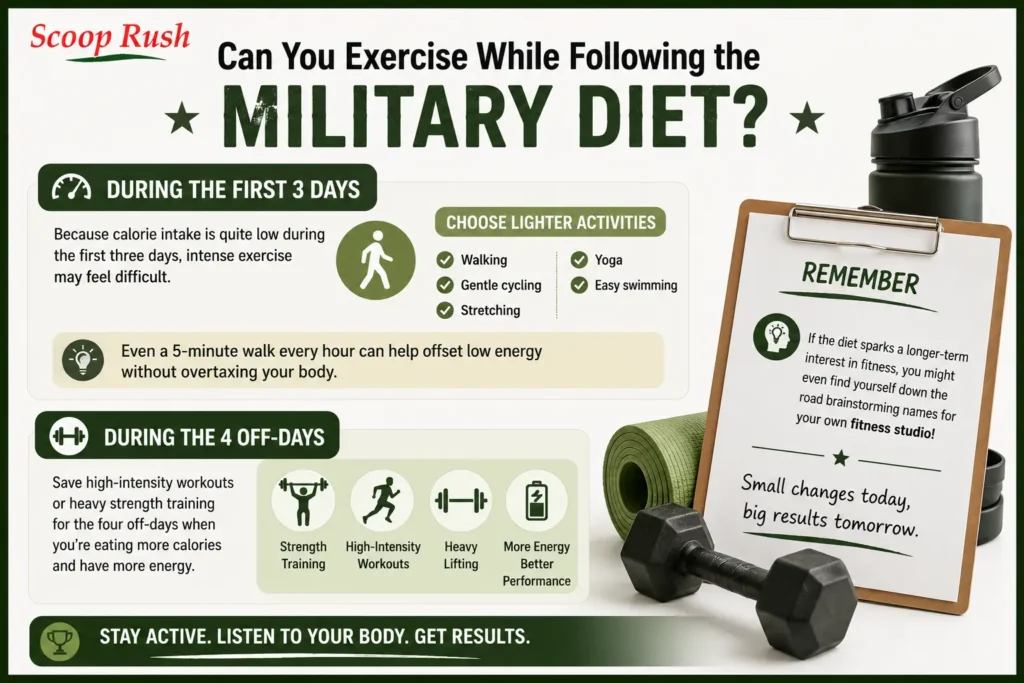
Because calorie intake is quite low during the first three days, intense exercise may feel difficult. If you’re following the Military Diet, consider lighter activities such as walking, gentle cycling, stretching, yoga, or easy swimming. Even something as small as taking a 5-minute walk every hour can help offset the low energy of these days without overtaxing your body.
Save high-intensity workouts or heavy strength training for the four off-days when you’re eating more calories and have more energy. If the diet ends up sparking a longer-term interest in fitness, you might even find yourself down the road brainstorming names for your own fitness studio plenty of people who start with small changes like this end up going much further with it.
Tips for Better Results
If you decide to try the Military Diet, these habits may help support healthier weight management:
- Drink plenty of water throughout the day.
- Avoid sugary beverages and alcohol.
- Get at least seven to eight hours of sleep each night.
- Include vegetables whenever possible.
- Choose lower-sodium foods.
- Stay physically active with moderate exercise.
- Avoid overeating during the four off-days.
- Focus on long-term healthy eating habits rather than repeated crash dieting.
These practices can help improve overall health and make it easier to maintain any weight you lose. Small daily rituals matter too even something as routine as how often you should brush your hair is part of the broader self-care picture that tends to improve when people feel better about their health overall.
Risks and Side Effects of the Military Diet
Although the Military Diet may lead to short-term weight loss, it is not without risks. Since the plan significantly reduces calorie intake during the first three days, some people may experience unwanted side effects.
1. Hunger and Low Energy
One of the most common complaints is constant hunger. Consuming only 1,100–1,400 calories per day may not provide enough energy, especially for active individuals. Some people may also notice fatigue, headaches, dizziness, or irritability during the diet.
Tip: Sip water or plain herbal tea between meals, and try to rest rather than push through intense activity on the lowest-calorie days.
2. Limited Nutrient Intake
The Military Diet includes some fruits, vegetables, and protein-rich foods, but it lacks variety. Over time, repeatedly following this plan may result in lower intake of important nutrients such as fiber, vitamins, and minerals. A balanced eating pattern usually includes a wider selection of fruits, vegetables, whole grains, legumes, nuts, seeds, and healthy fats.
3. High Sodium Content
Foods such as canned tuna, saltine crackers, hot dogs, and processed cheese can contain high amounts of sodium. Eating too much sodium may contribute to water retention and may not be suitable for people with high blood pressure or certain kidney conditions. Choosing lower-sodium versions of these foods can be a healthier option.
4. Low Fiber Intake
Fiber supports digestion, and the Military Diet’s reliance on crackers, processed meat, and canned fish means fiber intake tends to run low. Low fiber intake can contribute to constipation and digestive discomfort. Interestingly, some medically supervised eating plans go in the opposite direction — a low-residue diet is intentionally low in fiber for specific digestive conditions, which is a good reminder that “low fiber” isn’t automatically bad, but it shouldn’t happen by accident either.
5. Muscle Loss
When calorie intake drops sharply, the body may use both fat and muscle for energy. Losing muscle mass can reduce strength and may lower your resting metabolic rate over time. Including enough protein and performing resistance exercises after completing the diet may help preserve lean muscle.
6. Weight Regain
Many people lose weight quickly during restrictive diets, but maintaining those results can be difficult. Returning to previous eating habits right after the diet ends often leads to the weight coming back just as quickly as it left, which is why the four off-days and the habits that follow them matter more than the three restrictive days themselves.
Who Should Avoid the Military Diet?
The Military Diet is not suitable for everyone. You should consult a healthcare professional before trying it if you:
- Have diabetes
- Have kidney disease
- Have heart disease
- Have liver disease
- Are pregnant or breastfeeding
- Are under 18 years old
- Have a history of eating disorders
- Require a medically prescribed diet
- Take medications that need regular food intake
People with chronic health conditions should never begin a restrictive diet without medical advice. Staying on top of preventive care in general from routine screenings to knowing the early symptoms of lung cancer or the protective role of the HPV vaccine against cervical cancer matters just as much as any short-term diet decision.
Common Myths About the Military Diet
Myth 1: It Was Created by the Military Despite its name, there is no evidence that the Military Diet was developed by or for any military organization.
Myth 2: Special Food Combinations Burn Fat There is no reliable scientific evidence that eating grapefruit with peanut butter or ice cream with bananas creates a unique fat-burning effect. Weight loss occurs primarily because of reduced calorie intake.
Myth 3: Everyone Will Lose 10 Pounds Weight loss varies from person to person. Factors that influence results include starting weight, age, sex, activity level, metabolism, overall calorie intake, and fluid balance. While some people may see significant changes on the scale during the first week, much of that initial loss may be water weight rather than body fat.
Tips for Long-Term Weight Loss Success
Whether or not you try the Military Diet, long-term success usually comes from building sustainable habits.
Focus on Balanced Meals — Include lean protein, whole grains, fruits, vegetables, and healthy fats.
Stay Active — Aim for regular physical activity, including both aerobic exercise and strength training.
Drink Plenty of Water — Hydration supports overall health and may help manage appetite. This becomes especially important during warmer months — our home cooling tips for hot weather and general heat dome safety guidance are worth a look if you’re trying to stay active and hydrated through a heatwave, and older adults in particular should review the heat and humidity risks for seniors before exercising outdoors.
Sleep Well — Adults generally benefit from 7–9 hours of quality sleep each night. Poor sleep may affect hunger hormones and make healthy eating more difficult.
Monitor Portions — Even healthy foods can contribute to weight gain if eaten in excessive amounts. Paying attention to portion sizes can help maintain a calorie balance.
Set Realistic Goals — Healthy weight loss is usually gradual. Losing about 1–2 pounds per week is considered a safe and sustainable target for many adults. Sustainable health goals tend to go hand in hand with a sense of purpose elsewhere in life too — something reflected in the growing trend of Gen Z choosing jobs with purpose and better pay rather than burning out chasing quick fixes of any kind.
FAQs
Can I repeat the Military Diet every week?
Some people do, but repeatedly following very low-calorie diets may not provide balanced nutrition. A healthcare professional or registered dietitian can help determine a more sustainable approach if ongoing weight loss is your goal.
Can I snack during the three days?
The traditional Military Diet does not include additional snacks. Adding snacks increases calorie intake and changes the original plan.
Can I drink coffee?
Yes. Plain black coffee or unsweetened tea is generally allowed. Avoid adding sugar, cream, flavored syrups, or high-calorie creamers.
Is exercise required?
Exercise is not required, but light activity such as walking or stretching is usually more appropriate during the low-calorie days. Higher-intensity workouts may be better suited to the four off-days.
Is the Military Diet suitable for vegetarians?
Yes. Plant-based protein sources such as tofu, beans, lentils, eggs, and dairy products can replace meat and fish while keeping the diet relatively similar in calories.
How does this compare to other restrictive short-term diets?
The Military Diet is far less restrictive than medically supervised plans like a clear liquid diet, which is typically used before certain medical procedures rather than for weight loss. It’s a useful comparison for understanding just how far “restrictive eating” can range, from a few structured meals to no solid food at all.
Can I lose 10 pounds in one week?
Some people may see a large change on the scale during the first week, but much of this is often due to water loss. Results vary, and a gradual rate of weight loss is generally considered healthier and easier to maintain.
Final Verdict
The Military Diet has become one of the internet’s most talked-about short-term weight-loss plans because it is simple, inexpensive, and easy to follow. By creating a calorie deficit, it may help some people lose weight over a few days.
However, there is no strong scientific evidence that its specific food combinations boost metabolism or burn fat more effectively than other calorie-controlled diets. While some people may experience quick results, much of the initial weight loss is likely to be water weight.
For long-term success, experts generally recommend a balanced eating pattern, regular physical activity, adequate sleep, stress management, and gradual lifestyle changes rather than relying on restrictive crash diets.
If you are considering the Military Diet, especially if you have a medical condition or take prescription medications, consult a healthcare professional to determine whether it is appropriate for your individual needs.
Frequently Recommended Healthy Habits After the Military Diet
To help maintain your results after completing the three-day plan:
- Continue eating plenty of vegetables and fruits.
- Choose lean proteins such as chicken, fish, beans, and tofu.
- Replace refined grains with whole grains whenever possible.
- Limit sugary drinks and processed snacks.
- Stay hydrated throughout the day.
- Exercise most days of the week.
- Avoid returning to excessive calorie intake immediately after the diet.
Developing healthy habits over time is more likely to support lasting weight management than repeatedly following highly restrictive diets.
Conclusion
The Military Diet remains popular because of its promise of fast results and its simple meal plan. While it may create a calorie deficit that leads to short-term weight loss, its strict nature and limited food variety make it difficult to maintain over the long term.
Understanding both the potential benefits and the possible drawbacks allows you to make a more informed decision. Whether you choose to try the Military Diet or another eating plan, focusing on balanced nutrition, regular movement, and realistic goals is the most reliable path toward improving your overall health and maintaining a healthy weight.

