
What if a cough that won’t go away is more than just a lingering cold? Lung cancer often develops quietly, and many people don’t notice symptoms until the disease has already progressed. Recognizing the warning signs early and understanding the risk factors can make a real difference in when the disease is diagnosed and how well it can be managed.
Lung cancer remains one of the leading causes of cancer-related deaths worldwide. Smoking is the most significant risk factor, but it isn’t the only one. People who have never smoked can still develop lung cancer due to secondhand smoke, radon exposure, air pollution, workplace chemicals, and family history.
This guide covers what lung cancer is, its symptoms, major risk factors, diagnostic tests, treatment options, and ways to lower your risk. It also looks at non-small cell lung cancer (NSCLC), the most common form of the disease, and explains why early detection matters so much — the same principle behind other cancer-prevention breakthroughs, such as how the HPV vaccine prevents cervical cancer deaths.
What Is Lung Cancer?
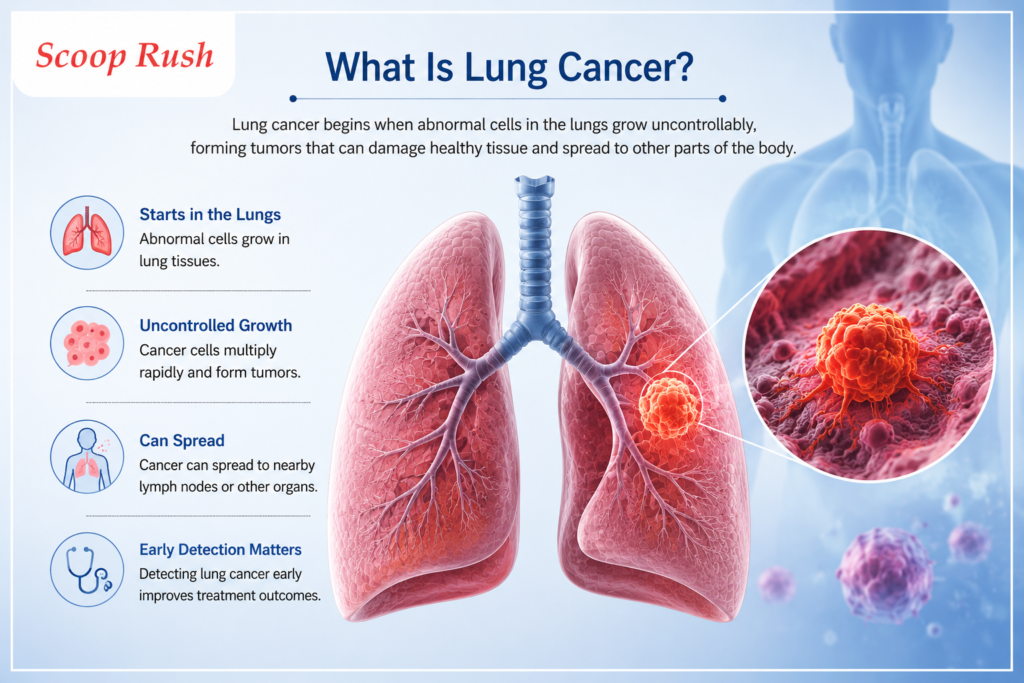
Lung cancer begins when abnormal cells in the lungs grow uncontrollably. Instead of dying off naturally, these damaged cells multiply and form tumors that interfere with normal lung function.
The lungs supply oxygen to the body and remove carbon dioxide. As tumors grow, they can block airways, reduce lung function, and eventually spread to nearby tissue or distant organs through the bloodstream or lymphatic system.
Lung cancer generally falls into two main categories:
- Non-small cell lung cancer (NSCLC) — accounts for about 80–85% of all cases.
- Small cell lung cancer (SCLC) — less common, but usually faster-growing.
Although these cancers behave differently and respond to treatment differently, early diagnosis matters for both.
Why Early Detection Matters
One of the biggest challenges with lung cancer is that it often causes few or no symptoms in its early stages. As a result, many people aren’t diagnosed until the disease has spread beyond the lungs. When lung cancer is caught earlier, treatment tends to be more effective and long-term outcomes are generally better.
Because of this, any persistent or unusual respiratory symptom is worth having checked by a healthcare professional rather than waiting it out.
Common Symptoms of Lung Cancer
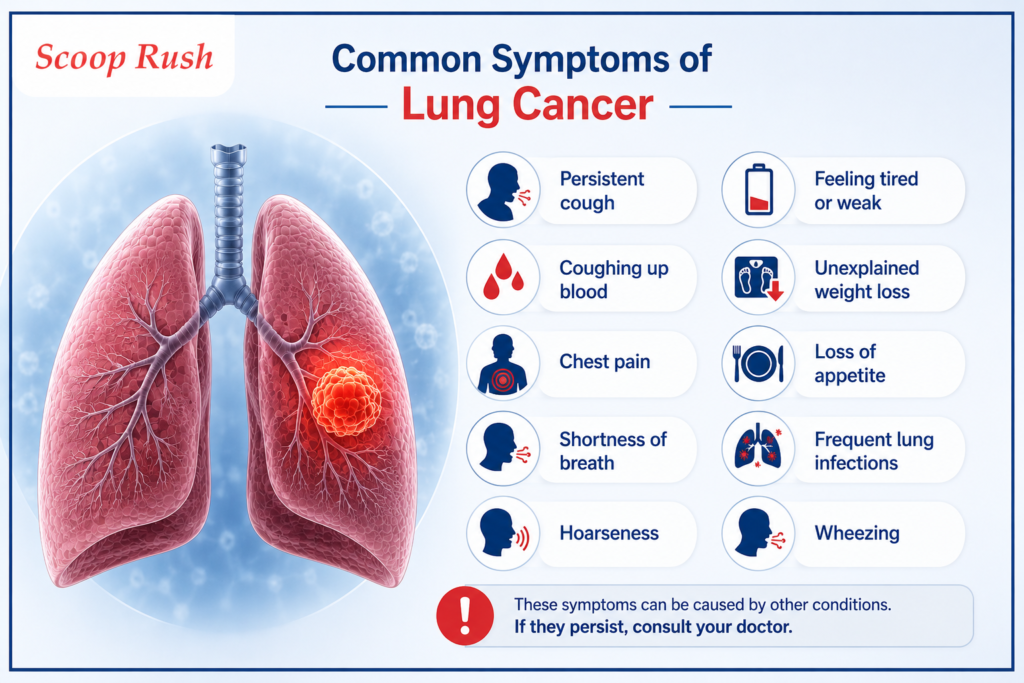
Symptoms vary depending on where the tumor is located and whether it has spread. The most common warning signs include:
- A cough that doesn’t go away or gets worse over time
- Coughing up blood or rust-colored mucus
- Chest pain that worsens with coughing or deep breathing
- Shortness of breath or wheezing
- Hoarseness
- Persistent fatigue
- Loss of appetite or unexplained weight loss
- Frequent lung infections such as bronchitis or pneumonia
These symptoms can result from other conditions too, but they should always be discussed with a doctor if they persist.
Symptoms of Advanced Lung Cancer
When lung cancer spreads beyond the lungs, additional symptoms can appear depending on which organs are affected:
- Bone pain, especially in the back or hips
- Persistent headaches, seizures, dizziness, or balance problems
- Weakness or numbness in the arms or legs
- Yellowing of the skin or eyes (jaundice)
- Swollen lymph nodes in the neck or above the collarbone
These signs call for prompt medical evaluation, since they may point to metastatic disease. Older patients managing lung cancer should also be mindful of other health vulnerabilities that come with age, such as heat and humidity risks for seniors.
What Causes Lung Cancer?
Lung cancer develops after genetic changes occur in lung cells, allowing damaged cells to keep growing instead of dying off normally. Over time, these abnormal cells build up and form tumors. Smoking remains the leading cause, but the disease can also develop in people who have never smoked.
Major Risk Factors
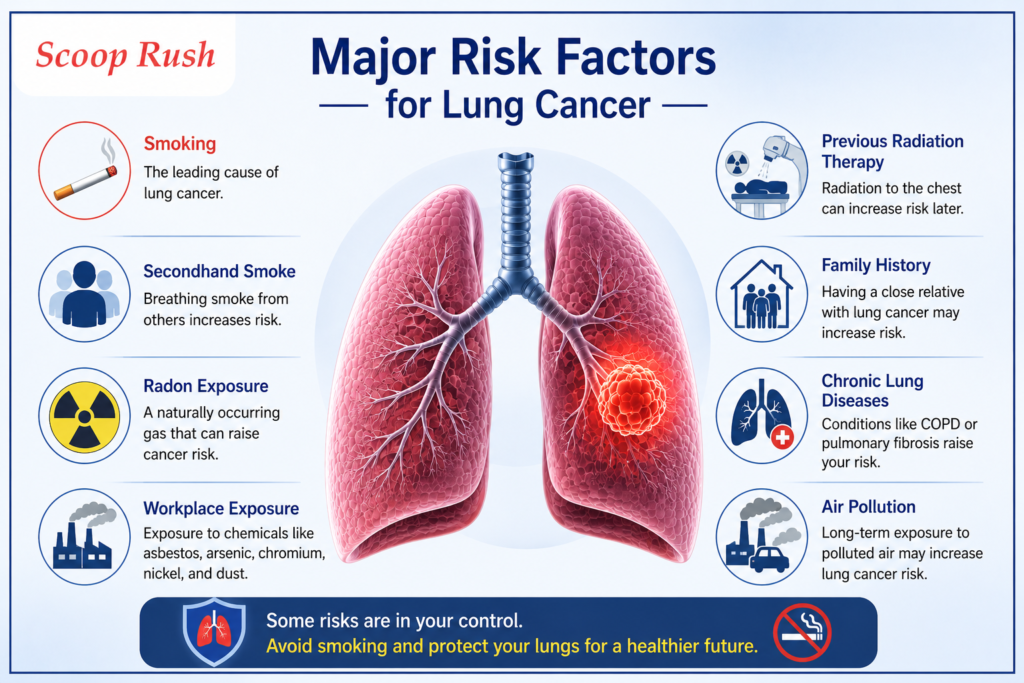
Smoking is the single greatest risk factor. Risk rises with the number of cigarettes smoked and the number of years spent smoking though quitting substantially reduces risk, even after long-term use.
Secondhand smoke also raises risk for those regularly exposed to others’ tobacco smoke.
Radon exposure a naturally occurring radioactive gas that can build up inside homes and buildings significantly increases risk with long-term exposure.
Workplace exposure to substances such as asbestos, arsenic, chromium, nickel, metal dust, and mineral dust can damage lung tissue over time. The danger is greater for workers who also smoke.
Previous chest radiation, family history of lung cancer, and chronic lung disease — including COPD and pulmonary fibrosis — are also linked to increased risk. Genetic and immune factors influence many chronic illnesses beyond lung cancer, as seen in emerging treatments like teplizumab for type 1 diabetes.
Lung Cancer in Underserved Communities
Access to healthcare plays a major role in outcomes. Underserved communities often face limited access to routine care, lower screening rates, delayed diagnosis, and greater exposure to smoking, pollution, and workplace hazards — so lung cancer is often diagnosed at more advanced stages. Expanding access to screening and healthcare services could help close this gap, along with broader efforts to create Gen Z jobs with purpose and better pay in safer working environments.
Understanding Non-Small Cell Lung Cancer (NSCLC)
NSCLC is the most common form of lung cancer. It generally grows more slowly than small cell lung cancer, but many patients are still diagnosed after the disease has spread, since symptoms often appear late.
Main subtypes include:
- Adenocarcinoma — usually develops in the outer regions of the lungs; the most frequently diagnosed subtype.
- Squamous cell carcinoma — often begins near the central airways and is strongly linked to smoking.
- Large cell carcinoma — can develop anywhere in the lungs and may grow rapidly.
Less common subtypes include sarcomatoid carcinoma and adenosquamous carcinoma.
Serious Syndromes Associated With Lung Cancer
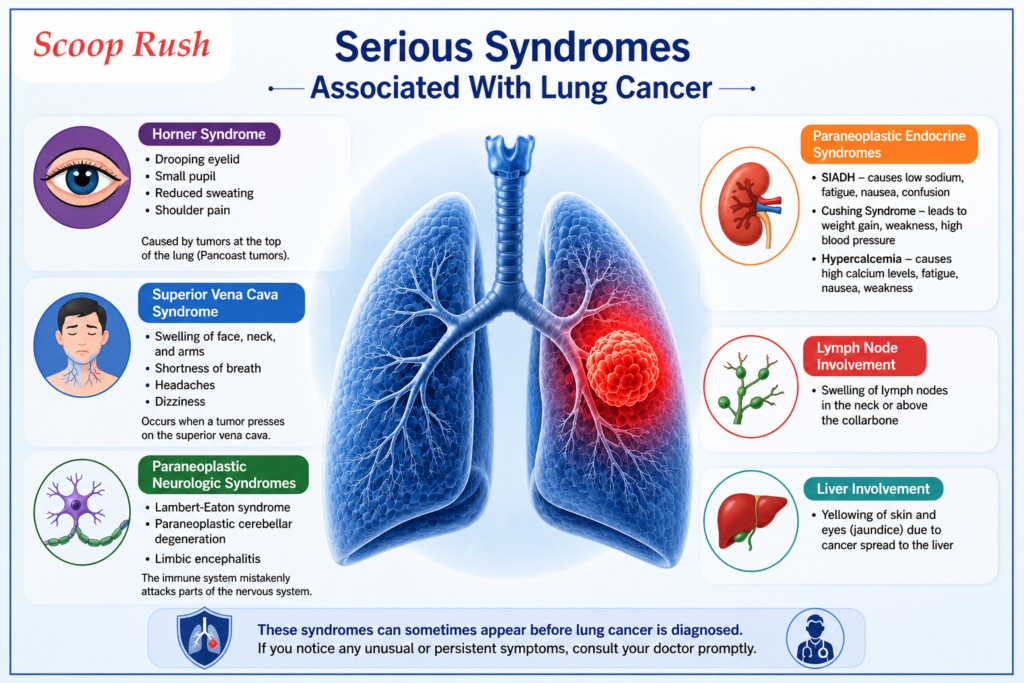
Some lung cancers cause symptoms that aren’t caused directly by the tumor itself.
Horner syndrome can occur when Pancoast tumors, located near the top of the lung, affect nearby nerves causing a drooping eyelid, a small pupil, reduced sweating on one side of the face, and shoulder pain.
Superior vena cava syndrome occurs when a tumor presses on the superior vena cava, interfering with blood flow. It can cause facial, neck, or arm swelling, difficulty breathing, headaches, and dizziness and in severe cases requires immediate medical attention.
Paraneoplastic syndromes happen when tumors release hormone-like substances or trigger immune responses affecting other organs, such as SIADH, Cushing syndrome, hypercalcemia, and Lambert-Eaton syndrome. These are uncommon but sometimes appear before lung cancer itself is diagnosed.
How Doctors Diagnose Lung Cancer
Diagnosis typically starts with a physical exam and medical history. If cancer is suspected, doctors may order chest X-rays, CT scans, PET scans, brain MRI, bronchoscopy, lung biopsy, or video-assisted thoracic surgery (VATS). A biopsy remains the definitive way to confirm a lung cancer diagnosis.
Treatment Options
Treatment depends on the cancer type, stage, tumor location, and the patient’s overall health. Many people receive more than one type of treatment.
- Surgery — removes the tumor and surrounding tissue when cancer is confined to the lung; some patients need part or all of a lung removed.
- Chemotherapy — uses medicines to destroy fast-growing cancer cells, given before or after surgery, alongside radiation, or as the main treatment.
- Radiation therapy — directs high-energy beams at cancer cells while limiting damage to healthy tissue.
- Targeted therapy — attacks cancers with specific genetic changes more precisely.
- Immunotherapy — strengthens the immune system’s ability to recognize and attack cancer cells.
Possible Complications
Advanced lung cancer can lead to difficulty breathing, persistent coughing, coughing up blood, pleural effusion (fluid around the lungs), pain, and spread to the brain, bones, liver, or lymph nodes. Managing these complications is a key part of ongoing care.
Can Lung Cancer Be Prevented?
Not every case can be prevented, but healthy choices can lower risk:
- Avoid smoking, or quit if you currently smoke
- Avoid secondhand smoke
- Test your home for radon
- Limit workplace exposure to harmful chemicals
- Eat a balanced diet rich in fruits and vegetables, and be cautious of supplement risks from taking too many vitamins
- Stay physically active even a 5-minute walk every hour or a session at a local fitness studio can help
- Keep your home comfortable in extreme weather with simple home cooling tips for hot weather
- Build healthy habits in your 20s and 30s to support long-term lung and overall health
When Should You See a Doctor?
Seek medical evaluation if you experience a cough lasting several weeks, coughing up blood, persistent chest pain, unexplained weight loss, ongoing shortness of breath, sudden wheezing, or repeated lung infections. Prompt evaluation can identify the cause and, if needed, lead to earlier treatment.
Outlook for People With Lung Cancer
Outlook depends on the type and stage of cancer, along with overall health. For NSCLC, outcomes are generally better when the disease is caught before it spreads. Even when a cure isn’t possible, modern treatments can slow progression, ease symptoms, and improve quality of life. Treatment options continue to expand, giving many patients more choices than ever before.
Conclusion
Lung cancer is serious, but understanding its warning signs, causes, and risk factors can help people seek care sooner. A persistent cough, coughing up blood, chest pain, unexplained weight loss, and breathing difficulties should never be ignored.
Smoking remains the leading risk factor, but lung cancer can affect non-smokers too environmental exposures, genetics, and chronic lung disease all play a role. Early diagnosis, accurate testing, and personalized treatment are central to better outcomes. By recognizing symptoms early, reducing avoidable risks, and talking to a healthcare provider about any concerns, people can take meaningful steps to protect their lung health alongside everyday wellness habits, from diet and exercise to simple routines like knowing how often you should brush your hair.
FAQs
1. What is the first symptom of lung cancer?
A persistent cough that won’t go away is one of the most common early symptoms, though some people have no symptoms in the early stages.
2. Can non-smokers get lung cancer?
Yes. Radon exposure, secondhand smoke, air pollution, workplace chemicals, and genetics can all lead to lung cancer in people who have never smoked.
3. What is the most common type of lung cancer?
Non-small cell lung cancer (NSCLC), accounting for roughly 80–85% of cases.
4. How is lung cancer diagnosed?
Through imaging tests such as chest X-rays, CT scans, PET scans, and MRI, along with bronchoscopy and lung biopsy for confirmation.
5. Can lung cancer be treated?
Yes. Options include surgery, chemotherapy, radiation therapy, immunotherapy, and targeted therapy, chosen based on cancer type, stage, and the patient’s overall health.

