
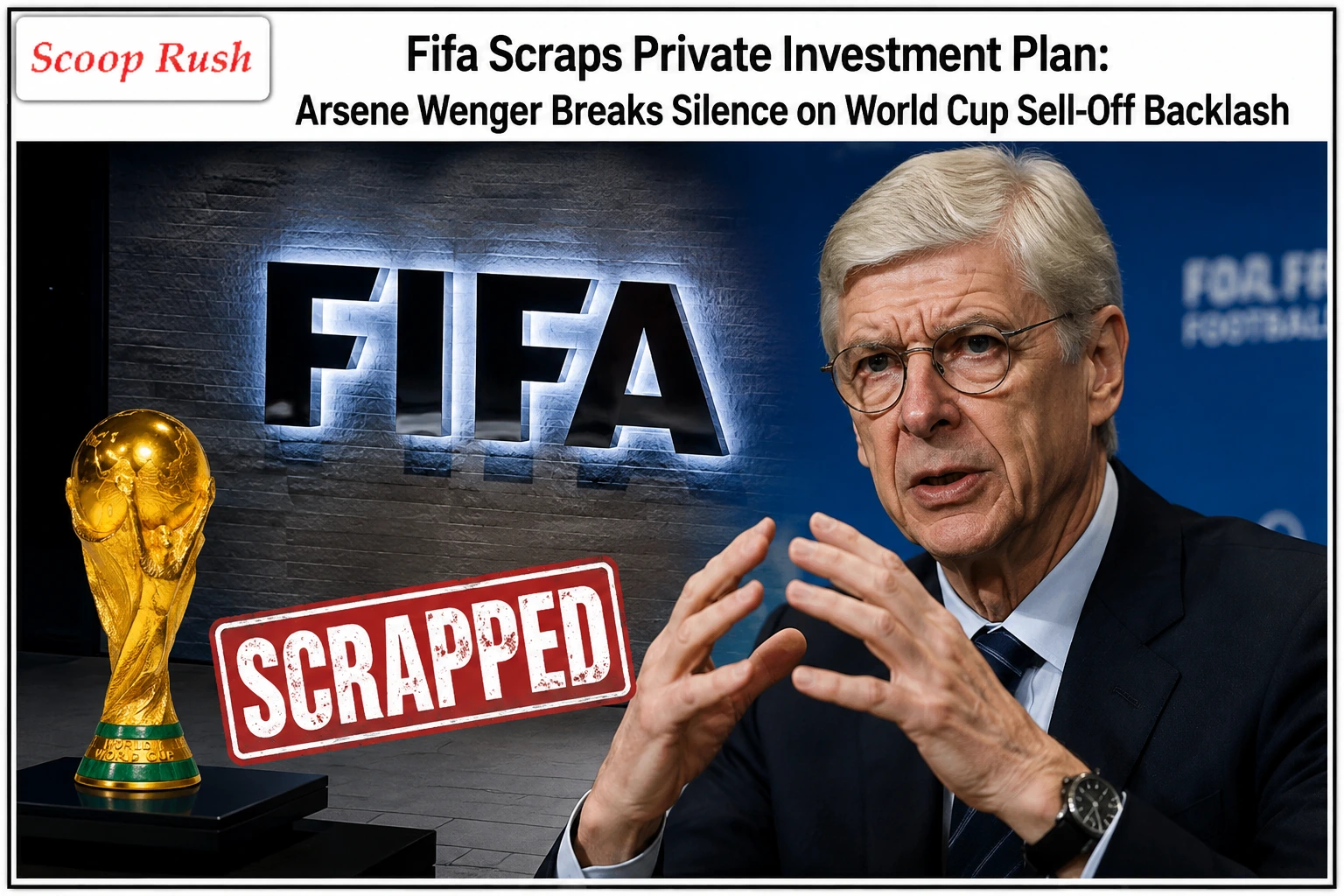
Would you trust an organisation that tried to sell stakes in the World Cup to private investors without telling its own top football expert? That is the question hanging over Fifa right now, after its private investment plan collapsed and Arsene Wenger broke his silence to answer it in the most direct way possible.
Fifa’s chief of global football development has broken his silence on the collapsed Fifa private investment plan. Wenger says scrapping the proposal was “absolutely necessary and beyond question.” His comments follow one of the most turbulent weeks in Fifa’s recent history, a week that produced a senior resignation, a threatened boycott from Uefa, and mounting pressure on president Gianni Infantino.
For football fans, this story matters far beyond boardroom politics. It touches the very structure of how the World Cup and other major tournaments operate, and who profits from them. Here is everything that happened, and why Wenger’s intervention is such a significant moment.
What Was Fifa’s Private Investment Plan?
Fifa president Gianni Infantino wanted to create a commercial subsidiary to run the organisation’s biggest events, including the World Cup. Under this plan, external investors could have bought stakes in that subsidiary.
To win support for the idea, Infantino reportedly offered each of Fifa’s 211 member associations $40m (£30m) to back the proposal. That is a huge sum to dangle in front of national federations, and it shows just how hard officials pushed the plan.
However, the reaction was swift and largely negative. Criticism piled up from multiple directions within days of the plan becoming public.
Uefa’s Boycott Threat Changed Everything
The turning point came when Uefa, the governing body for European football and home to 55 member nations, threatened to boycott all Fifa tournaments if the plan went ahead. That is not a small threat. Europe holds some of the richest leagues, the most valuable broadcast deals, and a huge share of Fifa’s overall revenue.
Faced with the possibility of Europe walking away from Fifa competitions altogether, Infantino withdrew the plan entirely. The reversal marked a rare and public defeat for a president who has otherwise consolidated significant power at Fifa since 2016.
Arsene Wenger’s Statement: “I Was Not Involved”
This is where Wenger’s role becomes central to the Fifa private investment plan story. The former Arsenal manager has served as Fifa’s chief of global football development since 2019, a role covering data analysis, online coaching education, and youth competitions.
A week after Infantino’s investment plan first came to light, Wenger issued a statement through Fifa demanding “transparency and integrity” from the organisation he works for. That is a striking phrase to use about your own employer, and it signals real frustration behind the scenes.
“The recent events at Fifa deserve some clarity from my side,” Wenger said. “I was not involved in this strategic plan and first became aware of the project through media reports.”
That single sentence deserves attention. Wenger is not just any employee. He holds one of the most senior football development roles at Fifa, yet he says he learned about a plan to sell stakes in the World Cup through the news, just like everyone else. This raises real questions about how Fifa actually makes decisions at the top of world football’s governing body.
Wenger went further, stating his position on the outcome in unambiguous terms. “The decision to withdraw the project was absolutely necessary and beyond question, because I firmly believe in an independent Fifa that serves our game with commitment, transparency, and integrity.”
A Notable Shift From a Previous Infantino Ally
It is worth noting that Wenger has not always clashed with Infantino’s vision for the game. He previously backed the Fifa president’s controversial proposal to hold the men’s World Cup every two years instead of the traditional four-year cycle. That plan also faced heavy criticism at the time, though it never advanced as far as this latest scheme.
A former Infantino supporter now publicly demanding transparency suggests the private investment plan crossed a line that even his allies would not accept.
Wenger Named in Uefa’s Legal Threat
The controversy has not stopped at public statements. Uefa named Wenger among 18 Fifa officials in a document preservation letter it sent to Fifa. That letter threatens legal action and requires the named individuals to preserve any documents and communications tied to the scrapped plan.
Appearing in such a letter does not mean Wenger did anything wrong. In fact, his own statement suggests he was kept in the dark. However, it does show how far the fallout from this episode has spread, pulling in senior figures across the organisation regardless of their direct involvement.
Why the Legal Letter Raises the Stakes
A document preservation letter is a serious legal step. It signals that Uefa is preparing for the possibility of formal action and wants to make sure no records disappear. For Fifa, that means the private investment controversy could stretch well beyond this news cycle.
Carlos Cordeiro Resigns Over the Scandal
While Wenger stayed on and spoke out, one senior Fifa figure chose to leave altogether. Carlos Cordeiro, Infantino’s senior adviser on global strategy and governance, resigned over the scandal.
Cordeiro did not hold back. He called the proposal “a bad deal for football” and warned it would “mortgage football’s future.” Coming from someone who worked closely with Infantino on strategy, this resignation added serious weight to the criticism surrounding the plan.
As of now, Cordeiro remains the only Fifa official to resign as a direct result of the controversy.
Internal Reaction: Grafstrom Calls It “Difficult to Comprehend”
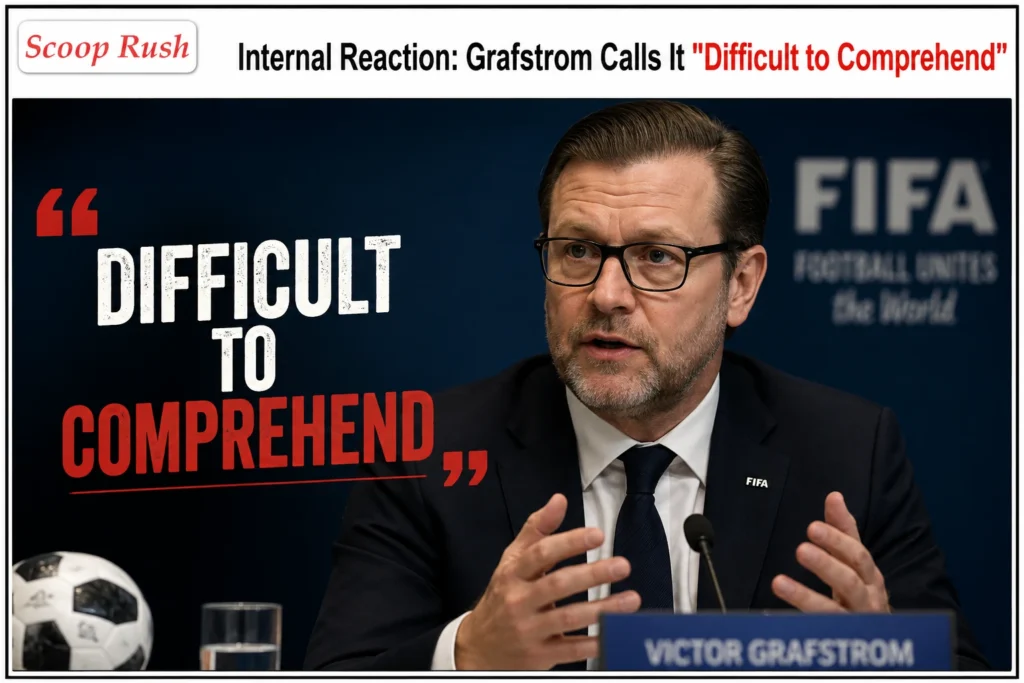
The fallout did not stay confined to public statements and boardrooms. Fifa secretary general Mattias Grafstrom addressed the situation internally, writing a memo to staff that described the past week as “difficult to comprehend and accept.”
Many see Grafstrom as a close Infantino ally. He became Fifa’s chief of staff after Infantino won the presidency in 2016, and Fifa promoted him to secretary general, one of the most powerful positions within the organisation, in 2024. Given that background, his choice of words carries extra significance.
In his memo, Grafstrom called the episode “a sad and irreproachable series of events,” and he noted relief that the project had been “permanently abandoned.” He urged staff to stay focused on serving football’s 211 member associations while remaining “in full compliance with the Fifa statutes and Fifa regulations.”
He also reassured employees directly. “I assure you that as members of the administration, you will be defended and safeguarded from the political context we currently experience. You do not need to worry,” he wrote.
Grafstrom closed his message with a broader point about Fifa’s stability. “Individuals, unstable moments and unfortunate episodes come and go,” he wrote, adding that the institution and its mission continue. He called on staff to keep their “professionalism, sense of perspective and composure” through the turbulence.
Why This Internal Messaging Matters
Memos like this rarely surface publicly unless an organisation is managing a genuine crisis of confidence. Fifa’s secretary general felt the need to reassure staff that the organisation would “defend and safeguard” them, and that alone suggests real anxiety within Fifa about how this episode affects its people, not just its reputation.
Why the Fifa Private Investment Plan Matters for Football Fans
You might wonder why any of this should matter if you simply watch the World Cup every four years. The answer comes down to control and transparency.
A private investment subsidiary running Fifa’s flagship events could have reshaped how tournaments generate revenue, who profits from them, and how much influence outside investors hold over decisions that affect the sport globally. Uefa’s willingness to threaten a boycott shows just how seriously major football bodies took that risk.
Additionally, Wenger’s comments highlight a deeper issue. A senior Fifa official responsible for global football development did not know about a plan of this scale, and that gap raises legitimate questions about internal governance at football’s top table. Transparency, as Wenger himself pointed out, is not just a buzzword here. It goes to the heart of how much fans can trust Fifa’s decision-making process.
Consequently, this story is likely far from over. Uefa has named 18 officials in a legal document preservation letter, and its ongoing scrutiny means more details could still emerge in the coming weeks.
Key Takeaways
- Fifa president Gianni Infantino planned a commercial subsidiary to run major events like the World Cup, allowing private investors to buy stakes.
- Fifa reportedly offered member associations $40m each to support the plan.
- Uefa’s 55 nations threatened to boycott all Fifa tournaments, and Infantino withdrew the proposal as a result.
- Arsene Wenger says he was not involved and only learned of the Fifa private investment plan through media reports, calling its withdrawal “absolutely necessary and beyond question.”
- Carlos Cordeiro resigned over the scandal, calling the plan “a bad deal for football.”
- Uefa named Wenger among 18 Fifa officials in a legal document preservation letter.
- Secretary general Mattias Grafstrom described the episode internally as “difficult to comprehend and accept,” while reassuring staff they would be protected.
Frequently Asked Questions
1. What was Fifa’s private investment plan?
Fifa planned to create a commercial subsidiary to run its major events, including the World Cup, and let external investors buy stakes in that subsidiary.
2. Why did Fifa scrap the private investment plan?
Widespread criticism forced the change, most notably Uefa’s threat to have its 55 member nations boycott all Fifa tournaments if the proposal went ahead.
3. Was Arsene Wenger involved in creating the plan?
No. Wenger stated publicly that he was not involved in the strategic plan and first learned about it through media reports, despite holding a senior role at Fifa.
4. Did anyone resign because of the Fifa investment scandal?
Yes. Carlos Cordeiro, Infantino’s senior adviser on global strategy and governance, resigned and described the plan as “a bad deal for football.”
5. What did Fifa’s secretary general say about the situation?
Mattias Grafstrom called the episode “difficult to comprehend and accept” in an internal memo, confirmed the project had been permanently abandoned, and reassured staff they would be protected.

