
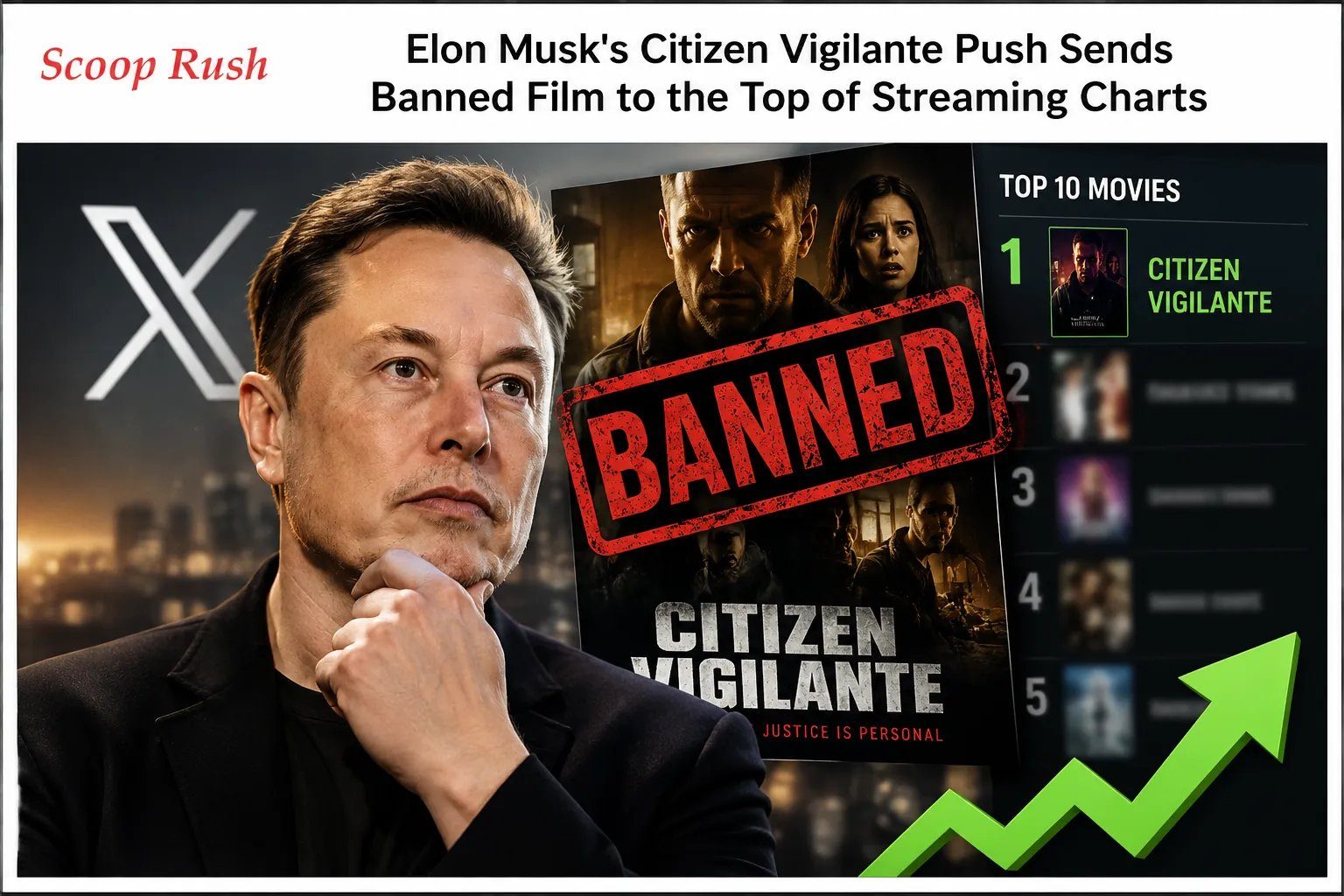
A film gets denied a rating in its own country. Normally, that is the end of its story. But then one post from the world’s richest man changes everything in 48 hours. Elon Musk Citizen Vigilante quickly became one of the biggest entertainment stories after the film gained massive attention on X.
That is exactly what happened with Citizen Vigilante, the Armie Hammer film that Elon Musk pushed onto millions of screens overnight. The result was a chart-topping run on Apple and Amazon, and a wave of new attention few expected.
This story matters because it shows something bigger than one movie. It shows how a single tech billionaire can now decide what succeeds in entertainment, regardless of ratings boards, critics, or traditional marketing. For anyone following media, streaming trends, or the growing power of platforms like X, this is a case worth understanding.
Why Citizen Vigilante Struggled to Find an Audience
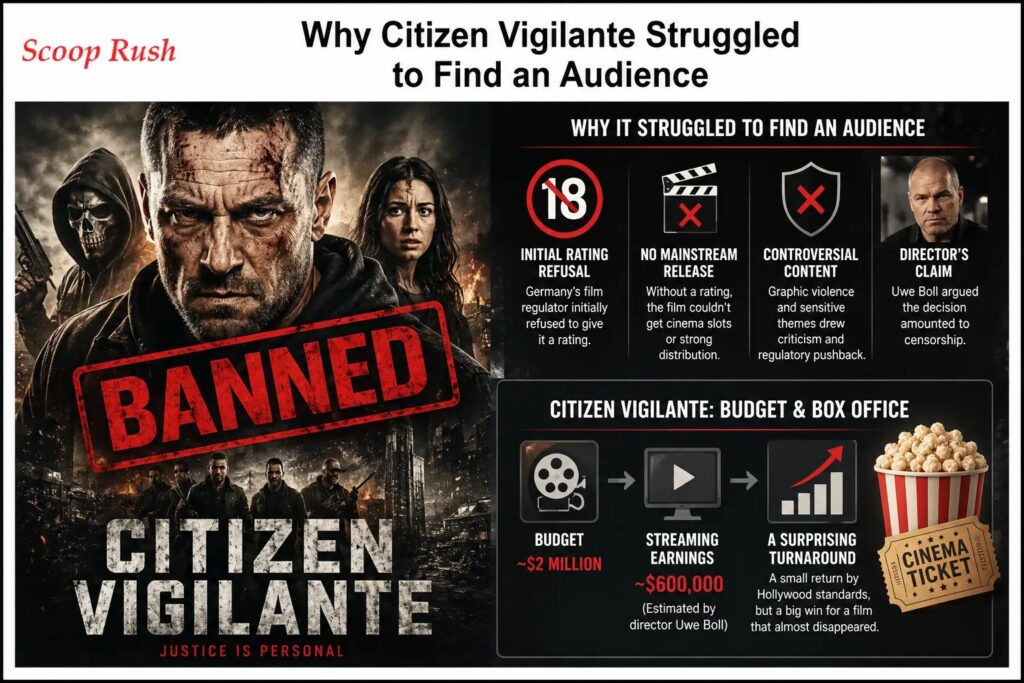
Citizen Vigilante follows an American vigilante who takes justice into his own hands. The film, directed by Uwe Boll, leans into graphic violence and touches on sensitive social themes. Consequently, Germany’s film regulator initially refused to give it a rating.
Without a rating, a film usually cannot secure mainstream cinema slots or strong shelf placement with distributors. As a result, Citizen Vigilante looked headed for a quiet, limited release. Boll has argued that the decision amounted to censorship of his work. Critics, however, pointed to the film’s violent content as the real issue.
The film later received an 18 rating for theatrical screenings. Its home entertainment classification, though, reportedly remained restricted.
Citizen Vigilante Budget and Box Office Numbers
The film carried a modest budget of around $2 million. After the sudden burst of attention, director Uwe Boll estimated it earned about $600,000 through streaming. That return is small by Hollywood standards. Still, for a film that nearly vanished after a rating refusal, it marks a real turnaround.
How Elon Musk’s Promotion Changed the Film’s Fate
Musk owns X, and his reach spans hundreds of millions of followers. In late June, he made Citizen Vigilante free to stream on the platform for 48 hours. That single move gave the film access to an audience it could never have reached through normal marketing.
The impact came fast. Citizen Vigilante briefly climbed to the top of streaming charts on both Apple and Amazon. For a film denied a rating in its home country, this level of visibility would have been almost impossible any other way.
This was not an isolated move either. As the owner of X, Musk regularly shapes which posts, videos, and now films reach mass audiences within hours. One post from him can outweigh an entire traditional marketing campaign, and that is exactly what happened here. This kind of outsized influence has followed Musk across industries, from social media to his growing footprint in space and AI ventures.
Critics Remained Sharply Divided on Citizen Vigilante
Even with its commercial boost, the film did not win over critics. Variety called it “astonishingly bad.” Meanwhile, conservative commentator Rod Dreher used even sharper language, although some who share his political views defended the film’s bleak depiction of European society.
This split reaction makes an important point clear. A film climbing the charts does not always mean it is good. Often, it simply reflects who is promoting it and how far their reach extends.
Armie Hammer’s Return to the Spotlight
The controversy has also renewed focus on lead actor Armie Hammer. He stepped back from major film roles after misconduct allegations surfaced in 2021. Hammer has denied the allegations, and prosecutors in Los Angeles declined to file criminal charges against him in 2023.
Citizen Vigilante now marks his comeback. For an actor rebuilding a career, sudden global attention changes the conversation, even when that attention comes wrapped in controversy. Whether more roles follow remains uncertain. Still, the film has clearly put Hammer’s name back in the headlines.
Censorship or Content Classification: The Bigger Debate
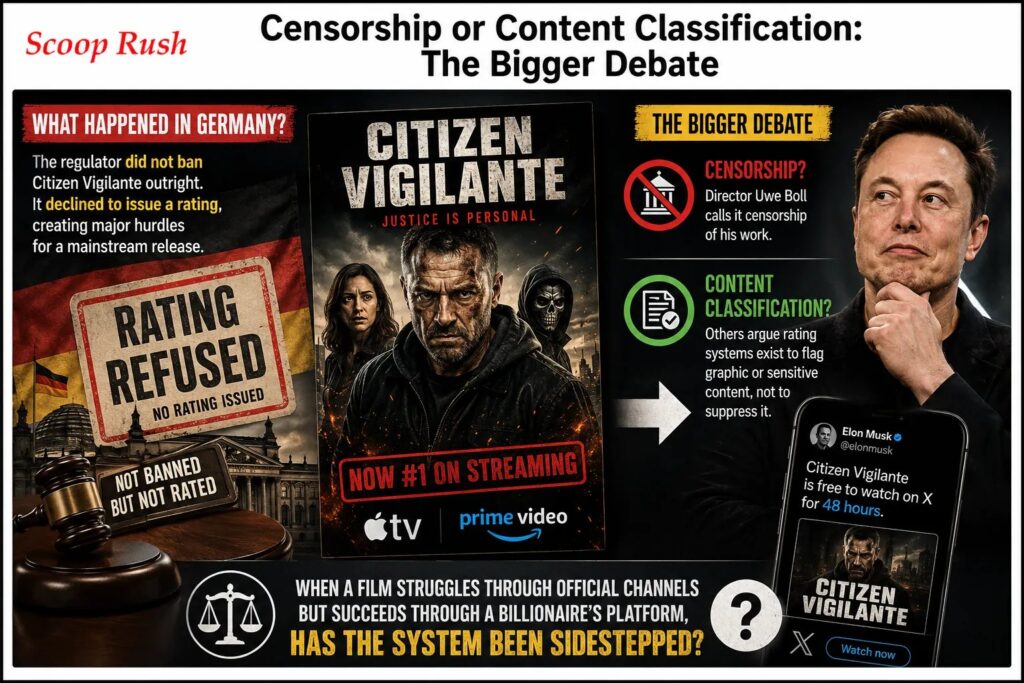
One of the more interesting angles here involves what actually happened in Germany. The regulator did not ban Citizen Vigilante outright. Instead, it declined to issue a rating, and that alone created major hurdles for a mainstream release.
This distinction carries weight. A government ban and a rating refusal are legally different, even though the practical effect can look similar. Boll frames the decision as censorship. Others argue that classification systems exist specifically to flag graphic or sensitive content, and a rating refusal is not the same as suppression.
This debate will likely continue. However, it raises a fair question: when a film struggles through official channels but succeeds through a billionaire’s personal platform, has the classification system simply been sidestepped?
What the Citizen Vigilante Story Means for Entertainment
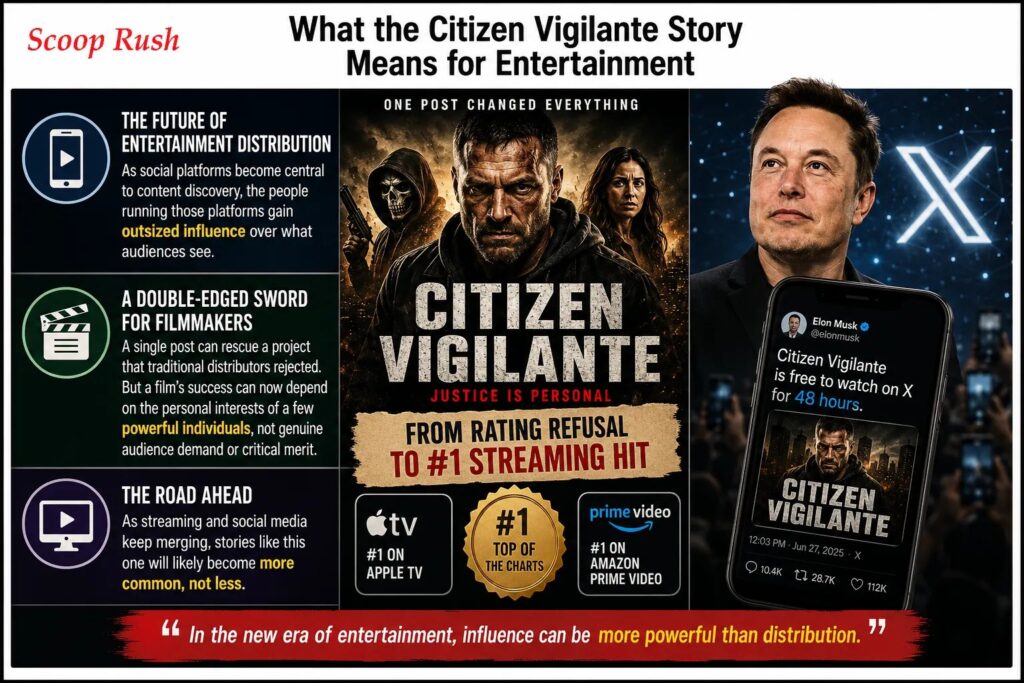
This episode offers a preview of where entertainment distribution may be heading. As social platforms become central to content discovery, the people running those platforms gain outsized influence over what audiences see.
For independent filmmakers, this cuts both ways. A single post can rescue a project that traditional distributors rejected. At the same time, a film’s success can now depend on the personal interests of a few powerful individuals rather than genuine audience demand or critical merit.
Ultimately, as streaming and social media keep merging, stories like this one will likely become more common, not less.
Key Takeaways
- Citizen Vigilante was initially denied a rating in Germany, which limited its mainstream release chances.
- Elon Musk made the film free on X for 48 hours in late June, driving a sudden surge in attention.
- The film briefly topped streaming charts on both Apple and Amazon after the promotion.
- Critics remained largely unimpressed despite the commercial success.
- The film marks Armie Hammer’s return to acting after stepping away in 2021. As streaming continues to evolve, the Elon Musk Citizen Vigilante case may become an important example of how online platforms influence modern entertainment.
FAQs
What is Citizen Vigilante about?
Citizen Vigilante is a film directed by Uwe Boll. It follows an American vigilante who takes violent action against people he believes have escaped justice. Armie Hammer stars in the lead role.
Why was Citizen Vigilante denied a rating in Germany?
Germany’s film regulator initially declined to rate the film. This decision was linked to its graphic violence and its handling of sensitive social themes, which restricted its access to mainstream cinemas.
How did Elon Musk help Citizen Vigilante gain attention?
Musk made the film free to stream on X for 48 hours in late June. The resulting surge in interest pushed Citizen Vigilante to the top of streaming charts on Apple and Amazon.
How much money did Citizen Vigilante make?
Director Uwe Boll estimated the film earned around $600,000 through streaming after the promotional boost. Its original production budget was roughly $2 million.
Is Citizen Vigilante Armie Hammer’s comeback film?
Yes. It marks Hammer’s return to film work after he stepped away from major roles in 2021 following misconduct allegations, which he denied and which did not lead to criminal charges.

