
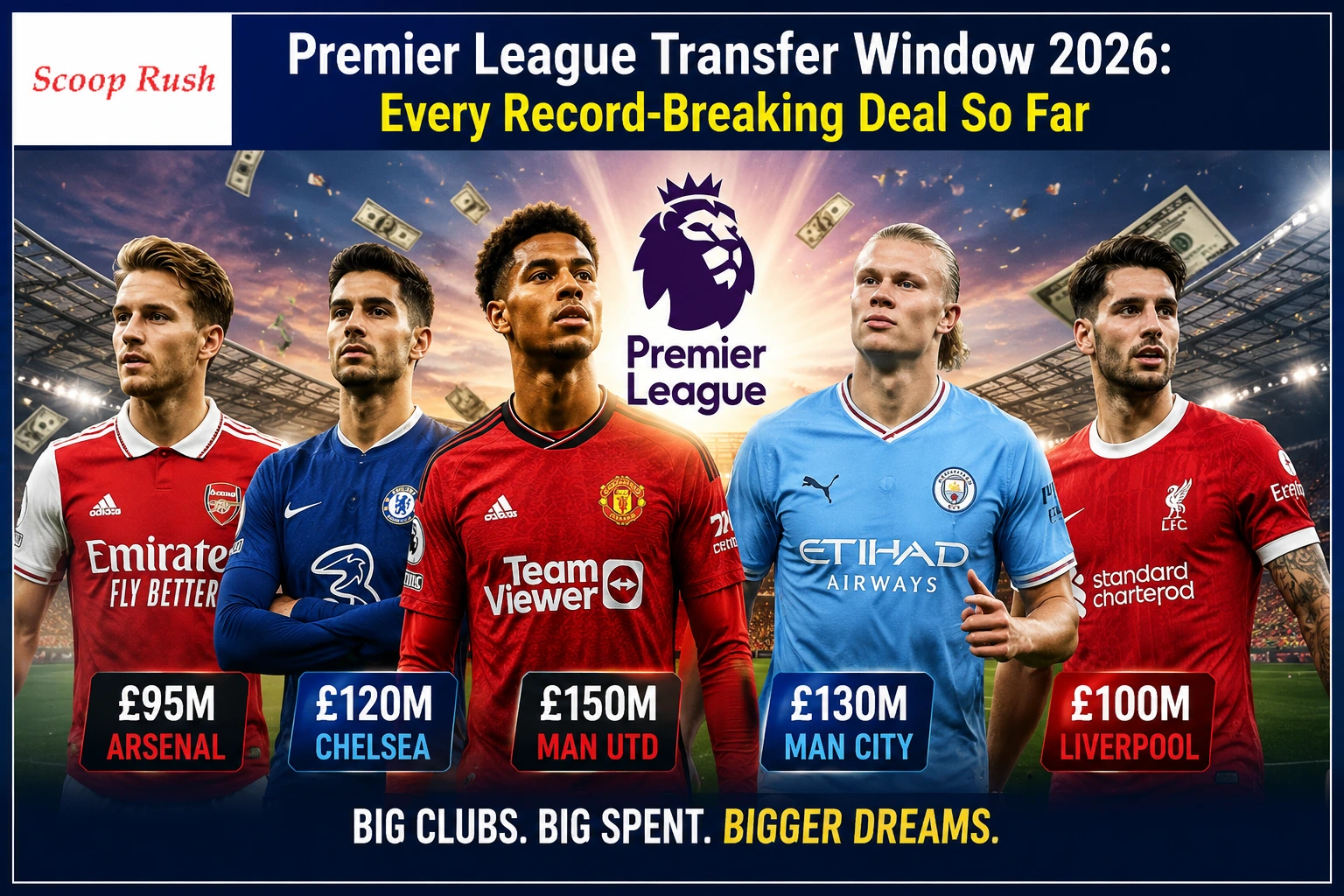
The Premier League Transfer Window Has Already Smashed Records
The Premier League transfer window has already crossed the £1 billion mark this summer. The market has barely reached its peak. Three clubs have shattered their own spending records within days of each other. Chelsea, Manchester City, and Tottenham have each paid more than £100 million for a single player. If that sounds unusual, consider this. One top-flight recruitment chief summed up the mood perfectly. He said nothing feels strange anymore once you work inside this market.
That comment captures where the Premier League transfer window stands right now. Money moves faster than ever. Clubs plan deals years in advance, and teams across every division work around the clock to stay ahead. This article breaks down how the Premier League transfer window works behind the scenes. It also explains why the numbers keep climbing and what it means for the rest of the 2026 summer market.
Record-Breaking Deals in the Premier League Transfer Window
Morgan Rogers is the name most fans are discussing right now. He joined Chelsea from Aston Villa for £117 million, a new record fee for a British player. What makes this deal remarkable is the timeline. Villa signed Rogers from Middlesbrough for just £16 million a little over two years ago. Few players ever climb in value that quickly.
However, Rogers is not the only headline the Premier League transfer window has produced. Sandro Tonali’s £100 million move to Spurs briefly set a new benchmark. Manchester City beat it days later with Elliot Anderson’s £116 million switch. Chelsea then topped both clubs by completing the Rogers deal. Meanwhile, Alexander Isak’s £125 million move to Liverpool last year still ranks among the biggest fees an English club has ever paid. That deal was completed on deadline day.
Biggest Fees of the 2026 Premier League Transfer Window
| Player | Transfer | Fee | Year |
| Alexander Isak | Newcastle to Liverpool | £125m | 2025 |
| Morgan Rogers | Aston Villa to Chelsea | £117m | 2026 |
| Elliot Anderson | Newcastle to Manchester City | £116m | 2026 |
| Sandro Tonali | Newcastle to Tottenham | £100m | 2026 |
Additionally, this spending follows a winter window in which clubs worldwide spent 2.2 billion euros. Yet even against that backdrop, the Premier League transfer window remains unmatched. No other league in the world comes close to its financial power.
How Clubs Prepare for the Premier League Transfer Window
So how do clubs actually get these deals done? Planning, technology, and a growing network of agents, scouts, and club officials answer that question. These groups now work together almost year-round to keep the Premier League transfer window moving.
Networking Events Now Shape Every Deal
In February, around 100 club officials, scouts, and agents gathered at Villa Park for a networking event. Representatives from Liverpool, West Ham, Birmingham, Preston, Derby, Aston Villa, and Manchester City mixed with agents over coffee. They used the event to prepare for the summer and review the winter window.
During the event, Aston Villa’s head of emerging talent and loans, Adam Henshall, presented how the club manages its loan system. He walked attendees through the data, risk, and reward factors the club weighs before sending a young player out on loan.
TransferRoom organized the event. The platform connects clubs and agents online and now counts around 800 clubs as members. This week, more than 200 clubs will meet 55 agencies in Madrid for a “deal day” built to finalize transfers. Villa, Chelsea, Crystal Palace, Manchester City, Manchester United, Roma, and Borussia Dortmund are among the clubs attending.
This shift shows how technology now shapes the modern Premier League transfer window. Instead of relying purely on scouting trips and phone calls, clubs use dedicated platforms. These tools speed up communication and help clubs avoid chasing deals that were never realistic.
Why the Premier League Transfer Window Could Explode in August
Most transfer activity should erupt in the second half of August. The World Cup delayed clubs from completing most deals earlier in the summer, which pushed usual planning back. As a result, English Football League clubs now find themselves waiting on decisions from the top of the pyramid. Their own plans may already sit in place, but they still cannot move until bigger clubs act first.
How Clubs Plan Ahead in the Premier League Transfer Window

Top-Flight Clubs Work a Full Window Ahead
One senior Premier League recruitment executive calls anything less than a window of advance planning “reactionary.” Ideally, clubs want to plan at least one transfer window ahead. In the Premier League, clubs generally know which players are most likely to move. That awareness lets them prepare early and avoid getting caught out.
Former Portsmouth, Blackpool, Oxford, and Shrewsbury manager Michael Appleton explained how this planning builds over time. Work on the summer window typically starts just a couple of weeks after the January window shuts. Meetings with the recruitment team begin weekly in early March. That frequency increases to every few days as the window approaches, and eventually becomes a daily routine once trading opens.
Lower League Clubs Face a Different Reality
Further down the football pyramid, the picture looks completely different. Most people in the game accept a simple truth. If a player performs well, he is likely to move on regardless of the club’s wishes. Essentially, any player can become tradeable. That reality leaves sporting directors and managers firefighting rather than planning long term.
Many EFL clubs also try to time their signings strategically to save money. Signing a player later in the window, for example, can save weeks of salary payments. That saving matters far more to smaller clubs working with tighter budgets.
Data Access Still Divides the Leagues
The amount of data clubs use in recruitment varies enormously between divisions. Advanced scouting platforms exist and can offer real insight. However, their cost often stops lower league clubs from justifying the expense. As a result, recruitment methods range widely. Some clubs use sophisticated analytics, while others rely on far simpler approaches. One lower league club has even searched for a transfer target’s agent directly on Instagram.
The Robert Lewandowski Deal: A Decade in the Making
Not every major transfer this summer carried a nine-figure price tag. One of the most fascinating moves involved no transfer fee at all. Poland captain Robert Lewandowski joined MLS side Chicago Fire on a free transfer after his Barcelona contract expired.
How Chicago Fire Built a Decade-Long Plan
Chicago Fire had tracked Lewandowski for ten years. The club believed it could eventually convince him to move to America. Chicago’s large Polish community made it a natural fit for the striker. Fire sporting director Gregg Broughton admits the plan sounded unrealistic at the time. Lewandowski was scoring goals for Bayern Munich and later Barcelona in the prime of his career. Still, the deal shows the value of long-term planning even outside the traditional Premier League transfer window.
The move became realistic in January 2025. Fire were negotiating with Neymar at the time, who shares an agent, Pini Zahavi, with Lewandowski. Neymar ultimately chose to return to Brazil with Santos. That conversation, however, opened the door for Fire to explore signing Lewandowski instead.
Behind the Scenes of a Global Superstar Signing
A spot on Fire’s official MLS discovery list meant no other MLS club could sign him. Even so, Fire had to wait for Barcelona’s decision on the striker’s future. The club could not speak directly to Lewandowski until January 1. Once that date arrived, head coach Gregg Berhalter flew to Spain to meet him in person.
Broughton explains that deals involving a player of Lewandowski’s stature go far beyond a standard contract. Clubs must weigh commercial negotiations and his career plans beyond football. They also consider his wife’s fitness business and its potential in the American market, plus school options for his children.
A Warm Welcome to Chicago
Lewandowski made his first visit to Chicago in June. The club welcomed him with billboard messages along the route from the airport. Broughton joked that gesture would never happen for a move between Heathrow and Chelsea. The signing eventually beat out interest from clubs in Europe and Saudi Arabia. That result proved the club’s long-term strategy had worked.
Deadline Day in the Premier League Transfer Window: Myth vs Reality
Deadline day often gets a reputation for chaos and unpredictability. However, insiders say the biggest deals rarely come together at the last minute. Agents now play an increasingly influential role in negotiations. They want more control over club-to-club agreements, which adds extra layers of paperwork. Much of that paperwork centers on the AF1 agency agreement. It outlines the deal structure, the agents involved, and how much they earn.
Even so, most senior figures in the Premier League agree on one thing. Deals rushed through on deadline day usually go wrong. Ideally, clubs should finalize a move at least 72 hours before the deadline. Clubs complete the majority of major transfers weeks in advance. When a deal closes in the final hours, it usually reflects small details still under negotiation rather than a rushed decision.
Michael Appleton prefers to finish his business early rather than panic on deadline day itself. However, he notes that deadline day still matters for a different reason. It becomes less about completing incoming transfers and more about preparing for players the club might lose. Clubs need to react quickly if that happens.
What the Premier League Transfer Window Means for Fans
The Premier League transfer window has evolved into a year-round operation rather than a short summer sprint. Clubs at the top build relationships and gather data months, sometimes years, before they strike a deal. Meanwhile, smaller clubs adapt with tighter budgets and quicker turnarounds. They often react to bigger clubs rather than dictating their own pace.
With deadline day just a month away, expect the pace to increase further. Agents will get busier, and paperwork will pile up. A handful of late deals will likely close in the final hours. Still, if history offers any guide, the biggest names in this Premier League transfer window probably agreed their moves behind closed doors. The headlines simply caught up later.
Key Takeaways
- Premier League clubs have already spent more than £1 billion in this transfer window.
- Chelsea’s £117 million deal for Morgan Rogers set a new British transfer record.
- Elliot Anderson’s £116 million move to Manchester City broke a record. Sandro Tonali’s £100 million switch to Spurs did too, within days of each other.
- Networking platforms like TransferRoom are reshaping the Premier League transfer window, with around 800 clubs now signed up.
- Top-flight clubs typically plan at least one transfer window ahead, while lower league clubs often react quickly to protect their squads.
- Chicago Fire’s signing of Robert Lewandowski shows how long-term planning can pay off, even a decade later.
- Clubs complete most major deals well before deadline day, despite its reputation for late drama.
Frequently Asked Questions
Why has the Premier League transfer window seen such high spending this summer?
Premier League clubs have already spent more than £1 billion this window. Record-breaking deals from Chelsea, Manchester City, and Tottenham drove much of that spending. Each club paid over £100 million for a single player.
Who holds the record for the most expensive British player transfer?
Morgan Rogers currently holds this record after his £117 million move from Aston Villa to Chelsea. That fee marks a huge jump from the £16 million Villa paid Middlesbrough for him just two years earlier.
Why is the Premier League transfer window expected to peak later in August this year?
The World Cup delayed many clubs from completing deals earlier in the summer. As a result, most major activity should land in the second half of August this year.
How do clubs plan their strategy for the Premier League transfer window?
Top-flight clubs generally plan at least one window ahead. They increase meeting frequency with recruitment teams as the window approaches. Lower league clubs, however, often have to react quickly since almost any player can become tradeable.
Why did Robert Lewandowski join Chicago Fire instead of a European club?
Chicago Fire had tracked Lewandowski for a decade and saw an opening once Barcelona’s contract with him expired. The club’s large Polish community in Chicago also made the free transfer decision easier despite interest from Europe and Saudi Arabia.

