BRUSSELS, Belgium, July 13, 2026 – EU Passenger Rights 2027 will give travelers stronger protections after the Council of the European Union approved a major package of aviation reforms. The European Parliament had already approved the measures. The new rules will take effect in mid 2027. They will apply to all flights departing from EU airports and arrivals operated by EU airlines. British travelers flying to or from Europe will also benefit in many cases.
The reforms improve seating rights, baggage transparency, ticket corrections, and compensation procedures. They also make flight disruption rules clearer. Officials say the changes will create a fairer and more transparent travel experience across Europe.
EU Passenger Rights 2027 Improve Family Seating and Booking Rules
Children under 14 can now sit beside their parents without extra seat reservation fees. Pregnant travelers and passengers with reduced mobility can also sit next to one travel companion without paying additional charges.
Airlines must correct spelling mistakes on passenger tickets free of charge. They must also provide printed boarding passes to checked-in passengers without extra fees. In addition, booking platforms must display fares that include cabin baggage by default. This change makes airline prices easier to compare.
EU Passenger Rights 2027 Protect Return Flights and Refunds
The new rules protect travelers who miss the outbound part of a return ticket. Airlines cannot cancel the return journey because of the missed first flight. This rule helps passengers avoid costly penalties.
Passengers who travel in a lower class than booked will receive automatic refunds. This change removes lengthy refund requests and gives travelers faster compensation when airlines downgrade their seats.
EU Passenger Rights 2027 Strengthen Delay Compensation
Existing compensation rules remain largely unchanged. Travelers can still receive compensation if a flight arrives at least three hours late and the airline caused the delay.
However, airlines will not pay compensation for extraordinary events. These include severe weather, natural disasters, airport staff strikes, or incidents involving disruptive passengers. The updated rules clearly explain these exceptions.
EU Passenger Rights 2027 Make Claims Easier
Airlines must inform passengers about their rights within 96 hours after the journey ends. Travelers will then have nine months to submit a compensation claim.
After receiving a claim, airlines must respond within 30 calendar days. They must either pay compensation or explain why they rejected the request. This process should reduce confusion and speed up claims.
EU Passenger Rights 2027 Expand Care During Flight Disruptions
Passengers will receive refreshments after a two-hour delay. Airlines must also provide a meal after three hours. They must continue offering meals every five hours, up to three meals each day.
If travelers need an overnight stay, airlines must arrange hotel accommodation. They must also provide free transport between the airport and the hotel. These rights apply during qualifying disruptions.
How Travelers Can Benefit From EU Passenger Rights 2027
Travelers should compare airline fares carefully because displayed prices will include cabin baggage. This change makes it easier to identify the true cost before booking.
Passengers should also keep travel documents and receipts during disruptions. They should submit compensation claims within nine months if eligible. Knowing these rights can help travelers avoid unnecessary expenses and recover eligible costs.
Conclusion
EU Passenger Rights 2027 will make air travel across Europe more transparent and passenger friendly. Travelers will enjoy better seating rights, easier ticket corrections, fairer baggage pricing, and a simpler compensation process. The reforms also strengthen support during delays and disruptions. Before booking your next European flight, review these new rules. Knowing your rights can help you save money and avoid unnecessary travel stress.
FAQs
1. When will the new EU passenger rights take effect?
The new rules will come into force in mid 2027. They will apply to flights departing from EU airports and arrivals operated by EU-based airlines.
2. Will British travelers benefit from these new rules?
Yes. UK passengers will benefit when they fly from an EU airport or travel on an EU airline to Europe. Many of the new protections will still apply despite Brexit.
3. Can airlines still charge families to sit together?
No. Children under 14 must be seated next to their parents without extra reservation fees. Pregnant passengers and travelers with reduced mobility can also sit beside one companion for free.
4. What support will I receive if my flight is delayed?
If your delay qualifies, the airline must provide refreshments after two hours, meals after three hours, and hotel accommodation with transport if an overnight stay becomes necessary. Compensation may also apply if the airline caused the delay.
5. How do I claim compensation under the new rules?
Passengers have nine months to submit a compensation claim. Airlines must respond within 30 calendar days by either paying the compensation or explaining why they rejected the claim.
Eating your greens is supposed to protect you from cancer. So why are researchers finding the opposite pattern in young lung cancer patients? A new study from USC Norris Comprehensive Cancer Center has uncovered a troubling connection between healthy eating and lung cancer in non-smokers under 50. This finding matters because it points to a hidden environmental risk factor that doctors and patients need to understand. If you prioritize fruits, vegetables, and whole grains, this story deserves your attention, since it raises real questions about how your food is grown.
The Study That Turned Nutrition Advice Upside Down
Researchers at USC Norris, part of Keck Medicine of USC, presented their findings at the American Association for Cancer Research’s annual meeting. They wanted to understand why lung cancer in non-smokers keeps rising among younger adults, a group that traditionally faced very low risk. What they found surprised even the researchers themselves.
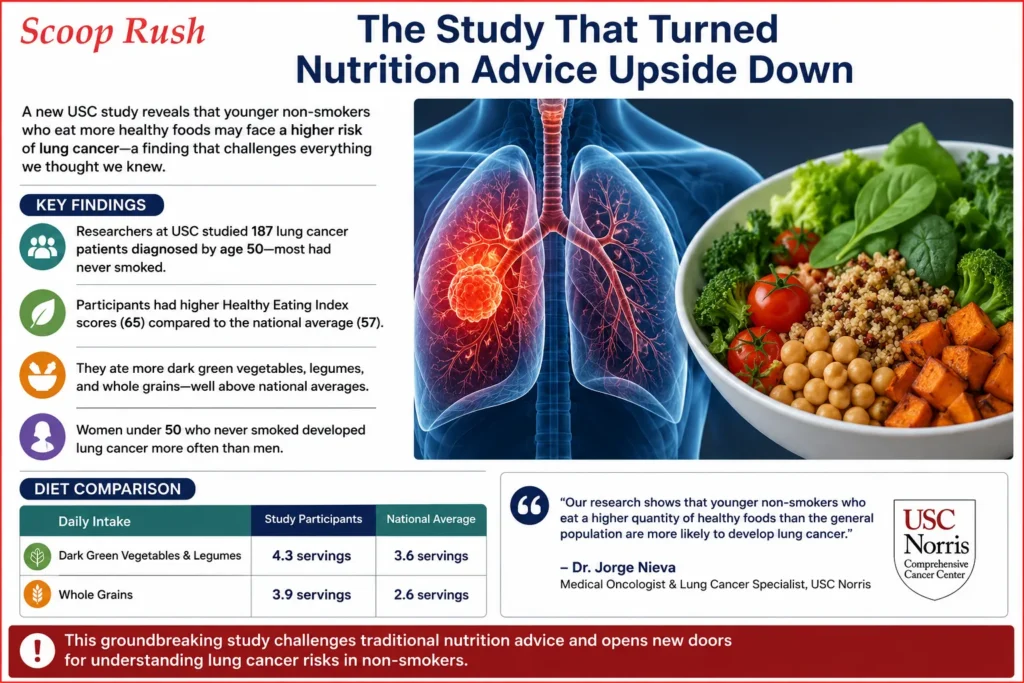
“Our research shows that younger non-smokers who eat a higher quantity of healthy foods than the general population are more likely to develop lung cancer,” said Dr. Jorge Nieva, a medical oncologist and lung cancer specialist with USC Norris who led the study. He called the results counter-intuitive, and rightfully so. Nobody expects a vegetable-rich diet to correlate with higher cancer rates.
The research team studied 187 people diagnosed with lung cancer by age 50. Most patients had never smoked. Additionally, most had a form of lung cancer that behaves differently from the type usually linked to tobacco use.
How Researchers Measured Diet Quality
The team used the Healthy Eating Index, a tool that scores overall diet quality from 1 to 100. Young lung cancer patients averaged a score of 65, while the national average sits at 57. These patients weren’t just eating reasonably well. They were eating significantly better than the typical American adult.
Participants consumed 4.3 daily servings of dark green vegetables and legumes, compared to the national average of 3.6 servings. They also ate 3.9 servings of whole grains daily, well above the average of 2.6 servings. Women in the study scored even higher on the Healthy Eating Index than men. Interestingly, women under 50 who never smoked also developed lung cancer more often than men in the same age group, and this overlap pushed researchers toward a specific hypothesis.
Could Pesticides Explain Lung Cancer in Non-Smokers?
The research team clarifies one key point: healthy foods themselves are not the problem. Fruits, vegetables, and whole grains remain some of the best things you can eat for overall health. Instead, the suspicion falls on pesticide residue.
Dr. Nieva pointed out that commercially grown, non-organic produce and whole grains typically carry higher pesticide residue levels than dairy, meat, and many processed foods. Consequently, someone eating more conventionally grown produce might also absorb more pesticide exposure than someone eating a less produce-heavy diet.
This isn’t a random guess. Previous research on agricultural workers shows that long-term pesticide exposure links to higher rates of lung cancer. That existing evidence supports the hypothesis, though it remains unproven in this specific context.
Dr. Nieva stayed direct about the limitations. He stressed that the pesticide connection “remains unproven and requires additional investigation, especially among younger adults and women.” Researchers didn’t measure pesticide levels in individual foods that participants ate. Instead, they used previously published data on average pesticide residues across food categories. This study identified a pattern worth investigating, not a confirmed cause and effect relationship.
The Bigger Picture: Lung Cancer Rates Are Shifting
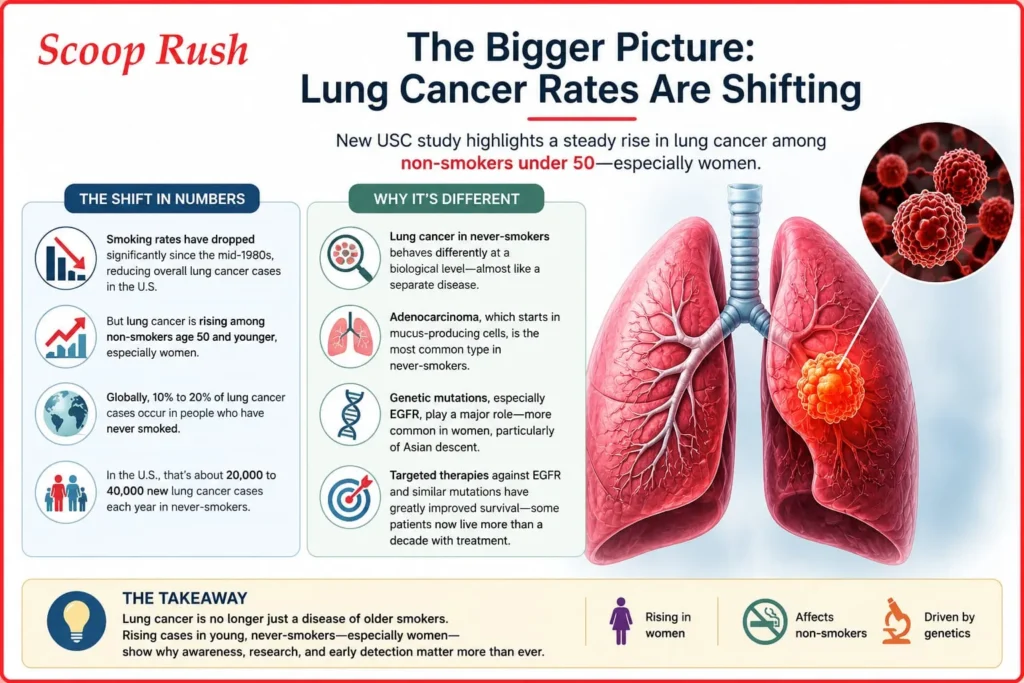
This USC study doesn’t exist in isolation. It fits into a broader trend that researchers worldwide have tracked for years. Lung cancer has historically affected older adults with an average diagnosis age of 71, heavy smokers, and men. However, that picture has changed steadily.
Smoking rates have dropped significantly since the mid-1980s, helping reduce overall lung cancer cases in the United States. Despite this progress, one group hasn’t followed the downward trend. Lung cancer has become more common among non-smokers age 50 and younger, and this shift stands out especially among women.
Globally, lung cancer remains the most common cancer and the leading cause of cancer death. Between 10% and 20% of lung cancer diagnoses worldwide now occur in people who have never smoked. In the United States, that translates to roughly 20,000 to 40,000 lung cancer cases every year in never-smokers.
Why Lung Cancer in Non-Smokers Behaves Differently
Lung cancer in never-smokers isn’t simply the same disease appearing in a different population. It behaves differently at a biological level. Oncologists describe it as emerging almost as a separate disease entity.
Adenocarcinoma, a cancer type that starts in mucus-producing cells, accounts for the vast majority of lung cancers in never-smokers. This differs from squamous cell carcinoma, which was historically the dominant form of lung cancer decades ago.
Genetic mutations play a significant role too, similar to how researchers have traced a hidden DNA factor affecting drug responses in other conditions. One common mutation, known as EGFR, affects a protein involved in cell growth. This mutation shows up more frequently in women, particularly women of Asian descent, though researchers don’t fully understand why. Fortunately, treatment has improved dramatically. Targeted therapies designed to block EGFR and similar mutations have extended survival rates significantly, and some patients now live more than a decade with ongoing treatment.
What Researchers Plan to Do Next
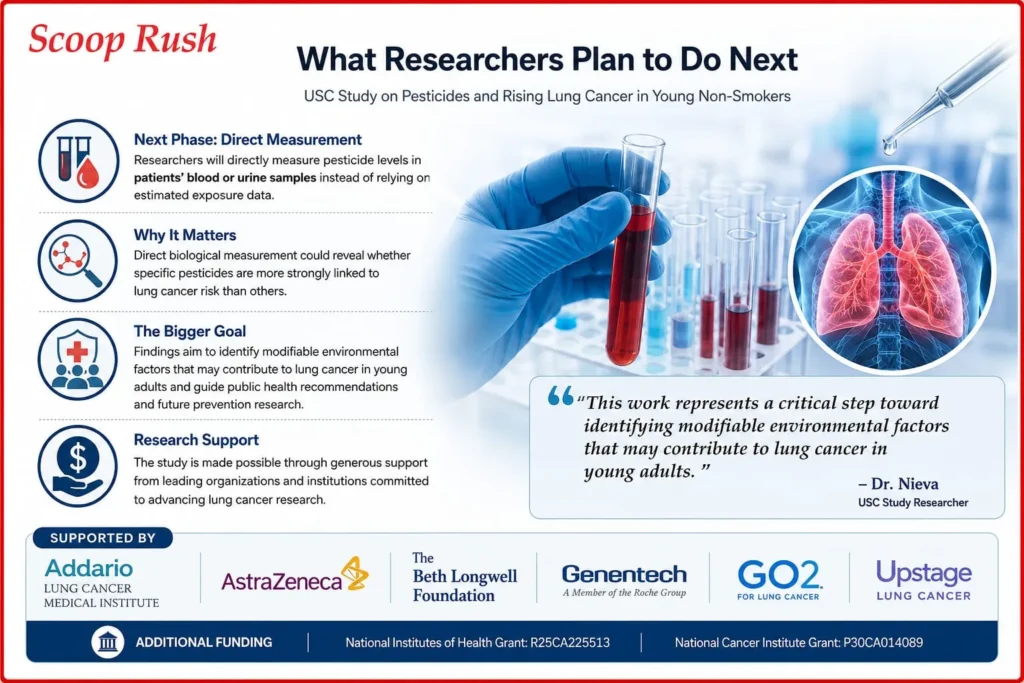
The USC team isn’t stopping here. Their next phase involves directly measuring pesticide levels in patients’ blood or urine samples rather than relying on estimated exposure data. This shift matters, since direct biological measurement could reveal whether specific pesticides carry a stronger link to lung cancer risk than others.
“This work represents a critical step toward identifying modifiable environmental factors that may contribute to lung cancer in young adults,” Dr. Nieva explained. He emphasized that the goal is guiding public health recommendations and shaping future prevention research.
The study received support from the Addario Lung Cancer Medical Institute, AstraZeneca, the Beth Longwell Foundation, Genentech, GO2 for Lung Cancer, and Upstage Lung Cancer. Additional funding came through National Institutes of Health grant R25CA225513 and National Cancer Institute grant P30CA014089.
Other Known Risk Factors for Lung Cancer in Non-Smokers
While this new research focuses on diet and pesticide exposure, other established risk factors already explain a portion of lung cancer cases in never-smokers.
Secondhand smoke exposure and radon gas remain two well-documented contributors. Researchers estimate secondhand smoke contributes to around 7,300 lung cancer cases annually, while radon accounts for roughly 2,900. Testing your home for radon remains one of the most effective steps a non-smoker can take, since radon exposure often produces no warning symptoms.
Air pollution also plays a substantial role, much like environmental shifts tracked by NASA’s satellite monitoring of global climate patterns. Fine particulate matter, known as PM2.5, links to lung cancer risk in never-smokers, particularly those carrying the EGFR mutation. These pollutants don’t directly damage DNA the way cigarette smoke does. Instead, they appear to activate dormant mutated cells already present in lung tissue, triggering them to grow.
Symptoms of lung cancer look the same whether someone has smoked or not. These include a persistent cough, coughing up blood, chest pain, wheezing, shortness of breath, or ongoing fatigue. If you notice any of these symptoms, talk to your doctor promptly, since early detection significantly improves outcomes.
Conclusion
This new research doesn’t mean you should abandon your leafy greens or whole grains. These foods still offer major benefits for heart health, digestion, and long-term wellness. What this study does suggest is that the way our food is grown deserves closer scrutiny.
Pesticide exposure remains an unproven but plausible factor that researchers are actively working to confirm. Meanwhile, the broader rise in lung cancer in non-smokers, especially among young women, points to a combination of environmental exposures and genetic factors that scientists are still mapping out. As research continues, staying informed about risk factors like radon, air pollution, and pesticide residue can help you make more educated choices. Ultimately, more definitive answers should emerge as USC’s next research phase unfolds.
FAQs
Does eating healthy food cause lung cancer?
No. Researchers stress that fruits, vegetables, and whole grains are not the problem. The suspected issue is pesticide residue that may be present on conventionally grown produce, not the nutritional content of the food itself.
What percentage of lung cancers occur in people who never smoked?
In the United States, about 10% to 20% of lung cancers, translating to roughly 20,000 to 40,000 cases annually, occur in people who never smoked or smoked fewer than 100 cigarettes in their lifetime.
Why are more young women getting lung cancer even though they don’t smoke?
Women under 50 who never smoked develop lung cancer more often than men in the same age group. Researchers point to genetic mutations like EGFR, which appear more frequently in women, along with environmental exposures such as air pollution and cooking fumes.
What type of lung cancer do non-smokers usually get?
About 50% to 60% of lung cancers in never-smokers are adenocarcinomas, a type that begins in mucus-producing cells. This differs biologically from the squamous cell carcinoma more commonly associated with smoking-related lung cancer.
How can non-smokers lower their risk of lung cancer?
Testing your home for radon, avoiding secondhand smoke, and limiting exposure to air pollution and diesel exhaust are proven ways to reduce risk. Since lung cancer screening isn’t currently recommended for never-smokers, staying aware of symptoms and discussing any family history with your doctor remains important.
What happens when one of the most criticized hotel room designs at Walt Disney World is completely reimagined?
The answer can be found in the newly redesigned Little Mermaid-themed accommodations at Disney’s Caribbean Beach Resort. These rooms replace the former Pirate Rooms, which had long divided opinion among guests. While the pirate concept sounded exciting on paper, many visitors felt the execution fell short.
Now, Disney has introduced a fresh “Under the Sea” design inspired by The Little Mermaid. The result is a room that feels more spacious, more practical, and significantly more comfortable.
This Disney Caribbean Beach Little Mermaid Rooms Review explores the redesign, highlights the biggest improvements, and explains why these rooms could become one of the most appealing options at a Moderate Resort.
Why Caribbean Beach Resort Remains Popular
Disney’s Caribbean Beach Resort has become one of the most sought-after Moderate Resorts at Walt Disney World.
Several factors contribute to its popularity.
First, it serves as the central hub for the Skyliner transportation system. Guests can easily travel to Disney’s Hollywood Studios and EPCOT while also connecting to other nearby resorts.
Additionally, the Old Port Royale area received major improvements in recent years. The updated lobby, waterfront promenade, dining venues, and guest amenities enhanced the overall experience.
The resort also benefits from its proximity to Disney’s Riviera Resort. Visitors staying at Caribbean Beach can conveniently access additional dining options and amenities located nearby.
These advantages already made Caribbean Beach a strong choice. The arrival of the new Little Mermaid rooms further strengthens its appeal.
The End of the Pirate Room Era
The biggest change is the complete replacement of the former Pirate Rooms.
Those rooms featured pirate ship beds, themed furniture, and heavily stylized décor. Although the concept attracted attention, guest feedback often focused on practical concerns.
Many visitors found the beds uncomfortable. The mattresses were thin, and the room layout felt cramped. Furthermore, the location of the Pirate Rooms within the resort placed guests farther away from key amenities.
As a result, Disney decided to move in a new direction.
The Little Mermaid redesign completely removes the pirate theme and introduces a modern layout focused on comfort and functionality.
Disney Caribbean Beach Little Mermaid Rooms Review – First Impressions
The difference is immediately noticeable.
The entire room has been rebuilt with new flooring, furniture, wall treatments, curtains, artwork, and bedding. Gone are the bulky pirate ship beds and oversized themed furniture.
Instead, guests are greeted by a bright, open space featuring aquatic-inspired design elements and subtle references to The Little Mermaid.
The room feels considerably larger despite maintaining a similar footprint.
This improved sense of space is one of the redesign’s biggest successes.
Smarter Sleeping Arrangements
One of the most important upgrades involves the beds.
The old pirate ship beds have been replaced by:
One raised queen bed
One pull-down Murphy queen bed
One pull-down fifth sleeper
This arrangement significantly improves flexibility.
When the Murphy bed is folded away, it functions as a comfortable couch. Consequently, guests gain additional living space during the day.
The fifth sleeper also doubles as seating when not being used as a bed.
According to the room design, accommodations can support five guests comfortably. However, the fifth sleeper is best suited for a child or smaller adult.
The overall sleeping experience appears far superior to the previous Pirate Rooms.
A Room Designed for Modern Families
Modern travelers often carry multiple devices.
Fortunately, Disney appears to have addressed that reality.
The new rooms feature numerous electrical outlets and USB charging ports. Guests can charge phones, tablets, watches, and other electronics without competing for outlet space.
Nightstands near the beds include convenient charging access. Meanwhile, additional outlets are positioned throughout the room.
This attention to detail improves everyday convenience.
Storage Space Has Improved Dramatically
Storage is another area where the redesign excels.
Guests will find storage options in multiple locations, including:
Under the raised queen bed
Inside the dresser
Under the fifth sleeper
Within the closet
Around the beverage station
For larger families, these additions can make a significant difference during longer stays.
Keeping luggage and personal items organized becomes much easier.
The Bathroom Receives a Modern Refresh
The bathroom has also undergone a complete transformation.
Several notable upgrades include:
Dual vessel sinks
Illuminated mirrors
Additional shelving
Separate bathroom spaces
Updated shower design
The sink area now offers a cleaner and more contemporary appearance.
Furthermore, Disney replaced the old curtain divider with an actual sliding door, creating better privacy between the bathroom and sleeping areas.
The toilet and bathtub remain in a separate enclosed space, which many families appreciate.
Another thoughtful addition is a small stool designed to help children reach the sink more easily.
Small Details Make a Big Difference
Throughout the room, Disney has added practical touches that improve the guest experience.
Near the television area, guests will find:
A safe
Recycling bins
Trash containers
Beverage cooler
Coffee station
The coffee setup includes a Cuisinart coffee maker along with complimentary coffee and tea selections.
These additions help the room function more like a comfortable home base during a vacation.
The Design Balances Theme and Sophistication
One interesting aspect of the redesign is Disney’s approach to theming.
Rather than creating an intensely character-focused environment, the designers chose a more balanced style.
References to The Little Mermaid appear throughout the room. However, they do not dominate the space.
Artwork, decorative details, and color choices subtly celebrate the film while maintaining a mature atmosphere.
This approach differs significantly from the Little Mermaid rooms at Disney’s Art of Animation Resort.
Those rooms feature stronger character elements and brighter visual themes. By comparison, the Caribbean Beach version feels more refined and understated.
As a result, the new rooms may appeal to a wider range of guests.
Caribbean Influences Remain Present
Importantly, Disney did not abandon the Caribbean Beach identity.
Several design features continue to reflect the resort’s tropical setting.
The furniture, color palette, floral patterns, and decorative details blend Caribbean-inspired elements with undersea themes.
This combination helps the rooms feel connected to their surroundings rather than simply functioning as a generic character room.
The balance works remarkably well.
How These Rooms Compare to Disney Vacation Club Studios
One of the most notable aspects of the redesign is its similarity to Disney Vacation Club studio layouts.
The room configuration closely mirrors modern DVC accommodations.
Features such as:
Murphy beds
Flexible seating
Efficient storage
Open layouts
have become popular within Disney Vacation Club resorts.
Now, guests staying at a Moderate Resort can enjoy many of those same benefits.
Although Riviera Resort studios still offer more premium finishes and private balconies, the overall experience gap appears much smaller than before.
This makes Caribbean Beach an attractive alternative for travelers seeking value.
Location Advantages Continue to Impress
The Trinidad section of Caribbean Beach Resort, where these rooms are located, offers several transportation benefits.
Most importantly, guests enjoy convenient access to the Skyliner system.
This transportation network provides direct service to Disney’s Hollywood Studios and easy access to EPCOT.
For guests taking advantage of Early Entry, this proximity can be especially valuable.
Fast transportation means more time enjoying attractions and less time waiting in lines.
Therefore, room location becomes another significant advantage of the Little Mermaid accommodations.
Comfort and Functionality Take Center Stage
The redesign clearly prioritizes guest comfort.
Several changes contribute to this goal:
Better mattresses
More seating
Improved storage
Additional charging options
Greater floor space
Enhanced bathroom design
These upgrades address many of the practical concerns associated with the former Pirate Rooms.
Rather than focusing exclusively on theme, Disney appears to have prioritized how guests actually use the space.
That decision seems to have paid off.
What Families Will Appreciate Most
Families are likely to notice several standout benefits.
First, the room accommodates more guests without feeling overcrowded.
Third, storage solutions help keep the room organized.
Finally, the transportation advantages of Caribbean Beach Resort remain a major selling point.
Combined together, these factors create a more enjoyable vacation experience.
Final Verdict
The transformation from Pirate Rooms to Little Mermaid-inspired accommodations represents a substantial improvement.
This Disney Caribbean Beach Little Mermaid Rooms Review shows how Disney successfully blended comfort, functionality, and themed storytelling into a modern room design.
The new rooms feel larger, more practical, and significantly more comfortable than their predecessors. Additionally, they maintain the tropical identity of Caribbean Beach Resort while incorporating tasteful references to The Little Mermaid.
For families seeking a Moderate Resort with excellent transportation access, modern amenities, and thoughtful design, these rooms deserve serious consideration.
Ultimately, Disney’s latest Caribbean Beach redesign appears to be one of the most successful room upgrades in recent years.
FAQs
1. What replaced the Pirate Rooms at Disney’s Caribbean Beach Resort?
The Pirate Rooms have been replaced by new Little Mermaid-inspired “Under the Sea” rooms featuring updated décor, Murphy beds, and modern amenities.
2. How many guests can stay in the new Little Mermaid rooms?
The rooms can accommodate up to five guests using a queen bed, a Murphy queen bed, and a pull-down fifth sleeper.
3. Are the new rooms larger than the old Pirate Rooms?
The physical size is similar, but the redesigned layout makes the rooms feel much more spacious and open.
4. Do the Little Mermaid rooms have access to the Skyliner?
Yes. Guests staying in these rooms enjoy convenient access to Disney’s Skyliner transportation system.
5. What are the biggest improvements in the redesign?
The biggest upgrades include more comfortable beds, increased storage, better bathroom design, improved charging options, and a more practical room layout.
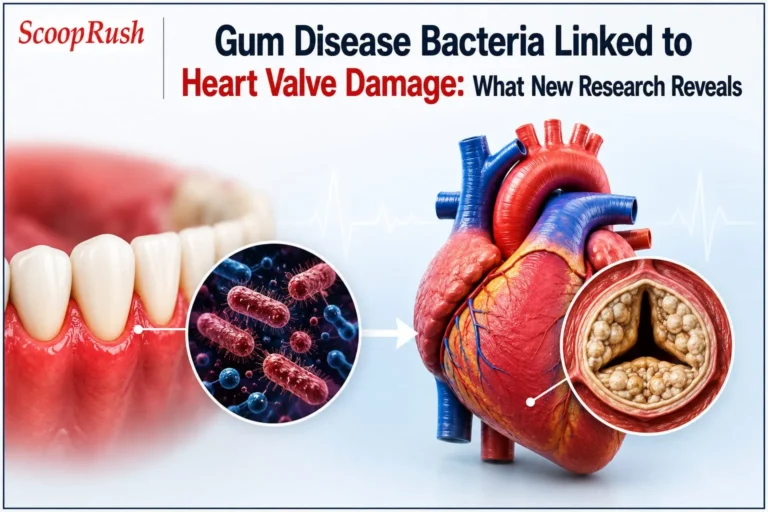
Could a bacterium living in your mouth right now be quietly damaging one of your heart’s valves? New preliminary research says it’s possible. Scientists have discovered that bacteria responsible for gum disease may play a direct role in a serious and common heart condition called calcific aortic valve stenosis.
This finding matters because heart valve disease often develops silently. Many people won’t notice symptoms until the condition has already progressed. If oral bacteria really do contribute to this process, then something as simple as brushing, flossing, and treating gum disease early could become part of protecting your heart, not just your smile.
Scientists presented the research at the American Heart Association’s Basic Cardiovascular Sciences Scientific Sessions 2026, held in Boston from July 13 to 16. This meeting ranks among the largest global gatherings focused on cardiovascular science, and the findings there are already generating conversation among doctors and dentists alike.
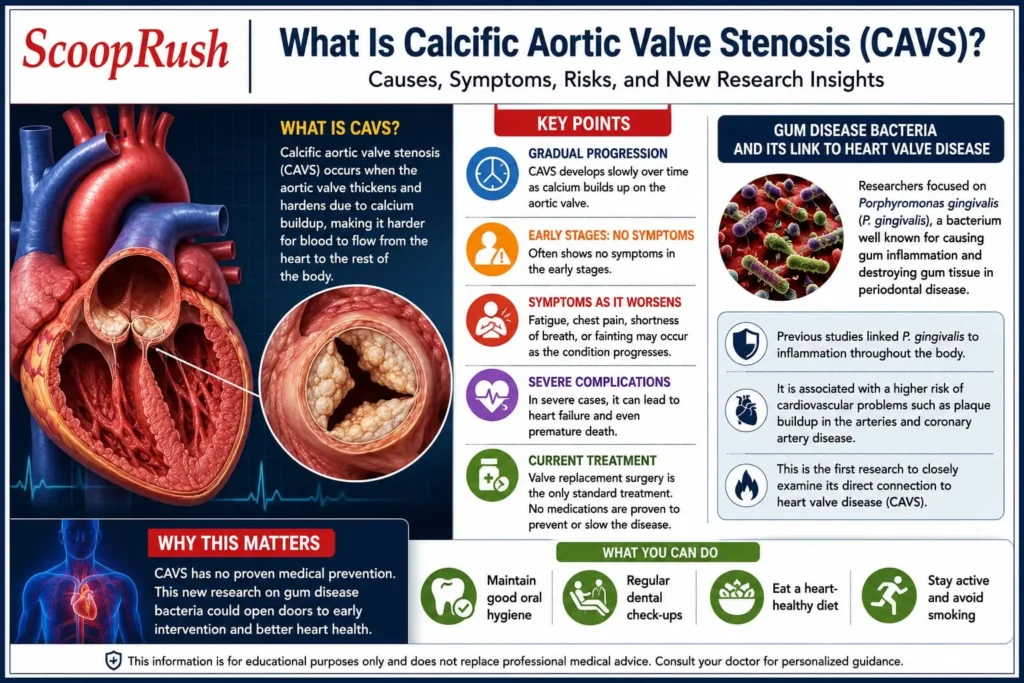
What Is Calcific Aortic Valve Stenosis (CAVS)?
Calcific aortic valve stenosis, often shortened to CAVS, happens when the aortic valve gradually thickens and hardens due to calcium buildup. Over time, this makes it harder for blood to flow properly from the heart to the rest of the body.
The tricky part is that CAVS often shows no symptoms in its early stages. As it worsens, however, people may experience fatigue, chest pain, shortness of breath, or fainting. In severe cases, it can lead to heart failure and even premature death.Currently, valve replacement surgery remains the only standard treatment, and no medications can prevent or slow the disease.
That lack of preventive options is exactly why this new research has caught so much attention.
Gum Disease Bacteria and Its Link to Heart Valve Disease
Researchers focused their attention on a specific bacterium called Porphyromonas gingivalis, or P. gingivalis for short. This bacterium already causes gum inflammation and destroys gum tissue in people with periodontal disease.
Previous studies had already connected P. gingivalis to inflammation throughout the body, along with a higher risk of cardiovascular problems like plaque buildup in the arteries and coronary artery disease. However, researchers had not closely examined its direct connection to heart valve disease until now. . Inflammation of this kind isn’t limited to blood vessels either; scientists have also found that the immune system’s inflammatory processes shape the brain itself, showing just how far the body’s inflammatory responses can reach. immune system’s inflammatory processes shape the brain itself,
How Researchers Found the Gum Disease–Heart Valve Connection
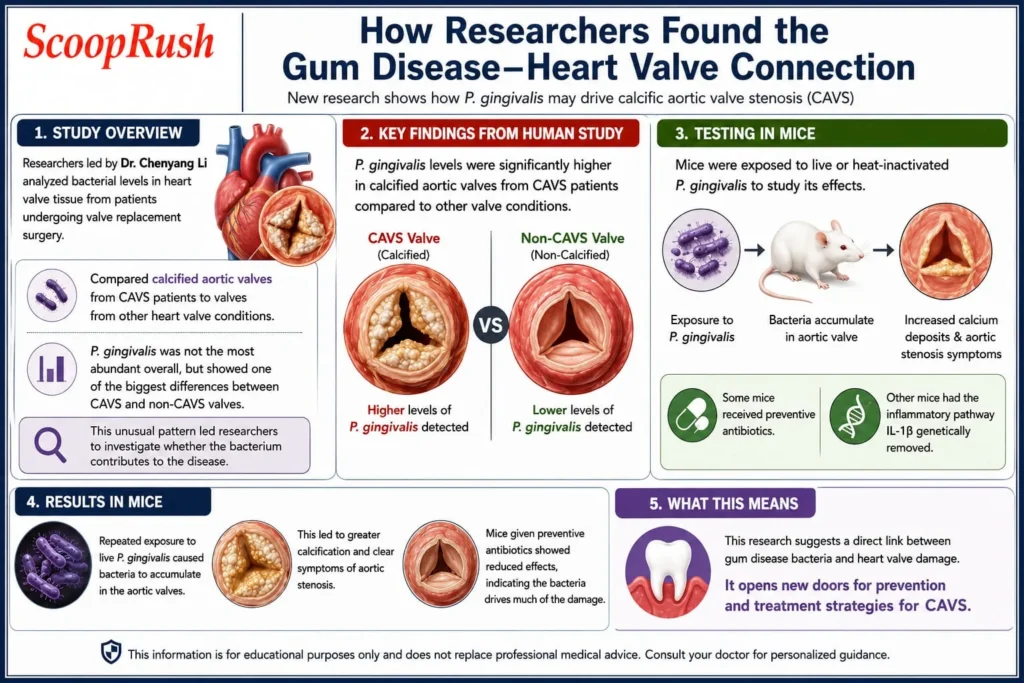
The study was led by Chenyang Li, M.D., a Ph.D. candidate in the department of cardiology at Fuwai Hospital’s National Center for Cardiovascular Diseases in Beijing. To investigate the link, the team analyzed bacterial levels in heart valve tissue collected from patients undergoing valve replacement surgery.
They compared calcified aortic valves from people diagnosed with CAVS to valve tissue taken from patients with other types of heart valve conditions.The results surprised the team. According to Li, P. gingivalis did not rank as the most abundant bacterium overall. Still, it showed one of the biggest differences between valves affected by CAVS and those that weren’t.
This unusual pattern is what pushed researchers to dig deeper into whether the bacterium was simply present, or whether it was actually contributing to the disease itself.
Testing Gum Disease Bacteria in Mice
To understand the biological mechanism at play, researchers turned to mouse studies. Mice were exposed to either live or heat-inactivated P. gingivalis. The team then observed whether the bacteria built up in the aortic valve, increased calcium deposits, and triggered symptoms similar to aortic stenosis.
Some mice were given preventive antibiotics. In other groups, researchers genetically removed a specific inflammatory pathway known as IL-1β.
The results were striking. Repeated exposure to live P. gingivalis caused bacteria to accumulate in the aortic valves of mice. This buildup led to greater calcification and clear symptoms of aortic stenosis. Meanwhile, mice given preventive antibiotics showed reduced effects, suggesting the bacteria itself was driving much of the damage.
How Gum Disease Triggers Inflammation in the Heart Valve
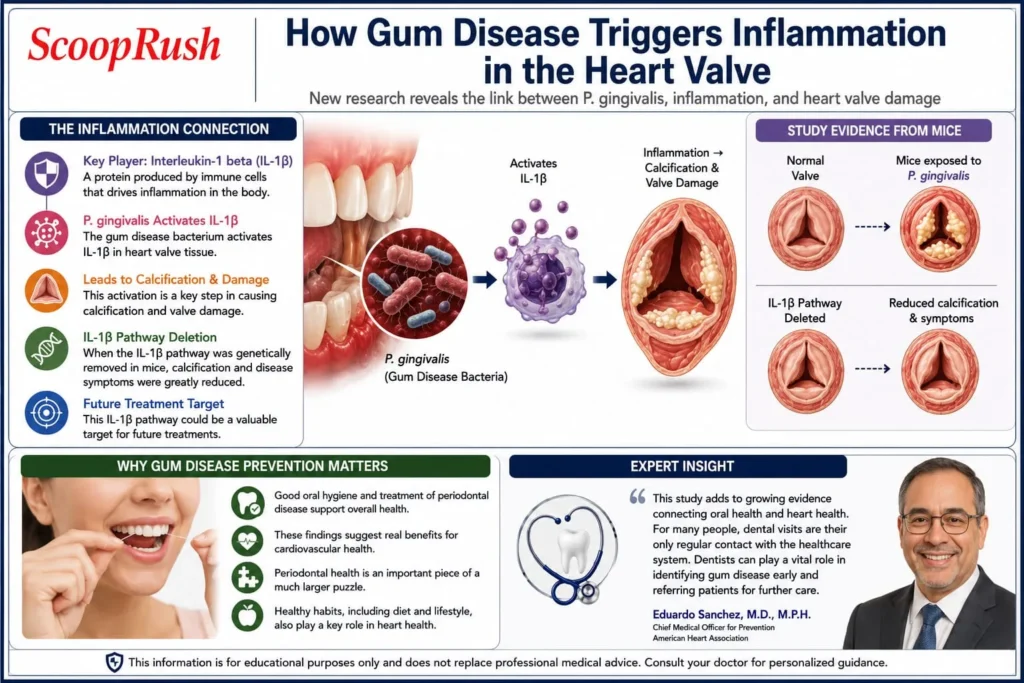
One of the most important discoveries in this study involves inflammation, specifically a protein called interleukin-1 beta, or IL-1β . Immune cells produce this protein mainly, and it plays a major role in promoting inflammation throughout the body.
Researchers found that P. gingivalis activated IL-1β in the valve tissue of mice. This activation appears to be a key step in how the bacteria contributes to calcification and valve damage.
To confirm this, scientists genetically deleted the IL-1β pathway in some mice. The results were significant. Even when P. gingivalis was still present, valve calcification and disease symptoms were greatly reduced. This suggests that IL-1β may serve as an important mediator between the bacterial infection and the resulting heart damage.
As a result, this pathway could become a valuable target for future treatments, even before doctors fully understand every step of the disease process. Interestingly, calcium regulation and mineral buildup play a role in other parts of the body too, much like how vitamin A supports healthy development in the eyes, reminding us how interconnected the body’s biological systems really are.
Why Gum Disease Prevention Matters for Heart Health
Li summarized the practical takeaway in simple terms: take good care of your oral health. Good oral hygiene and proper treatment of periodontal disease are already known to support overall health. However, these findings suggest they may also carry real benefits for cardiovascular health.
It’s important to note that it’s still too early to recommend specific treatments aimed at preventing CAVS through dental care alone. Even so, the findings point toward periodontal health being an important piece of a much larger puzzle. Diet also plays a supporting role in overall wellness, and research on extreme eating patterns like no-sugar diets shows how lifestyle choices can influence long-term health outcomes in unexpected ways.
Eduardo Sanchez, M.D., M.P.H., chief medical officer for prevention at the American Heart Association, echoed this sentiment. He noted that this study adds to growing evidence connecting oral health and heart health. Additionally, he pointed out that for many people, dental visits are their only regular contact with the healthcare system. Because of this, dentists could play a valuable role in identifying gum disease early and referring patients for further care before larger health problems develop.
Oral Health and Heart Valve Disease: What’s Being Done
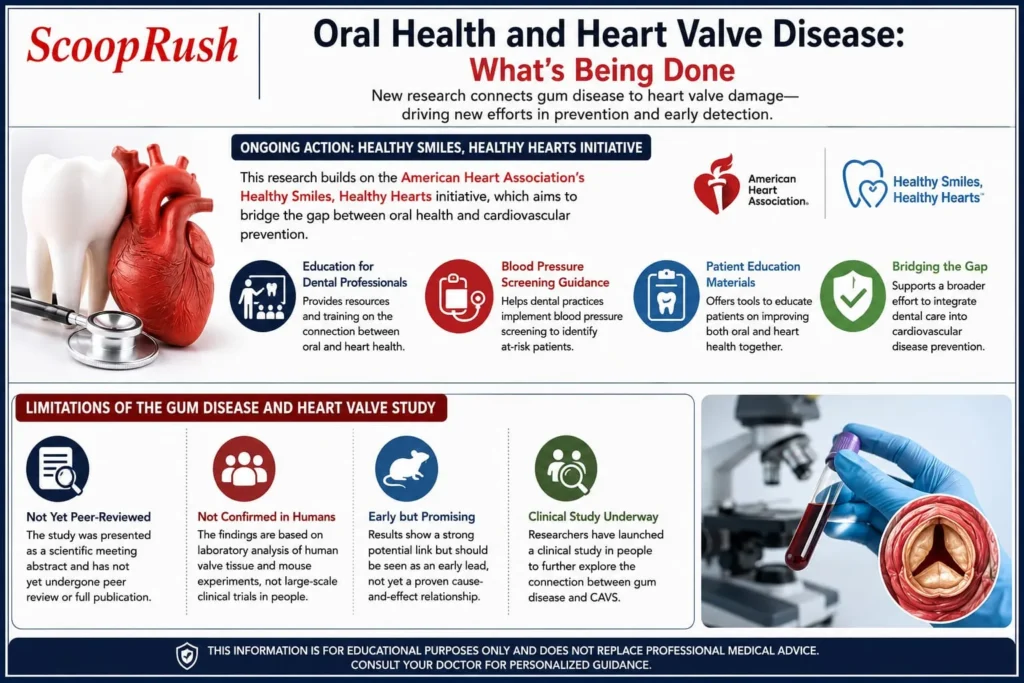
This research builds on the American Heart Association’s ongoing Healthy Smiles, Healthy Hearts initiative.: The program supports dental professionals with education about the connection between oral and cardiovascular health.
The initiative also includes blood pressure screening guidance for dental practices, along with patient education materials aimed at improving both oral and heart health simultaneously. Therefore, this new study fits into a broader effort to bridge the gap between dental care and cardiovascular prevention. Preventive health strategies like these echo the value of early detection seen in other fields, such as how monitoring aging muscle stem cells can help researchers understand and address age-related decline before it becomes severe.
Limitations of the Gum Disease and Heart Valve Study
While the findings are compelling, it’s essential to understand their current limitations.Scientists presented this research as a scientific meeting abstract, meaning it has not yet gone through peer review or appeared as a full journal paper.
Additionally, researchers have not yet confirmed the results in humans. They established the connection through laboratory analysis of human valve tissue combined with mouse experiments, not through large-scale human clinical trials.
Recognizing this gap, the research team has already launched a clinical study in people to further investigate the relationship between gum disease and CAVS. : Until those results are available, readers should view the findings as an early but promising lead rather than a confirmed cause-and-effect relationship.
Conclusion
This emerging research offers a fascinating look at how oral health may influence conditions far beyond the mouth. Scientists identified P. gingivalis, a bacterium linked to gum disease, as being unusually present in calcified aortic valves affected by CAVS.
Mouse studies further revealed that this bacterium can trigger inflammation through the IL-1β pathway, leading to valve calcification and stenosis symptoms. Encouragingly, both antibiotic treatment and genetic removal of this inflammatory pathway reduced these effects.
Although further human research is still needed, the message for now remains simple and practical. Maintaining good oral hygiene and treating gum disease promptly may offer benefits that extend well beyond a healthy smile, potentially supporting long-term heart health as well.
FAQs
Can gum disease really cause heart valve problems?
New preliminary research suggests a possible link between gum disease bacteria and calcific aortic valve stenosis. However, this connection has only been shown in laboratory and mouse studies so far, not confirmed in large human trials.
What is Porphyromonas gingivalis?
Porphyromonas gingivalis, or P. gingivalis, is a bacterium known for causing gum inflammation and tissue destruction in people with periodontal disease. It has also been linked to broader inflammation and cardiovascular risk.
What is calcific aortic valve stenosis (CAVS)?
CAVS is a condition where the aortic valve thickens and calcifies over time, restricting blood flow from the heart. It can lead to fatigue, chest pain, shortness of breath, and in severe cases, heart failure.
Is there a treatment to prevent CAVS?
Currently, there are no medications proven to prevent or slow the progression of CAVS. Valve replacement surgery remains the standard treatment for severe cases.
Should I visit the dentist more often because of this research?
While the findings are still preliminary, maintaining good oral hygiene and treating gum disease is already known to support overall health. Regular dental visits may also help catch periodontal issues early, which could carry added benefits for heart health.
England are no longer outsiders hoping for a miracle. The England World Cup 2026 Semi-Final appearance is the latest sign of a team that now expects to compete with the best in the world.
A decade ago, England were struggling to make an impact at major tournaments. The disappointment of Euro 2016, where they were eliminated by Iceland, summed up years of frustration. Today, the picture is completely different. England have become regular contenders, reaching the latter stages of major competitions with impressive consistency.
Their dramatic 2-1 extra-time victory over Norway has secured another World Cup semi-final place. More importantly, it has reinforced the belief that England belongs among football’s elite.
Why the England World Cup 2026 Semi-Final Matters
The significance of this achievement goes far beyond one tournament.
England’s recent record shows a remarkable transformation. Since Euro 2016, the men’s national team has reached at least the semi-finals in four of the last five major tournaments. Few nations can match that level of consistency.
This latest success comes after another intense knockout match. England defeated Norway 2-1 after extra time, with Jude Bellingham once again delivering when his team needed him most.
As a result, England now prepares for a huge semi-final showdown against Argentina. The match also brings the possibility of the first senior international meeting between England and Lionel Messi.
However, regardless of what happens next, England’s place among the world’s strongest football nations is no longer in doubt.
From Tournament Disappointments to Regular Contenders
For many years, England’s history in major tournaments was defined by near misses and heartbreak.
After reaching the semi-finals of the 1968 European Championship, England waited until the 1990 World Cup to reach another major tournament semi-final.
The years in between were filled with disappointment. England failed to qualify for several major competitions and repeatedly fell short when expectations were high.
Famous Heartbreaks That Defined Previous Generations
Many England supporters remember painful moments that shaped the team’s reputation.
The 1998 World Cup exit against Argentina remains one of the most discussed defeats in English football history.
Similarly, England’s quarter-final loss to Portugal in 2006 added another chapter to a long list of frustrations.
The defeat to Brazil in the 2002 World Cup also left lasting memories, particularly Ronaldinho’s famous free-kick that helped eliminate England.
Furthermore, failing to qualify for Euro 2008 represented another major setback for a nation with enormous football resources.
For decades, England struggled to convert talent into tournament success.
England’s Modern Golden Era
The current generation has changed that narrative.
England have now reached two European Championship finals and multiple World Cup semi-finals within a relatively short period.
A young England fan today has grown up watching the national team regularly challenge for trophies. That experience is very different from previous generations, who often expected disappointment.
Gareth Southgate’s Role in the Transformation
Much of England’s modern success began under former manager Gareth Southgate.
Southgate guided England to the Euro 2020 final, where they lost to Italy on penalties. He then led the team to another European Championship final in 2024, where Spain claimed a 2-1 victory.
Although trophies remained elusive, Southgate established a culture of consistency and belief.
Most importantly, he helped England become a team capable of competing deep into tournaments on a regular basis.
Thomas Tuchel’s Next Challenge
Now the responsibility belongs to Thomas Tuchel.
The German coach inherited a squad filled with world-class talent and strong tournament experience.
His task is straightforward but extremely difficult. He must take England from consistent contenders to champions.
The upcoming clash with Argentina represents the next major test in that journey.
Jude Bellingham and Harry Kane Leading the Charge
Two players have stood at the center of England’s World Cup campaign.
Jude Bellingham and Harry Kane have delivered crucial goals throughout the tournament.
Together, they have scored 11 of England’s 13 goals at the World Cup.
That level of contribution highlights their importance to the team’s success.
Jude Bellingham’s Growing Influence
Bellingham continues to establish himself as one of world football’s brightest stars.
His performances have combined technical quality, leadership, and a remarkable ability to influence important matches.
Against Norway, he once again played a decisive role as England secured their place in the semi-finals.
Despite his young age, Bellingham has become one of the team’s most important figures.
Harry Kane’s Leadership and Experience
Meanwhile, Harry Kane remains England’s captain and leading attacking threat.
His experience has proven invaluable throughout the tournament.
Kane has consistently delivered goals in major competitions and continues to lead by example.
However, one objective still remains.
The England captain is still chasing the major international trophy that would define his legacy.
How England Built a Sustainable Production Line of Talent
England’s rise has not happened by chance.
Behind the scenes, years of planning and investment helped create the foundations for today’s success.
The Elite Player Performance Plan
In 2011, English football introduced the Elite Player Performance Plan, commonly known as EPPP.
The initiative aimed to improve academy development across the country.
Significant investment allowed clubs to upgrade facilities, improve coaching standards, and create better environments for young players.
The plan was designed as a long-term project rather than a quick solution.
Today, many of England’s leading players have benefited from that system.
The Importance of St George’s Park
Another major step came with the opening of St George’s Park in 2012.
The national football center became the hub of England’s player development pathway.
Young players, coaches, and national teams gained access to world-class facilities.
Consequently, England established a more unified approach to developing talent.
The benefits are now visible throughout every level of the national team structure.
The New Generation Driving England Forward
England’s squad reflects the success of those development programs.
Several key players emerged through the academy system created during the last decade.
Young Stars Already Making an Impact
Jude Bellingham, Declan Rice, Bukayo Saka, and Elliot Anderson are among the standout names who developed within modern English football structures.
Their technical ability and tactical understanding have strengthened England’s competitiveness.
Furthermore, the talent pool extends far beyond the starting lineup.
England possesses enough depth to leave out several high-profile players while still competing at the highest level.
That level of competition within the squad demonstrates the strength of the current generation.
More Talent Waiting in the Wings
The production line continues to deliver exciting prospects.
Alex Scott, Josh King, Ethan Nwaneri, and Rio Ngumoha were included in England’s pre-tournament training group.
Meanwhile, Arsenal teenager Max Dowman has already attracted attention through his impressive achievements at youth level.
These emerging talents suggest England’s success could continue for years to come.
A Different Mentality in Major Tournaments
One of the biggest changes has been England’s mentality.
Previous generations often struggled to overcome adversity in major matches.
The current team appears far more resilient.
That resilience was evident during England’s 3-2 victory over Mexico earlier in the tournament.
Despite being reduced to ten men following Jarell Quansah’s dismissal, England found a way to win.
In past years, many supporters might have expected another painful exit.
Instead, this team responded positively under pressure.
That ability to remain composed during difficult moments is a hallmark of successful international teams.
England vs Argentina: The Next Big Test
The reward for defeating Norway is a semi-final against Argentina.
It promises to be one of the most anticipated matches of the tournament.
Argentina remains one of the strongest teams in world football and possesses vast experience on the biggest stage.
Additionally, the prospect of facing Lionel Messi adds even more excitement to the occasion.
England knows the challenge ahead will be immense.
However, they also understand that they have earned their place among the final four teams.
For a squad filled with confidence and quality, the opportunity is one they will embrace.
The team has transformed from occasional challengers into regular contenders.
Semi-finals and finals are no longer rare events. Instead, they have become realistic expectations.
Nevertheless, the ultimate goal remains unfinished.
England has demonstrated consistency, resilience, and talent throughout this era.
They have built a strong foundation through youth development, coaching improvements, and long-term planning.
Now they need the trophy that would complete the story.
If England can overcome Argentina and continue their journey, they will move one step closer to achieving what generations of supporters have dreamed about.
For now, the England World Cup 2026 Semi-Final stands as further evidence that England belongs among football’s elite nations.
Conclusion
England’s rise over the last decade represents one of the most significant transformations in international football. From the disappointment of Euro 2016 to another World Cup semi-final appearance, the team has evolved into a consistent tournament force.
Strong leadership, improved player development, and the emergence of stars such as Jude Bellingham and Harry Kane have helped drive that progress.
The upcoming semi-final against Argentina presents another major challenge. However, England now approaches these occasions with belief rather than fear.
The foundations have been built. The talent is in place. The only thing missing is the trophy that would define this remarkable era.
FAQs
1. Who will England face in the FIFA World Cup 2026 semi-final?
England will face Argentina in the FIFA World Cup 2026 semi-final after defeating Norway 2-1 after extra time.
2. How many major tournament semi-finals have England reached since Euro 2016?
England have reached at least the semi-finals in four of the last five major international tournaments since Euro 2016.
3. Who are England’s key players at the 2026 World Cup?
Jude Bellingham and Harry Kane have been England’s standout performers, scoring the majority of the team’s goals in the tournament.
4. What is the Elite Player Performance Plan (EPPP)?
The EPPP is a long-term academy development program introduced in 2011 to improve youth coaching, facilities, and player development across English football.
5. Why is England’s current era considered historic?
England have consistently reached the latter stages of major tournaments, including multiple finals and semi-finals, making this one of the most successful periods in the national team’s history.
The Lindsey Graham death shocked Washington after the longtime Republican senator died suddenly on July 11 at age 71. His office said he suffered a brief and sudden illness. A preliminary medical examiner’s report identified an aortic dissection caused by arteriosclerotic cardiovascular disease as the cause of death. The South Carolina senator had returned from overseas just hours before his death.
Graham represented South Carolina in the U.S. Senate for more than two decades. During that time, he became one of the Republican Party’s most recognizable lawmakers. He earned national attention through his strong views on defense, foreign policy, and national security. His sudden passing surprised political leaders across the United States because he had remained active until his final day.
Lindsey Graham Death Came After Busy Overseas Schedule
Lindsey Graham spent his final days on an important overseas trip. He joined a bipartisan delegation at the NATO summit in Ankara, Turkey, where lawmakers discussed global security and international cooperation.
Before returning to Washington, Graham also traveled to Kyiv. He met Ukrainian President Volodymyr Zelenskyy to discuss the ongoing war with Russia. The visit marked his tenth trip to Ukraine since the conflict began. He planned to return to Senate work immediately after Congress resumed its session.
Lindsey Graham Death Followed Sudden Medical Emergency
Emergency crews responded to Graham’s Washington residence on Saturday evening after receiving a report of cardiac arrest. First responders performed CPR as they worked to save his life.
Later, Graham’s office released the preliminary findings from the medical examiner. Officials said an aortic dissection caused by arteriosclerotic cardiovascular disease led to his death. Investigators will complete toxicology and laboratory testing before issuing the final death certificate. Authorities have not indicated any evidence of suspicious circumstances.
Lindsey Graham Death Shocked Washington Leaders
News of Lindsey Graham’s death quickly spread throughout Washington. Lawmakers from both political parties expressed sadness and praised his decades of public service.
President Donald Trump described Graham as one of the greatest senators he had known. Senator Roger Wicker called him irreplaceable, while Senator Mike Lee remembered his humor and enthusiasm. South Carolina Senator Tim Scott said the state had lost a dedicated statesman and a trusted friend.
Lindsey Graham Death Ends Long Senate Career
Lindsey Graham entered the U.S. Senate in 2003 after serving several terms in the House of Representatives. Throughout his career, he remained active on issues involving national defense, military affairs, and the federal judiciary.
He also became one of the Senate’s most visible public figures. Graham frequently appeared on television to discuss major political events and foreign policy challenges. His influence extended beyond Congress through his close relationships with both American and international leaders.
Lindsey Graham Death Highlights His Foreign Policy Legacy
Foreign policy defined much of Lindsey Graham’s political career. He consistently supported military aid for Ukraine and often visited the country during its war with Russia.
Graham also backed Israel during conflicts in the Middle East and called for a tougher approach toward Iran. Supporters viewed him as a strong advocate for American security interests. Critics argued that his positions encouraged greater military involvement overseas. His foreign policy legacy remained one of the most debated parts of his career.
Lindsey Graham Death Marks End of Close Trump Alliance
Lindsey Graham did not always support Donald Trump. During the 2016 Republican presidential campaign, he openly criticized Trump’s leadership and political style.
However, their relationship changed after Trump entered the White House. The two developed a close political partnership and often worked together on major policy issues. Graham later became one of Trump’s strongest allies in the Senate and frequently defended the administration’s agenda.
Lindsey Graham Death Leaves Senate Seat Vacant
Graham planned to seek another Senate term in the 2026 midterm elections. His unexpected death now leaves South Carolina’s Senate seat temporarily vacant.
Governor Henry McMaster will appoint an interim senator to serve until the next Congress begins. State voters will later choose a permanent replacement according to South Carolina election law. Political leaders expect Republicans to remain strong contenders for the seat.
Lindsey Graham Death Leaves Lasting Political Legacy
Lindsey Graham spent more than thirty years in national politics. He built a reputation as an outspoken lawmaker who rarely avoided difficult debates. Friends respected his willingness to work across party lines, while critics often challenged his foreign policy positions.
One of his final priorities involved a bipartisan sanctions bill targeting Russia. Lawmakers say they will continue pushing the legislation forward in the weeks ahead. His influence on American foreign policy and national security debates will likely remain part of his political legacy for years.
FAQs
1. What caused Lindsey Graham’s death?
A preliminary report from the medical examiner found that Lindsey Graham died from an aortic dissection caused by arteriosclerotic cardiovascular disease. Officials will complete toxicology and laboratory testing before releasing the final death certificate.
2. What was Lindsey Graham doing before he died?
In the days before his death, Graham attended the NATO summit in Ankara, Turkey, with a bipartisan congressional delegation. He also visited Kyiv, where he met Ukrainian President Volodymyr Zelenskyy. After returning to Washington, he planned to resume Senate work and appear on NBC’s Meet the Press.
3. Why was Lindsey Graham considered a controversial politician?
Graham strongly supported military aid to Ukraine, backed Israel during conflicts in the Middle East, and called for tougher action against Iran. Supporters praised his national security stance, while critics opposed many of his foreign policy positions.
4. Who will replace Lindsey Graham in the U.S. Senate?
South Carolina Governor Henry McMaster will appoint an interim senator to fill the vacant seat. Voters will later elect a permanent replacement under the state’s election process.
5. What is Lindsey Graham’s political legacy?
Lindsey Graham served South Carolina in the U.S. Senate for more than twenty years. He became one of the Republican Party’s leading voices on defense, foreign policy, and national security. His close alliance with President Donald Trump also shaped many major political debates during his later years.
Every spacecraft that lands on the moon leaves more than footprints and flags behind. New research warns that moon landings contaminate life origins evidence, as exhaust gas spreads across the entire lunar surface within days, threatening some of the most valuable scientific evidence in the solar system.
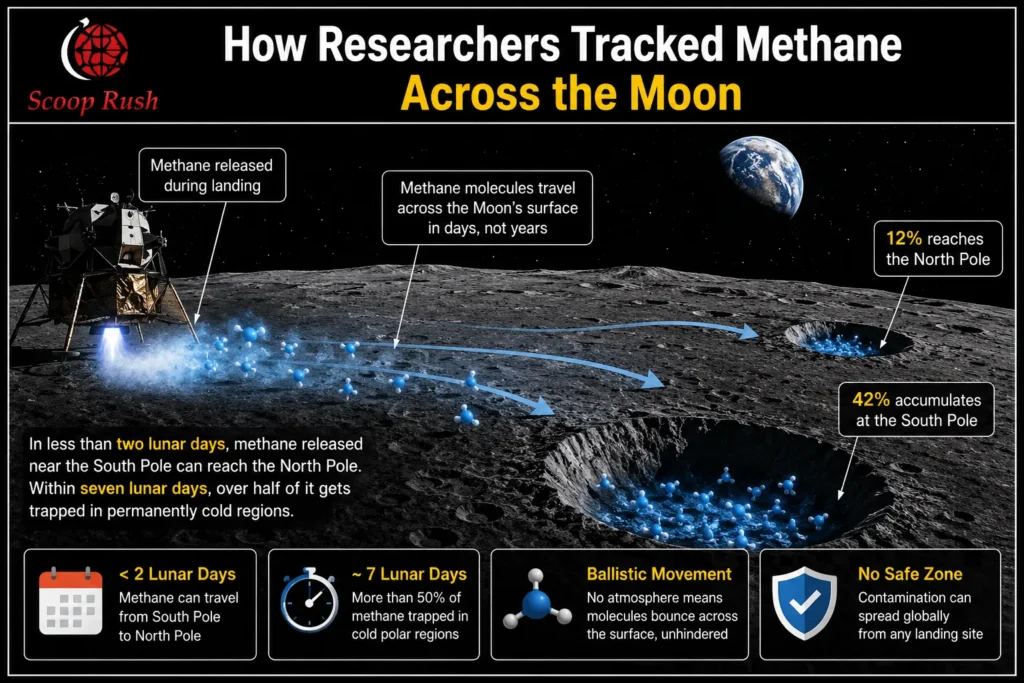
Scientists have discovered that methane released during spacecraft landings can travel from the moon’s South Pole to its North Pole in less than two lunar days.That is a problem, because moon landings contaminate life origins clues hidden in those polar regions, much like scientists recently explored ancient life on Mars. As space agencies and private companies race to send more missions to the moon, this discovery raises an urgent question. Are we about to destroy the very evidence we are trying to study?
This matters to anyone following the new era of lunar exploration, since moon landings contaminate life origins evidence that scientists may never recover. As Artemis, Argonaut, and other missions move forward, understanding this risk now could decide whether scientists ever get a real shot at answering one of humanity’s biggest questions.
Why the Moon’s Poles Matter So Much to Science
Moon landings contaminate life origins clues buried in craters near the moon’s poles, regions that never see sunlight. Scientists call these permanently shadowed regions, and they stay so cold that ice can survive there for billions of years.
That ice is not just frozen water. Researchers believe it may also contain organic molecules delivered by comets and asteroids long ago. These compounds are sometimes called prebiotic molecules, meaning they could be chemical building blocks that eventually combined to form life, in a similar way that a 3.2-billion-year-old enzyme recently helped scientists understand life’s earliest chemistry.
Silvio Sinibaldi, planetary protection officer at the European Space Agency and senior author of the new study, explained why this matters. He noted that scientists already know organic molecules exist elsewhere in the solar system, such as on asteroids. However, researchers still do not fully understand how those molecules evolved into the complex chemistry found in living organisms.
Earth cannot help answer that question anymore. Our planet’s surface constantly changes due to weather, tectonic activity, and erosion, so any ancient evidence of life’s origins has likely been erased. The moon, on the other hand, has stayed largely unchanged for billions of years. As a result, its frozen polar craters could serve as a natural time capsule, preserving material that vanished from Earth long ago.
The Same Cold That Preserves Evidence Also Traps Pollution
Here is the twist. The same extreme cold that preserves ancient evidence is also why moon landings contaminate life origins material hiding in these craters.
When a spacecraft lands, its engines burn propellant and release exhaust gases. Methane is the main organic compound produced during this process. Once released, that methane does not simply disappear. Instead, it can drift across the lunar surface and settle into the coldest spots available, which happen to be the very craters scientists want to study.
How Researchers Tracked Methane Across the Moon
To understand the scale of the problem, Sinibaldi teamed up with Francisca Paiva, a physicist at Instituto Superior Técnico who worked on the study during an internship with the European Space Agency. Together, they built a detailed computer model to simulate methane behavior on the lunar surface.
The team used ESA’s planned Argonaut lander mission as a real-world case study. Argonaut is expected to touch down near the moon’s South Pole, so the researchers modeled how methane released during that kind of landing would spread over time.
This research pushed into new territory. Earlier studies had tracked how water molecules move across the moon, but nobody had modeled how an organic molecule like methane behaves in that environment. The simulations also factored in solar wind and ultraviolet radiation, both of which influence how molecules move once they hit the surface, similar to how researchers monitor space weather using tools like the Swift telescope.
Paiva described just how demanding the process was. She explained that the team modeled thousands of molecules at once, tracking how they moved, collided with each other, and interacted with the lunar surface. Each simulation reportedly took days or even weeks of computing time to complete.
What the Simulations Revealed
The results surprised even the researchers. Methane released near the South Pole reached the North Pole in less than two lunar days, which is roughly equivalent to two months on Earth.
The spread did not stop there. Within seven lunar days, which is close to seven months on Earth, more than half of all the released methane had become trapped in the moon’s permanently cold regions. Roughly 42 percent accumulated at the South Pole, while another 12 percent ended up at the North Pole, far from where the spacecraft originally landed.
Sinibaldi admitted the timeframe caught the team off guard. He pointed out that within a single week, molecules could travel all the way from one pole to the other.
The reason behind this rapid spread comes down to one key fact: the moon barely has an atmosphere. On Earth, air molecules slow things down and cause gases to diffuse gradually. The moon offers no such resistance. Paiva described the methane’s movement as essentially ballistic, meaning the molecules bounce from one location to another, propelled by sunlight and gravity rather than being slowed by air.
This finding led to a sobering conclusion. Paiva explained that the molecules can travel across the entire moon, meaning no landing site is truly safe from contamination. Wherever a spacecraft touches down, some level of pollution will eventually spread elsewhere.
What This Means for Future Lunar Missions
This discovery arrives at a critical moment, as growing evidence shows moon landings contaminate life origins research before scientists even get the chance to study it. Multiple space agencies, private companies, and international partners are actively planning missions to the moon over the next decade. NASA’s Artemis program aims to return astronauts to the lunar surface for the first time since the Apollo era. Meanwhile, countries including China and India continue to expand their own lunar exploration efforts, a scale of environmental impact that echoes concerns raised by climate expert Benjamin Santer about tracking human-driven change.
Given this surge in activity, the researchers stress that understanding contamination now is essential before it becomes a widespread problem. Sinibaldi noted that the goal is not to halt lunar exploration, but to protect the scientific value of the moon while still allowing missions to move forward.
He compared the situation to environmental protections already in place on Earth. Paiva pointed out that laws already exist to prevent contamination in sensitive places like Antarctica and national parks. She believes the moon deserves that same level of protection, given how valuable its untouched regions are to science.
Possible Solutions Going Forward
The good news is that contamination may not be unavoidable if mission planners act early. Paiva suggested that colder landing sites might help keep exhaust molecules more contained, rather than allowing them to spread as freely as warmer regions would.
Sinibaldi also plans to investigate whether exhaust molecules only settle on the surface layer of lunar ice. If deeper ice remains untouched, scientists could still access pristine material by drilling or sampling below the contaminated surface layer.
Both researchers agree that computer models alone are not enough. They want future lunar missions to carry instruments capable of directly measuring contamination levels, which would help confirm whether the simulations match real-world conditions.
Sinibaldi emphasized that this is not just an academic exercise. He stated plainly that humanity is going to the moon regardless, so mission teams need real data now rather than waiting until contamination becomes irreversible.
Paiva also wants to expand the research beyond methane. She hopes to study whether other spacecraft materials, including paint and rubber components, could release additional contaminants that threaten the moon’s scientific value.
Conclusion
This research delivers an important warning: moon landings contaminate life origins clues, threatening evidence humanity may never get back. Spacecraft exhaust, particularly methane, can travel across the entire moon within days due to the lack of atmosphere. That contamination threatens permanently shadowed polar craters, which may hold ancient organic molecules linked to the origins of life on Earth.
The study, led by Francisca Paiva and Silvio Sinibaldi and published in the Journal of Geophysical Research: Planets, shows that no landing site is completely free from risk. However, the researchers believe smarter mission planning, colder landing zones, and onboard monitoring instruments could help protect these irreplaceable scientific archives.
As more countries and companies plan missions to the moon, this research offers a timely reminder. The choices made now could determine whether future scientists ever get the chance to unlock one of the biggest mysteries in science: how life began.
FAQs
1. How does spacecraft exhaust contaminate the moon?
When a lunar lander touches down, its engines release methane gas as a byproduct of burning propellant. Because the moon has almost no atmosphere, this methane travels freely across the surface instead of dispersing, eventually settling into cold, permanently shadowed craters.
2. Why are the moon’s polar craters so important to scientists?
These craters never receive sunlight, so they stay extremely cold. That cold allows ice and organic molecules delivered by ancient comets and asteroids to remain preserved for billions of years, potentially offering clues about how life began on Earth.
3. How fast can methane spread across the moon?
According to the study, methane released near the South Pole can reach the North Pole in less than two lunar days, which is roughly two months on Earth. Within seven lunar days, more than half of the released methane becomes trapped in polar regions.
4. Can lunar contamination be prevented?
Researchers believe contamination can be reduced, though not entirely eliminated. Choosing colder landing sites and developing new monitoring instruments could help limit how far exhaust molecules spread.
5. Which mission was used to study this contamination risk?
Scientists used the European Space Agency’s planned Argonaut lander mission as a case study, modeling how methane exhaust would behave following a landing near the moon’s South Pole.
Digestive problems can make even your favorite meals feel uncomfortable. Whether you’re recovering from stomach surgery, dealing with acid reflux, recovering from food poisoning, or managing symptoms of ulcers or cancer treatment, choosing the right foods can make a big difference. A bland diet is designed to give your digestive system a chance to rest while still providing the nutrients your body needs.
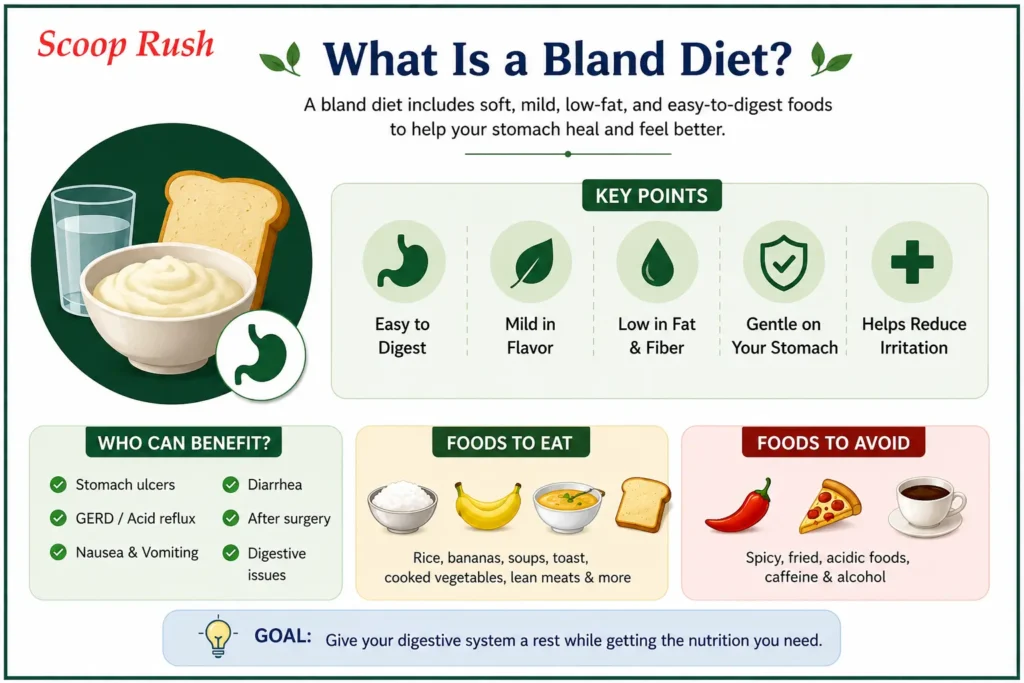
Unlike many restrictive diets, a bland diet isn’t meant for weight loss. Instead, it’s a temporary eating plan that focuses on soft, low-fat, low-fiber, and mildly seasoned foods that are easy to digest. This guide explains everything you need to know about a bland diet, including its benefits, foods to eat, foods to avoid, meal ideas, and helpful tips for recovery.
What Is a Bland Diet?
A bland diet is an eating plan made up of foods that are gentle on the stomach and digestive tract. The foods are generally:
Soft and easy to chew
Low in fat
Low in fiber
Mild in flavor
Not spicy or heavily seasoned
Easy to digest
The goal is to reduce irritation in the stomach and intestines while helping relieve symptoms such as heartburn, acid reflux (GERD), stomach ulcers, gastritis, nausea, vomiting, diarrhea, indigestion, and upset stomach.
Doctors may also recommend a bland diet after stomach or intestinal surgery or during recovery from digestive illnesses.
Is a Bland Diet the Same as the BRAT Diet?
Not exactly.
The BRAT diet stands for:
Bananas
Rice
Applesauce
Toast
It is a very limited version of a bland diet and is often used for short-term treatment of diarrhea or stomach viruses.
A bland diet includes these foods but also allows many other nutritious options such as lean meats, eggs, potatoes, yogurt, cooked vegetables, cereals, and soups, making it more balanced for longer use.
It’s also worth knowing how a bland diet differs from a clear liquid diet, which is even more restrictive and typically used right before or after surgery, or a low-residue diet, which limits fiber more strictly for conditions like IBD flare-ups.
Who May Benefit From a Bland Diet?
A healthcare provider may recommend a bland diet if you have:
GERD (Acid Reflux) — Bland foods help reduce stomach acid production and lower the chance of acid reflux.
Peptic Ulcers — Mild foods are less likely to irritate the stomach lining while ulcers heal.
Gastritis — People with inflammation of the stomach lining often experience less discomfort after eating bland meals.
Nausea and Vomiting — Soft, plain foods are easier to tolerate when the stomach feels unsettled.
Diarrhea — Low-fiber foods help reduce bowel movements and allow the digestive tract to recover.
After Surgery — Patients recovering from stomach or intestinal surgery often begin with a bland diet before returning to regular foods.
Cancer Treatment — Chemotherapy and radiation can cause nausea, taste changes, diarrhea, and mouth soreness. A bland diet can make eating more comfortable and help maintain nutrition. Early awareness matters too — knowing common lung cancer symptoms can help with earlier diagnosis and treatment planning.
Benefits of a Bland Diet
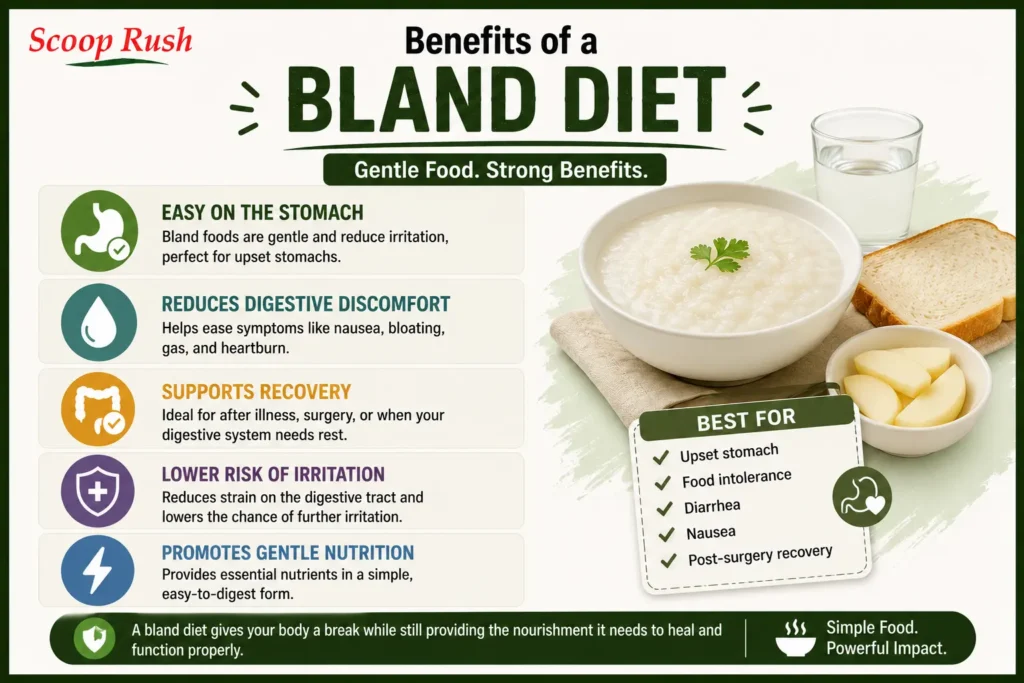
Helps Reduce Stomach Irritation — Avoiding spicy, acidic, and greasy foods allows the digestive system time to heal.
Improves Digestion — Soft foods are easier to digest and place less stress on the stomach and intestines.
Relieves Digestive Symptoms — Many people experience fewer symptoms such as heartburn, acid reflux, stomach pain, bloating, nausea, vomiting, and diarrhea.
Supports Recovery — After surgery or illness, a bland diet provides nourishment while reducing digestive discomfort.
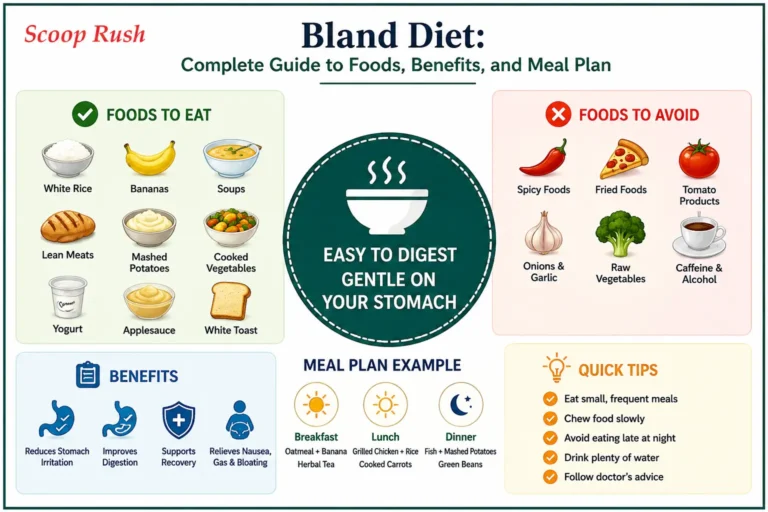
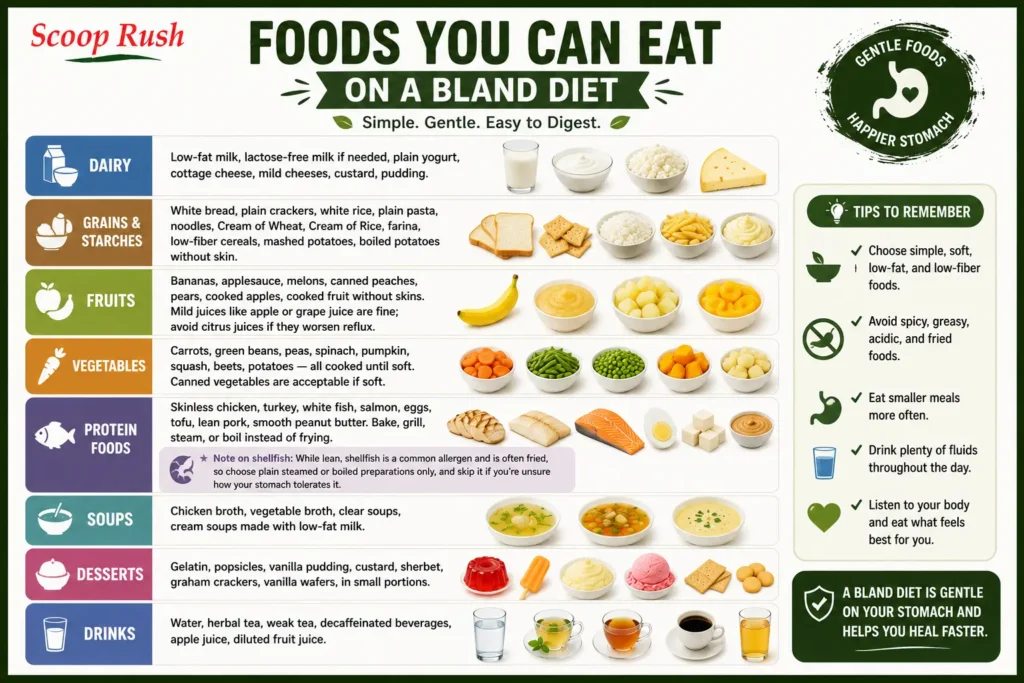
Grains and Starches — White bread, plain crackers, white rice, plain pasta, noodles, Cream of Wheat, Cream of Rice, farina, low-fiber cereals, mashed potatoes, boiled potatoes without skin.
Fruits — Bananas, applesauce, melons, canned peaches, pears, cooked apples, cooked fruit without skins. Mild juices like apple or grape juice are fine; avoid citrus juices if they worsen reflux.
Vegetables — Carrots, green beans, peas, spinach, pumpkin, squash, beets, potatoes — all cooked until soft. Canned vegetables are acceptable if soft.
Protein Foods — Skinless chicken, turkey, white fish, salmon, eggs, tofu, lean pork, smooth peanut butter. Bake, grill, steam, or boil instead of frying. A note on shellfish: while lean, shellfish is a common allergen and is often fried, so choose plain steamed or boiled preparations only, and skip it if you’re unsure how your stomach tolerates it.
Soups — Chicken broth, vegetable broth, clear soups, cream soups made with low-fat milk.
Desserts — Gelatin, popsicles, vanilla pudding, custard, sherbet, graham crackers, vanilla wafers, in small portions.
Drinks — Water, herbal tea, weak tea, decaffeinated beverages, apple juice, diluted fruit juice.
Foods to Avoid on a Bland Diet
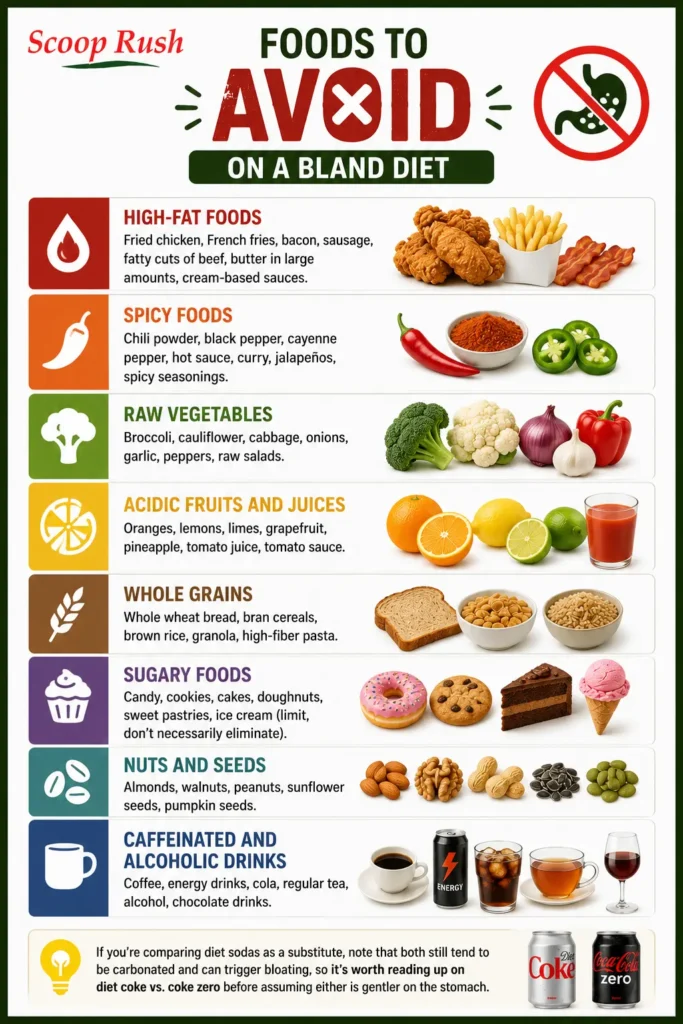
High-Fat Foods — Fried chicken, French fries, bacon, sausage, fatty cuts of beef, butter in large amounts, cream-based sauces.
Spicy Foods — Chili powder, black pepper, cayenne pepper, hot sauce, curry, jalapeños, spicy seasonings.
Raw Vegetables — Broccoli, cauliflower, cabbage, onions, garlic, peppers, raw salads.
Caffeinated and Alcoholic Drinks — Coffee, energy drinks, cola, regular tea, alcohol, chocolate drinks. If you’re comparing diet sodas as a substitute, note that both still tend to be carbonated and can trigger bloating, so it’s worth reading up on diet coke vs. coke zero before assuming either is gentler on the stomach.
Sample 3-Day Bland Diet Meal Plan
Day 1
Breakfast: Cream of Wheat, banana, low-fat milk
Snack: Applesauce
Lunch: Grilled chicken breast, white rice, cooked carrots
Snack: Graham crackers
Dinner: Baked white fish, mashed potatoes, cooked green beans
Dessert: Vanilla pudding
Day 2
Breakfast: Scrambled eggs, white toast, herbal tea
Snack: Plain yogurt
Lunch: Turkey sandwich on white bread, applesauce
Snack: Vanilla wafers
Dinner: Baked chicken, plain pasta, cooked squash
Day 3
Breakfast: Oatmeal (if tolerated), banana
Snack: Cottage cheese
Lunch: Baked fish, white rice, spinach
Snack: Gelatin
Dinner: Turkey, mashed potatoes, cooked carrots
Simple Bland Diet Recipe Ideas
Chicken and Rice Soup — Chicken breast, white rice, carrots, low-sodium chicken broth. Cook until the chicken is tender and vegetables are soft.
Mashed Potato Bowl — Top mashed potatoes with grilled chicken and cooked green beans.
Some medicines can irritate the stomach, especially if you have ulcers or gastritis. Talk with your healthcare provider before using aspirin, ibuprofen (Advil, Motrin), or naproxen (Aleve). These belong to a group called NSAIDs, which may increase stomach irritation or delay ulcer healing. Never stop prescribed medication without medical advice.
Common Challenges on a Bland Diet
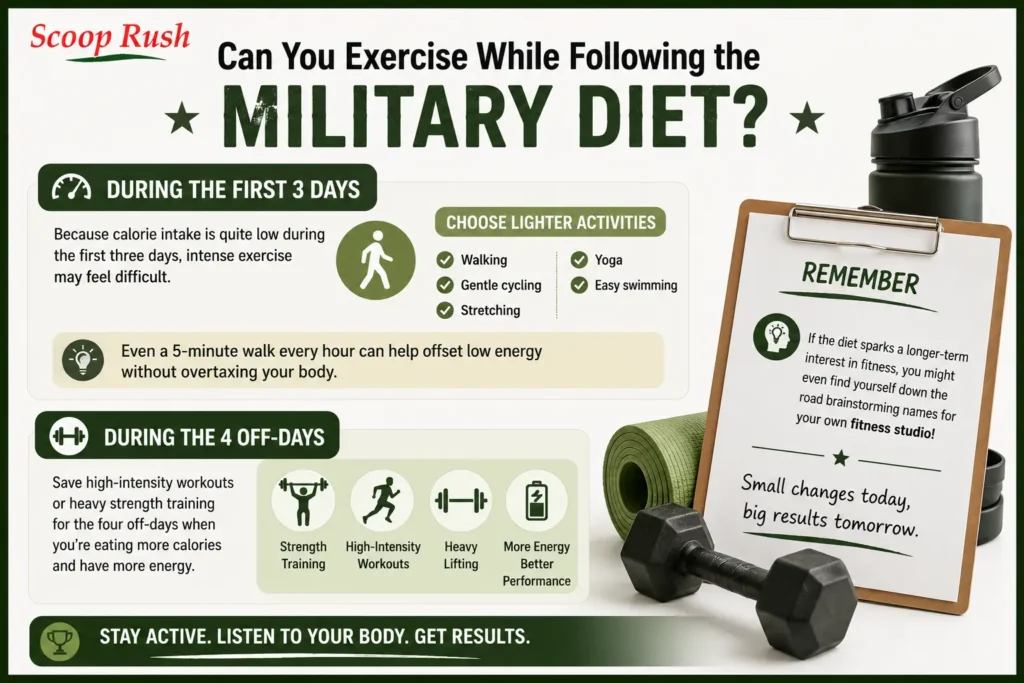
Constipation — Because the diet is lower in fiber, constipation may occur. Drink plenty of water, stay active if possible — even a 5-minute walk every hour can help keep digestion moving — and add fiber-rich foods back gradually once approved by your provider. Avoid reaching for fiber supplements on your own, since taking too many vitamins or supplements can cause its own digestive issues.
Boredom — Eating the same foods daily can feel repetitive. Rotate lean proteins, try different cooked vegetables, and use mild herbs like parsley or basil for flavor.
Reduced Appetite — Eat five or six small meals throughout the day, choose nutrient-dense foods, and avoid skipping meals.
Tips for Success on a Bland Diet
Eat small meals every 3 to 4 hours
Chew food slowly and thoroughly
Avoid overeating
Drink fluids between meals instead of with meals if nausea is a problem
Stay upright for at least two hours after eating
Avoid eating late at night
Stop smoking if you smoke
Introduce new foods one at a time as symptoms improve
Keep a food diary to identify foods that trigger symptoms
Bland Diet Grocery Shopping List
Having a ready shopping list makes the bland diet much easier to stick to, especially in the first few days when appetite and energy are low.
Grains: white bread, plain crackers, white rice, plain pasta, Cream of Wheat, low-fiber cereal
Pantry: low-sodium broth, gelatin, graham crackers, vanilla wafers
Drinks: water, herbal tea, apple juice
Keeping these staples on hand reduces the temptation to reach for something harder to digest when hunger strikes.
Hydration on a Bland Diet
Staying hydrated is just as important as choosing the right foods, particularly if diarrhea or vomiting is part of the picture. Sip water throughout the day rather than drinking large amounts at once, which can overwhelm a sensitive stomach. Oral rehydration solutions can help replace lost electrolytes after significant fluid loss. Avoid very cold or very hot drinks if they seem to trigger discomfort, and space fluids between meals rather than during them if nausea is an issue.
Bland Diet for Children and Older Adults
Children and older adults often need extra care on a bland diet because they’re more vulnerable to dehydration and nutrient gaps. For kids, offer small, frequent portions of familiar foods like plain rice, toast, and bananas, and involve a pediatrician if symptoms last more than a day or two. Older adults may already be managing reduced appetite or chewing difficulties, so soft-cooked vegetables, scrambled eggs, and smooth soups are often easier to manage than solid pieces of meat or raw produce. In both groups, weight loss or ongoing poor intake should prompt a call to a healthcare provider rather than waiting it out.
When to See a Doctor
A bland diet is meant to support short-term recovery, not replace medical care. Contact a healthcare provider if you experience:
Severe or worsening abdominal pain
Vomiting that lasts more than 24 hours
Blood in vomit or stool
Signs of dehydration, such as dizziness or very dark urine
Unintentional weight loss
Symptoms that don’t improve after a few days on the diet
These can signal something that needs more than dietary changes alone.
How Long Should You Stay on a Bland Diet?
A bland diet is usually recommended for a short period while your digestive system heals. The length of time depends on the reason you’re following it.
Your healthcare provider may advise returning to a regular diet once symptoms improve. Foods should be reintroduced gradually so you can identify anything that causes discomfort. Because the diet limits certain nutrients and fiber, it is not intended as a long-term eating plan unless directed by a healthcare professional.
Conclusion
A bland diet is a temporary eating plan that helps reduce irritation in the digestive tract by focusing on soft, low-fat, low-fiber, and mildly seasoned foods. It can be especially helpful for people recovering from stomach surgery, managing acid reflux, peptic ulcers, gastritis, nausea, vomiting, diarrhea, or cancer treatment.
Choosing gentle foods such as bananas, rice, cooked vegetables, lean proteins, yogurt, and white rice can help ease symptoms while giving your digestive system time to heal. At the same time, avoiding spicy foods, fried meals, alcohol, caffeine, and high-fiber foods may reduce discomfort and promote recovery.
Since everyone’s digestive system is different, it’s important to follow your healthcare provider’s advice and gradually return to your regular diet as symptoms improve.
Once you’re back to eating normally, building healthy habits in your 20s and 30s can help prevent future digestive flare-ups. And if you’re curious how a bland diet compares to other short-term eating plans, our guide to the military diet breaks down a very different approach built around weight loss rather than digestive recovery.
This article is for informational purposes only and is not a substitute for professional medical advice. Always consult a doctor or registered dietitian for guidance specific to your condition.
FAQs
Can I eat eggs on a bland diet?
Yes. Boiled, poached, or scrambled eggs are excellent sources of protein and are usually well tolerated.
Is peanut butter allowed?
Yes. Smooth peanut butter is generally recommended, while crunchy peanut butter should be avoided.
Can I drink coffee?
No. Regular coffee contains caffeine, which may irritate the stomach and worsen acid reflux. This is especially true if you tend to drink coffee on an empty stomach, which can intensify irritation.
Can I eat cheese?
Yes, but choose mild, low-fat cheeses such as cottage cheese. Avoid strong or highly seasoned cheeses.
Is oatmeal allowed?
Some people tolerate oatmeal well, while others may need to limit it because of its fiber content. Ask your healthcare provider if you’re unsure.
Can I lose weight on a bland diet?
Weight loss is not the goal of a bland diet. It is designed to reduce digestive irritation and support healing.
Corbin Mims CorbinGPT jokes have taken over social media, and honestly, he finds them just as funny as everyone else. After his exit from Love Island USA season 8, fans flooded social media comparing the 22-year-old Miami native to artificial intelligence. Now, in exclusive interviews, Corbin Mims is finally addressing the viral nickname head-on, and his reaction might surprise you. Love Island USA .
For anyone following Love Island USA season 8, the Corbin Mims CorbinGPT story offers a rare, honest look at how reality stars process internet fame the moment they leave the villa. His candid comments also shed light on his connection with Parmida Keshani and the tough decision that made him a fan favorite.
How the “CorbinGPT” Nickname Started
The Corbin Mims CorbinGPT comparisons didn’t actually begin online. According to Corbin, his fellow islanders started the joke the moment he walked in as a bombshell.
“They’re like, ‘Dude, you walked in like you’re AI,'” Corbin recalled to People. His castmates said his slow, expressionless entrance looked almost robotic. They joked that he looked like he’d been “created in the lab” and dropped straight into the villa from Mount Olympus.
His sleeping habits added even more fuel to the joke. Corbin barely moves at night and sleeps facing straight up, a quirk his co-stars compared to a device “recharging.” Soon, the whole cast was calling him AI, long before viewers online ever coined the term CorbinGPT.
Corbin’s Honest Reaction to the Memes
Once Corbin got his phone back after leaving the show, he realized just how far the Corbin Mims CorbinGPT joke had traveled. Speaking to E! News, he admitted the memes genuinely caught him off guard.
“When I looked at those memes, I’m like, ‘Holy s–t,'” Corbin said. He explained that he never meant to come across as robotic. He simply forgot the cameras were rolling and acted like himself, tired moments included.
Rather than feeling embarrassed, Corbin embraced the humor. He told People he “can’t help but just laugh” at the comparisons, adding that he often forgets he’s being filmed since the villa becomes his everyday life while the show is happening.
Corbin’s Deep Connection with Parmida Keshani
Beyond the memes, Corbin’s time in Fiji centered heavily on his bond with Parmida Keshani, whom he coupled up with during Casa Amor. He credits her with helping him through one of the toughest calls of his season, a decision that echoes how other reality stars, like Olivia Attwood, have leaned on partners during difficult moments on camera.
Corbin and Parmida were the only couple to vote out Melanie Moreno and Sincere Rhea as the least compatible pair. As a result, Corbin used the moment to confront Sincere directly about how he treated Melanie.
“I set my friendship aside and said, ‘OK, let me listen to Parmida speak the pros and cons,'” Corbin explained. He credited her clear thinking for helping him see the situation accurately once he stepped back from the emotional pressure of the villa.
Corbin also pushed back on the idea that he and Parmida lacked substance. Even though fans mostly saw their physical chemistry on screen, he insists their bond ran much deeper.
“We had a lot of late-night conversations,” Corbin told People. He said the editing made their relationship look surface-level, when in reality they shared meaningful talks throughout their time together.
Furthermore, Corbin cleared up rumors about how long he and Parmida knew each other before the show. He confirmed they had briefly followed each other on Instagram and exchanged a few messages, but only days before he entered as a bombshell. Therefore, claims online that they’d been talking for a year simply aren’t true.
Why Corbin Mims Left the Villa
Corbin entered Love Island USA season 8 on Day 5 as a bombshell. He first coupled up with Kenzie before America’s vote separated them, which led him to recouple with Melanie. He later reunited with Kenzie, but during Casa Amor, he returned to the villa with Parmida instead.
On the July 3 episode, Corbin and Parmida were dumped from the villa after being voted one of the two least compatible couples. Despite the elimination, Corbin says leaving the show brought a real sense of relief.
“It’s a relief to come out of the villa,” he told People, reflecting on the intensity of the experience and the clarity that came once he had some distance from the cameras.
What This Means for Love Island USA Fans
Corbin’s willingness to address the CorbinGPT jokes so openly has resonated with fans who appreciated his self-aware sense of humor. Additionally, his honesty about his relationship with Parmida gives viewers a fuller picture beyond what made it into the episodes.
As Love Island USA season 8 heads toward its finale, Corbin’s arc stands out as one of the more memorable storylines of the season, much like how other reality stars have navigated public scrutiny after leaving their shows, similar to the attention Danger Ehren has faced. His mix of humor, honesty, and vulnerability has kept him relevant in conversations, even after his early exit.
Conclusion
Corbin Mims turned a viral AI joke into one of the most talked-about storylines of Love Island USA season 8. Instead of distancing himself from the CorbinGPT nickname, he leaned into the humor while using interviews to set the record straight about his genuine connection with Parmida Keshani. His openness about the elimination, the meme culture around him, and the depth of his villa romance shows a side of reality TV stardom fans rarely get to see this candidly. As the season wraps up, Corbin’s story is a reminder that staying authentic, even when it looks a little robotic, can still win people over.
FAQs
Why is Corbin Mims called CorbinGPT?
Fans and fellow islanders nicknamed him CorbinGPT because of his slow, expressionless entrance into the villa and his unusual sleeping habits, which made him seem robotic or AI-like.
Why did Corbin Mims leave Love Island USA?
Corbin and his partner Parmida Keshani were eliminated on the July 3 episode after being voted one of the two least compatible couples in the villa.
Are Corbin Mims and Parmida Keshani still together?
Corbin has expressed strong confidence in his connection with Parmida, describing deep conversations and a bond that extended beyond what viewers saw on screen.
Did Corbin Mims know Parmida Keshani before Love Island?
Corbin clarified that he and Parmida had only briefly followed each other on Instagram and exchanged messages days before he entered the villa, denying rumors that they had a prior year-long relationship.
Why did Corbin Mims vote against Sincere and Melanie?
Corbin and Parmida voted them as the least compatible couple after Corbin learned new information during movie night, prompting him to confront Sincere about how he treated Melanie.
Losing weight quickly is a goal many people share, and it’s easy to see why the Military Diet has attracted so much attention. Social media, blogs, and online forums often claim this three-day eating plan can help people lose up to 10 pounds in a single week. The promise of rapid results with simple, inexpensive foods makes it appealing to anyone looking for a quick solution.
Despite its popularity, the Military Diet is surrounded by myths and misconceptions. It isn’t connected to any military organization, nor is there scientific evidence proving that its specific food combinations have special fat-burning properties. Still, many people try it because it is structured, easy to follow, and requires little meal preparation.
Before starting any restrictive eating plan, it’s important to understand how it works, what the research says, and whether it is a safe choice for your health. In this guide, we’ll explain everything you need to know about the Military Diet, including its meal plan, benefits, risks, substitutions, and practical tips for achieving healthy, sustainable weight loss. If your bigger goal is building better habits overall, our guide to healthy habits in your 20s and 30s is a good next stop after you finish this one.
What Is the Military Diet?
The Military Diet is a short-term eating plan built around two phases: three days of strict calorie restriction, followed by four days of more moderate, flexible eating. It’s designed to be repeated in weekly cycles, though most nutrition experts recommend against following it long-term.
Unlike many commercial weight-loss programs, the Military Diet doesn’t require supplements, expensive meal replacements, or special products. Instead, it relies on everyday grocery items such as eggs, tuna, toast, bananas, peanut butter, vegetables, crackers, and lean meat.
Although the diet is commonly called the “Military Diet,” it has no known connection with any military branch or government organization. Nutrition experts generally consider it another form of a very low-calorie diet intended for short-term use.
How Does the Military Diet Work?
The basic principle behind the Military Diet is simple: reducing calorie intake creates a calorie deficit. When your body uses more calories than you consume, it begins using stored energy, leading to weight loss.
During the first three days, calorie intake usually ranges between:
Day 1: Approximately 1,400 calories
Day 2: Approximately 1,200 calories
Day 3: Approximately 1,100 calories
These calories come from carefully portioned meals with very few snacks.
For the remaining four days, followers are encouraged to continue eating moderately, generally keeping daily intake below 1,500 calories while choosing healthier foods.
Many websites claim certain food combinations “boost metabolism” or “burn fat.” However, there is currently no strong scientific evidence supporting these claims. Weight loss on the Military Diet primarily occurs because total calorie intake is significantly reduced.
Does the Military Diet Really Help You Lose Weight?
Many people notice weight loss during the first week of the Military Diet. However, it’s important to understand what that weight actually represents.
When calorie intake drops suddenly, the body uses stored glycogen for energy. Glycogen holds water, so using it causes a noticeable decrease in water weight. This often explains why the scale changes quickly during the first few days.
Some fat loss may also occur because of the calorie deficit, but experts caution that losing 10 pounds in one week is unlikely for most people and is generally not considered a healthy or sustainable rate of weight loss.
Health organizations typically recommend aiming to lose about 1 to 2 pounds per week through balanced eating and regular physical activity.
Who Should Consider the Military Diet?
Some adults may choose the Military Diet as a short-term approach if they want a simple eating plan for a few days. It may appeal to people who:
Prefer structured meal plans
Want inexpensive ingredients
Don’t enjoy counting calories throughout the day
Need a temporary eating schedule
However, it is not suitable for everyone. People managing chronic conditions should be especially cautious — for example, research into treatments like teplizumab for type 1 diabetes highlights just how carefully blood sugar and nutrition need to be managed in that population, which is one reason people with diabetes are advised to steer clear of very low-calorie plans like this one.
The Complete 3-Day Military Diet Meal Plan
Day 1
Breakfast
Half a grapefruit
One slice of whole-wheat toast
Two tablespoons of peanut butter
One cup of black coffee or plain tea
This breakfast combines fruit, healthy fats, and carbohydrates while keeping calories relatively low.
Lunch
Half a cup of canned tuna
One slice of whole-wheat toast
Black coffee or plain tea
Tuna provides protein that may help keep you feeling full until dinner.
Dinner
Three ounces of lean meat
One cup of green beans
Half a banana
One small apple
One cup of vanilla ice cream
Although ice cream surprises many people, it fits within the calorie target for the day.
Day 2
Breakfast
One egg
One slice of whole-wheat toast
Half a banana
Eggs provide high-quality protein and several important vitamins and minerals.
Lunch
One cup of cottage cheese
One hard-boiled egg
Five saltine crackers
Dinner
Two hot dogs without buns
One cup of broccoli
Half a cup of carrots
Half a banana
Half a cup of vanilla ice cream
Broccoli and carrots contribute fiber, vitamins, and minerals, while the hot dogs add protein — though they are also high in sodium.
Day 3
Breakfast
Five saltine crackers
One ounce of cheddar cheese
One small apple
This meal is simple and easy to prepare while staying within the day’s calorie limit.
Lunch
One boiled or cooked egg
One slice of whole-wheat toast
A light lunch helps keep the day’s calorie intake low.
Dinner
One cup of canned tuna
Half a banana
One cup of vanilla ice cream
This final dinner completes the three-day meal schedule before transitioning to more flexible eating.
Why Are These Foods Included?
The Military Diet often claims these foods work together because of their “chemical compatibility.” According to supporters, combining certain foods may increase metabolism or encourage fat burning. There’s no credible research backing that idea, and it’s worth being just as skeptical here as you would be of any product or plan that promises a shortcut — the same caution applies to over-relying on pills and powders, since taking too many vitamins and supplements carries its own risks and won’t substitute for real food.
Instead, these foods likely appear because they:
Are inexpensive
Are widely available
Require minimal cooking
Help keep total calories low
Provide moderate amounts of protein
The overall calorie deficit not any special food combination is the most likely explanation for any weight loss.
Can You Drink Coffee?
Yes. Black coffee is generally allowed during the three-day phase. Many followers also drink plain tea without sugar or cream. If you rely on your morning cup before eating anything, it’s worth knowing what drinking coffee on an empty stomach can do to some people’s digestion, especially on days when calories are already tightly restricted.
Water is strongly encouraged throughout the diet because staying hydrated supports overall health and may help reduce feelings of hunger. Artificial sweeteners are generally discouraged, although some versions of the diet allow small amounts of stevia.
Foods to Avoid During the Three Days
To stay within the intended calorie limits, it’s best to avoid:
Sugary drinks
Alcohol
Fruit juice
Fried foods
Fast food
Candy
Chips
Pastries
Large desserts
Sweetened coffee drinks
High-calorie sauces and dressings
If you’re trying to cut back on soda as part of this, it helps to understand the actual differences between diet sodas our breakdown of Diet Coke vs. Coke Zero explains what’s really in each can. Adding extra snacks or larger portions may reduce the calorie deficit and affect weight-loss results.
Military Diet Shopping List
One reason the Military Diet remains popular is that it uses common grocery items that are affordable and easy to find. Preparing your shopping list before starting the diet can make meal planning much easier.
Protein Foods: Eggs, canned tuna, lean beef or chicken, hot dogs (preferably lower-sodium), cottage cheese, cheddar cheese, peanut butter
Fruits: Grapefruit, bananas, apples
Vegetables: Green beans, broccoli, carrots
Grains and Bread: Whole-wheat bread, saltine crackers
Dairy: Vanilla ice cream
Drinks: Black coffee, black tea, herbal tea, plenty of water
If possible, choose low-sodium canned foods, natural peanut butter with no added sugar, and whole-grain bread for slightly better nutrition.
The 4-Day Off Plan
The Military Diet is not meant to end after the first three days. The next four days are just as important because they help you maintain your calorie deficit while eating a more balanced variety of foods.
Most versions of the diet recommend keeping your daily intake around 1,500 calories during these four days. Instead of returning to unhealthy eating habits, focus on nutritious meals that include lean protein, whole grains, fruits, vegetables, and healthy fats.
Sample 4-Day Meal Plan
Breakfast Options (choose one each morning)
Perfect Yogurt: 1 cup plain Greek yogurt, mixed berries, small serving of granola, sliced almonds
Tuna Pita: Whole-wheat pita filled with tuna, lettuce, and beans
Chicken Salad: Grilled chicken over mixed greens with cucumbers, tomatoes, carrots, and olive oil dressing
Lentil Soup: A bowl of lentil soup served with whole-grain bread
Turkey Sandwich: Whole-grain bread with turkey, Swiss cheese, lettuce, tomato, and mustard
Dinner Options
Grilled chicken with brown rice and steamed vegetables
Whole-wheat shrimp pasta with garlic, olive oil, basil, and zucchini
Homemade black bean burger on a whole-grain bun with fresh salad
Baked white fish with herbs, broccoli, carrots, and roasted potatoes
Healthy Snacks (choose two each day)
Apple with almonds, Greek yogurt with berries, carrot sticks with hummus, cottage cheese and melon, air-popped popcorn, banana with peanut butter, pistachios, string cheese and whole-grain crackers.
These snacks provide protein and fiber, helping control hunger between meals.
Military Diet Food Substitutions
Many people have dietary restrictions or food allergies. Fortunately, most foods in the Military Diet can be replaced with nutritionally similar alternatives.
Vegetarians can successfully adapt the Military Diet by replacing meat and fish with plant-based proteins. Good choices include eggs, cottage cheese, Greek yogurt, lentils, black beans, chickpeas, tofu, tempeh, and plant-based burgers. The goal is to maintain a similar calorie intake while ensuring enough protein.
Vegan Military Diet
Vegans can also modify the plan using plant-based foods. Suitable replacements include tofu, tempeh, edamame, soy yogurt, plant milk, nut butters, lentils, beans, and vegan cheese alternatives. Because vegan diets eliminate dairy and eggs, it may take more planning to meet protein needs while staying within calorie limits.
Does the Military Diet Really Boost Metabolism?
Supporters often claim the Military Diet speeds up metabolism because of specific food combinations. Current scientific evidence does not support this claim.
Your metabolism is influenced by factors such as age, sex, muscle mass, genetics, physical activity, and overall calorie intake. There is no reliable research showing that grapefruit, tuna, peanut butter, ice cream, or other prescribed foods create a unique metabolic advantage when eaten together.
Most experts agree that weight loss occurs because the diet significantly reduces calorie intake rather than because of any special metabolic effect.
What Does the Research Say?
Researchers have studied low-calorie diets for many years. Evidence shows that reducing calorie intake generally leads to weight loss in the short term. However, there are no high-quality clinical trials proving that the Military Diet itself is superior to other calorie-controlled eating plans.
Experts also point out that very rapid weight loss often includes a significant loss of water weight and lean muscle, especially if protein intake and strength training are inadequate. This is a similar concern raised around some prescription weight-loss drugs — for instance, the conversation around GLP-1 medications and muscle loss underscores why preserving lean mass matters no matter which method you use to lose weight.
Another concern is that restrictive diets can be difficult to maintain, making it more likely that people regain the weight they initially lose.
Potential Benefits of the Military Diet
Although the Military Diet has limitations, it does offer some advantages.
Easy to Follow — The menu is simple and requires little planning.
Budget-Friendly — The ingredients are inexpensive and widely available.
No Special Products — You don’t need shakes, supplements, or meal replacements.
Short-Term Structure — Some people find a three-day plan easier to commit to than long-term dieting.
High in Protein — Meals include eggs, tuna, peanut butter, meat, and dairy products that can help improve satiety.
Portion Awareness — The diet teaches people to recognize appropriate serving sizes.
Can You Exercise While Following the Military Diet?
Because calorie intake is quite low during the first three days, intense exercise may feel difficult. If you’re following the Military Diet, consider lighter activities such as walking, gentle cycling, stretching, yoga, or easy swimming. Even something as small as taking a 5-minute walk every hour can help offset the low energy of these days without overtaxing your body.
Save high-intensity workouts or heavy strength training for the four off-days when you’re eating more calories and have more energy. If the diet ends up sparking a longer-term interest in fitness, you might even find yourself down the road brainstorming names for your own fitness studio plenty of people who start with small changes like this end up going much further with it.
Tips for Better Results
If you decide to try the Military Diet, these habits may help support healthier weight management:
Drink plenty of water throughout the day.
Avoid sugary beverages and alcohol.
Get at least seven to eight hours of sleep each night.
Include vegetables whenever possible.
Choose lower-sodium foods.
Stay physically active with moderate exercise.
Avoid overeating during the four off-days.
Focus on long-term healthy eating habits rather than repeated crash dieting.
These practices can help improve overall health and make it easier to maintain any weight you lose. Small daily rituals matter too even something as routine as how often you should brush your hair is part of the broader self-care picture that tends to improve when people feel better about their health overall.
Risks and Side Effects of the Military Diet
Although the Military Diet may lead to short-term weight loss, it is not without risks. Since the plan significantly reduces calorie intake during the first three days, some people may experience unwanted side effects.
1. Hunger and Low Energy
One of the most common complaints is constant hunger. Consuming only 1,100–1,400 calories per day may not provide enough energy, especially for active individuals. Some people may also notice fatigue, headaches, dizziness, or irritability during the diet.
Tip: Sip water or plain herbal tea between meals, and try to rest rather than push through intense activity on the lowest-calorie days.
2. Limited Nutrient Intake
The Military Diet includes some fruits, vegetables, and protein-rich foods, but it lacks variety. Over time, repeatedly following this plan may result in lower intake of important nutrients such as fiber, vitamins, and minerals. A balanced eating pattern usually includes a wider selection of fruits, vegetables, whole grains, legumes, nuts, seeds, and healthy fats.
3. High Sodium Content
Foods such as canned tuna, saltine crackers, hot dogs, and processed cheese can contain high amounts of sodium. Eating too much sodium may contribute to water retention and may not be suitable for people with high blood pressure or certain kidney conditions. Choosing lower-sodium versions of these foods can be a healthier option.
4. Low Fiber Intake
Fiber supports digestion, and the Military Diet’s reliance on crackers, processed meat, and canned fish means fiber intake tends to run low. Low fiber intake can contribute to constipation and digestive discomfort. Interestingly, some medically supervised eating plans go in the opposite direction — a low-residue diet is intentionally low in fiber for specific digestive conditions, which is a good reminder that “low fiber” isn’t automatically bad, but it shouldn’t happen by accident either.
5. Muscle Loss
When calorie intake drops sharply, the body may use both fat and muscle for energy. Losing muscle mass can reduce strength and may lower your resting metabolic rate over time. Including enough protein and performing resistance exercises after completing the diet may help preserve lean muscle.
6. Weight Regain
Many people lose weight quickly during restrictive diets, but maintaining those results can be difficult. Returning to previous eating habits right after the diet ends often leads to the weight coming back just as quickly as it left, which is why the four off-days and the habits that follow them matter more than the three restrictive days themselves.
Who Should Avoid the Military Diet?
The Military Diet is not suitable for everyone. You should consult a healthcare professional before trying it if you:
Have diabetes
Have kidney disease
Have heart disease
Have liver disease
Are pregnant or breastfeeding
Are under 18 years old
Have a history of eating disorders
Require a medically prescribed diet
Take medications that need regular food intake
People with chronic health conditions should never begin a restrictive diet without medical advice. Staying on top of preventive care in general from routine screenings to knowing the early symptoms of lung cancer or the protective role of the HPV vaccine against cervical cancer matters just as much as any short-term diet decision.
Common Myths About the Military Diet
Myth 1: It Was Created by the Military Despite its name, there is no evidence that the Military Diet was developed by or for any military organization.
Myth 2: Special Food Combinations Burn Fat There is no reliable scientific evidence that eating grapefruit with peanut butter or ice cream with bananas creates a unique fat-burning effect. Weight loss occurs primarily because of reduced calorie intake.
Myth 3: Everyone Will Lose 10 Pounds Weight loss varies from person to person. Factors that influence results include starting weight, age, sex, activity level, metabolism, overall calorie intake, and fluid balance. While some people may see significant changes on the scale during the first week, much of that initial loss may be water weight rather than body fat.
Tips for Long-Term Weight Loss Success
Whether or not you try the Military Diet, long-term success usually comes from building sustainable habits.
Focus on Balanced Meals — Include lean protein, whole grains, fruits, vegetables, and healthy fats.
Stay Active — Aim for regular physical activity, including both aerobic exercise and strength training.
Drink Plenty of Water — Hydration supports overall health and may help manage appetite. This becomes especially important during warmer months — our home cooling tips for hot weather and general heat dome safety guidance are worth a look if you’re trying to stay active and hydrated through a heatwave, and older adults in particular should review the heat and humidity risks for seniors before exercising outdoors.
Sleep Well — Adults generally benefit from 7–9 hours of quality sleep each night. Poor sleep may affect hunger hormones and make healthy eating more difficult.
Monitor Portions — Even healthy foods can contribute to weight gain if eaten in excessive amounts. Paying attention to portion sizes can help maintain a calorie balance.
Set Realistic Goals — Healthy weight loss is usually gradual. Losing about 1–2 pounds per week is considered a safe and sustainable target for many adults. Sustainable health goals tend to go hand in hand with a sense of purpose elsewhere in life too — something reflected in the growing trend of Gen Z choosing jobs with purpose and better pay rather than burning out chasing quick fixes of any kind.
FAQs
Can I repeat the Military Diet every week?
Some people do, but repeatedly following very low-calorie diets may not provide balanced nutrition. A healthcare professional or registered dietitian can help determine a more sustainable approach if ongoing weight loss is your goal.
Can I snack during the three days?
The traditional Military Diet does not include additional snacks. Adding snacks increases calorie intake and changes the original plan.
Can I drink coffee?
Yes. Plain black coffee or unsweetened tea is generally allowed. Avoid adding sugar, cream, flavored syrups, or high-calorie creamers.
Is exercise required?
Exercise is not required, but light activity such as walking or stretching is usually more appropriate during the low-calorie days. Higher-intensity workouts may be better suited to the four off-days.
Is the Military Diet suitable for vegetarians?
Yes. Plant-based protein sources such as tofu, beans, lentils, eggs, and dairy products can replace meat and fish while keeping the diet relatively similar in calories.
How does this compare to other restrictive short-term diets?
The Military Diet is far less restrictive than medically supervised plans like a clear liquid diet, which is typically used before certain medical procedures rather than for weight loss. It’s a useful comparison for understanding just how far “restrictive eating” can range, from a few structured meals to no solid food at all.
Can I lose 10 pounds in one week?
Some people may see a large change on the scale during the first week, but much of this is often due to water loss. Results vary, and a gradual rate of weight loss is generally considered healthier and easier to maintain.
Final Verdict
The Military Diet has become one of the internet’s most talked-about short-term weight-loss plans because it is simple, inexpensive, and easy to follow. By creating a calorie deficit, it may help some people lose weight over a few days.
However, there is no strong scientific evidence that its specific food combinations boost metabolism or burn fat more effectively than other calorie-controlled diets. While some people may experience quick results, much of the initial weight loss is likely to be water weight.
For long-term success, experts generally recommend a balanced eating pattern, regular physical activity, adequate sleep, stress management, and gradual lifestyle changes rather than relying on restrictive crash diets.
If you are considering the Military Diet, especially if you have a medical condition or take prescription medications, consult a healthcare professional to determine whether it is appropriate for your individual needs.
Frequently Recommended Healthy Habits After the Military Diet
To help maintain your results after completing the three-day plan:
Continue eating plenty of vegetables and fruits.
Choose lean proteins such as chicken, fish, beans, and tofu.
Replace refined grains with whole grains whenever possible.
Limit sugary drinks and processed snacks.
Stay hydrated throughout the day.
Exercise most days of the week.
Avoid returning to excessive calorie intake immediately after the diet.
Developing healthy habits over time is more likely to support lasting weight management than repeatedly following highly restrictive diets.
Conclusion
The Military Diet remains popular because of its promise of fast results and its simple meal plan. While it may create a calorie deficit that leads to short-term weight loss, its strict nature and limited food variety make it difficult to maintain over the long term.
Understanding both the potential benefits and the possible drawbacks allows you to make a more informed decision. Whether you choose to try the Military Diet or another eating plan, focusing on balanced nutrition, regular movement, and realistic goals is the most reliable path toward improving your overall health and maintaining a healthy weight.