

Introduction
Eating your greens is supposed to protect you from cancer. So why are researchers finding the opposite pattern in young lung cancer patients? A new study from USC Norris Comprehensive Cancer Center has uncovered a troubling connection between healthy eating and lung cancer in non-smokers under 50. This finding matters because it points to a hidden environmental risk factor that doctors and patients need to understand. If you prioritize fruits, vegetables, and whole grains, this story deserves your attention, since it raises real questions about how your food is grown.
The Study That Turned Nutrition Advice Upside Down
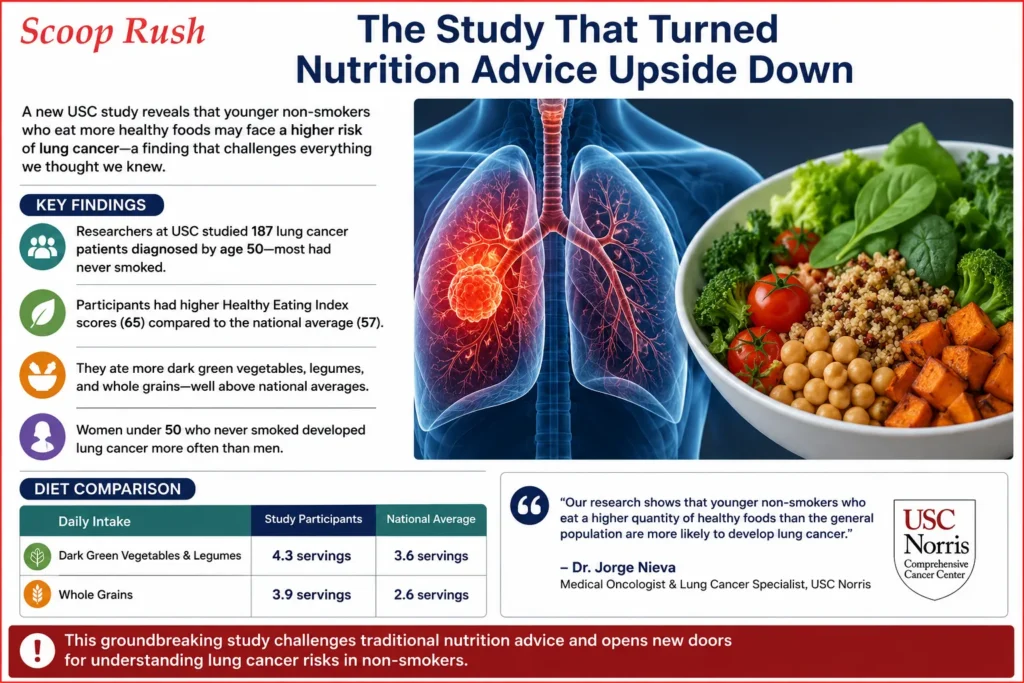
Researchers at USC Norris, part of Keck Medicine of USC, presented their findings at the American Association for Cancer Research’s annual meeting. They wanted to understand why lung cancer in non-smokers keeps rising among younger adults, a group that traditionally faced very low risk. What they found surprised even the researchers themselves.
“Our research shows that younger non-smokers who eat a higher quantity of healthy foods than the general population are more likely to develop lung cancer,” said Dr. Jorge Nieva, a medical oncologist and lung cancer specialist with USC Norris who led the study. He called the results counter-intuitive, and rightfully so. Nobody expects a vegetable-rich diet to correlate with higher cancer rates.
The research team studied 187 people diagnosed with lung cancer by age 50. Most patients had never smoked. Additionally, most had a form of lung cancer that behaves differently from the type usually linked to tobacco use.
How Researchers Measured Diet Quality
The team used the Healthy Eating Index, a tool that scores overall diet quality from 1 to 100. Young lung cancer patients averaged a score of 65, while the national average sits at 57. These patients weren’t just eating reasonably well. They were eating significantly better than the typical American adult.
Participants consumed 4.3 daily servings of dark green vegetables and legumes, compared to the national average of 3.6 servings. They also ate 3.9 servings of whole grains daily, well above the average of 2.6 servings. Women in the study scored even higher on the Healthy Eating Index than men. Interestingly, women under 50 who never smoked also developed lung cancer more often than men in the same age group, and this overlap pushed researchers toward a specific hypothesis.
Could Pesticides Explain Lung Cancer in Non-Smokers?
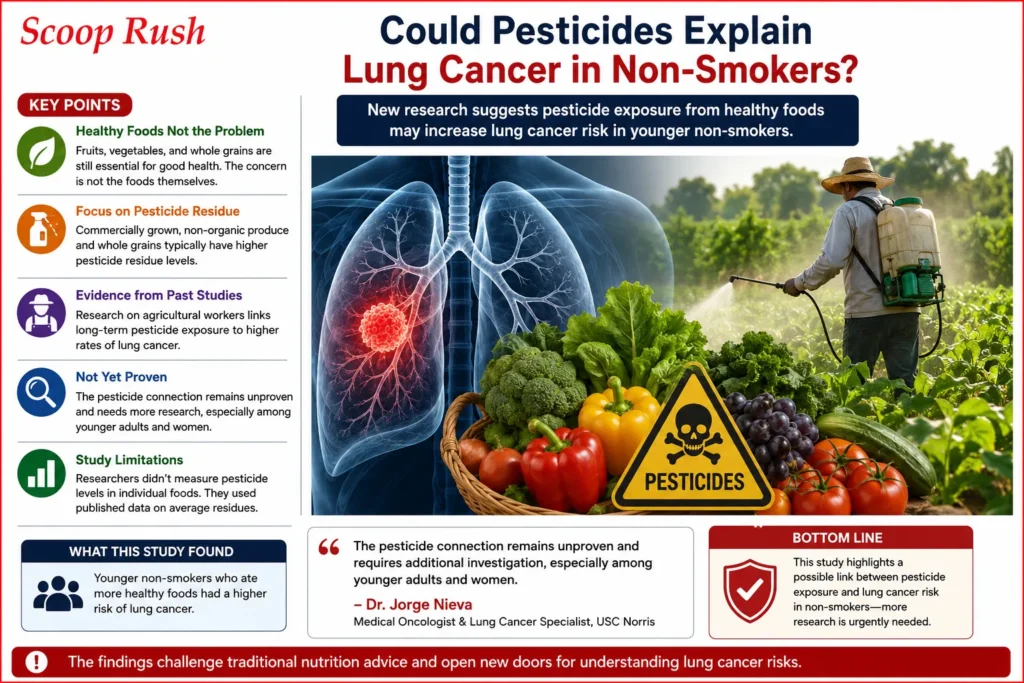
The research team clarifies one key point: healthy foods themselves are not the problem. Fruits, vegetables, and whole grains remain some of the best things you can eat for overall health. Instead, the suspicion falls on pesticide residue.
Dr. Nieva pointed out that commercially grown, non-organic produce and whole grains typically carry higher pesticide residue levels than dairy, meat, and many processed foods. Consequently, someone eating more conventionally grown produce might also absorb more pesticide exposure than someone eating a less produce-heavy diet.
This isn’t a random guess. Previous research on agricultural workers shows that long-term pesticide exposure links to higher rates of lung cancer. That existing evidence supports the hypothesis, though it remains unproven in this specific context.
Dr. Nieva stayed direct about the limitations. He stressed that the pesticide connection “remains unproven and requires additional investigation, especially among younger adults and women.” Researchers didn’t measure pesticide levels in individual foods that participants ate. Instead, they used previously published data on average pesticide residues across food categories. This study identified a pattern worth investigating, not a confirmed cause and effect relationship.
The Bigger Picture: Lung Cancer Rates Are Shifting
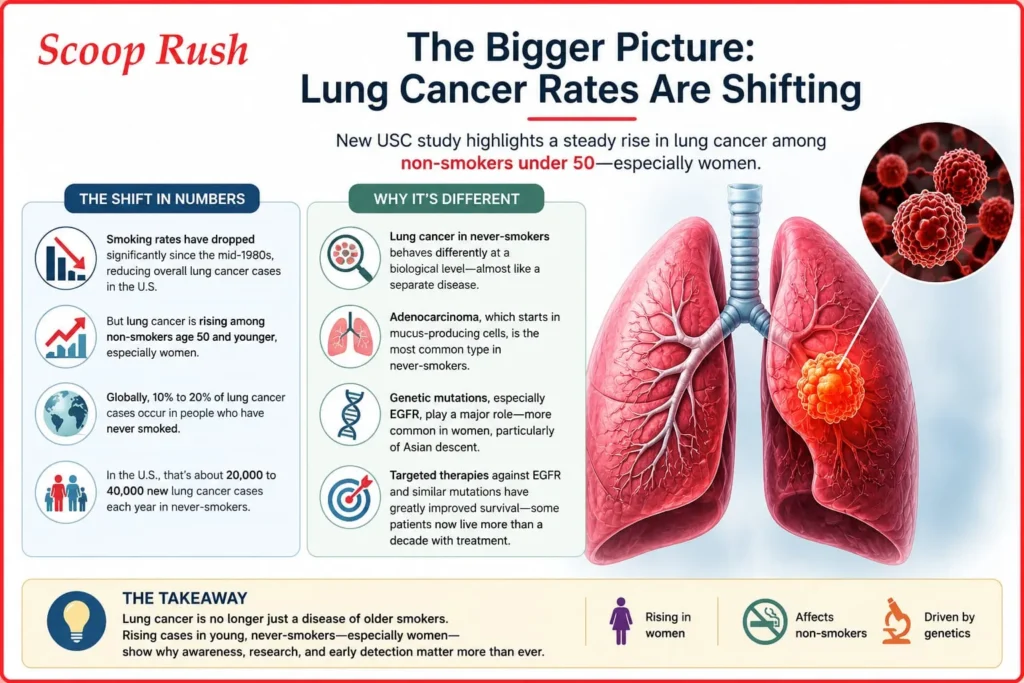
This USC study doesn’t exist in isolation. It fits into a broader trend that researchers worldwide have tracked for years. Lung cancer has historically affected older adults with an average diagnosis age of 71, heavy smokers, and men. However, that picture has changed steadily.
Smoking rates have dropped significantly since the mid-1980s, helping reduce overall lung cancer cases in the United States. Despite this progress, one group hasn’t followed the downward trend. Lung cancer has become more common among non-smokers age 50 and younger, and this shift stands out especially among women.
Globally, lung cancer remains the most common cancer and the leading cause of cancer death. Between 10% and 20% of lung cancer diagnoses worldwide now occur in people who have never smoked. In the United States, that translates to roughly 20,000 to 40,000 lung cancer cases every year in never-smokers.
Why Lung Cancer in Non-Smokers Behaves Differently
Lung cancer in never-smokers isn’t simply the same disease appearing in a different population. It behaves differently at a biological level. Oncologists describe it as emerging almost as a separate disease entity.
Adenocarcinoma, a cancer type that starts in mucus-producing cells, accounts for the vast majority of lung cancers in never-smokers. This differs from squamous cell carcinoma, which was historically the dominant form of lung cancer decades ago.
Genetic mutations play a significant role too, similar to how researchers have traced a hidden DNA factor affecting drug responses in other conditions. One common mutation, known as EGFR, affects a protein involved in cell growth. This mutation shows up more frequently in women, particularly women of Asian descent, though researchers don’t fully understand why. Fortunately, treatment has improved dramatically. Targeted therapies designed to block EGFR and similar mutations have extended survival rates significantly, and some patients now live more than a decade with ongoing treatment.
What Researchers Plan to Do Next
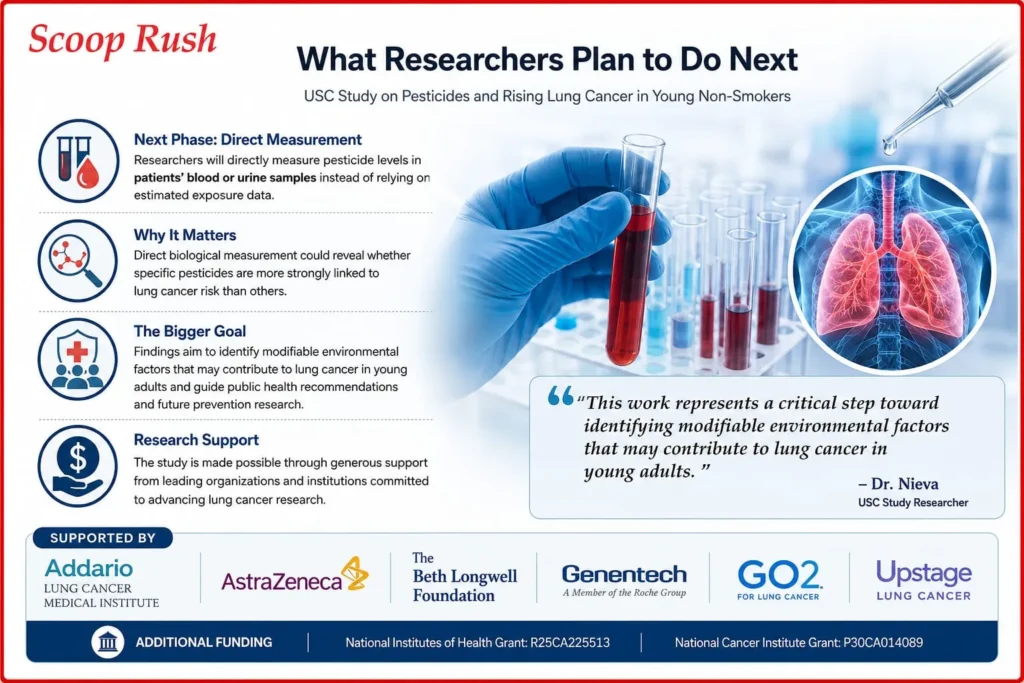
The USC team isn’t stopping here. Their next phase involves directly measuring pesticide levels in patients’ blood or urine samples rather than relying on estimated exposure data. This shift matters, since direct biological measurement could reveal whether specific pesticides carry a stronger link to lung cancer risk than others.
“This work represents a critical step toward identifying modifiable environmental factors that may contribute to lung cancer in young adults,” Dr. Nieva explained. He emphasized that the goal is guiding public health recommendations and shaping future prevention research.
The study received support from the Addario Lung Cancer Medical Institute, AstraZeneca, the Beth Longwell Foundation, Genentech, GO2 for Lung Cancer, and Upstage Lung Cancer. Additional funding came through National Institutes of Health grant R25CA225513 and National Cancer Institute grant P30CA014089.
Other Known Risk Factors for Lung Cancer in Non-Smokers
While this new research focuses on diet and pesticide exposure, other established risk factors already explain a portion of lung cancer cases in never-smokers.
Secondhand smoke exposure and radon gas remain two well-documented contributors. Researchers estimate secondhand smoke contributes to around 7,300 lung cancer cases annually, while radon accounts for roughly 2,900. Testing your home for radon remains one of the most effective steps a non-smoker can take, since radon exposure often produces no warning symptoms.
Air pollution also plays a substantial role, much like environmental shifts tracked by NASA’s satellite monitoring of global climate patterns. Fine particulate matter, known as PM2.5, links to lung cancer risk in never-smokers, particularly those carrying the EGFR mutation. These pollutants don’t directly damage DNA the way cigarette smoke does. Instead, they appear to activate dormant mutated cells already present in lung tissue, triggering them to grow.
Symptoms of lung cancer look the same whether someone has smoked or not. These include a persistent cough, coughing up blood, chest pain, wheezing, shortness of breath, or ongoing fatigue. If you notice any of these symptoms, talk to your doctor promptly, since early detection significantly improves outcomes.
Conclusion
This new research doesn’t mean you should abandon your leafy greens or whole grains. These foods still offer major benefits for heart health, digestion, and long-term wellness. What this study does suggest is that the way our food is grown deserves closer scrutiny.
Pesticide exposure remains an unproven but plausible factor that researchers are actively working to confirm. Meanwhile, the broader rise in lung cancer in non-smokers, especially among young women, points to a combination of environmental exposures and genetic factors that scientists are still mapping out. As research continues, staying informed about risk factors like radon, air pollution, and pesticide residue can help you make more educated choices. Ultimately, more definitive answers should emerge as USC’s next research phase unfolds.
FAQs
Does eating healthy food cause lung cancer?
No. Researchers stress that fruits, vegetables, and whole grains are not the problem. The suspected issue is pesticide residue that may be present on conventionally grown produce, not the nutritional content of the food itself.
What percentage of lung cancers occur in people who never smoked?
In the United States, about 10% to 20% of lung cancers, translating to roughly 20,000 to 40,000 cases annually, occur in people who never smoked or smoked fewer than 100 cigarettes in their lifetime.
Why are more young women getting lung cancer even though they don’t smoke?
Women under 50 who never smoked develop lung cancer more often than men in the same age group. Researchers point to genetic mutations like EGFR, which appear more frequently in women, along with environmental exposures such as air pollution and cooking fumes.
What type of lung cancer do non-smokers usually get?
About 50% to 60% of lung cancers in never-smokers are adenocarcinomas, a type that begins in mucus-producing cells. This differs biologically from the squamous cell carcinoma more commonly associated with smoking-related lung cancer.
How can non-smokers lower their risk of lung cancer?
Testing your home for radon, avoiding secondhand smoke, and limiting exposure to air pollution and diesel exhaust are proven ways to reduce risk. Since lung cancer screening isn’t currently recommended for never-smokers, staying aware of symptoms and discussing any family history with your doctor remains important.

