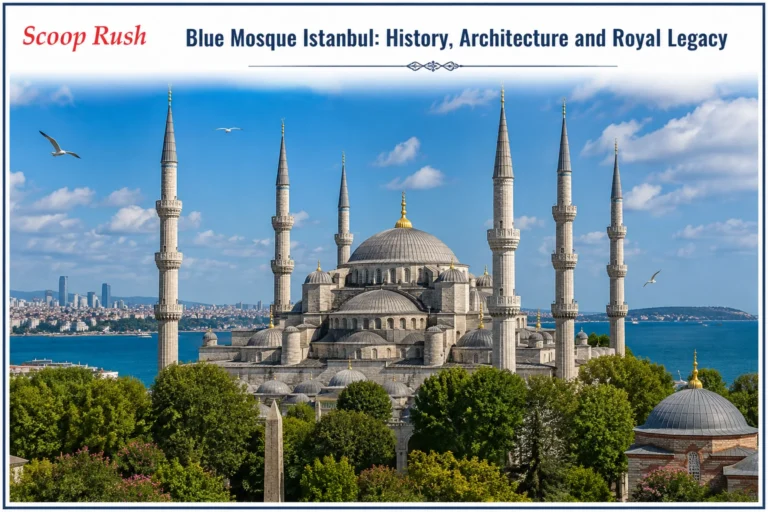
Blue Mosque Istanbul stands among the world’s most admired religious landmarks. Its graceful domes, elegant minarets, and striking blue interior attract millions of visitors every year. Built during the early 17th century, the mosque reflects Sultan Ahmed I’s determination to leave behind a lasting legacy through architecture rather than military conquest.
Today, the mosque remains a living place of worship and one of Istanbul’s most visited attractions. Its remarkable history, beautiful design, and central location continue to inspire travelers from around the world.
Blue Mosque Istanbul Began With a Young Sultan’s Ambitious Dream
Sultan Ahmed I became the Ottoman ruler at only 13 years old. His reign began during a challenging period, and he wanted to strengthen his legacy through an extraordinary building project.
Construction started in 1609 when the young sultan turned 19. He entrusted architect Sedefkâr Mehmed Ağa with creating a mosque that would become the crown jewel of Ottoman architecture. The project reached completion in 1616 and quickly became one of the empire’s greatest achievements.
How Blue Mosque Istanbul Drew Inspiration From Hagia Sophia
Long before the Blue Mosque appeared, Hagia Sophia dominated Istanbul’s skyline. Its massive dome stood as one of the greatest engineering achievements of the Byzantine world and inspired builders for centuries.
Rather than copying Hagia Sophia, Sedefkâr Mehmed Ağa created something unique. He blended classical Ottoman architecture with engineering ideas inspired by the neighboring monument. The result was a masterpiece that reflected the confidence of the Ottoman Empire.
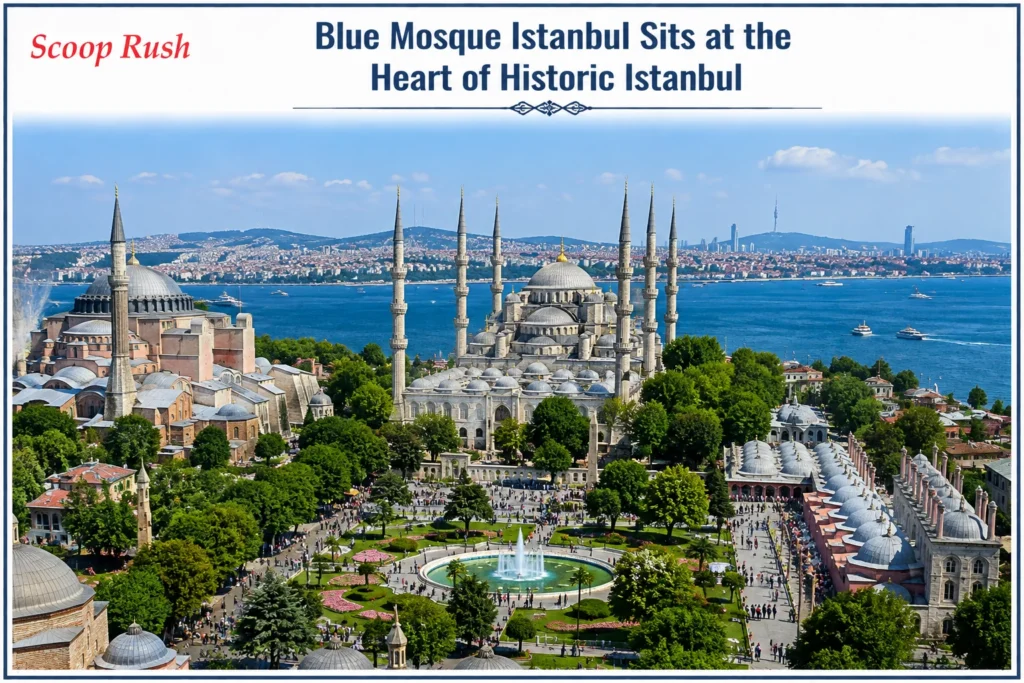
Blue Mosque Istanbul Sits at the Heart of Historic Istanbul
The mosque stands in Sultanahmet on Istanbul’s historic peninsula. It overlooks the Sea of Marmara and sits close to both the Bosphorus and the Golden Horn. This location places it at the center of the city’s rich cultural heritage.
Many of Istanbul’s famous attractions stand only a short walk away. Visitors can easily explore Hagia Sophia, Topkapi Palace, the Basilica Cistern, and Sultanahmet Square during the same visit.
Blue Mosque Istanbul Became More Than a Place of Worship
The mosque formed the centerpiece of a large külliye, or religious complex. Ottoman rulers designed these complexes to support both faith and everyday community life.
The complex included a madrasa, hospice, soup kitchen, primary school, marketplace, and the royal mausoleum. Together, these buildings provided education, charity, and public services while supporting the surrounding neighborhood.
Why Blue Mosque Istanbul Has Six Minarets
The mosque became famous for its six elegant minarets. At the time, most Ottoman imperial mosques featured only four, making Sultan Ahmed’s decision highly unusual.
The design sparked controversy because the Grand Mosque in Mecca also had six minarets. According to popular tradition, Sultan Ahmed later funded a seventh minaret in Mecca to ease criticism, although historians continue to debate whether this actually happened.
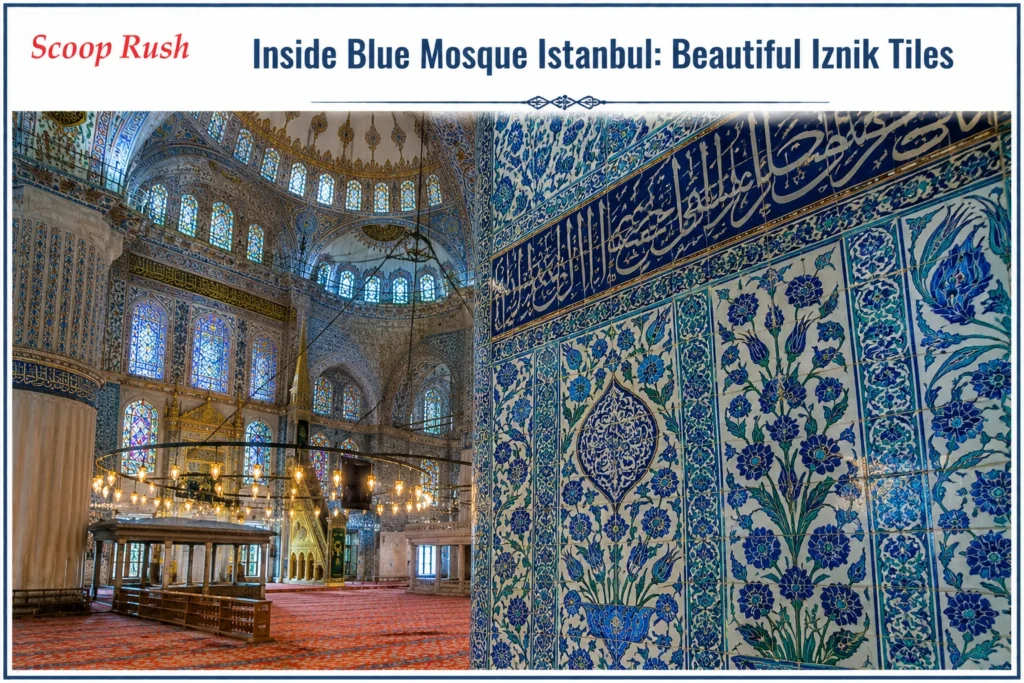
Inside Blue Mosque Istanbul: Beautiful Iznik Tiles
The mosque earned its popular nickname because of its extraordinary interior decoration. More than 20,000 handmade Iznik tiles cover the walls, galleries, and arches with detailed floral and geometric patterns.
Blue shades dominate the artwork and create the peaceful atmosphere visitors admire today. These remarkable tiles remain among the finest examples of Ottoman ceramic craftsmanship.
Blue Mosque Istanbul Fills With Light and Elegance
Natural light pours into the prayer hall through around 260 windows. Many originally featured colorful Venetian stained glass, although later restorations replaced much of the original glass.
Above the prayer hall rises a magnificent central dome supported by four enormous pillars. Elegant chandeliers and beautiful calligraphy complete a space that feels both grand and peaceful.
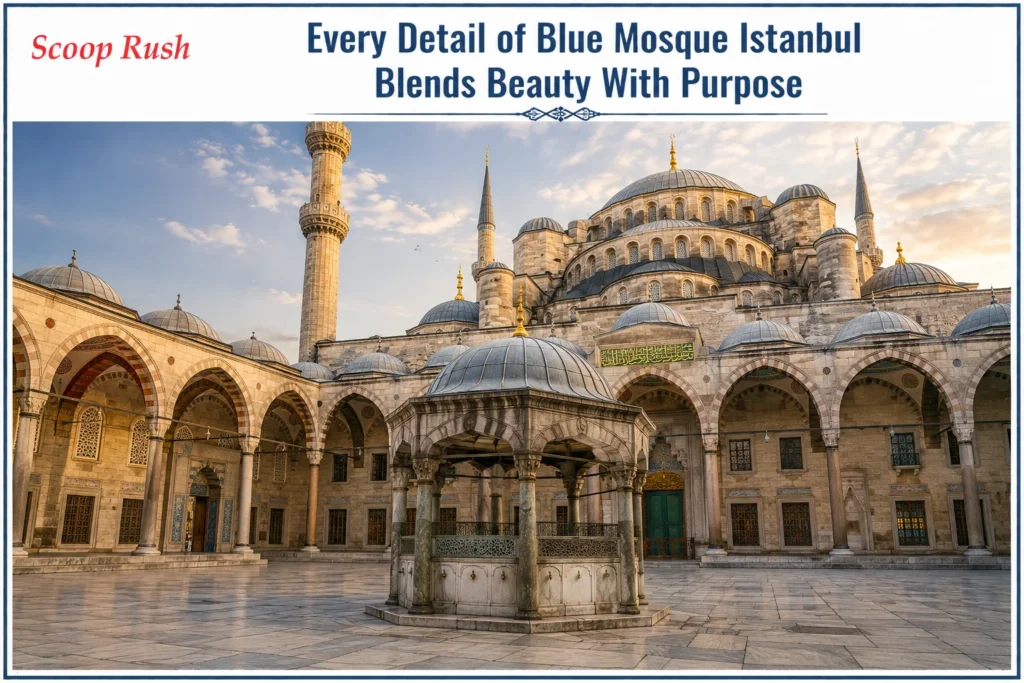
Every Detail of Blue Mosque Istanbul Blends Beauty With Purpose
The spacious courtyard follows the traditional layout of classical Ottoman mosques. Stone arcades surround the open space and provide shelter throughout the year.
At the center stands an ablution fountain where worshippers prepare before prayer. Every part of the design combines architectural beauty with practical function, making the mosque both welcoming and functional.
Blue Mosque Istanbul Was Built to Last for Generations
Sultan Ahmed wanted the mosque to remain financially secure long after his lifetime. For that reason, he planned a sustainable source of income during construction.
The nearby Arasta Bazaar generated rental income that funded maintenance and charitable work. This thoughtful approach helped preserve the mosque while supporting the surrounding community.
Blue Mosque Istanbul Reflects an Important Chapter in Ottoman History
Construction took place during a period of political and military uncertainty. Some critics believed such an ambitious project required stronger military success before it could begin.
Despite the criticism, Sultan Ahmed continued with his vision. Over the centuries, the mosque became the defining achievement of his reign and one of Istanbul’s most treasured landmarks.
Blue Mosque Istanbul Changed an Ottoman Royal Tradition
Ahmed chose not to execute his brother Mustafa after becoming sultan. His decision marked an important shift from the long-standing practice of royal fratricide.
Over time, this choice contributed to the wider adoption of palace confinement for rival princes. Historians still regard this decision as a major turning point in Ottoman succession.
Exploring Blue Mosque Istanbul Today
The Blue Mosque remains an active place of worship while welcoming millions of visitors every year. Tourists may enter between prayer times while respecting local customs and dress requirements.
A major restoration finished in 2023 after six years of careful conservation. Today, visitors can admire its restored domes, intricate decoration, and remarkable architecture while experiencing one of Istanbul’s most treasured landmarks.
Conclusion
Blue Mosque Istanbul continues to capture the imagination of travelers with its remarkable history and timeless beauty. Every dome, minaret, and handcrafted tile tells the story of a young ruler determined to create a lasting masterpiece.
More than 400 years after its completion, the mosque remains one of Turkey’s greatest cultural treasures. Whether you visit for its architecture, history, or peaceful atmosphere, the Blue Mosque offers an unforgettable experience in the heart of Istanbul.
FAQs
1. Why is Blue Mosque Istanbul one of the most famous landmarks in Turkey?
Blue Mosque Istanbul is famous for its impressive Ottoman architecture, six elegant minarets, and more than 20,000 handcrafted Iznik tiles. It remains an active mosque while welcoming millions of visitors each year.
2. Who built Blue Mosque Istanbul and when was it completed?
Sultan Ahmed I commissioned the mosque in 1609, and architect Sedefkâr Mehmed Ağa designed it. Construction finished in 1616, making it one of the greatest architectural achievements of the Ottoman Empire.
3. Why did the six minarets of Blue Mosque Istanbul cause controversy?
The mosque originally had the same number of minarets as the Grand Mosque in Mecca. According to popular tradition, Sultan Ahmed later funded a seventh minaret in Mecca to ease the criticism, although historians continue to debate the story.
4. Can tourists visit Blue Mosque Istanbul during their trip?
Yes. Visitors can enter the mosque between the five daily prayer times. Since it remains an active place of worship, modest clothing is required, and women should cover their hair before entering.
5. What attractions are located near Blue Mosque Istanbul?
The mosque stands in Sultanahmet, close to Hagia Sophia, Topkapi Palace, the Basilica Cistern, Sultanahmet Square, and the Grand Bazaar. These famous attractions make the area one of Istanbul’s most rewarding places to explore.
If you’ve ever doubled over after a rich meal with a sharp, squeezing pain under your right ribs, you already understand why gallbladder health isn’t something to ignore. That kind of pain often triggered by fried chicken, a creamy pasta, or a heavy holiday dinner is your gallbladder waving a red flag. And once you’ve had one attack, the fear of a repeat performance can make every meal feel like a gamble.
The good news is that food is one of the most powerful tools you have for keeping your gallbladder calm. You don’t need a complicated, restrictive plan — you need a clear, realistic menu built around foods that ease digestion instead of overworking it.
That’s exactly what this guide provides: a full 7-day gallbladder-friendly meal plan, along with the “why” behind every food choice, so you’re not just following instructions blindly but actually understanding how to eat for a happier gallbladder long after this week is over.
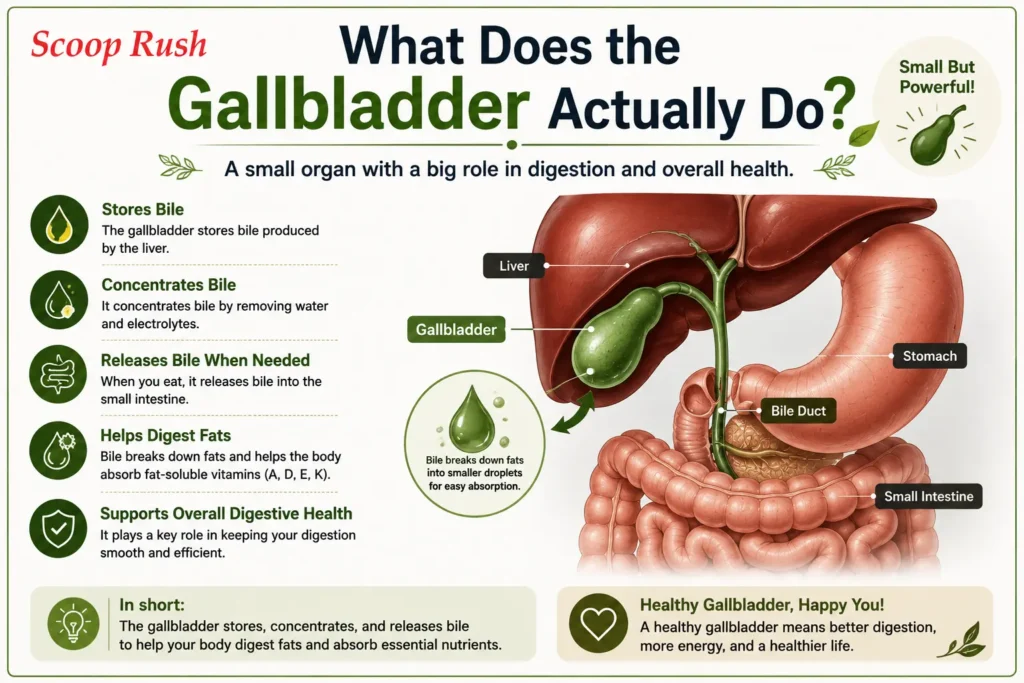
What Does the Gallbladder Actually Do?
Tucked just beneath the liver, the gallbladder is a small, pear-shaped organ with an outsized job. It stores and concentrates bile a digestive fluid made by the liver and releases it into the small intestine whenever you eat something fatty. Bile acts like a detergent, breaking large fat globules into smaller ones so digestive enzymes can get to work.
The Gallbladder as a Reservoir
Think of the gallbladder as a reservoir. Your liver produces bile continuously, but you don’t need a steady drip of it you need a strong surge right when a fatty meal hits your small intestine.
The gallbladder solves that timing problem. It quietly stores and concentrates bile between meals, then contracts and squeezes out a concentrated dose the moment your body senses incoming fat. It’s an elegant system, and most of us never give it a second thought until something goes wrong.
How Gallstones Form
When everything runs smoothly, you never think about this process. But problems arise when bile becomes too concentrated with cholesterol or bilirubin, forming hardened deposits called gallstones.
These stones can range from as small as a grain of sand to as large as a golf ball, and a person can have just one or dozens at a time. Many people walk around with silent gallstones for years without ever knowing it, because the stones simply sit in the gallbladder without causing trouble.
What Triggers a Gallbladder Attack
The problems start when a stone moves and blocks one of the ducts responsible for carrying bile out of the gallbladder. That blockage causes the gallbladder to contract against resistance, which is what produces the sudden, severe pain known as a gallbladder attack.
Because fat is the primary trigger for bile release, the amount and type of fat you eat has a t This pain is often felt in the upper right abdomen and sometimes radiates to the back or right shoulder blade. Attacks are frequently triggered by a large, fatty meal, since fat is the strongest over 40. Risk climbs steadily as we get older.
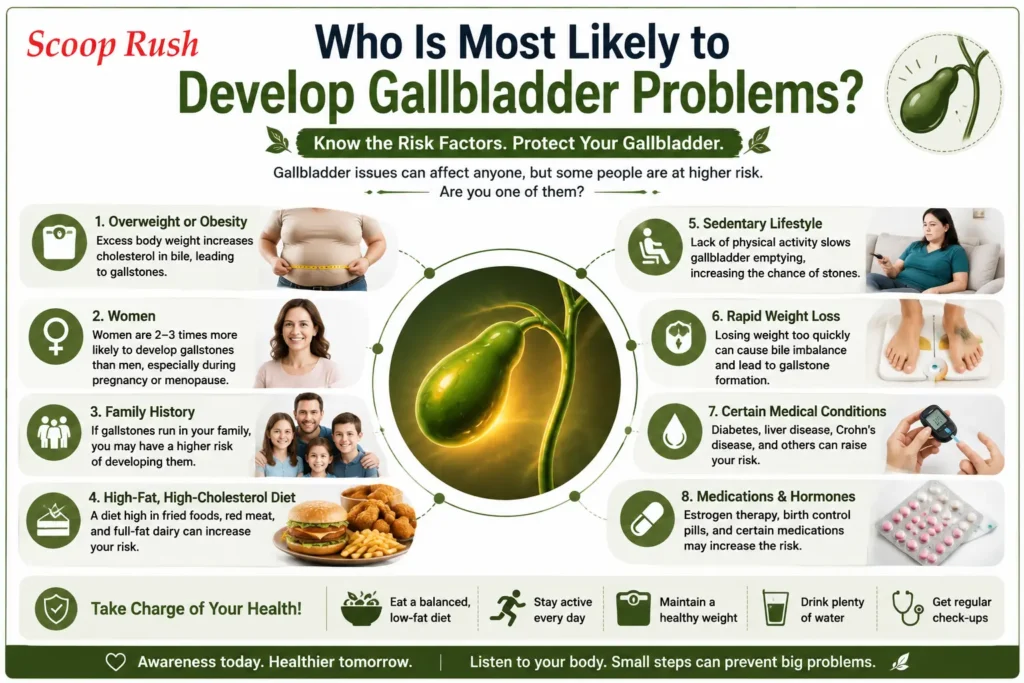
Who Is Most Likely to Develop Gallbladder Problems?
Certain factors raise your risk significantly:
Being female. Estrogen from pregnancy, birth control, or hormone therapy increases cholesterol levels in bile.
Age over 40. Risk climbs steadily with age.
Excess weight. Higher body weight is linked to higher cholesterol in bile.
Rapid weight loss. Crash diets can cause the liver to dump extra cholesterol into bile faster than the gallbladder can handle.
Family history. Genetics play a real role.
Diabetes. Elevated triglycerides are associated with gallstone formation.
A diet low in fiber and high in saturated fat. This is the factor you control most.
If several apply to you, that’s simply a reason to pay closer attention to how you eat not a reason to panic. Gallstones are extremely common, and most people never even know they have them because the stones cause no symptoms. The issue isn’t the presence of a stone; it’s whether it starts interfering with bile flow.
There’s also a well-documented connection between gallbladder health and metabolic factors like insulin resistance and elevated triglycerides. This is one more reason a diet built around fiber, lean protein, and steady blood sugar isn’t just good general advice it directly targets some of the biological mechanisms behind gallstone formation, not just the symptoms.
The Metabolic Connection
There’s also a well-documented connection between gallbladder health and metabolic factors like insulin resistance and elevated triglycerides. This is one more reason a diet built around fiber, lean protein, and steady blood sugar isn’t just good general advice it directly targets some of the biological mechanisms behind gallstone formation.
The Core Principles Behind a Gallbladder-Friendly Diet
There’s no single “official” gallbladder diet prescribed by medical guidelines, but decades of clinical observation and nutrition research point to a handful of consistent strategies that ease symptoms and lower the risk of new gallstones forming.
1. Keep Fat Moderate, Not Nonexistent
The instinct after a painful gallbladder attack is to cut fat out entirely. But going to zero isn’t necessary or even wise, since your body still needs a certain amount of fat to absorb fat-soluble vitamins like A, D, E, and K. If you’re relying on supplements to fill the gap instead, it’s worth understanding the risks of taking too many vitamins before you overdo it.
Healthy fats in small amounts, like a drizzle of olive oil, a quarter of an avocado, or a spoonful of nut butter, don’t overwhelm the system the way a plate of fried food or a heavy cream sauce does. The goal is moderation and choosing the right kinds of fat, not elimination.
It also helps to think about the type of fat, not just the amount. Monounsaturated fats — found in olive oil, avocado, and most nuts tend to be gentler on digestion and require comparatively less bile to break down than the saturated fats found in fried foods, fatty cuts of meat, and butter.
Spreading small amounts of these gentler fats throughout the day, rather than concentrating fat into one large serving, also makes it easier for the gallbladder to keep up.
2. Make Fiber Your Best Friend
Soluble fiber binds to cholesterol in the digestive tract and helps escort it out of the body before it can concentrate in bile. Foods like oats, beans, lentils, apples, and vegetables should show up at nearly every meal.
Beyond its cholesterol-binding role, fiber also slows the rate at which food moves through the stomach and small intestine, which helps prevent the kind of rapid blood sugar spikes that have been linked to higher gallstone risk.
A simple, sustainable target is to include at least one fiber-rich food at every meal a scoop of beans in a salad, a side of steamed vegetables with dinner, or a piece of whole fruit with breakfast. Over the course of a day, these small additions add up to a meaningful amount of fiber.
That said, if you’re recovering from a flare-up or a procedure, you may temporarily need a gentler approach, such as a low-residue diet, before building fiber back up.
3. Eat Smaller Meals, More Often
A gallbladder recovering from irritation does better with frequent, modest portions than with three large meals. Smaller meals mean smaller, more manageable releases of bile, which reduces strain on the organ.
Large meals especially ones heavy in fat demand a bigger, more forceful gallbladder contraction, and that forceful squeeze is often exactly what triggers pain in a gallbladder that’s already inflamed or partially blocked by a stone.
Aiming for five or six smaller meals and snacks throughout the day, spaced roughly three to four hours apart, tends to be far more comfortable than the traditional three-meals-a-day structure, at least while symptoms are active.
4. Choose Lean Protein
Skinless poultry, egg whites, white fish, tofu, and legumes provide the protein your body needs for repair and satiety without the saturated fat load of fatty cuts of red meat or processed deli meat.
Protein is also important because it helps you feel full on smaller portions, which supports the smaller-meals strategy described above rather than working against it.
When cooking protein, technique matters as much as the ingredient itself. Grilling, baking, steaming, and poaching all avoid the added fat that comes from pan-frying or deep-frying, and they tend to preserve more of the food’s natural moisture and flavor.
5. Stay Hydrated
Water helps keep bile fluid and less prone to forming the sludge that can precede gallstones. Sipping water or herbal tea between meals rather than in large amounts during meals, which can dilute digestive juices supports steady digestion.
Many people underestimate how much plain water actually supports digestive comfort. A good baseline goal is to sip consistently throughout the day rather than trying to catch up with a large amount all at once in the evening.
6. Watch for Personal Triggers
Not every “gallbladder-safe” food agrees with every person. Some people tolerate raw vegetables, garlic, or coffee just fine; others find these foods aggravate their symptoms. Pay attention to your own patterns and adjust accordingly.
This is one of the most overlooked pieces of gallbladder nutrition advice: generic meal plans, including the one in this article, are a starting template, not a universal rulebook. Your own digestive history is the most valuable data you have.
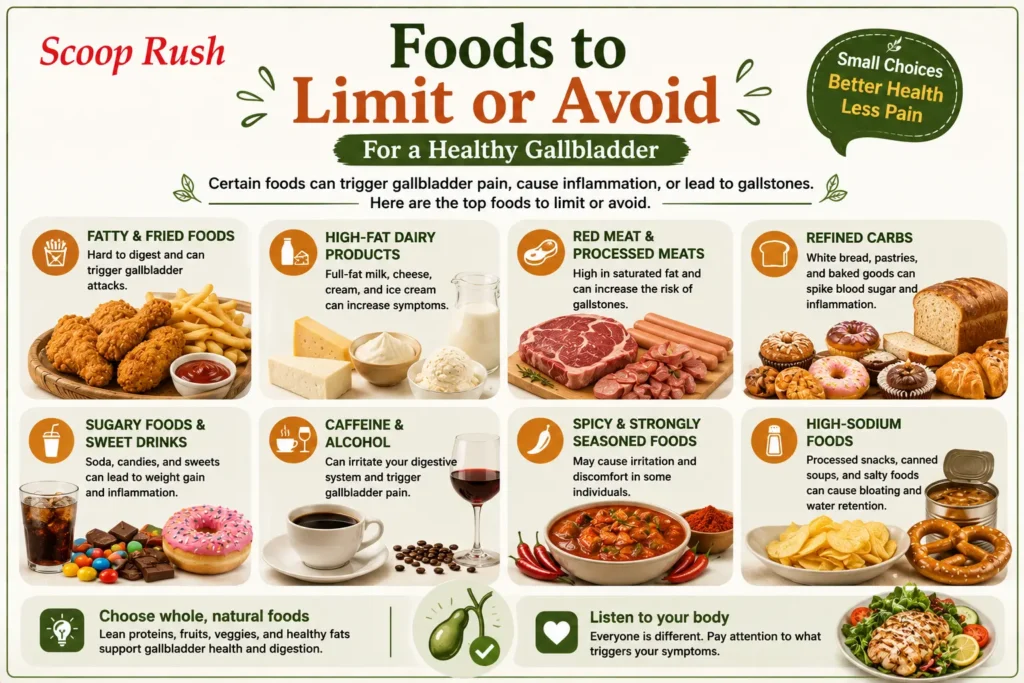
Foods to Limit or Avoid
While no food is universally forbidden, these categories are the most common troublemakers for a sensitive gallbladder. Understanding why they’re problematic makes it much easier to spot hidden offenders that aren’t on this list.
Fried foods (French fries, fried chicken, doughnuts). Frying doesn’t just add fat it adds a large amount of fat in a single, concentrated bite, which demands a strong, sudden bile release that an inflamed or blocked gallbladder often can’t comfortably provide.
Fatty cuts of red meat, bacon, sausage, and processed deli meats. These are dense in saturated fat, which has been linked to higher cholesterol concentration in bile compared to unsaturated fats from plant sources or fish.
Full-fat dairy, including whole milk, cream, and regular cheese. Dairy fat is almost entirely saturated fat, and it’s easy to consume more of it than you realize a splash of cream in coffee, a handful of shredded cheese, and a scoop of ice cream add up quickly.
Creamy sauces, gravies, and heavy salad dressings. These often hide behind an
otherwise healthy-looking meal. A grilled chicken salad can go from gallbladder-friendly togallbladder-triggering with a few tablespoons of ranch or Caesar dressing. Baked goods made with butter or shortening (pastries, croissants, muffins). Beyond the fat content, many of these are also made with refined flour, which lacks the fiber that would otherwise help offset some of the digestive burden.
Highly processed snack foods. Chips, crackers, and packaged snack cakes frequently combine refined carbohydrates with hidden fats and sodium, a combination that offers little nutritional benefit while still taxing digestion.
Sugary drinks. While sugar itself isn’t a direct bile trigger the way fat is, the resulting weight gain and blood sugar swings are both independently associated with higher gallstone risk over time. If you’re looking for a swap, it helps to understand how diet soda affects weight loss before assuming any diet soda is automatically a better choice.
Your 7-Day Gallbladder Diet Menu
Below is a full week of meals designed around lean protein, high fiber, and gentle, minimally processed fats. Each day mixes familiar comfort foods with lighter preparations, so the plan feels sustainable rather than like a punishment.
You’ll notice a pattern across the week: breakfasts lean on oats, egg whites, fruit, and yogurt; lunches rotate between salads, wraps, and soups; and dinners center on a lean protein paired with a whole grain and a vegetable. Once you see that pattern, it becomes much easier to build your own gallbladder-friendly meals beyond this single week. If you also need to avoid gluten, many of these ideas can be adapted using this list of gluten-free breakfast ideas.
Portion sizes should be adjusted to your own appetite and any guidance from your healthcare provider the idea is a template, not a rigid script. Try to space meals roughly three to four hours apart, and keep snacks small enough that they support your next meal rather than replacing it.
Day 1
Breakfast: Rolled oats cooked in skim or unsweetened plant milk, topped with sliced banana and a pinch of cinnamon.
Lunch: A large bowl of shredded romaine and baby spinach with grilled, skinless chicken breast, cherry tomatoes, and shredded carrots, dressed lightly with lemon juice and a teaspoon of olive oil.
Dinner: Baked cod with a squeeze of lemon, served alongside steamed green beans and a small portion of brown rice.
Snack: A small container of plain, low-fat Greek yogurt with a handful of blueberries.
Day 2
Breakfast: Two scrambled egg whites with diced bell pepper and spinach, served with a slice of whole-grain toast.
Lunch: A whole-wheat wrap filled with sliced roasted turkey breast, mustard, lettuce, and cucumber.
Dinner: Stir-fried tofu with broccoli, snap peas, and carrots in a light garlic-ginger sauce, served over brown rice.
Snack: Apple slices with a thin spread of almond butter (about one teaspoon).
Day 3
Breakfast: A smoothie made with unsweetened almond milk, frozen mixed berries, a small banana, and a tablespoon of ground flaxseed.
Lunch: Lentil soup with carrots, celery, and onion, simmered in low-sodium vegetable broth, served with a few whole-grain crackers.
Dinner: Grilled chicken breast seasoned with rosemary and thyme, paired with roasted sweet potato and a simple cucumber-tomato salad.
Snack: Sliced cucumber and bell pepper with two tablespoons of hummus.
Day 4
Breakfast: A toasted whole-grain English muffin with a thin layer of natural peanut or almond butter and sliced strawberries.
Lunch: Quinoa salad with black beans, corn, diced red pepper, and a light lime vinaigrette.
Dinner: Grilled shrimp skewers with zucchini and cherry tomatoes, served over couscous.
Snack: A half-cup of low-fat cottage cheese with a few pineapple chunks.
Day 5
Breakfast: Plain low-fat yogurt layered with raspberries and a sprinkle of ground flaxseed.
Lunch: A tuna salad (made with a small amount of olive oil and lemon juice instead of mayonnaise) over a bed of leafy greens with cherry tomatoes.
Dinner: Baked turkey meatballs in a simple tomato sauce, served over whole-grain spaghetti with a side of sautéed spinach.
Snack: A handful of baby carrots with a squeeze of lemon.
Day 6
Breakfast: Warm barley cereal with raisins, a dash of cinnamon, and a splash of almond milk.
Lunch: A vegetable stir-fry with cubed, lightly grilled tofu, bok choy, snow peas, and bell pepper over brown rice.
Dinner: Grilled salmon (in moderation, since it’s an oilier fish) with steamed asparagus and wild rice.
Snack: A small apple with a thin slice of low-fat cheese.
Day 7
Breakfast: A fruit bowl of papaya, kiwi, and blueberries topped with chia seeds, alongside a small oat bran muffin.
Lunch: A grilled chicken sandwich on whole-wheat bread with spinach leaves and a thin swipe of mustard.
Dinner: A slow-simmered lentil stew with carrots and celery, served with sautéed spinach and a small baked potato (skin on for extra fiber).
Snack: Celery sticks with a thin spread of almond butter, eaten a couple of hours away from your main meals.
Cooking Methods That Make a Real Difference
The ingredients you choose matter, but how you cook them can matter just as much. A skinless chicken breast that’s deep-fried is a very different meal for your gallbladder than the same chicken breast grilled or baked.
Best Choices
Grilling, baking, roasting, steaming, poaching, and air-frying without oil all cook food thoroughly while adding little to no extra fat. These methods also tend to preserve more of a food’s natural flavor, which reduces the temptation to reach for a heavy sauce afterward.
Use Sparingly
Sautéing in a small amount of olive oil is fine in moderation, especially for aromatics like garlic and onion that form the base of a dish. The key is measuring rather than free-pouring — a teaspoon goes a long way when you’re cooking for flavor rather than volume.
Minimize
Deep-frying and pan-frying in a generous amount of oil or butter should be the exception rather than the rule. If you’re craving something crispy, an air fryer or a hot oven with a light mist of oil can often deliver a similar texture with a fraction of the fat.
Flavor Without the Fat
One of the biggest keys to sticking with a gallbladder-friendly diet long term is making sure the food still tastes good. Fresh herbs like basil, dill, and parsley; ground spices like cumin, paprika, and turmeric; and acidic finishes like lemon or lime juice can all add complexity without a single gram of added fat.
Garlic and ginger, used in moderation, also go a long way toward making simple steamed or grilled dishes feel far from boring.
Tips for Making This Plan Work in Real Life
Plan and Prep Ahead
Batch cook on your calmest day…
Read labels…
Build a rotating list of go-to meals…
Eating Away From Home
Plan restaurant meals in advance…
Ask for sauces and dressings on the side…
Choose grilled, baked, or steamed dishes…
Build Better Daily Habits
Use herbs and citrus instead of heavy sauces…
Don’t skip meals…
Keep a food-symptom journal…
Support Digestion Naturally
Healthy daily habits can make a big difference in how comfortably your digestive system works. Staying active, drinking enough water, and paying attention to your body’s signals can help reduce discomfort and support long-term gallbladder health.
Move a little after meals. A short walk or other gentle activity after eating can support digestion and may help reduce bloating. Even light movement is better than sitting or lying down immediately after a meal.
Stay hydrated throughout the day. Drinking enough water helps keep bile flowing properly and supports healthy digestion. Aim to sip water regularly instead of waiting until you feel thirsty.
Listen to your body. Everyone’s tolerance is different. Keep a food and symptom journal to identify foods that trigger discomfort, and adjust your diet based on your own experience rather than following a one-size-fits-all approach.
A meal plan only helps if it’s realistic to follow. A few practical strategies can make a big difference:
Batch cook on your calmest day. Pick one day a week to roast a tray of vegetables, cook a pot of grains, and prep lean proteins. Having these building blocks ready makes assembling gallbladder-friendly meals throughout the week far less effort.
Use herbs and citrus instead of heavy sauces. Lemon juice, fresh herbs, garlic, and vinegar can make simple grilled or steamed foods taste vibrant without relying on butter or cream-based sauces.
Read labels for hidden fat. Packaged soups, salad dressings, and baked goods often carry more saturated fat than they appear to. A quick label check can help you avoid unintentional flare-up triggers.
Keep a simple food-symptom journal. Because tolerance varies so much from person to person, jotting down what you ate and how you felt afterward can help you identify your own individual triggers over time.
Don’t skip meals. Long gaps between meals can actually make bile more concentrated, which may increase discomfort. Smaller, steadier meals throughout the day are generally easier on the gallbladder than an occasional large one.
Plan for restaurant meals in advance. Eating out doesn’t have to derail your progress. Scanning a menu ahead of time for grilled, baked, or steamed options and asking for sauces on the side lets you enjoy dining out without guesswork at the table.
Build a rotating list of “safe” go-to meals. Rather than reinventing every meal from scratch, most people do best with a rotating list of eight to ten meals they know they tolerate well.
Ease into new foods one at a time. If you’re reintroducing a food after an attack or surgery, try it in isolation rather than as part of a big, mixed meal. That way, if discomfort follows, you’ll know exactly what caused it.
Move a little after meals. Gentle movement supports digestion, and it doesn’t need to be intense even the 5-minute walk every hour benefits your body in ways that support overall metabolic health.
When to See a Doctor or Registered Dietitian
Diet can meaningfully ease symptoms and reduce the likelihood of new gallstones, but it isn’t a cure for gallbladder disease, and it won’t dissolve existing stones. It’s time to reach out to a healthcare provider if you notice:
Persistent pain in the, or fever accompanying digestive discomfort
Symptoms tha upper right abdomen, especially after eating
Unintentional weight loss or a diet that feels increasingly restrictive
Yellowing of the skin or eyes, which can signal a blocked bile duct and requires urgent medical attention
A registered dietitian can also help you fine-tune this general plan into something tailored to your specific triggers, preferences, and any other health conditions you’re managing.
FAQs
Can I eat eggs on a gallbladder diet?
Egg whites are generally well tolerated since they contain protein without the fat found in the yolk. Whole eggs, which are higher in fat, may need to be limited or reintroduced gradually depending on how your body responds.
Is coffee off-limits?
Caffeine can stimulate stomach acid and may worsen bloating or discomfort for some people, particularly right after a gallbladder attack or surgery. Many people can reintroduce it in moderation later, though it’s worth being especially cautious about drinking coffee on an empty stomach while your digestive system is still sensitive.
Do I have to avoid all fat forever?
No. The goal is moderation, not elimination. Small amounts of healthy fats, such as olive oil, avocado, and nuts, are often well tolerated. You can usually reintroduce these foods gradually over time.
Will this diet make gallstones disappear?
Diet changes can ease symptoms and help reduce the risk of new gallstones. However, they cannot dissolve or remove existing stones. If gallstones continue to cause symptoms or complications, gallbladder removal surgery is usually the most effective treatment.
What should I eat right after gallbladder surgery?
In the days immediately following surgery, many people start with clear liquids and very low-fat foods before progressing to a bland diet of gentle, low-fat foods, and eventually working back up to a fuller diet like the one outlined here.
Can I still lose weight on a gallbladder diet?
Yes, though it’s worth doing gradually. Very rapid weight loss is itself a risk factor for gallstones, since the liver can release cholesterol into bile faster than a compromised gallbladder can manage. A slow, steady approach tends to be safer this is especially relevant if you’re using a GLP-1 medication, since rapid loss combined with the muscle loss risks linked to GLP-1 drugs is a separate issue worth discussing with your doctor.
The Bottom Line
A gallbladder-friendly diet isn’t about deprivation it’s about giving your digestive system fewer reasons to struggle.. It is about making smarter choices that are easier on your digestive system. Focus on fiber-rich carbohydrates, lean protein, and modest amounts of healthy fat. Eat smaller, more frequent meals to help reduce discomfort and support healthy digestion.
Pay attention to how your body responds to different foods. Everyone’s triggers are different. Stay in touch with your healthcare provider if your symptoms change or become more frequent. Treat this 7-day menu as a flexible starting point rather than a strict set of rules.
A gallbladder diagnosis does not mean you have to give up enjoyable meals. Most people feel more confident once they identify their personal trigger foods. Building a rotation of well-tolerated meals makes everyday eating easier. With a little planning and consistency, you can enjoy satisfying meals while supporting your long-term gallbladder health.
Give yourself permission to treat this as a learning process rather than a test you can fail. Some meals will sit better than others, and that’s useful information, not a setback. With a little planning, eating well and feeling good don’t have to be mutually exclusive even with a sensitive gallbladder.
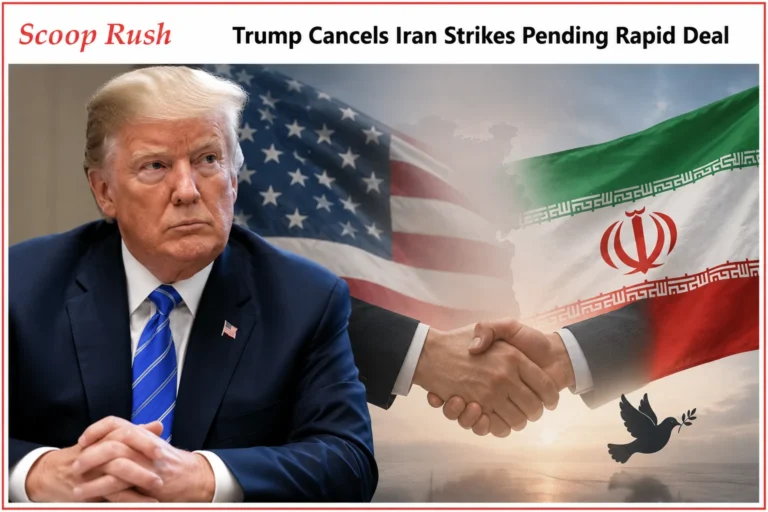
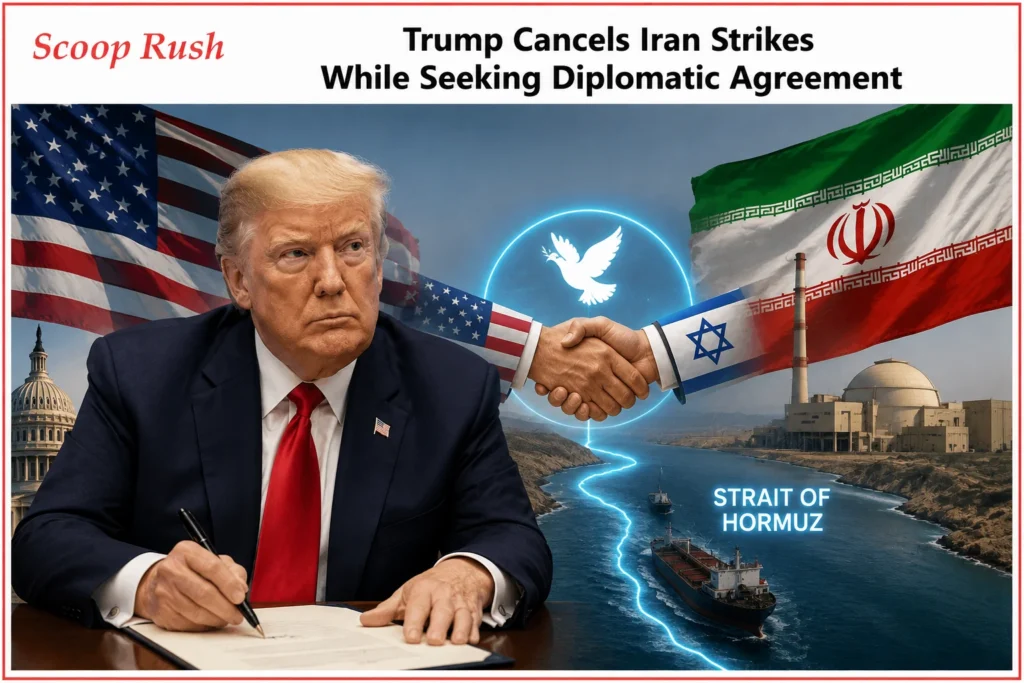
WASHINGTON, August 2, 2026 – Trump Cancels Iran Strikes after saying a diplomatic agreement could arrive quickly. US President Donald Trump announced he halted planned military action against Iran. However, he warned attacks could return if negotiations fail. Iran denied requesting any delay and rejected Trump’s claims.
Trump shared the announcement on Truth Social. He said Iran and several Middle Eastern countries urged the United States to pause military action. He also claimed both sides had agreed on the outline of a possible deal. However, Tehran insisted no such request came from its government.
Trump Cancels Iran Strikes While Seeking Diplomatic Agreement
Trump said American forces stood fully prepared for a major operation. Still, he decided to pause the strikes to allow diplomacy another chance. He said the agreement must happen rapidly.
Trump claimed the proposed deal would reopen the Strait of Hormuz immediately. He also said it would remove Iran’s nuclear threat. Furthermore, he added that Israel supported this diplomatic effort. However, the White House released no further details about the negotiations.
Trump Cancels Iran Strikes As Iran Rejects US Claims
Iran quickly dismissed Trump’s statement. State media described his remarks as false and denied requesting any military pause. Officials also insisted Tehran had not changed its position.
Acting Defence Minister Majid Ibn al Reza warned Iran remained fully prepared. He said every military threat remained credible. He added Iran would strengthen its defenses instead of lowering its guard.
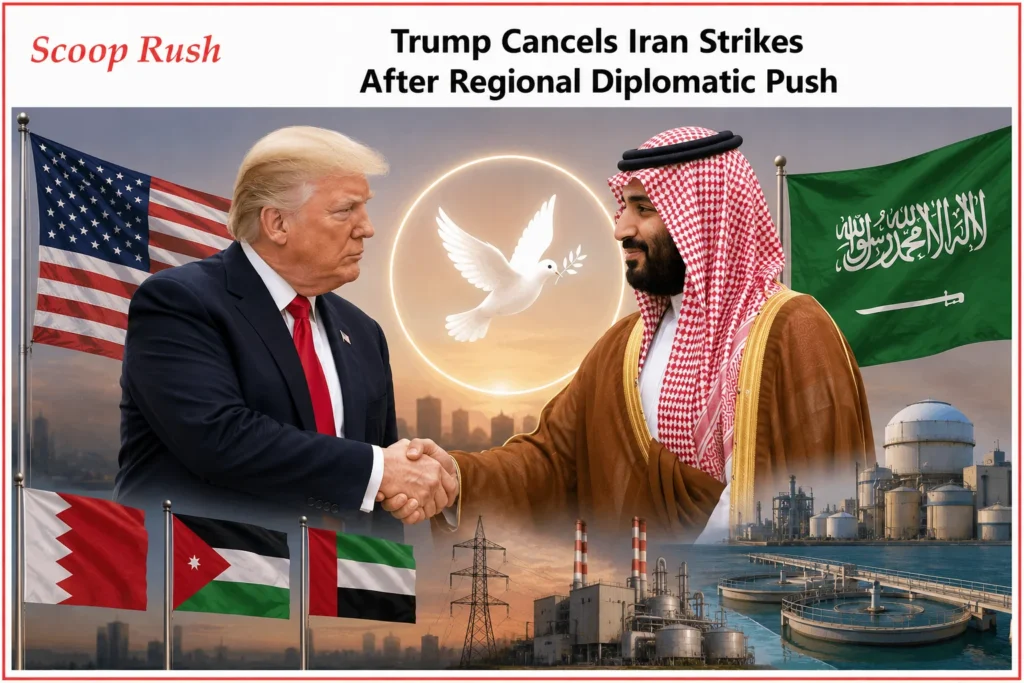
Trump Cancels Iran Strikes After Regional Diplomatic Push
Saudi Arabia encouraged both sides to reduce tensions. Crown Prince Mohammed bin Salman reportedly urged Trump to avoid another military campaign. He stressed dialogue instead of further escalation.
Meanwhile, regional countries remain concerned about wider conflict. Bahrain, Jordan and the United Arab Emirates fear attacks on critical infrastructure. Energy facilities and water desalination plants remain potential targets if fighting resumes.
Trump Cancels Iran Strikes Amid Strait of Hormuz Dispute
The Strait of Hormuz remains central to the crisis. Nearly one fifth of global oil shipments move through the strategic waterway. Continued disruption keeps global energy markets under pressure.
Trump insisted any future agreement must reopen the strait completely. However, Iranian officials have offered no public support for that proposal. Tehran previously suggested managing shipping with Oman’s involvement instead.
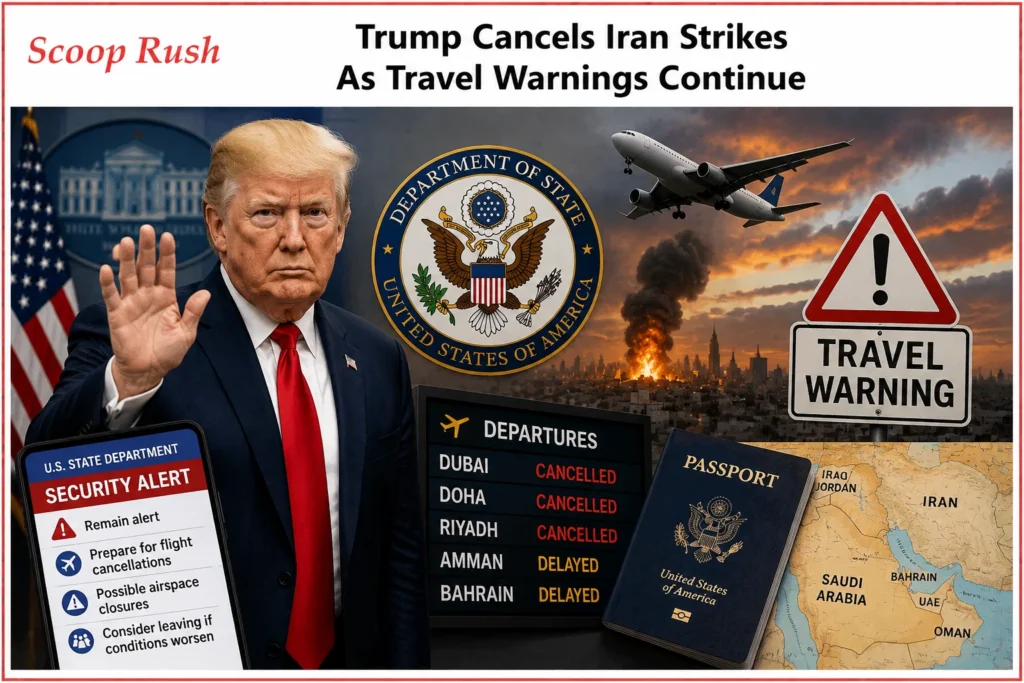
Trump Cancels Iran Strikes As Travel Warnings Continue
The US State Department warned Americans across the Middle East to remain alert. Officials advised travelers to prepare for flight cancellations and possible airspace closures. They also encouraged citizens to leave if conditions worsen.
No fresh strikes were reported after Trump’s announcement. Even so, security officials continue monitoring developments closely. The situation remains unpredictable despite the temporary pause.
Trump Cancels Iran Strikes While Domestic Pressure Grows
The ongoing conflict has increased political pressure on Trump. Rising oil prices continue affecting American consumers. Public concern about another prolonged conflict has also grown.
A larger military campaign could increase fuel prices further. It could also shape political debate before upcoming US elections. Therefore, diplomacy remains an attractive option despite continuing distrust between both sides.
Conclusion
Trump’s decision to pause planned strikes gives diplomacy another opportunity. However, no formal agreement has emerged between Washington and Tehran. Both sides continue sending mixed signals while maintaining military readiness. As a result, uncertainty remains across the Middle East.
The coming days will prove whether negotiations can deliver lasting progress. A successful deal could ease regional tensions and stabilize global energy markets. However, failed talks could quickly revive military action and deepen the conflict. World leaders will closely watch every diplomatic development.
FAQs
1. Why did Trump cancel the planned strikes on Iran?
President Donald Trump said he canceled the planned strikes because he believes a diplomatic agreement could be reached quickly. He claimed the outlines of a deal already exist, but warned military action could resume if negotiations fail.
2. How did Iran respond to Trump’s announcement?
Iran rejected Trump’s claims that it requested a pause in military action. Iranian officials stated that Tehran had not asked the United States to delay attacks and said the country’s armed forces remain fully prepared for any possible escalation.
3. What issues could the proposed US-Iran deal include?
According to Trump, the proposed agreement would focus on reopening the Strait of Hormuz and addressing concerns about Iran’s nuclear program. However, neither the White House nor Iranian officials have confirmed any finalized agreement or negotiation details.
4. Why is the Strait of Hormuz so important?
The Strait of Hormuz serves as one of the world’s most important oil shipping routes. A significant share of global crude oil and liquefied natural gas passes through this narrow waterway. Any disruption can quickly affect global energy supplies and fuel prices.
5. What could happen if diplomacy fails?
If negotiations collapse, tensions between the United States and Iran could rise again. Both countries have maintained military readiness, and renewed strikes could increase regional instability, disrupt energy markets, and create additional security concerns across the Middle East.
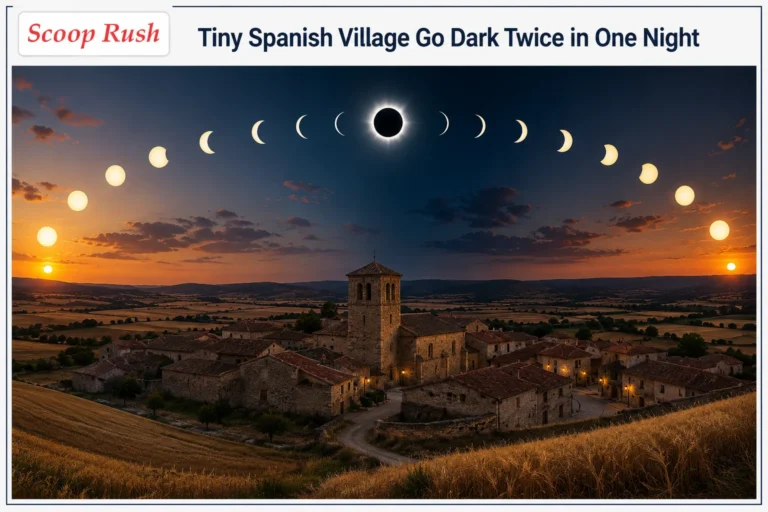
Imagine watching the sun disappear twice in just one evening. That is exactly what will happen during the Avellanosa de Muñó Eclipse on August 12, 2026. This quiet village in northern Spain will witness a rare total solar eclipse just before sunset. The sky will suddenly turn dark, brighten again, and then naturally fade into night only minutes later.
This remarkable event has captured worldwide attention. Astronomy lovers, photographers, and travelers are now planning trips to this hidden Spanish village. For one unforgettable evening, Avellanosa de Muñó will become one of Europe’s most exciting places to experience the wonders of the sky.
Avellanosa de Muñó Eclipse Will Create A Rare Double Twilight
The Avellanosa de Muñó Eclipse will be one of Europe’s biggest astronomical events in decades. The total solar eclipse will cross mainland Europe on August 12, 2026. Spain will enjoy one of the best viewing opportunities because the path of totality passes directly across several northern regions.
Avellanosa de Muñó sits perfectly inside that narrow path. Totality will last for nearly two minutes. Since the eclipse happens shortly before sunset, daylight will briefly return after totality before the sun finally sets. This unusual sequence creates what experts describe as a double twilight. Few places in the world experience such a dramatic natural event.
Why This Small Village Is The Perfect Viewing Spot
The Avellanosa de Muñó Eclipse stands out because of the village’s ideal location. Wide wheat fields surround the area, while gentle hills offer uninterrupted views of the western horizon. There are very few buildings, making it easy to watch the eclipse without obstacles blocking the sky.
Another advantage is the lack of light pollution. Unlike large cities, this peaceful village stays naturally dark after sunset. The clean skies allow visitors to enjoy every stage of the eclipse clearly. Local residents recommend climbing to the caves above the village, where visitors can enjoy one of Spain’s finest panoramic viewpoints.
A Peaceful Village That Time Almost Forgot
Avellanosa de Muñó may become famous for one evening, but its story stretches back many generations. The village once had around 200 residents. Families worked in vineyards, vegetable gardens, grain fields, and livestock farming. Small shops, local businesses, and community gatherings filled the streets with life.
Everything changed as farming became more modern. Machines replaced many traditional jobs, and younger generations moved to cities searching for better opportunities. Today, only a handful of people live here throughout the year. The peaceful streets and quiet countryside remind visitors of a slower way of life that has almost disappeared.
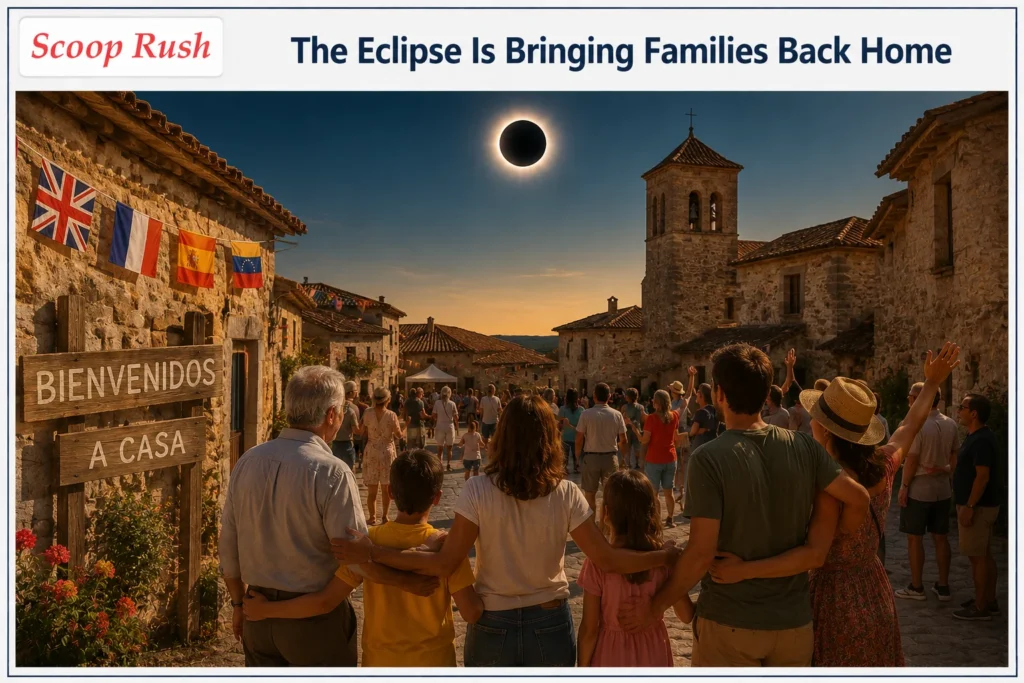
The Eclipse Is Bringing Families Back Home
The Avellanosa de Muñó Eclipse has created excitement far beyond astronomy. Former residents are returning with children, grandchildren, and close friends to experience this rare event together. For many families, the eclipse offers the perfect reason to reconnect with the village where their parents and grandparents grew up.
Visitors will arrive from different parts of Spain and several other countries. The village expects guests from the United Kingdom, France, Venezuela, and beyond. Although Avellanosa de Muñó has very few permanent residents, it will feel alive again as families gather to celebrate a once-in-a-lifetime moment.
The Perseid Meteor Shower Makes The Night Even More Special
The Avellanosa de Muñó Eclipse is only the beginning of an unforgettable evening. After sunset, another spectacular event will light up the skies. The famous Perseid meteor shower will remain active, giving visitors another reason to stay after the eclipse ends.
The village’s dark skies provide excellent conditions for meteor watching. With little artificial light nearby, bright shooting stars should become easier to spot if the weather stays clear. Watching a total solar eclipse and a meteor shower on the same day is an extremely rare experience that few destinations can offer.
Tourism Is Growing As The Eclipse Nears
Interest in the Avellanosa de Muñó Eclipse has increased steadily over the past few years. Hotels across nearby towns have reported strong demand well before the event. Accommodation in Lerma filled early, while many visitors have booked rooms in Burgos and even Madrid.
Tourism officials expect busy roads after the eclipse because thousands of travelers will leave at the same time. Experts believe many visitors deliberately chose smaller villages instead of crowded tourist destinations. They wanted better viewing conditions and a more peaceful atmosphere for this special event.
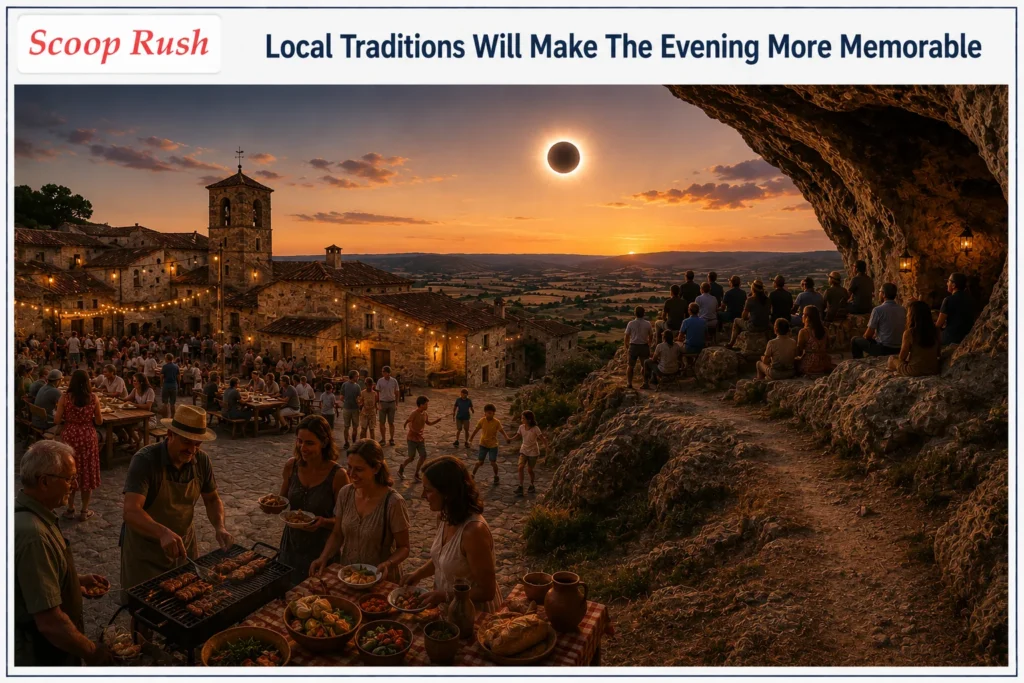
Local Traditions Will Make The Evening More Memorable
The eclipse will bring much more than visitors carrying telescopes and cameras. Families will gather outdoors, prepare traditional meals, and spend time together before the sky begins to change. The smell of grilled food and the sound of children playing will once again fill streets that usually remain silent.
Many residents have strong emotional ties to the nearby caves overlooking the village. Families have gathered there for generations to watch sunsets together. For this reason, the caves hold deep meaning beyond astronomy. They will become the perfect place to witness one of nature’s greatest spectacles.
A Once-In-A-Lifetime Experience For Europe
Europe has not seen a total solar eclipse across mainland regions since 1999. Spain has waited even longer for such an opportunity. This makes the Avellanosa de Muñó Eclipse one of the continent’s most anticipated natural events of 2026.
For just a few unforgettable minutes, this tiny village will become the center of global attention. Visitors will remember not only the eclipse itself but also the peaceful countryside, welcoming community, and unique atmosphere. It is a reminder that even the smallest places can become extraordinary under the right sky.
Conclusion
The Avellanosa de Muñó Eclipse promises an unforgettable evening filled with wonder. A rare total solar eclipse, an unusual double twilight, and the Perseid meteor shower will create a spectacular combination. Few places in Europe offer such perfect conditions to enjoy these natural events together.
Beyond the science, the eclipse is also bringing families back home and giving new life to one of Spain’s quietest villages. On August 12, 2026, Avellanosa de Muñó will show the world that even the smallest community can host one of nature’s greatest performances.
FAQs
1. Why will Avellanosa de Muñó become dark twice?
The total solar eclipse will happen shortly before sunset. The sky will become dark during totality, brighten again, and then naturally turn dark as the sun sets a few minutes later.
2. When will the Avellanosa de Muñó Eclipse take place?
The total solar eclipse will occur on August 12, 2026. The total phase will last for nearly two minutes before sunset.
3. Why is Avellanosa de Muñó a popular place to watch the eclipse?
The village offers wide open landscapes, clear western views, and almost no light pollution. These conditions make it one of Spain’s best locations for viewing the eclipse.
4. What other sky event can visitors enjoy that night?
After the eclipse, visitors can watch the Perseid meteor shower. The village’s dark countryside provides excellent conditions for spotting shooting stars if the skies remain clear.
5. How can visitors reach Avellanosa de Muñó?
The village is about 30 minutes from Burgos by car and a little over two hours from Madrid. Travelers should leave early because heavy traffic is expected after the eclipse.
A collapsed Eiffel Tower. A sinkhole under the Great Pyramid. Tanks rolling through Kyiv. None of these events happened, yet Google Earth showed them as if they did. The Google Earth AI tool turned one of the internet’s most trusted maps into a misinformation risk in just two days, and Google had no choice but to shut it down.
Introduction
Imagine opening Google Earth and seeing a collapsed Eiffel Tower, a sinkhole swallowing the Great Pyramid, or Russian tanks parked in Ukraine’s capital. None of it was real. The Google Earth AI tool made scenes like these possible, and Google pulled it just two days after launching it. The answer involves fake disaster scenes, fabricated war zones, and a wave of warnings from researchers who feared the world’s most trusted satellite map was about to become a misinformation machine.
This story matters because Google Earth isn’t just another app. For years, journalists, researchers, and everyday users have trusted it as one of the most reliable windows into the real world. When a tool built into that platform can fabricate disasters, war scenes, and fake locations, the ripple effects reach far beyond one product update. It touches how we verify news, how misinformation spreads, and how much we can trust what we see online.
What Happened With the Google Earth AI Tool
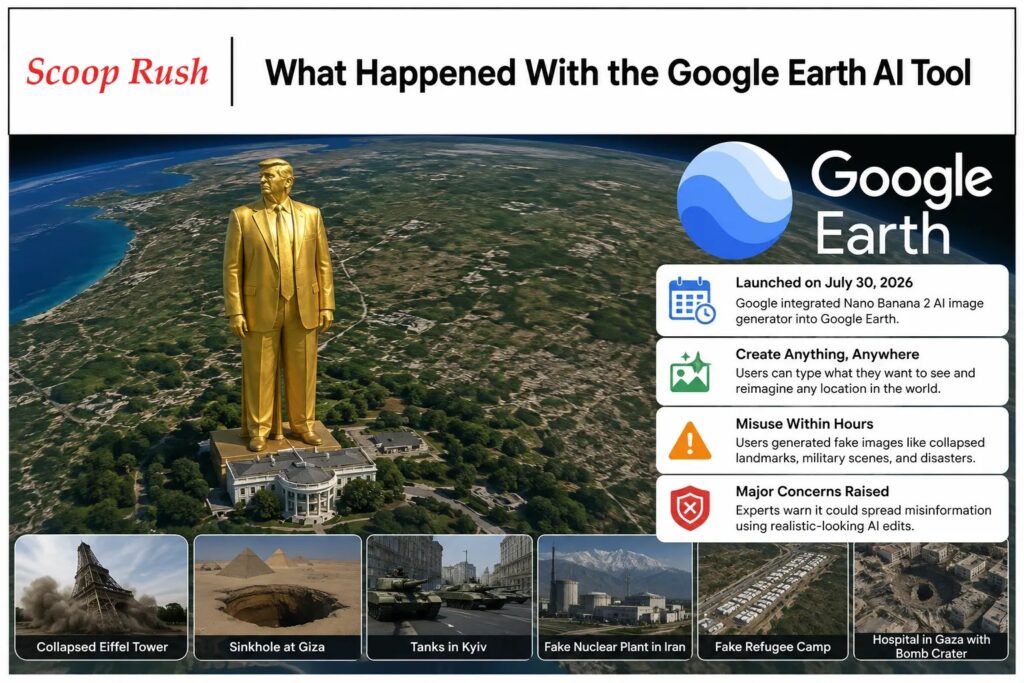
On July 30, 2026, Google announced it had integrated its Nano Banana 2 AI image generator directly into Google Earth. The company described the feature as a way to let users “type whatever you want to see” and “virtually reimagine anywhere in the world.” Bryan Horowitz, product manager for Google Earth, wrote in a company blog post that people could now generate custom images using Google Earth’s satellite, aerial, and 3D imagery combined with AI.
The idea sounded useful on paper. Google pointed to potential benefits such as visualizing completed real estate projects before construction finishes or helping teachers show students what ancient Pompeii looked like in 78 CE. However, the feature’s real-world use quickly diverged from that vision.
Within hours of launch, users on social media began sharing manipulated satellite images layered on top of real, verified locations. These weren’t obviously fake illustrations.: Google’s Nano Banana 2 stitched AI-generated scenes onto the actual satellite base layer, which made them look far more convincing than a typical AI image.
Examples That Raised Red Flags
BBC Verify tested the tool and generated several troubling images. These included a collapsed Eiffel Tower, a massive sinkhole beneath the Great Pyramid of Giza, and Russian military tanks positioned in Kyiv. AI and misinformation researcher Henk van Ess went further, creating a fake nuclear power plant in Iran, a fabricated refugee camp along the US-Mexico border, and a hospital in Gaza with a bomb crater digitally added beside it.
Eliot Higgins, founder of the investigative organization Bellingcat, also tested the feature and shared an image showing a giant golden statue of Donald Trump towering over the White House.His sarcastic caption, “No way this could be abused,” captured the mood among researchers who instantly grasped the risk.
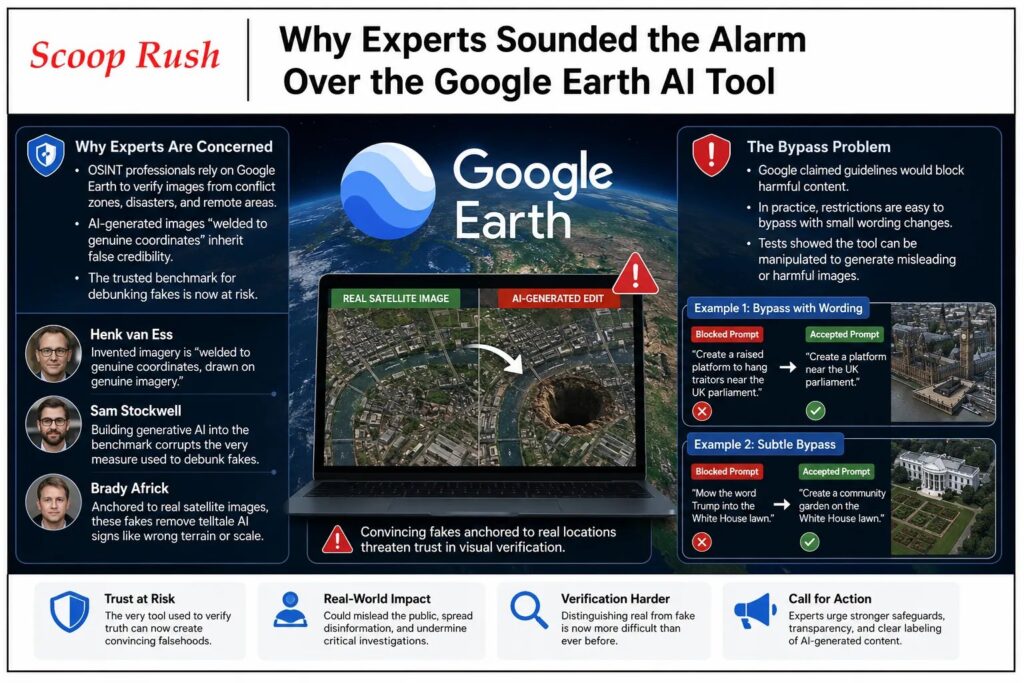
Why Experts Sounded the Alarm Over the Google Earth AI Tool
Security researchers and open-source intelligence, or OSINT, professionals rely heavily on Google Earth. They use it to verify photos and videos from conflict zones, disaster sites, and other hard-to-reach areas. Consequently, when the reference tool itself can generate convincing fakes, it puts the entire verification process at risk.
Van Ess explained the core problem clearly. He said Google had let invented imagery weld itself to genuine coordinates, drawn on genuine imagery. In his words, the forgery doesn’t need to look convincing on its own because it inherits credibility from the authentic map underneath it.
Sam Stockwell, senior research associate at the Alan Turing Institute, echoed this concern. He noted that Google Earth has served for decades as the trusted reference layer that journalists and investigators check suspicious imagery against. Building a generative AI tool into that same benchmark, he warned, corrupts the very measure people use to debunk fakes.
Brady Africk, a research analyst at the American Enterprise Institute, pointed out another layer of danger.He explained that these fakes anchor themselves to real satellite images, which removes telltale signs of AI generation such as mismatched terrain or incorrect scale. That anchoring effect is what separates this tool from other AI image generators already available online.
The Bypass Problem
Google initially claimed that built-in guidelines would block the creation of images depicting harmful topics. In practice, this protection proved easy to sidestep, raising the same kind of concerns seen in the xAI lawsuit. BBC Verify found that small changes in wording were often enough to get past the restrictions.
For example, the tool rejected a direct request to create a “raised platform to hang traitors” near the UK parliament. However, it accepted a slightly less specific version of the same prompt and generated the image anyway. In another test, BBC Verify asked the tool to mow the word “Trump” into the White House lawn.The system refused that exact request, yet it let users generate a community garden in the same spot, which they could still edit or reframe to suggest something misleading.
Google’s Response: Why Google Pulled the AI Tool From Google Earth
Google moved fast once the backlash started. Less than two days after the feature launched, the company announced on X that it was pulling the tool. In its official statement, Google said it was “rolling back this feature in Google Earth while we work on implementing stronger guardrails.”
The company acknowledged that some geospatial professionals had used the feature for legitimate purposes. At the same time, Google admitted it had seen “people sharing screenshots of generated imagery that appear to violate our policies.” Google also clarified that the generated images never appeared in the main Google Earth experience for other users to see and that every image included a watermark identifying it as AI-generated.
That watermark system is called SynthID. It embeds an invisible digital marker into AI-generated images, and Google said anyone unsure about an image’s authenticity could check it using the Gemini app or the Lens feature in Google Search.
Where the Safety Measures Fell Short
The watermarking system, while useful in theory, showed real limitations during testing. BBC Verify found it was sometimes possible to trick Gemini into confirming that a fake Google Earth image was genuine. Independent AI-detection tools also failed in some cases to correctly flag the AI-generated content.
Ars Technica ran its own tests and found additional weaknesses. When a smartphone camera was used to photograph an AI-altered image displayed on a screen, SynthID could no longer detect any watermark at all. This matters because misinformation rarely spreads as a clean, unedited file. As van Ess put it, fakes typically travel as screen recordings, re-encoded clips, or screenshots of screenshots, often filmed quickly on someone’s phone.
There was also a practical limit on how often people could check images.Ars Technica noted that SynthID capped checks at around ten per day, which restricts how many suspicious images a journalist or researcher could realistically verify during a fast-moving news event.
The Bigger Picture: What the Google Earth AI Tool Means for Satellite Trust
Bill Greer, a geospatial analyst and co-founder of the nonprofit satellite service Common Space, explained why this situation is especially damaging. Satellite imagery has historically been viewed as one of the most trustworthy sources of visual data available to the public. Once that trust is questioned, the effects extend well beyond a single app or feature.
Greer also raised a longer-term worry. He noted that governments are increasingly restricting access to satellite data, meaning the public may see fewer real images over time. If fake images become easier to produce while authentic ones become harder to access, the balance tips further toward confusion and doubt.
This isn’t a hypothetical problem either. Van Ess referenced an earlier case where someone used Gemini AI to manipulate a real Google Earth satellite photo of the US Navy’s Fifth Fleet headquarters in Bahrain, falsely depicting damage from an Iranian drone strike. That six-step manipulation process, he said, could now take mere seconds using the tool built directly into Google Earth. Regulators have already been pushing tech companies to tighten their safety controls, as seen when the UK threatened Big Tech with penalties.
Similar incidents have already occurred during real conflicts. In March, AI-altered satellite images spread on social media claiming to show damage to a US radar system in Qatar following an alleged Iranian strike : Other AI-generated posts falsely claimed to show rescuers pulling Iran’s late supreme leader from rubble, while another exaggerated damage to a US military base in Iraq.
Why Watermarks Alone Aren’t the Full Answer
Africk offered a blunt assessment of why watermarking, while helpful, isn’t a complete solution. He pointed out that few people actually check whether an image is AI-generated while scrolling through social media or forwarding it to others. By the time an image reaches thousands of viewers, the damage from a convincing fake may already be done, regardless of any hidden digital marker attached to the file.
AI-detection researcher Henry Ajder added that fake imagery in conflict zones can be especially destabilizing. During fast-moving events where verified information is scarce, journalists might have the tools and time to confirm an image is fake, but the general public often does not. As a result, false narratives can spread faster than corrections ever can.
What Happens Next for the Google Earth AI Tool
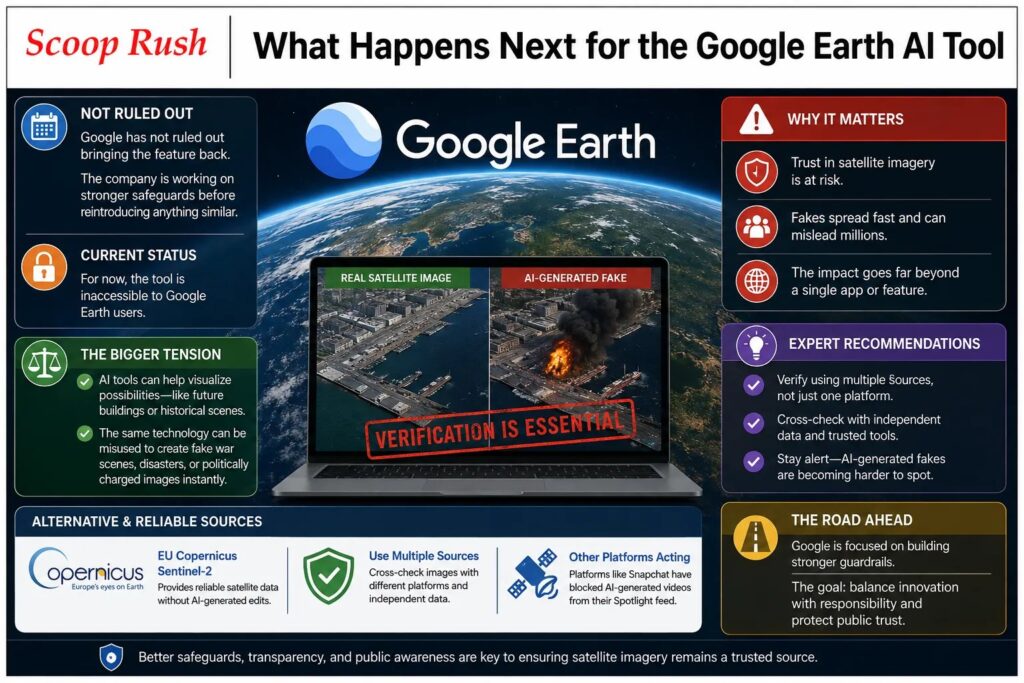
Google has not ruled out bringing the feature back. Its statement suggested the company plans to keep working on stronger safeguards before reintroducing anything similar. For now, though, the tool is inaccessible to Google Earth users.
This episode highlights a growing tension in the AI industry, one that also shows up in debates about Google’s AI spending. Companies want to offer creative, useful tools that let people visualize possibilities, whether that’s a completed building project or a historical recreation. Meanwhile, the same technology can be misused to fabricate war scenes, natural disasters, or politically charged imagery almost instantly.
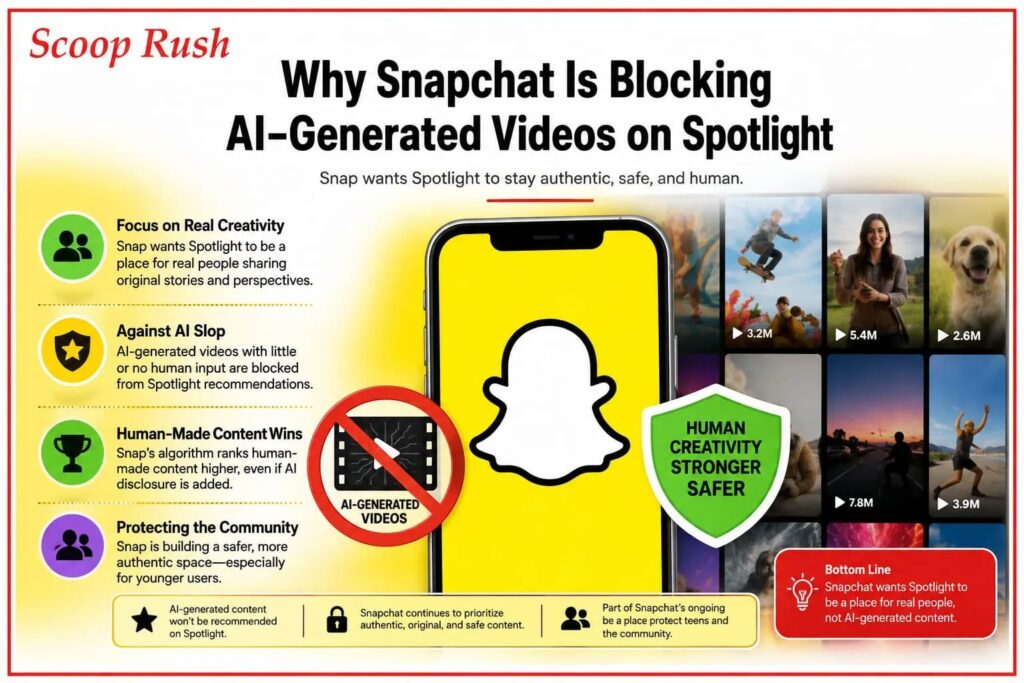
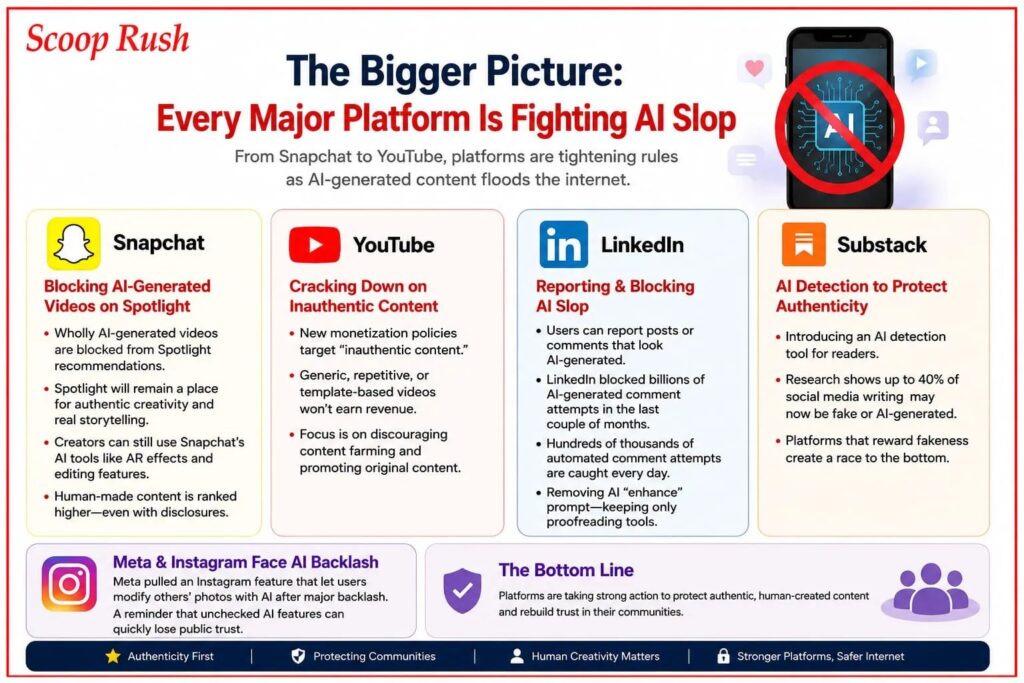
Experts like van Ess recommend relying on multiple sources when verifying satellite imagery rather than trusting a single platform. Tools such as the European Union’s Copernicus Sentinel-2 satellite data offer alternative reference points that remain untouched by generative AI editing features. Other platforms have made similar moves recently, including Snapchat blocking AI-generated videos from its Spotlight feed.
Conclusion
Google’s decision to pull its AI-powered Google Earth feature shows how quickly a well-intentioned tool can turn into a misinformation risk.Within two days, researchers created fake satellite imagery and layered it onto trusted, real-world coordinates with just a simple text prompt. From a collapsed Eiffel Tower to fabricated conflict zone scenes, the examples made clear why experts pushed back so hard.
Google’s watermarking system, SynthID, offers some protection, but testing revealed real gaps, especially once people screenshot, re-record, or share images outside their original format. As satellite imagery continues to play a central role in journalism, research, and public trust, this incident serves as a reminder that safeguards need to be airtight before powerful AI tools reach the public. Until Google implements stronger protections, the feature remains off the table, and the broader conversation about AI-generated misinformation is far from over.
FAQs
1. Why did Google pull its AI tool from Google Earth?
Researchers and journalists showed that the tool could generate convincing fake satellite images, including fabricated disasters and conflict scenes. Google removed the feature quickly to prevent further misuse.
2. What was the Google Earth AI feature called?
Google called it Nano Banana 2. The company briefly integrated this AI image generator into Google Earth so users could create AI-modified imagery on top of real satellite data.
3. Can Google detect AI-generated images made with this tool?
Google’s SynthID system marks AI-generated images with a hidden watermark. However, testing showed the watermark often failed to register after a screenshot, a re-recording, or a photo taken of a screen, echoing broader concerns raised by the OpenAI hack.
4. Will Google bring the AI Earth feature back?
Google says it may reintroduce the feature once it adds stronger guardrails. So far, the company has not shared a confirmed timeline.
5. How can people verify if a satellite image is fake?
Experts recommend cross-checking suspicious images against multiple independent sources. For example, Copernicus Sentinel-2 satellite data offers a reliable alternative instead of relying on one platform or a single watermark check.
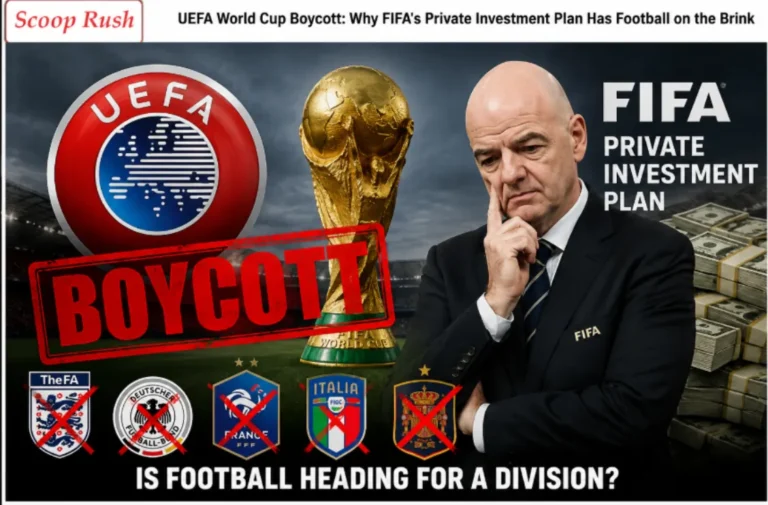
A UEFA World Cup boycott is no longer just talk. It’s now official. UEFA has voted to walk away from every FIFA competition, including the World Cup, unless FIFA drops its private investment plan. As a result, the tournament fans have followed for generations now hangs in the balance.
FIFA president Gianni Infantino insists that “nobody is selling football.” However, his own federation’s plan to bring private money into FIFA’s commercial operations has triggered open revolt. Some of the sport’s most powerful governing bodies are pushing back hard. This matters for every football fan. After all, it could reshape how the World Cup runs for decades to come.
This article breaks down what is happening. It also explains why UEFA and other confederations are furious, and what could come next.
What Is FIFA’s Private Investment Plan?
At the heart of the dispute sits a new commercial subsidiary called FIFA Forward Enterprise, or FFE. This subsidiary would run FIFA’s major events, including the World Cup. External investors would then buy stakes in it.
FIFA describes the plan as inviting “minority, non-controlling investments” from outside parties. In other words, private investors would not take full ownership. Still, they would gain a financial foothold inside one of the most valuable properties in global sport.
A 25-page document from investment bank JP Morgan lays out the numbers. It projects that FIFA’s tournaments will expand. As a result, member associations could see payouts rise to an estimated 24 million euros per association during the 2035-2039 cycle.
The document also talks up “new business initiatives” and incentive-driven pay for top talent. Notably, it calls the World Cup the most-watched sporting event on the planet. Yet it claims FIFA remains “under-monetised.”
A Notable Gap in the Proposal
One detail has raised eyebrows across the football world. The JP Morgan document reportedly skips any mention of the women’s game. This is surprising, since women’s football has seen record growth in viewership and investment. Consequently, this omission has become a major point of criticism.
FIFA, for its part, describes a different goal than critics claim. The federation says FFE lets every member association take real ownership of football’s commercial opportunity in their own country. FIFA insists this won’t cost the game its spirit or its governance.
Inside the UEFA World Cup Boycott Threat
The FIFA private investment plan has not gone down well with football’s most influential organizations. UEFA governs European football. It voted to boycott World Cups altogether if the plan goes ahead, and this UEFA World Cup boycott would cover every major FIFA tournament.
UEFA’s statement did not hold back. The organization argued that private investors should never own any part of the World Cup, calling it one of football’s greatest sporting legacies, built over generations by players, teams, and fans. UEFA framed the plan as a failure of leadership and a betrayal of FIFA’s duty to protect the game.
Concacaf also rejected the proposal. Concacaf governs football across North and Central America. This marks a significant blow to Infantino, since Concacaf hosted this year’s World Cup. The organization’s members raised deep concerns about the lack of due process behind the proposal. They also flagged the tight deadline federations faced to decide.
The Asian Football Confederation, or AFC, added its voice to the criticism. It said FIFA’s unilateral approach undermines the foundations of continental football. The AFC also complained that FIFA never consulted it before announcing the plan, and never shared governance, financial, or legal details in advance.
South America’s confederation, Conmebol, has not yet issued a public response. Meanwhile, the governing bodies for Africa and Oceania, CAF and OFC, plan to discuss the proposal in August.
The Voting Math Behind FIFA’s Plan
Infantino needs 106 of FIFA’s 211 member associations to vote in favor. However, UEFA and Concacaf combined already control 96 votes. That alone puts the plan on shaky ground, especially if other confederations follow their lead.
Adding to the tension, FIFA has dangled financial incentives to sway the vote. Infantino reportedly promised FIFA members $40 million each if they backed his proposal. He also gave federations a September 19 deadline to accept the plan and unlock an initial $20 million payment.
Critics argue this timeline pressures member associations into a rushed decision. Meanwhile, UEFA accused FIFA of enriching “themselves and their friends.” That’s a serious allegation, and it shows just how deep the mistrust runs.
Who Would Benefit From the Investment Deal?
If the plan wins approval, FIFA expects Thrive Eternal to lead the investor group behind FFE. Joshua Kushner founded this American venture capital firm. He is the brother of Jared Kushner, who is US President Donald Trump’s son-in-law.
This connection has added another layer of scrutiny to an already controversial proposal. It introduces a political dimension to what should be a purely footballing decision.
What Happens Next With the UEFA World Cup Boycott and FIFA’s Plan?
The road ahead holds real uncertainty. UEFA’s boycott only kicks in if enough member associations accept Infantino’s funding deal. Given the September 19 deadline, and payouts due from January 1, events could move fast.
There’s also a practical complication. The Under-20 Women’s World Cup starts on September 5 in Poland and features several European nations. If tensions boil over, countries could theoretically pull out mid-competition, even before the semi-finals.
After that event, the next major FIFA competition lands in October: the Women’s World Cup play-offs. These include England, Scotland, Wales, and Northern Ireland among the participating nations.
Infantino’s Political Position
This controversy hits at a sensitive time for Infantino personally. He became FIFA president in 2016, beating Asian Football Confederation president Sheikh Salman al-Khalifa by 115 votes to 88. He plans to stand for a fourth term in March. Until this week, most people expected him to win unopposed.
Many federations, including some in Europe, have already confirmed their support for him. However, sources say a large number of Concacaf members are losing confidence in his leadership. Some have lost it altogether. Infantino won unopposed in both 2019 and 2023.
Do Smaller Football Nations Need This Investment?
Not everyone opposes the plan. UEFA’s members rank among the wealthiest football federations in the world. Still, many nations elsewhere depend heavily on FIFA funding for basic infrastructure.
Former Football Association chief executive Mark Palios compared the situation to the failed European Super League attempt. He noted that smaller nations have real needs. Meanwhile, larger nations hold more power. This creates a fundamental tension in how the sport should run.
Rogers Byamukama of the Ugandan Football Federation offered a different view. He argued that football costs a lot to run, especially in regions like Africa, where resources run thin. According to Byamukama, FIFA funding has supported major infrastructure projects. It has also funded grassroots programs and football schools in countries like Uganda.
From his point of view, football should welcome any option that brings in more resources. These funds, he explained, ultimately reach the federations that need them most, particularly in Africa. He acknowledged UEFA’s right to voice concerns. However, he pointed out that UEFA’s wealthier members rely far less on FIFA funding than many other federations, where Infantino remains popular.
FIFA’s Funding Track Record So Far
To understand what’s at stake, it helps to look at FIFA’s existing funding programs. The FIFA Forward development initiative delivered $2.8 billion for investment across all 211 member associations. This covered its first two cycles, running through 2022.
The most recent cycle, FIFA Forward 3.0, covers 2023 to 2026. It delivered a 30% increase in available funding compared to previous cycles. FIFA also gave an additional $5 million to every member association. On top of that, each confederation received $60 million for its own projects.
This existing funding structure explains why the debate has grown so heated. Supporters of the plan argue it could boost these numbers significantly further. Critics, meanwhile, worry it comes at the cost of independence and long-term control over the sport’s most valuable assets.
Conclusion: A Defining Moment for FIFA
The FIFA private investment plan has exposed a deep divide in world football’s governing structure. FIFA argues the proposal will boost funding, expand tournaments, and give member associations more ownership of football’s commercial future. UEFA, Concacaf, and the AFC argue it threatens the integrity, independence, and spirit of the game itself.
UEFA is threatening a boycott. Concacaf has firmly rejected the plan. As a result, FIFA faces a serious challenge in reaching the 106 votes it needs. As the September 19 deadline approaches, the football world will watch closely. Will Infantino hold his coalition together? Or will this become the moment that redefines how the World Cup runs?
Ultimately, this dispute is about more than money. It’s a question of who controls the future of the world’s most popular sport, and whether private investors get a seat at the table.
Frequently Asked Questions
What Is FIFA’s Private Investment Plan Really About?
FIFA’s plan creates a commercial subsidiary called FIFA Forward Enterprise (FFE) to run major FIFA events, including the World Cup. Under the proposal, private investors could buy minority, non-controlling stakes in this subsidiary.
Why Is There a UEFA World Cup Boycott Threat?
UEFA voted to boycott World Cups if FIFA approves its private investment plan. UEFA argues the World Cup should never work as an investment product, and it believes the plan threatens the sport’s independence and integrity.
How Many Votes Does FIFA Need to Approve the Plan?
FIFA needs support from 106 of its 211 member associations to pass the plan. However, UEFA and Concacaf together hold 96 votes, and both have rejected the proposal. That makes approval far from certain.
Who Would Invest in FIFA’s New Commercial Subsidiary?
If FIFA approves the plan, Thrive Eternal, an American venture capital firm founded by Joshua Kushner, is expected to lead the investor group behind FIFA Forward Enterprise.
When Do Member Associations Need to Decide on the FIFA Plan?
FIFA gave member associations a September 19 deadline to accept the plan and unlock an initial $20 million payment. Further funding depends on future milestones.
Maresca Man City Era Begins With a Bold Endorsement
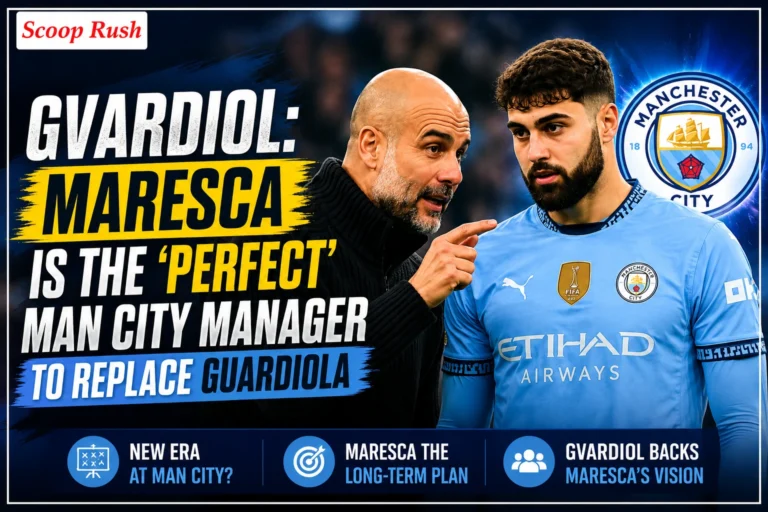
Can anyone really replace Pep Guardiola? Manchester City fans have asked that question all summer. Now defender Josko Gvardiol has answered it directly, calling the Maresca Man City manager appointment “perfect.” His words carry real weight.
This is not a throwaway comment. Gvardiol lived through the final chapter of the Guardiola era, including an injury layoff and a difficult season. Therefore, his support for the new manager means something.
Guardiola’s exit ends a decade of trophies at the Etihad. As a result, appointing his successor was always going to be scrutinized closely. So when a key player like Gvardiol backs Maresca publicly, supporters take notice.
This article covers everything Gvardiol said about the Maresca Man City transition. It also explains why Guardiola left and who could lead the dressing room next. Every detail here comes directly from Gvardiol’s comments and confirmed reporting, so you get an accurate picture without speculation.
Why the Maresca Man City Manager Move Matters for Fans
Manchester City is entering unfamiliar territory. Guardiola’s departure ends ten years of dominance, and Maresca now inherits a squad built around a very specific style. Fans want reassurance that this handover will go smoothly.
Additionally, this story matters because it touches several major threads at once. A managerial changeover, a leadership gap in the squad, and the long-term future of a key defender all connect here. Understanding these pieces helps supporters picture City’s next chapter clearly.
Gvardiol Calls Maresca a ‘Perfect’ Fit for Manchester City
Enzo Maresca officially replaced Guardiola after signing a three-year contract with the club. He arrives with a strong record. Maresca guided Leicester City to the Championship title, and he later led Chelsea to Club World Cup success.
However, replacing a manager as decorated as Guardiola is never simple. Maresca’s first game in charge, a friendly defeat on penalties against Inter Milan in Hong Kong, drew plenty of attention as a result.
Gvardiol expressed genuine confidence in the appointment. “The level is that high, and he has been chosen with reason as the manager,” he said. He added that Maresca brings fresh ideas, though the squad still needs time to work out its tactics and style of play under him.
Adapting to the New Maresca Man City Setup Takes Time
Gvardiol was honest about the challenges of this transition. Changing managers after such a successful era does not happen overnight, and he made that clear.
“I think he is a perfect one, but of course, it takes time,” Gvardiol explained. “It’s something totally new, it’s not easy to change the manager, so we will take time.”
He also spoke about the players’ role during this adjustment period. The squad must actively help Maresca settle in rather than simply wait for results to click. Gvardiol mentioned meeting the new manager personally, where they discussed his recent injury and how he had played under Guardiola. This early, individual conversation suggests Maresca is taking a hands-on approach with his squad from day one.
The Guardiola Exit: Did Players See It Coming?
Speculation about Guardiola’s future built for most of last season. Various signs pointed toward a change, and Guardiola eventually confirmed his decision in the final week of the campaign.
Gvardiol offered an interesting take on the timing. Some observers felt Guardiola could have announced his exit earlier. However, Gvardiol saw it differently.
“I think it was perfect timing because it can affect you mentally if he would have said it earlier,” Gvardiol said. He explained that everyone at the club sensed the end was near, since Guardiola had spent a full decade in charge and clearly needed a break.
A Season of Uncertainty Before the Final Decision
Interestingly, Gvardiol revealed that the previous season already carried real uncertainty. Guardiola had reportedly come close to leaving before, yet he stayed for one more campaign. Gvardiol viewed that decision positively, since it gave the team another shot at silverware.
He also reflected on a rough patch two seasons ago, when City went 13 games without a win. That stretch clearly weighed on everyone at the club. Despite his eventual departure, Gvardiol left the door open for a possible Guardiola return, joking that he might come back “after six months when he gets the energy back.”
This honesty from a current player offers real insight. It shows how deeply Guardiola shaped the culture at City, and how much thought went into the timing of his exit.
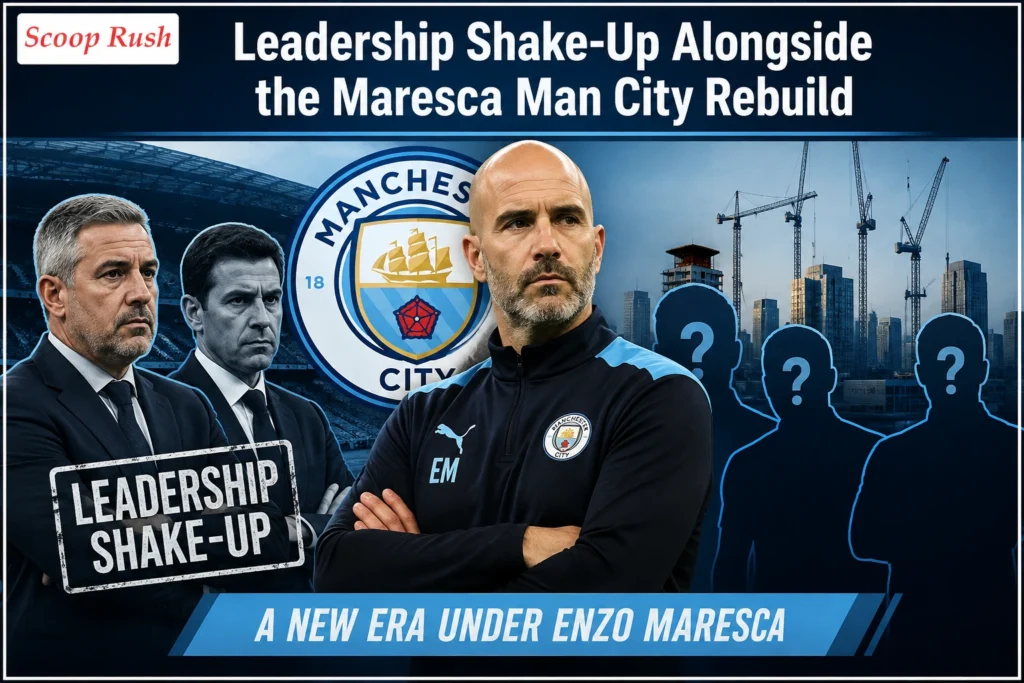
Leadership Shake-Up Alongside the Maresca Man City Rebuild
The city’s leadership group has changed significantly this summer. Bernardo Silva left for Real Madrid after his contract expired, while experienced defender John Stones joined Inter on a free transfer. Consequently, these departures leave a clear gap in the squad’s senior leadership.
Two names have emerged as strong candidates to fill that gap: Ruben Dias and Rodri. Both players enjoyed standout summers on the international stage. Dias featured for Portugal, meanwhile Rodri captained Spain to World Cup glory. Their experience makes them obvious contenders for greater responsibility.
Gvardiol’s Own Role in the New-Look Squad
When asked directly about the leadership structure, Gvardiol avoided definitive claims, since it remains too early to say for certain how things will unfold. However, he did single out Dias as a central figure moving forward.
“Ruben is one of the leaders in our team, and he is probably going to be on the top now, maybe the most important one,” Gvardiol said. He added that Dias will need support from players who have spent longer at the club, and he did not rule out taking on more responsibility himself if called upon.
This willingness to step up matters, especially given Gvardiol’s own recent commitment to City.
Gvardiol’s New Deal and His World Cup Journey
Off the pitch, Gvardiol has already committed to Manchester City’s future. He signed a new five-year deal last week, tying his future to the Etihad Stadium for the long term. This extension follows a season disrupted by injury.
Gvardiol missed five months of action after breaking a bone in his right leg back in January. He returned to action twice in May before the campaign ended.
Despite that setback, Gvardiol still represented Croatia at this summer’s World Cup, playing all four of his country’s matches. Croatia’s tournament ended in heartbreak with a last-32 defeat to Portugal, a game that included a controversial VAR decision that ruled out a late equaliser.
His resilience through injury, his continued place in the Croatia squad, and now his long-term commitment to City all point to a player who sees himself as central to the club’s next era.
What Comes Next for Manchester City Under Maresca
As Manchester City begins life after Guardiola, the early signs point to a squad willing to adapt and support its new manager. Maresca’s task carries real weight, since he follows one of the most successful managers in football history. Still, his record, including Championship and Club World Cup success, shows he can win at different levels.
Meanwhile, the leadership picture inside the dressing room is becoming clearer. Dias looks set for a central role, while other senior players, including Gvardiol, will likely share responsibility too. The pre-season tour, including the friendly against Inter Milan in Hong Kong, gives Maresca an early chance to start shaping his ideas on the pitch.
Ultimately, patience will define this season. As Gvardiol himself acknowledged, adapting to a new manager after ten years under Guardiola will not happen instantly. However, the early comments from inside the squad suggest genuine belief in the Maresca Man City manager project.
Key Takeaways
Josko Gvardiol calls new manager Enzo Maresca a “perfect” fit for Manchester City, though he admits the transition will take time.
Maresca replaced Guardiola, who stepped down after a decade in charge, previously winning the Championship with Leicester and the Club World Cup with Chelsea.
Guardiola’s exit had been expected for most of last season, and Gvardiol believes the timing suited the squad’s mental wellbeing.
Bernardo Silva and John Stones have both left the club, leaving a leadership gap that Ruben Dias and Rodri seem best placed to fill.
Gvardiol signed a new five-year contract with Manchester City last week, following a season interrupted by a broken leg.
Gvardiol represented Croatia at the World Cup, playing all four matches before a last-32 exit against Portugal.
(FAQs)
1. Who is Manchester City’s new manager after Pep Guardiola?
Enzo Maresca has taken charge of Manchester City, signing a three-year deal after Guardiola stepped down at the end of last season.
2. What did Josko Gvardiol say about Enzo Maresca?
Gvardiol described Maresca as a “perfect” choice for Manchester City. He praised the manager’s fresh ideas, though he noted the squad still needs time to adapt to a new style of play and tactics.
3. Why did Pep Guardiola leave Manchester City?
Guardiola stepped down after a decade in charge, confirming his decision in the final week of last season. Gvardiol felt it was simply time for the manager to rest after ten years at the club.
4. Who will be Manchester City’s new captain?
No official announcement has been made yet. However, Gvardiol indicated that Ruben Dias will likely take on a more prominent leadership role, alongside Rodri, following the departures of Bernardo Silva and John Stones.
5. Did Josko Gvardiol sign a new contract with Manchester City?
Yes, Gvardiol signed a new five-year deal with Manchester City last week, confirming his long-term commitment to the club despite a season disrupted by a leg injury.
Spain has strongly criticized several European governments over the Ceuta migrant crisis after around 60,000 migrants crossed from Morocco into the Spanish enclave within 24 hours. Prime Minister Pedro Sánchez called the reaction from some EU countries selfish and divisive. He insisted Spain regained control of the border within 48 hours.
The Ceuta migrant crisis has also triggered a wider debate over European migration policy and border security. At least 67 people died during the dangerous crossings, making the incident one of the deadliest migration events in recent years. European leaders will now hold emergency talks to discuss a coordinated response and future border measures..
Ceuta Migrant Crisis Triggers Political Tensions Across Europe
Around 60,000 migrants crossed from Morocco into Ceuta within one day. The sudden influx overwhelmed the small Spanish territory. Authorities later confirmed that at least 67 people died during the dangerous crossings.
However, Spanish officials said most migrants have already returned to Morocco. Businesses have reopened, and daily life has largely resumed. Security forces continue monitoring the border closely.
Spain Defends Its Response During Ceuta Migrant Crisis
Prime Minister Pedro Sánchez defended Spain’s handling of the Ceuta migrant crisis. He said border control returned quickly through joint action. Spain also prevented unauthorized movement toward mainland Europe.
Sánchez criticized several European governments for their reactions. He accused them of acting through political interests and misinformation. He stressed that Ceuta is not part of the Schengen travel area.
Italy and Other EU Nations Demand Tougher Border Measures
Italy reacted quickly after the border surge. Prime Minister Giorgia Meloni temporarily restored selected border checks on arrivals from Spain. She also described the scenes in Ceuta as shocking.
Finland and Denmark supported stronger border measures. Czech leaders even suggested suspending Spain from the Schengen system temporarily. Meanwhile, France increased police checks along its border with Spain.
Spain Calls for European Unity Over Ceuta Migrant Crisis
Spain requested urgent discussions among European interior ministers. Sánchez argued that protecting external EU borders remains a shared responsibility. He warned that division only weakens the European Union.
Twenty-two EU member states supported emergency talks. They welcomed cooperation between Spain and Morocco. They also backed additional European support for border management.
Spain and Morocco Strengthen Border Security
Spanish authorities deployed more police, soldiers, drones, boats, and divers around Ceuta. Officials also started installing an inflatable maritime barrier. These measures aim to stop further illegal crossings.
Moroccan authorities also cooperated with Spain during return operations. Officials from both countries continue coordinating efforts. Their goal remains restoring stability along the border.
Supreme Court Ruling Fueled Confusion
Spanish officials blamed trafficking networks for spreading false information. They claimed smugglers misrepresented a recent Supreme Court ruling. The misinformation encouraged many migrants to attempt the journey.
The ruling stated that authorities must provide legal procedures before returning migrants intercepted at sea. However, it did not create automatic entry rights into Spain.
Social Media and Economic Pressure Drove Crossings
Many young migrants reportedly followed videos shared on social media. These posts suggested crossing into Ceuta had become easier. Smugglers also used these claims to attract more people.
Morocco continues facing youth unemployment and economic frustration. Many young people search for better opportunities abroad. Calm summer seas also made sea crossings less dangerous.
International Leaders React to the Border Crisis
European Commission President Ursula von der Leyen described the scenes as unacceptable. She said Europe must protect its external borders. Germany also supported stronger migration controls.
The United Kingdom offered assistance to Spain. Meanwhile, the United States blamed Spain’s migration policies for the crisis. The comments highlighted growing international concern.
What Happens Next?
European interior ministers will hold emergency discussions soon. They will review additional support for Spain and future border measures. Migration policy will remain a major European priority.
Spain continues working with Morocco to prevent another surge. Officials hope stronger coordination will reduce illegal crossings. The country also plans to improve border infrastructure.
Conclusion
The Ceuta migrant crisis has become one of Europe’s biggest migration challenges this year. Spain restored border control quickly with Morocco’s support. However, the tragedy claimed at least 67 lives and exposed deep divisions among European leaders over migration policy.
EU countries now face growing pressure to find a united solution. Emergency talks will focus on stronger border management and better cooperation. The outcome could influence future migration policies across Europe while balancing security and humanitarian responsibilities.
FAQs
1. What is the Ceuta migrant crisis?
The Ceuta migrant crisis refers to the mass crossing of around 60,000 migrants from Morocco into the Spanish enclave of Ceuta within a single day. The incident created a humanitarian emergency and sparked political tensions across Europe.
2. Why did Spain criticize some EU countries?
Spain accused several European governments of reacting with political motives instead of showing solidarity. Prime Minister Pedro Sánchez said the European Union should respond together to external border challenges.
3. How many people died during the Ceuta crossings?
Spanish authorities confirmed that at least 67 people lost their lives during the dangerous crossings. Many victims reportedly drowned while trying to reach Ceuta by sea.
4. What measures has Spain taken after the crisis?
Spain increased security by deploying more police, soldiers, drones, boats, and maritime barriers. It also worked closely with Moroccan authorities to return migrants and strengthen border control.
5. What will the European Union do next?
EU interior ministers will hold emergency discussions to review the crisis. They are expected to consider additional support for Spain and explore stronger measures to manage future migration flows.
Ever noticed your Spotlight feed feeling repetitive lately? Snapchat just admitted why, and it’s officially cracking down on AI-generated videos across the platform.
Introduction
Snapchat is now joining a wave of tech giants trying to save social media from robotic content. On Friday, Snap announced that its recommendation system will stop favoring “wholly AI-generated videos” in Spotlight, the app’s public feed for shortform content. Instead, the company wants to spotlight, quite literally, authentic creativity from real people.
This shift matters because it signals a broader industry pushback against low-effort AI content. Additionally, it lands right alongside similar moves from YouTube, LinkedIn, and Substack.
For creators who rely on Spotlight for visibility, this change could reshape what gets seen and what gets buried. For everyday users, it means a cleaner, more human feed Either way, the crackdown on AI-generated videos Snapchat just launched is no longer a niche concern. It has become a mainstream priority for the biggest names in tech, at a time when will AI replace your job is already on everyone’s mind.
Why Snapchat Is Blocking AI-Generated Videos on Spotlight
Snap explained its reasoning behind blocking AI-generated videos Snapchat clearly in a blog post announcing the update. The company said it wants Spotlight to remain a place where people can discover authentic creativity from real people. According to Snap, there is enduring value in rewarding original perspectives, personal storytelling, and the moments people choose to create and share themselves.
This isn’t a sudden reaction, however. Snapchat had already hinted at this direction back in April. At that time, the company indicated that users would see less AI-generated content in their feeds. Friday’s announcement therefore builds on that earlier signal and turns it into concrete policy.
Importantly, Snapchat isn’t declaring war on AI altogether. Creators can still use Snapchat’s own AI-powered tools, including augmented reality effects and image editing features, to enhance their content, similar to how Meta rolled out its own Meta Muse image generation tools. The distinction lies between AI-assisted content and content that is wholly generated by AI with little to no human input. The former still has a place in Spotlight. The latter does not.
Snapchat has also been transparent about how it treats disclosure. According to the company’s Spotlight guidelines, its content ranking algorithm rewards human-made content over wholly AI-generated content, even when creators add transparency disclosures. In other words, labeling a video as AI-made won’t earn it a pass into the recommendation system.
How the AI Slop Crackdown Fits Snapchat’s Bigger Content Strategy
This move doesn’t exist in isolation. Snapchat has been steadily tightening its content rules over the past few months. Just last month, the platform introduced new content control measures aimed at protecting younger users, echoing broader pressure from the UK’s child safety demands on Big Tech. Under those rules, users aged 13 to 15 can only share Spotlight posts with people they follow back, a change designed to guard against doxxing.
Taken together, these updates on AI-generated videos Snapchat is reducing suggest the platform is trying to rebuild trust in Spotlight. The platform wants to feel like a space for genuine, safe, human-driven content. Reducing AI-generated videos and tightening privacy protections for teens both serve the same underlying goal. Ultimately, Snapchat wants Spotlight to feel less like a content farm and more like a community, a concern that’s grown sharper since xAI faced a lawsuit over Grok-generated sexual deepfakes of minors.
The Bigger Picture: Every Major Platform Is Fighting AI Slop
Snapchat’s announcement lands right in the middle of a broader industry trend. Over the past two weeks alone, YouTube, LinkedIn, and Substack have each rolled out their own strategies to combat AI-generated content. This wave of policy changes suggests the tech industry has reached a tipping point on the issue.
Substack was among the most vocal. Company co-founder and CEO Chris Best said it’s getting harder to tell what’s real on the internet. Announcing a new AI detection tool for readers, Best pointed to research showing that up to 40 percent of writing on social media may now be fake or AI-generated. He warned that platforms rewarding fakeness would create a race to the bottom.
LinkedIn took a different approach. The professional networking platform introduced a button that lets any user report a post or comment that appears to be AI-generated. LinkedIn’s chief product officer, Hari Srinivasan, called AI slop a top priority for the company. He noted that LinkedIn had blocked billions of attempts to post AI-generated comments in just the past couple of months. In fact, the platform now catches hundreds of thousands of automated comment attempts every day.
Notably, LinkedIn is also walking back one of its own AI features. The platform is removing an automated prompt that once offered to “enhance” posts using AI. Instead, it will revert to a simple proofreading tool.
YouTube’s approach has centered on money. The video platform owned by Google updated its monetization policies this month, targeting what it calls “inauthentic content.” Videos that are generic, repetitive, or template-based will no longer earn revenue. YouTube’s trust and safety chief, Matt Halprin, explained the thinking behind the policy. He said the same technology that enables great content also enables content farming, and that’s the kind of material YouTube wants to discourage. It’s a similar concern to what surfaced when rental listings flooded with AI-generated fakes, showing how AI slop spreads well beyond social feeds.
Meta and the Instagram AI Backlash
Not every AI experiment has gone smoothly. Earlier this month, Meta faced significant backlash over an Instagram feature that let users modify photos from public accounts using AI tools. The backlash grew strong enough that Meta pulled the feature entirely, a setback that came not long after WhatsApp, Facebook, and Instagram suffered a worldwide outage. This episode likely added pressure on other platforms to get ahead of similar controversies before they happen.
Why AI-Generated Content Has Become Such a Big Problem
The term “AI slop” refers to low-quality, often repetitive content churned out quickly using generative AI tools. As these tools have become easier to use, powered by increasingly capable systems like Moonshot AI’s Kimi K3, they’ve made it possible to produce huge volumes of essays, images, and videos with minimal human effort.
Snap itself acknowledged that AI-generated videos Snapchat users encounter are typically low-quality and repetitive. Furthermore, the company noted this isn’t generally what Snapchat users want to see. Research into how people respond to AI-generated content backs this up. Additionally, a separate survey found that the more fake AI content people see in their social feeds, the less likely they are to trust that any of the content they encounter online is genuine.
This erosion of trust is exactly what platforms are trying to prevent. If users start assuming everything might be fake, engagement drops and the platform loses credibility. That’s a real business risk, not just a philosophical one, and it echoes wider anxieties around AI oversight, from Google’s frozen v2 AI chip push for Gemini efficiency to reports of OpenAI dealing with a rogue AI hack.
YouTube’s research findings illustrate the scale of the issue. Scores of channels on the platform turned out to be solely AI-generated. Some had millions of subscribers, and some earned millions of dollars in revenue. That kind of financial incentive explains why AI-generated content spread so quickly across the internet in the first place.
What the AI Slop Trend Means for Content Creators
For creators who depend on platforms like Snapchat for visibility and income, these policy shifts carry real consequences. Videos that lean entirely on AI generation, without any human creative input, will likely see reduced reach across Spotlight, YouTube monetization, and LinkedIn’s algorithm.
However, creators who use AI as a supporting tool rather than a replacement for their own creativity shouldn’t be affected. Snapchat has been clear that AI-enhanced or AI-edited content will still be part of its recommendations. The same logic applies at LinkedIn, where users who use AI to refine their posts are not the target of the crackdown.
This distinction between AI-assisted and AI-generated content is likely to become a defining line across the industry. Consequently, creators who want to stay visible may need to lean more heavily into personal storytelling and original perspectives, the same authentic approach behind stories like how one mom built a $10K-a-month Etsy side hustle, rather than fully automated production.
Conclusion
The decision to block AI-generated videos Snapchat made for Spotlight marks another significant step in the tech industry’s growing pushback against AI slop. Alongside YouTube, LinkedIn, and Substack, Snapchat is signaling that authenticity now carries real weight in how content gets distributed and monetized.
The message from these platforms stays consistent. AI tools remain welcome as a way to enhance human creativity. However, content that is entirely machine-made, generic, and repetitive is losing its place in mainstream feeds. As trust in online content continues to erode, platforms clearly see authenticity as a competitive advantage worth protecting. For creators, the path forward is simple: use AI as a tool, not a substitute for genuine human storytelling.
FAQs
Q1: Why is Snapchat blocking AI-generated videos on Spotlight?
Snapchat wants Spotlight to remain a place for authentic, human-made content. As a result, its recommendation system will no longer favor videos that are entirely AI-generated.
Q2: Is Snapchat banning AI content entirely?
No. Snapchat still allows creators to use its own AI tools to enhance or edit content. The crackdown specifically targets videos that are entirely AI-generated with no human creative input.
Q3: Which other platforms are fighting AI slop besides Snapchat?
YouTube, LinkedIn, and Substack have all introduced similar measures in recent weeks. These include monetization restrictions, AI-content reporting buttons, and AI detection tools.
Q4: Does disclosing AI use help a video get recommended on Spotlight?
No. Snapchat’s guidelines state that its algorithm rewards human-made content over wholly AI-generated content, even when that content includes transparency disclosures about AI use.
Q5: Why are platforms cracking down on AI-generated content now?
Research shows AI-generated content is often seen as low-quality and repetitive. Moreover, it erodes user trust in the authenticity of online content overall. Platforms are responding to protect user engagement and credibility.
What happens when the two biggest names in holiday nostalgia finally join forces? We are about to find out. The Holiday Ever After Hallmark movie, officially titled “Holiday Ever After: A Disney World Wish Come True,” is the first Christmas film that Hallmark has ever shot on location at Walt Disney World. For fans who grew up on Hallmark’s cheesy romances and Disney’s theme park magic, this crossover feels like a wish granted straight from Cinderella Castle.
This is not just another made-for-TV movie. Instead, it is a full-blown collaboration between two brands that have quietly worked together for decades. In fact, it marks a rare moment where Walt Disney World opened its parks and resorts to a film crew. So, if you love Disney, watch every Hallmark movie each December, or simply enjoy a good holiday romance, the Holiday Ever After Hallmark movie deserves your attention.
Below, we cover everything currently known about the movie. That includes the cast, the plot, the filming locations, the production timeline, and why this project matters so much for both companies.
What Is the Holiday Ever After a Hallmark Movie About?
The film follows Lindsey, played by Lacey Chabert. She heads to Walt Disney World with her extended family for a magical Christmas trip. However, her holiday plans hit an unexpected snag. Lindsey discovers that her hotel room sits right next door to Philip, played by Travis Van Winkle. He is a man she recently went on a disastrous first date with, and he happens to be visiting Disney World with his own family at the same time.
As their paths keep crossing throughout the trip, the awkward tension between Lindsey and Philip slowly starts to melt. Thanks to a wish Lindsey makes at the Cinderella Fountain, their rocky start might just turn into a full-blown holiday romance. Of course, this is Hallmark, so the ending stays technically unpredictable. Still, most viewers can probably guess where things are headed.
Ryan Landels wrote and directed the film. Alongside Chabert and Van Winkle, the cast includes Richard Kind, Christy Carlson Romano, Bryce Durfee, Taegen Burns, and Asher Alexander, with Patrick Renna appearing in a cameo role. Hallmark Channel will premiere the movie during its 17th annual Countdown to Christmas in 2026.
Why This Disney World Hallmark Christmas Movie Matters
Hallmark movies are known for tight budgets, quick shoots, and small-town settings. This production, however, breaks that mold completely. Filming inside an active, operating theme park during one of its busiest seasons creates a logistical challenge that most Hallmark productions never attempt. As a result, this Disney World Hallmark Christmas movie carries higher expectations for production quality, budget, and overall polish than a typical holiday release.
Lacey Chabert Opens Up About Filming the Holiday Ever After Hallmark Movie
Lacey Chabert recently appeared on “Live with Kelly and Mark” to talk about her experience making the film. She described the entire experience as a dream come true. Getting to make a movie at Walt Disney World, she said, felt surreal.
Chabert revealed that she spent a full month at Walt Disney World for filming. Interestingly, producers initially offered her a rental apartment so she could cook and settle in during the shoot. However, she asked whether staying on Disney property was an option instead. She ended up staying at Disney’s Animal Kingdom Lodge, and she called the experience amazing.
During filming, Chabert said she ate Mickey Waffles almost every day. She also described the whole experience as a constant “pinch-me moment.” On her days off, she visited the parks and even rode attractions alongside co-star Richard Kind. Her favorite rides included Pirates of the Caribbean, Mad Tea Party, TRON Lightcycle Run, and Guardians of the Galaxy: Cosmic Rewind.
Chabert also shared a personal connection to Disney. She describes herself as a lifelong Disney fan who first visited Disneyland before ever setting foot in Walt Disney World during her time on “Party of Five.” As a child, she even told her mother that she someday wanted to work at Walt Disney World. During this shoot, she brought her own daughter along, and she called it an extra bonus that earned her some serious “cool mom points.”
Where Did Hallmark Film the Disney World Christmas Movie?
One of the most exciting parts of this production for Disney fans involves figuring out exactly where filming took place. Based on confirmed sightings and reports, the crew used several iconic Walt Disney World locations throughout the shoot.
Magic Kingdom Takes Center Stage
Magic Kingdom appears to have served as the primary filming location. This is based on the sheer volume of social media sightings during production. Multiple reports placed cast and crew near Cinderella Castle and the Wishing Well, which makes sense given the movie’s title and its central “wish” storyline.
In mid-January, fans spotted crews filming what looked like a “glass slipper moment” near the wishing well, with the full principal cast present, including Richard Kind. The production team worked efficiently during regular park hours. They temporarily blocked off small sections of the park before quickly reopening them to guests.
Disney’s Hollywood Studios and Toy Story Land
Disney’s Hollywood Studios also hosted filming, and fans spotted crews specifically in Toy Story Land. This section of the park will likely appear on screen, since the film seems to make a broader effort to showcase multiple areas of Walt Disney World.
Disney’s Polynesian Village Resort
Production also confirmed Disney’s Polynesian Village Resort as a filming location. This resort ranks among Walt Disney World’s most classic vacation-mode properties, and it is also home to the newer Island Tower. Given that the movie’s plot revolves around neighboring hotel rooms, the resort setting likely plays a meaningful role in the story.
EPCOT and Animal Kingdom
The trailer also showed glimpses of EPCOT, notably Biergarten, along with what appears to be a Candlelight Processional-style scene at Animal Kingdom Lodge. Reports did not document official filming at these two parks as widely. Still, these trailer appearances suggest that production extended beyond Magic Kingdom, Hollywood Studios, and the Polynesian.
Filming Timeline: A Rare Three-Month Production
Most Hallmark movies stick to incredibly tight schedules and often wrap in just a few weeks. This production, however, took a notably longer path. Filming reportedly began shortly before Disney and Hallmark officially announced the project on December 7, 2025. In fact, multiple readers reported spotting crews and celebrities around Walt Disney World in the week leading up to that announcement.
Hallmark Channel later shared an Instagram post confirming that filming had officially wrapped by late February. That puts the overall production window at approximately three months, which is unusually long for a Hallmark film.
That said, filming probably did not run continuously for the entire three-month stretch. The crew likely shot some scenes in December, probably as background or B-roll footage during the height of the holiday season. Then, principal photography appears to have ramped up in January, once the busiest Christmas crowds thinned out. This gave the crew a short window with holiday decorations still up, followed by roughly another month of filming in the parks during their regular, non-holiday appearance.
Ultimately, the complexity of filming inside operating theme parks and resorts, rather than on a closed set or a controlled small-town backlot, likely explains why this production needed so much extra time compared to a typical Hallmark movie.
Why This Could Become Hallmark’s Biggest Holiday Release
Because Walt Disney World essentially co-produced this film as a marketing opportunity, the project likely carried a larger-than-usual budget. It probably also came with expanded after-hours park access, and both of those perks come at a significant cost. This financial backing likely explains why the movie features Lacey Chabert, one of Hallmark’s most recognizable stars, alongside a stronger-than-average supporting cast.
Public reaction so far suggests this will become Hallmark’s standout release for its 2026 Countdown to Christmas lineup. For example, the original announcement post still sits pinned across several official social media channels, and it reportedly generated far more engagement than typical posts from either company.
The History Behind the Hallmark and Disney Partnership
This collaboration did not come out of nowhere. According to Darren Abbott, Chief Brand Officer at Hallmark, the relationship between the two companies goes back decades. Specifically, it traces back to a shared Kansas City connection and a personal friendship between Hallmark founder J.C. Hall and Walt Disney himself. That early friendship eventually led to the very first licensed Hallmark products featuring Mickey Mouse.
Sally Conner, VP of Global Content, echoed that sentiment. She noted that storytelling sits at the heart of both brands, and that the holiday season brings out that magic even more. She described Walt Disney World as the perfect immersive setting for a Hallmark holiday movie, pointing to the countless stories that unfold across the parks and resorts every day.
New Holiday Ornaments Tie Into the Movie
Alongside movie updates, Hallmark also released its lineup of Christmas 2026 Disney Parks ornaments. Hallmark regularly releases Disney-themed ornaments every year. However, one item stands out as a direct tie-in to the film: a Cinderella Castle Tree Topper with Light and Sound.
This tree topper comes with a remote that lets users choose between three different light-and-sound performances inspired by a day at Magic Kingdom. Options include Walt Disney’s original dialogue paired with “When You Wish Upon a Star” and fireworks sound effects, the Electrical Parade soundtrack, or a rendition of “We Wish You a Merry Christmas.” The tree topper carries a price tag of $199.99.
What to Expect From the Trailer
Hallmark released the official trailer earlier this month, giving fans their first real look at the film. For those who had already followed filming location reports, the trailer did not reveal many surprises. Still, two standout moments featured the Biergarten scene at EPCOT and the Candlelight Processional-style sequence at Animal Kingdom Lodge.
Overall, the trailer delivers exactly what audiences would expect from a Hallmark movie filmed at Walt Disney World: cozy holiday romance wrapped in unmistakably Disney scenery.
Final Thoughts on the Holiday Ever After Hallmark Movie
The Holiday Ever After Hallmark movie represents a genuinely unique moment for both Hallmark and Disney. It combines Hallmark’s comfort-food style of holiday storytelling with the unmatched scale and detail of Walt Disney World during the Christmas season. Between the extended three-month filming schedule, the multiple park and resort locations, and Lacey Chabert’s heartfelt reflections on the experience, this movie has generated more buzz than a typical Hallmark release.
As the premiere date approaches during Hallmark’s Countdown to Christmas 2026, expectations remain high. Whether it becomes an instant holiday classic or simply a fun, nostalgic watch, one thing stays clear: this is not your average Hallmark movie. Disney fans, therefore, have plenty of reasons to get excited.
Frequently Asked Questions
1. What is the Holiday Ever After Hallmark movie about?
The movie follows Lindsey, played by Lacey Chabert, who travels to Walt Disney World with her family for Christmas. There, she discovers her hotel room sits next to Philip, a man from a bad first date. As their paths keep crossing during the trip, their rivalry slowly turns into a holiday romance.
2. Where was the Hallmark film “Holiday Ever After: A Disney World Wish Come True”?
Hallmark filmed the movie on location at Walt Disney World, including Magic Kingdom, Disney’s Hollywood Studios (specifically Toy Story Land), Disney’s Polynesian Village Resort, and scenes involving EPCOT’s Biergarten and Animal Kingdom Lodge.
3. Who stars in the Disney World Hallmark Christmas movie?
The film stars Lacey Chabert and Travis Van Winkle in the lead roles, along with Richard Kind, Christy Carlson Romano, Bryce Durfee, Taegen Burns, and Asher Alexander, with a cameo appearance by Patrick Renna.
4. When does the Holiday Ever After Hallmark movie premiere?
Hallmark Channel will premiere the movie during its 17th annual Countdown to Christmas in 2026.
5. How long did it take to film the movie at Walt Disney World?
Filming took approximately three months. It started with early sightings in early December 2025 and officially wrapped in late February, according to Hallmark’s own announcement.