
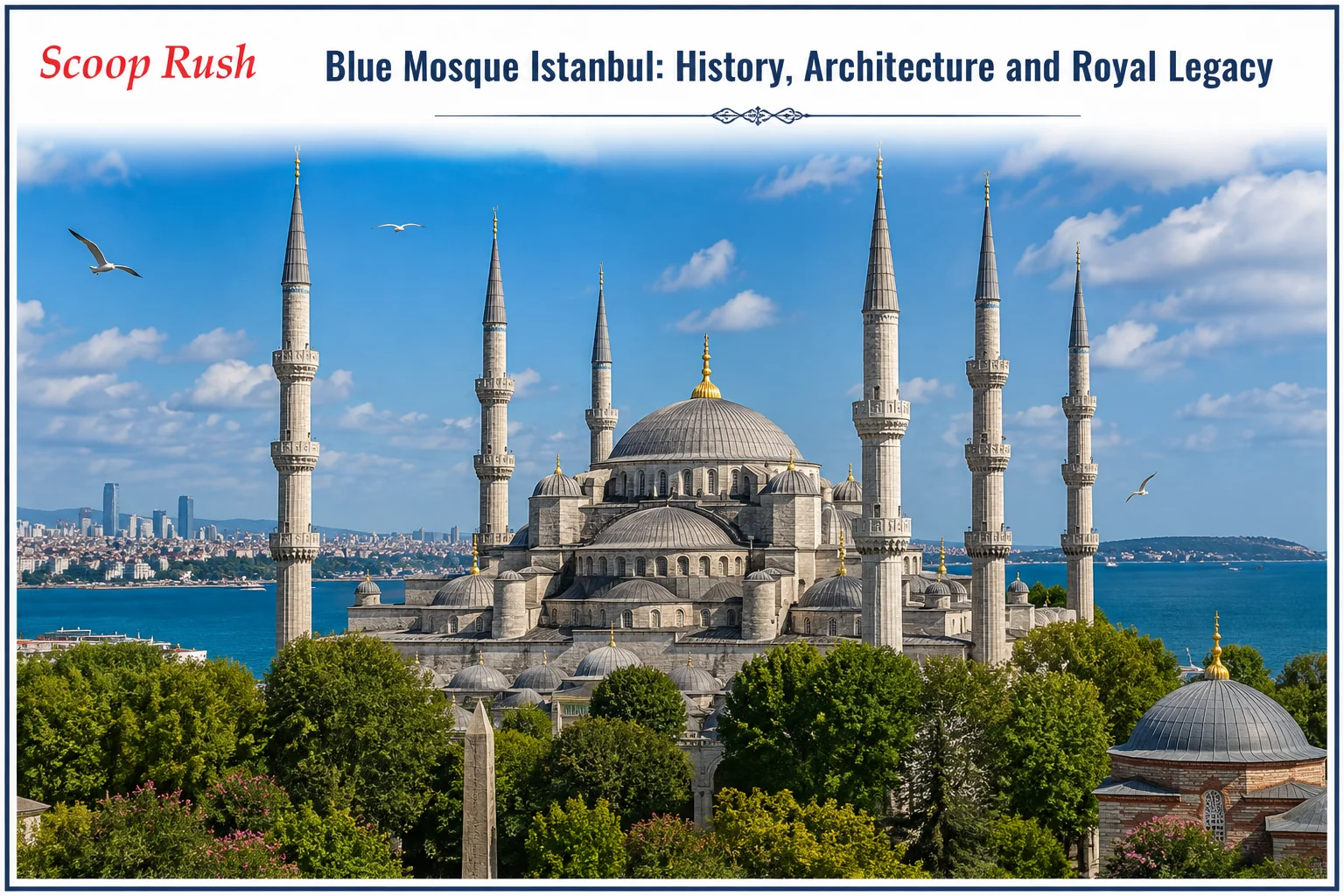
Blue Mosque Istanbul stands among the world’s most admired religious landmarks. Its graceful domes, elegant minarets, and striking blue interior attract millions of visitors every year. Built during the early 17th century, the mosque reflects Sultan Ahmed I’s determination to leave behind a lasting legacy through architecture rather than military conquest.
Today, the mosque remains a living place of worship and one of Istanbul’s most visited attractions. Its remarkable history, beautiful design, and central location continue to inspire travelers from around the world.
Blue Mosque Istanbul Began With a Young Sultan’s Ambitious Dream
Sultan Ahmed I became the Ottoman ruler at only 13 years old. His reign began during a challenging period, and he wanted to strengthen his legacy through an extraordinary building project.
Construction started in 1609 when the young sultan turned 19. He entrusted architect Sedefkâr Mehmed Ağa with creating a mosque that would become the crown jewel of Ottoman architecture. The project reached completion in 1616 and quickly became one of the empire’s greatest achievements.
How Blue Mosque Istanbul Drew Inspiration From Hagia Sophia
Long before the Blue Mosque appeared, Hagia Sophia dominated Istanbul’s skyline. Its massive dome stood as one of the greatest engineering achievements of the Byzantine world and inspired builders for centuries.
Rather than copying Hagia Sophia, Sedefkâr Mehmed Ağa created something unique. He blended classical Ottoman architecture with engineering ideas inspired by the neighboring monument. The result was a masterpiece that reflected the confidence of the Ottoman Empire.
Blue Mosque Istanbul Sits at the Heart of Historic Istanbul
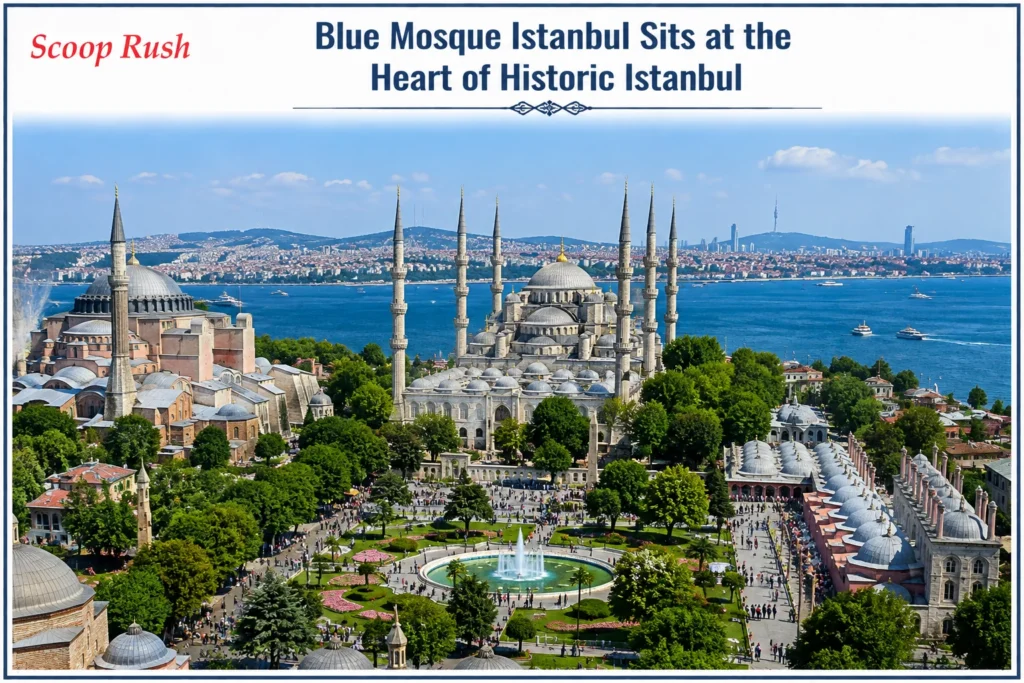
The mosque stands in Sultanahmet on Istanbul’s historic peninsula. It overlooks the Sea of Marmara and sits close to both the Bosphorus and the Golden Horn. This location places it at the center of the city’s rich cultural heritage.
Many of Istanbul’s famous attractions stand only a short walk away. Visitors can easily explore Hagia Sophia, Topkapi Palace, the Basilica Cistern, and Sultanahmet Square during the same visit.
Blue Mosque Istanbul Became More Than a Place of Worship
The mosque formed the centerpiece of a large külliye, or religious complex. Ottoman rulers designed these complexes to support both faith and everyday community life.
The complex included a madrasa, hospice, soup kitchen, primary school, marketplace, and the royal mausoleum. Together, these buildings provided education, charity, and public services while supporting the surrounding neighborhood.
Why Blue Mosque Istanbul Has Six Minarets
The mosque became famous for its six elegant minarets. At the time, most Ottoman imperial mosques featured only four, making Sultan Ahmed’s decision highly unusual.
The design sparked controversy because the Grand Mosque in Mecca also had six minarets. According to popular tradition, Sultan Ahmed later funded a seventh minaret in Mecca to ease criticism, although historians continue to debate whether this actually happened.
Inside Blue Mosque Istanbul: Beautiful Iznik Tiles
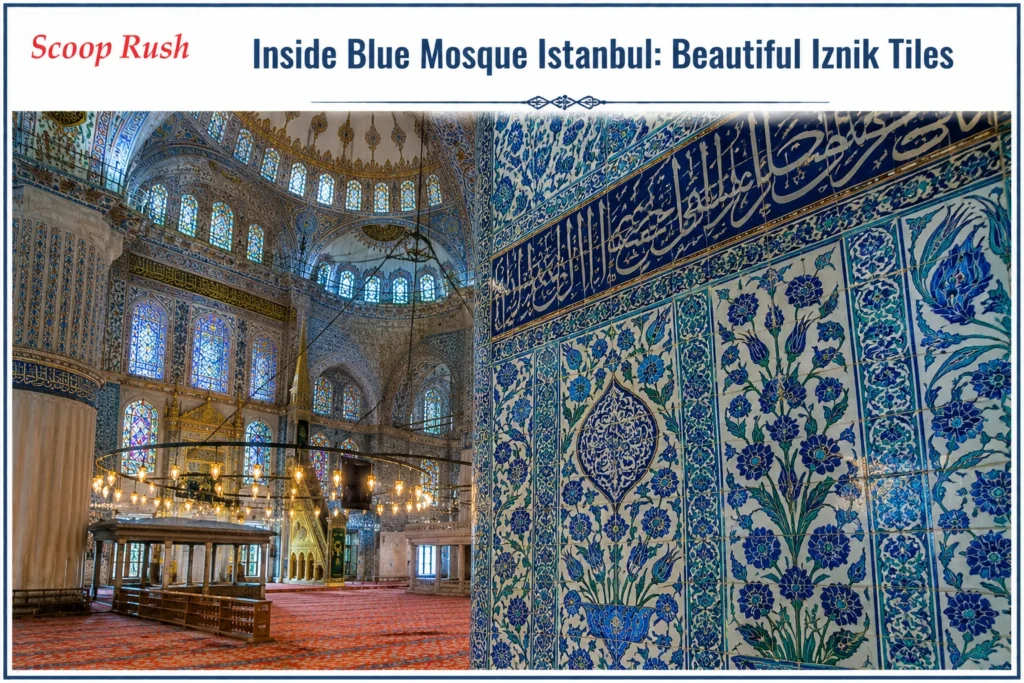
The mosque earned its popular nickname because of its extraordinary interior decoration. More than 20,000 handmade Iznik tiles cover the walls, galleries, and arches with detailed floral and geometric patterns.
Blue shades dominate the artwork and create the peaceful atmosphere visitors admire today. These remarkable tiles remain among the finest examples of Ottoman ceramic craftsmanship.
Blue Mosque Istanbul Fills With Light and Elegance
Natural light pours into the prayer hall through around 260 windows. Many originally featured colorful Venetian stained glass, although later restorations replaced much of the original glass.
Above the prayer hall rises a magnificent central dome supported by four enormous pillars. Elegant chandeliers and beautiful calligraphy complete a space that feels both grand and peaceful.
Every Detail of Blue Mosque Istanbul Blends Beauty With Purpose
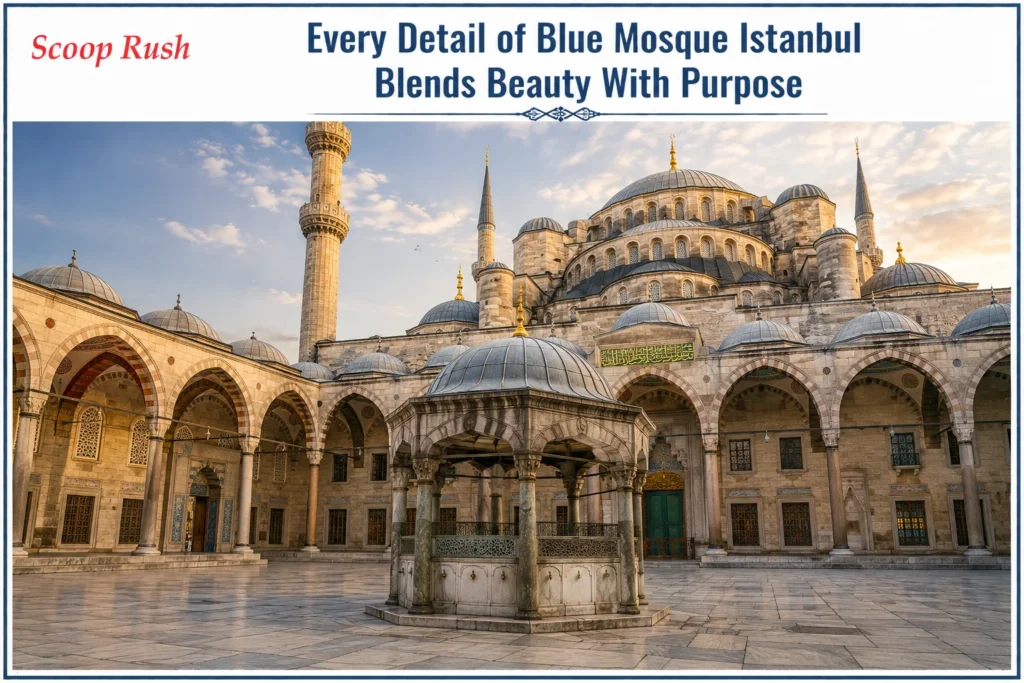
The spacious courtyard follows the traditional layout of classical Ottoman mosques. Stone arcades surround the open space and provide shelter throughout the year.
At the center stands an ablution fountain where worshippers prepare before prayer. Every part of the design combines architectural beauty with practical function, making the mosque both welcoming and functional.
Blue Mosque Istanbul Was Built to Last for Generations
Sultan Ahmed wanted the mosque to remain financially secure long after his lifetime. For that reason, he planned a sustainable source of income during construction.
The nearby Arasta Bazaar generated rental income that funded maintenance and charitable work. This thoughtful approach helped preserve the mosque while supporting the surrounding community.
Blue Mosque Istanbul Reflects an Important Chapter in Ottoman History
Construction took place during a period of political and military uncertainty. Some critics believed such an ambitious project required stronger military success before it could begin.
Despite the criticism, Sultan Ahmed continued with his vision. Over the centuries, the mosque became the defining achievement of his reign and one of Istanbul’s most treasured landmarks.
Blue Mosque Istanbul Changed an Ottoman Royal Tradition
Ahmed chose not to execute his brother Mustafa after becoming sultan. His decision marked an important shift from the long-standing practice of royal fratricide.
Over time, this choice contributed to the wider adoption of palace confinement for rival princes. Historians still regard this decision as a major turning point in Ottoman succession.
Exploring Blue Mosque Istanbul Today
The Blue Mosque remains an active place of worship while welcoming millions of visitors every year. Tourists may enter between prayer times while respecting local customs and dress requirements.
A major restoration finished in 2023 after six years of careful conservation. Today, visitors can admire its restored domes, intricate decoration, and remarkable architecture while experiencing one of Istanbul’s most treasured landmarks.
Conclusion
Blue Mosque Istanbul continues to capture the imagination of travelers with its remarkable history and timeless beauty. Every dome, minaret, and handcrafted tile tells the story of a young ruler determined to create a lasting masterpiece.
More than 400 years after its completion, the mosque remains one of Turkey’s greatest cultural treasures. Whether you visit for its architecture, history, or peaceful atmosphere, the Blue Mosque offers an unforgettable experience in the heart of Istanbul.
FAQs
1. Why is Blue Mosque Istanbul one of the most famous landmarks in Turkey?
Blue Mosque Istanbul is famous for its impressive Ottoman architecture, six elegant minarets, and more than 20,000 handcrafted Iznik tiles. It remains an active mosque while welcoming millions of visitors each year.
2. Who built Blue Mosque Istanbul and when was it completed?
Sultan Ahmed I commissioned the mosque in 1609, and architect Sedefkâr Mehmed Ağa designed it. Construction finished in 1616, making it one of the greatest architectural achievements of the Ottoman Empire.
3. Why did the six minarets of Blue Mosque Istanbul cause controversy?
The mosque originally had the same number of minarets as the Grand Mosque in Mecca. According to popular tradition, Sultan Ahmed later funded a seventh minaret in Mecca to ease the criticism, although historians continue to debate the story.
4. Can tourists visit Blue Mosque Istanbul during their trip?
Yes. Visitors can enter the mosque between the five daily prayer times. Since it remains an active place of worship, modest clothing is required, and women should cover their hair before entering.
5. What attractions are located near Blue Mosque Istanbul?
The mosque stands in Sultanahmet, close to Hagia Sophia, Topkapi Palace, the Basilica Cistern, Sultanahmet Square, and the Grand Bazaar. These famous attractions make the area one of Istanbul’s most rewarding places to explore.

