
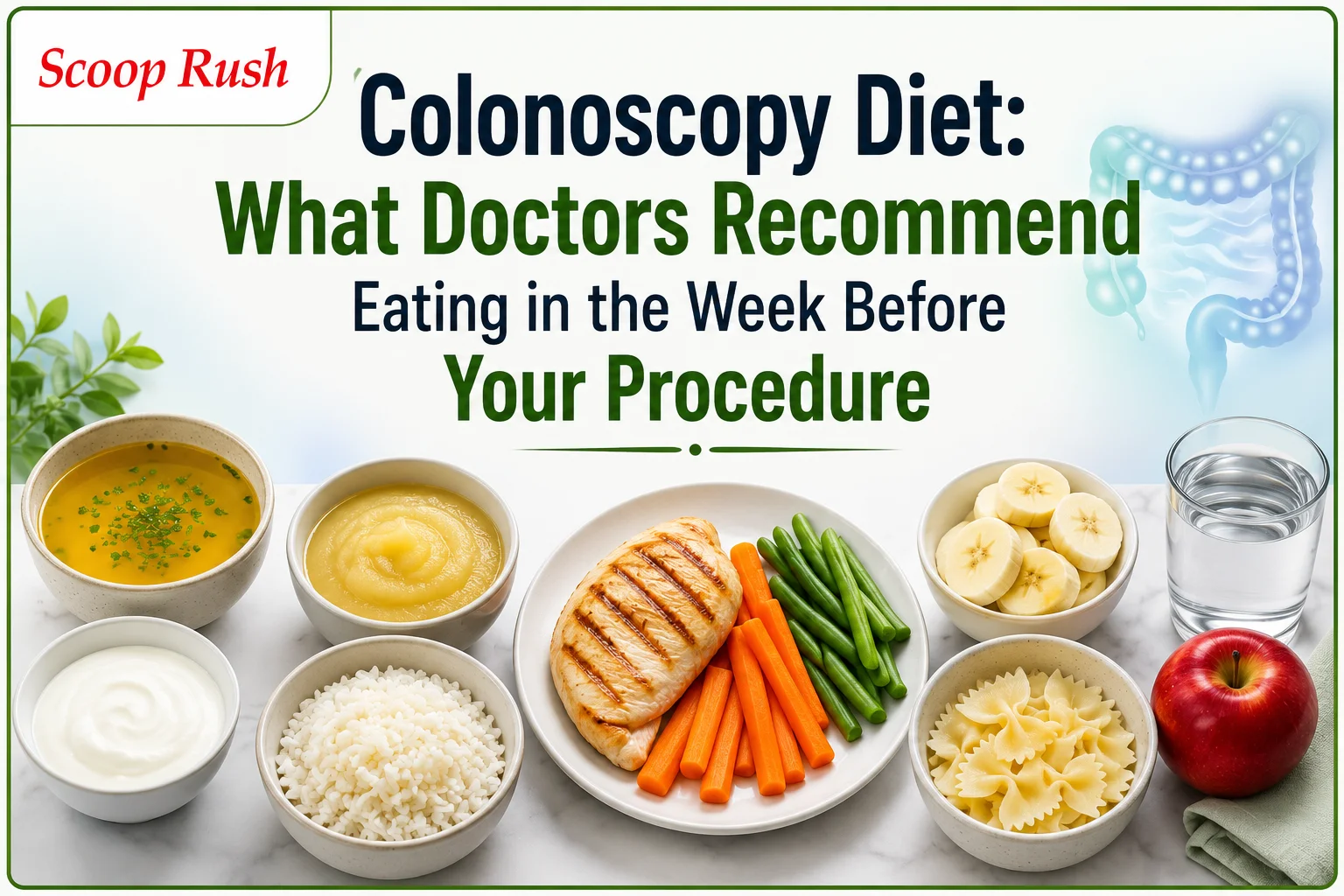
Millions of people undergo a colonoscopy every year, and doctors say the outcome of the procedure often depends on something that happens long before the patient reaches the clinic: what they eat during the week leading up to it.
Health experts note that a well-planned colonoscopy diet, paired with the prescribed bowel prep solution, gives doctors the clear view they need to spot polyps and early signs of colorectal cancer. Skipping or ignoring the diet, on the other hand, can lead to an incomplete exam or a repeat procedure, which means more time, more cost and more anxiety for the patient.
This guide breaks down exactly what to eat and avoid in the week before a colonoscopy, why the diet matters so much, and how to handle common problems that come up along the way.
Why the Colonoscopy Diet Matters

A colonoscopy allows a doctor to examine the entire lining of the colon using a small camera attached to a flexible tube. If the colon still contains undigested food or waste, that view gets blocked, and small but important details, like early polyps or subtle inflammation, can be missed entirely.
The Science Behind the Prep
According to gastroenterology guidance, the purpose of the pre-procedure diet is to gradually reduce the amount of solid waste sitting in the colon, which makes the final bowel prep solution far more effective at cleaning things out. Research published on UCIHealth.org has shown that a moderate low-fiber diet, allowing foods like eggs, yogurt and white bread, produces results comparable to older, far more restrictive diets, while being much easier for patients to actually stick to.
Why Early Detection Depends on Good Prep
This matters beyond simple comfort. A poor prep can hide polyps that would otherwise be caught early, which is especially important for anyone undergoing routine screening or ongoing cancer surveillance. Doctors who specialize in early detection often point to the same lesson that applies across cancer screening in general, whether it is a colonoscopy or something like the HPV vaccine’s role in preventing cervical cancer deaths: early, accurate detection saves lives, and preparation is a key part of making that detection possible.
The Colonoscopy Diet Timeline: A Week-by-Week Breakdown
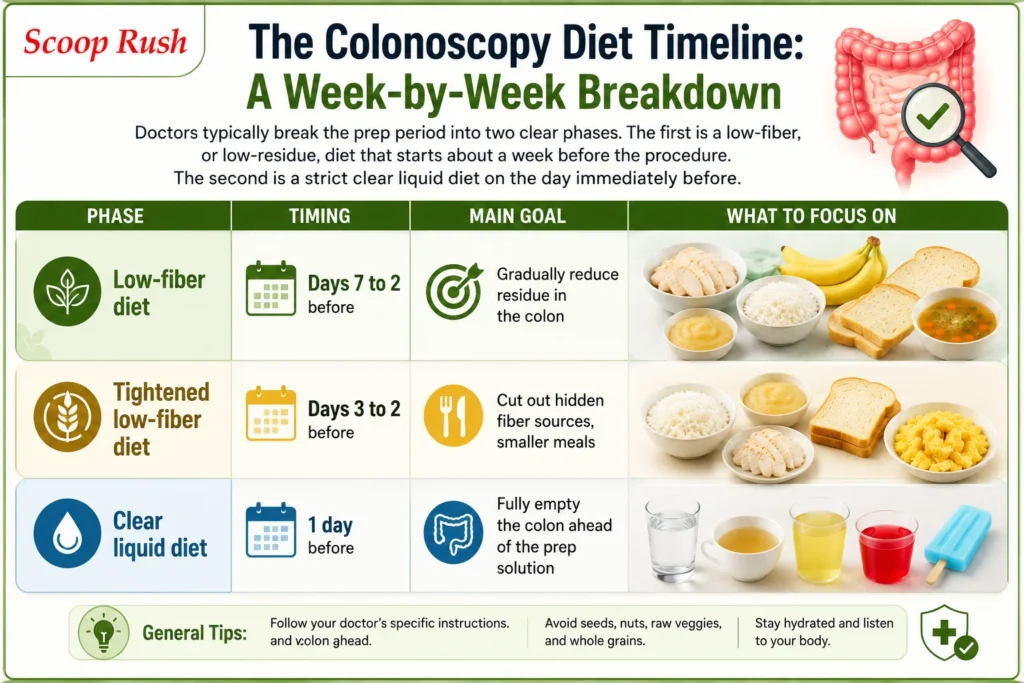
Doctors typically break the prep period into two clear phases. The first is a low-fiber, or low-residue, diet that starts about a week before the procedure. The second is a strict clear liquid diet on the day immediately before.
| Phase | Timing | Main Goal |
| Low-fiber diet | Days 7 to 2 before | Gradually reduce residue in the colon |
| Tightened low-fiber diet | Days 3 to 2 before | Cut out hidden fiber sources, smaller meals |
| Clear liquid diet | 1 day before | Fully empty the colon ahead of the prep solution |
Days 7 to 4: Easing Into the Low-Fiber Diet
The first few days are about phasing out high-fiber foods gradually rather than making an abrupt switch. This makes the transition easier on the digestive system and easier on the patient’s routine.
| Food Group | Allowed | Avoid |
| Grains | White bread, white rice, plain pasta | Whole grains, bran cereal, granola |
| Protein | Eggs, tender chicken, turkey, fish | Tough or fatty cuts of meat |
| Vegetables | Well-cooked, skinless carrots, green beans, peeled potatoes | Raw vegetables, corn, beans, lentils |
| Fruit | Canned or peeled fruit without skin or seeds | Berries, grapes, apples, other fruit with skin or seeds |
| Dairy | Milk, plain yogurt, mild cheese | Yogurt with seeds or fruit pieces |
| Other | Smooth spreads, seasonings | Nuts, seeds, popcorn |
A typical day on this diet might include scrambled eggs and white toast for breakfast, a turkey sandwich on white bread for lunch, and grilled fish with white rice for dinner. It is a significant shift from typical dietary advice that emphasizes fiber, which is exactly why doctors recommend planning meals ahead of time rather than figuring it out day by day.
This kind of temporary dietary restriction has some overlap with other structured diets people follow for different reasons. Someone already used to eating according to a plan, whether that is a low-carb diet, a military diet or even a carnivore diet, may find the low-residue phase more familiar than someone used to eating a high-fiber, plant-heavy diet every day. Even so, doctors stress that the colonoscopy diet has its own specific rules and should not be confused with any of these other eating patterns, since the goal here is reducing residue, not managing weight or macronutrients.
Days 3 to 2: Tightening the Rules
As the procedure approaches, doctors advise sticking more strictly to the low-fiber list and shifting toward smaller, lighter meals. This reduces the overall workload on the digestive system heading into the final prep day.
This is also the stage where hidden sources of fiber tend to slip through unnoticed. Flavored yogurts often contain small fruit seeds. Multigrain crackers that look harmless can contain whole wheat flour or hidden seeds. The safest approach is to read labels carefully and default to the plainest version of any food, whether that is plain saltines instead of “healthy” crackers or plain yogurt instead of one with fruit swirled in.
Medications to Flag With Your Doctor
Patients are also generally told to stop taking iron supplements about a week before the procedure, since iron can coat the colon wall and interfere with visibility during the exam. This is one reason doctors always ask patients to bring a full list of medications and supplements to their pre-procedure appointment. It ties into a broader point that health experts have been raising more often lately: taking too many supplements without medical guidance can cause problems doctors do not always anticipate, a concern covered in more detail in this piece on the risks of taking too many vitamins and supplements.
Aspirin, ibuprofen and blood-thinning medications often need to be paused as well, though only on a doctor’s specific instructions, since stopping these medications carries its own risks depending on why a patient is taking them.
The Day Before: Clear Liquids Only
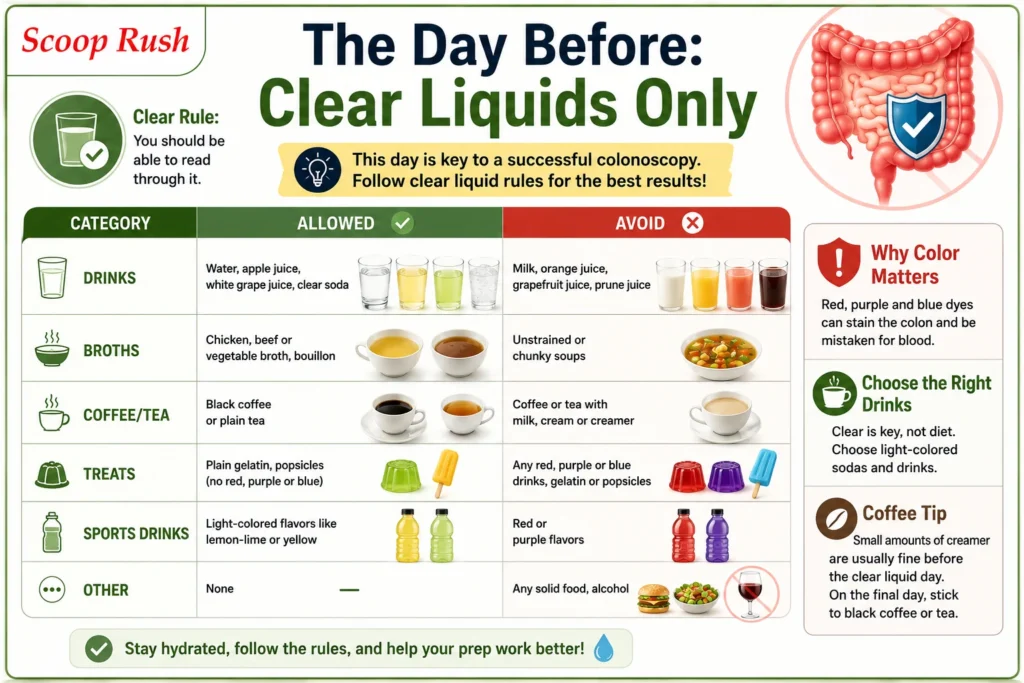
The final day before a colonoscopy calls for a strict clear liquid diet. This is widely considered the most important part of the entire prep process, since it directly determines whether the bowel prep solution can finish the job properly.
A simple way to judge whether a drink qualifies as a clear liquid is whether it would be possible to read text through it if held up to the light in a glass. For a full breakdown of what counts and what does not, this detailed clear liquid diet guide covers the category in depth.
| Clear Liquid Diet | Allowed | Avoid |
| Drinks | Water, apple juice, white grape juice, clear soda | Milk, orange juice, grapefruit juice, prune juice |
| Broths | Chicken, beef or vegetable broth, bouillon | Unstrained or chunky soups |
| Coffee/Tea | Black coffee or plain tea | Coffee or tea with milk, cream or creamer |
| Treats | Plain gelatin, popsicles (no red, purple or blue) | Any red, purple or blue drinks, gelatin or popsicles |
| Sports drinks | Light-colored flavors like lemon-lime or yellow | Red or purple flavors |
| Other | None | Any solid food, alcohol |
Why the Color Rule Matters
Doctors warn specifically against red, purple or blue dyes on this day, since they can stain the colon lining and be mistaken for blood during the exam, which can lead to a delayed or inaccurate result, or in some cases the need to repeat the entire prep.
Choosing the Right Drinks
Soda choices can be confusing for people who are used to reaching for a diet drink out of habit. Since clear liquid rules focus on color rather than sugar content, some diet sodas are technically allowed as long as they are not dark or dyed red or purple. For anyone weighing their options, comparisons like Diet Coke versus Coke Zero, the health profile of Diet Sprite, or a closer look at Diet Dr Pepper can help clarify which options fit the clear liquid rule and which do not, since color rather than diet status is what actually matters here.
Coffee is another point of confusion. Many patients ask whether their morning coffee habit needs to stop entirely. During the early low-fiber days, coffee with a small amount of creamer is usually fine, but questions about coffee and digestion come up often enough that it is worth understanding how coffee affects the body on an empty stomach, especially once solid food is off the table and only black coffee remains an option.
Other Special Diets Worth Understanding
The colonoscopy diet is temporary and specific, but it is not the only restrictive eating plan doctors commonly recommend. People managing digestive conditions long term may already be familiar with some of the same principles.
Diets That Share Similar Principles
A low-residue diet is essentially the same concept used for colonoscopy prep, just applied on an ongoing basis for conditions that require reduced fiber intake. Similarly, a bland diet and a soft food diet share overlapping goals of easing digestive strain, though they are used for different medical reasons, such as recovering from surgery or managing acid reflux.
People who deal with diverticulitis or hemorrhoids on an ongoing basis may already have practice navigating fiber restrictions, though it is worth noting that long-term diverticulitis management often eventually calls for more fiber, not less, once a flare-up has passed. This is exactly why doctors emphasize that the colonoscopy prep diet is short-term and should not be extended beyond what is medically necessary.
When Other Medical Diets Overlap With Prep
For patients managing other health conditions, additional dietary considerations may apply. Someone with Meniere’s disease managing sodium intake through a low-sodium diet, or someone managing kidney stones through a low-oxalate diet, should mention these existing dietary needs to their gastroenterologist ahead of time so the prep plan can be adjusted without conflicting with other medical guidance. The same applies to anyone following a keto diet, since the sudden shift away from typical keto staples can feel disorienting without a plan in place.
Common Mistakes That Can Ruin a Colonoscopy Prep
Gastroenterologists say a handful of missteps come up again and again, and most of them are entirely avoidable with a bit of preparation.
- Forgetting to stop iron or certain medications. Patients are encouraged to bring a full, written list of every medication and supplement to their pre-procedure appointment rather than trying to remember everything on the spot.
- Not finishing the entire bowel prep solution, even when bowel movements already look clear. Doctors stress that the full dose is needed to clean the upper part of the colon, not just the lower portion that clears first. Stopping early because things “look clean enough” is one of the most common reasons a colonoscopy has to be repeated.
- Giving up on the prep solution due to nausea. Chilling the solution in the refrigerator and sipping it slowly through a straw is a widely recommended way to make it more tolerable. Staying close to a bathroom and continuing to sip other clear fluids throughout the process also helps manage discomfort.
- Getting dehydrated during the clear liquid day, particularly once the bowel prep solution starts working.
Staying Hydrated Through the Process
Light-colored sports drinks help replace lost electrolytes like sodium and potassium. This kind of hydration awareness matters just as much outside of medical prep, especially for older adults managing hydration during extreme weather, which is covered in more detail in guidance on heat and humidity risks for seniors and general home cooling tips for hot weather, as well as broader heat dome safety guidance for anyone scheduling a summer procedure during a heat wave.
Extra Care for Patients in Cancer Treatment
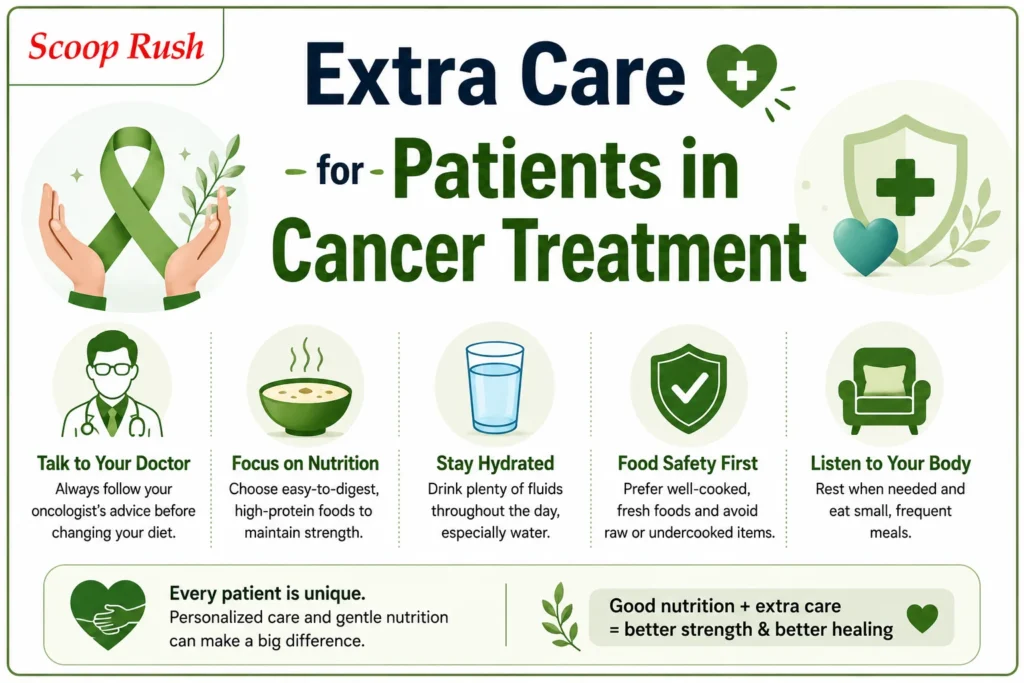
For patients undergoing chemotherapy or other cancer treatment, doctors recommend closer coordination between the oncology team and the gastroenterologist before starting the colonoscopy diet. Treatment schedules take priority over prep timing, and adjustments are often necessary for medications tied to specific treatment plans, including newer therapies.
Coordinating Treatment Schedules
Ongoing research into treatments like teplizumab for type 1 diabetes is a reminder of how quickly treatment protocols evolve, which is exactly why patients on any specialized regimen should never adjust their medication schedule without direct guidance from their treating physician.
Managing Blood Sugar and Newer Medications
Diabetic patients in particular often need dosage adjustments once they switch to clear liquids, since blood sugar levels can shift quickly without regular food intake. Patients using newer weight loss or diabetes medications should also flag this with their care team, since concerns like the muscle loss sometimes associated with GLP-1 medications can factor into how a doctor manages nutrition during the prep period.
One observational study found that nutritional deficiency affected a large share of patients in the 48 hours before a colonoscopy, which is why doctors often suggest nutrient-dense options like bone broth over plain bouillon during this stage, along with approved clear nutritional supplements where appropriate.
What to Do If the Prep Doesn’t Go as Planned
| Situation | What Doctors Recommend |
| Ate a restricted food a few days before the procedure | Usually not a serious problem, the body has time to process it |
| Ate solid food the day before the procedure | Call your doctor’s office right away to confirm whether to proceed or reschedule |
| Stool has not turned clear or pale yellow after finishing the entire prep | Call the clinic immediately, even after hours, rather than waiting it out |
| Severe nausea prevents finishing the prep solution | Chill the solution, sip through a straw, and contact your doctor if it continues |
If stool has not turned clear or pale yellow after finishing the entire prep solution, in some cases an additional step like a tap water enema may be recommended to finish the job properly.
Life After the Colonoscopy: Getting Back on Track
Once the procedure is over, most people are eager to get back to normal eating and normal routines. Doctors generally recommend easing back into a regular diet over a day or two rather than jumping straight back into heavy or high-fiber meals.
Building Better Habits Going Forward
This can also be a good moment to think about longer-term habits, especially for younger adults who may be undergoing a first screening earlier than expected due to family history or symptoms. Building sustainable routines, like the kind outlined in guidance on healthy habits for people in their 20s and 30s, can support long-term digestive and overall health well beyond the prep week itself.
Simple movement also plays a role in digestive health and overall wellness. Something as small as building in a five-minute walk every hour has been shown to offer meaningful benefits, and it is a low-effort habit that fits easily into recovery after a colonoscopy once a doctor gives the go-ahead to resume normal activity.
For anyone considering a bigger lifestyle shift after a health screening, whether that means joining a gym or starting a new fitness routine, thinking through details like fitness studio name ideas might feel like a stretch mid-prep, but plenty of people use a health scare or a routine screening as the trigger to finally commit to changes they had been putting off.
The Bigger Picture on Preventive Health
It’s also worth remembering that a colonoscopy is one part of a much larger picture of preventive health. Recognizing symptoms early matters across the board, whether that means understanding early lung cancer symptoms or simply paying attention to changes in digestion, energy or weight that might otherwise be brushed off.
Questions Worth Asking Before You Start the Diet
Walking into a pre-procedure appointment with a short list of questions can prevent a lot of confusion later in the week. Doctors say patients rarely ask enough questions up front, and then end up calling the office anyway once they hit a gray area on day three or four.
A few worth raising directly with your care team:
- Exactly which day should the low-fiber diet start, and which day should clear liquids begin?
- Are there any foods on the standard list that should be avoided in my specific case, based on other health conditions?
- Which of my current medications need to be paused, and when should they be restarted?
- Is there a preferred bowel prep brand or schedule, and should it be split into two doses rather than one?
- What is the exact cutoff time for drinking anything at all before arrival?
Every clinic and every physician has slightly different preferences, which is part of why the guidance found online, including in this article, should be treated as a general framework rather than a substitute for direct instructions. Bowel prep products vary, procedure times vary, and individual health history can change what is considered safe. A quick phone call to confirm details is far less stressful than guessing halfway through prep week.
Practical Logistics to Sort Out Early
It also helps to plan practical logistics ahead of time rather than scrambling the night before. Arranging a ride home is required at most clinics, since sedation is typically used during the procedure. Picking out comfortable, loose clothing for the day of the exam, skipping jewelry and valuables, and setting aside insurance information in advance all reduce last-minute stress. None of this affects the prep itself, but a calmer lead-up to the appointment tends to make the entire week easier to manage.
FAQs
1. Can I drink coffee before a colonoscopy?
Yes, but the type allowed depends on the stage of your prep. During the early low-fiber days, coffee with a small amount of creamer is usually fine. Once you switch to the clear liquid diet, only black coffee or tea is allowed, with no milk, cream or non-dairy creamer.
2. Why can’t I have red or purple drinks before a colonoscopy?
Red, purple and blue dyes can stain the lining of the colon. During the procedure, this staining can look like blood, which may lead to confusion during the exam or the need to repeat the prep entirely.
3. What happens if I accidentally eat the wrong food during my colonoscopy diet week?
Eating a small amount of a restricted food a few days before the procedure usually isn’t a major concern, since the body has time to process it. Eating solid food the day before the colonoscopy is more serious, and you should contact your doctor’s office as soon as possible to confirm whether you can proceed as planned.
4. Is it normal to feel nauseous during bowel prep?
Nausea is a common reaction to the bowel prep solution. Chilling the solution and drinking it slowly through a straw often helps, as does taking short breaks between doses if your instructions allow it. If nausea becomes severe, persistent, or is accompanied by vomiting that prevents you from finishing the prep, contact your doctor.
5. Do I need to stop my medications before a colonoscopy?
Some medications, including iron supplements, aspirin, ibuprofen and blood thinners, often need to be paused before the procedure. This should always be done under a doctor’s guidance and never on your own, since some medications, especially those tied to cancer treatment or diabetes management, require careful timing to avoid complications.

