
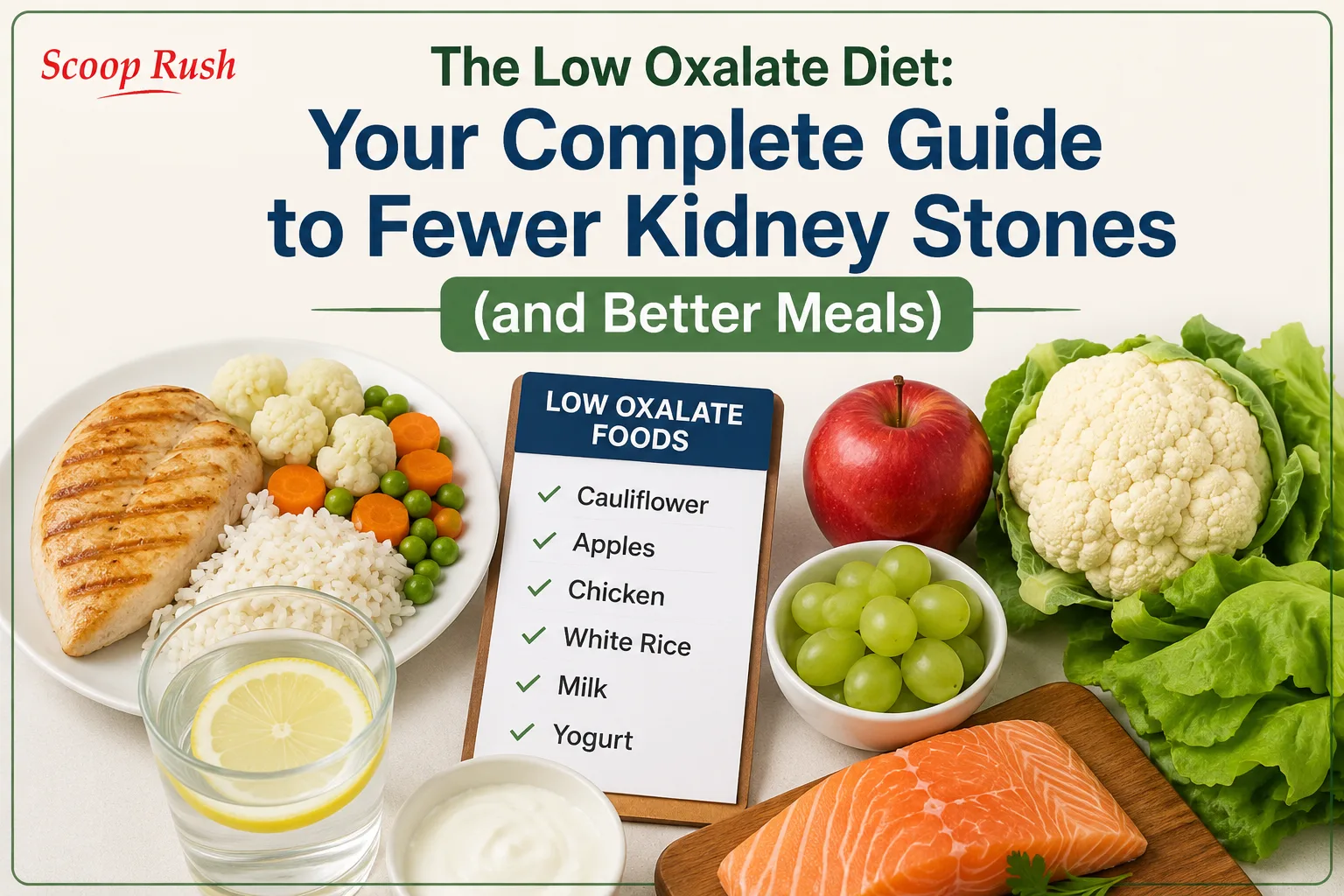
If you’ve ever had a kidney stone, you don’t need anyone to tell you how much it hurts you just want to make sure it never happens again. For most people with calcium oxalate stones (the most common kind by far), the single most effective thing you can do isn’t a miracle supplement or an expensive procedure. It’s food.
This guide walks you through what oxalate actually is, why your body sometimes turns it into stones, and most importantly exactly what to eat, what to limit, and how to build a week of meals around it without feeling like you’re on a diet of cardboard and regret.
What Is Oxalate, Really?
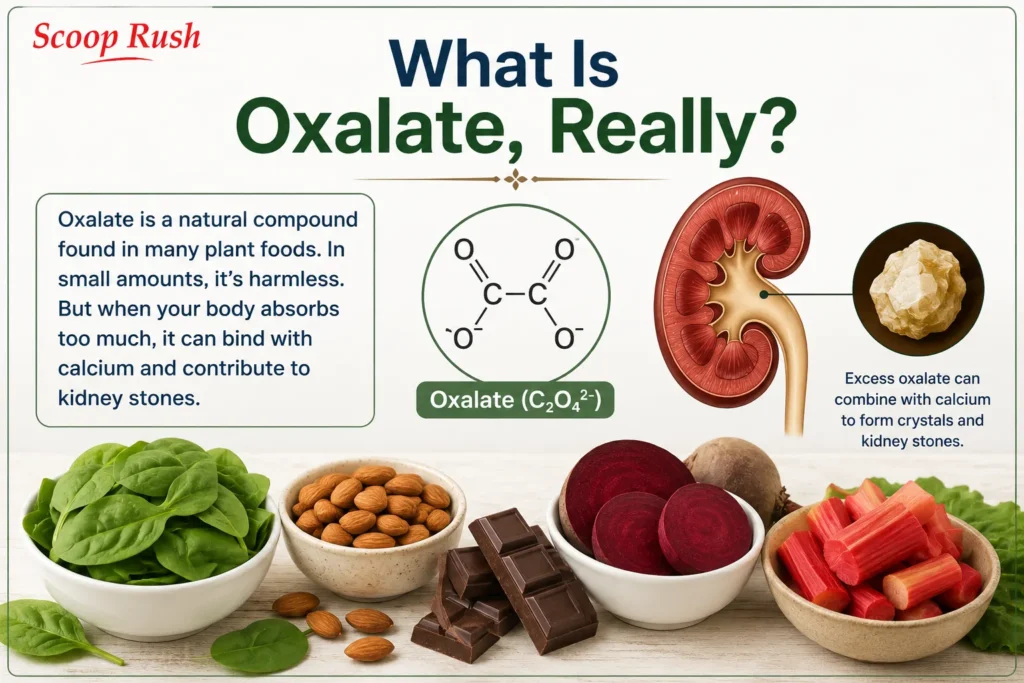
Oxalate (also called oxalic acid) is a natural compound found in tons of plant foods vegetables, fruits, nuts, seeds, grains, legumes, even chocolate and tea. Your liver also produces a small amount on its own as a byproduct of normal metabolism, so even a theoretically “oxalate-free” diet wouldn’t bring your levels to zero.
Normally, oxalate just passes through you, exiting via stool or urine without incident. The trouble starts when too much of it gets absorbed into your bloodstream, travels to your kidneys, and links up with calcium there. That pairing forms tiny crystals and over time, those crystals can grow into the kind of stone that lands people in the ER doubled over in pain.
Left unchecked, these crystals can:
- Grow larger and stick together
- Block urine flow
- Trigger infections
- Damage kidney tissue over time
It helps to think of oxalate and calcium like two puzzle pieces that shouldn’t be allowed to meet in the wrong place. In your gut, calcium can safely “catch” oxalate and carry it out with your stool. In your kidneys, that same pairing turns into a problem. The entire strategy behind this diet is about controlling where that meeting happens.
The Calcium Plot Twist
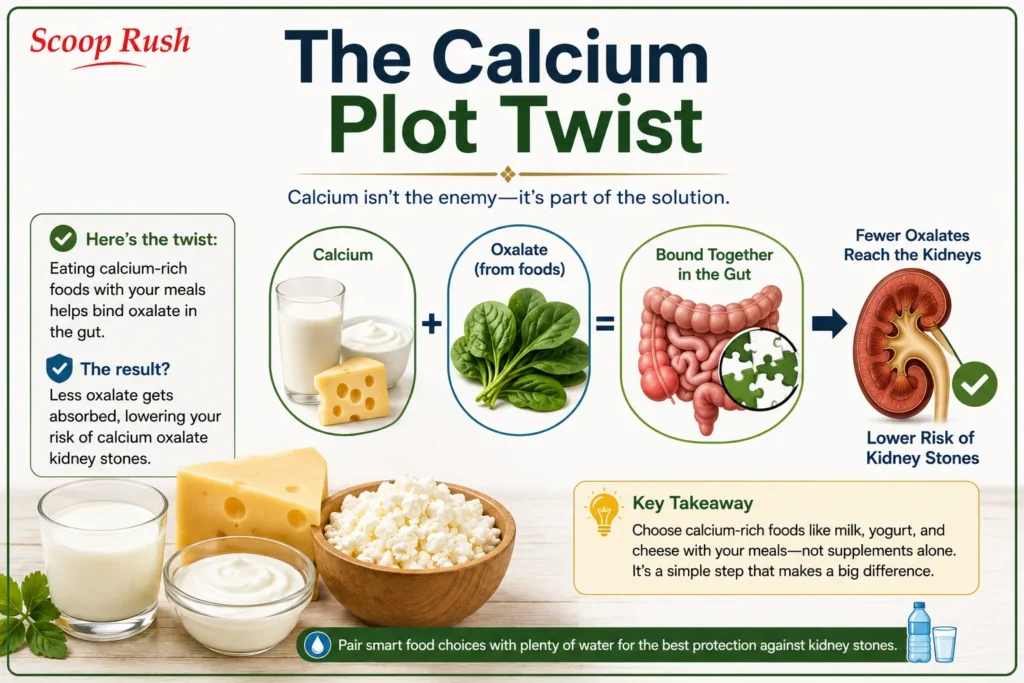
Here’s the part that surprises almost everyone: if you’ve had calcium oxalate stones, cutting calcium is usually the wrong move.
Eaten with meals, calcium binds to oxalate right in your intestines before it ever reaches your bloodstream and the pair simply leaves your body together through stool. Skip the calcium, and there’s nothing to catch the oxalate before it heads for your kidneys instead. This is why low-calcium diets have actually been linked to a higher rate of stone formation in some patients, not a lower one.
Good calcium sources to eat alongside meals:
- Milk
- Yogurt
- Cheese
- Calcium-fortified foods and beverages
Most providers recommend getting this calcium from food rather than supplements taken between meals. If you do take a calcium supplement, timing matters — taking it with a meal (rather than on an empty stomach at bedtime, say) is what allows it to actually do its binding job. Always confirm dosing and timing with your provider, since needs vary a lot from person to person, and keep in mind that megadosing on any single nutrient carries its own risks more isn’t automatically better.
Who Actually Needs This Diet?
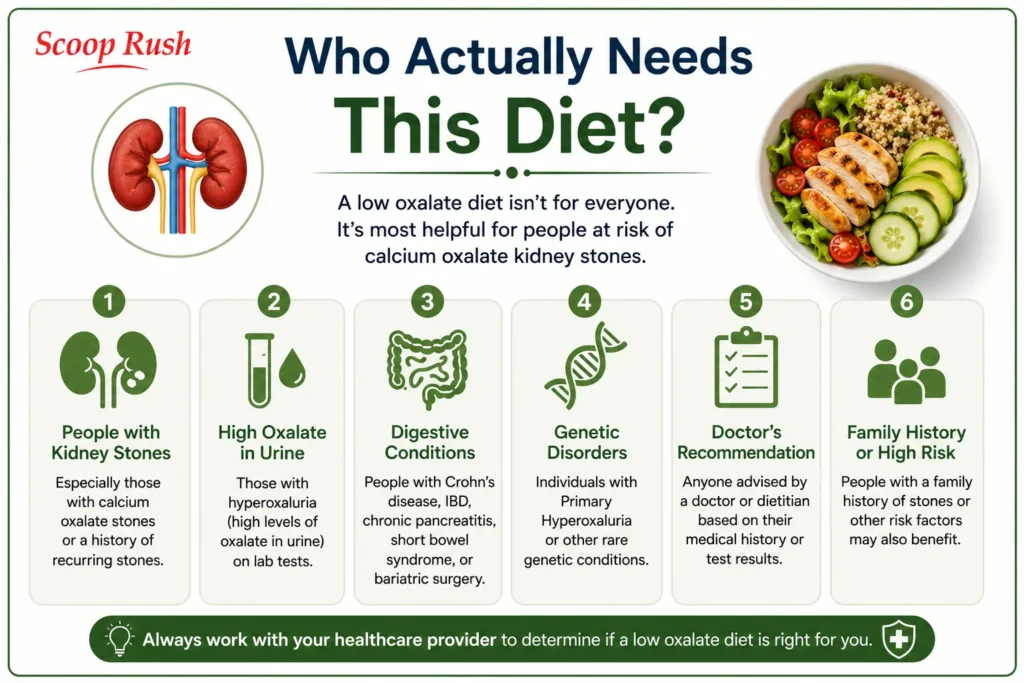
A low oxalate diet isn’t for everyone it’s typically recommended if you have:
- Recurrent calcium oxalate kidney stones
- Hyperoxaluria (elevated urinary oxalate), primary or enteric
- Crohn’s disease or inflammatory bowel disease (IBD)
- Chronic pancreatitis
- Short bowel syndrome
- A history of bariatric surgery
- Elevated oxalate found on a 24-hour urine test
If you’ve never had a stone and your labs are normal, restricting oxalate for the sake of it isn’t generally necessary and cutting out too many high-oxalate plant foods without reason can mean missing out on fiber, antioxidants, and other nutrients those foods provide. If your oxalate issues stem from a digestive condition like Crohn’s or chronic pancreatitis, it’s also worth talking to your provider about how this diet might need to work alongside other eating approaches, such as a bland diet during flare-ups, rather than in isolation.
One important exception: Primary Hyperoxaluria (PH) is a genetic liver condition that causes the body to overproduce oxalate internally, regardless of diet. Because the problem originates inside the body rather than from food, diet alone can’t fully correct it. People with PH usually need specialized medical treatment sometimes including targeted medications or, in severe cases, liver-related interventions alongside any dietary changes.
How Much Oxalate Is “Low”?
| Daily Target | Who It’s For |
| Under 100 mg/day | General kidney stone prevention |
| Under 50 mg/day | High-risk patients, under medical supervision |
Your doctor or dietitian will fine-tune this number based on your urine test results, stone history, and overall health it’s a starting point, not a universal rule. Many people find it useful to track oxalate intake for a week or two using a food diary or app just to get a feel for how quickly foods like spinach or almonds can eat up their daily “budget,” even in small servings.
Two Habits That Matter Almost as Much as the Food
Hydrate like it’s your job. Diluted urine means oxalate and calcium are less likely to bump into each other and crystallize. Most kidney specialists suggest aiming to produce at least 2.5 liters of urine a day which for most people means drinking noticeably more than that in fluids, since some of what you drink is lost through sweat, breathing, and other functions. Good options: water, lemon water, milk, buttermilk, and select herbal teas. Lemon water deserves a special mention the citrate in lemon juice actually helps prevent calcium from binding with oxalate in the first place, making it one of the more genuinely useful beverage choices on this list, not just a flavor add-in.
Watch your sodium. Excess salt makes your kidneys dump more calcium into your urine which, ironically, raises stone risk even if your oxalate intake is perfect. Cook at home more often, check labels, and go easy on processed and salty snacks. A useful rule of thumb: if a food comes in a box, can, or bag and has a long ingredient list, assume it’s a sodium contributor until the label proves otherwise. Sodium restriction shows up as a cornerstone of several other condition-specific eating plans too for example, a low-sodium approach is also central to managing Meniere’s disease, which shows just how many parts of the body benefit when you dial back salt.
Foods to Eat and Enjoy
Low oxalate vegetables:
cauliflower, cabbage, Brussels sprouts, mushrooms, onions, white potatoes, radishes, fresh green peas, avocado
Moderate (fine in reasonable portions):
broccoli, carrots, asparagus, corn, lettuce, lima beans, tomatoes, turnips, parsnips
Low oxalate fruits:
apples, bananas, mangoes, honeydew, watermelon, cantaloupe, grapefruit, green grapes, nectarines, cherries, pineapple juice, green/yellow plums
Moderate fruits:
peaches, pears, oranges, pineapple, purple plums, apricots, prunes, cranberry juice, grape juice
Proteins (naturally very low in oxalate):
chicken, turkey, beef, pork, lamb, fish, seafood, eggs, cheese
Grains:
white bread, white rice, pasta, macaroni, noodles, cornflakes and most breakfast cereals
Dairy:
milk, yogurt, cheese, cottage cheese, buttermilk — your best friends on this diet, since they cover both the “low oxalate” and “high calcium” boxes at once
Fats:
olive oil, vegetable oil, butter, margarine, mayonnaise, salad dressing
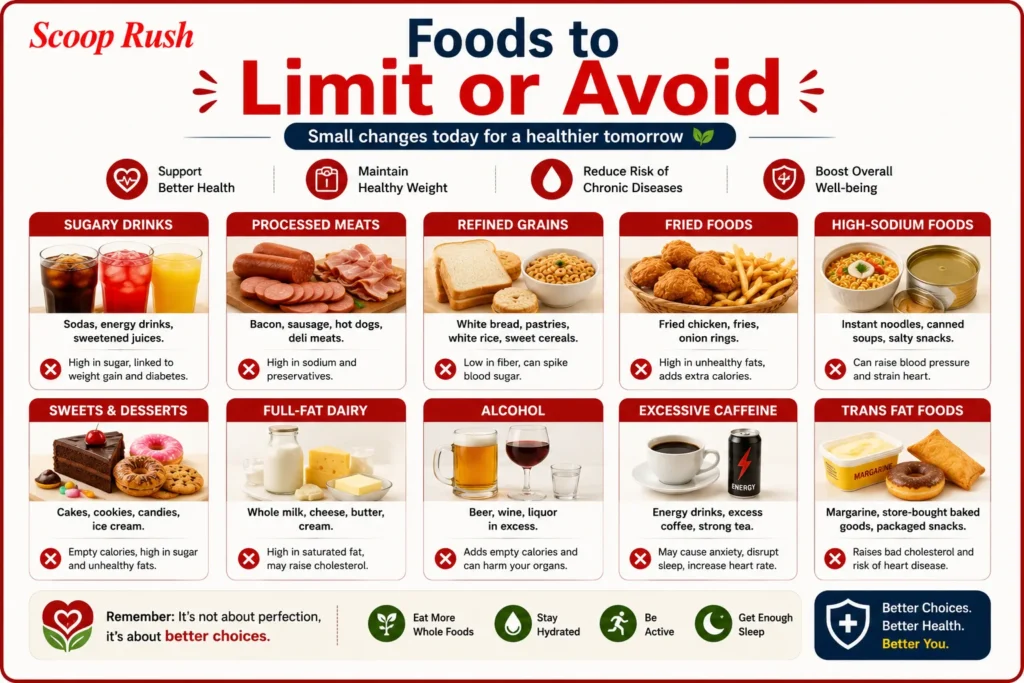
Foods to Limit or Avoid
High oxalate vegetables:
spinach (especially cooked one of the biggest offenders, since cooking concentrates it as water evaporates), Swiss chard, beet greens, beets, sweet potatoes, okra, kale, parsley, leeks, mustard greens, watercress, summer squash
High oxalate fruits:
strawberries, blueberries, blackberries, raspberries, rhubarb, tangerines, purple grapes, citrus peel
Plant proteins to limit:
peanut butter, tofu, baked beans, soy products (if you’re vegetarian, loop in a dietitian to keep protein adequate while managing oxalate this is one of the trickier parts of the diet to navigate without professional guidance)
Grain products to limit:
wheat bran, wheat germ, soy crackers, amaranth, fruit cake, white corn grits
Nuts and seeds:
almonds, cashews, walnuts, pecans, peanuts, sesame seeds, nut butters — nutritious, but among the highest-oxalate foods around, so even a small handful can use up a large chunk of a daily limit
Drinks to limit:
cocoa, hot chocolate, chocolate milk, black tea, dark beer, and coffee in moderation. If coffee is a non-negotiable part of your morning, it’s also worth knowing what drinking it on an empty stomach does to your body, separate from its oxalate content.
A quick note on cooking method: boiling high-oxalate vegetables and discarding the cooking water can reduce their oxalate content noticeably, since oxalate is water-soluble and leaches out during boiling. This won’t turn spinach into a low-oxalate food, but it can make an occasional moderate portion more reasonable than eating it raw or sautéed.
7-Day Sample Menu
Day 1
Breakfast: Scrambled eggs with mushrooms, white toast, milk, and a banana.
Lunch: Enjoy grilled chicken with white rice, steamed cauliflower, and lemon water.
Dinner: Finish the day with baked salmon, roasted cabbage, and a dinner roll.
Day 2
Breakfast: Cornflakes served with milk, a boiled egg, and honeydew melon.
Lunch: A turkey sandwich on white bread with lettuce and cucumber pairs well with a side of yogurt.
Dinner: Lean beef, mashed white potatoes, and green peas make a satisfying evening meal.
Day 3
Breakfast: Start your morning with oatmeal prepared in milk and topped with sliced banana.
Lunch: A tuna salad sandwich served with an apple offers a balanced midday meal.
Dinner: Roasted chicken, white rice, and steamed broccoli complete the day.
Day 4
Breakfast: A vegetable omelet with mushrooms and onions, white toast, and milk provides a nutritious start.
Lunch: Grilled pork loin served alongside cauliflower and white rice is a filling option.
Dinner: Baked cod, fresh cabbage slaw, and a dinner roll make an easy evening meal.
Day 5
Breakfast: Pancakes topped with maple syrup, served with milk and a banana, offer a hearty breakfast.
Lunch: Chicken salad on white bread with crisp lettuce is a light yet satisfying choice.
Dinner: Roast turkey, mashed potatoes, and Brussels sprouts round out the day’s menu.
Day 6
Breakfast: Boiled eggs, toast, and honeydew melon create a simple morning meal.
Lunch: For lunch, try a beef stir-fry with mushrooms, onions, and white rice.
Dinner: Baked tilapia with cauliflower and green peas provides a healthy finish to the day.
Day 7
Breakfast: Yogurt with sliced banana and toast makes a quick, nutritious breakfast.
Lunch: A turkey wrap filled with lettuce and cucumber is a fresh and flavorful option.
Dinner: End the week with grilled chicken, white pasta, and steamed cabbage.
Snacks throughout the week can rotate through apple slices with cheese, plain yogurt, grapes, melon, and cottage cheese all low-oxalate and calcium-friendly. Notice the pattern repeating across the week: a protein + a low-oxalate starch + a low- or moderate-oxalate vegetable + a dairy source somewhere in the meal. Once that structure clicks, you don’t need a rigid printed plan you can build new combinations on the fly using whatever’s in your fridge.
Kitchen Habits Worth Building
- Put dairy on the table at every meal — it’s doing real work catching oxalate before it’s absorbed.
- Sip water all day, not just a big glass at dinner.
- Check labels — cocoa, soy, and nuts hide in more packaged foods than you’d expect, from granola bars to veggie burgers.
- Cook at home more often to control both sodium and oxalate simultaneously.
- Don’t panic-cut all plant foods — plenty of vegetables and fruits are naturally low in oxalate and worth keeping in heavy rotation for fiber and overall nutrition.
- Boil, don’t just sauté, when cooking moderate-oxalate vegetables, and discard the water afterward.
- Batch-plan your week around the protein-starch-vegetable-dairy formula so decision fatigue doesn’t push you toward convenience foods with hidden oxalate or sodium.
- Move regularly, not just at the gym — general kidney and metabolic health benefits from simple daily movement, and something as small as taking a 5-minute walk every hour can support circulation and overall wellbeing alongside your dietary changes.
Common Myths, Debunked
“I should avoid all dairy and calcium since my stones contain calcium.” This is probably the most common and most counterproductive misconception. As covered above, dietary calcium is protective, not harmful, when eaten with meals.
“If a food is healthy, it must be low in oxalate.” Not necessarily. Spinach, almonds, and sweet potatoes are all nutrient-dense foods that also happen to be high in oxalate. “Healthy” and “low-oxalate” are separate categories that sometimes overlap and sometimes don’t.
“Going low-oxalate means I can eat unlimited meat and cheese.” Oxalate restriction doesn’t cancel out other health considerations. Portion sizes and overall balance still matter, particularly for sodium, saturated fat, and total calorie intake.
“Once I’ve had one stone, I’ll definitely get another.” Not guaranteed but the recurrence risk is high enough that most doctors recommend prevention strategies like this diet, especially if a 24-hour urine test shows elevated oxalate.
The Bottom Line
A low oxalate diet isn’t about stripping your plate down to white rice and chicken breast forever it’s about swapping high-oxalate foods for lower-oxalate alternatives, pairing meals with calcium, drinking enough water to keep your kidneys happy, and dialing back sodium. Do those four things consistently, and you’re covering most of what actually moves the needle on stone recurrence. It’s a diet built on addition as much as subtraction: more water, more calcium-paired meals, more home cooking with a handful of high-oxalate foods dialed back rather than eliminated wholesale.
If you’re in your 20s or 30s and dealing with your first stone, this is also a good moment to zoom out and look at broader healthy habits worth building now kidney stone prevention tends to fit naturally alongside the same hydration, movement, and nutrition basics that protect long-term health more generally.
FAQs
Can I ever eat high-oxalate foods again?
Often, yes in small portions, as long as your overall daily intake stays within your target. Anyone on a strict medical protocol should stick to their provider’s specific guidance.
Is this the same as a low-carb diet?
No. Low oxalate targets a specific compound in plant foods; low-carb targets carbohydrates. There’s some overlap, but they’re not interchangeable, and following one doesn’t automatically mean you’re following the other if you’re curious how a carb-focused approach compares, this breakdown of low-carb diet benefits and risks is a useful side-by-side.
Will this prevent every kidney stone?
No it specifically targets calcium oxalate stones, the most common type. Other stone types, like uric acid, struvite, or cystine stones, form through different mechanisms and call for different dietary strategies entirely.
Do I have to do this forever?
Depends on why your oxalate is elevated and your stone history. Some people need this long-term; others adjust after retesting shows their urinary oxalate has stabilized. Your doctor is the one to make that call, typically based on repeat 24-hour urine testing.
Does vitamin C intake matter?
High-dose vitamin C supplements can be converted into oxalate in the body, so some providers recommend keeping supplemental vitamin C intake moderate if you’re prone to calcium oxalate stones. This is worth discussing directly with your provider rather than assuming it applies to you.
What about oxalate and gut bacteria?
Certain gut bacteria, including a species called Oxalobacter formigenes, can break down oxalate before it’s absorbed. Some research suggests that antibiotic use and other factors that disrupt gut bacteria may play a role in oxalate absorption, though this is still an evolving area of study rather than settled clinical guidance.

