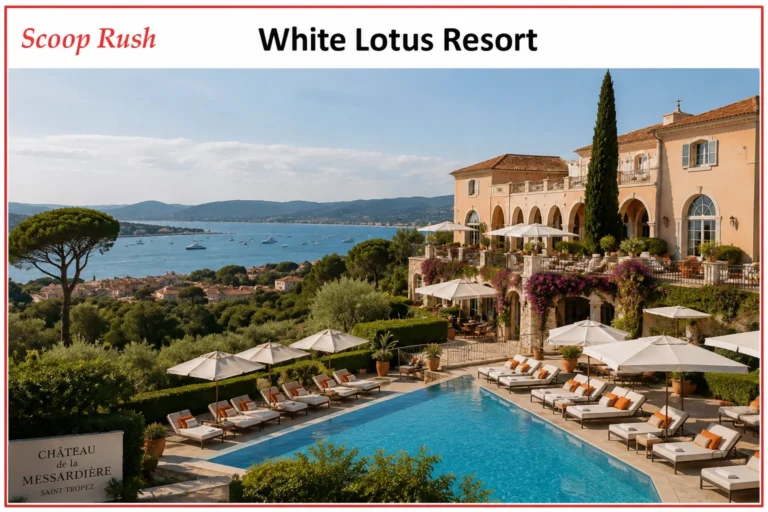
The White Lotus Resort has become one of this summer’s biggest travel attractions. HBO chose Château de la Messardière in Saint-Tropez as the main filming location for The White Lotus season four. The luxury property now welcomes wealthy travelers while hosting actors, cameras, and production crews. Guests can even witness parts of the filming during their stay.
Located on the French Riviera, the resort blends world-class hospitality with breathtaking scenery. Visitors relax beside elegant pools and beautiful gardens. At the same time, they may spot celebrities or production teams nearby. This rare experience has made the hotel even more desirable.
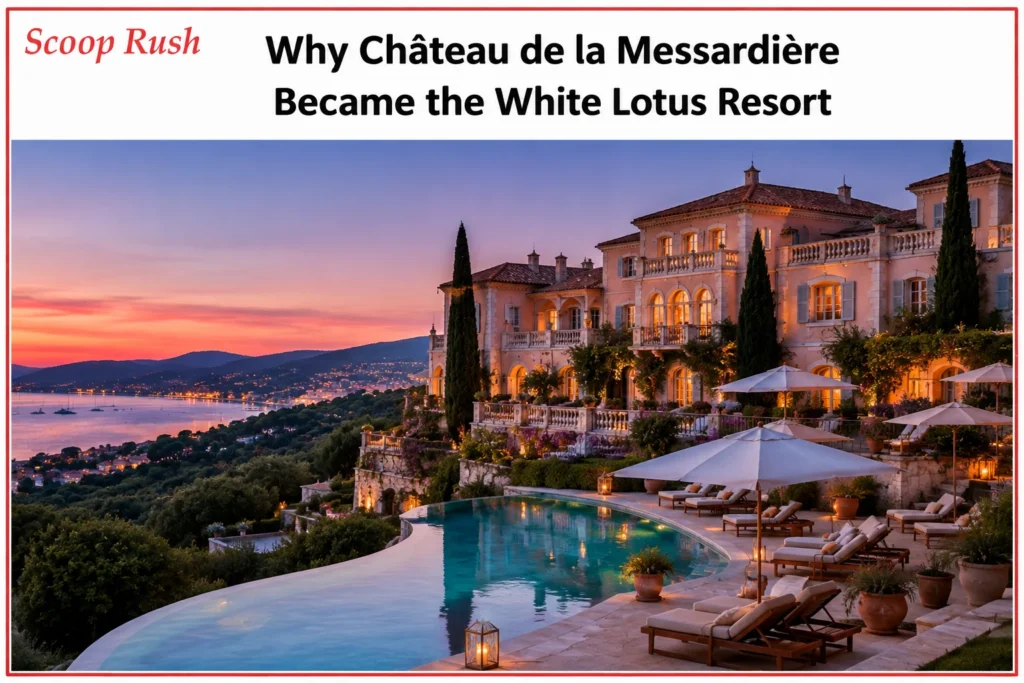
Why Château de la Messardière Became the White Lotus Resort
HBO selected Château de la Messardière as the main filming location for The White Lotus season four. The luxury estate sits on a hill overlooking Saint-Tropez and offers elegant architecture, spacious gardens, and panoramic sea views. Its sophisticated setting matches the glamorous atmosphere that has become a signature of the series.
The property also provides enough space for filming while continuing to welcome paying guests. Its private location and world-class facilities allow production crews to work efficiently without affecting the resort’s luxurious appeal.
Guests Enjoy a Rare Behind-the-Scenes Filming Experience
Many visitors arrived expecting a peaceful holiday but found themselves staying alongside a major television production. Some guests watched scenes being filmed near the pools, while others spotted actors and crew members around the resort during their stay.
Despite the busy schedule, production teams kept disruptions to a minimum. Guests followed simple filming guidelines and appreciated the chance to witness how one of television’s most popular series is created behind the scenes.
Luxury Amenities Continue to Define the Resort Experience
Beyond its television connection, the resort remains one of Saint-Tropez’s finest luxury destinations. Peak season suites typically cost between $3,000 and $6,000 per night. The property offers elegant accommodations designed for privacy and comfort.
Guests enjoy multiple swimming pools, beautifully landscaped gardens, private terraces, and exceptional dining options. The resort also provides Rolls-Royce transfers to its beach club, adding another touch of exclusivity to the overall experience.
Filming Brings Small Changes Without Interrupting Guests
The hotel continued operating throughout production with only minor adjustments. Production teams prepared selected areas for filming while allowing guests to enjoy the rest of the property without major interruptions.
Staff temporarily replaced some poolside accessories with White Lotus branding to match the scenes. They also protected pathways and landscaped areas to preserve the resort’s elegant appearance during filming.
Celebrity Sightings Add Excitement to Every Stay
The cast and crew stayed at the resort throughout production, creating memorable moments for many visitors. Guests occasionally shared restaurants, pool areas, and other public spaces with actors during breaks from filming.
Several visitors described the cast as friendly and approachable. These unexpected celebrity encounters added another unique highlight to an already luxurious vacation experience.
Saint-Tropez Provides the Perfect Backdrop for Season Four
Saint-Tropez has long been known for attracting celebrities, filmmakers, and luxury travelers. Its stylish atmosphere, scenic coastline, and exclusive lifestyle make it an ideal setting for The White Lotus.
The destination offers beautiful beaches, luxury hotels, designer boutiques, and fine dining. These attractions perfectly complement the series’ themes of wealth, glamour, and high-end travel.
The Resort Could See Higher Demand After the New Season
Previous filming locations featured in The White Lotus experienced significant increases in visitor interest after each season aired. Many travel experts expect Château de la Messardière to enjoy similar global attention.
Some guests already believe reservations will become more competitive once the new season premieres. The combination of international exposure and outstanding hospitality could make the resort one of the French Riviera’s most sought-after destinations.
The White Lotus Filming Blends Into Daily Resort Life
Filming took place while the resort continued welcoming guests. Production crews worked carefully to limit disruptions across the property. Many visitors said they barely noticed the cameras unless they were close to an active set.
The resort’s large grounds made this possible. While one area hosted filming, guests could still enjoy the pools, restaurants, gardens, and other facilities without major interruptions. This balance helped maintain the luxury experience throughout production.
Luxury Travel Meets Television Tourism
The success of The White Lotus has changed how many people choose luxury destinations. Fans now travel to filming locations to experience the same hotels and landscapes featured on screen. This growing trend has boosted interest in several resorts around the world.
Château de la Messardière now stands at the center of that trend. Its appearance in season four is expected to attract both television fans and luxury travelers. Many visitors will likely choose the resort to enjoy its elegant surroundings while exploring one of the French Riviera’s most famous destinations.
Conclusion
Château de la Messardière has become more than a luxury hotel in Saint-Tropez. As the main filming location for The White Lotus season four, it offers guests a rare blend of elegant hospitality and behind-the-scenes television excitement.
The resort continues to deliver exceptional service while hosting one of television’s most anticipated productions. With worldwide interest growing, it is well positioned to attract even more visitors after the new season debuts.
FAQs
1. What is the White Lotus Resort?
The White Lotus Resort refers to Château de la Messardière in Saint-Tropez, which serves as the main filming location for The White Lotus season four.
2. Where is Château de la Messardière located?
The resort is located on a hill overlooking Saint-Tropez on the French Riviera. It offers luxury accommodations, beautiful gardens, and panoramic views of the surrounding coastline.
3. How much does a stay at the resort cost?
Peak season suites generally range from $3,000 to $6,000 per night. Prices vary depending on the suite type, travel season, and availability.
4. Can hotel guests watch The White Lotus filming?
Yes. Some guests have watched filming from their rooms or public areas. However, the production team asks visitors not to record active filming.
5. Why has Château de la Messardière become so popular?
The resort combines luxury hospitality with its role in The White Lotus season four. Celebrity sightings, beautiful surroundings, and international attention have made it one of the French Riviera’s most desirable destinations.
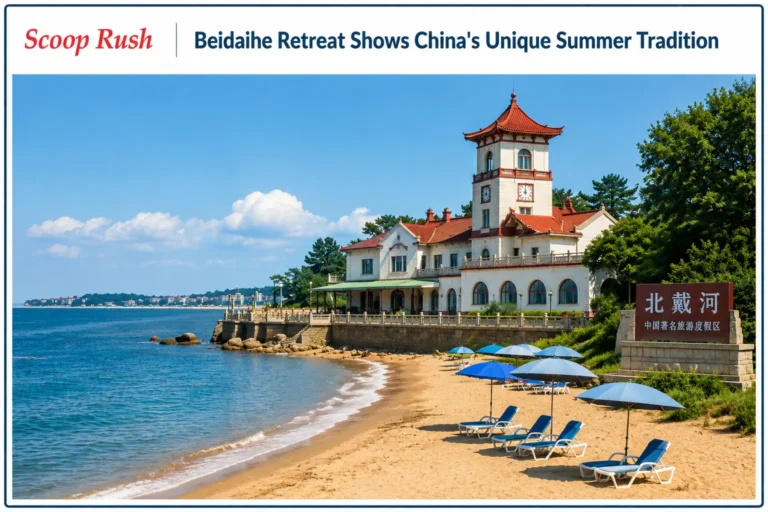
The Beidaihe Retreat returns every summer as China’s top political tradition. Instead of luxury resorts, senior leaders spend time in the quiet coastal town of Beidaihe. The destination sits about 300 kilometers east of Beijing. It combines a summer break with informal policy discussions.
Unlike many global leaders, China’s leadership keeps this annual trip private. Officials rarely announce the schedule. However, tighter security and reduced public appearances usually signal the retreat’s beginning. The tradition continues to attract attention because of its political importance and long history.
Beidaihe Retreat Reflects China’s Political Style
Every August, Chinese President Xi Jinping and senior Communist Party officials disappear from public events for around 10 to 14 days. Their absence has become a familiar pattern during the annual Beidaihe Retreat. Public announcements remain rare, adding to the mystery surrounding the gathering.
The leadership does not choose famous luxury destinations. Instead, Beidaihe presents a modest image with simple beaches, seafood restaurants, and Soviet-era villas. Analysts believe this choice supports Xi Jinping’s public campaign against corruption and excessive government privileges.
Beidaihe Retreat Takes Place Under Tight Security
Security increases across Beidaihe weeks before senior leaders arrive. Authorities ban drones, private boats, and several recreational activities near restricted areas. Visitors notice additional checkpoints and stronger police presence throughout the town.
Despite these measures, ordinary tourists continue visiting the beaches. Families enjoy swimming, seafood, and summer holidays while restricted compounds remain closed to the public. This contrast creates one of China’s most unusual summer traditions.
Beidaihe Retreat Began During Mao Zedong’s Era
The tradition started in 1953 when Mao Zedong selected Beidaihe as a summer workplace. Beijing’s intense summer heat made the coastal town an attractive alternative for senior officials. Leaders gradually turned the town into an important seasonal political center.
Several major policy discussions took place there during the following decades. Historians note that Beidaihe influenced important political decisions throughout modern Chinese history. Although its formal role has changed, the town still carries strong historical significance.
Beidaihe Retreat Focuses on Policy Discussions
The annual gathering serves more than a vacation. It offers senior leaders time for informal meetings before major political events. Experts believe officials discuss economic conditions, national priorities, and internal party matters during this period.
Every year, senior official Cai Qi also hosts leading academics in Beidaihe. These experts discuss subjects including artificial intelligence and national development. Their meetings often happen shortly before the leadership begins its summer retreat.
Beidaihe Retreat Symbolizes Simplicity Instead of Luxury
Many world leaders vacation in destinations like Saint-Tropez or Monaco. China’s leadership follows a different approach. Beidaihe offers modest surroundings instead of expensive yachts and luxury hotels. This choice strengthens the government’s public image of discipline and restraint.
Political observers believe the location sends an important message. Leaders appear closer to ordinary citizens by choosing a traditional seaside town. The simple setting also supports Xi Jinping’s long-running anti-corruption campaign.
Beidaihe Remains Popular Beyond Politics
Although politics defines its reputation, Beidaihe welcomes millions of domestic visitors every year. Travelers visit its beaches, historic landmarks, seafood restaurants, and coastal scenery. Many families simply view it as a relaxing summer destination.
Nearby attractions continue attracting younger visitors as well. Modern cultural areas such as Aranya host festivals, artistic events, and architectural landmarks. These attractions have helped expand Beidaihe’s appeal beyond its political identity.
Beidaihe Retreat Holds Less Political Power Today
Many researchers believe the retreat no longer determines national policy like it once did. Xi Jinping has centralized decision-making during his leadership. As a result, opportunities for major negotiations have become more limited.
Even so, the retreat continues as an important political tradition. Observers still watch leadership movements closely each August. The gathering remains a symbolic event in China’s political calendar despite its evolving role.
Why Beidaihe Continues to Draw Global Attention
International observers closely monitor the Beidaihe Retreat each year. The leadership’s absence from public view often sparks speculation about government priorities. However, officials rarely confirm meeting schedules or discussion topics.
The secrecy surrounding the retreat continues to fascinate analysts worldwide. While ordinary tourists enjoy the beaches, China’s highest leaders remain behind guarded compounds. That contrast keeps Beidaihe one of the country’s most closely watched summer destinations.
Conclusion
The Beidaihe Retreat remains one of China’s most distinctive political traditions. It combines history, security, and informal leadership meetings in a modest seaside town rather than a luxury destination.
Although its political influence has evolved, the retreat still reflects the leadership’s public image and governing style. Every summer, Beidaihe again becomes the focus of both domestic observers and the international community.
FAQs
1. What is the Beidaihe Retreat?
The Beidaihe Retreat is China’s annual summer gathering for senior Communist Party leaders. They spend several days in the coastal town while holding informal discussions.
2. Where is Beidaihe located?
Beidaihe sits about 300 kilometers east of Beijing along China’s northern coastline. It remains a popular domestic beach destination.
3. Why do Chinese leaders choose Beidaihe?
Leaders choose Beidaihe because it reflects simplicity and tradition. The location also supports the government’s anti-corruption image.
4. Does the Beidaihe Retreat include political meetings?
Yes. Officials and experts often discuss national priorities, economic issues, and future policies during the retreat, although details remain private.
5. Can tourists visit Beidaihe during the retreat?
Yes. Most beaches and tourist attractions remain open. However, authorities restrict access to areas used by senior government leaders.
Will Disneyland finally get the Tomorrowland makeover fans have been begging for since 2019? That single question sums up the mood heading into the 2026 D23 Expo. Disney is expected to reveal a wave of updates for Disneyland and Disney California Adventure. After the blockbuster announcements of 2024, this year’s expo carries a different kind of weight. Fans want to know if Disney will fill in the gaps between now and 2028. They also want to know whether some of the biggest promises from two years ago are still on track. That is why the 2026 D23 Expo Disneyland predictions circulating right now matter so much.
The 2024 event set the stage for expansion projects that stretch into the 2030s. Since then, construction has quietly moved forward on several fronts. However, 2026 is shaping up to be more of a “fill in the blanks” year. The focus will likely be on smaller projects that can actually open before the next expo in 2028.
Below is a breakdown of the 2026 D23 Expo Disneyland predictions worth watching. This covers what industry watchers expect Disney to confirm, update, or quietly walk back at this year’s Parks Panel and on the show floor. None of this is guaranteed. These are informed predictions built on construction progress, past patterns, and statements Disney has already made publicly.
Why the 2026 D23 Expo Disneyland Predictions Look So Different This Year
The 2024 D23 Expo was widely considered one of the strongest since 2017. Disney announced new lands, ride reimaginings, and entertainment additions. These reveals set the roadmap for the next several years at both Walt Disney World and Disneyland. Most of those projects will not open until 2028 through 2031. As a result, it makes little sense for Disney to pile on even more distant announcements this time around.
Instead, expect this year’s reveals to focus on projects that can realistically begin and finish before the 2028 expo. Think ride reimaginings, entertainment upgrades, and seasonal overlays rather than entirely new lands. These smaller moves matter. They help boost attendance and win back local guests before the next phase of Avengers Campus opens.
This pattern is not unusual. D23 Expo tends to run in cycles. It alternates between headline-grabbing reveals and detail-oriented “backfill” years. Disneyland has roughly two more expos to go before the Avatar-themed area is expected to open. Therefore, 2026 falls squarely into the backfill category.
What an Off-Year at Disneyland Really Means
An off-year does not mean a quiet year. Disney still needs something to keep guests engaged and spending money at the parks. That pressure will likely translate into a heavier focus on ride reimaginings and nighttime entertainment. These are areas where Imagineering can make a visible impact without years of construction.
Avengers Campus Predictions: The Safest Bet for D23 2026
If there is one guaranteed topic at this year’s Parks Panel, it is Avengers Campus. Disney California Adventure is in the middle of doubling the size of this land. Two new attractions, Stark Flight Lab and Avengers Infinity Defense, are already under construction.
Construction is already underway behind the scenes. A massive show building stretches behind Cars Land. The canopy over Avengers Campus looks complete from a guest’s perspective. Meanwhile, the backstage structure is now being enclosed, a clear sign that progress continues even when it is not visible from the queue.
Expect the spotlight to fall mostly on Avengers Infinity Defense, the larger of the two new rides. Reports suggest its ride system may resemble Peter Pan’s Never Land Adventure. It will likely blend physical sets with screen-based scenes. New concept art and behind-the-scenes testing footage will probably accompany any announcement.
An opening date is possible, and it would be a genuinely positive sign for the resort. Current expectations point to a Late 2027 through Summer 2028 window. If Disney announces a specific year at this year’s expo, a 2027 opening becomes more plausible.
The Coco Boat Ride Gets Another Disneyland Update
Two years ago, Disney confirmed the long-rumored Coco boat ride for Disneyland. Since then, the project’s location has been revealed and construction has started. Even so, many specifics remain unknown.
The attraction will follow Miguel’s journey into the land of the dead. It draws heavily on the film’s characters and music. Imagineers have described taking inspiration from classics like Haunted Mansion and Pirates of the Caribbean. New Audio-Animatronics technology will bring the skeletal cast to life.
At this year’s expo, expect more concept art and additional detail on the ride’s individual scenes. There is also a chance Disney shows footage of the human-to-skeleton transforming Audio-Animatronics figure. This same technology is currently being tested for Pirates of the Caribbean and is expected to appear in Coco. Do not expect a firm opening date just yet.
Is the Avatar Land at Disneyland Still Happening?
Few topics generate as much speculation as the future of the Avatar-themed expansion at Disneyland. Rumors have circulated that Zootopia could replace Pandora. This idea is partly driven by the theory that a new CEO might want to reshape long-term projects to leave a personal mark on the resort.
It is important to separate speculation from fact here. There is currently no confirmed rumor supporting a swap between Avatar and Zootopia. That said, Disney’s own August 2026 earnings call included a slide referencing an “Avatar Experience” still listed as in development. This suggests the project has not been cancelled outright.
D23 Expo functions as a purely promotional event, so Disney is unlikely to explicitly announce that a project is dead. Instead, fans will need to read between the lines. Heavy coverage of Avatar would signal the project is moving forward. Meanwhile, minimal mention, or a surprise Zootopia reveal framed as “listening to fan feedback,” would suggest otherwise.
Disneyland Ride Reimaginings Could Define This Year’s Announcements
With no major new attractions scheduled to open before 2028, ride reimaginings are expected to carry much of the weight at this year’s expo. Walt Disney World has already shown how effective this strategy can be. It used a “singles and doubles” approach to refresh existing attractions with strong results.
Disneyland has been slower to adopt this approach, which makes a shift feel overdue. Likely candidates for updates include Buzz Lightyear’s Astro Blasters, Autopia, Finding Nemo Submarine Voyage, Roger Rabbit’s Car Toon Spin, and Goofy’s Sky School. None of these are confirmed. However, they represent attractions that are both dated and technically feasible to refresh in the 2027 to 2028 window.
Tomorrowland Predictions for the 2026 D23 Expo
Tomorrowland’s entrance walls have stood for years longer than anyone expected. The concept art displayed on them has already needed replacement due to fading. This lingering construction wall has become something of a running joke among Disneyland fans.
A full reimagining of Tomorrowland is unlikely. The land is considered too popular to take offline for a major overhaul. However, a lighter, more piecemeal approach seems realistic, similar to recent updates at Magic Kingdom. Autopia’s reimagining is already confirmed. A refreshed version of Buzz Lightyear’s Astro Blasters feels like a natural next step.
There is also unused potential in the old Innoventions and Star Wars Launch Bay building. The Star View Station lounge is closing for refurbishment around the same time as the expo. Some fans see this as more than coincidence.
Fantasyland and Fantasmic Updates Are Overdue
It has been over a decade since Disneyland’s 60th Anniversary brought updates to Alice in Wonderland and Peter Pan’s Flight. Snow White’s Enchanted Wish followed years later as the most recent Fantasyland project. Even so, that update was more than five years ago.
Pinocchio’s Daring Journey and Mr. Toad’s Wild Ride are the most likely candidates for similar treatment. Any update to Mr. Toad’s Wild Ride would need to preserve its offbeat, chaotic charm. That quirky energy is exactly what makes the ride memorable.
Fantasmic also remains a sore spot. Its return after a long hiatus disappointed many fans, since the show came back largely unchanged rather than enhanced. A genuine reimagining, including a new dragon and improved transitional scenes, would go a long way toward restoring the show’s reputation. For comparison, the Walt Disney World version of Fantasmic has become the strongest in the country after years of investment.
Nighttime Entertainment Predictions for Disneyland and DCA
Parades and nighttime spectaculars are another area ripe for updates. This is especially true since Disney California Adventure cannot support parades during ongoing construction. A revamped nighttime show, similar in spirit to Wondrous Journeys but built around World of Color, is therefore a logical possibility.
Meanwhile, the Main Street Electrical Parade could return again in 2027 to mark its 55th anniversary. Repeated revivals tend to lose impact over time. As a result, pairing the parade with new floats or another beloved show could help maintain excitement. Disneyland’s 75th Anniversary is approaching in 2030. Many of these entertainment decisions will likely be paced with that milestone in mind.
Placemaking Projects at Disney California Adventure
Disney has a pattern of announcing smaller reimaginings to legacy areas of DCA during off-years. This follows the earlier transformations of Pixar Pier and San Fransokyo Square. Hollywood Land could be next in line, especially once Avatar or Zootopia potentially takes over part of its backlot space.
Grizzly Peak is another area some expect to see refreshed. It could possibly incorporate more theming around Ranger J. Audubon Woodlore or Junior Woodchucks branding. These kinds of updates tend to be lower-cost, higher-visibility ways to keep older sections of the park feeling fresh.
What Almost Certainly Won’t Be Announced at D23 2026
Just as important as what might get revealed is what almost certainly will not. A brand-new themed land opening within the next year or two is highly unlikely. Projects like Avengers Campus and Coco already show how many years these builds take from start to finish.
A confirmed third gate at Disneyland also seems out of reach for this expo. Long-term speculation about resort expansion continues, particularly around the Toy Story Lot. Still, nothing suggests an announcement is imminent. Similarly, do not expect Disney to explicitly cancel Avatar. If that project is being scaled back, it is far more likely to happen quietly rather than through a direct statement.
Final Thoughts on the 2026 D23 Expo Disneyland Predictions
This year’s D23 Expo will likely favor practical, near-term updates over sweeping new announcements. Avengers Campus and Coco will almost certainly get the spotlight, since both are already under construction and closest to completion. Meanwhile, ride reimaginings and entertainment upgrades are shaping up to be the real story of this off-year. They will help fill the gap before Avengers Campus Phase 2 and other larger projects debut.
As a result, fans hoping for a brand-new land announcement may be disappointed. However, anyone who cares about Disneyland’s classic attractions getting long-overdue attention has real reason for cautious optimism. The next few years appear to be less about groundbreaking reveals and more about quietly fixing what has been neglected.
Ultimately, the true test will be whether Disney follows through with concrete opening windows rather than vague promises. Until the Parks Panel actually happens, all of this remains educated speculation. It is based on construction progress, public statements, and Disney’s historical patterns at past expos.
FAQs
When is the 2026 D23 Expo happening?
The source article does not specify an exact date. However, coverage and predictions are circulating as of August 2026, suggesting the event is scheduled for later this year.
Will Disney announce a new land for Disneyland at the 2026 D23 Expo?
It is unlikely. Most major expansion projects were already announced at the 2024 D23 Expo. Since those will not open until 2028 through 2031, this year is expected to focus on smaller updates rather than entirely new lands.
Is the Avatar-themed land at Disneyland cancelled?
There is no confirmation of cancellation. Disney’s own August 2026 earnings materials still listed an “Avatar Experience” as in development. Fans will need to watch how much attention it receives at the expo for further clues.
What rides could get reimagined at Disneyland soon?
Likely candidates include Buzz Lightyear’s Astro Blasters, Autopia, Finding Nemo Submarine Voyage, Roger Rabbit’s Car Toon Spin, and Goofy’s Sky School. None of these updates are officially confirmed yet.
When will the new Avengers Campus rides open?
No official date has been confirmed. Based on current construction progress, a realistic opening window falls between Late 2027 and Summer 2028.
The Trump munitions stockpile debate intensified after reports questioned America’s missile supplies. President Donald Trump rejected the claims and insisted the United States still holds massive weapons reserves. He also announced that officials would pursue those responsible for leaking classified information. Meanwhile, defense experts continue discussing how the conflict with Iran has affected US military inventories.
The administration maintains that the US military remains fully prepared for future operations. However, analysts say rebuilding some advanced missile stockpiles could take several years because of complex production timelines.
President Donald Trump strongly denied reports claiming the United States faces a serious weapons shortage. In a Truth Social post, he said America has massive amounts of munitions. He also stated that manufacturers continue producing and delivering additional weapons.
Trump stressed that the United States still possesses enough military strength to defend its interests worldwide. He added that defense companies continue expanding production facilities to meet future military needs.
Trump Targets Leakers Over Weapons Reports
The Trump munitions stockpile controversy also shifted attention toward government leaks. Trump accused unnamed individuals of releasing sensitive information about military inventories. He described the disclosures as treasonous and promised authorities would identify those responsible.
Trump also warned that his administration would seek long prison sentences for anyone found guilty of illegally leaking classified information. His remarks came after several media reports cited anonymous officials discussing missile stockpiles.
Reports Raise Questions About US Missile Inventories
Several news organizations recently reported that the Pentagon has used significant numbers of precision-guided weapons during the conflict with Iran. Reuters reported that the Army had nearly exhausted its inventories of Army Tactical Missile Systems and Precision Strike Missiles.
Other reports suggested that stocks of Patriot, THAAD, and Tomahawk missiles also declined during months of military operations. However, exact inventory numbers remain classified, making independent verification impossible.
Defense Experts Explain Stockpile Challenges
The Trump munitions stockpile debate gained attention after new estimates from the Center for Strategic and International Studies. The think tank estimated that Patriot missile inventories have declined sharply since the conflict began.
Defense analysts also estimated that the military has used around sixty percent of available THAAD interceptors. They stressed that the issue involves future readiness instead of immediate battlefield capability.
Pentagon Says Military Remains Fully Prepared
Pentagon officials rejected claims suggesting the military cannot respond to global threats. Officials stated that US forces continue conducting successful operations while maintaining a deep arsenal of advanced weapons.
Defense leaders also emphasized that military planning accounts for changing battlefield conditions. They insisted the United States still possesses enough capabilities to protect national interests across multiple regions.
US Expands Missile Production
The Trump munitions stockpile discussion also highlighted ongoing efforts to increase weapons production. Defense Secretary Pete Hegseth has repeatedly stated that the Pentagon continues expanding missile manufacturing.
The Defense Department recently announced agreements with major defense contractors to increase production of Patriot and THAAD interceptor components. Officials believe these investments will strengthen future military readiness.
Iran Conflict Continues To Pressure Military Resources
The war with Iran has entered its sixth month despite several temporary pauses in fighting. Diplomatic efforts continue, but both sides have exchanged repeated strikes during the conflict.
Military experts say prolonged operations naturally increase demand for advanced precision weapons. Modern missiles require years of planning, funding, manufacturing, and delivery before entering service.
Iran Issues New Regional Threat
Iran also warned that any US strike on its power infrastructure could trigger wider regional consequences. According to regional officials, Tehran threatened to disrupt electricity supplies across Gulf countries if such attacks occurred.
The warning added fresh tension to an already unstable security situation. Gulf nations continue supporting diplomatic efforts while strengthening regional defense cooperation.
Saudi Arabia Strengthens Maritime Security
Saudi Arabia announced the appointment of Rear Admiral Abdullah bin Salem Al-Shahri to lead the regional maritime defense coalition. Officials described the move as an important step toward improving operational readiness.
The coalition plans to hold a meeting during August to complete its remaining organizational structure. Member states aim to strengthen maritime security, protect shipping routes, and secure strategic waterways.
What The Situation Means Going Forward
The Trump munitions stockpile remains a subject of public debate because official inventory numbers remain classified. The White House insists America retains one of the world’s strongest military arsenals despite months of combat operations.
Independent analysts agree that the United States still possesses significant military capabilities. However, many also believe replacing advanced precision weapons will require sustained investment and years of production.
Conclusion
President Donald Trump firmly rejected claims that the United States faces a dangerous weapons shortage. His administration continues insisting that American military readiness remains strong despite the prolonged conflict with Iran. Officials also pledged to investigate and prosecute anyone responsible for leaking classified information.
Defense experts, however, continue monitoring missile inventories as the conflict places pressure on advanced weapon stockpiles. While the Pentagon says current capabilities remain sufficient, rebuilding some precision-guided weapons could take several years as production expands.
FAQs
1. What is the controversy over U.S. munitions stockpiles?
The debate began after media reports, citing unnamed officials, suggested that U.S. inventories of some advanced missiles had been significantly reduced during operations related to the Iran conflict. The Trump administration disputes those reports.
2. Did Trump acknowledge a weapons shortage?
No. Trump said the United States still has “massive amounts” of munitions and that defense manufacturers are increasing production.
3. Has the Pentagon confirmed missile inventory levels?
No. The Pentagon has not released detailed inventory figures, and official stockpile numbers remain classified.
4. Why are analysts concerned?
Defense analysts say advanced precision-guided missiles are expensive and time-consuming to manufacture, meaning replenishing inventories can take several years.
5. Is the U.S. military still considered ready?
According to the Pentagon and the White House, yes. Officials say the U.S. military remains capable of responding to global threats while continuing to rebuild inventories.
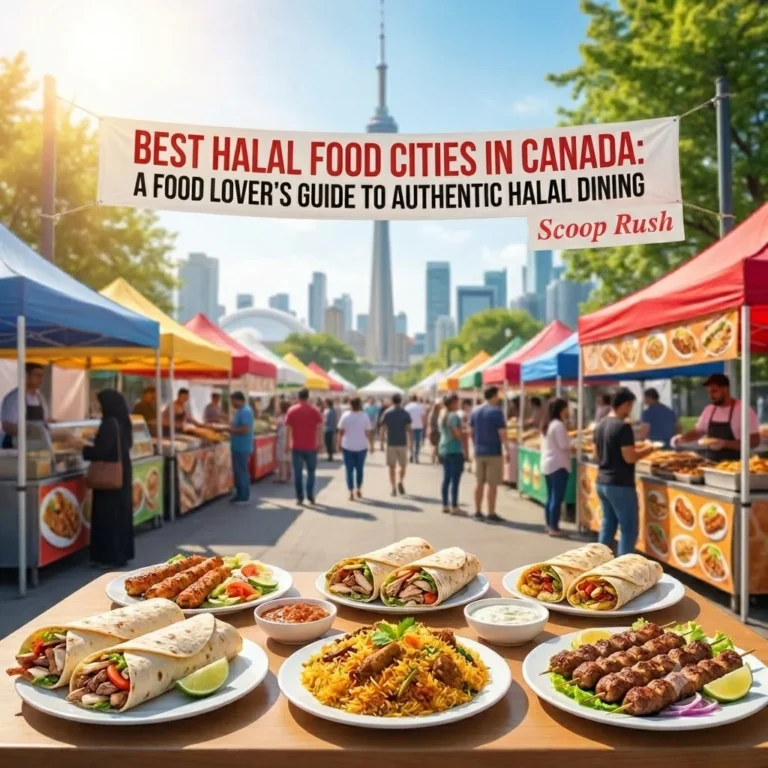
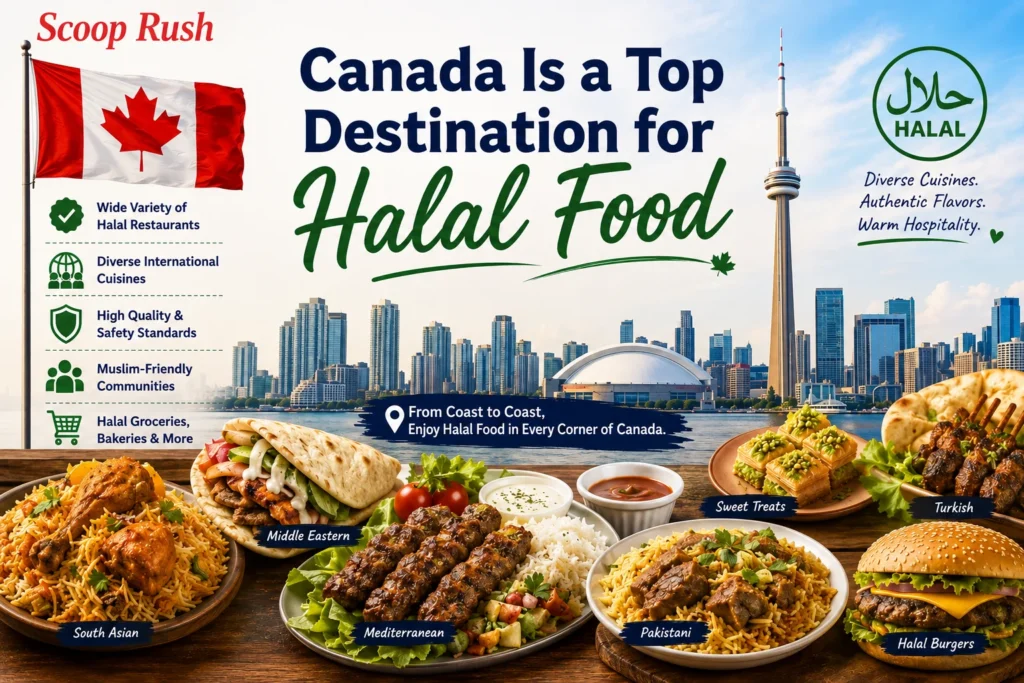
Canada is one of the world’s most culturally diverse countries, and that diversity is reflected in its incredible food scene. From authentic South Asian curries to flavorful Middle Eastern grills and Turkish kebabs, halal cuisine has become an essential part of Canadian dining. Whether you’re a local looking for your next favorite restaurant or a traveler searching for Muslim-friendly food options, Canada offers countless places where halal dining is both accessible and delicious.
Over the past decade, the number of halal-certified restaurants across Canada has grown significantly. Large Muslim communities, increasing tourism, and a demand for authentic international cuisine have encouraged restaurants to expand their halal menus. Today, you’ll find everything from affordable street food and food trucks to fine dining restaurants serving premium halal steaks and gourmet fusion dishes.
In this guide, we’ll explore the best halal food cities in Canada, highlighting what makes each destination unique, the cuisines they’re known for, and why they deserve a spot on every food lover’s travel itinerary.
Why Canada Is a Top Destination for Halal Food
Canada’s reputation as a multicultural nation has helped create one of the most diverse culinary landscapes in the world. People from every continent have brought their traditional recipes and cooking techniques, allowing visitors to experience authentic flavors without leaving the country.
Halal dining is particularly popular in major cities where multicultural neighborhoods have become vibrant culinary hubs. Restaurants proudly serve dishes inspired by Pakistan, India, Lebanon, Turkey, Syria, Afghanistan, Morocco, Egypt, and many other countries.
Easy access to halal grocery stores, bakeries, and cafés
Whether you’re craving a traditional chicken biryani, freshly grilled shawarma, juicy halal burgers, or sweet Middle Eastern desserts, you’ll find countless options throughout Canada’s largest cities.
How We Chose These Cities
To create this list, we considered several important factors that contribute to a memorable halal dining experience:
Number of halal restaurants available
Variety of international cuisines
Restaurant quality and customer satisfaction
Accessibility for visitors
Affordability
Family-friendly dining environments
Overall reputation among food lovers
These cities consistently stand out for offering exceptional halal food while showcasing Canada’s rich cultural diversity.
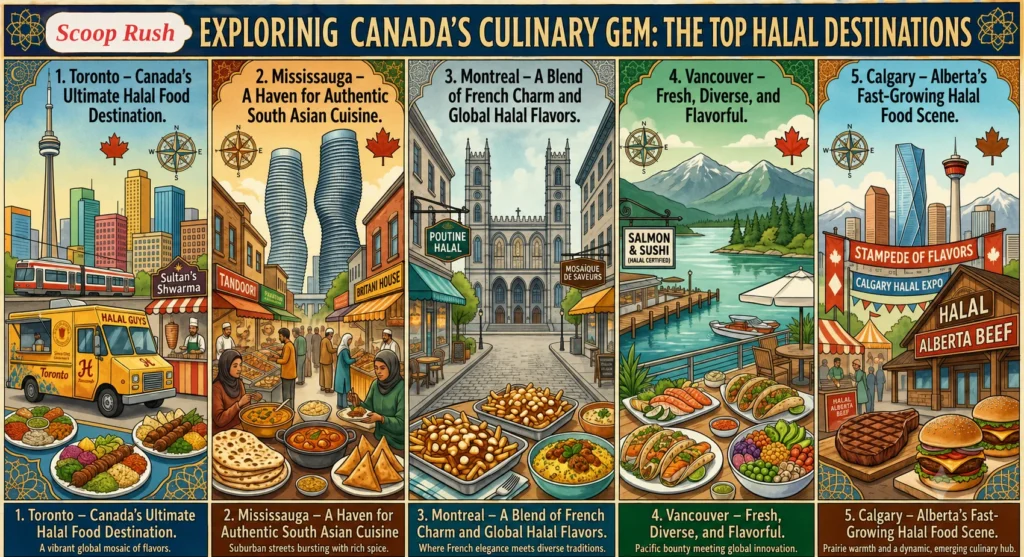
1. Toronto – Canada’s Ultimate Halal Food Destination
When it comes to halal dining, no city in Canada offers more variety than Toronto. Home to one of the country’s largest multicultural populations, Toronto has become a paradise for food lovers seeking authentic halal cuisine from around the world.
Almost every neighborhood has restaurants specializing in different international flavors. Whether you’re exploring downtown Toronto, Scarborough, North York, or Etobicoke, you’ll find an impressive range of halal dining options that cater to every taste and budget.
Toronto is especially famous for its Pakistani, Indian, Lebanese, Turkish, Afghan, Syrian, Somali, and Mediterranean restaurants. Many family-owned establishments have spent decades perfecting traditional recipes, while newer restaurants continue to introduce creative fusion dishes that combine global flavors with modern presentation.
One of Toronto’s greatest strengths is its incredible diversity. You can begin your morning with a halal breakfast café, enjoy authentic chicken biryani for lunch, stop by a dessert shop for kunafa and pistachio pastries, and finish the evening with premium halal steaks or gourmet burgers.
Popular halal dishes to try include:
Chicken shawarma
Beef seekh kebabs
Butter chicken
Nihari
Chicken biryani
Turkish döner
Afghan mantu
Falafel wraps
Mixed grill platters
Baklava
Toronto also hosts numerous food festivals throughout the year where visitors can discover halal street food, artisan desserts, specialty coffee, and cuisines from across the globe.
Whether you’re visiting Canada for the first time or have lived here for years, Toronto remains the country’s premier destination for halal dining.
2. Mississauga – A Haven for Authentic South Asian Cuisine
Located just west of Toronto, Mississauga has quietly built one of Canada’s strongest halal food scenes. Thanks to its diverse population and thriving Muslim community, the city offers an impressive collection of restaurants serving authentic Pakistani, Indian, Afghan, Turkish, and Middle Eastern cuisine.
Many visitors choose Mississauga specifically for its traditional South Asian restaurants, where recipes are often passed down through generations. Rich curries, freshly baked naan, slow-cooked meats, and aromatic rice dishes are staples across the city.
One of the biggest advantages of dining in Mississauga is the excellent value for money. Restaurants frequently serve generous portions at affordable prices, making the city a favorite destination for families and groups.
Popular dishes include:
Chicken karahi
Lamb biryani
Chapli kebabs
Seekh kebabs
Haleem
Nihari
Butter chicken
Falafel wraps
Shawarma platters
Beyond restaurants, Mississauga is home to numerous halal bakeries, dessert cafés, butcher shops, and grocery stores. This allows residents and visitors to enjoy authentic halal ingredients while experiencing the city’s vibrant food culture.
The city’s welcoming atmosphere, convenient location, and outstanding restaurant selection make it one of the best places in Canada to explore halal cuisine.
3. Montreal – A Blend of French Charm and Global Halal Flavors
Montreal is one of Canada’s most distinctive culinary destinations, combining European influences with a vibrant multicultural food scene. Known for its historic neighborhoods, lively cafés, and world-class restaurants, the city has also become a favorite for halal food enthusiasts.
The growing Muslim community has contributed to an impressive range of halal restaurants serving authentic dishes from North Africa, the Middle East, South Asia, and beyond. Whether you’re exploring the cobblestone streets of Old Montreal or the bustling neighborhoods around downtown, you’ll find halal eateries offering everything from traditional recipes to modern fusion cuisine.
One of Montreal’s biggest strengths is its balance between quality and creativity. Many chefs use locally sourced ingredients while staying true to authentic cooking techniques, resulting in meals that are both fresh and flavorful.
Popular Halal Cuisines in Montreal
Moroccan
Algerian
Lebanese
Syrian
Turkish
Pakistani
Indian
Mediterranean
Must-Try Dishes
Moroccan lamb tagine
Chicken shawarma
Mixed grill platters
Couscous
Falafel
Turkish kebabs
Baklava
Pistachio desserts
Fresh hummus with warm pita
Montreal is also known for its café culture. Many halal-friendly cafés serve artisan coffee alongside Middle Eastern pastries, making them perfect places to relax after exploring the city’s attractions.
For travelers looking to combine sightseeing with memorable dining experiences, Montreal offers the perfect blend of culture, history, and exceptional halal cuisine.
4. Vancouver – Fresh, Diverse, and Flavorful
Vancouver is often recognized as one of Canada’s healthiest and most scenic cities, but it’s also becoming one of the country’s top destinations for halal dining. Surrounded by mountains and the Pacific Ocean, the city attracts people from around the world, creating a rich and diverse culinary landscape.
The halal food scene in Vancouver has grown steadily over the years, offering everything from authentic Persian kebabs to gourmet halal burgers and Asian fusion dishes. Restaurants across the city emphasize fresh ingredients, high-quality meats, and beautifully presented meals.
Popular Halal Cuisines
Persian
Turkish
Pakistani
Indian
Lebanese
Mediterranean
Afghan
Because Vancouver values locally sourced produce, many halal restaurants incorporate fresh vegetables, herbs, and premium ingredients into their dishes. This combination of authentic recipes and fresh local produce creates meals that are both healthy and satisfying.
Popular Dishes to Try
Persian grilled chicken
Lamb skewers
Chicken biryani
Butter chicken
Halal ramen
Mediterranean rice bowls
Gourmet halal burgers
Turkish döner
Shawarma wraps
Vancouver’s dessert cafés are equally impressive, offering handcrafted pastries, specialty coffee, cheesecakes, and Middle Eastern sweets that perfectly complement the city’s relaxed atmosphere.
Whether you’re enjoying lunch after a day of sightseeing or searching for an elegant dinner with friends, Vancouver provides a memorable halal dining experience.
5. Calgary – Alberta’s Fast-Growing Halal Food Scene
Calgary has experienced remarkable growth over the past decade, and its halal food scene has expanded alongside the city’s diverse population. Today, Calgary is home to a wide selection of halal restaurants serving authentic cuisines from South Asia, the Middle East, and the Mediterranean.
The city’s restaurants are known for generous portions, welcoming hospitality, and consistently high food quality. Whether you’re craving grilled meats, spicy curries, or freshly baked naan, Calgary has plenty of options to satisfy every appetite.
Many family-owned restaurants have built loyal customer bases by serving traditional recipes prepared with care and attention to detail. At the same time, newer establishments continue to introduce creative menu items that blend classic flavors with modern presentation.
Popular Halal Cuisines
Pakistani
Indian
Afghan
Lebanese
Turkish
Mediterranean
Must-Try Dishes
Chicken tikka
Lamb biryani
Beef seekh kebabs
Shawarma wraps
Chapli kebabs
Butter chicken
Falafel bowls
Mixed grill platters
Calgary also hosts multicultural festivals and community events throughout the year, giving visitors the opportunity to sample a wide variety of halal foods in one place. These events celebrate the city’s diversity and highlight the growing popularity of halal cuisine across Alberta.
For travelers exploring Western Canada, Calgary offers an excellent mix of authentic flavors, friendly service, and great value, making it a worthwhile stop on any halal food journey.
6. Edmonton – A Rising Star for Halal Food
Edmonton may not receive as much attention as Canada’s largest cities, but its halal dining scene has grown into one of Alberta’s hidden culinary gems. With a diverse population and an increasing number of halal-certified restaurants, the city offers an excellent mix of authentic international cuisines and modern dining experiences.
Whether you’re looking for a quick shawarma wrap, a hearty Pakistani dinner, or freshly grilled kebabs, Edmonton has something for every taste. Many restaurants are family-owned, giving visitors the chance to enjoy traditional recipes made with care and authentic ingredients.
Popular Halal Cuisines
Pakistani
Indian
Syrian
Lebanese
Turkish
East African
Mediterranean
Must-Try Dishes
Chicken karahi
Chapli kebabs
Beef shawarma
Butter chicken
Lamb kebabs
Falafel wraps
Mixed grill platters
One of Edmonton’s biggest advantages is affordability. Many halal restaurants offer generous portions at reasonable prices, making the city an excellent destination for students, families, and budget-conscious travelers.
7. Ottawa – Canada’s Capital with a Diverse Halal Dining Scene
As Canada’s capital, Ottawa is known for its iconic landmarks and cultural attractions. It’s also home to a growing halal food scene that reflects the city’s multicultural population.
Visitors can enjoy everything from traditional Lebanese shawarma shops to elegant restaurants serving Turkish, Pakistani, Moroccan, and Mediterranean cuisine. Whether you’re exploring Parliament Hill, museums, or local markets, you’ll never be far from a delicious halal meal.
Popular Halal Cuisines
Lebanese
Turkish
Pakistani
Indian
Moroccan
Mediterranean
Must-Try Dishes
Chicken shawarma
Lamb chops
Moroccan tagine
Chicken biryani
Hummus with fresh pita
Mixed kebab platters
Baklava
Kunafa
Ottawa also offers several halal cafés and bakeries where visitors can enjoy artisan coffee, pastries, and desserts after a day of sightseeing. The city’s relaxed atmosphere and welcoming restaurants make it an excellent choice for families and travelers alike.
8. Winnipeg – Manitoba’s Hidden Halal Food Gem
Winnipeg may have a smaller halal restaurant scene than Toronto or Montreal, but it has developed a loyal following among locals who appreciate authentic flavors and friendly hospitality.
The city’s multicultural communities have helped introduce a variety of halal cuisines, including Pakistani, Indian, Afghan, and Middle Eastern specialties. Visitors can expect fresh ingredients, generous servings, and excellent value for money.
Popular Halal Cuisines
Pakistani
Indian
Afghan
Middle Eastern
Mediterranean
Must-Try Dishes
Chicken biryani
Butter chicken
Beef kebabs
Falafel
Mixed grill platters
Fresh naan
Winnipeg’s welcoming atmosphere makes dining here a pleasant experience, whether you’re visiting for business or exploring Manitoba’s attractions.
Honorable Mentions
While the following cities may have smaller halal dining scenes, they continue to grow and offer excellent food experiences:
Brampton, Ontario
Often considered an extension of the Greater Toronto Area’s vibrant food culture, Brampton is famous for its authentic Pakistani, Indian, and Bangladeshi restaurants. It’s an excellent destination for flavorful curries, barbecue, and traditional desserts.
Surrey, British Columbia
Surrey’s diverse population has helped create an impressive selection of halal restaurants serving South Asian, Middle Eastern, and Mediterranean cuisines. It’s a great option for visitors exploring the Vancouver metropolitan area.
Hamilton, Ontario
Hamilton’s halal restaurant scene has expanded significantly in recent years, offering everything from shawarma and kebabs to gourmet burgers and fusion cuisine.
Quebec City, Quebec
Although smaller than Montreal, Quebec City still provides several quality halal dining options, particularly for visitors looking for Middle Eastern and Mediterranean cuisine while exploring its historic attractions.
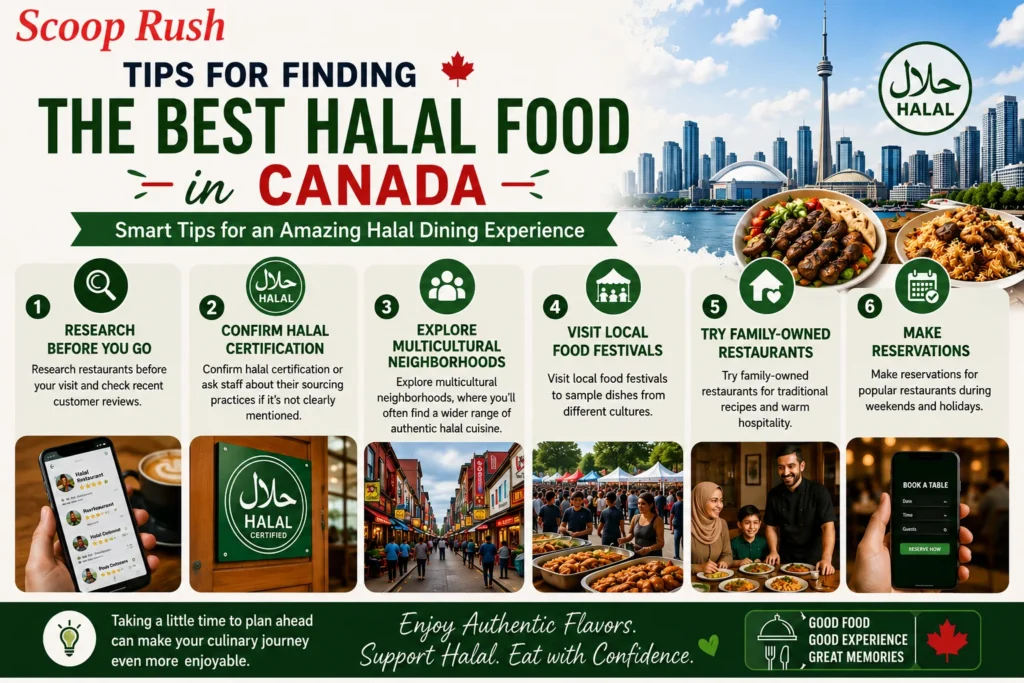
Tips for Finding the Best Halal Food in Canada
Whether you’re visiting Canada for the first time or planning a food-focused road trip, these practical tips can help you discover great halal restaurants:
Research restaurants before your visit and check recent customer reviews.
Confirm halal certification or ask staff about their sourcing practices if it’s not clearly mentioned.
Explore multicultural neighborhoods, where you’ll often find a wider range of authentic halal cuisine.
Visit local food festivals to sample dishes from different cultures.
Try family-owned restaurants for traditional recipes and warm hospitality.
Make reservations for popular restaurants during weekends and holidays.
Taking a little time to plan ahead can make your culinary journey even more enjoyable.
Final Thoughts
Canada’s halal food scene reflects the country’s incredible cultural diversity and welcoming spirit. From the bustling streets of Toronto to the scenic neighborhoods of Vancouver and the growing culinary hubs of Calgary, Edmonton, and Ottawa, each city brings its own unique flavors and dining experiences.
Whether you’re craving authentic Pakistani biryani, Lebanese shawarma, Turkish kebabs, Moroccan tagine, or gourmet halal burgers, you’ll find countless restaurants serving delicious meals prepared with quality ingredients and genuine hospitality.
Exploring the best halal food cities in Canada is about more than enjoying great meals—it’s an opportunity to experience the country’s multicultural heritage through food. Every city on this list offers something special, making Canada one of the world’s best destinations for halal dining.
So, the next time you’re planning a trip or looking for your next unforgettable meal, use this guide to discover the diverse and flavorful halal food experiences waiting across Canada.
Frequently Asked Questions
Which city has the best halal food in Canada?
Toronto is widely regarded as Canada’s top halal food destination due to its large number of halal restaurants, diverse cuisines, and vibrant multicultural food scene.
Is halal food easy to find in Canada?
Yes. Major cities such as Toronto, Mississauga, Montreal, Vancouver, Calgary, Edmonton, and Ottawa offer a wide variety of halal dining options, with availability continuing to grow across the country.
What cuisines are commonly available as halal in Canada?
You’ll find halal Pakistani, Indian, Turkish, Lebanese, Syrian, Afghan, Moroccan, Persian, Mediterranean, and many fusion cuisines. Halal burgers, pizza, tacos, and other international favorites are also increasingly popular.
Are halal restaurants family-friendly?
Most halal restaurants in Canada welcome families and offer comfortable seating, generous portions, and a relaxed atmosphere suitable for groups of all sizes.
Is halal food expensive in Canada?
Not necessarily. Canada offers halal dining for every budget, from affordable food trucks and casual eateries to premium steakhouses and fine dining restaurants.
Rodri Transfer Decision Could Shape the Summer Transfer Window
What happens when one of the world’s best midfielders enters the final year of his contract while two of Spain’s biggest clubs are interested?
That is exactly the situation surrounding Rodri. The Manchester City midfielder now faces one of the biggest choices of his career. According to the latest developments, both Barcelona and Real Madrid are interested if he decides to leave the Premier League champions.
The Rodri transfer decision has become one of the biggest talking points of the summer. Manchester City still hope to keep the Spanish international, but the uncertainty over his future has created fresh questions about where he could play next.
With his contract entering its final year, Rodri must decide whether to remain at Manchester City, see out his current deal, or consider a return to Spanish football.
Why Rodri’s Future Has Become a Major Story
Rodri has been one of Manchester City’s most important players since arriving in 2019. During his time at the club, he has helped City dominate English football and establish themselves among Europe’s elite.
However, his current contract situation has placed his future under the spotlight. The 30-year-old has yet to agree fresh terms with Manchester City. As a result, speculation has grown over whether he could leave before his contract expires or become a free agent next summer.
According to BBC Sport, Real Madrid have admired Rodri for a long time. Now, Barcelona have also emerged as a possible destination, although sources close to the Catalan club have played down those reports. At this stage, no transfer has been agreed.
Rodri Returned to His Best at the World Cup
Rodri endured a difficult period with injuries over the past two seasons.
He missed a large part of the 2024-25 campaign after suffering a serious knee injury. Later, a hamstring problem also disrupted his progress. Despite those setbacks, Rodri impressed once again during the World Cup.
He captained Spain to World Cup glory and was named the tournament’s best player. His performances reminded everyone why he remains one of the finest defensive midfielders in world football. Those displays have only increased interest in his future.
Manchester City Still Want to Keep Rodri
Manchester City have made their position clear. Club sources previously indicated they are counting on Rodri for the coming season. The Premier League side also believe any club hoping to sign him would need to submit a significant transfer fee before City would even consider negotiations.
Rodri is currently recovering after undergoing back surgery. Because of that, he has not yet joined Manchester City’s pre-season tour in the Far East. Once he returns, discussions over his future are expected to become an important topic. Earlier this season, Rodri himself suggested that his future would be addressed after the World Cup. That moment has now arrived.
Rodri Transfer Decision: What Are His Options?
Rodri has several possible paths in front of him. Each option carries different sporting and financial implications.
Option One: Sign a New Manchester City Contract
The simplest outcome would be agreeing a new deal with Manchester City. This would allow Rodri to continue working under the same project where he has already enjoyed enormous success.
City remain one of Europe’s strongest teams and clearly see him as a key part of their future. A contract extension would also remove uncertainty surrounding his future.
Option Two: Complete His Contract
Rodri could decide not to renew immediately. Instead, he could stay for the remainder of the season before becoming a free agent next summer.
Barcelona and Real Madrid are both reportedly interested if Rodri becomes available. A return to La Liga would allow him to play in his home country once again.
Both clubs offer different opportunities. However, no agreement currently exists with either side.
Why Barcelona Could Appeal to Rodri
Barcelona have reportedly entered the race for the midfielder. Although club sources have distanced themselves from the reports, their name continues to be linked with the player. If Rodri joined Barcelona, he would reunite with several Spain teammates.
That group includes:
Ferran Torres
Lamine Yamal
Pau Cubarsi
Pedri
Playing alongside familiar international teammates could make adaptation easier. Barcelona have also won the La Liga title during the past two seasons, making them an attractive sporting project.
Why Real Madrid Remain Strong Contenders
Real Madrid’s interest in Rodri is not new. BBC Sport reports that the Spanish champions have admired him for a long time.
A move there would also reunite Rodri with former Manchester City teammate Bernardo Silva, who joined Real Madrid on a free transfer this summer.
The club will also begin a new chapter under returning manager Jose Mourinho. Those factors naturally make Real Madrid one of the clubs to watch if Rodri leaves Manchester City.
Rodri’s Atletico Madrid Past Adds Another Dimension
Rodri previously played for Atletico Madrid.
Because of that history, a move to either Real Madrid or Barcelona would inevitably attract attention. The report also notes Rodri once said that “you can’t turn down the best clubs in the world” when discussing Real Madrid.
Meanwhile, if he joined Barcelona, his reception from supporters would become another interesting storyline given his Atletico background. At present, these remain talking points rather than confirmed developments.
How Important Is Rodri to Manchester City?
Few midfielders have influenced Manchester City’s success as much as Rodri. Since arriving in 2019, he has collected an impressive list of honours.
His achievements include:
Four Premier League titles
One UEFA Champions League title
Two FA Cups
Beyond trophies, Rodri has become the team’s midfield leader. His calm passing, positional awareness and defensive intelligence have made him one of the first names on the team sheet whenever fully fit.
Replacing a player with that profile would be extremely difficult.
Who Could Replace Rodri?
If Rodri eventually leaves, Manchester City already have several midfielders who could receive greater responsibility.
Mateo Kovacic
Kovacic brings experience and composure. He has already played an important role within City’s midfield and could take on additional responsibility.
Nico Gonzalez
Nico Gonzalez offers another option in central midfield. He has featured during pre-season preparations and could see increased opportunities if needed.
Tijjani Reijnders
Reijnders has also been involved during pre-season. His versatility could become valuable if City need different midfield combinations.
Elliot Anderson
City’s club-record signing Elliot Anderson is expected to become a regular starter. His arrival strengthens the midfield, although Rodri’s unique qualities remain difficult to replace.
Manchester City Continue Talks With Ayyoub Bouaddi
Manchester City are also in discussions to sign 18-year-old midfielder Ayyoub Bouaddi from Lille. However, expecting a teenager to immediately replace one of the world’s leading midfielders would represent a significant challenge.
Young players usually require time to adapt to the Premier League.Therefore, even if Bouaddi arrives, he would not necessarily fill Rodri’s role straight away.
Injuries Have Tested Rodri’s Resilience
Rodri’s recent seasons have not been straightforward. The serious knee injury kept him out for much of the 2024-25 campaign. Later, a hamstring problem interrupted his momentum again.
Most recently, he underwent back surgery and continues his recovery. Even so, his World Cup performances demonstrated that he can still perform at the highest level when fully fit. That return to form has undoubtedly increased interest from Europe’s biggest clubs.
Why the Next Few Weeks Could Be Crucial
Manchester City’s pre-season preparations continue, while Rodri focuses on recovery. Once he rejoins the squad, discussions over his future are expected to become more prominent.
The club wants clarity. Rodri also knows an important career decision cannot be delayed forever. Whether he signs a new contract, stays until next summer or eventually returns to Spain, the coming weeks may provide greater direction. For now, Manchester City continue to view him as part of their plans.
What We Know So Far
Several important facts are already clear.
Rodri is in the final year of his Manchester City contract.
Manchester City hope to keep him.
Real Madrid have maintained long-term interest.
Barcelona have also been linked with the midfielder.
Barcelona sources have played down those reports.
Rodri recently underwent back surgery.
He captained Spain to World Cup success and won the tournament’s Best Player award.
No transfer agreement has been announced.
Conclusion
The Rodri transfer decision has become one of the biggest stories of the summer transfer window. Manchester City remain determined to keep one of their most influential players. Meanwhile, both Real Madrid and Barcelona continue to attract attention because of their reported interest.
At this stage, Rodri has not announced his decision. His recovery from back surgery remains the immediate priority before discussions over his future continue. Whether he commits to Manchester City or eventually returns to Spain, his next move will be watched closely across European football.
Frequently Asked Questions
1. Why is Rodri’s future attracting so much attention?
Rodri is in the final year of his Manchester City contract, while both Real Madrid and Barcelona have been linked with interest.
2. Has Rodri agreed to join Barcelona or Real Madrid?
No. There is currently no confirmed agreement with either club.
3. What is Manchester City’s position?
Manchester City want Rodri to stay and have previously indicated they are counting on him for next season.
4. Why has Rodri not joined Manchester City’s pre-season tour?
Rodri is recovering after undergoing back surgery and has not yet linked up with the squad.
5. Who could replace Rodri if he leaves Manchester City?
Possible internal options include Mateo Kovacic, Nico Gonzalez, Tijjani Reijnders and Elliot Anderson. Manchester City are also in talks to sign young midfielder Ayyoub Bouaddi from Lille.
Mohamed Salah Trabzonspor Move: A Shock Decision Nobody Saw Coming
What would make one of the greatest Premier League players in history turn down Saudi millions and an MLS lifestyle for Turkish football? That is the question everyone is asking now that Trabzonspor has officially confirmed the Mohamed Salah transfer.
For months, fans speculated about where the Egyptian King would land after his Liverpool contract expired. Saudi Pro League clubs circled him for years. Meanwhile, MLS clubs saw him as a marquee signing. Yet Salah surprised the football world by signing a two-year deal with Trabzonspor, a Turkish club known more for disrupting the established order than dominating it.
So why does this matter beyond the transfer itself? It signals a shift in how elite, experienced players view their career options as they enter the later stages of their playing days. For Liverpool fans, it closes a chapter on one of the most successful eras in the club’s history. For Turkish football, it might be the moment that changes everything.
The End of an Era at Anfield Before the Trabzonspor Transfer
Before diving into why Trabzonspor won this race, it helps to understand what Salah leaves behind. His departure from Liverpool brings the curtain down on one of the most iconic careers in Premier League history. The 34-year-old winger leaves Anfield as a legend, having delivered performances that reshaped what fans expect from a wide forward.
However, his final season told a more complicated story. Liverpool slipped to fifth place in a disappointing campaign, and Salah found himself out of favour under manager Arne Slot. He scored 12 goals across all competitions and managed just seven league goals, numbers that pale in comparison to his usual standards.
Just a year earlier, Salah was unstoppable. He scored 34 goals and provided 23 assists across all competitions as Liverpool lifted the Premier League title, arguably the finest individual campaign of his career. That contrast between his 2023-24 heroics and his quieter farewell season adds extra intrigue to his next chapter.
Why Salah Prioritised Europe Over a Bigger Payday Before the Trabzonspor Move
Given that legacy, the question becomes even more interesting: why leave for a club many had never seriously considered? Money alone does not explain this transfer. Al-Ittihad reportedly made a late approach to sign Salah, and Sporting Kansas City was among the MLS clubs interested in bringing him to the United States. Both destinations could have handed him a significantly larger paycheque.
Instead, Salah chose to remain in European football. That decision reflects a clear priority: continuing to compete at a continental level rather than chasing the biggest possible salary.
Trabzonspor finished third in last season’s Super Lig and will play in this month’s Europa League play-offs. A win over two legs sends them into the Europa League league phase, while a loss would drop them into the Conference League. For a player who helped Egypt reach the World Cup knockout stages this summer, staying involved in Uefa competition clearly carried real weight in his decision-making.
The Besiktas Deal That Fell Apart Before Trabzonspor Stepped In
Interestingly, Trabzonspor was not the first Turkish club in the running. Besiktas attempted to sign Salah earlier, but negotiations collapsed over the financial structure of the proposed deal. That breakdown opened the door for Trabzonspor to step in and secure one of the biggest signings in the club’s history.
Why Trabzonspor? Understanding the Pull Behind the Salah Transfer
So once Besiktas fell away, why did Salah pick Trabzonspor specifically? Turkey’s football landscape is typically dominated by the Istanbul trio: Galatasaray, Fenerbahce, and Besiktas. Most marquee foreign signings historically gravitate toward one of these giants. So why did Salah choose a club outside Istanbul?
The answer lies in Trabzonspor’s genuine pedigree. Although they lack the global brand recognition of Turkey’s biggest clubs, they are far from underdogs. Trabzonspor are seven-time Turkish champions, they won the Super Lig as recently as 2021-22, and they lifted last season’s Turkish Cup. Under manager Fatih Tekke, the club also finished third in the league last season, earning another shot at European qualification.
Salah instantly becomes the biggest name to ever sign for the club. Hundreds of fans gathered at Istanbul Ataturk Airport and later in Trabzon to welcome him, underscoring just how significant this arrival is for the club’s identity and ambitions.
A Symbolic Shirt Number Tribute for Trabzonspor’s New Signing
During his unveiling, Salah briefly wore a symbolic number 61 shirt as a tribute to the city of Trabzon. The number represents the city’s vehicle registration code and carries special meaning for supporters, who traditionally celebrate the 61st minute of every match as a nod to their local identity.
However, for the 2026-27 season, Salah will wear his familiar number 10, the same number he wears for the Egyptian national team. Team-mate Ernest Muci gave up the jersey as a gesture of respect toward the club’s new marquee signing.
How the Mohamed Salah Trabzonspor Move Reflects the Super Lig’s Growing Global Appeal
The Mohamed Salah Trabzonspor transfer is not happening in isolation. It fits into a broader trend of established stars choosing Turkish football over other lucrative options. Victor Osimhen, Leroy Sane, Ilkay Gundogan, Nathan Ake, and Leandro Trossard are just a few of the high-profile names already competing in the Super Lig. Trabzonspor itself already boasts experienced internationals like Andre Onana, Ruslan Malinovskyi, and Stefan Savic.
Last summer, the Super Lig recorded the third-highest net transfer spend in world football, trailing only the Premier League and the Saudi Pro League. That statistic alone highlights just how ambitious Turkish clubs have become in the transfer market.
The Financial Logic Behind Turkish Spending Power
The economics driving this spending spree are somewhat unusual. Turkey’s biggest clubs generate substantial revenue in euros through Uefa competitions, while many of their domestic operating costs remain in Turkish lira. Additionally, the country’s prolonged period of high inflation has reduced the relative value of existing domestic debt, giving clubs more financial flexibility than outsiders might expect.
This dynamic allowed Trabzonspor to put together an attractive package for Salah. According to reports in Turkey, he has signed a two-year contract running until June 2028, worth approximately £7.3 million per season. That figure is reportedly below what he could have earned in Saudi Arabia, though it comes with additional bonuses and a share of merchandise revenue tied to his name and image.
Former Scotland midfielder Ryan Jack, who has spent the last two seasons playing in Turkey, believes the league’s reputation is only rising. “The league is getting stronger every year and you’re seeing more and more big names joining,” he told BBC Sport. “Salah is probably the biggest name to move to Turkey in recent years. It shows the league is growing and it might persuade other top players to consider going there.”
Jack also spoke fondly of his own experience adapting to life in Turkish football, noting the passionate fanbase and the support foreign players receive when settling into the league.
Is the Super Lig Good Enough for a Player of Salah’s Calibre?
Despite its growing star power, the Super Lig remains some distance from Europe’s elite competitions. Opta currently ranks it as the 14th strongest domestic league in world football, behind top-flight leagues in countries such as Denmark and Poland, and even behind England’s Championship.
Turkish clubs have also struggled to translate domestic success into sustained European achievement. Since Galatasaray won the Uefa Cup in 2000, only one Turkish side has reached the semi-finals of a major Uefa competition. That statistic illustrates the gap that still separates Turkey’s top clubs from Europe’s traditional powerhouses.
For Salah, however, this move represents a compromise rather than a retreat. He is not stepping away from continental football entirely. Instead, he continues competing in European competition while immersing himself in one of the most passionate football environments on the continent.
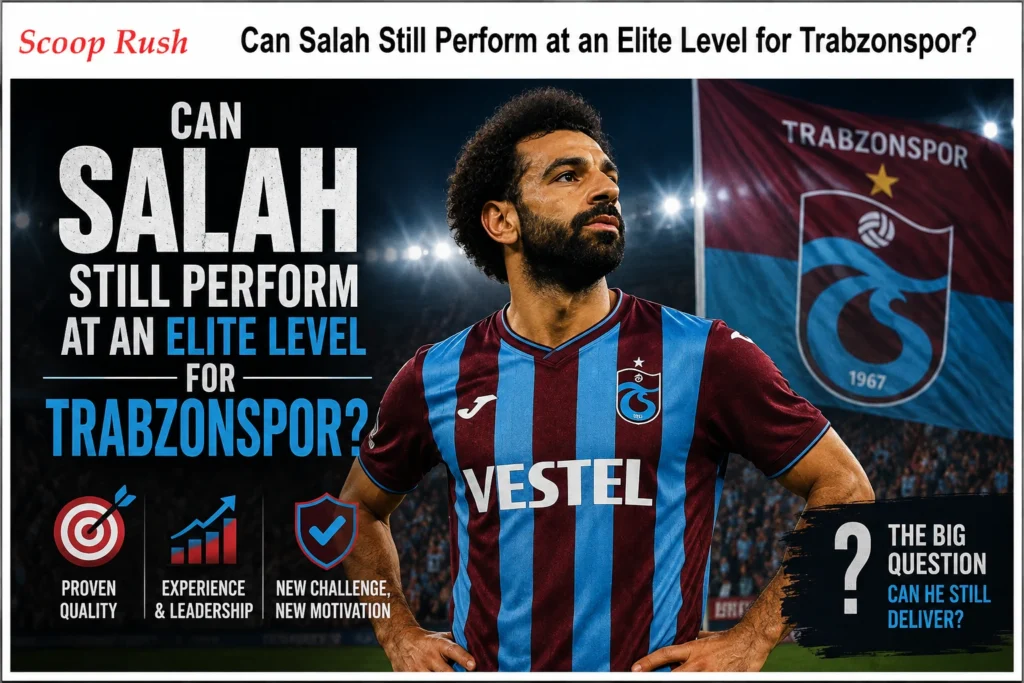
Can Salah Still Perform at an Elite Level for Trabzonspor?
That gap between leagues raises a fair question: can Salah still deliver at the level Trabzonspor needs? Age suggests he is entering the twilight of his playing career, yet there is plenty of evidence suggesting he still has quality to offer. He was instrumental in helping Egypt reach the knockout stages of the 2026 World Cup, contributing one goal and two assists across five appearances for his national team.
Trabzonspor plans to build its entire attacking structure around him from day one. Fatih Tekke’s side typically lines up in a 4-2-3-1 formation, and Salah will occupy his familiar position on the right wing, cutting inside onto his stronger left foot in the exact role that made him one of the most prolific forwards in European football. Tekke can also shift to a 4-3-3 without significantly altering Salah’s responsibilities, keeping him as the focal point of the team’s attack.
His competitive debut could arrive on 15 August, when Trabzonspor open their Super Lig campaign away against Kasimpasa. Attention will then quickly turn to a Europa League play-off tie against either Hungary’s Ferencvaros or Poland’s Gornik Zabrze.
What the Salah Trabzonspor Transfer Means for the Club
Beyond the tactics and the trophy chase, this deal carries weight off the pitch too. For Trabzonspor, this signing extends far beyond what Salah might contribute on the pitch. His arrival immediately elevates the club’s global profile, opens new commercial opportunities, and brings one of the most marketable footballers of the modern era into their dressing room.
Ryan Jack believes the ripple effects will extend well beyond Trabzon itself. “I think Liverpool fans, and people who love watching Salah, will definitely take notice and start following the league,” he explained. He also pointed to his own experience, noting that his family and friends began watching Turkish football for the first time after he moved there, simply because they wanted to follow his journey.
Meanwhile, for Salah, this transfer offers something that might be more valuable than another enormous paycheque. He remains in Europe, retains the opportunity to compete for both domestic and continental honours, and becomes the undisputed figurehead of one of Turkey’s most historic football clubs.
Final Thoughts: A New Chapter Begins
The Mohamed Salah Trabzonspor move was not the destination many expected when speculation began months ago. However, when you examine the full picture, it makes considerable sense. Salah prioritised European competition over bigger paydays elsewhere. Trabzonspor offered him a genuine European platform, passionate support, and the chance to become a club legend all over again.
For Turkish football, this signing could mark a turning point. As more established stars choose the Super Lig over other leagues, the competition’s global visibility and financial ambition will likely continue growing. Ultimately, both player and club now share the same goal: building something special together in this new and unexpected partnership.
Frequently Asked Questions
1. Why did Mohamed Salah choose Trabzonspor over Saudi Arabian clubs?
Salah prioritised staying in European football and continuing to compete in Uefa competitions. While Al-Ittihad and other Saudi clubs pursued him, Trabzonspor offered him the chance to remain in Europe and chase both domestic and continental honours.
2. How much is Mohamed Salah earning at Trabzonspor?
Reports in Turkey indicate Salah signed a two-year contract worth approximately £7.3 million per season, running until June 2028. This figure reportedly includes additional bonuses and a share of merchandise revenue linked to his name.
3. What shirt number will Salah wear at Trabzonspor?
Salah will wear the number 10 shirt, the same number he wears for the Egyptian national team. Team-mate Ernest Muci gave up the jersey as a gesture of respect for the club’s new signing.
4. When will Mohamed Salah make his debut for Trabzonspor?
His competitive debut could come on 15 August, when Trabzonspor open their Super Lig season away against Kasimpasa, followed by a Europa League play-off tie shortly after.
5. How strong is the Turkish Super Lig compared to other European leagues?
According to Opta, the Super Lig currently ranks as the 14th strongest domestic league in world football, behind leagues such as Denmark, Poland, and England’s Championship. However, growing investment and high-profile signings like Salah’s suggest the league’s standing may continue to rise.
Meta just fired its biggest shot yet in the AI coding wars.”On August 5, 2026, the company launched Muse Code, a terminal-based AI coding agent for complete software engineering tasks across massive codebases. Meta has watched rivals dominate the developer tools space for years. This is its clearest attempt yet to change that story.”
Introduction
If you follow AI news even casually, you already know the coding agent space has become a battleground. Anthropic has Claude Code. OpenAI has Codex . “And now Meta has entered the ring with Muse Code. The tool comes from Meta Superintelligence Labs, the division AI chief Alexandr Wang has led since Meta’s roughly $14.3 billion acquihire of Scale AI.”
This launch matters for more than just developers. It signals a structural shift inside Meta. The company is now separating its AI research arm from its product arm, mirroring the approach Google DeepMind already uses. Additionally, Muse Code represents Meta’s most direct answer yet to investor pressure over its massive AI infrastructure spending. : “Zuckerberg has made it clear that AI needs to start generating real revenue. Muse Code is the first tangible product Meta has built specifically for that purpose.”
“Whether you’re picking your next coding assistant or just tracking the AI industry’s next big move, here’s everything you need to know about Muse Code.”what Meta Muse Image is for more context on the Muse family of products.
What Is Muse Code and How Does It Work?
Muse Code is a terminal-based coding agent that installs with a single command on macOS and Linux. It runs on Meta’s newly released Muse Spark 1.2 model, which was developed and trained alongside Muse Code itself.
“According to Wang, Meta designed the tool for full-scale software engineering work rather than simple code suggestions.” It covers the full workflow, not just one step.”
That distinction matters. Muse Code isn’t just autocomplete for programmers. Instead, it functions as a persistent agent capable of planning a task, writing the necessary code, and then checking its own work before handing it back to the developer.
Parallel Agents and Restart-Safe Execution
One of the more technical highlights of Muse Code is how it handles large, complex jobs. The system uses persistent asynchronous background agents that plan, write, and validate code simultaneously rather than working through tasks one step at a time.
Furthermore, Muse Code maintains a local, append-only event log that records every model call and edit made during a session. This means that if a long-running task gets interrupted, the agent can resume from where it left off instead of starting over. For developers working across large repositories on long-horizon projects, that kind of restart safety can save significant time.
“This approach differs from lightweight edge models like Liquid AI’s LFM2.5. Those models are built for quick, low-latency tasks, not deep, multi-step engineering work.”
How Muse Code Performs Against the Competition
: “Meta has published benchmark scores for Muse Spark 1. 2.”It’s worth noting Meta reported these figures itself, and independent researchers have not verified them.”
“On Terminal-Bench 2.1, Muse Spark 1.2 scored 82.9%, a 6.7-point jump over its predecessor, Spark 1.1. DeepSWE 1.1 saw a similar gain, with the model scoring 59.3%, up 6.3 points. That places Muse Spark 1.2 in second position on Meta’s own benchmark chart, trailing only Claude Opus 5, which scored 86.7%.”
“The model also scored 54 on the Artificial Analysis Intelligence Index. That places it near the Pareto frontier, a term for models offering the best tradeoff between performance and cost.”
Independent researchers have not yet verified these numbers, so it’s reasonable to treat them with some caution until third-party testing catches up.
The Real Story: Meta’s Contributor Tier Pricing
Here’s where things get genuinely interesting, and arguably more important than the technology itself.
Meta is offering three ways to access Muse Code. First, there’s a standard pay-as-you-go tier priced at $1.25 per million input tokens and $4.25 per million output tokens. That pricing is roughly in line with Anthropic’s Claude Haiku 4.5, which charges $1 and $5 respectively, and it undercuts OpenAI’s codex-mini, priced at $1.50 and $6.
: “For context, that standard tier is significantly cheaper than premium models like Claude Sonnet 4.6. That model costs $3 per million input tokens and $15 per million output tokens.”
The Contributor Tier Explained
The second option is where Meta’s real strategy comes into focus. The contributor tier prices out at roughly $0.10 per million input tokens and $0.20 per million output tokens. Wang described it as “an incredibly good option, especially from a cost perspective,” and he’s not exaggerating. That pricing is about 10 times cheaper than the standard pay-as-you-go tier, and roughly a quarter of what OpenAI and Anthropic typically charge at list price.
However, there’s a catch. Developers who choose the contributor tier must opt in to having their prompts and completions used to help improve Meta’s models. In other words, this isn’t simply a discount. It’s a data exchange. Meta subsidizes cheap access, developers generate high-quality coding data through everyday use, and that data then feeds directly into training future versions of Muse Spark.
This creates what’s essentially a feedback loop. The more developers who choose the cheaper contributor tier, the more real-world coding data Meta collects, and the faster its models can improve without relying purely on synthetic data generation.
: “Meta has also confirmed it’s beginning to accept requests for zero-data retention access. This option would let enterprise developers use Muse Code without their data being retained at all. Wang called this “a big enterprise feature that is important for folks.” That makes sense, since companies with sensitive codebases rarely want their proprietary code used for model training.”
Why This Launch Matters for the Broader AI Market
Meta’s timing here is not accidental. The AI coding market is currently being squeezed from two directions at once.
From below, open-weight models are steadily eroding pricing power across the industry. The upcoming release of Alibaba’s Qwen3.8-Max, a Max-class open-weight model with 95 billion active parameters, is expected to intensify that pressure even further.
From above, the cost of training and running frontier-level models keeps climbing, forcing every major AI lab to look for new ways to generate revenue that can offset those costs. Google is facing a similar squeeze, as its own AI spending has pushed cash flow into negative territory, underscoring just how expensive the frontier AI race has become for every major player.
“Meta’s strategy appears to be a bet that price will beat performance for most developers, at least in the short term. Rather than outperforming Claude Opus 5 outright, Meta seems focused on capturing developer market share early, before open-weight alternatives mature. Meanwhile, data from the contributor tier can gradually close the performance gap.”
What This Means for Developers Choosing Between Tools
“For independent developers, freelancers, and small teams on non-sensitive projects, the economics of Meta’s contributor tier are hard to ignore. A roughly 10x cost reduction matters, especially for teams running large volumes of coding tasks regularly.”
On the other hand, enterprise teams handling proprietary or sensitive codebases will likely lean toward the standard tier, or the newly available zero-data retention option, since protecting intellectual property will typically outweigh the savings offered by the contributor tier.
This also reflects a broader trend across the AI industry. Companies are no longer competing purely on raw model capability. Instead, pricing structure and data strategy have become just as important as
Meta’s Bigger Picture Strategy
It’s worth remembering enchmark scores when developers decide which tool becomes part of their daily workflow.why Meta is pushing so hard into this space right now. The company’s shares dropped after it issued a lighter-than-expected revenue forecast and reported shrinking free cash flow in a recent quarter, largely due to the sheer scale of its AI infrastructure investment.
Muse Code represents a direct answer to that pressure. Zuckerberg has been clear that generating actual revenue from AI is now a top priority, not just building impressive research demos. Muse Code is the first genuinely commercial product to come out of that mandate, built by the same team that Alexandr Wang has led since joining Meta last year as the centerpiece of its AI turnaround effort.
Notably, Meta hasn’t chosen a subscription model for Muse Code. Instead, it’s using usage-based, token-driven pricing, which lets it compete aggressively on cost while still collecting valuable training data through the contributor tier. This dual approach, cheap access paired with data collection, is Meta’s way of trying to fund model improvement without relying purely on token revenue.
Conclusion
Muse Code marks a genuine turning point for Meta’s presence in the AI coding space. On the surface, it looks like a straightforward product launch, a new agent competing with Claude Code and Codex on features and benchmark scores. But the more important story is the contributor tier pricing model, which turns everyday developer usage into a continuous stream of training data.
Meta is betting that affordability, not raw performance, will drive early adoption. If enough developers choose the cheaper, data-sharing tier, Meta gains something more valuable than short-term revenue: a steady flow of real-world software engineering data that could help close the gap with frontier models like Claude Opus 5 over time. Data handling remains a sensitive topic across the industry, as shown by the earlier controversy over Claude AI chats appearing in Google search results, which is exactly the kind of concern Meta’s zero-data retention option is meant to address for enterprise users.
For developers, the decision ultimately comes down to priorities. Those chasing maximum savings on non-sensitive projects have a genuinely compelling reason to try Muse Code’s contributor tier. Meanwhile, enterprise teams protecting proprietary code will likely wait, watch, and lean on the standard or zero-data retention options instead. Either way, Meta has officially entered the AI coding agent race, and its pricing strategy alone is enough to keep the entire industry watching closely.
FAQs
What is Meta’s Muse Code?
Muse Code is a terminal-based AI coding agent from Meta Superintelligence Labs, built to handle complete software engineering tasks like planning changes, writing code, and validating results across large codebases.
What model powers Muse Code?
Muse Code runs on Muse Spark 1.2, Meta’s latest coding-focused AI model, which was developed and trained alongside Muse Code itself.
How much does Muse Code cost?
Standard pay-as-you-go pricing is $1.25 per million input tokens and $4.25 per million output tokens. A contributor tier offers roughly $0.10 and $0.20 per million tokens, but requires developers to let Meta use their data for model training.
How does Muse Code compare to Claude Code and OpenAI Codex?
Muse Code is Meta’s direct competitor to Claude Code and Codex. On Meta’s own vendor-reported benchmarks, Muse Spark 1.2 trails only Claude Opus 5, though independent verification of these scores has not yet been published.
Is Muse Code available for enterprise use?
Yes. Meta is now accepting requests for zero-data retention access, which allows enterprise developers to use Muse Code without their data being retained for model training, addressing a key concern for companies with sensitive codebases.
Thinking about becoming a data analyst in 2026 but not sure where to start? You’re not alone. Businesses now lean on data for almost every decision, and employers expect newcomers to be comfortable with spreadsheets, databases, dashboards, and increasingly, AI-assisted workflows. The good news is that you don’t need to learn all of it at once.
Search around and you’ll find dozens of learning guides, each pointing you toward a different starting line. One says Python first. Another insists on SQL. A third pushes dashboard tools before anything else. It’s no surprise beginners end up more confused than when they started.
A simpler approach works better: build one skill at a time, in an order that lets each new tool reinforce the last. This roadmap lays out six months of learning — Excel, then SQL, then data cleaning, then dashboards, then AI-assisted workflows — so that by the end, you have a portfolio of real skills instead of a stack of half-finished tutorials.
Month 1: Start With Excel, Not Advanced Software
Every capable analyst starts by understanding data, not by memorizing software menus. Excel gets dismissed as basic, but it’s still one of the most widely used tools in business, and it’s the fastest way to build analytical instincts.
Excel Skills Worth Practicing First
During month one, spend regular time on:
Formulas and functions
Sorting and filtering
Conditional formatting
Lookup functions
Pivot tables
Charts and graphs
These aren’t just features to check off — they teach you how businesses actually look at information.
Picture a retail company where weekend sales are climbing but profits keep slipping. That’s a confusing signal on the surface. Break the numbers down by revenue, profit margin, product category, and discount level in Excel, though, and the story becomes clear: heavy weekend discounting is quietly eating the gains from higher sales volume.
Working with real, messy datasets — not sample files — is what builds this instinct. By the end of the month, you should feel confident organizing raw numbers, running calculations, and pulling a simple business insight out of a spreadsheet.
Month 2: Learn SQL to Query Real Databases
Once Excel feels natural, the next step for any data analyst in 2026 is SQL. If Excel helps you understand data you can see, SQL lets you pull data out of systems holding millions of records — which is where most business information actually lives.
Core SQL Skills to Master
Focus your second month on:
SELECT statements
WHERE clauses
GROUP BY
JOIN operations
CASE statements
Subqueries
Window functions
Each of these answers a different kind of business question. Take a food delivery company seeing a spike in complaints over a holiday weekend. Nobody knows exactly why yet. With SQL, an analyst can pull delivery records, compare regions, check restaurant performance, and isolate the exact time windows where delays spiked — work that would take hours to do by hand.
SQL rewards daily practice more than most tools. Rebuilding reports and exploring how tables relate to each other trains you to ask sharper questions, which matters just as much as writing the query itself.
Month 3: Master Data Cleaning Before You Trust Any Report
This is the stage beginners tend to skip, and it’s a mistake. Even a beautifully designed dashboard is worthless if the data feeding it is wrong.
Real-world datasets are messy by default — missing values, duplicate entries, inconsistent date formats, and typos are the norm, not the exception. Before any analysis begins, that mess needs to be sorted out.
Why Clean Data Changes Outcomes
Consider a hospital trying to cut patient wait times. If appointment records include duplicate entries, missing timestamps, or department names spelled three different ways by three different staff members, any conclusion drawn from that data is shaky at best — and shaky data can lead to decisions that affect patient care.
During month three, practice spotting and fixing:
Duplicate records
Missing values
Inconsistent date and text formats
Mismatched category names
Calculation errors
Conflicts between multiple datasets
Document each cleaning decision as you go — it’s a habit that saves you (and anyone reviewing your work) a lot of guesswork later. Combining Excel and SQL here works well: Excel is good for spotting visual inconsistencies, while SQL handles cleanup across much larger tables. By month’s end, you should be able to hand off a dataset that other people can actually rely on.
Month 4: Build Dashboards That Make Numbers Usable
With clean data in hand, the next challenge is turning rows and columns into something a busy executive can understand in ten seconds. That’s the job of a dashboard.
Power BI Skills to Practice
Month four is about learning to:
Design interactive dashboards
Create Key Performance Indicators (KPIs)
Match chart types to the data they’re showing
Add filters and slicers
Build drill-down reports
Tailor reports for different audiences
Take a logistics company tracking deliveries across several regions. Managers want to know where delays are happening, which routes are performing well, and how fuel costs are affecting the bottom line. Buried in a spreadsheet, those answers could take hours to find. On a well-built dashboard, a line chart shows delivery trends over time, a bar chart compares regions side by side, and KPI cards flag whether targets are being hit — all at a glance.
Try building multiple dashboards from the same dataset: one for executives, one for operations, one for department managers. Each audience needs a different level of detail, and learning to adjust for that is a skill in itself. The goal was never more charts — it’s the clearest possible version of the story the data is telling.
Months 5–6: Use AI as a Tool, Not a Shortcut
The final stretch of the roadmap reflects one of the biggest shifts in analytics work today. AI isn’t replacing analysts — it’s taking over the repetitive parts of the job so there’s more time for judgment calls and problem-solving.
Where AI Actually Helps
Modern AI tools are useful for:
Drafting SQL queries
Summarizing large datasets
Flagging unusual patterns
Supporting exploratory analysis
Writing documentation
Suggesting angles for further investigation
Imagine a streaming service trying to figure out why retention dropped in one region. Rather than reading through thousands of customer comments by hand, an analyst can use AI to summarize the feedback and surface recurring themes — then decide which of those threads is worth chasing with a proper SQL query.
That last part matters most. The analyst still checks every recommendation before it reaches a decision-maker. A few habits worth building during these two months:
Review every AI-generated query before running it. Small errors can quietly skew results.
Verify insights against the actual data. AI can spot a pattern; it can’t confirm the pattern means what you think it means.
Get better at writing prompts. Clear, specific instructions produce noticeably better output.
Keep your own judgment in the loop. AI speeds up the repetitive work, but curiosity and business context are still yours to bring.
Why a Structured Path Beats Random Tutorials
It’s easy to lose months jumping between YouTube tutorials, each one recommending a different tool as “the one to learn first.” That approach leaves most beginners with scattered knowledge and no real sense of progress.
A sequential path avoids that trap:
Excel builds the analytical foundation
SQL adds the ability to pull data at scale
Data cleaning makes the results trustworthy
Dashboards turn numbers into a story
AI speeds up the routine work, while judgment stays with you
Each stage sets up the next, so the learning feels cumulative rather than scattered. And that’s ultimately what employers are hiring for — not a list of software names, but someone who can work with messy real-world data, communicate what it means, and back it up with sound reasoning.
Common Mistakes to Avoid Along the Way
Trying to learn everything at once. Excel, SQL, Power BI, Python, and AI tools all at the same time sounds efficient but usually just creates confusion. One skill at a time, built on the last, works better.
Skipping hands-on practice. Watching a tutorial isn’t the same as solving a problem with it. After each stage, build something small with a public dataset — it’s the fastest way to actually retain what you learned.
Treating data cleaning as optional. A dashboard is only as good as the data underneath it. Always check for duplicates, missing values, and formatting issues before drawing conclusions.
Over-relying on AI. It’s a productivity boost, not a replacement for thinking. Use it to draft and summarize, then verify everything before it goes anywhere near a decision-maker.
What Employers Actually Look For
Technical skills open the door for a data analyst in 2026, but they’re rarely the whole picture. Employers evaluating data analysts in 2026 tend to look for a mix of both.
Technical skills: Excel for analysis, SQL for querying, data cleaning and validation, Power BI dashboard-building, AI-assisted workflows, and solid reporting and visualization habits.
Soft skills: the ability to ask the right business questions, explain findings in plain language, work well across teams, think critically before making a recommendation, and keep learning as tools evolve.
The analysts who stand out combine both — they’re not just comfortable with the software, they understand why the business cares about the answer.
Conclusion
If you’ve been wondering how to become a data analyst in 2026, the short answer is: stop trying to learn everything simultaneously, and instead follow a path that builds on itself. Start with Excel to develop analytical thinking. Move to SQL to pull data efficiently from real systems. Spend real time on data cleaning so your reports hold up to scrutiny. Learn to build dashboards that turn numbers into a story anyone can follow. And finally, bring AI into your workflow as a productivity tool — one you still double-check, not one you defer to.
Consistency matters more than speed here. A small project at the end of each month does more for your confidence and your portfolio than weeks of passive tutorial-watching.The core of the job for a data analyst in 2026 doesn’t really change from year to year: organize reliable data, ask good questions, explain what you found clearly, and help people make better decisions with it. Build that foundation over six months, and you’ll be in a solid position to start applying for entry-level analytics roles.
FAQs
What should I learn first to become a data analyst in 2026?
Start with Microsoft Excel. It teaches formulas, data organization, pivot tables, filtering, and charting — the fundamentals that make every later tool easier to pick up.
Should I learn Excel or SQL first?
Excel first. It gives you a visual, hands-on way to understand data before you move on to retrieving and filtering it from databases with SQL.
Is AI replacing data analysts in 2026?
No. AI takes on repetitive tasks like drafting SQL queries, summarizing data, and spotting patterns, but analysts still need to verify results and apply critical thinking before making recommendations.
Do I need advanced math to become a data analyst?
Not for most entry-level work. Percentages, averages, ratios, growth rates, and basic statistics cover the majority of day-to-day tasks. Advanced math becomes relevant mainly in specialized roles.
Can beginners realistically become data analysts in six months?
A structured six-month plan can get you the core foundational skills. Long-term success after that comes down to consistent practice, real projects, and continuing to build on what you’ve learned.
Going out for drinks shouldn’t feel like a minefield. But if you live with celiac disease, non-celiac gluten sensitivity, or you’re simply following a gluten-free lifestyle, ordering at a bar can bring on a wave of questions. Is that vodka safe? What about the beer on tap? Will the cocktail syrup wreck your night?
The good news is that most alcoholic drinks are naturally gluten-free or become gluten-free through the way they’re made. The confusion usually comes down to a handful of myths, some tricky labeling rules, and a few categories namely beer that genuinely do need extra caution.
This guide breaks down exactly which alcohol is gluten-free, which drinks to steer clear of, and why distillation changes everything.
Quick Answer: Gluten-Free Alcohol at a Glance
Here’s the short version before we dig into the details.
Distillation removes gluten proteins, even when the base grain contains gluten
Wine (still and sparkling)
Generally safe
Made from grapes; rare “may contain traces” labels do exist
Champagne and Prosecco
Generally safe
Naturally gluten-free sparkling wines
Port, sherry, vermouth
Generally safe
Grape-based fortified wines
Cider
Generally safe
Made from apples, though some brands add a touch of malt
Hard seltzers
Usually safe
Check the label, as recipes vary by brand
Beer, ale, lager, stout
Not safe unless labeled gluten-free
Made from barley or wheat; look for “gluten-free” or “gluten-removed” certification
Some liqueurs and flavored malt beverages
Check the label
Added flavorings or malt bases can introduce gluten
Cocktails with syrups, beer, or Worcestershire sauce
Check the ingredients
Mixers are often the hidden risk, not the spirit itself
Why Distilled Spirits Are Considered Gluten-Free
This is the part that trips people up the most: many spirits start out as gluten-containing grains. Whiskey and bourbon typically begin with wheat, rye, or barley. Some vodkas and gins do too. So how can they be labeled gluten-free?
The Science Behind Distillation
The answer lies in the distillation process itself. In the United States, the Alcohol and Tobacco Tax and Trade Bureau (TTB) the agency that regulates most alcoholic beverages has ruled that distillation removes the proteins responsible for triggering a reaction in people with celiac disease. Gluten proteins are large, complex molecules, and they’re too heavy to evaporate along with the alcohol during distillation. Instead, they stay behind in the mash, while the purified alcohol vapor is collected separately and condensed into the finished spirit.
This is fundamentally different from what happens during fermentation, which is why beer a fermented, not distilled, beverage plays by a different set of rules entirely.
The Official TTB Ruling
According to the TTB, because distillation strips out the protein when proper manufacturing practices are followed, and because the absence of protein can be confirmed with scientifically validated testing methods, distillers are permitted to label their products “gluten-free” even when the starting grain contained gluten as long as they take precautions to prevent gluten from being reintroduced after distillation.
That last part matters. A distillery still has to prove, if asked, that no protein made it into the final bottle and that there was no cross-contact from storage containers, shared equipment, or added ingredients after the spirit left the still.
What This Means for You
In short: it’s not the grain that determines whether a spirit is gluten-free it’s what happens to that grain during and after distillation. A wheat-based vodka and a potato-based vodka can end up equally safe, provided both are properly distilled and handled afterward. This is also why flavored or spiced spirits deserve a second look: any ingredient added back in after distillation bypasses the process that made the base spirit safe in the first place.
Spirits That Are Generally Gluten-Free
The following distilled spirits are considered safe for a gluten-free diet, even when derived from gluten-containing grains:
Vodka — including wheat-based vodkas, thanks to distillation
Gin — even when made from wheat or barley
Whiskey and Scotch — malt whisky included
Bourbon — a corn-based whiskey, naturally low-risk
Rum — made from sugarcane or molasses
Tequila and mezcal — made from the blue agave plant
Brandy and cognac — grape-based spirits
Absinthe — herb-based spirit
Soju — Korean distilled spirit
The caveat with all of these is what happens after distillation. Flavored spirits, liqueurs, and pre-mixed drinks sometimes have ingredients added back in post-distillation think flavoring syrups, coloring, or thickeners and those additions can occasionally introduce gluten. Always check the label on anything flavored, spiced, or “ready to drink.”
A Note on Popular Vodka Brands
Not every vodka is treated equally by gluten-free drinkers, and brand-specific questions come up constantly.
Smirnoff is certified gluten-free and widely considered safe by celiac organizations.
Absolut is made from winter wheat, and while distillation should remove the gluten protein, some people with high sensitivity report symptoms after drinking it Absolut has not sought official gluten-free certification.
Brands made from potatoes, corn, or grapes such as certain potato vodkas sidestep the debate entirely, since there’s no gluten-containing grain in the process to begin with.
If you’re highly sensitive, sticking to vodkas made from potatoes, corn, or grapes, or those carrying an official gluten-free certification, is the more cautious route.
What About Wine, Champagne, and Fortified Wines?
Wine is about as gluten-friendly as alcohol gets. It’s made from grapes, which contain no gluten at all, and the fermentation process doesn’t introduce any.
Still wines — reds, whites, and rosés are naturally gluten-free.
Sparkling wines, including Champagne and Prosecco, are also gluten-free.
Port, sherry, and vermouth are fortified wines made from a grape base and are considered safe.
Wine also tends to appeal to drinkers following a low-carb diet, since it’s naturally lower in carbohydrates than most beers and mixed drinks.
There is one small wrinkle worth knowing about: during the “fining” process, some winemakers use gluten-based products to clarify the wine, and certain wines are aged in oak barrels sealed with a wheat-based paste. These practices can theoretically leave trace amounts of gluten behind. Reports of this happening are rare, but if you’re highly sensitive, it doesn’t hurt to check the label or contact the producer for reassurance.
Cider and Seltzers
Cider is made by fermenting apples, so it’s naturally gluten-free in most cases. Some cider makers do add a small amount of malt for flavor, so it’s worth a quick label check if you’re extremely sensitive, but the vast majority of ciders on the market are safe.
Hard seltzers have exploded in popularity, and most are brewed from a fermented cane sugar or malt base and then processed to remove gluten, similar to gluten-removed beer. Many are labeled gluten-free, but formulas differ by brand similar to how ingredients vary across diet soda brands so a quick label scan is the safest bet.
Beer: The One Category That Needs Real Caution
If there’s a single rule to remember, it’s this: regular beer is not gluten-free.
Traditional beer, ale, lager, and stout are made by fermenting barley and often wheat both gluten-containing grains. Fermentation, unlike distillation, does not remove gluten proteins. That means a standard pint is off-limits for anyone with celiac disease or a serious gluten sensitivity.
That said, the beer aisle isn’t a total dead zone. There are two very different types of gluten-friendly beer, and understanding the difference matters:
Gluten-free beer — brewed from grains that never contained gluten to begin with, such as sorghum, rice, millet, or corn. These beers are regulated by the FDA rather than the TTB and can be labeled “gluten-free” if they test below 20 parts per million (ppm) of gluten.
Gluten-removed (or gluten-reduced) beer — brewed from traditional grains like barley, then treated with enzymes that break down the gluten proteins into smaller fragments. These often test below 20 ppm too, but because they’re still made from gluten-containing grains, some health organizations remain cautious about recommending them to people with celiac disease, since testing methods for this process haven’t been universally validated.
If you see a beer labeled “gluten-free,” it’s the safer bet. If it says “gluten-removed” or “crafted to remove gluten,” treat it with a bit more caution, especially if you have celiac disease rather than a milder sensitivity.
Common Beers That Are NOT Gluten-Free
Corona
Budweiser and Bud Light
Heineken
Guinness
Stella Artois
Peroni
Most standard lagers, ales, and stouts
Is Baileys Gluten-Free?
Baileys Irish Cream contains Irish whiskey, which is distilled from gluten-containing cereals. Distilled spirits are typically considered gluten-free under TTB and FDA guidance, but Baileys also contains cream and other added ingredients, so those with high sensitivity may want to double-check current formulations or reach out to the manufacturer directly.
Liqueurs, Ouzo, and Sake: Where It Gets Tricky
A few specialty drinks deserve their own mention because they don’t fit neatly into the “spirits are always fine” rule:
Ouzo, the anise-flavored Greek spirit, sometimes has grains added back in after distillation, which can reintroduce gluten.
Sake, brewed from rice, is generally low-risk but can occasionally raise questions depending on production methods, so it’s worth checking with the brand if you’re sensitive.
Flavored liqueurs can contain gluten-based thickeners, flavorings, or coloring agents added after distillation.
When in doubt with any specialty liqueur, a quick look at the label or a message to the manufacturer is the safest move.
Are Cocktails Gluten-Free?
This is where things get genuinely complicated, because a cocktail is only as gluten-free as its weakest ingredient. A gin and tonic or a vodka soda is typically a safe bet, since it’s just spirit, mixer, and citrus.
Cocktails That Commonly Carry Hidden Gluten
Bloody Marys often contain Worcestershire sauce, which is frequently made with barley malt vinegar.
Beer cocktails, like a shandy or a Michelada, obviously carry the same risk as regular beer.
Flavored syrups used in craft cocktails can sometimes contain gluten-based thickeners.
Pre-mixed canned cocktails can be a wildcard, since ingredient lists aren’t always required by law (more on that below).
What to Do at the Bar
The safest approach at a bar is the same one you’d use when ordering food: ask what’s actually in the drink, not just what spirit is listed on the menu. If a cocktail menu describes a drink only by its base spirit and a vague flavor note, it’s worth asking the bartender directly whether any syrups, sauces, or bitters are involved, since these are the most common source of hidden gluten. When in doubt, a simple spirit-and-mixer combination like tequila and soda with lime, or whiskey on the rocks is almost always the safest order.
Gluten Cross-Contact: The Risk Beyond the Ingredients
Even when a drink’s core ingredients are gluten-free, cross-contact is a separate risk worth understanding. This happens when a naturally gluten-free product comes into contact with gluten somewhere along the supply chain, rather than through the ingredients themselves.
Where Cross-Contact Can Happen
Shared bottling lines — a facility that also bottles beer or malt-based drinks may use the same equipment for gluten-free spirits.
Storage barrels — spirits and wines aged in barrels previously used for gluten-containing products can pick up trace residue.
Bar equipment — this one is often overlooked. A shared cocktail shaker, ice scoop, or garnish tray used for both beer and spirits at a bar can introduce trace gluten, even if the drink itself is safe on paper.
Why This Matters More for Some People Than Others
For people with mild gluten sensitivity, trace cross-contact is rarely an issue. But for those with celiac disease, even small amounts of gluten can trigger an immune response, so it’s worth being mindful of preparation, not just ingredients, especially at bars and restaurants rather than with sealed, factory-bottled products.
The Weird Labeling Loophole You Should Know About
Here’s a quirk of alcohol labeling that catches a lot of people off guard: in many regions, alcoholic drinks above a certain alcohol-by-volume threshold aren’t legally required to list their full ingredients on the label, the way food products are.
Allergens Still Have to Be Disclosed
However, alcoholic drinks are still required to disclose major allergens, including gluten-containing grains, even when the full ingredient list is left off the label. This means a canned cocktail might not tell you every ingredient inside, but it must flag wheat, barley, or rye if any of those are present.
The Name-as-Disclosure Exception
There’s an extra wrinkle, too a product that has the allergen in its own name, like “Wheat Beer,” is sometimes exempt from separately listing wheat as an allergen, since it’s already obvious from the name itself.
When to Contact the Manufacturer
The upshot: if you’re ever uncertain whether a canned cocktail, flavored spirit, or specialty drink is gluten-free, your best move is to contact the manufacturer directly rather than relying solely on the can. Most beverage companies keep detailed allergen and gluten-status information on hand and are used to fielding this exact question.
Brand Checklist: Popular Alcohol Brands and Gluten Status
Brand
Gluten-Free?
Why
Smirnoff Vodka
Yes
Certified gluten-free
Absolut Vodka
Caution
Made from wheat; not officially certified
Tito’s Handmade Vodka
Yes
Made from corn
Ciroc
Yes
Made from grapes
Grey Goose
Yes
Made from wheat but distilled; check personal tolerance
Corona
No
Contains barley malt
Bud Light
No
Standard barley-based beer
Guinness
No
Barley-based stout
Baileys Irish Cream
Caution
Contains distilled whiskey plus added ingredients
Tequila (100% agave)
Yes
Distilled from blue agave
Champagne (most brands)
Yes
Grape-based sparkling wine
Tips for Ordering Gluten-Free Alcohol With Confidence
Stick to wine, champagne, cider, or straight spirits (vodka, gin, rum, tequila, whiskey) mixed with soda water, tonic, or juice.
Avoid anything poured straight from a beer tap unless it’s specifically labeled gluten-free.
Ask your bartender about syrups, mixers, and garnishes before ordering a cocktail.
Watch out for Worcestershire sauce in Bloody Marys and similar savory cocktails.
When trying a new bottled or canned product, check for a “gluten-free” certification rather than assuming based on the base spirit alone.
If a product doesn’t list ingredients, don’t hesitate to contact the manufacturer most have gluten information available on request.
Look specifically for beers made from sorghum, rice, millet, or corn if you want a truly gluten-free beer experience.
If you’re out for a while, pairing drinks with a bit of movement even a 5-minute walk every hour can help you stay comfortable and aware of how you’re feeling.
FAQs
Is all alcohol gluten-free?
No. While most spirits, wine, cider, and champagne are gluten-free, regular beer, ale, lager, and stout are not, since they’re fermented from barley or wheat rather than distilled.
Can people with celiac disease drink vodka?
Yes, in most cases. Even wheat-based vodkas are considered gluten-free after distillation, since the process removes the gluten protein. Those who are highly sensitive may prefer vodkas made from potatoes, corn, or grapes to avoid any doubt.
Is Guinness gluten-free?
No. Guinness is a barley-based stout and is not suitable for a gluten-free diet unless a specific gluten-free version is released.
What is the difference between “gluten-free” and “gluten-removed” beer?
Gluten-free beer is brewed from grains that never contained gluten, such as sorghum or rice. Gluten-removed beer starts with barley or wheat and is then treated with enzymes to break down the gluten. Both may test below 20 ppm, but gluten-removed beer is treated with more caution by some celiac organizations since testing methods for it aren’t universally validated.
Are flavored vodkas and liqueurs gluten-free?
Not always. The base spirit may be gluten-free, but flavorings, syrups, or thickeners added after distillation can introduce gluten. Always check the label or ask the manufacturer for flavored or specialty products.
Is wine ever unsafe for a gluten-free diet?
Wine is naturally gluten-free, since it’s made from grapes. In rare cases, gluten can be introduced during the fining process or through barrels sealed with wheat paste, so highly sensitive drinkers may want to double-check with the producer, though this is uncommon.
Do I need to worry about cross-contamination at bars?
It’s worth being mindful of it, especially if you have celiac disease. Shared shakers, ice scoops, and garnish trays used for both beer and spirits can introduce trace gluten, even if the drink itself is made with gluten-free ingredients.
What’s the safest drink to order if I’m unsure?
A straightforward spirit and mixer like tequila with soda water and lime, or whiskey on the rocks is typically the lowest-risk option, since it avoids syrups, sauces, and beer entirely.
Does alcohol affect people taking GLP-1 medications?
It can. Alcohol and GLP-1 medications can interact in ways that affect appetite, digestion, and blood sugar, so it’s worth talking to your doctor about how alcohol fits into your routine if you’re on one of these medications.
Most alcohol is naturally or effectively gluten-free wine, cider, champagne, and virtually all distilled spirits fall into the safe category, even when they start out as wheat, rye, or barley. Beer is the clear exception, along with a handful of specialty liqueurs and cocktail mixers that can sneak gluten in after the fact.
The safest healthy habit to build, whether you’re at a bar, a liquor store, or hosting a party, is the same one you’d use with food: know your safe categories, double-check labels on anything flavored or blended, and don’t be afraid to ask questions. With a bit of label-reading, there’s still a full bar’s worth of options open to you.