
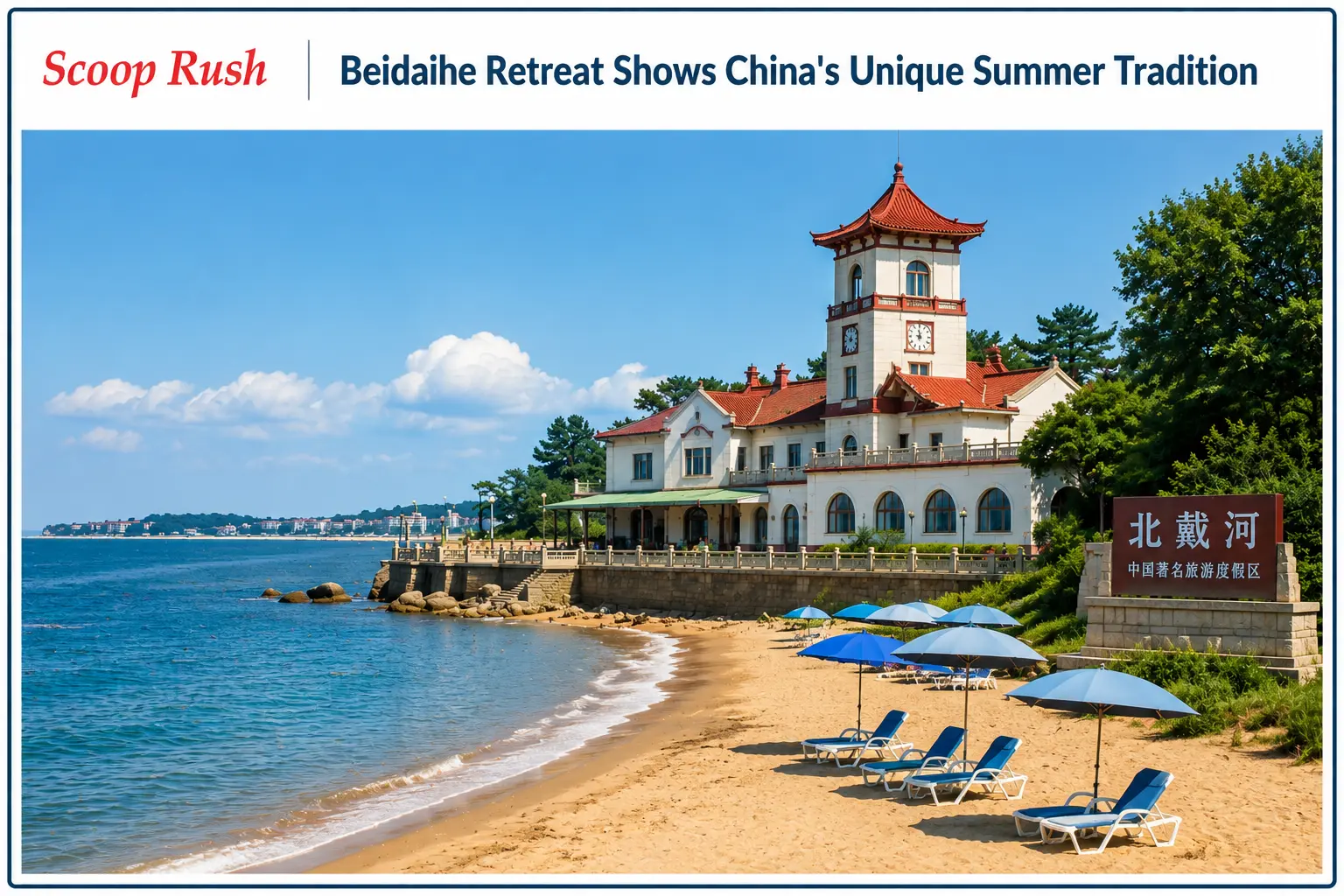
The Beidaihe Retreat returns every summer as China’s top political tradition. Instead of luxury resorts, senior leaders spend time in the quiet coastal town of Beidaihe. The destination sits about 300 kilometers east of Beijing. It combines a summer break with informal policy discussions.
Unlike many global leaders, China’s leadership keeps this annual trip private. Officials rarely announce the schedule. However, tighter security and reduced public appearances usually signal the retreat’s beginning. The tradition continues to attract attention because of its political importance and long history.
Beidaihe Retreat Reflects China’s Political Style
Every August, Chinese President Xi Jinping and senior Communist Party officials disappear from public events for around 10 to 14 days. Their absence has become a familiar pattern during the annual Beidaihe Retreat. Public announcements remain rare, adding to the mystery surrounding the gathering.
The leadership does not choose famous luxury destinations. Instead, Beidaihe presents a modest image with simple beaches, seafood restaurants, and Soviet-era villas. Analysts believe this choice supports Xi Jinping’s public campaign against corruption and excessive government privileges.
Beidaihe Retreat Takes Place Under Tight Security
Security increases across Beidaihe weeks before senior leaders arrive. Authorities ban drones, private boats, and several recreational activities near restricted areas. Visitors notice additional checkpoints and stronger police presence throughout the town.
Despite these measures, ordinary tourists continue visiting the beaches. Families enjoy swimming, seafood, and summer holidays while restricted compounds remain closed to the public. This contrast creates one of China’s most unusual summer traditions.
Beidaihe Retreat Began During Mao Zedong’s Era
The tradition started in 1953 when Mao Zedong selected Beidaihe as a summer workplace. Beijing’s intense summer heat made the coastal town an attractive alternative for senior officials. Leaders gradually turned the town into an important seasonal political center.
Several major policy discussions took place there during the following decades. Historians note that Beidaihe influenced important political decisions throughout modern Chinese history. Although its formal role has changed, the town still carries strong historical significance.
Beidaihe Retreat Focuses on Policy Discussions
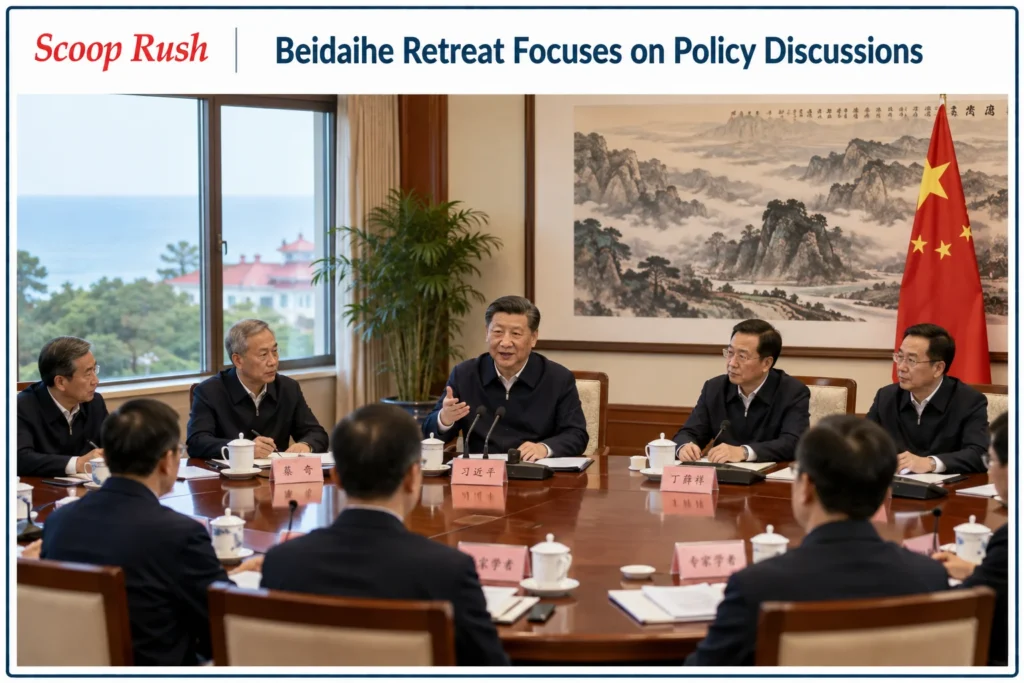
The annual gathering serves more than a vacation. It offers senior leaders time for informal meetings before major political events. Experts believe officials discuss economic conditions, national priorities, and internal party matters during this period.
Every year, senior official Cai Qi also hosts leading academics in Beidaihe. These experts discuss subjects including artificial intelligence and national development. Their meetings often happen shortly before the leadership begins its summer retreat.
Beidaihe Retreat Symbolizes Simplicity Instead of Luxury
Many world leaders vacation in destinations like Saint-Tropez or Monaco. China’s leadership follows a different approach. Beidaihe offers modest surroundings instead of expensive yachts and luxury hotels. This choice strengthens the government’s public image of discipline and restraint.
Political observers believe the location sends an important message. Leaders appear closer to ordinary citizens by choosing a traditional seaside town. The simple setting also supports Xi Jinping’s long-running anti-corruption campaign.
Beidaihe Remains Popular Beyond Politics
Although politics defines its reputation, Beidaihe welcomes millions of domestic visitors every year. Travelers visit its beaches, historic landmarks, seafood restaurants, and coastal scenery. Many families simply view it as a relaxing summer destination.
Nearby attractions continue attracting younger visitors as well. Modern cultural areas such as Aranya host festivals, artistic events, and architectural landmarks. These attractions have helped expand Beidaihe’s appeal beyond its political identity.
Beidaihe Retreat Holds Less Political Power Today
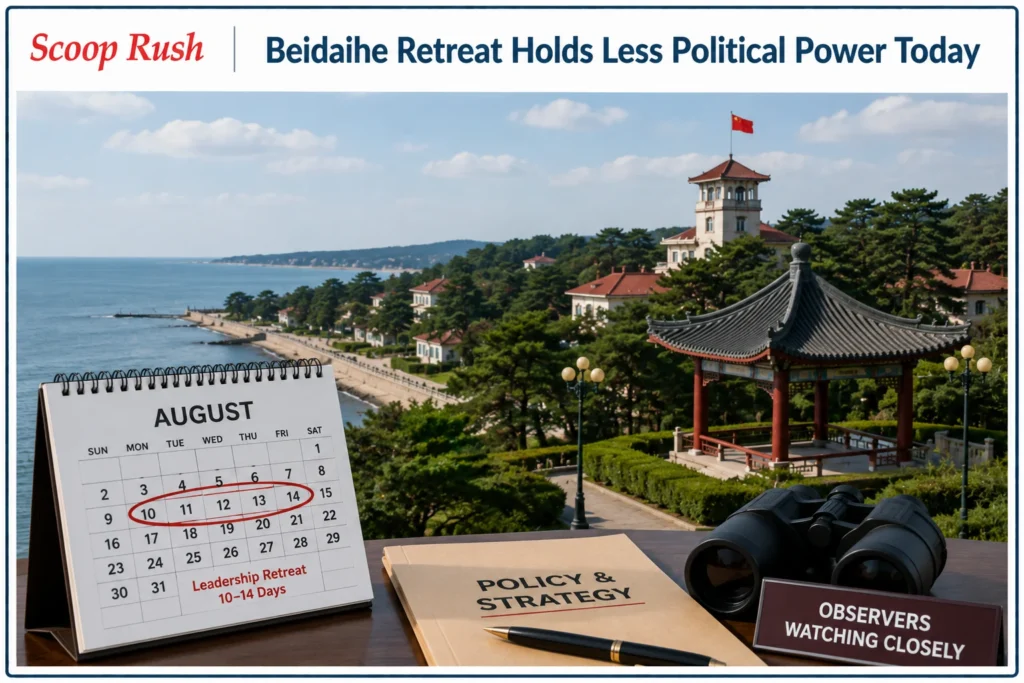
Many researchers believe the retreat no longer determines national policy like it once did. Xi Jinping has centralized decision-making during his leadership. As a result, opportunities for major negotiations have become more limited.
Even so, the retreat continues as an important political tradition. Observers still watch leadership movements closely each August. The gathering remains a symbolic event in China’s political calendar despite its evolving role.
Why Beidaihe Continues to Draw Global Attention
International observers closely monitor the Beidaihe Retreat each year. The leadership’s absence from public view often sparks speculation about government priorities. However, officials rarely confirm meeting schedules or discussion topics.
The secrecy surrounding the retreat continues to fascinate analysts worldwide. While ordinary tourists enjoy the beaches, China’s highest leaders remain behind guarded compounds. That contrast keeps Beidaihe one of the country’s most closely watched summer destinations.
Conclusion
The Beidaihe Retreat remains one of China’s most distinctive political traditions. It combines history, security, and informal leadership meetings in a modest seaside town rather than a luxury destination.
Although its political influence has evolved, the retreat still reflects the leadership’s public image and governing style. Every summer, Beidaihe again becomes the focus of both domestic observers and the international community.
FAQs
1. What is the Beidaihe Retreat?
The Beidaihe Retreat is China’s annual summer gathering for senior Communist Party leaders. They spend several days in the coastal town while holding informal discussions.
2. Where is Beidaihe located?
Beidaihe sits about 300 kilometers east of Beijing along China’s northern coastline. It remains a popular domestic beach destination.
3. Why do Chinese leaders choose Beidaihe?
Leaders choose Beidaihe because it reflects simplicity and tradition. The location also supports the government’s anti-corruption image.
4. Does the Beidaihe Retreat include political meetings?
Yes. Officials and experts often discuss national priorities, economic issues, and future policies during the retreat, although details remain private.
5. Can tourists visit Beidaihe during the retreat?
Yes. Most beaches and tourist attractions remain open. However, authorities restrict access to areas used by senior government leaders.

)