Home Blog Page 20

Israel Rejects Gaza Peace Plan Over Hamas Disarmament

0

Israel has rejected the Gaza peace plan backed by US President Donald Trump. Prime Minister Benjamin Netanyahu said Israeli forces will not withdraw from Gaza until Hamas fully disarms. Netanyahu made the statement during an Israeli cabinet meeting on Sunday. He said Israel rejects the 15-point document while discussions with Washington continue.

Netanyahu said Hamas must surrender its military capabilities before an Israeli withdrawal. He stressed that disarmament must cover heavy weapons, lighter weapons, and other arms. Hamas has taken a different position on the proposed process. The group wants Israel to stop attacks and withdraw its forces. The disagreement now threatens to delay the next stage of Trump’s proposal.

Israel Rejects Trump’s 15-Point Gaza Peace Plan

Netanyahu directly rejected the 15-point Gaza peace plan during Sunday’s cabinet meeting. He said Israel will not accept a military withdrawal before Hamas becomes genuinely disarmed. He also said Israeli forces will continue protecting Israeli troops and civilians. Netanyahu wants clear guarantees that Hamas cannot maintain its military capabilities. He described complete disarmament as a necessary condition for withdrawal.

The proposal seeks a framework for ending the conflict in Gaza. It includes Hamas disarmament, Israeli withdrawal, future governance, and reconstruction. Netanyahu said Israel remains in discussions with American officials about the proposal. However, he said some US ideas remain unacceptable to his government. The disagreement shows that major issues remain unresolved between the two sides.

Netanyahu Makes Hamas Disarmament a Key Condition

Netanyahu-Makes-Hamas-Disarmament-a-Key-Condition

Netanyahu has made complete Hamas disarmament the central Israeli demand. He said Israeli forces will remain in Gaza until Hamas genuinely gives up its weapons. He also said Israel will continue responding to threats against its forces and citizens. Netanyahu rejected any arrangement involving limited or symbolic disarmament. Israel wants Hamas to lose its military capabilities before troops leave Gaza.

Hamas has taken a different position on the agreement. The group wants Israel to stop military attacks and withdraw its forces. Hamas has linked its own disarmament to Israeli commitments under the framework. This creates a direct dispute over the order of key steps. Israel wants disarmament first, while Hamas expects Israeli action as part of the process.

Hamas Supports Moving Forward With the Proposal

Hamas has said it remains committed to Trump’s proposed roadmap. A senior Hamas official called on mediators to pressure Israel to follow the agreement. The group says all parties must fulfill their commitments. Hamas also wants Israel to halt attacks and pull back its forces. Its position indicates that Hamas remains open to discussions about implementation.

The disagreement could now delay the next phase of the Gaza peace plan. Israel and Hamas support parts of the framework but disagree over implementation. Hamas wants guarantees for an Israeli withdrawal after meeting its commitments. Israel wants guarantees that Hamas will surrender its weapons completely. Mediators may need to create a phased process to bridge those differences.

Trump’s Gaza Peace Plan Faces a Major Challenge

Trump presented the proposal as a major step toward ending the Gaza conflict. His administration said Hamas had agreed to move toward complete disarmament. The framework also includes an Israeli military withdrawal from Gaza. It seeks arrangements for Gaza’s future administration and reconstruction. Those measures require cooperation between Israel, Hamas, and other involved parties.

Netanyahu’s rejection now creates uncertainty over the proposal’s future. Washington must keep discussions moving while addressing Israel’s security demands. A revised implementation process could provide a possible path forward. Such a process could connect Hamas disarmament with gradual Israeli withdrawals. However, both sides would need clear guarantees before accepting major commitments.

Israeli Forces Remain Inside Large Parts of Gaza

Israeli forces currently control large areas of Gaza. Their presence remains one of the main issues in negotiations. Netanyahu says Israeli troops will not withdraw before Hamas fully disarms. Hamas wants Israeli forces to pull back under the proposed framework. The two positions currently leave little room for immediate implementation.

Any future withdrawal would require detailed security arrangements. Israel wants protection against renewed attacks from Gaza. Hamas wants assurances that Israel will not resume military operations. International monitoring could help verify weapons transfers and military movements. However, Israel and Hamas would first need to agree on monitoring arrangements.

Netanyahu Rejects Palestinian Statehood

Netanyahu also ruled out the creation of a Palestinian state under his leadership. He said he would oppose Palestinian statehood in Gaza and the West Bank. His position adds another political challenge to the negotiations. The future governance of Gaza remains an important issue. Any long-term arrangement would need a structure for administration and security.

Netanyahu’s statement could narrow the political options available to negotiators. The immediate dispute, however, remains focused on Hamas disarmament. The United States and regional mediators may focus first on security arrangements. Political questions could receive greater attention during later negotiations. For now, the weapons issue remains the main obstacle.

Gaza Peace Plan Enters a Critical Stage

Gaza-Peace-Plan-Enters-a-Critical-Stage

The Gaza peace plan now faces a critical test after Netanyahu’s rejection. The United States must find a way to preserve diplomatic momentum. Washington could seek changes to the implementation process. A phased approach could connect Hamas disarmament with Israeli military withdrawals. Such an arrangement could give both sides clear obligations.

However, creating such a process would require further negotiations. Israel and Hamas must agree on security guarantees and verification measures. They must also determine how to respond to potential violations. These issues could delay implementation. Still, neither side has completely abandoned the diplomatic process.

What Happens Next for Trump’s Gaza Plan?

The next talks will likely focus on Hamas disarmament and Israeli withdrawal. These issues now represent the biggest obstacles to implementation. US officials may seek a compromise that allows both sides to act gradually. Regional mediators could also help develop guarantees for both parties. Any agreement would need clear responsibilities and monitoring arrangements.

Netanyahu says Israel remains in discussions with Washington despite rejecting the document. Hamas has also said it remains committed to the proposed roadmap. This means diplomatic channels remain open despite the disagreement. The future of the Gaza peace plan will depend on further negotiations. Both sides must resolve the dispute over disarmament and withdrawal.

FAQs

1. Why did Israel reject Trump’s Gaza peace plan?

Israel rejected key provisions because Netanyahu wants Hamas fully disarmed first. He says Israeli forces cannot withdraw before genuine disarmament.

2. What does Trump’s Gaza peace plan propose?

The plan focuses on Hamas disarmament and Israeli military withdrawal. It also includes arrangements for Gaza’s future governance and reconstruction.

3. Does Hamas support Trump’s Gaza peace plan?

Hamas says it remains committed to the proposed roadmap. However, it expects Israel to fulfill its commitments under the agreement.

4. Will Israeli forces withdraw from Gaza?

Netanyahu says Israel will not withdraw before Hamas fully disarms. Hamas wants Israeli forces to withdraw as part of the process.

5. Can the Gaza peace plan still succeed?

The proposal can continue through further negotiations. However, Hamas disarmament and Israeli withdrawal remain unresolved.

Polish Tatras: An Affordable Alternative to the Alps

0

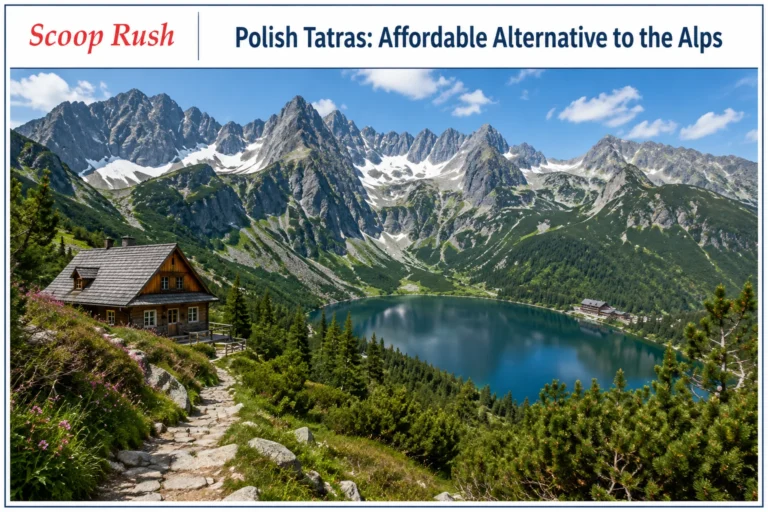
The Polish Tatras offer stunning mountain scenery at a lower cost than many Alpine destinations. The range features rugged peaks, clear lakes, forests, valleys, and waterfalls. Zakopane also provides easy access to the mountains, making the region ideal for budget-friendly outdoor trips.

The Tatras form part of the Carpathian Mountains along the Polish-Slovak border. Much of the Polish side sits within Tatra National Park. The area attracts hikers, skiers, nature lovers, and travelers seeking a European mountain escape.

Alpine Scenery at a Lower Cost

Alpine-Scenery-at-a-Lower-Cost

The Tatras offer landscapes that can rival famous Alpine destinations. Sharp peaks rise above green valleys and clear mountain lakes. Rocky ridges also create dramatic views throughout the national park.

Travel costs can make the region especially appealing. Accommodation, food, and local transport often cost less than similar services in major Alpine resorts. This allows travelers to enjoy mountain scenery without an expensive holiday budget.

Zakopane Is the Best Base

Zakopane sits at the foot of the mountains and serves as the main tourist hub. The town has hotels, guesthouses, restaurants, shops, and transport links. Visitors can easily reach several popular mountain routes from the town.

Krupówki Street forms the center of Zakopane. It offers restaurants, cafes, shops, and regional products. Travelers can also try local specialties such as pierogi and oscypek cheese.

Morskie Oko Is a Must-See Lake

Morskie Oko remains one of the most popular attractions in the Polish Tatras. The lake sits beneath impressive mountain peaks inside Tatra National Park. Its clear waters and surrounding scenery create one of Poland’s most famous mountain views.

Visitors can reach the lake through a maintained hiking route from Palenica Białczańska. The trail passes through forests before reaching the lake. The route can become crowded during peak travel periods, so early starts can help.

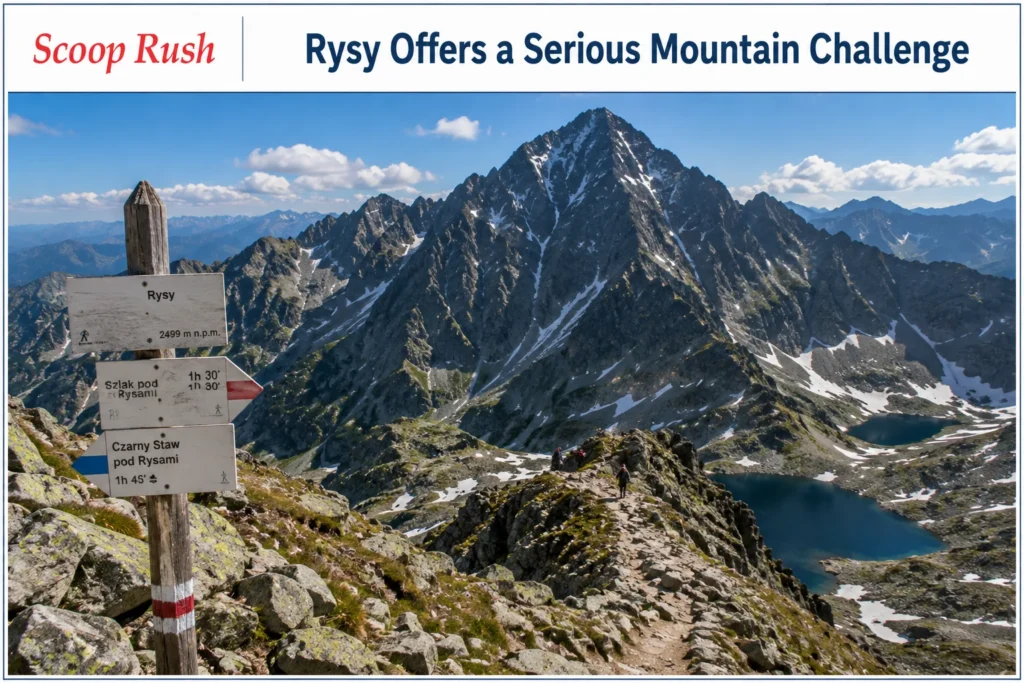
Rysy Offers a Serious Mountain Challenge

Rysy-Offers-a-Serious-Mountain-Challenge

Rysy is the highest point in Poland and reaches about 2,499 meters. The summit sits on the border between Poland and Slovakia. Experienced hikers often consider it one of the region’s main challenges.

The climb requires careful preparation and suitable mountain equipment. Snow and ice can remain on higher sections outside winter. Hikers should always check weather and trail conditions before attempting the route.

Easier Trails Offer Beautiful Alternatives

Visitors do not need to climb high peaks to enjoy the mountains. Several valleys offer scenic routes for less experienced hikers. Dolina Strążyska provides a popular walk through forests near Zakopane.

Dolina Kościeliska offers another attractive route through forests and limestone landscapes. Visitors can also find caves and a mountain hut along the route. These trails provide scenic experiences without the demands of the highest summits.

Public Transport Keeps Travel Simple

Travelers can explore the region without hiring a car. Local buses and minibuses connect Zakopane with important trailheads. Taxis also provide convenient options for travelers carrying hiking equipment.

Kraków serves as a convenient arrival point for international visitors. Regular buses connect Kraków and Zakopane. The journey generally takes around two hours, depending on traffic.

Winter Brings Skiing and Snow Activities

Winter-Brings-Skiing-and-Snow-Activities

The Tatras remain popular during winter. Ski resorts around Zakopane attract visitors looking for skiing and snowboarding. The mountains also offer a different landscape during the colder months.

However, winter travel requires additional preparation. Snow and ice can create dangerous conditions on mountain routes. Visitors should check local weather and safety information before heading into higher areas.

The Mountains Can Get Crowded

The Tatras may appear less famous internationally than the Alps. However, they remain highly popular with Polish travelers. Zakopane can become particularly busy during summer weekends and holidays.

Popular trails can also attract large crowds. Travelers seeking quieter conditions should consider visiting during shoulder seasons. Starting hikes early can also help reduce time spent in busy areas.

Safety Should Remain a Priority

Mountain conditions can change quickly throughout the year. Snow, ice, fog, wind, and heavy rain can make trails difficult. Avalanche risks can also affect higher routes during colder periods.

Hikers should check official conditions before every trip. Proper footwear and suitable clothing are essential. Travelers should also choose routes that match their experience and fitness.

Thermal Baths Add a Relaxing Option

The region offers more than hiking and skiing. Thermal bath complexes provide an easy way to relax after outdoor activities. Several facilities operate around Zakopane and nearby mountain communities.

These attractions suit travelers who want a slower day between hikes. They also make the destination suitable for groups with different interests. A trip can combine mountain walks with relaxation and sightseeing.

Why the Tatras Stand Out

The Tatras offer dramatic scenery within a compact mountain region. Visitors can reach lakes, valleys, peaks, and waterfalls without long journeys between destinations. This makes the area convenient for short breaks.

The combination of scenery and affordability gives the region a strong advantage. Travelers can experience European mountain landscapes while keeping costs manageable. For budget-conscious visitors, the Tatras provide a compelling alternative to the Alps.

Conclusion

The Polish Tatras offer dramatic mountain scenery, accessible hiking, and lower travel costs. From Morskie Oko to Rysy, the region provides options for different experience levels. Zakopane also makes exploring the mountains simple without needing a rental car.

Although popular trails can become crowded, careful planning can create a rewarding experience. Travelers can choose quieter routes, visit outside peak periods, and enjoy local attractions. For visitors seeking an affordable European mountain escape, the Tatras remain a strong alternative to the Alps.

FAQs

1. Where are the Polish Tatras?

The Polish Tatras lie in southern Poland near the Slovak border. They form part of the Carpathian Mountains and include Tatra National Park.

2. Is Zakopane a good base for visiting the Tatras?

Yes. Zakopane offers accommodation, restaurants, shops, and transport links. Several major hiking areas are easily accessible from the town.

3. Is Morskie Oko suitable for beginners?

The route is suitable for many reasonably fit walkers. However, visitors should wear comfortable footwear and prepare for changing mountain weather.

4. Can tourists visit without renting a car?

Yes. Buses, minibuses, and taxis connect Zakopane with many important trailheads. Kraków also has regular bus connections with Zakopane.

5. When is the best time to visit?

Late spring and early autumn can offer good hiking conditions and fewer crowds. Summer provides longer days but usually attracts more visitors. Winter is best for skiing and snow activities.

Is Bread Vegan? The Complete Guide to Dairy-Free, High-Protein & Milk Bread

0

Bread has a strange reputation among vegans. New plant-based eaters often assume every loaf is off-limits. They lump bread in with cheese, eggs, and butter.

But that’s not true. So, is bread vegan?

Most classic breads are vegan by accident. Flour, water, salt, and yeast that’s it. Bread only became complicated once bakeries started adding dairy and eggs for softness.

This guide answers the question properly. It covers how to tell if a loaf is really vegan, how bakers are turning bread into a protein source, how Asian milk bread is made without dairy, and why bread traditions across the whole world tend to be plant-based more often than people expect.

By the end, you’ll know exactly what to check on a label, how to bake your own protein-packed loaf, and why “milk bread” doesn’t always need milk at all.

Is Bread Vegan? A Quick Answer

Is Bread Vegan? A Quick Answer|Scoop Rush

Not always. It depends on the type of bread and the ingredients used.

Lean, old-world breads are almost always vegan. Think baguettes, ciabatta, ficelle, and rustic country loaves. These use only flour, water, salt, and yeast. No dairy fat. No eggs.

Enriched breads are a different story. Anything soft, tender, and slightly sweet often has butter, milk, or eggs. This includes brioche, challah, Hawaiian rolls, and many burger buns. Challah is almost always made with eggs. Supermarket sandwich bread often has milk powder or whey too.

Common Non-Vegan Ingredients in Bread

IngredientWhy It’s UsedVegan-Friendly?
Milk, whey, caseinAdds softness, flavor, browningNo
EggsRichness, structure (challah, brioche)No
HoneySweetener in “wheat” or “grain” breadsNo (vegetarian only)
GelatinOccasionally used in glazesNo
Mono- and diglyceridesEmulsifier, keeps bread moistUsually yes (mostly soy-derived)
Soy lecithinEmulsifier, dough conditionerUsually yes

A simple shortcut helps here. Kosher bakeries rarely use milk products. Jewish dietary law keeps meat and dairy separate. So rye bread and many bagels are safe bets.

Store brands vary a lot, though. The same company can sell both vegan and non-vegan bread side by side. Always check the label.

Why Do Grocery Store Labels Confuse People?

Why Do Grocery Store Labels Confuse People?|Scoop Rush

Ingredient lists aren’t always written for clarity. A label might say “natural flavors” or “enzymes,” and neither term tells you the source. Some enzymes are plant-derived. Others come from animal or microbial sources, and manufacturers rarely specify which.

This is why the same bread aisle can hide both vegan and non-vegan options right next to each other. Two loaves can look identical. One will have milk powder buried near the bottom of the list. The other won’t.

A good habit: scan for “milk,” “whey,” “egg,” and “honey” first. These four words catch most non-vegan bread instantly. If none of them appear, the loaf is very likely safe.

Is Yeast Vegan?

Yes. Yeast is a single-celled fungus, not an animal. It lives naturally in the air, on fruit skins, and in flour. This is exactly why naturally fermented bread has existed for thousands of years.

Some very strict vegans do question refined white sugar. A few refineries use bone char to decolorize it. Organic sugar and beet sugar avoid this issue completely. If you’re already careful about what goes into your diet, it’s also worth reading up on supplement risks from taking too many vitamins, since more isn’t always better with nutrition.

Vegan Bread Traditions Around the World

Vegan Bread Traditions Around the World| Scoop Rush

Bread isn’t just a European or American story. Nearly every culture with access to grain has developed its own bread, and most of these traditional versions never needed animal products in the first place.

Middle Eastern flatbreads like pita and lavash are typically just flour, water, salt, and yeast. South Asian staples like roti and phulka skip yeast entirely, relying on whole wheat flour and water alone. Latin American arepas are made from ground corn, not wheat, and contain no dairy or eggs in their traditional form. Even Ethiopian injera, made from fermented teff flour, is naturally vegan.

A Quick World Tour

BreadRegionNaturally Vegan?
PitaMiddle EastYes
Roti / phulkaSouth AsiaYes
InjeraEthiopiaYes
ArepaLatin AmericaYes
Naan (traditional)South AsiaOften no (uses yogurt or ghee)
FocacciaItalyUsually yes
BriocheFranceNo

Naan is a useful example of how tricky this gets. Traditional recipes often include yogurt, milk, or ghee for richness, which makes classic naan non-vegan. Restaurant naan, though, varies a lot — some kitchens brush it with plain oil instead of ghee, which makes it vegan without anyone advertising the fact.

This pattern repeats everywhere. The “default” version of a bread often depends more on regional habit than on any technical requirement. A flatbread doesn’t need dairy to turn out well; a baker just has to choose not to add it.

It’s a similar story on the opposite end of the spectrum too. People following an animal-based diet or even a strict carnivore diet skip bread entirely, which shows just how differently cultures and individuals can approach the same staple food.

Why Are Bakers Adding Protein to Bread?

Bread used to sit firmly in the “carbs” category. Nobody reached for a slice to hit a protein goal. That’s changing fast, especially among people following a low-carb diet who still want the comfort of a real sandwich.

Home bakers and recipe developers are now packing real protein into everyday loaves. The trick is a single ingredient: vital wheat gluten.

What Is Vital Wheat Gluten?

Vital wheat gluten is the concentrated protein found naturally in wheat. Bakers make it by washing wheat flour with water. The starch rinses away. Only the stretchy gluten network remains.

It’s also the base ingredient in seitan, the popular vegan meat substitute.

Nutrition snapshot (per ¼ cup):

NutrientAmount
Protein~23g
Calories~120

This density is what makes it so useful. A small amount adds a lot of protein. It doesn’t add extra fat or sugar.

One limitation: there’s no real substitute for vital wheat gluten in these recipes. Because of this, high-protein bread made this way can’t be gluten-free. If gluten is a concern for you, it’s worth exploring other gluten-free breakfast ideas that don’t rely on wheat-based bread at all.

How Much Protein Can One Slice Really Have?

A typical slice of white sandwich bread has around 2–3 grams of protein. A slice of high-protein vegan bread built around vital wheat gluten can hit 10 grams or more. That’s roughly triple to quadruple the amount, from the same size slice.

Stack that across a sandwich. Two slices of high-protein bread alone can deliver 20 grams of protein, before any filling goes on top. Add a plant-based deli slice or a spread of nut butter, and a single lunch sandwich starts approaching the protein content of a full meal.

This is exactly why the trend has caught on with people building muscle, recovering from workouts, or simply trying to eat more balanced meals without tracking every gram. It’s also worth knowing this if you’re on medications linked to GLP-1 and muscle loss, since keeping protein intake up matters even more in that situation.

Best Non-Dairy Milks for Baking Bread

Not every plant milk performs the same way in a dough. Some add extra protein, some add sweetness, and a few actively work against the texture you want.

Non-Dairy MilkEffect on BreadBest For
Pea protein milkAdds extra protein, mild flavorHigh-protein loaves
Soy milkNeutral flavor, good structureEveryday sandwich bread
Oat milkSlightly sweet, very soft crumbEnriched, softer loaves
Almond milkLight texture, thinner liquidLean, simple loaves
Coconut milkStrong flavor, high fatNot recommended for most breads

Coconut milk is worth calling out specifically. Its distinct flavor tends to carry through baking, which can clash with an otherwise neutral loaf. Most recipe developers steer bakers toward it only when a coconut flavor is actually wanted.

Beginner Mistakes When Baking Vegan Bread for the First Time

Vegan bread baking isn’t harder than regular baking, but a few habits trip up beginners more than others. Building consistency in the kitchen ties into the same principles behind good healthy habits in your 20s and 30s  small, repeatable routines beat one-off effort every time.

Using cold liquid to activate yeast. Yeast needs warmth to wake up, generally between 90–100°F. Liquid that’s too cold leaves the yeast sluggish, and the dough won’t rise properly.

Skipping a kitchen scale. Cup measurements for flour can vary by as much as 20% depending on how it’s scooped. A scale removes the guesswork and produces far more consistent results.

Rushing the proofing time. Warm, humid kitchens proof faster. Cold, dry kitchens proof slower. Recipe timings are just estimates the dough itself, not the clock, tells you when it’s ready.

Adding too much extra flour while kneading. A slightly sticky dough is normal, especially in humid weather. Adding flour to compensate often leads to a dense, dry loaf.

Cutting the loaf too soon. Bread continues to set internally as it cools. Slicing while it’s still warm can make the crumb gummy, even if the bake itself was perfect.

How Is High-Protein Vegan Bread Made?

The method is close to standard sandwich bread. A few tweaks make the difference.

  1. Warm non-dairy milk and activate the yeast. Pea protein milk is popular here.
  2. Mix the milk with vital wheat gluten, flour, salt, and a little sugar.
  3. Add melted plant butter for softness.
  4. Knead briefly by hand — just enough to bring the dough together.
  5. Let it rise once as a ball.
  6. Shape it into a loaf and let it rise again in the pan.
  7. Bake until golden, then cool fully before slicing.

The double rise matters. Skipping the second proof, or rushing the shaping step, leads to a dense crumb. Patience beats equipment here.

Common Mistakes to Avoid

MistakeWhat HappensFix
Over-kneading with a stand mixerTough, rubbery breadKnead briefly by hand instead
Skipping the second proofDense, tight crumbAlways double-proof
Using a full bread machine cycleOver-develops glutenInterrupt cycle, use rise-only settings
Slicing too earlyGummy textureCool fully before cutting

Storage Guide

Storage MethodShelf Life
Airtight container, room temperature3–5 days
RefrigeratorAbout a week
Freezer (sliced)Several months

This bread is easy to customize too. Add seeds on top for crunch. Fold in chopped nuts for flavor. Swap in cinnamon and raisins for a sweet breakfast version.

What Makes Asian Milk Bread So Soft?

While Western bakers boost protein, a much older tradition chases a different goal: extreme softness. Think shokupan in Japan, fluffy buns in Hong Kong and Taiwan, or roti sobek in Indonesia.

The softness isn’t an accident. It comes from specific techniques, not luck.

The Key Techniques

TechniqueHow It Works
TangzhongFlour and liquid cooked into a paste before mixing into the dough
YudaneBoiling water poured directly over flour
Sweet stiff starterA pre-fermented, high-sugar sponge dough, left to rise until honeycombed

All three do the same job. They pre-gel some of the flour’s starch. This lets the bread hold more water. More water means a softer crumb that stays fresh longer.

A Short History

Bread reached much of Asia fairly recently in baking terms. Portuguese traders are usually credited with bringing it to Japan. Colonial trade routes, wartime food policy, and post-war American influence all played a role later on.

Taiwan saw large wheat and milling imports in the mid-20th century. This reshaped local baking traditions. International baking competitions have since raised the profile of Asian bakers and their techniques.

Does Milk Bread Actually Need Milk?

Not really. Despite the name, many recipes use very little dairy. The real engine behind the texture is the starch-gelling technique, not the milk itself.

This makes the whole category easy to veganize. Swap dairy milk for a plain, unsweetened plant milk. Swap butter for plant butter. The tangzhong or yudane paste does most of the work regardless of what liquid it’s built from.

How to Make Vegan Milk Bread

  1. Make a tangzhong or yudane paste using flour and plant milk (or water).
  2. Let the paste cool completely.
  3. Fold it into a standard enriched dough made with plant butter.
  4. Use non-dairy milk or water for the remaining liquid.
  5. Proof, shape, and bake as you would any enriched dough.

Nothing about the proofing or shaping process changes. Only the fat and liquid source changes. The starch-gelling method stays exactly the same.

Vegan Milk Bread vs. Regular Milk Bread

FactorDairy VersionVegan Version
Softness techniqueTangzhong/yudaneSame, unchanged
Liquid usedDairy milkPlant milk or water
Fat usedButterPlant butter
Shelf lifeSimilarSimilar
Taste differenceBaselineVery minor, if any

Vegan Bread at a Glance

Bread TypeUsually Vegan?Key Technique
Baguette, ciabatta, rustic loavesYesLean dough, no enrichment
Challah, briocheNo (traditionally)Egg/dairy enrichment
High-protein sandwich breadYes (when made this way)Vital wheat gluten
Asian milk bread / shokupanCan be, if adaptedTangzhong or yudane paste

Final Takeaway

So, is bread vegan? Often, yes but not automatically. Vegan bread isn’t one single thing. It ranges from simple baguettes to protein-packed sandwich loaves to soft Asian milk bread. None of these need eggs, milk, or butter to work.

The real difference between a good loaf and a mediocre one isn’t a missing animal ingredient. It’s technique, proofing time, and understanding what each bread style is trying to achieve.

Start simple. Read labels at the store. Then try baking at home either chasing extra protein with vital wheat gluten, or chasing extreme softness with tangzhong. Either way, the formula stays the same: flour, water, a living culture, and time.

And if bread isn’t always on the menu for you, there are plenty of keto-friendly snack ideas worth keeping on hand too pairing a good diet with simple daily movement, like a 5-minute walk every hour, rounds out the bigger picture of eating well.

FAQs

Is regular sandwich bread vegan?

Not always. Many supermarket loaves contain milk powder or whey. Always check the ingredient label.

Can vegans eat yeast? 

Yes. Yeast is a fungus, not an animal product. It’s completely vegan-friendly.

What is vital wheat gluten, and is it vegan? 

It’s the concentrated protein from wheat flour. It’s 100% plant-based and commonly used to boost protein in bread and make seitan.

Can high-protein vegan bread be made gluten-free? 

No. The recipe depends entirely on vital wheat gluten, which is a wheat product. There’s no gluten-free substitute for it in this method.

Does vegan milk bread taste different from the dairy version? 

Not significantly. The softness comes from the tangzhong or yudane technique, not the dairy itself, so the texture stays very similar.

How long does homemade vegan bread last? 

About 3–5 days at room temperature, up to a week in the fridge, and several months in the freezer if sliced first.

Is honey ever used in bread, and is it vegan? 

Yes, honey shows up in some “wheat” or “grain” breads. It’s vegetarian but not vegan, since it’s produced by bees.

Why does some vegan bread taste better than others? 

Technique matters more than ingredients here. Under-proofed dough tastes flat and dense, no matter how good the flour is. Two bakers using identical ingredients can still end up with very different loaves, simply because one rushed the rise and the other didn’t.

Is naan usually vegan? 

Not always. Traditional naan often uses yogurt, milk, or ghee. Some restaurants brush it with plain oil instead, which makes it vegan it’s worth asking.

Can I make vegan bread without any special ingredients?

Yes. A basic lean loaf needs only flour, water, salt, and yeast. Vital wheat gluten and tangzhong pastes are optional upgrades, not requirements.

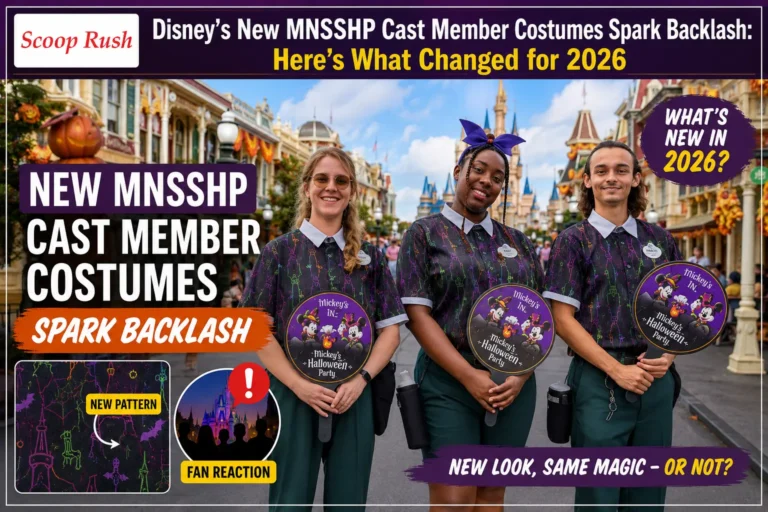
Disney’s New MNSSHP Cast Member Costumes Spark Backlash: Here’s What Changed for 2026

0

Walt Disney World just swapped out one of the most recognizable uniforms in the parks. However, not everyone is happy about it. The new MNSSHP Cast Member costumes debuted this month for the 2026 Mickey’s Not So Scary Halloween Party. They replace a look that guests had come to associate with the event for years. So, if you attended this hard-ticket party before, you will notice the switch right away. In fact, it hits the moment you walk through those “Special Event” turnstiles.

So what changed, and why does it matter? For longtime fans, Cast Member costumes are more than just workwear. They are part of the atmosphere. Additionally, they are the little detail that signals a themed event has begun, even before the fireworks start. Naturally, when Disney alters something that is visible, it sparks conversation across the fan community. This update is no exception.

This article breaks down what the new costumes look like. It also covers how they compare to the old ones. You will also find out what the change means for guests attending the party this fall.

What Are the New MNSSHP Cast Member Costumes?

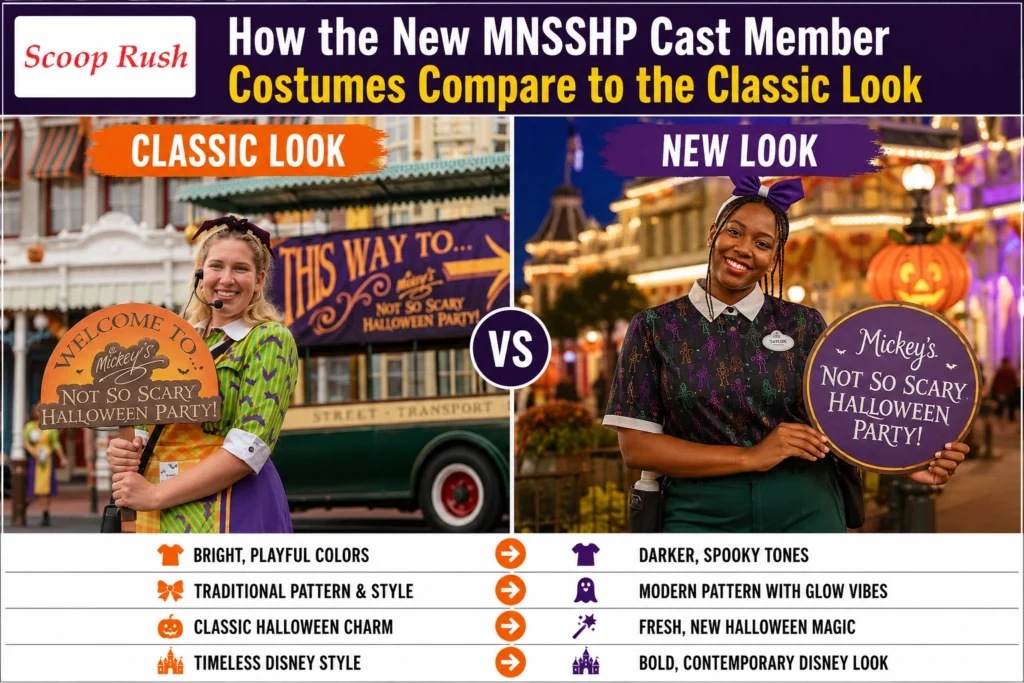
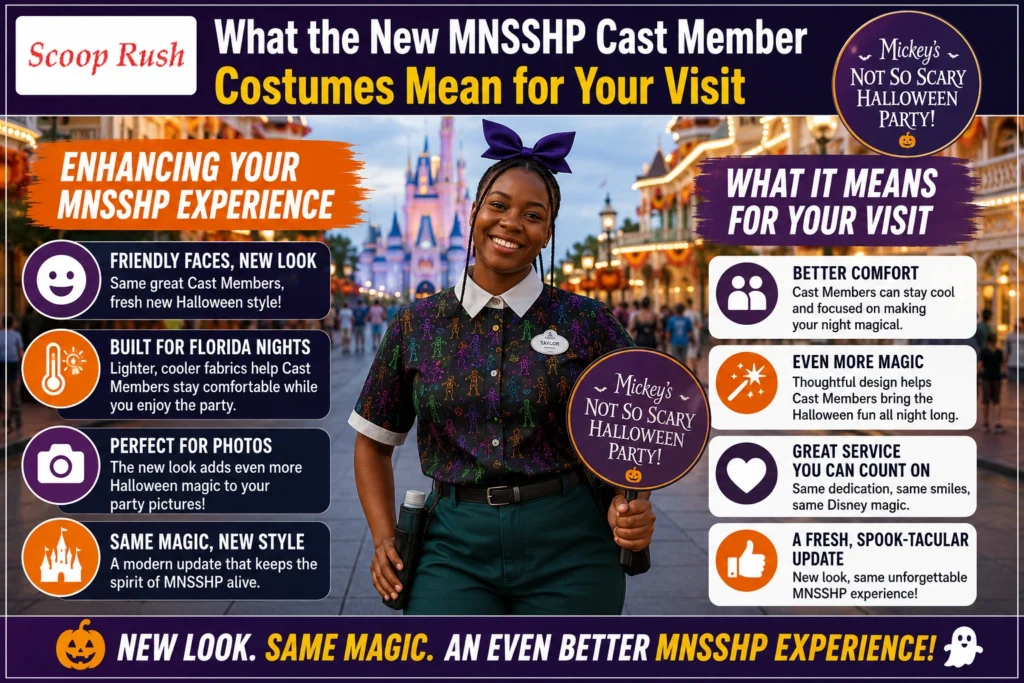
The redesigned MNSSHP Cast Member costumes come in two similar styles. Both feature a short-sleeved black shirt covered in a pattern of stacked skeletons. Specifically, the pattern comes in shades of red, purple, and green. Notably, these shirts do not glow in the dark.

The first version pairs an untucked button-down with dark green shorts. Meanwhile, the second uses the same patterned shirt but tucks it into dark green long pants instead. Both are gender neutral costumes. Additionally, Disney offers no dress option for women.

A collared white shirt serves as an underlayer for both styles. For example, Cast Members can accessorize the shorts version with a plain black belt and a bow tie. A headband accessory shaped like bat wings adds an extra Halloween touch.

How the New MNSSHP Cast Member Costumes Compare to the Classic Look

How the New MNSSHP Cast Member Costumes Compare to the Classic Look

If you have been to Mickey’s Not So Scary Halloween Party before, you likely remember the old costumes well. They combined yellow-and-orange plaid layers over green-and-yellow striped bat shirts. Guests paired those with purple skirts or trousers, plus oversized bat headbands or bow ties. The colors and patterns were purposefully mismatched. As a result, that gave the whole look a festive, costume-like feel without being an actual costume.

That old design had been part of the party experience since at least 2006. It became genuinely iconic among annual attendees. Many guests could spot a MNSSHP Cast Member from across Main Street simply because the outfit was so distinctive. Compared to that, the new uniforms are noticeably darker, simpler, and far more subdued.

Why Are the New MNSSHP Cast Member Costumes Controversial?

The reaction to the new MNSSHP Cast Member costumes has been mixed. That mix is worth understanding, rather than treating this as a simple case of fans hating change. Based on reader feedback from an earlier post covering leaked concept art, roughly one-third of readers disliked the old costumes. They described the previous look as garish, dated, busy, tacky, cheesy, or simply outdated in style.

However, most of those same readers did not express excitement about the new design either. That distinction matters, because it shows this is not just a reflexive rejection of anything different. People have genuine, specific opinions on both the old and new looks.

This debate is also not without precedent. Costume changes at Walt Disney World have been a recurring source of criticism for more than a decade. Still, this particular shift has generated more discussion than any Cast Member costume update in years. In fact, you have to go back to 2012 for a comparable reaction. That year, the American Adventure pavilion moved away from its colonial-style outfits. Cast Members there switched to an American Airlines-inspired flight attendant look instead.

The Biggest Criticism: Cast Members Are Harder to Spot

The most common objective complaint about the new costumes centers on visibility. The old uniforms were unlike anything a typical guest would wear to the parks. That made Cast Members instantly identifiable in a crowd. Whether you found that look garish or delightfully whimsical came down to personal taste. Still, there was no denying it stood out.

The new costumes, on the other hand, resemble streetwear. Early in the Halloween season, many guests are already dressed in Halloween-themed outfits rather than full costumes. As a result, the new Cast Member attire tends to blend right into the crowd. This holds true even during daytime hours.

The problem becomes more pronounced after dark. Party lighting throughout MNSSHP is intentionally low. Since the new shirts and pants are both dark colored, and neither one glows, Cast Members become even harder to pick out visually at night. This matters practically, too. Meanwhile, Parade Audience Control and other Cast Members manage crowd flow throughout the evening. Now they mostly stand out only when they happen to be holding glow wands.

The Practical Upside: MNSSHP Cast Member Costumes and Florida Heat

The Practical Upside: MNSSHP Cast Member Costumes and Florida Heat

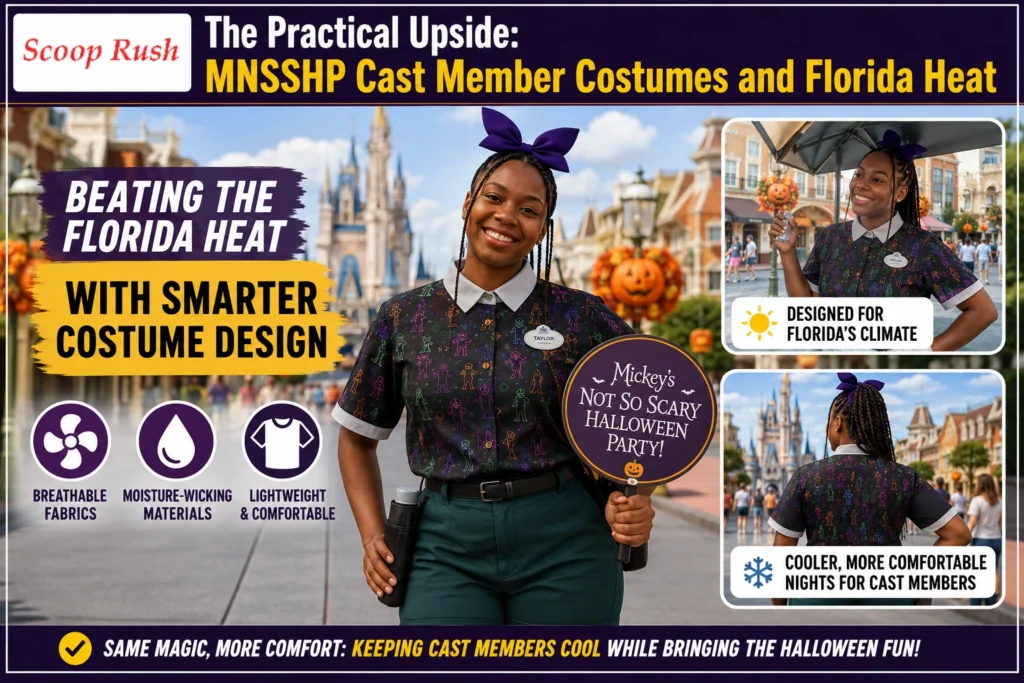
Not everything about the change is negative. The biggest objective benefit of the new costumes is practicality. That matters especially given the reality of Central Florida weather during the party’s run. MNSSHP now starts in early August and continues through October 31, 2026. As a result, Cast Members work outdoors during some of the hottest and most humid months of the year.

The new costumes carry noticeably fewer layers than the outfits they replaced. That gives Cast Members a clear advantage in extreme heat. Disney has not confirmed the exact fabric composition for this specific costume. However, the company has historically used breathable, moisture-wicking synthetic materials when redesigning Cast Member uniforms. Additionally, those materials are often made from recycled fabric. This approach both improves comfort and gives the company a sustainability angle to promote.

A Confusing Contradiction in the Design

Given that comfort appears to be a major goal behind the redesign, one detail stands out as somewhat puzzling: the shirts are black. For example, black fabric absorbs more heat in direct sunlight. Consequently, Cast Members can be wearing this costume for as long as six hours before the sun goes down. Combine that with the visibility issue mentioned earlier, and it raises a fair question about the design choices made here.

A high-visibility uniform would arguably serve both form and function better. It would make Cast Members easier for guests to spot. At the same time, it could potentially offer better heat management than solid black fabric. Therefore, this tension exists between the stated goal of practicality and the actual execution. It is part of why the update has drawn mixed reactions.

Could the MNSSHP Cast Member Costumes Have Struck a Better Balance?

Several things can be true about this situation at once. First, expecting Cast Members to wear multiple layers of non-breathable fabric is simply not practical. That is especially true during a Halloween party that now begins in early August. Second, costumes do not need to resemble a flight attendant uniform or a convention badge holder’s outfit to feel professional. Third, the previous costumes, beloved as they were among longtime fans, had started to feel dated. Consequently, they were likely due for a refresh.

Budget considerations may also be a factor behind the shift. The old costumes were more elaborate and involved more pieces. That likely made them more expensive to produce and maintain over time. It is possible that an internal review found many existing pieces nearing the end of their usable life. A full replacement may simply have been more cost effective than repairing or refreshing them. For example, this pattern fits a broader trend across Walt Disney World’s newer Cast Member uniforms. Similarly, it also stands in contrast to Disneyland Paris and Tokyo Disney Resort. Both of those resorts still maintain elaborate and more expensive costume designs for their events.

None of this means whimsical and practical designs are mutually exclusive. Disney has built its reputation on distinctive, eye-catching creative work. Therefore, there was room here to create a costume that was breathable, comfortable, and still visually memorable. For instance, high-visibility, playful patterns exist in performance fabric today. A subdued color palette was not the only path toward a more practical uniform.

What the New MNSSHP Cast Member Costumes Mean for Your Visit

What the New MNSSHP Cast Member Costumes Mean for Your Visit

For guests planning a trip, this costume change will not affect your ability to enjoy the party. The parade, the Hocus Pocus stage show, and the fireworks remain the core draw of Mickey’s Not So Scary Halloween Party. So does the trick-or-treating experience. Additionally, tickets for the 2026 event range from $119 to $229. The party runs across 38 nights between August 7 and October 31, 2026. Guests have already sold out eight dates, mostly in the early-to-mid August window.

That said, spotting Cast Members quickly may take a bit more effort now, particularly once the sun goes down. This matters if you rely on them to ask questions or navigate the park during the party. Keep an eye out for the black shirts with the stacked skeleton pattern. Do not search for the old bat-and-plaid look you may remember from previous years.

Final Thoughts

Small details like Cast Member costumes might seem inconsequential compared to rides, fireworks, and parades. However, they help make Walt Disney World feel distinct from other theme park experiences. Disney’s attention to seasonal touches, right down to what employees wear, has long shaped the company’s identity.

The new MNSSHP Cast Member costumes trade whimsy and high visibility for comfort and simplicity. Whether that trade-off feels worth it will likely depend on your own preferences. Additionally, it depends on how much you valued the old design’s nostalgic, eye-catching charm. Either way, the change is now official. It will be the look Cast Members wear throughout the rest of the 2026 Halloween season at Magic Kingdom.

Frequently Asked Questions

1. When did the new Cast Member costumes debut for MNSSHP 2026? 

The new costumes debuted alongside the start of the 2026 Mickey’s Not So Scary Halloween Party, which began on August 7, 2026.

2. Do the new MNSSHP Cast Member costumes glow in the dark? 

No. Despite their dark color and skeleton pattern, the new shirts do not glow in the dark. As a result, this has contributed to visibility concerns during the party’s evening hours.

3. What do the new Cast Member costumes look like? 

There are two similar styles. One pairs a black skeleton-patterned shirt worn untucked with dark green shorts. The other tucks the same shirt into dark green long pants. Both include a white collared underlayer. The shorts version also offers accessories like a bow tie, black belt, and a bat-wing headband.

4. Why did Disney change the MNSSHP Cast Member costumes? 

Disney has not issued an official public explanation for the change. Based on general practice, the redesign appears aimed at improving Cast Member comfort in Florida’s summer heat. Fewer layers likely play a role in that goal, though Disney has not officially confirmed the reasoning.

5. Are the old Mickey’s Not So Scary Halloween Party costumes gone for good? 

Based on this debut, Disney has retired the previous plaid-and-bat costumes. The company has replaced them with the new design for the 2026 party season. Disney has not commented on whether any variation could return in future years.

DOGE Savings Claims Debunked: GAO Finds $110bn in Cuts Don’t Add Up

0

This DOGE savings GAO report reveals major gaps between what the group claimed and what it actually achieved. DOGE promised to save Americans $2 trillion a year. A federal watchdog just found that even its much smaller claimed number can’t hold up. So how much of DOGE’s “Wall of Receipts” was actually real?

Elon Musk’s DOGE set out to reshape how the federal government spends money. It fell dramatically short of its original target. Now, a new government watchdog report says even the smaller figure DOGE did claim cannot be trusted.

The Government Accountability Office released its findings on Thursday, and the picture it paints is not flattering. DOGE reported $110 billion in savings on its so-called “Wall of Receipts.” However, a large chunk of that number is either unverifiable or simply wrong. For a program that was supposed to represent a new era of government efficiency, that’s a significant credibility problem.

This story matters because DOGE’s cuts touched real programs, real agencies, and real people. Understanding what the GAO actually found helps separate the headline numbers from what the group truly accomplished.

What Is DOGE and Why Was It Created?

What Is DOGE and Why Was It Created?

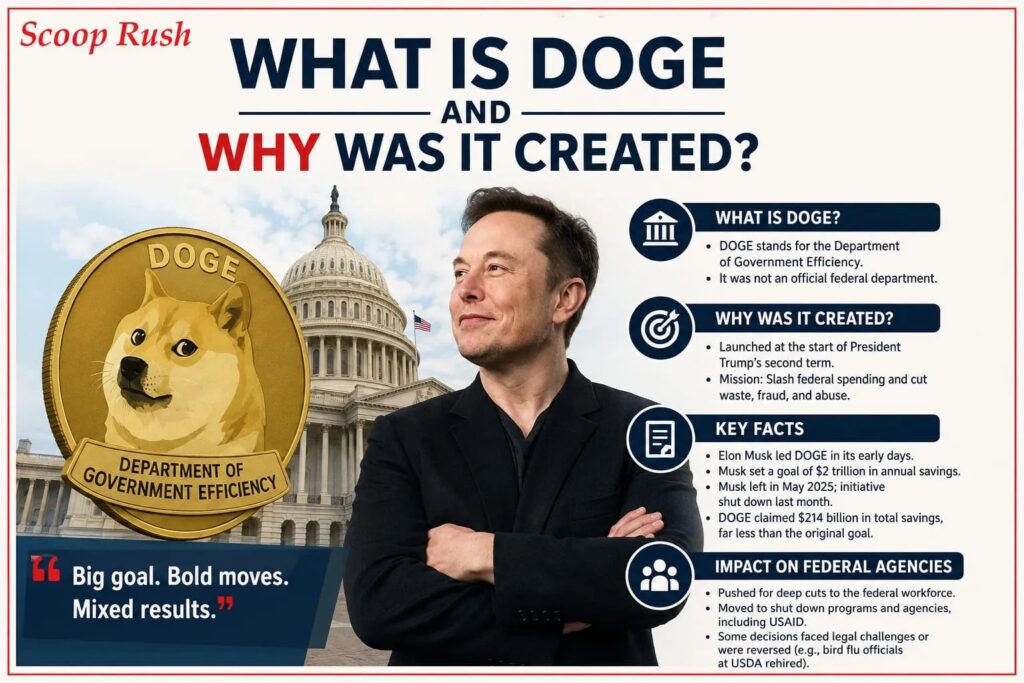
DOGE stands for the Department of Government Efficiency. Despite the name, it never held official status as a federal department. It launched at the start of President Trump’s second term with a bold mission: slash federal spending and cut what its founders called waste, fraud, and abuse.

Elon Musk, the Tesla and SpaceX CEO, led the effort in its early days. He set an eye-popping goal of $2 trillion in annual savings. Musk left his role at DOGE in May 2025, and the initiative itself shut down last month.

Throughout its run, DOGE published a running tally of its accomplishments online. This tracker, called the Wall of Receipts, listed contracts, grants, and leases the group claimed to have cut. By the time DOGE closed, the site claimed an estimated $214 billion in total savings, a fraction of Musk’s original promise.

DOGE’s Impact on Federal Agencies

DOGE didn’t just trim budgets on paper. Under Musk’s direction, the group pushed for deep reductions across the federal workforce. It also moved to shutter entire programs and agencies, most notably the U.S. Agency for International Development.

Not every move stuck, though. Some decisions triggered legal challenges or had to be walked back entirely. For example, DOGE’s cuts led to the firing of bird flu officials at the U.S. Department of Agriculture. Days later, the Trump administration moved to rehire them.

GAO Report on DOGE Savings: What Investigators Found

GAO Report on DOGE Savings: What Investigators Found

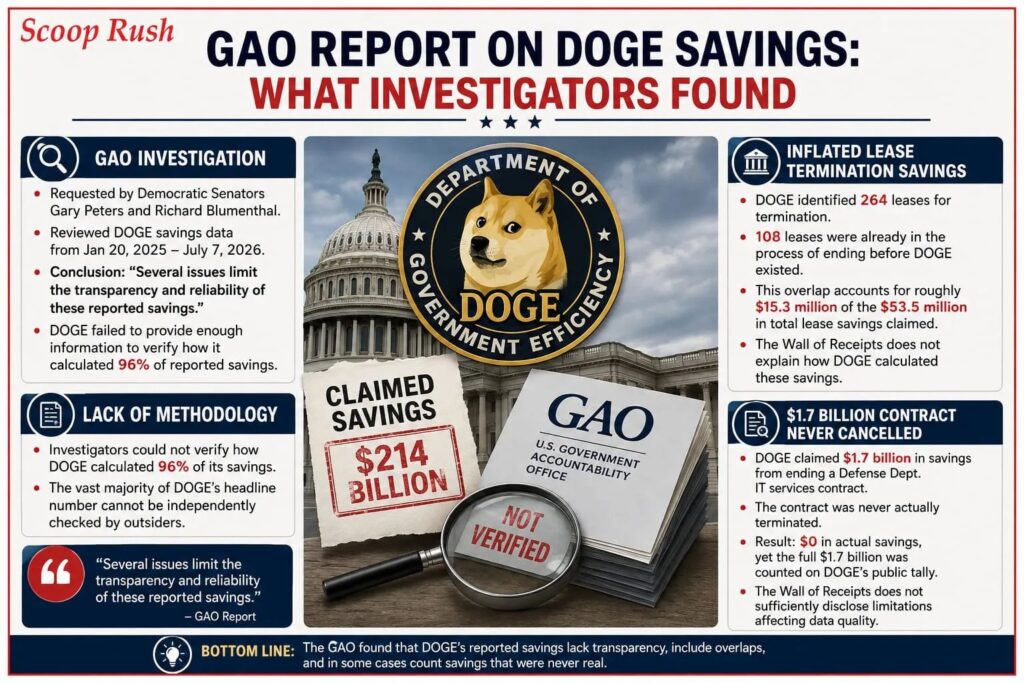
This DOGE savings GAO report didn’t happen on its own. Democratic Senators Gary Peters of Michigan and Richard Blumenthal of Connecticut requested the review. The GAO audit didn’t happen on its own. Democratic Senators Gary Peters of Michigan and Richard Blumenthal of Connecticut requested the review. Investigators examined savings data DOGE reported between January 20, 2025, and July 7, 2026.

The conclusion was blunt. According to the report, “several issues limit the transparency and reliability of these reported savings.” In other words, the numbers on DOGE’s website simply don’t hold up under scrutiny.

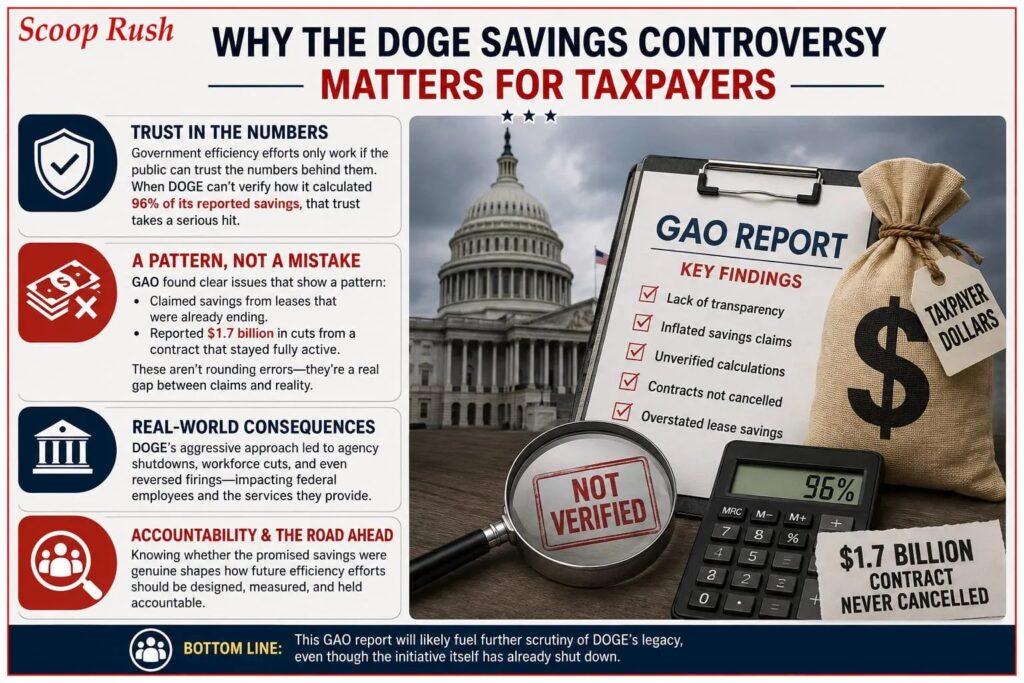
One striking finding involves DOGE’s methodology, or rather the lack of one that outsiders could verify. Investigators said DOGE failed to provide enough information to confirm how it calculated 96 percent of its reported savings. That’s not a small gap. It means the vast majority of DOGE’s headline number rests on calculations nobody outside the group can independently check.

DOGE’s Inflated Lease Termination Savings

Leases were one area where the GAO found clear overstatement. DOGE identified 264 leases for termination as part of its cost-cutting push. However, 108 of those leases were already in the process of ending before DOGE even existed.

That overlap accounts for roughly $15.3 million of the $53.5 million in total lease savings DOGE claimed credit for. Essentially, DOGE took credit for work that agencies had already started, inflating its own results in the process.

The GAO also flagged a transparency issue here. The Wall of Receipts, the report noted, doesn’t explain how DOGE calculated the savings from these terminated leases. Without that explanation, readers have no real way to judge whether the figures hold any accuracy.

The $1.7 Billion Contract That Was Never Cancelled

Perhaps the most eye-catching finding involves a Defense Department IT services contract. DOGE claimed $1.7 billion in savings from ending this contract. There was just one problem: the contract was never actually terminated.

Since the contract remained active, DOGE achieved no savings whatsoever. Yet the $1.7 billion figure sat on DOGE’s public tally as if it represented real money returned to taxpayers.

This wasn’t an isolated slip, either. The GAO report found that while the Wall of Receipts includes some data about its sources, it “does not sufficiently disclose limitations affecting data quality.” That phrasing is essentially a diplomatic way of saying the public never got the full picture.

How Washington Reacted to the DOGE Audit

How Washington Reacted to the DOGE Audit

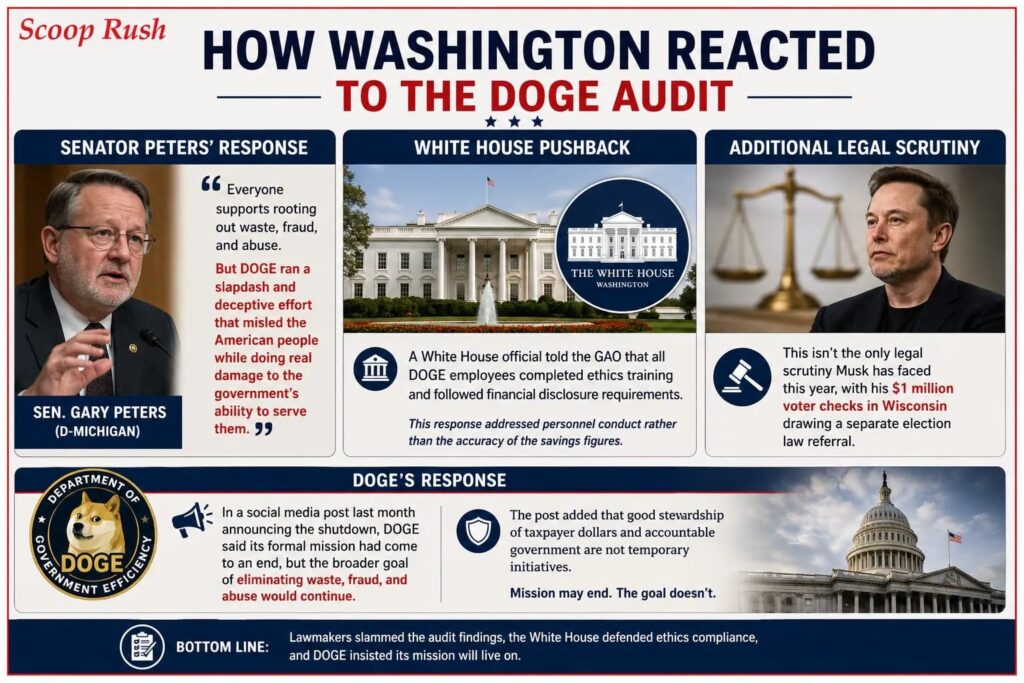
The findings landed hard among the senators who requested the audit. Senator Peters didn’t hold back in his response to the report.

He said everyone supports rooting out waste, fraud, and abuse in government. However, he argued that DOGE ran a slapdash and deceptive effort that misled the American people while doing real damage to the government’s ability to serve them.

The White House pushed back on the broader criticism. A White House official told the GAO that all DOGE employees completed ethics training and followed financial disclosure requirements. That response addressed personnel conduct rather than the accuracy of the savings figures themselves.

This isn’t the only legal scrutiny Musk has faced this year either, with his $1 million voter checks in Wisconsin drawing a separate election law referral. DOGE, for its part, framed its closure as the end of a chapter rather than the end of its mission. In a social media post last month announcing the shutdown, the group said its formal mission had come to an end, but that the broader goal of eliminating waste, fraud, and abuse would continue. The post added that good stewardship of taxpayer dollars and accountable government are not temporary initiatives.

Why the DOGE Savings Controversy Matters for Taxpayers

Why the DOGE Savings Controversy Matters for Taxpayers

Government efficiency efforts only work if the public can trust the numbers behind them. When a body created specifically to highlight savings can’t verify how it calculated 96 percent of those savings, that trust takes a serious hit. The DOGE savings GAO report makes clear that trust in these numbers has been badly damaged.

Additionally, the specific examples the GAO uncovered show a pattern rather than a one-off mistake. DOGE claimed savings from leases that were already ending. It reported $1.7 billion in cuts from a contract that stayed fully active. These aren’t rounding errors. They represent a real gap between what officials announced publicly and what actually happened inside federal agencies.

Furthermore, DOGE’s aggressive approach carried consequences that went beyond accounting questions. Agency shutdowns, workforce reductions, and reversed firings all affected federal employees and the services they provide. Therefore, understanding whether the promised savings were genuine isn’t just an academic exercise. It shapes how future efficiency efforts should be designed and measured going forward.

As a result, this GAO report will likely fuel further scrutiny of DOGE’s legacy, even though the initiative itself has already closed its doors.

Key Takeaways

The GAO’s review of DOGE’s $110 billion in claimed savings uncovered major gaps in transparency and accuracy. Investigators could not verify the method behind 96 percent of reported savings. Meanwhile, 108 of the 264 leases DOGE took credit for were already ending before the group formed, and its $1.7 billion IT contract claim involved a contract that was never actually terminated.

Elon Musk originally promised $2 trillion a year in savings. DOGE’s own final tally landed closer to $214 billion, and now a significant portion of even that reduced figure sits in question, even as Musk’s SpaceX IPO pushes his net worth toward trillionaire status. The organization has since closed, but the debate over its actual impact on federal spending is far from over.

FAQs

What is DOGE and what was its goal?

DOGE, or the Department of Government Efficiency, was an initiative launched at the start of President Trump’s second term to cut federal spending. It aimed to reduce waste, fraud, and abuse across government agencies, with Elon Musk initially targeting up to $2 trillion in annual savings.

How much money did DOGE actually claim to save?

DOGE’s Wall of Receipts website claimed an estimated $214 billion in total savings. The GAO specifically reviewed $110 billion of that figure, covering contracts, grants, and leases.

What did the GAO report find wrong with DOGE’s numbers?

The GAO found that DOGE could not provide enough information to verify the method used to calculate 96 percent of its reported savings. It also uncovered specific overstatements, including lease terminations that began before DOGE existed and a $1.7 billion contract claim where officials never actually cancelled the contract.

Is DOGE still operating?

No. DOGE closed last month, according to the report. In its closing announcement, the group said its formal mission had ended but that its broader efficiency goals would continue in other forms.

Who requested the GAO investigation into DOGE?

Democratic Senators Gary Peters of Michigan and Richard Blumenthal of Connecticut requested the audit, which covered DOGE’s reported savings from January 20, 2025, through July 7, 2026.

Trent Alexander-Arnold at Real Madrid: Mourinho’s New Plan to Finally Unlock His Best Form

0

Trent Alexander-Arnold at Real Madrid has a new job description this season, and it might change everything. Jose Mourinho has built a fresh tactical plan around him. It is designed to finally unlock the creative spark that once made him one of the Premier League’s best full-backs.

That matters because Alexander-Arnold’s first year in Spain never found that spark. Injuries, managerial changes, and a new league slowed him down. However, this season looks different. Mourinho has returned to the Bernabeu, and pre-season has gone smoothly. Real Madrid now appear ready to build their attack through him, rather than around him.

Why Trent Alexander-Arnold’s First Season Fell Short

Real Madrid signed Alexander-Arnold from Liverpool ahead of the 2025 Club World Cup. The fee was a reported 10 million euros, around £8.4 million. He agreed to a six-year contract and arrived with a reputation for elite passing, sharp crossing, and calm decision-making under pressure.

Yet things quickly got complicated. A hamstring injury sidelined him for seven weeks in September. Just as he found his footing, a thigh problem ruled him out for another two months in December. These setbacks robbed him of the consistent run he needed. He had a new country, a new dressing room, and a new style of football to adjust to.

Despite the interruptions, Alexander-Arnold still made close to 30 appearances and picked up five assists across all competitions. Still, doubts about his defensive game followed him from Liverpool to Madrid. Real Madrid also finished the season without a major trophy, under interim managers Xabi Alonso and Alvaro Arbeloa.

The England Snub That Changed His Mindset

The England Snub That Changed His Mindset

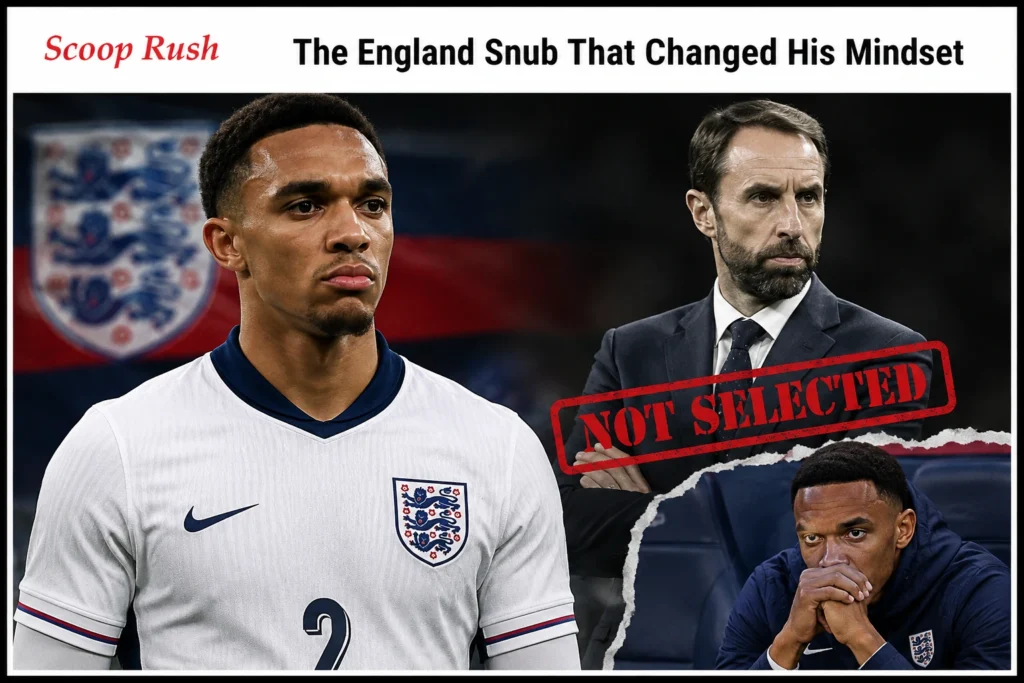
England manager Thomas Tuchel left Alexander-Arnold out of the 2026 World Cup squad, a decision that stung. Many pundits saw it as proof that his form had dipped too far below his old Liverpool standard. Instead of derailing him, though, that snub appears to have sharpened his focus heading into pre-season. He arrived at Valdebebas early and trained hard through the summer. He used the extra time to prepare for Mourinho’s demanding sessions.

Mourinho’s Tactical Plan for Trent Alexander-Arnold

This is where the story turns. According to reports from Diario AS, Mourinho intends to use Alexander-Arnold in a hybrid role this season. He will start as a conventional right-back. Once Real Madrid win the ball, though, he will push forward into central midfield to help build attacks.

That plan already showed up in pre-season. During a recent friendly against Fiorentina, Alexander-Arnold lined up at right-back in Real Madrid’s official shape. Once his side gained possession, though, he consistently drifted infield, linking play through the middle of the pitch. This is not an accident. Mourinho appears to be building a system that plays directly to Alexander-Arnold’s biggest strength: his passing range from deep positions.

Mourinho has also signed left-back Marc Cucurella. He is a defensively disciplined player who can hold his position and cover for Vinicius Junior. That signing frees Alexander-Arnold to push forward with confidence on the opposite flank. Real Madrid no longer need him to sit back and defend as often.

How Denzel Dumfries Fits Around Him

Real Madrid also signed Denzel Dumfries from Inter Milan during the summer. Some reports suggested he could challenge Alexander-Arnold directly for the right-back spot. Pre-season selections tell a different story, though. Mourinho started Dumfries further forward on the right wing against Fiorentina, while Alexander-Arnold held the right-back role.

This setup suggests Mourinho sees the two players as complementary rather than competing for one shirt. Dumfries brings physical power and attacking thrust from advanced positions. Alexander-Arnold offers control, vision, and quality in build-up play. Together, they give Mourinho more attacking options down the right side of the pitch.

What This Means for Trent Alexander-Arnold’s Real Madrid Career

Real Madrid have also made their intentions clear off the pitch. Spanish outlet AS reported on 8 August that the club has no plans to sell Alexander-Arnold. This came despite talk of a possible Liverpool return. Mourinho reportedly views him as central to his plans, not as a player on his way out.

This backing gives Alexander-Arnold something he lacked for most of last season: real clarity about his role. Consequently, the pressure now shifts toward performance. He needs to stay fit and adapt quickly to Mourinho’s new system. Then he must turn training-ground promise into match-winning contributions once the season kicks off.

Alexander-Arnold’s history suggests he can do exactly that. During his time at Liverpool, he helped the club win the Premier League, the Champions League, and the Club World Cup. That trophy-laden record shows what he can offer when he plays with confidence and rhythm. Therefore, a settled role under Mourinho could be exactly what he needs to rediscover that form in Madrid.

Final Thoughts

Trent Alexander-Arnold at Real Madrid enters a defining season. His first year brought injuries, inconsistency, and doubt, but Mourinho’s new hybrid role gives him a clear path forward. Real Madrid have backed him publicly and built a system around his strengths. They have also started him ahead of a marquee summer signing in pre-season friendlies.

Ultimately, none of this guarantees success. Alexander-Arnold still has to prove it on the pitch once competitive matches begin. However, the foundation now looks stronger than at any point since he arrived at the Bernabeu. This season could finally be the one where he delivers on that early promise.

Frequently Asked Questions

1. What new role is Mourinho planning for Trent Alexander-Arnold? 

Mourinho plans to use him as a right-back who moves into central midfield during attacking phases, taking advantage of his passing range rather than limiting him to a purely defensive role.

2. Why did Trent Alexander-Arnold struggle in his first season at Real Madrid? 

Two separate injuries, a hamstring problem in September and a thigh issue in December, disrupted his season and prevented him from settling into the team.

3. Is Denzel Dumfries replacing Alexander-Arnold at right-back? 

Not based on recent pre-season matches. Mourinho has used Dumfries further forward on the right wing while Alexander-Arnold continues to start at right-back.

4. Will Trent Alexander-Arnold leave Real Madrid for Liverpool? 

Reports from AS indicate Real Madrid have no plans to sell him, and Mourinho considers him an important part of his squad for the new season.

5. How much did Real Madrid pay for Trent Alexander-Arnold? 

Real Madrid paid Liverpool a reported 10 million euros, around £8.4 million, and Alexander-Arnold signed a six-year contract at the club.

Raw Images, No Filters: Why Do MySpace Fans Want the Old Days Back?

0

“Do you remember when your MySpace profile said more about you than any filtered photo ever could? A MySpace relaunch is now being hinted at, and that messy, music-blaring, endlessly customizable page might be making a comeback.”

For millions of millennials, one question is suddenly back in conversation: is MySpace coming back for real this time? The idea alone has been enough to get former users talking, and the excitement online has been hard to miss.

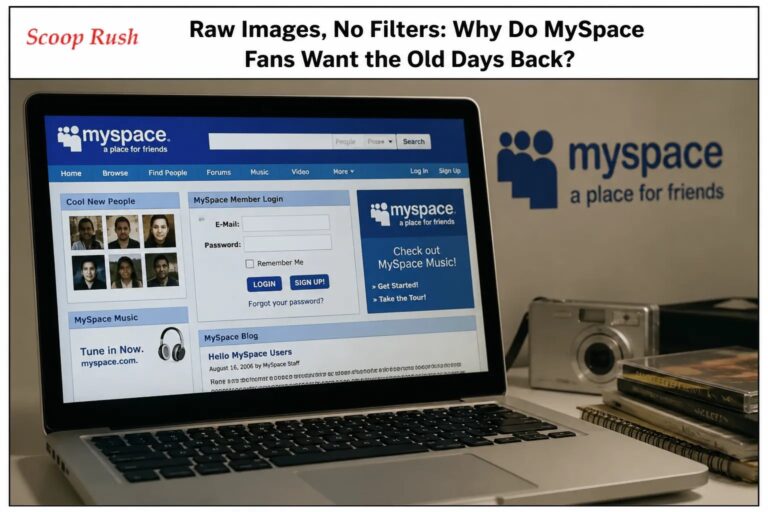
For many millennials, MySpace wasn’t just an early social network. It was the place where they first learned to build an identity online, one glittery background and auto-playing song at a time. Now that its owners have hinted at a MySpace relaunch, people are asking a bigger question: can any platform recapture what made that era feel so real?

This matters beyond simple nostalgia. Today’s social media landscape runs on algorithms, curated feeds, and content designed to keep users scrolling endlessly. A MySpace comeback, if it stays true to raw, unfiltered self-expression, could offer something genuinely different. Understanding why people miss it, and what a relaunch needs to get right, says a lot about what’s missing from social media right now.

Is a MySpace Relaunch Actually Happening?

Is a MySpace Relaunch Actually Happening?

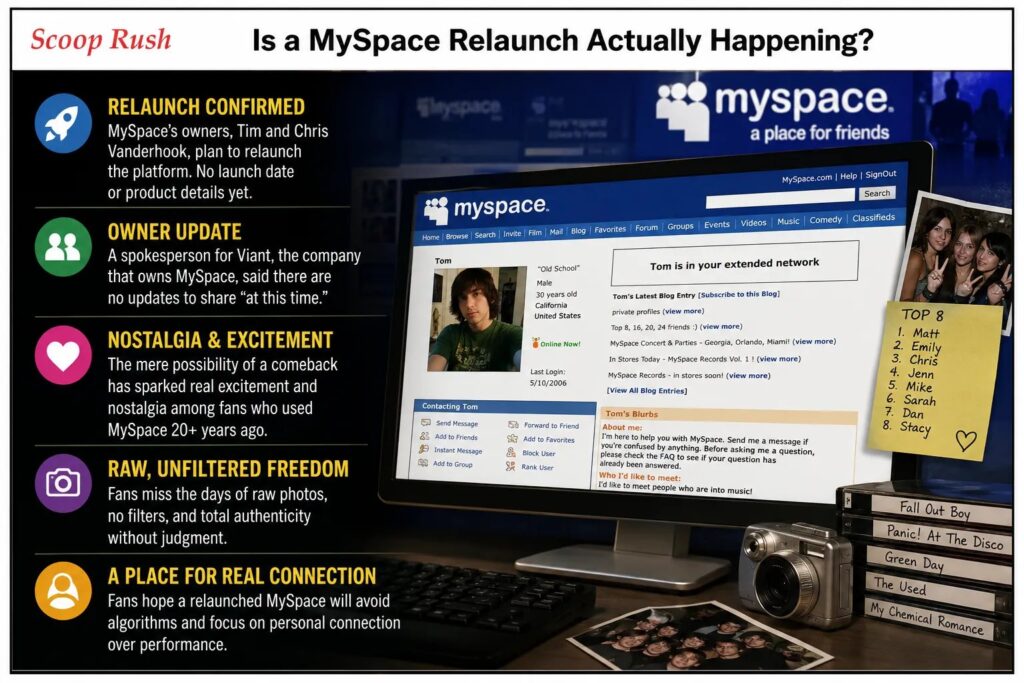
MySpace’s owners, brothers Tim and Chris Vanderhook, have confirmed they plan a MySpace relaunch However, they haven’t announced a launch date, and specific product details remain unclear for now. A spokesperson for Viant, the company that owns MySpace, said there are no updates to share “at this time.”

Still, that small amount of information sparked real excitement. Just the possibility of a comeback has stirred memories among people who used the platform more than 20 years ago. For them, MySpace represented a specific kind of internet freedom that newer platforms, including WhatsApp, Facebook, and Instagram, haven’t managed to replicate.

Why Do MySpace Fans Miss Raw, Unfiltered Images So Much?

Monticah Hawkins, a 31-year-old real-estate agent in Atlanta, describes MySpace as more than a website. She calls it a ritual.

“You could be authentic on MySpace,” she says. “Upload raw images, no filters. You could have snot coming out your nose and nobody would judge.”

That kind of unfiltered honesty feels almost foreign next to today’s heavily edited social media posts. Melissa Kristin, a TikTok creator with more than 900,000 followers, grew up using MySpace and remembers a similar sense of freedom.

“It was all very much your own little world, your own corner of the internet,” Kristin says.

That feeling shaped how she expresses herself online today. Additionally, she believes a revived MySpace should avoid the algorithm-driven, pay-to-play systems that dominate current platforms. Instead, she says it “would be best served for personal connection rather than performance.”

For Kristin, the appeal isn’t just about design. It’s about recapturing an emotional experience millennials remember fondly. As she puts it, the goal would be recreating “that high we felt as millennials when we got all the friend requests and comments,” which helped people feel genuinely connected.

What Happened to MySpace? A Quick Look Back

What Happened to MySpace? A Quick Look Back

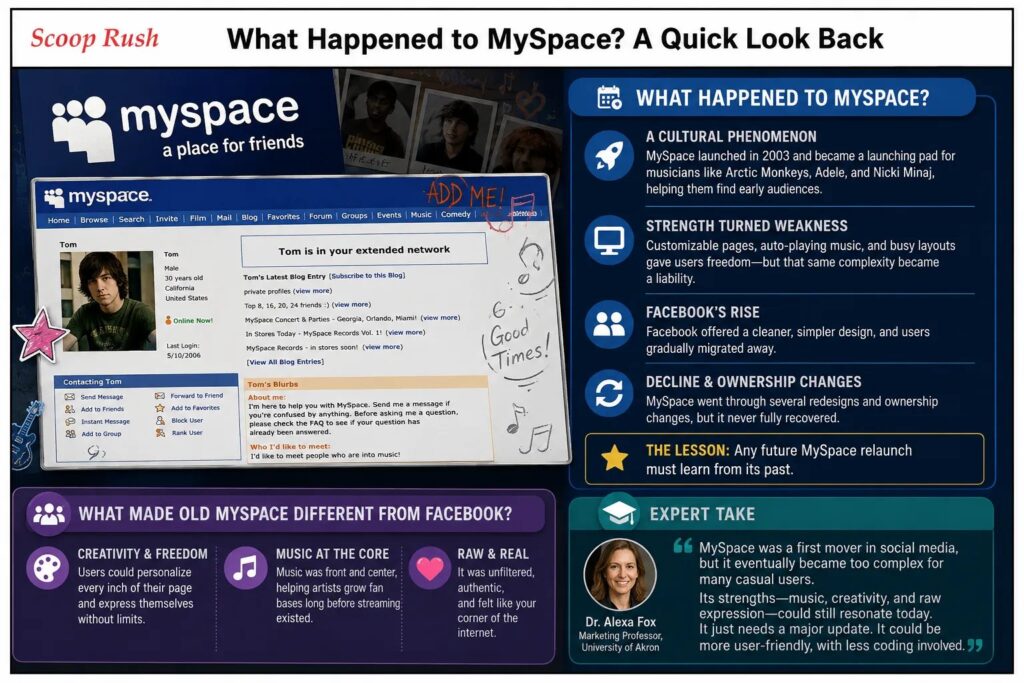
MySpace launched in 2003 and quickly grew into a major cultural force. It became a launching pad for musicians, helping artists like Arctic Monkeys, Adele, and Nicki Minaj find early audiences long before streaming platforms existed.

Its biggest strength was also its biggest challenge. Highly customizable pages, auto-playing music, and busy layouts gave users creative freedom, but that same complexity eventually became a liability. Meanwhile, Facebook introduced a cleaner, simpler design, and users gradually started migrating away. As a result, MySpace went through several redesigns and ownership changes, but it never fully recovered its dominant position.

Marketing experts say any future MySpace relaunch will need to learn from that history.

What Made the Old MySpace Different From Facebook?

Dr. Alexa Fox, a marketing professor at the University of Akron, explains that MySpace was a “first mover” in social media. However, it eventually became too complex for many casual users to navigate.

She believes the platform’s original strengths, including music, creativity, and raw personal expression, could still resonate with people today. That said, she notes it would need a major update. “It could be more user-friendly, with less coding involved,” she says.

What Would Make a Successful MySpace Comeback?

What Would Make a Successful MySpace Comeback?

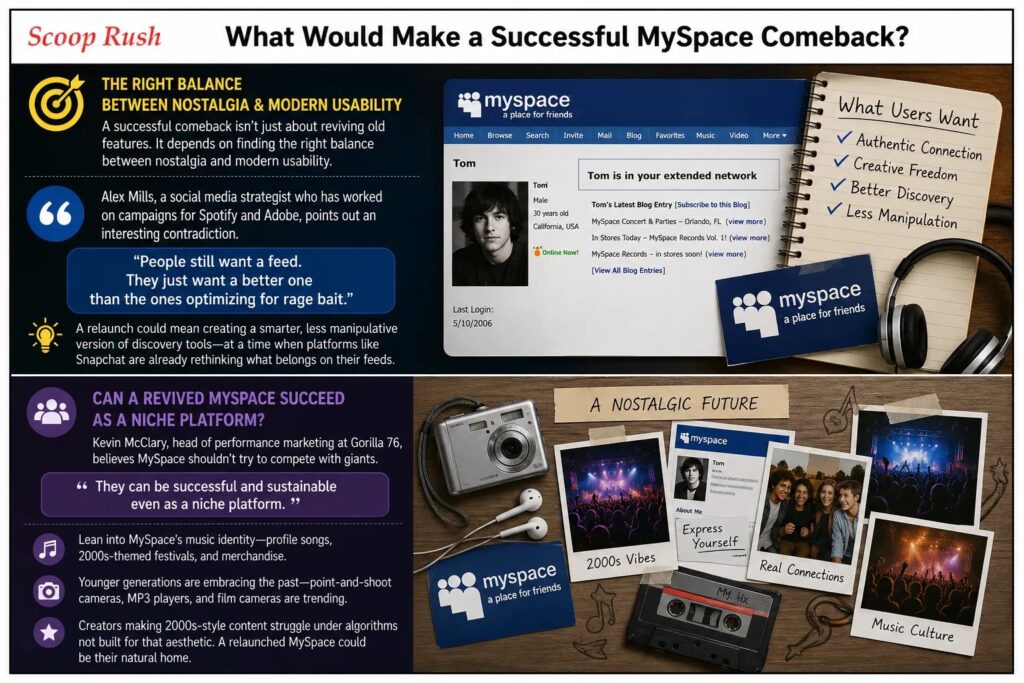
A successful comeback isn’t just about reviving old features. According to industry professionals, it depends on finding the right balance between nostalgia and modern usability.

Alex Mills, a social media strategist who has worked on campaigns for Spotify and Adobe, points out an interesting contradiction. The algorithm-free feed people miss so much was also part of what caused MySpace’s decline.

“People still want a feed,” Mills says. “They just want a better one than the ones optimizing for rage bait.”

This suggests that a relaunch wouldn’t necessarily mean removing algorithms entirely. Instead, it could mean creating a smarter, less manipulative version of the discovery tools users already expect, at a time when platforms like Snapchat are already rethinking what belongs on their feeds.

Can a Revived MySpace Succeed as a Niche Platform?

Kevin McClary, head of performance marketing at Gorilla 76, believes MySpace shouldn’t try to go head-to-head with giants like Meta, TikTok, or X. Instead, he argues it could thrive as a smaller, culturally rooted platform.

“They can be successful and sustainable even as a niche platform,” he says.

McClary suggests leaning heavily into MySpace’s music identity, from profile songs to 2000s-themed festivals and merchandise. He also points to a growing trend among younger users who weren’t even around during MySpace’s original run.

“You see younger generations now buying old point-and-shoot digital cameras, MP3 players, even film cameras,” McClary says. “They clearly have an interest in the past.”

He adds that creators making 2000s-style content on other platforms are often at the mercy of algorithms that weren’t built for that aesthetic. As a result, a relaunched MySpace rooted in that specific era could give them a more natural home.

Finding the Right Balance Between Old and New

Dr. Fox agrees that differentiation will be essential for any relaunch to succeed. She warns against MySpace trying to compete with features other platforms already dominate, such as Reels and short-form video.

Popular formats can still be included, she explains, but they shouldn’t define the platform’s identity. Instead, she sees an opportunity for MySpace to offer something increasingly rare: a calmer online experience.

Today’s feeds, she notes, are shaped by “algorithmic-driven AI, constantly in your face.” Therefore, a platform that gives users more control, or simply feels less overwhelming, could genuinely stand out in a crowded market, especially as scrutiny grows over how child safety features are handled across major platforms.

What Would a MySpace Return Mean for Former Users?

What Would a MySpace Return Mean for Former Users?

For longtime fans like Hawkins and Kristin, the appeal of a comeback is both emotional and practical. Both say they would return to MySpace if it kept its original spirit intact.

For now, the relaunch exists mostly as a promise. There’s no confirmed date, no revealed features, and no guarantee it will recapture the magic of the original. Still, it represents something meaningful: a reminder of a time when social media felt less polished and a lot more personal.

As Hawkins puts it, the real test will be emotional. “Are you still gonna have that same feeling?” she asks. “Are you still gonna feel like, ‘oh my god, somebody loves me?'”

Key Takeaways

MySpace’s potential comeback has reignited interest in a version of social media built around raw, no-filter personal connection rather than performance. Its original strengths, including music discovery, creative freedom, and authentic self-expression, still resonate with users today. However, experts agree that a successful relaunch will require careful updates, such as simpler design, smarter algorithms, and a clear niche identity rooted in early 2000s culture.

Whether MySpace can actually recreate that feeling remains uncertain. Ultimately, its future success will depend on whether it can modernize without losing the raw, unfiltered spirit that made it special in the first place.

FAQs

Is MySpace really coming back?

MySpace’s owners, Tim and Chris Vanderhook, have said they plan to relaunch the platform. However, no official launch date or specific product details have been announced yet.

Who owns MySpace now?

MySpace is owned by Viant, a company run by brothers Tim and Chris Vanderhook.

Why was MySpace popular in the first place?

MySpace stood out for its highly customizable profiles, auto-playing music, raw unfiltered photos, and strong music community. It helped launch the careers of artists like Arctic Monkeys, Adele, and Nicki Minaj.

Why did people stop using MySpace?

Facebook introduced a simpler, cleaner design, and as a result, users gradually moved away from MySpace’s more complex and customizable layout, which contributed to its decline in popularity.

What would make a MySpace relaunch successful?

Marketing experts suggest the platform should focus on user-friendly design, avoid over-reliance on aggressive algorithms, and lean into its music, raw self-expression, and early 2000s cultural identity rather than competing directly with platforms like TikTok or Instagram.

Saudi Arabia Defense Pact Reshapes Regional Security

0

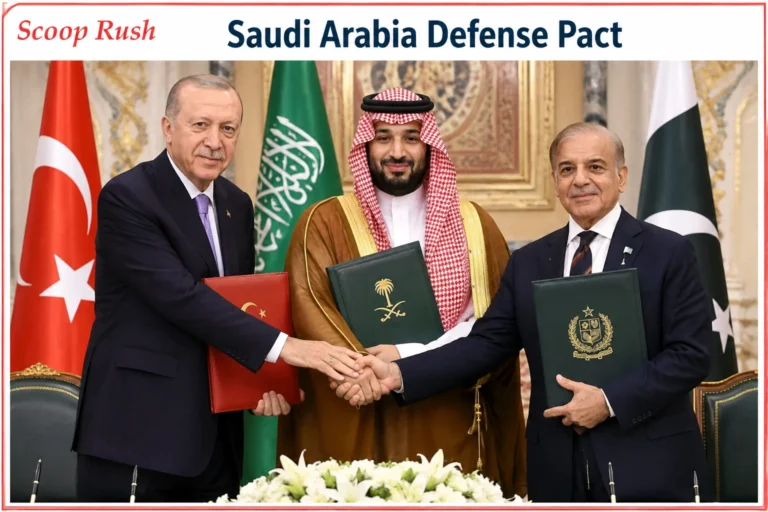
Saudi Arabia has signed a major defense pact with Turkey and Pakistan. The agreement comes as tensions with Iran continue to create security concerns across the Middle East. The three countries signed the Mecca Joint Defence Agreement in Mecca on August 7, 2026.

The pact says an attack on one member will be treated as an attack on all. However, it does not clearly explain the military response required after an attack. The agreement strengthens Saudi Arabia’s defense partnerships while giving Turkey and Pakistan a larger role in regional security.

Saudi Arabia Builds a New Defense Partnership

Saudi Arabia has relied on the United States for security support for decades. However, growing regional instability has encouraged Riyadh to develop stronger relationships with other military powers. The new agreement brings Turkey and Pakistan closer to Saudi Arabia through a formal defense framework.

The partnership also builds on existing military ties between the three countries. Saudi Arabia already maintains close defense relations with both Turkey and Pakistan. The new pact now gives those relationships a wider strategic purpose during a period of rising regional tensions.

Turkey Brings Strong Military Capabilities

Turkey-Brings-Strong-Military-Capabilities

Turkey gives the partnership significant conventional military strength. Its armed forces have extensive experience in regional operations and military planning. Turkey also has a growing defense industry that produces drones, missiles, armored vehicles, and naval systems.

These capabilities could support deeper cooperation with Saudi Arabia and Pakistan. Joint training, intelligence sharing, and defense projects could become important parts of the partnership. Turkey also has strong reasons to prevent a wider conflict because it shares a border with Iran.

Pakistan Adds Strategic Weight

Pakistan brings another important military dimension to the agreement. The country has an experienced armed force and significant strategic capabilities. Pakistan also maintains longstanding military cooperation with Saudi Arabia.

The two countries signed a separate mutual defense agreement in 2025. The latest pact expands that relationship by adding Turkey. However, Pakistan also shares a border with Iran, which gives Islamabad strong reasons to avoid a wider regional conflict.

Iran Tensions Increase the Pact’s Importance

The agreement comes as Saudi Arabia faces growing threats linked to the regional conflict. Iran-backed groups in Yemen have continued attacks against Saudi interests. Missile and drone threats have increased concerns about Saudi territory and important infrastructure.

The new defense arrangement could strengthen Saudi deterrence. Any potential attacker must now consider possible reactions from Turkey and Pakistan. Still, officials from all three countries say the pact remains defensive and does not target a specific country.

Yemen Could Become a Major Test

Yemen remains one of Saudi Arabia’s biggest security challenges. Houthi forces control large parts of Yemen and have repeatedly targeted Saudi-linked interests. Recent attacks have raised concerns about another escalation along the Saudi-Yemeni border.

The Saudi Arabia defense pact could face its first serious test if attacks continue. However, the agreement does not guarantee automatic military intervention. Turkey and Pakistan would still need to assess the situation before deciding how to respond.

Gulf Security Could Enter a New Phase

The agreement reflects Saudi Arabia’s broader effort to diversify its security partnerships. Riyadh continues to maintain important ties with Washington, but it now wants additional strategic options. Turkey and Pakistan can provide valuable military support and political cooperation.

The pact could also influence other countries across the region. Turkish officials have suggested that additional states could potentially join. However, expansion would require careful negotiations because regional countries have different relationships with Iran and other major powers.

The Pact Still Has Unanswered Questions

The-Pact-Still-Has-Unanswered-Questions

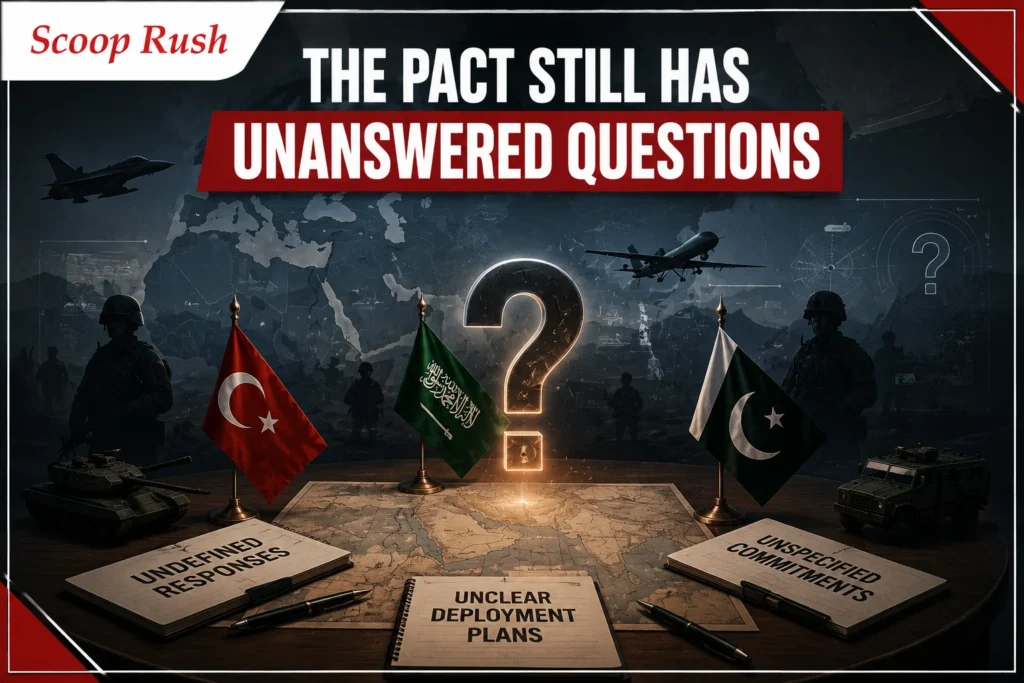
The agreement contains strong collective defense language, but important details remain unclear. It does not publicly specify troop commitments, deployment plans, or a fixed response to different types of attacks. This gives each member considerable room to make its own decisions.

Future military exercises could help clarify how the partnership will work. Intelligence cooperation and joint defense planning could also strengthen coordination. The real strength of the agreement will depend on how seriously the three countries develop these practical arrangements.

What the Agreement Means for Riyadh

For Saudi Arabia, the pact provides another layer of security during a difficult period. Turkey offers major conventional military capabilities, while Pakistan provides extensive military experience and strategic importance. Their combined support could strengthen Riyadh’s position.

The agreement also shows Saudi Arabia’s growing interest in regional security cooperation. Riyadh wants stronger relationships with capable military partners. However, the kingdom must still balance deterrence with diplomacy to avoid turning regional tensions into a wider war.

Conclusion

The Saudi Arabia defense pact marks an important development in Middle Eastern security. Saudi Arabia, Turkey, and Pakistan have created a new framework for collective defense and closer military cooperation.

The pact strengthens Saudi Arabia’s regional partnerships, but its real impact remains uncertain. Future military coordination and the response to any major attack will determine its credibility. For now, the agreement sends a clear message that Riyadh wants stronger regional security options.

FAQs

1. What is the Saudi Arabia defense pact?

The Saudi Arabia defense pact is a collective defense agreement between Saudi Arabia, Turkey, and Pakistan. The pact says an attack on one member will be treated as an attack on all three countries.

2. Why did Saudi Arabia sign the defense pact?

Saudi Arabia wants stronger security partnerships amid rising regional tensions. The agreement gives Riyadh closer military ties with Turkey and Pakistan.

3. Is the Saudi Arabia defense pact aimed at Iran?

The three countries describe the pact as defensive. They say it does not target any specific country. However, tensions involving Iran form an important part of the current security situation.

4. Will Turkey and Pakistan automatically send troops after an attack?

Not necessarily. The agreement does not clearly define automatic military deployments. Each country would likely assess the situation before deciding its response.

5. Could other countries join the defense pact?

Yes, Turkish officials have indicated that other countries could potentially join. However, any expansion would require agreement among the participating states.

Disney Spaceship Earth TV Show: Do Fans Actually Want This EPCOT Adaptation?

0

The Spaceship Earth TV Show Just Got a Green Light

What if your favorite theme park ride became a full streaming drama? That is exactly what is happening now. Disney+ has ordered a pilot for a new Spaceship Earth TV show. The series draws its name from the iconic EPCOT attraction at Walt Disney World.

For longtime park fans, this raises a fair question. Can a slow-moving dark ride about human history really support a gripping television series? Disney clearly thinks so. In fact, this project is already further along than many similar ideas that never left the drawing board.

This news matters for a simple reason. It shows where Disney is headed with its parks-to-screen strategy. It also reveals how the studio is rethinking its streaming output after years of overspending. Below, we break down everything currently known about the Spaceship Earth TV show, who is behind it, and whether it stands a real chance of reaching your screen.

What We Know About the Spaceship Earth TV Show So Far

According to The Hollywood Reporter, Disney+ has ordered a pilot inspired directly by the ride. The writing team includes Jason Fuchs and Michael Waldron. Fuchs also co-showruns IT: Welcome to Derry. Waldron is well known among Marvel fans.

Fuchs will serve as showrunner on the Spaceship Earth TV show. He is executive producing through FiveTen Productions. He recently launched that company with his wife, producer and actress Alexandra Fuchs.

The list of names does not stop there. Director Lee Toland Krieger, known for You and Riverdale, has also joined the project. Adam Fishbach, previously behind Love, Victor, is on board too. So is Adam Fasullo, Waldron’s partner at Anomaly Pictures.

Interestingly, Fuchs and Fishbach have worked together before. They teamed up on the 2024 film Argylle. That movie underperformed at the box office despite a strong cast and a fun premise. Perhaps that earlier partnership explains why the two reunited for this new show.

The Spaceship Earth TV Show Premise and Casting

The Spaceship Earth TV Show Premise and Casting

The pilot borrows its core idea from the ride itself. The Spaceship Earth attraction takes guests on a journey through time. It traces human progress in communication, from cave paintings to the digital age.

However, the television version takes a different direction. Rather than a calm history lesson, the show centers on a global crisis. A group of teenagers from different points in time must team up to stop a danger that threatens time itself.

Casting for the Spaceship Earth TV show is already underway. This suggests Disney is moving forward with real momentum, not just treating it as a passive development deal.

Why the Spaceship Earth TV Show Fits a Familiar Disney Pattern

Disney has a long history of turning rides into movies and shows. Results have been mixed. The clearest success story is Pirates of the Caribbean. That franchise grew from a single attraction into one of the most profitable film series ever made.

Other attempts have not fared as well. Haunted Mansion received two separate film adaptations. Neither one became a runaway hit. Jungle Cruise and Tomorrowland followed a similar pattern. Both generated decent buzz but fell short of blockbuster expectations.

In fact, the Spaceship Earth TV show’s premise feels familiar. Its time-travel angle and search for meaning echo Tomorrowland. That film also struggled to connect with audiences, despite a promising concept and a big-name cast.

A Long List of Abandoned Projects Before the Spaceship Earth TV Show

Disney has floated many ride-based projects over the years. Most never made it past the announcement stage. Past ideas included concepts tied to the Society of Explorers and Adventurers, Space Mountain, and Big Thunder Mountain Railroad. A remake of 20,000 Leagues Under the Sea was also discussed.

There was talk of a Figment project connected to Seth Rogen. A Club 33 murder mystery concept came up too. Many of these ideas quietly disappeared. They joined a growing graveyard of unproduced parks IP.

At one point, Disney even discussed a “Magic Kingdom Universe.” The plan aimed to connect films and shows, similar to the Marvel Cinematic Universe. That ambitious idea has largely faded. It shows just how hard it is to turn park nostalgia into lasting content.

Why Disney Is Pulling Back on Streaming Spending

For years, Disney poured huge resources into Disney+. The goal was to compete with Netflix and other streaming giants. Company leadership has since admitted this rapid growth came at a cost. Too much content got rushed into production. Quality suffered as a result.

This overspending also pulled money away from the theme parks. Wall Street pushed hard for streaming growth during the Chapel era. Disney responded by greenlighting project after project.

That approach started shifting around 2022. Disney’s streaming losses reached billions of dollars that year. This financial reality shaped major company events. The 2022 D23 Expo, for example, was a quiet “blue sky” session. Meanwhile, the 2024 presentation returned with a wave of blockbuster announcements once financial pressure eased.

Streaming has since stabilized and turned a profit. This happened largely because Disney reined in its spending. Consequently, any new project that survives this stricter approach has cleared a higher bar. That includes the Spaceship Earth TV show.

Fewer Shows, But Hopefully Better Ones

The silver lining here is simple. Tighter budgets could mean fewer shows overall. That may actually be good news for viewers and park fans alike. A smaller slate gives Disney room to focus on ideas with real potential. It also means less energy spread across dozens of half-formed concepts.

It is reasonable to expect that several previously announced parks projects will be shelved. Not every idea based on a short ride deserves a full television series. Disney appears to be recognizing that reality with the Spaceship Earth TV show and its narrower focus.

Does the Spaceship Earth TV Show Concept Actually Fit the Ride?

Does the Spaceship Earth TV Show Concept Actually Fit the Ride?

Here is where skepticism creeps in. The premise features teenagers from the past and future stopping a global disaster. That could work as a general sci-fi adventure. However, its connection to the actual attraction feels loose at best.

The ride itself is quiet and reflective. It celebrates the history of human communication inside a geodesic sphere. It does not naturally lend itself to a fast-paced, time-traveling teen thriller.

This mismatch raises a fair question about the Spaceship Earth TV show. Is Disney using the name simply because it carries built-in brand recognition? Or does the story genuinely connect to the attraction’s spirit? Right now, that connection looks thin.

This pattern is not unique to Disney. A similar situation is unfolding with the upcoming Resident Evil film from director Zach Cregger. That project reportedly bears little resemblance to the video game series it borrows its name from. If the goal is simply using a recognizable title to secure a green light, that would not be surprising, even if it disappoints purists.

What the Spaceship Earth TV Show Could Mean for the Ride Itself

There has also been talk of a possible refurbishment at EPCOT. Even if these rumors do not lead to an announcement soon, some kind of update seems likely before the park’s 50th anniversary.

This timing naturally raises questions among fans. Could the show eventually shape changes to the ride? Something similar happened with Pirates of the Caribbean. Captain Jack Sparrow was added to the attraction after the films became a cultural phenomenon. That change happened because guests, unfamiliar with the ride’s origins, wondered why the popular character was missing.

Realistically, that scenario remains far off for the Spaceship Earth TV show. Disney has not altered other attractions like Jungle Cruise, Haunted Mansion, Tower of Terror, or Country Bear Jamboree to match their film adaptations. There is little reason to expect different treatment here. Unless the show becomes an unexpected hit on the level of Stranger Things, the ride and the series will likely stay separate stories.

The Bigger Picture Behind the Spaceship Earth TV Show

This project also highlights a broader trend at Disney. Former CEO Bob Iger once said nearly all of the company’s planned $60 billion park investment would draw from existing movie intellectual property.

That approach makes sense given Disney’s massive film catalog. However, it raises a long-term concern. If every new park addition comes from existing movies, there will eventually be nothing new left to adapt for future films or shows. The parks-to-screen pipeline depends on original park experiences existing in the first place.

Spaceship Earth may be one of the last major pieces of classic parks IP left to adapt. That alone could explain why Disney chose this attraction for its next television experiment, even if the final show only loosely resembles the ride that inspired it.

Final Thoughts

The Spaceship Earth TV show sits at an interesting crossroads for Disney. On one hand, it represents the kind of ambitious content that made Disney+ a major streaming player. On the other hand, its premise feels disconnected from the calm attraction that inspired its name.

Given Disney’s long track record of abandoned parks projects, there is a real chance this pilot never becomes a full series. Even if it does move forward, its connection to the actual EPCOT ride will likely stay symbolic rather than literal. For now, the safest approach is to watch this story unfold rather than expect a guaranteed hit.

Whatever happens next, the Spaceship Earth TV show is a reminder that Disney’s parks and its streaming ambitions remain deeply connected, even when the final product looks nothing like the source material.

FAQs

1. What is the Spaceship Earth TV show about? 

The pilot follows teenagers from Earth’s past and future. They must work together to stop a global disaster. The show borrows its time-travel theme from the original ride rather than retelling it directly.

2. Who is writing and producing the Spaceship Earth TV show? 

Jason Fuchs and Michael Waldron are writing the pilot. Fuchs serves as showrunner. Executive producers include Lee Toland Krieger, Adam Fishbach, and Adam Fasullo.

3. Is the Spaceship Earth TV show confirmed to air on Disney+? 

Not yet. Disney+ has only ordered a pilot so far. The project needs a full series order before it can stream.

4. Will the Spaceship Earth attraction change because of the TV show? 

There is no confirmed link between the show and any ride changes. Disney has historically kept its attractions separate from film and TV adaptations.

5. Has Disney made other shows or movies based on theme park rides? 

Yes. Notable examples include Pirates of the Caribbean, two Haunted Mansion films, Jungle Cruise, and Tomorrowland. Results have varied widely at the box office.

Newcastle United New Manager: Inside Matthias Jaissle’s Rebuild After Eddie Howe’s Shock Exit

0

A New Era Begins With an Unexpected Goodbye

Nobody at St James’ Park saw it coming this way. As Newcastle United’s team plane touched down after a rough 4-1 loss to Bristol City in a pre-season friendly, head coach Eddie Howe sat quietly and reviewed match footage. He was still searching for answers, even in what looked like a throwaway game. Hours later, the news broke: Howe was stepping down, and the search for a Newcastle United new manager suddenly became the biggest story on Tyneside.

Howe had delivered Newcastle’s first major trophy in decades, so his exit felt like the end of a golden chapter. However, insiders suggest the transition had already started weeks earlier. Howe informed the club’s leadership of his decision, then agreed to stay on temporarily until the board found a successor. That successor turned out to be Matthias Jaissle, and his appointment as Newcastle United’s new manager marks the start of a full club rebuild.

This isn’t just a coaching change. It’s a transformation of how Newcastle United recruits, trains, and competes. For supporters wondering what comes next, the story of Newcastle United’s new manager and Eddie Howe’s shock exit matters more than ever.

Why Newcastle United’s New Manager Appointment Matters Right Now

Newcastle finished 12th in the Premier League last season, a disappointing result for a club with Champions League ambitions. Add a turbulent transfer window and mounting pressure from Uefa’s financial fair play rules, and the need for change becomes obvious.

This rebuild doesn’t exist in isolation. It shapes transfer strategy, coaching philosophy, and the club’s long-term identity. Fans must adjust their expectations while trusting a data-driven, youth-focused approach that could define Newcastle for the next decade. Therefore, Newcastle United’s new manager story goes far beyond one coaching swap. It shows how a Premier League club recalibrates after breaching financial regulations and losing key players.

Building a Model That Can Win Without Breaking the Rules

Sporting director Ross Wilson has stated the challenge plainly. Newcastle must build a model that competes at the top while staying financially sustainable. That means the club must avoid a repeat of the sanctions triggered by its earlier breach of Uefa’s financial regulations.

As a result, Newcastle has pivoted toward a trading model. Instead of relying purely on big-money signings, the club now targets younger, developing talent from across the continent and has strengthened its internal data and analytics operations.

The Cost of Reinvestment

This shift hasn’t come without sacrifice. Sandro Tonali moved to Tottenham Hotspur, and Anthony Gordon transferred to Barcelona. Both departures felt reluctant, but they funded reinvestment elsewhere. More painfully, captain Bruno Guimaraes is now set to depart for Arsenal, a move that reportedly never fit the club’s original plan.

Newcastle has also missed out on other targets this summer. Spanish winger Victor Munoz chose Liverpool instead, while Swiss midfielder Johan Manzambi picked Aston Villa. These setbacks show just how competitive the market has become, especially for a club navigating financial restrictions.

Despite these challenges, Newcastle has still completed five notable signings this summer. Goalkeepers Lukas Hornicek and Ewen Jaouen, midfielders Aladji Bamba and Sean Steur, and forward Bazoumana Toure have all joined the squad. Wilson acknowledges the club still has work to do before the transfer window closes.

Meet Matthias Jaissle: Newcastle United’s New Manager

Meet Matthias Jaissle: Newcastle United's New Manager

At just 38 years old, Matthias Jaissle brings a fresh identity to Newcastle. Before joining, he managed Al-Ahli in the Saudi Pro League. Earlier still, he built his reputation at RB Salzburg, where he won back-to-back league titles and reached the Champions League last 16.

His track record reveals a clear tactical signature. Under Jaissle, RB Salzburg ranked first in the Austrian league for high turnovers per game and possession won in the final third. Meanwhile, Al-Ahli posted similarly aggressive numbers under his guidance, averaging over eight high turnovers per match while also winning back-to-back Asian Champions League titles.

This blend of attacking intensity and defensive discipline explains why Newcastle believes its new manager can succeed in the Premier League.

A Rushed but Purposeful Arrival

Jaissle’s move to Newcastle happened fast. Since the club’s Premier League opener against Liverpool arrived on 23 August, the club had little time to waste. He left Al-Ahli and joined Newcastle’s pre-season training camp in Spain almost immediately.

Performance director James Bunce compared the situation to speed dating, since every moment counts during this compressed preparation window. Jaissle’s first week has moved at pace, building toward a friendly against Valencia at the Mestalla this Saturday.

How Newcastle United’s New Manager Runs Training

Anyone who has watched a new manager’s first sessions knows intensity always rises as players try to make an impression. However, those close to the squad say Jaissle’s double training sessions have felt unusually demanding, even by those standards.

Like Howe before him, Jaissle insists that training intensity must mirror match intensity. He allows no shortcuts. Players completed a striking number of recovery runs during certain sessions, and many looked visibly drained afterward.

Interestingly, Jaissle also recognised when his squad needed rest. The club scaled back training on Thursday after he noticed his players’ legs looked heavy, a decision that reflects both intensity and awareness.

The Coach Behind the Calm Exterior

In interviews, Jaissle comes across as composed and measured. On the training pitch, though, he transforms into a hands-on, high-energy figure. He even physically repositions his coaching staff to demonstrate the intensity he wants to see.

He brought his own coaching team with him, including assistants Alexander Hauser, Engin Yanova, and Florens Koch, along with coach analysts Maximilian Fischer and Steffen Konrad, and goalkeeping coach Alexander Bade. Even so, Jaissle made clear in his opening address that existing staff must also raise their standards to match his expectations.

New Signings Adjust to Life Under Newcastle’s New Manager

While Jaissle settles into his new role, new players adapt just as quickly. Czech Republic goalkeeper Lukas Hornicek, who joined from Braga for £25.7 million, arrived less than a week before pre-season began.

Despite the short notice, coaches have already given Hornicek intensive lessons on the physical demands of Premier League set-pieces, including how to handle taller opposition players crowding him during corners and free-kicks. When asked if he felt ready for the challenge, Hornicek said he was ready for the fight.

This rapid adaptation captures the broader theme running through Newcastle’s rebuild. Nobody gets a gradual transition. Coaching staff and new signings alike must adjust quickly to compete at the highest level.

Racing Against the Clock Before Liverpool

Adding pressure to this transition, Liverpool has had significantly more time to adapt under its own new manager, Andoni Iraola. Consequently, Newcastle’s coaching staff have reportedly worked late into the night on preparation and match analysis.

This compressed timeline forces Jaissle to build tactical understanding, team chemistry, and physical conditioning all at once, while also integrating new signings who are still learning the demands of English football.

What Newcastle United’s New Manager Era Means for the Season Ahead

Ultimately, Newcastle’s rebuild reflects a broader trend in modern football, where financial discipline increasingly shapes squad-building decisions. Clubs can no longer rely solely on big spending. Instead, smart recruitment, data analysis, and player development have become essential tools for sustained competitiveness.

For Newcastle, this means balancing ambition with caution. The club wants to compete for top honours, but not at the cost of future financial penalties. Jaissle’s experience developing young talent at Salzburg makes him a fitting choice to lead Newcastle United’s new manager era, even though the timeline for results remains tight given the pressures of Premier League competition.

As the season approaches, all eyes will watch how quickly this new-look Newcastle side gels together under its new manager, and whether the club’s trading model can deliver both financial stability and on-field success.

Key Takeaways

Newcastle United’s new manager, Matthias Jaissle, has taken charge following Eddie Howe’s shock exit, marking a major shift in strategy. The club now prioritises younger talent, stronger data operations, and a sustainable trading model to comply with Uefa financial regulations. Jaissle brings an aggressive, high-intensity tactical approach from his time at RB Salzburg and Al-Ahli, though his transition has moved fast ahead of the season opener against Liverpool. Despite losing key players like Bruno Guimaraes and missing top transfer targets, Newcastle has added five new signings and remains focused on building a competitive, financially responsible squad under its new manager.

Frequently Asked Questions

Why did Eddie Howe leave Newcastle United? 

Eddie Howe stepped down as Newcastle United’s head coach after informing club leadership of his decision weeks earlier. He agreed to stay temporarily until the board appointed a successor before he officially departed.

Who is Newcastle United’s new manager? 

Matthias Jaissle, a 38-year-old German coach previously with Al-Ahli in the Saudi Pro League and RB Salzburg in Austria, has become Newcastle United’s new manager.

Why is Newcastle United changing its transfer strategy under its new manager? 

Newcastle is shifting toward a trading model focused on younger players because of a restrictive financial settlement following the club’s breach of Uefa’s financial rules, along with a difficult transfer window last summer.

Which players has Newcastle United signed this summer? 

Newcastle has signed goalkeepers Lukas Hornicek and Ewen Jaouen, midfielders Aladji Bamba and Sean Steur, and forward Bazoumana Toure so far this summer.

Is Bruno Guimaraes leaving Newcastle United? 

Yes, captain Bruno Guimaraes is reportedly set to depart Newcastle United for Arsenal, a move that was never part of the club’s original transfer plans.