
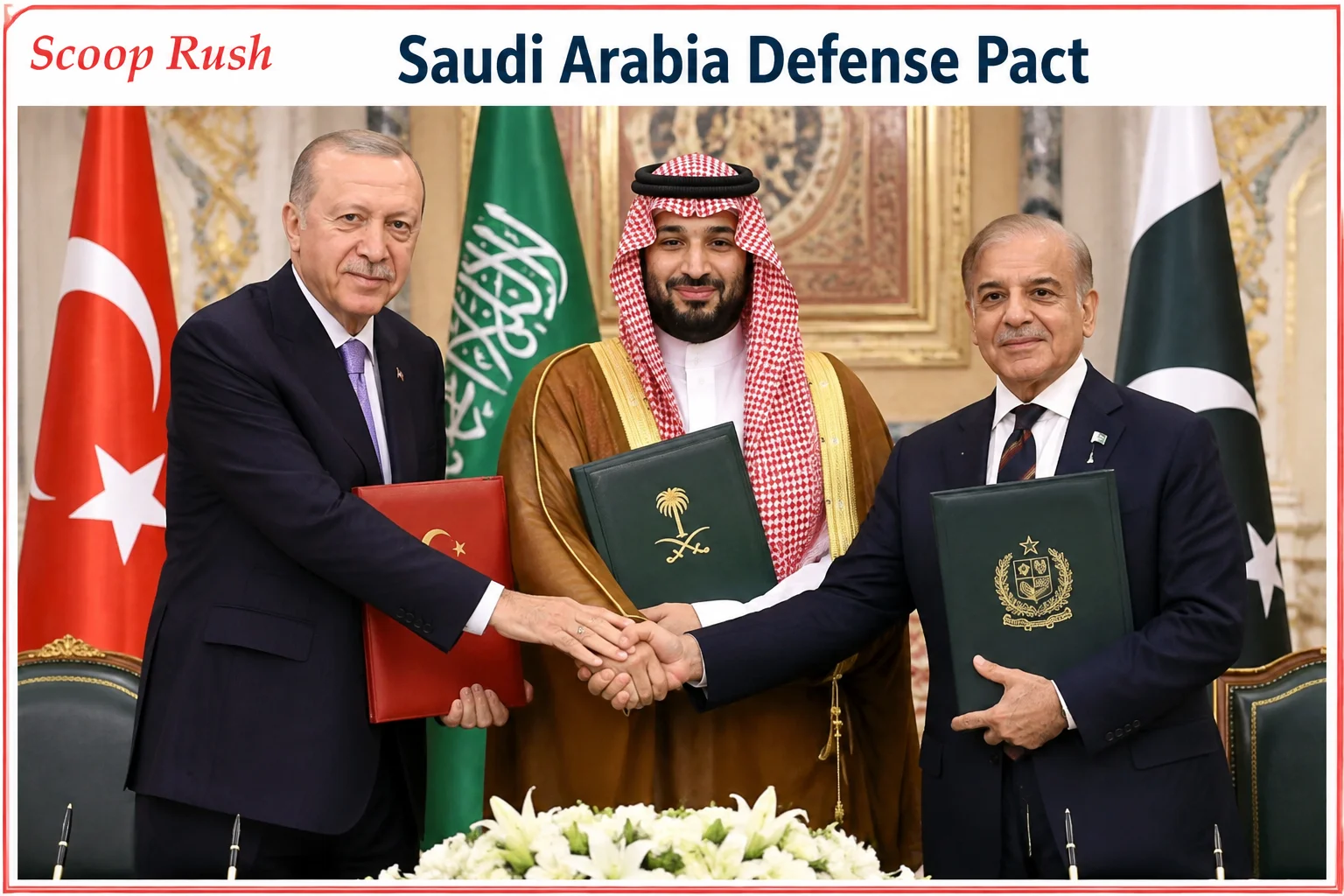
Saudi Arabia has signed a major defense pact with Turkey and Pakistan. The agreement comes as tensions with Iran continue to create security concerns across the Middle East. The three countries signed the Mecca Joint Defence Agreement in Mecca on August 7, 2026.
The pact says an attack on one member will be treated as an attack on all. However, it does not clearly explain the military response required after an attack. The agreement strengthens Saudi Arabia’s defense partnerships while giving Turkey and Pakistan a larger role in regional security.
Saudi Arabia Builds a New Defense Partnership
Saudi Arabia has relied on the United States for security support for decades. However, growing regional instability has encouraged Riyadh to develop stronger relationships with other military powers. The new agreement brings Turkey and Pakistan closer to Saudi Arabia through a formal defense framework.
The partnership also builds on existing military ties between the three countries. Saudi Arabia already maintains close defense relations with both Turkey and Pakistan. The new pact now gives those relationships a wider strategic purpose during a period of rising regional tensions.
Turkey Brings Strong Military Capabilities
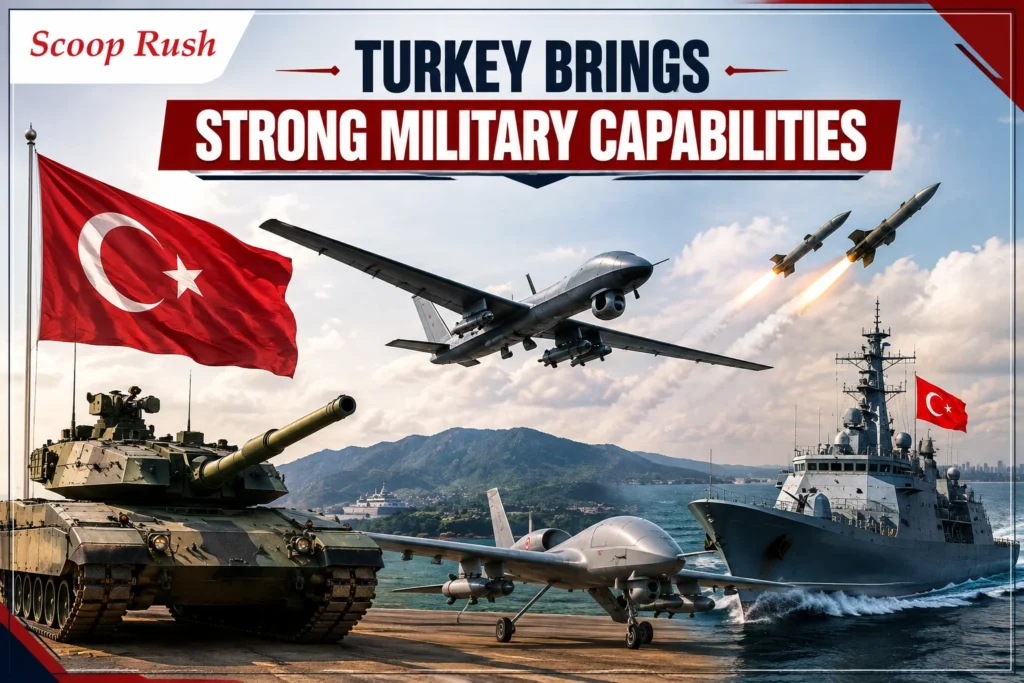
Turkey gives the partnership significant conventional military strength. Its armed forces have extensive experience in regional operations and military planning. Turkey also has a growing defense industry that produces drones, missiles, armored vehicles, and naval systems.
These capabilities could support deeper cooperation with Saudi Arabia and Pakistan. Joint training, intelligence sharing, and defense projects could become important parts of the partnership. Turkey also has strong reasons to prevent a wider conflict because it shares a border with Iran.
Pakistan Adds Strategic Weight
Pakistan brings another important military dimension to the agreement. The country has an experienced armed force and significant strategic capabilities. Pakistan also maintains longstanding military cooperation with Saudi Arabia.
The two countries signed a separate mutual defense agreement in 2025. The latest pact expands that relationship by adding Turkey. However, Pakistan also shares a border with Iran, which gives Islamabad strong reasons to avoid a wider regional conflict.
Iran Tensions Increase the Pact’s Importance
The agreement comes as Saudi Arabia faces growing threats linked to the regional conflict. Iran-backed groups in Yemen have continued attacks against Saudi interests. Missile and drone threats have increased concerns about Saudi territory and important infrastructure.
The new defense arrangement could strengthen Saudi deterrence. Any potential attacker must now consider possible reactions from Turkey and Pakistan. Still, officials from all three countries say the pact remains defensive and does not target a specific country.
Yemen Could Become a Major Test
Yemen remains one of Saudi Arabia’s biggest security challenges. Houthi forces control large parts of Yemen and have repeatedly targeted Saudi-linked interests. Recent attacks have raised concerns about another escalation along the Saudi-Yemeni border.
The Saudi Arabia defense pact could face its first serious test if attacks continue. However, the agreement does not guarantee automatic military intervention. Turkey and Pakistan would still need to assess the situation before deciding how to respond.
Gulf Security Could Enter a New Phase
The agreement reflects Saudi Arabia’s broader effort to diversify its security partnerships. Riyadh continues to maintain important ties with Washington, but it now wants additional strategic options. Turkey and Pakistan can provide valuable military support and political cooperation.
The pact could also influence other countries across the region. Turkish officials have suggested that additional states could potentially join. However, expansion would require careful negotiations because regional countries have different relationships with Iran and other major powers.
The Pact Still Has Unanswered Questions
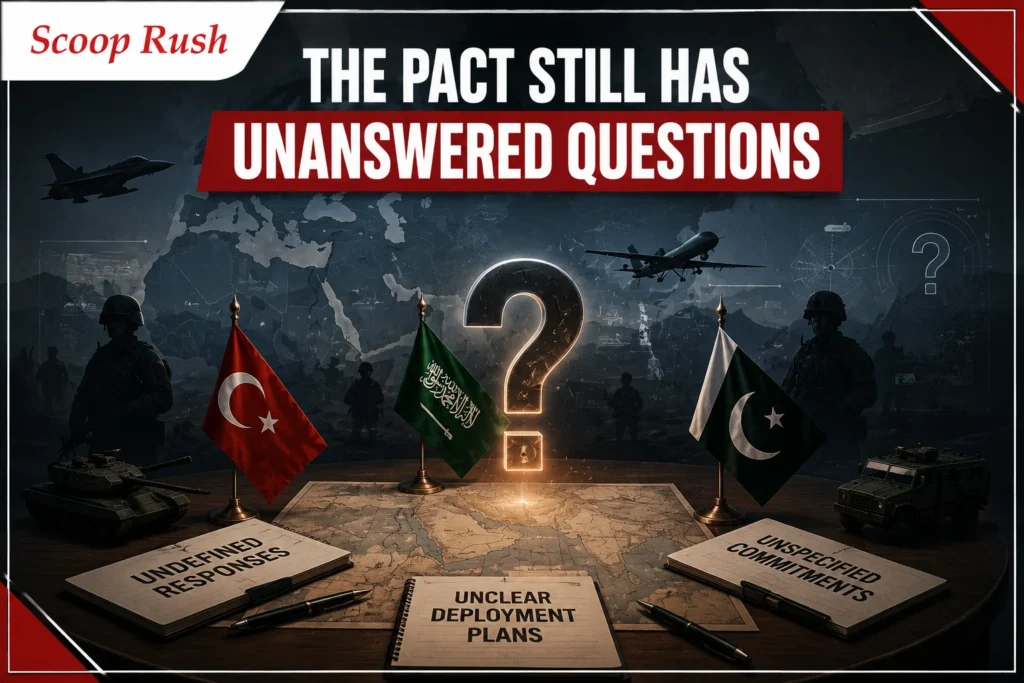
The agreement contains strong collective defense language, but important details remain unclear. It does not publicly specify troop commitments, deployment plans, or a fixed response to different types of attacks. This gives each member considerable room to make its own decisions.
Future military exercises could help clarify how the partnership will work. Intelligence cooperation and joint defense planning could also strengthen coordination. The real strength of the agreement will depend on how seriously the three countries develop these practical arrangements.
What the Agreement Means for Riyadh
For Saudi Arabia, the pact provides another layer of security during a difficult period. Turkey offers major conventional military capabilities, while Pakistan provides extensive military experience and strategic importance. Their combined support could strengthen Riyadh’s position.
The agreement also shows Saudi Arabia’s growing interest in regional security cooperation. Riyadh wants stronger relationships with capable military partners. However, the kingdom must still balance deterrence with diplomacy to avoid turning regional tensions into a wider war.
Conclusion
The Saudi Arabia defense pact marks an important development in Middle Eastern security. Saudi Arabia, Turkey, and Pakistan have created a new framework for collective defense and closer military cooperation.
The pact strengthens Saudi Arabia’s regional partnerships, but its real impact remains uncertain. Future military coordination and the response to any major attack will determine its credibility. For now, the agreement sends a clear message that Riyadh wants stronger regional security options.
FAQs
1. What is the Saudi Arabia defense pact?
The Saudi Arabia defense pact is a collective defense agreement between Saudi Arabia, Turkey, and Pakistan. The pact says an attack on one member will be treated as an attack on all three countries.
2. Why did Saudi Arabia sign the defense pact?
Saudi Arabia wants stronger security partnerships amid rising regional tensions. The agreement gives Riyadh closer military ties with Turkey and Pakistan.
3. Is the Saudi Arabia defense pact aimed at Iran?
The three countries describe the pact as defensive. They say it does not target any specific country. However, tensions involving Iran form an important part of the current security situation.
4. Will Turkey and Pakistan automatically send troops after an attack?
Not necessarily. The agreement does not clearly define automatic military deployments. Each country would likely assess the situation before deciding its response.
5. Could other countries join the defense pact?
Yes, Turkish officials have indicated that other countries could potentially join. However, any expansion would require agreement among the participating states.

