
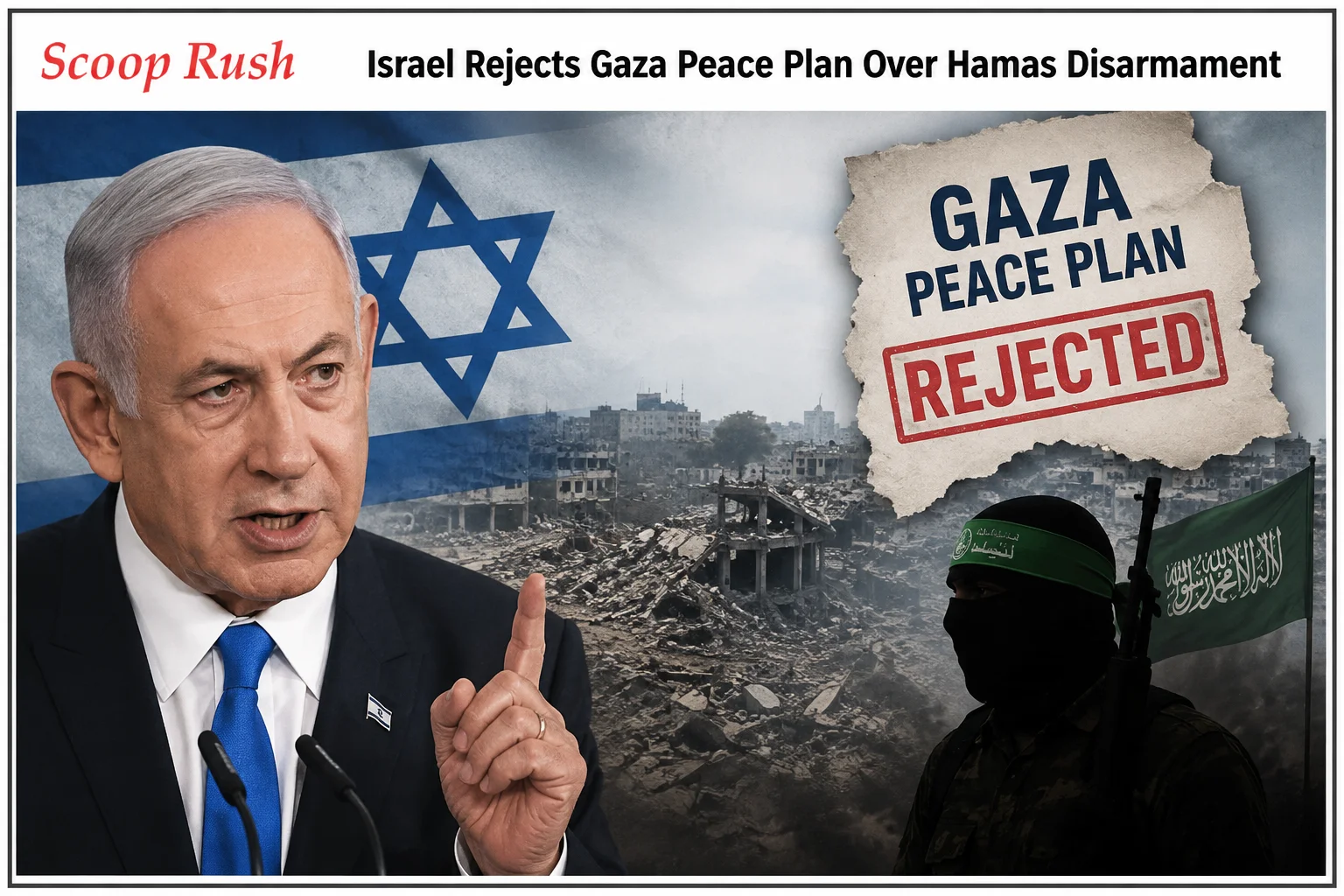
Israel has rejected the Gaza peace plan backed by US President Donald Trump. Prime Minister Benjamin Netanyahu said Israeli forces will not withdraw from Gaza until Hamas fully disarms. Netanyahu made the statement during an Israeli cabinet meeting on Sunday. He said Israel rejects the 15-point document while discussions with Washington continue.
Netanyahu said Hamas must surrender its military capabilities before an Israeli withdrawal. He stressed that disarmament must cover heavy weapons, lighter weapons, and other arms. Hamas has taken a different position on the proposed process. The group wants Israel to stop attacks and withdraw its forces. The disagreement now threatens to delay the next stage of Trump’s proposal.
Israel Rejects Trump’s 15-Point Gaza Peace Plan
Netanyahu directly rejected the 15-point Gaza peace plan during Sunday’s cabinet meeting. He said Israel will not accept a military withdrawal before Hamas becomes genuinely disarmed. He also said Israeli forces will continue protecting Israeli troops and civilians. Netanyahu wants clear guarantees that Hamas cannot maintain its military capabilities. He described complete disarmament as a necessary condition for withdrawal.
The proposal seeks a framework for ending the conflict in Gaza. It includes Hamas disarmament, Israeli withdrawal, future governance, and reconstruction. Netanyahu said Israel remains in discussions with American officials about the proposal. However, he said some US ideas remain unacceptable to his government. The disagreement shows that major issues remain unresolved between the two sides.
Netanyahu Makes Hamas Disarmament a Key Condition
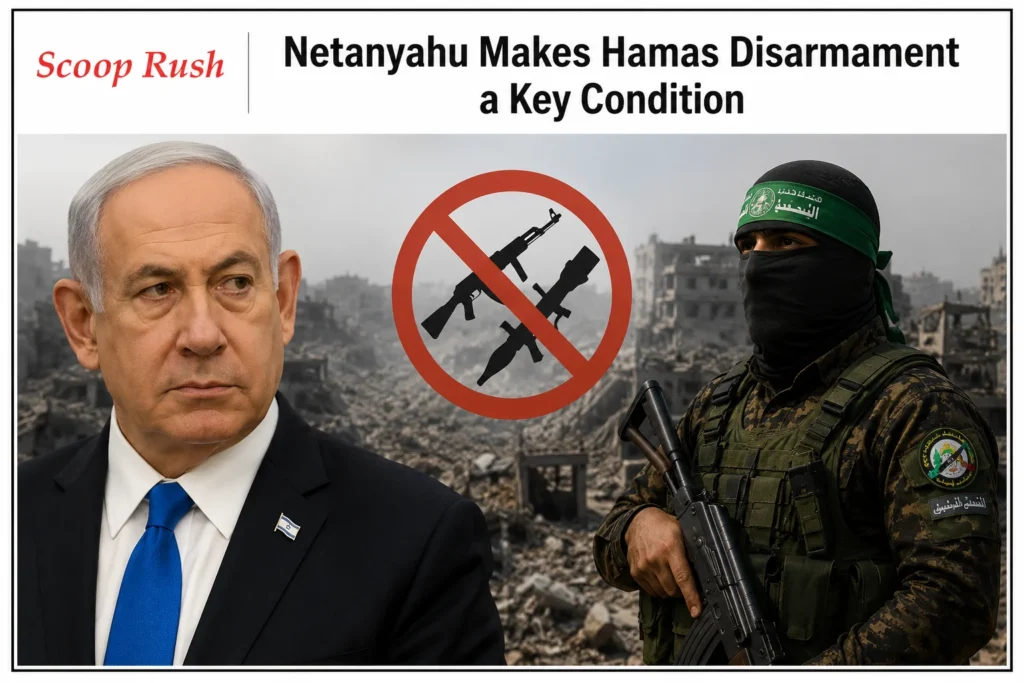
Netanyahu has made complete Hamas disarmament the central Israeli demand. He said Israeli forces will remain in Gaza until Hamas genuinely gives up its weapons. He also said Israel will continue responding to threats against its forces and citizens. Netanyahu rejected any arrangement involving limited or symbolic disarmament. Israel wants Hamas to lose its military capabilities before troops leave Gaza.
Hamas has taken a different position on the agreement. The group wants Israel to stop military attacks and withdraw its forces. Hamas has linked its own disarmament to Israeli commitments under the framework. This creates a direct dispute over the order of key steps. Israel wants disarmament first, while Hamas expects Israeli action as part of the process.
Hamas Supports Moving Forward With the Proposal
Hamas has said it remains committed to Trump’s proposed roadmap. A senior Hamas official called on mediators to pressure Israel to follow the agreement. The group says all parties must fulfill their commitments. Hamas also wants Israel to halt attacks and pull back its forces. Its position indicates that Hamas remains open to discussions about implementation.
The disagreement could now delay the next phase of the Gaza peace plan. Israel and Hamas support parts of the framework but disagree over implementation. Hamas wants guarantees for an Israeli withdrawal after meeting its commitments. Israel wants guarantees that Hamas will surrender its weapons completely. Mediators may need to create a phased process to bridge those differences.
Trump’s Gaza Peace Plan Faces a Major Challenge
Trump presented the proposal as a major step toward ending the Gaza conflict. His administration said Hamas had agreed to move toward complete disarmament. The framework also includes an Israeli military withdrawal from Gaza. It seeks arrangements for Gaza’s future administration and reconstruction. Those measures require cooperation between Israel, Hamas, and other involved parties.
Netanyahu’s rejection now creates uncertainty over the proposal’s future. Washington must keep discussions moving while addressing Israel’s security demands. A revised implementation process could provide a possible path forward. Such a process could connect Hamas disarmament with gradual Israeli withdrawals. However, both sides would need clear guarantees before accepting major commitments.
Israeli Forces Remain Inside Large Parts of Gaza
Israeli forces currently control large areas of Gaza. Their presence remains one of the main issues in negotiations. Netanyahu says Israeli troops will not withdraw before Hamas fully disarms. Hamas wants Israeli forces to pull back under the proposed framework. The two positions currently leave little room for immediate implementation.
Any future withdrawal would require detailed security arrangements. Israel wants protection against renewed attacks from Gaza. Hamas wants assurances that Israel will not resume military operations. International monitoring could help verify weapons transfers and military movements. However, Israel and Hamas would first need to agree on monitoring arrangements.
Netanyahu Rejects Palestinian Statehood
Netanyahu also ruled out the creation of a Palestinian state under his leadership. He said he would oppose Palestinian statehood in Gaza and the West Bank. His position adds another political challenge to the negotiations. The future governance of Gaza remains an important issue. Any long-term arrangement would need a structure for administration and security.
Netanyahu’s statement could narrow the political options available to negotiators. The immediate dispute, however, remains focused on Hamas disarmament. The United States and regional mediators may focus first on security arrangements. Political questions could receive greater attention during later negotiations. For now, the weapons issue remains the main obstacle.
Gaza Peace Plan Enters a Critical Stage
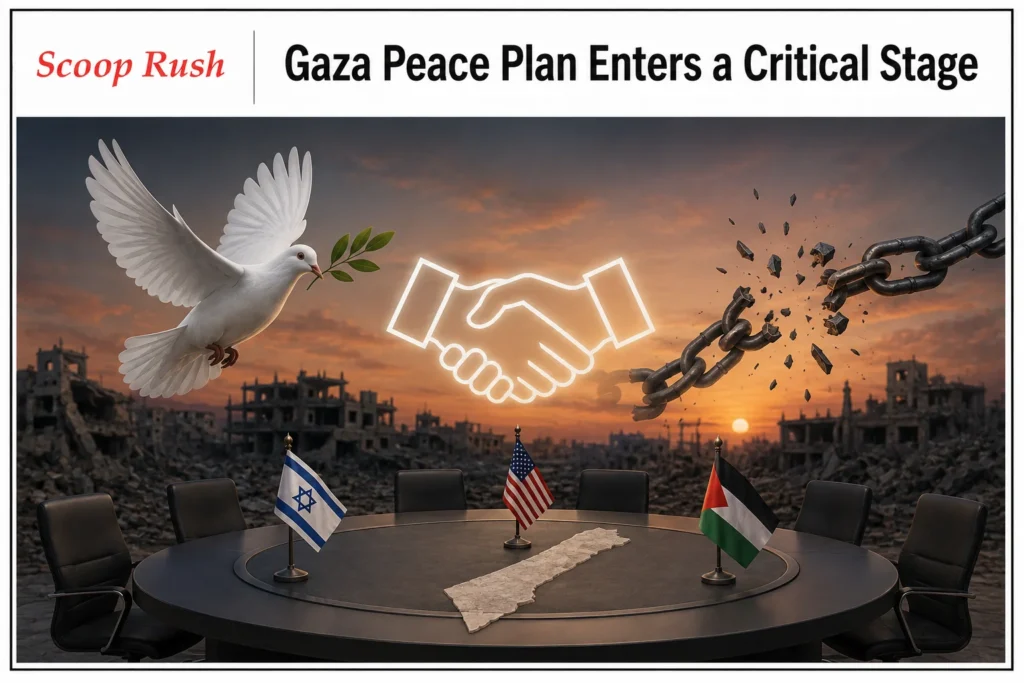
The Gaza peace plan now faces a critical test after Netanyahu’s rejection. The United States must find a way to preserve diplomatic momentum. Washington could seek changes to the implementation process. A phased approach could connect Hamas disarmament with Israeli military withdrawals. Such an arrangement could give both sides clear obligations.
However, creating such a process would require further negotiations. Israel and Hamas must agree on security guarantees and verification measures. They must also determine how to respond to potential violations. These issues could delay implementation. Still, neither side has completely abandoned the diplomatic process.
What Happens Next for Trump’s Gaza Plan?
The next talks will likely focus on Hamas disarmament and Israeli withdrawal. These issues now represent the biggest obstacles to implementation. US officials may seek a compromise that allows both sides to act gradually. Regional mediators could also help develop guarantees for both parties. Any agreement would need clear responsibilities and monitoring arrangements.
Netanyahu says Israel remains in discussions with Washington despite rejecting the document. Hamas has also said it remains committed to the proposed roadmap. This means diplomatic channels remain open despite the disagreement. The future of the Gaza peace plan will depend on further negotiations. Both sides must resolve the dispute over disarmament and withdrawal.
FAQs
1. Why did Israel reject Trump’s Gaza peace plan?
Israel rejected key provisions because Netanyahu wants Hamas fully disarmed first. He says Israeli forces cannot withdraw before genuine disarmament.
2. What does Trump’s Gaza peace plan propose?
The plan focuses on Hamas disarmament and Israeli military withdrawal. It also includes arrangements for Gaza’s future governance and reconstruction.
3. Does Hamas support Trump’s Gaza peace plan?
Hamas says it remains committed to the proposed roadmap. However, it expects Israel to fulfill its commitments under the agreement.
4. Will Israeli forces withdraw from Gaza?
Netanyahu says Israel will not withdraw before Hamas fully disarms. Hamas wants Israeli forces to withdraw as part of the process.
5. Can the Gaza peace plan still succeed?
The proposal can continue through further negotiations. However, Hamas disarmament and Israeli withdrawal remain unresolved.

