
There’s a testimony making the rounds in church circles and on social media: someone decides to “eat like the apostles,” drops a noticeable amount of weight in a few months, and suddenly a phrase like the “apostles’ diet” starts trending in group chats and Sunday school hallways.
It sounds catchy. It sounds biblical. And for anyone trying to get healthier, it sounds like permission to turn Scripture into a meal plan.
But before you start swapping your pantry for olives and lentils in the name of holiness, it’s worth asking a more honest question: what did the apostles actually eat, why did they eat that way, and is turning their lifestyle into a weight-loss program missing the entire point?
This article digs into the historical, cultural, and spiritual backdrop of first-century eating habits, the biblical food laws that shaped what “clean” and “unclean” meant to Jewish believers of that era, and why reducing any of it to a diet trend sells discipleship short. If you’re exploring faith-based eating more broadly, our biblical diet guide is a good companion read.
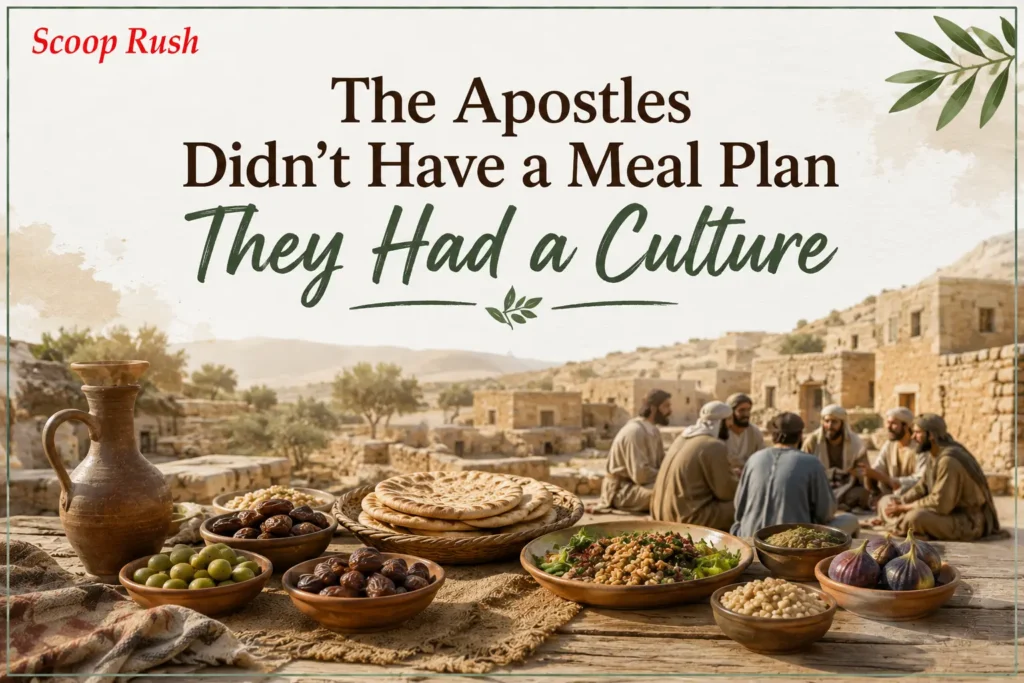
The Apostles Didn’t Have a Meal Plan They Had a Culture
A Diet Shaped by Geography, Not Strategy
It helps to remember that the apostles weren’t following a curated nutrition program. They were first-century Jewish men living in an agrarian Mediterranean economy.
Their food choices were shaped by geography, season, economics, and religious law long before any of them ever met Jesus.
What Was Actually on the Table
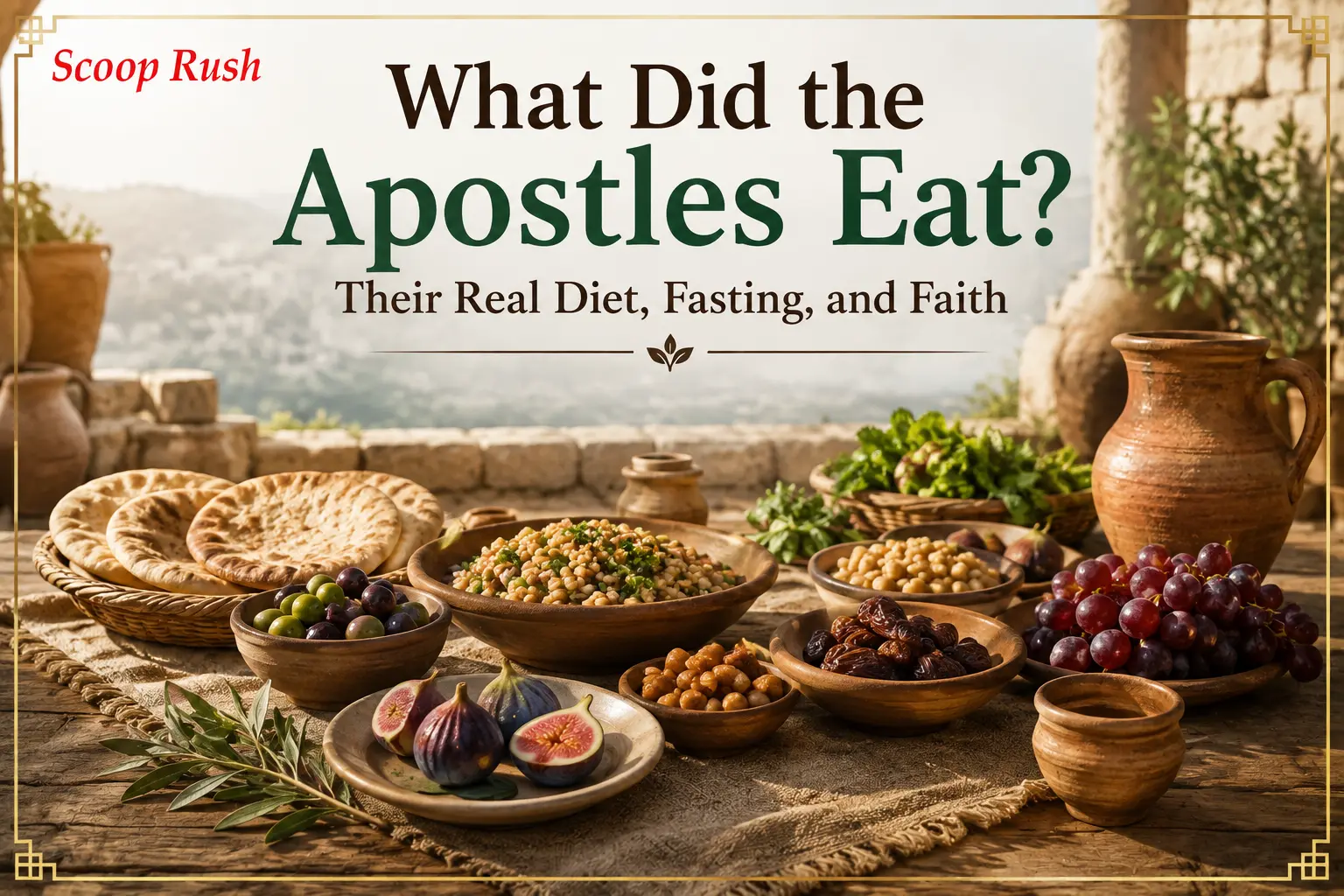
Historians and food scholars generally agree that the everyday diet of that time and place would have included:
- Bread, usually made from barley or wheat, and often the centerpiece of a meal
- Fish, especially for those living near the Sea of Galilee, where several disciples worked as fishermen
- Olives and olive oil, used both for cooking and as a dietary staple
- Legumes like lentils and chickpeas, a reliable source of protein
- Fruit, including figs, dates, and grapes
- Vegetables grown locally and eaten in season
- Goat cheese and dairy, though meat overall was eaten sparingly and reserved for feasts
- Water and diluted wine, since wine was frequently cut with water
Simple by Necessity, Not by Choice
There were no packaged snacks, no drive-through windows, no refined sugar in the way we understand it today, and no artificial anything.
Meals were simple because the food supply was simple. They were seasonal because refrigeration didn’t exist. And they were often communal, eaten around a table with family or a traveling band of disciples rather than alone and in a hurry.
None of this was a nutritional strategy. It was just what life looked like.
Where the “Clean” and “Unclean” Food Idea Comes From

Leviticus 11 and the Roots of Biblical Food Law
Anyone tracing the roots of a so-called apostolic or biblical diet eventually lands in the same place: Leviticus chapter 11. This Old Testament passage lays out which animals were considered permissible to eat and which were not, under the Mosaic law given to Israel.
As Jewish men shaped by that law, the apostles would have grown up observing these distinctions. Many Apostolic and Pentecostal church traditions today still draw directly from this chapter to guide what their members eat.
It Was Holiness, Not Health Science
The classification system in Leviticus doesn’t use modern nutritional science. It’s rooted in ceremonial holiness the idea that Israel was to be a nation “set apart,” and that even an ordinary meal could express that separation.
Here’s how the categories break down:
| Category | Considered “Clean” (Permitted) | Considered “Unclean” (Avoided) |
| Land animals | Split hoof and chews the cud beef, lamb, goat, venison | Pork, rabbit, camel, and animals not meeting both criteria |
| Poultry | Chicken, turkey, dove, quail, most common domesticated birds | Birds of prey and scavenger birds |
| Fish and sea creatures | Fins and scales salmon, tuna, cod, tilapia, trout | Shellfish (shrimp, crab, lobster, oysters, clams, mussels), scaleless fish like catfish or shark |
| Insects | A small number of locusts and similar insects, per the text | Most insects |
For observant Jews in the first century, including the apostles, this wasn’t a health regimen. It was religious identity. Eating within these boundaries was a way of living out covenant faithfulness, not managing cholesterol.
For comparison, modern restrictive eating patterns built around very different goals like the carnivore diet or an animal-based diet show how differently “clean eating” can be defined depending on whether the motivation is spiritual, medical, or performance-driven.
Portion, Restraint, and the Seriousness of Gluttony

Why Overeating Was a Moral Issue, Not a Minor Flaw
One detail that often gets lost in modern retellings is how seriously the ancient world and the early church especially treated overeating.
Gluttony wasn’t viewed as a minor personal quirk. It was considered a genuine spiritual failure, a sign of a person ruled by appetite rather than self-control.
Food as Gift, Not Entitlement
This wasn’t unique to Christianity; Greek and Roman moral philosophy also prized moderation. But for the apostles, shaped by their Jewish upbringing and Jesus’ teaching, food was received with gratitude and eaten with restraint.
Meals were an occasion for community and thanksgiving, not indulgence. That posture food as gift rather than food as entitlement is arguably more countercultural today than any specific list of ingredients.
Modern overcorrection can swing the other way, too from stripped-back approaches like a bland diet to trend diets like the military diet, both built around short-term restriction rather than the steady, communal moderation the apostles practiced.
Fasting Wasn’t Optional It Was Rhythm
“When You Fast,” Not “If You Fast”
If there’s one part of the apostles’ relationship with food that’s underrepresented in modern conversations, it’s fasting.
Jesus didn’t frame fasting as optional. In the Sermon on the Mount, He said, “When you fast,” not “if you fast” (Matthew 6:16), treating it as a normal part of a disciple’s life.
The apostles followed that example. Acts 13 describes the early church fasting and praying before commissioning Paul and Barnabas for ministry. Fasting shows up repeatedly throughout the New Testament as a tool for discernment and repentance.
A Weekly Rhythm, Not a Crash Diet
Historical church practice backs this up. Early Christian communities, as described in documents like the Didache, reportedly observed regular fasting on Wednesdays and Fridays, often until mid-afternoon.
This wasn’t a crash diet or a body-image strategy. It was a spiritual discipline woven into the weekly rhythm of the church, meant to cultivate dependence on God.
Fasting, in other words, was never about the number on a scale. It was about clearing space emotionally and spiritually to focus on something bigger than the next meal.
If you’re curious how modern fasting-adjacent approaches compare, pieces like our clear liquid diet guide explain how short-term restriction is used medically today a very different purpose from the apostles’ spiritual fasting, but a useful contrast.
They Also Moved. A Lot.
Walking, Fishing, and Ministry as Physical Labor
It’s easy to overlook, but physical activity was baked into apostolic life in a way that has almost nothing to do with the modern gym.
The apostles walked between towns, sometimes for days at a stretch. Fishermen among them, like Peter, James, and John, spent hours hauling nets and rowing boats.
A Baseline, Not a Fitness Goal
Ministry itself was physically demanding preaching outdoors, traveling on foot, carrying supplies, and living without modern conveniences.
The now-popular benchmark of 10,000 steps a day, often treated as an ambitious fitness goal, was probably closer to a baseline for people living the way the apostles did. They moved because ministry and daily survival required it.
Even small, consistent movement matters today our piece on the benefits of a 5-minute walk every hour breaks down why regular, low-intensity activity can matter more than occasional intense workouts.
So Was Their Lifestyle “Healthy”? Kind of But That Wasn’t the Point
The Health Benefits Were a Byproduct
Looking at all of this together whole foods, modest portions, regular fasting, and constant movement it’s fair to say the apostles’ lifestyle would check a lot of boxes modern nutritionists recommend today.
Whole grains, lean proteins, healthy fats from olive oil, minimal processed food, and consistent activity are still considered foundational to good health. For those building similar habits today, our guide to healthy habits in your 20s and 30s covers practical, sustainable ways to eat and move well.
But It Was Never the Goal
Here’s the catch: none of it was designed with health outcomes in mind. The apostles weren’t trying to lower their cholesterol or fit into smaller robes. They weren’t optimizing macros.
They were, in the fullest sense of the phrase, giving their whole selves body, mind, and spirit to the mission Jesus had given them. That distinction matters enormously.
The Risk of Turning Discipleship Into a Brand
When modern wellness culture borrows the imagery of the apostles and repackages it as a diet plan, it risks flattening a spiritual discipline into a self-improvement product.
The danger isn’t that people lose weight; it’s that discipleship gets reduced to appearance, and following Jesus starts to look more like a lifestyle brand than a transformed life.
The Real Question Isn’t “What Did They Eat?”
A Better Question to Ask
If there’s a single shift worth making, it’s this: instead of asking “What did the apostles eat?” a question about replicating outward behavior a more useful question might be, “What does it mean to steward my body as a follower of Jesus today?”
That question doesn’t come with a shopping list. It comes with a posture. A few practical starting points that reflect apostolic values, without turning them into a rigid program, might include:
- Eat with gratitude, not guilt. Food was received as a gift, not a source of shame or anxiety.
- Eat to fuel service, not to soothe stress. The apostles ate to sustain a mission, not to numb emotions.
- Practice moderation over excess. Restraint was a virtue, not a punishment.
- Fast with intention. Fasting can still function as a way to seek God rather than a weight-loss shortcut.
- Move your body as part of daily life. Walking and working reflects apostolic rhythm without needing a gym.
- Treat rest as spiritual, not indulgent. Rest wasn’t a luxury reserved for the deserving.
- Resist the pull toward image over substance. The goal was never to look a certain way, but to live a certain way.
Stewardship also means being cautious about over-optimizing our article on supplement risks and taking too many vitamins is a good reminder that more isn’t always better, even when the intentions are good.
A Body Given for a Purpose
Temple, Not Billboard
Scripture describes the body as a temple, not a display case (1 Corinthians 6:19–20). That distinction is worth sitting with.
A temple exists for worship and purpose. A billboard exists to be looked at. The apostles’ relationship with food, fasting, and physical discipline was oriented entirely around the first idea, not the second.
What’s Actually Worth Keeping
That doesn’t mean physical health doesn’t matter moderation, whole foods, and regular movement carry real benefits. There’s nothing wrong with wanting to be healthier.
But when the motivation shifts from “I want to steward what God gave me” to “I want to look like I follow Jesus,” something essential gets lost.
Skipping processed food and building healthier habits are worthwhile. But the deeper invitation isn’t to eat like a first-century fisherman it’s to live with the same undivided devotion they did, regardless of what’s on the plate.
For readers thinking more broadly about purposeful living beyond the plate, our piece on Gen Z jobs with purpose and better pay explores a similar theme: choosing meaning over image in a different area of life.
FAQs
Did the apostles follow a specific “diet plan”?
No. There’s no evidence the apostles followed a structured eating plan. Their food choices reflected the culture, geography, and religious laws of first-century Israel not a deliberate health strategy.
What does the Bible say the apostles actually ate?
Historical and biblical context suggests a diet built around bread, fish, olives, legumes like lentils, fruit such as figs and dates, vegetables, goat cheese, and water or diluted wine. Meat was eaten occasionally rather than daily.
Is the “Apostolic Diet” the same as what the apostles ate?
Not exactly. The term “Apostolic Diet” is more commonly associated with certain modern Apostolic and Pentecostal church traditions that follow the clean and unclean food categories in Leviticus 11. It’s related but distinct from a historical reconstruction of what the twelve apostles personally ate.
Why is pork excluded in these biblical food guidelines?
Under the classification system in Leviticus, an animal is considered clean only if it has a split hoof and chews the cud. Pigs have a split hoof but don’t chew the cud, which is why pork falls into the “unclean” category.
Did the apostles fast regularly?
Yes. Fasting appears repeatedly in the New Testament, including before major ministry decisions such as the commissioning of Paul and Barnabas in Acts 13. Early church tradition also points to regular fasting rhythms, such as Wednesdays and Fridays, per the Didache.
Is it wrong to try eating healthier by looking at what the apostles ate?
Not at all there’s nothing wrong with drawing inspiration from a simpler, less processed way of eating. The caution is against turning it into a spiritualized weight-loss gimmick centered on image rather than the deeper purpose behind their lifestyle. If you want structured, medically grounded guidance instead, our low-carb diet guide covers benefits, risks, and food lists for a more clinical approach.
What’s a better goal than “eating like an apostle”?
Rather than replicating a first-century menu, the more meaningful goal is stewardship treating your body as a gift entrusted to you for a purpose, marked by gratitude, moderation, and service, rather than a project to perfect for appearance’s sake.

