
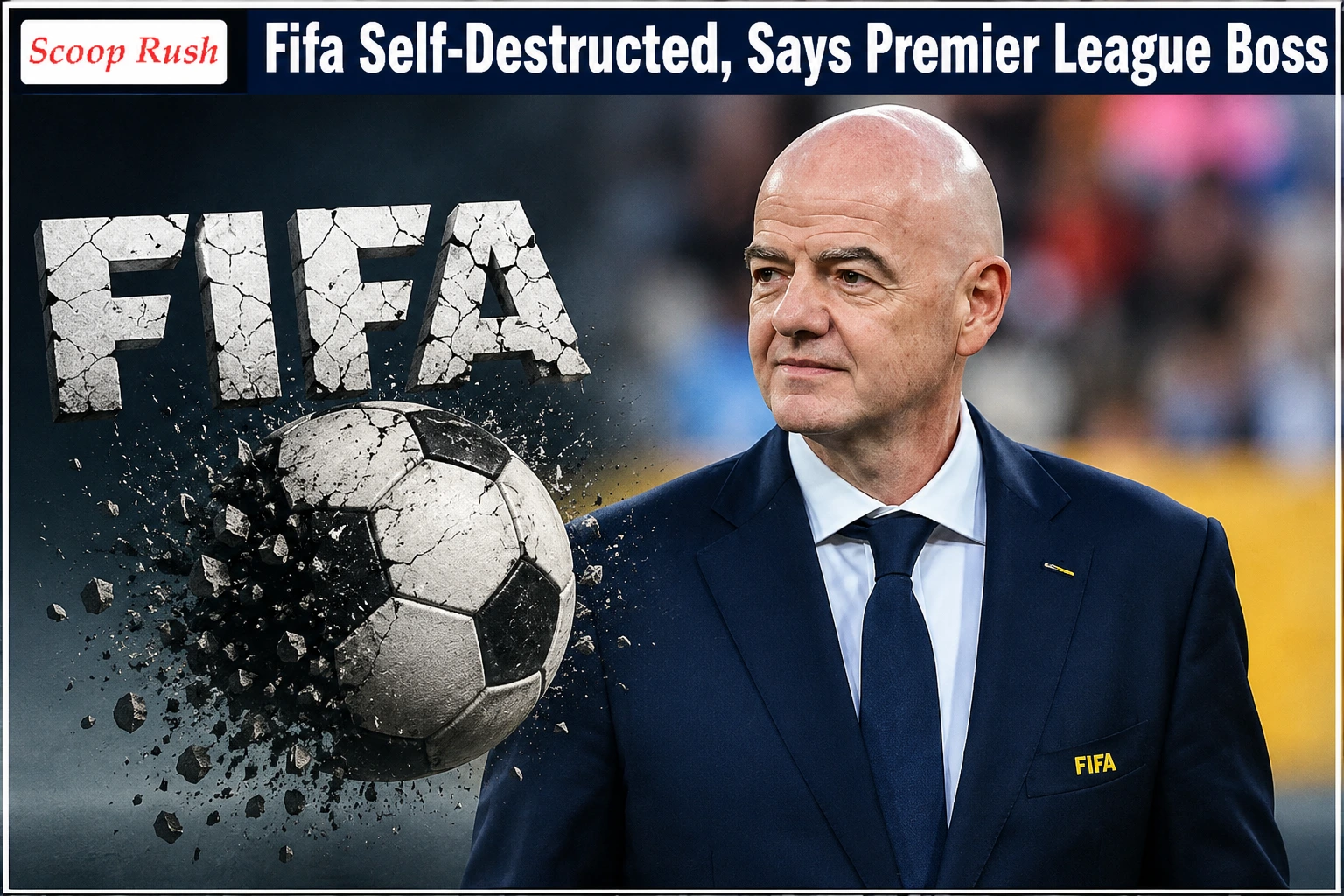
What happens when the organization meant to protect football’s biggest prize tries to sell a piece of it? That question sits at the heart of a growing storm inside Fifa. Premier League chief executive Richard Masters says Fifa self-destructed over its now-abandoned plan to sell a stake in the World Cup. And he isn’t holding back.
Masters delivered one of the sharpest rebukes Fifa has faced in years. He told BBC Sport that Fifa “pressed the self-destruct button.” He called the whole episode a “self-inflicted wound.” These are strong words from a man who rarely courts controversy. They matter because they show how deep the cracks in football’s leadership have become.
This isn’t just boardroom drama. Fans, players, and national federations all care about who owns the world’s biggest sporting event. So here’s what happened, why the plan collapsed, and why people are now saying Fifa self-destructed its own credibility.
Why People Are Saying Fifa Self-Destructed Its Own World Cup Plan
The controversy centres on a proposal called Fifa Forward Enterprise, or FFE. This plan would have created a new company. That company would manage commercial and ticketing rights for every Fifa competition, including the World Cup itself. Under the proposal, Fifa planned to sell 21% of that new entity to a private investment company.
In other words, Fifa prepared to hand a real stake in the World Cup’s commercial future to outside investors. That idea landed like a bombshell. After all, Fifa has always described itself as a not-for-profit custodian of the game.
The backlash came fast. Several confederations pushed back hard. Uefa led the charge. It even threatened to boycott Fifa competitions altogether. Facing that pressure, Fifa abandoned the FFE plan before it could move forward. This retreat is exactly why Masters believes Fifa self-destructed, rather than being undone by outside forces.
The Reason the Sell-Off Plan Triggered Such a Strong Reaction
Masters explained his concerns clearly. “I don’t think Fifa should be ever contemplating selling off a stake in the World Cup,” he told BBC Sport. He pointed out that Fifa operates as a not-for-profit organisation. Therefore, he argued, it should hold the World Cup in trust for football’s future. It shouldn’t treat the tournament as a tradable commercial asset.
That distinction matters. The World Cup isn’t just a tournament. Billions of people watch it. Decades of trust between federations, players, and fans built it into what it is today. Consequently, any move that looks like a price tag on that trust was always going to spark alarm.
Fifa Faces Accusations of “Deception” From Major Confederations
The fallout didn’t stop at the Premier League’s door. Last week, Uefa, Concacaf, and the Asian Football Confederation issued a joint open letter. The letter accused Fifa of breaking trust “through deception.”
Presidents and general secretaries across all three confederations signed the letter. It framed the controversy as something bigger than one failed proposal. According to the letter, the real issue was “the integrity of the game, and the integrity of those elected to lead it.”
That’s a serious charge against the head of world football’s governing body. However, not every confederation agrees. Infantino has kept the backing of senior executives across Africa, South America, and Oceania. He also received support during a meeting in Morocco earlier this month. As a result, Fifa now looks split along regional lines.
The FA Withdraws Support as the Premier League Backs the Move
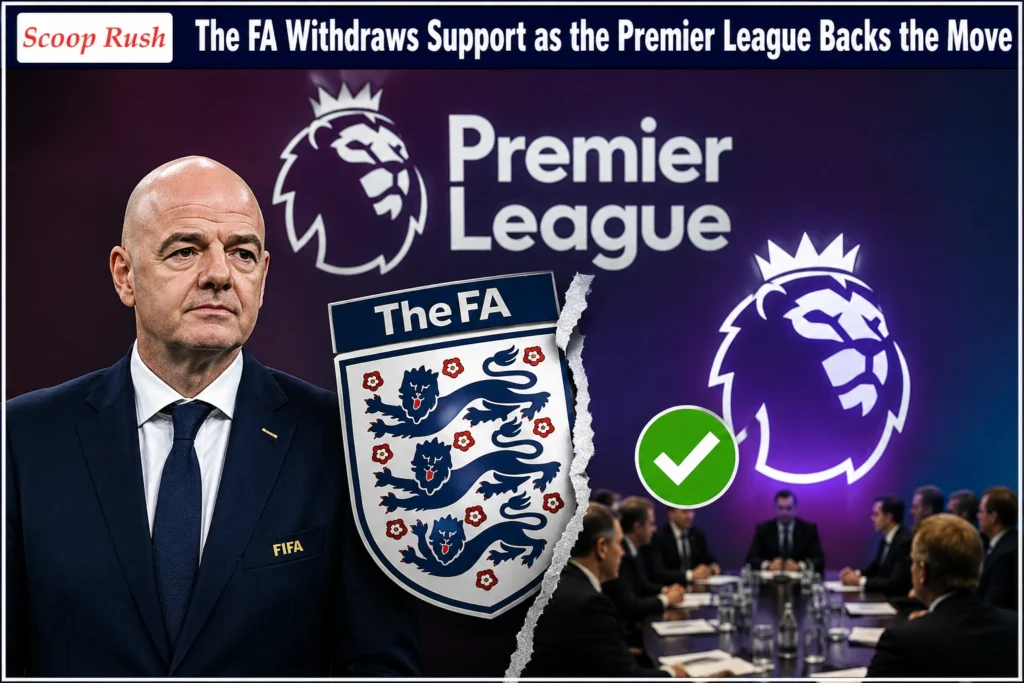
England’s Football Association has taken a clear stand. It withdrew support for Infantino ahead of his expected bid for a fourth term as Fifa president in March. Masters confirmed the Premier League fully backs that decision.
“They’re a not-for-profit organisation. They should really be holding that competition in trust for the future of football,” Masters said. “I think it’s a bad idea, and the FA have taken the right position regarding Gianni.”
This kind of public split between a national federation and the Fifa president doesn’t happen often. It shows just how seriously English football’s leadership views the situation.
Calls Grow for a “Unity Candidate” to Challenge Infantino
So what happens next? Masters called for a “unity candidate” to step forward for the Fifa presidency. This person would need to bring the sport’s fractured confederations back together.
Nobody has formally challenged Infantino yet. Candidates have until 18 November to declare. Still, Masters was clear about what he wants from whoever steps up.
“I think an emerging unity candidate should have on his or her agenda reform of Fifa, and perhaps even reform of the president’s role and how it interacts with those things,” he said.
This statement reveals something important. Masters isn’t just unhappy about one failed commercial plan. He’s raising deeper questions about how much power the Fifa presidency itself holds, and whether that structure needs reform.
Masters Also Raises Concerns Over World Cup Officiating
The sell-off plan wasn’t the only issue troubling Masters. He also flagged concerns about how Fifa handled disciplinary decisions during the recent World Cup in North America. European champions Spain beat Argentina in the final.
One incident stood out. USA striker Folarin Balogun received a straight red card for a foul on Bosnia-Herzegovina defender Tarik Muharemovic. This happened during the co-hosts’ last-32 win. Under normal rules, that red card would have triggered an automatic one-match ban.
Instead, Fifa suspended the ban for a year. This came after President Donald Trump asked the organisation to review the decision. That allowed Balogun to play in the next round against Belgium, a match the United States lost 4-1.
Masters didn’t mince words. “We worry about that particular episode, and of course we don’t know what happens,” he said. He then questioned why Fifa lacks a clear red card review process, similar to the one the Premier League uses.
“Generally speaking, Fifa is supposed to uphold non-political interference within the game of football,” Masters added. “So I think it’s a big issue, and it needs to be thought through properly.”
That comment ties back to a broader theme. Masters believes Fifa doesn’t always apply its own principles consistently.
A Season of Change for the Premier League
Away from the Fifa controversy, Masters also discussed the new Premier League season. It kicks off with champions Arsenal hosting promoted Coventry.
This campaign brings a record number of new permanent managers. Nine clubs start the season under different leadership than last year. Arsenal remain the exception, with Mikel Arteta continuing after guiding the club to the title. Meanwhile, Manchester City, Liverpool, and Chelsea all enter the season with new managers: Enzo Maresca, Andoni Iraola, and Xabi Alonso.
Player movement has also raised questions about the league’s pulling power. Spain midfielder Rodri left Manchester City for Barcelona. This followed Anthony Gordon’s earlier move from Newcastle to Spain. Masters pushed back firmly when asked if this signals fading appeal.
“If you look at the top 100 players in the world independently ranked, the Premier League has nearly half of them,” he said. He added that 13 English players feature among that group, with 11 of them playing in the Premier League itself.
“Stars come and go, and the Premier League hasn’t really always been about stars,” Masters explained. “It’s been about clubs. It’s been about squads. It’s been about success.” He compared the shift to the managerial changes, calling it a natural “changing of the guard.”
Chelsea’s Punishment and the Manchester City Case
Masters addressed two ongoing disciplinary stories too. Chelsea received a £10 million fine last month. The club also got a suspended ban from registering new players for two transfer windows. This came after Chelsea admitted breaching rules around agent payments between 2009 and 2022. Fifa also handed down a six-point deduction, suspended until 30 June 2027, though an appeal later set it aside.
Chelsea admitted making £47 million in secret payments to unregistered agents and third parties on transfers between 2011 and 2018. Owners Todd Boehly and Clearlake Capital self-reported 74 rule breaches after buying the club in 2022.
Some critics called the punishment lenient. They compared it to the points deductions Everton and Nottingham Forest received in 2024 for breaching Profitability and Sustainability Rules. Masters defended the decision. He explained that the Chelsea case was historic and fundamentally different from PSR cases.
“None of the people involved with these payments are still at the club, we were not able to interview them, the evidence base isn’t complete,” he said. He added that a contested commission route might not have secured all the admitted charges. That made the sanction agreement the more practical path.
Manchester City, meanwhile, is still waiting on a ruling. Its case involves more than 100 alleged breaches of Premier League financial rules. An independent commission has yet to publish its findings, even though the disciplinary hearing concluded over a year and a half ago. The city continues to deny all wrongdoing.
“I do accept it’s taking longer than expected,” Masters said, “but I simply can’t provide that. Our rules are very clear. We have to follow the process, and there’s only one real clear route through, which is to allow that process to reach its natural conclusion.”
Key Takeaways:
Fifa abandoned its World Cup sell-off plan, but the fallout continues. Richard Masters’ comments reveal just how much trust has eroded between the Premier League, the FA, and Fifa’s leadership under Gianni Infantino. Uefa, Concacaf, and the AFC accuse Fifa of deception. Meanwhile, Africa, South America, and Oceania continue backing Infantino. As a result, world football looks visibly divided.
Questions around World Cup officiating add more fuel to the fire, particularly the Balogun red card decision. These raise concerns about political interference in the game. With the Fifa presidential race approaching its 18 November nomination deadline, everyone is watching to see whether a genuine unity candidate emerges to challenge Infantino and push for reform.
For now, the Premier League moves into a season defined by fresh managerial faces, shifting star power, and unresolved disciplinary cases involving Chelsea and Manchester City. Both stories will keep developing throughout the year.
Frequently Asked Questions
1. Why do people say Fifa self-destructed over the World Cup plan?
Premier League chief Richard Masters used the phrase after Fifa abandoned its plan to sell a 21% stake in a new company managing World Cup commercial rights. He called it a self-inflicted wound, caused entirely by Fifa’s own decisions.
2. What was the Fifa World Cup sell-off plan?
It was a proposal called Fifa Forward Enterprise. The plan would have created a new company to manage commercial and ticketing rights for all Fifa competitions, including the World Cup, with 21% sold to a private investment firm.
3. Why did Fifa abandon the World Cup sell-off plan?
Fifa dropped the plan after strong opposition from several confederations. Uefa led the resistance and threatened to boycott Fifa competitions if the proposal moved forward.
4. Has the Football Association withdrawn support for Gianni Infantino?
Yes. The FA withdrew support for Infantino ahead of his expected bid for a fourth term as Fifa president in March. The Premier League backs that decision.
5. What happened with the Folarin Balogun red card at the World Cup?
Balogun received a straight red card during the USA’s last-32 win over Bosnia-Herzegovina. Fifa suspended the automatic ban for a year after President Donald Trump asked for a review. That let Balogun play against Belgium in the next round.

