
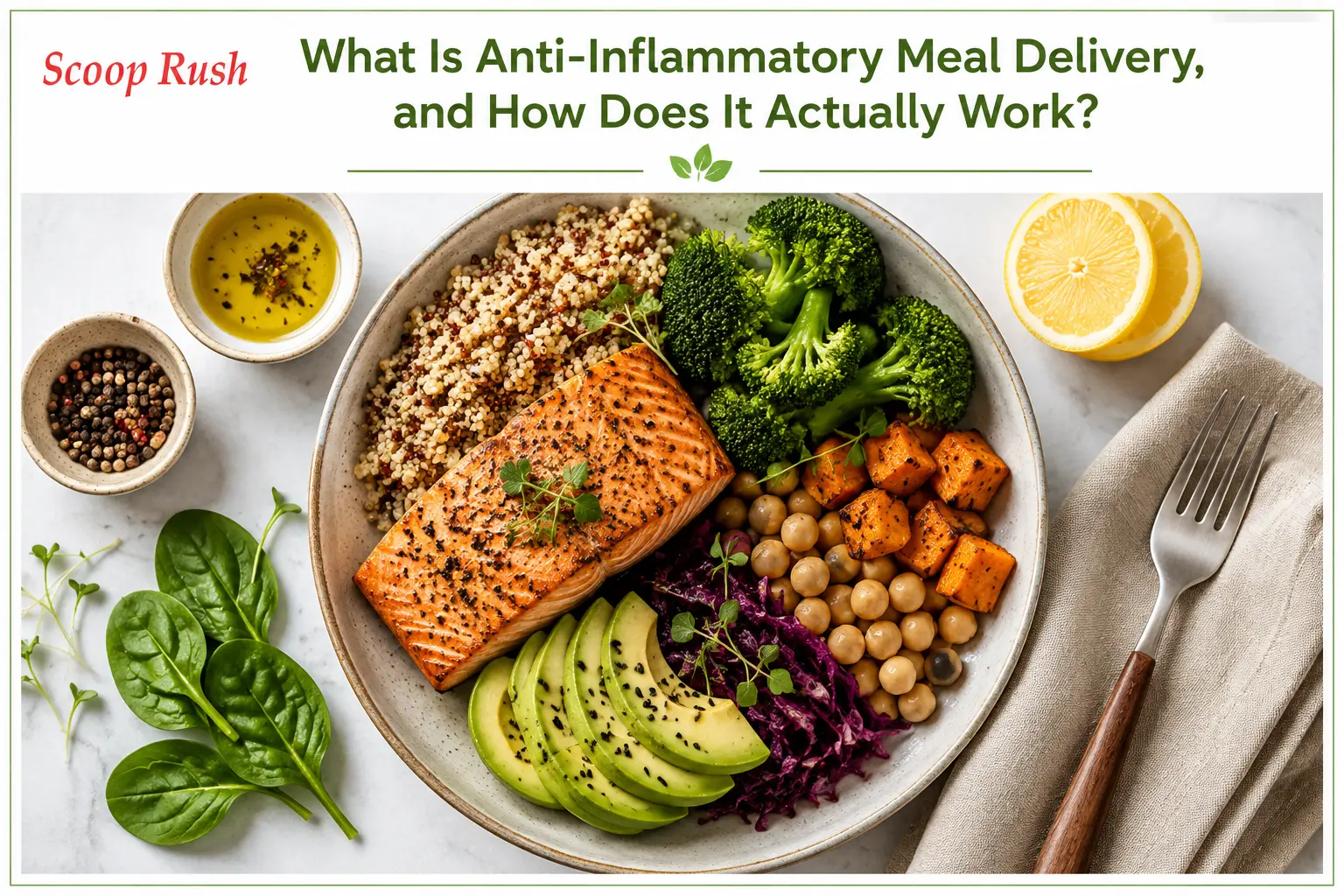
Why Inflammation Matters More Than You Think
Chronic inflammation is the unifying factor in an astounding number of diseases. It has also become one of the most overused buzzwords in the nutrition world, one that gets thrown around so often it has started to lose its meaning. So it is worth slowing down and actually demystifying what inflammation is, and why it matters so much for long-term health.
As Harvard Health has put it, the “four horsemen” of modern illness coronary artery disease, diabetes, cancer, and Alzheimer’s may be riding the same steed: inflammation. That is not a scare tactic dressed up as a headline. It reflects just how central this single biological process is to nearly every major chronic condition doctors are racing to understand.
Inflammation Isn’t Always the Enemy
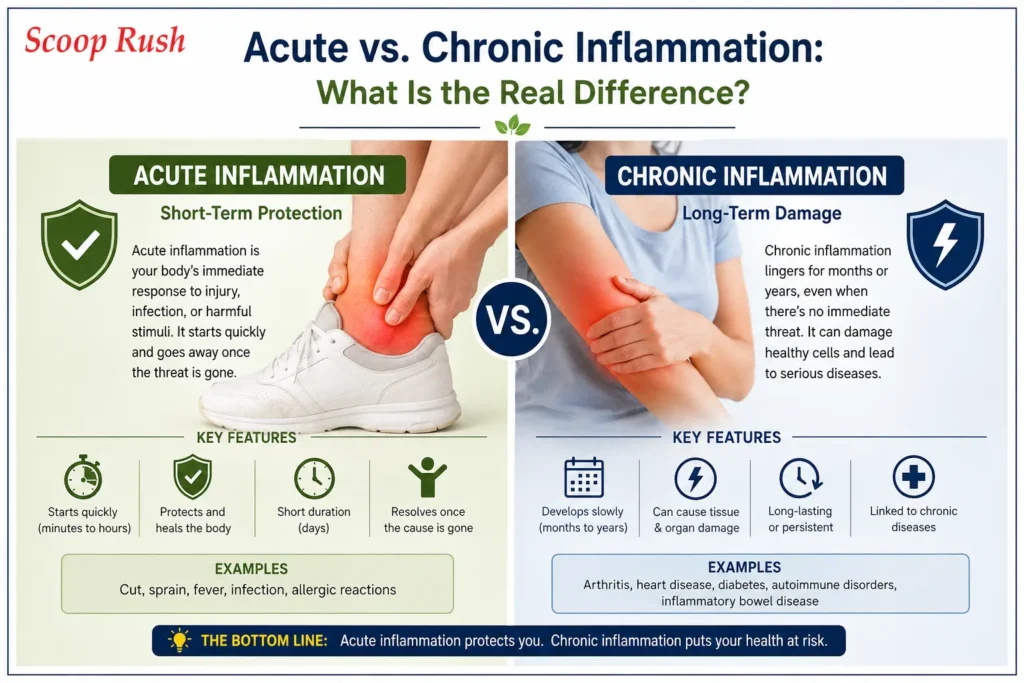
Here is the twist, though: inflammation itself is not the enemy. In its simplest form, inflammation is your immune system’s response to stress, and short-term, acute inflammation is genuinely protective. When you scratch your knee, your immune system rushes antibodies to the site to begin repairs.
That is exactly what produces the redness and swelling you feel afterward. It is not a malfunction it is your body doing what it evolved to do. The trouble starts when that response never fully switches off, and instead lingers for weeks, months, or years, reshaping how your organs, joints, and gut function.
Acute vs. Chronic Inflammation: What Is the Real Difference?
The Weekend Guest vs. The Permanent Houseguest
Acute inflammation behaves a lot like healing after stress, similar to a friend who visits for the weekend. They show up, help you deal with whatever needs attention, and then they leave, and life goes back to normal.
Chronic inflammation behaves more like a stranger who crashes on your couch for months at a time. It overstays its welcome, quietly drains your resources, and eventually interferes with everything else going on, even parts that have nothing to do with the original problem.
Quick side-by-side:
- Acute inflammation — short-lived, triggered by a specific injury or infection, resolves once healing is done
- Chronic inflammation — long-lasting, often triggered by diet or stress, doesn’t resolve on its own
- Acute inflammation — visible signs like redness or swelling at one site
- Chronic inflammation — often silent, showing up as fatigue, brain fog, or joint pain instead
Healing a single cut is manageable and mostly automatic. Healing subtle, systemic damage that gets re-inflicted every day, through every processed meal or every stretch of unmanaged stress, is an entirely different kind of challenge.
The Long-Term Cost of Unmanaged Inflammation
When the damage never stops, neither does the inflammatory response. Over time, that persistence wears down entire organ systems, cellular DNA, and a person’s overall sense of wellbeing. It has also been linked to symptoms people sometimes call “adrenal fatigue,” which often ties back to broader healthy habits in your 20s and 30s that are easier to build before chronic patterns set in.
Why Autoimmune Conditions Feel Different
If you are living with an autoimmune condition, whether that is rheumatoid arthritis, Crohn’s disease, ulcerative colitis, Hashimoto’s thyroiditis, or lupus, this onslaught does not come and go. It is constant.
Your immune system has essentially misidentified healthy tissue as a threat, and it responds accordingly, going into a kind of scorched-earth mode every day to eradicate a problem that was never actually there. Layering inflammatory foods on top of that only adds fuel to a fire already burning.
Why the Standard American Diet Makes Everything Worse

The Everyday Ingredients Working Against You
Unfortunately, the Standard American Diet is packed with ingredients that provoke the unhelpful kind of inflammatory response, and most people consume them without ever realizing it. Common culprits include:
- Hydrogenated and heavily refined vegetable oils
- Irritating proteins, such as lactose for those who are sensitive
- Heavily added and refined sugars
- Ultra-processed snack foods with long, unrecognizable ingredient lists
- Excess alcohol and sugary beverages
Each one asks something extra of an immune system that may already be working overtime just to keep up. But this is not only a story about what to avoid. There is an entire universe of foods that actively work in the opposite direction, calming the gut and cooling inflammatory pathways.
This is exactly where anti-inflammatory eating patterns, and more targeted approaches like the Autoimmune Protocol, known as AIP, come into the picture.
What Is an Anti-Inflammatory Diet, Really?
The Basic Idea Behind It
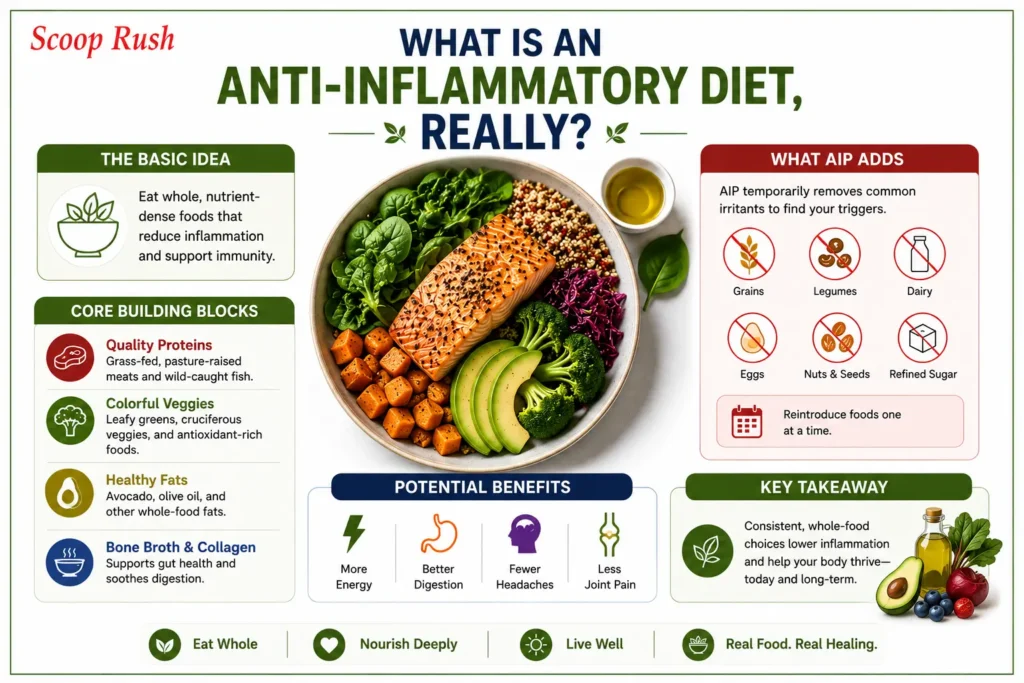
An anti-inflammatory diet is built around nutrient-dense, minimally processed foods that reduce irritation along the digestive tract and calm systemic immune activity throughout the body. It shares a lot of overlap with the Autoimmune Protocol.
AIP is a more structured elimination-and-reintroduction framework, often used by people managing autoimmune disease who want a precise way to identify their personal triggers. At its core, though, this way of eating is not complicated.
It is not about counting macros or chasing whatever ingredient happens to be trending as a superfood that week. It is about giving your body easy-to-digest, nutrient-dense ingredients in their most whole, least-processed forms.
The Core Building Blocks
The main pillars of an anti-inflammatory diet include:
- Grass-fed and pasture-raised proteins, which carry a more favorable ratio of omega-3 to omega-6 fatty acids than conventionally raised meat
- Cruciferous and colorful vegetables, including broccoli, leafy greens, sweet potatoes, and beets, loaded with fiber, antioxidants, and plant compounds
- Whole-food fats, like avocado and olive oil, in place of industrially processed, hydrogenated oils
- Wild-caught fish, rich in omega-3 fatty acids with a well-documented anti-inflammatory effect
- Bone broth and collagen-rich foods, which many people with sensitive digestion find genuinely soothing
That ratio of omega-3 to omega-6 fats plays a meaningful role in how inflamed or calm your body’s tissues stay over time, which is part of why protein sourcing matters just as much as the vegetables on the plate.
What AIP Adds on Top
For people following AIP specifically, the protocol also temporarily removes common irritants:
- Grains (wheat, rice, oats, and others)
- Legumes (beans, lentils, peanuts)
- Nightshades (tomatoes, peppers, eggplant, white potatoes)
- Dairy
- Eggs
- Nuts and seeds
- Refined sugar
These are slowly reintroduced one at a time to identify individual triggers. It is considerably more restrictive than a general anti-inflammatory diet, and it is typically most useful for a defined stretch of time rather than something followed forever.
For everyone, eating with inflammation in mind can meaningfully raise a person’s daily baseline. People following this way of eating often notice less fatigue, easier digestion, fewer headaches, reduced joint pain, a steadier mood, and better sleep within a matter of weeks.
Anti-Inflammatory Foods at a Glance
A Quick Reference Table
The table below offers a simple side-by-side comparison of foods that tend to fuel inflammation versus foods that tend to help calm it. It can be a useful reference when restocking your kitchen or building a weekly menu.
| Food Category | Commonly Inflammatory Choices | Anti-Inflammatory Swaps |
| Fats and Oils | Vegetable oil, margarine, hydrogenated oils | Extra virgin olive oil, avocado oil, coconut oil |
| Proteins | Processed deli meats, factory-farmed meat | Grass-fed beef, wild-caught salmon, pasture-raised poultry |
| Grains | Refined white flour, sugary cereals | Oats, quinoa, or none at all during strict AIP |
| Sweeteners | Refined sugar, high-fructose corn syrup | Small amounts of raw honey or maple syrup, if tolerated |
| Dairy | Conventional milk, processed cheese | Coconut milk, dairy-free alternatives, or elimination during AIP |
| Vegetables | Heavily fried or breaded vegetables | Steamed, roasted, or fresh leafy greens and cruciferous vegetables |
| Beverages | Soda, sweetened coffee drinks, alcohol | Water, herbal tea, bone broth |
| Seasonings | Processed seasoning blends with additives | Fresh herbs, ginger, turmeric, garlic |
This table is not meant to suggest that every item in the left column is inherently dangerous. It is simply a starting point for noticing patterns, and for making small, sustainable substitutions rather than an overnight overhaul that is unlikely to stick.
The Real Barrier Is Not Knowledge, It Is Time
Why Knowing What to Eat Isn’t Enough
Here is a part of this conversation that does not get talked about enough: most people who could genuinely benefit from anti-inflammatory or AIP-style eating already know, in broad strokes, what they are supposed to eat. The barrier is not information. It is execution. Following this way of eating well requires:
- Reading every ingredient label every time, since inflammatory ingredients hide in unexpected places
- Sourcing higher-quality proteins and produce, often across multiple stores
- Prepping food from scratch far more often than a typical household does
- Doing all of this while managing fatigue, pain, or brain fog the exact symptoms this diet is supposed to help resolve
What Happens on the Hard Weeks
That is a genuinely difficult ask even on a good week. On a bad one, mid-flare and exhausted, it can feel completely out of reach, and people understandably default to whatever is fastest, even when they know it is not serving them.
That is not a failure of willpower. It is simple math: limited energy plus limited time plus a demanding protocol equals something has to give. This is exactly the gap a service like The Good Kitchen was built to close, alongside sustainable habits like a five-minute walk every hour when energy allows.
How The Good Kitchen Makes Anti-Inflammatory Eating Doable
What Makes the Model Different
The Good Kitchen is a meal delivery service built around whole-food, chef-prepared meals, including dedicated anti-inflammatory and AIP-friendly options, delivered straight to your door and ready to heat and eat. Instead of asking you to source, prep, and cook every meal from scratch, it handles the heavy lifting through:
- Ingredients chosen specifically with inflammation in mind
- Grass-fed proteins, wild-caught seafood, and organic produce whenever available
- No hydrogenated oils, unnecessary fillers, or hidden refined sugars
- Full ingredient transparency, so what’s on the label is genuinely what’s in the meal
Built for the Elimination Phase
AIP-compliant options are clearly labeled throughout the menu, which matters enormously for anyone navigating the elimination phase. Nobody should have to call a kitchen and interrogate a chef just to confirm whether a dish contains nightshades.
Meals arrive fully cooked and ready in minutes, which changes everything on a genuinely low-energy day. There’s no chopping, no multi-step recipe, no standing over a stove when standing is the last thing your body wants to do.
Menus and portions rotate regularly too, so eating this way doesn’t start to feel like a restrictive loop of the same five meals. Variety plays a real role in whether people actually stick with an eating pattern long term.
The goal isn’t to replace home cooking altogether. It’s to remove the barrier on days when cooking simply isn’t possible, so an anti-inflammatory way of eating doesn’t collapse the moment life gets hard often exactly when the body needs it most.
What Is Actually in an Anti-Inflammatory or AIP Meal
Proteins and Vegetables on the Plate
If you are new to this style of eating, it helps to picture what a well-built anti-inflammatory or AIP meal typically includes on a plate:
- Proteins: grass-fed beef, pasture-raised poultry, wild-caught salmon or other cold-water fish
- AIP-friendly vegetables: sweet potatoes, carrots, beets, leafy greens, broccoli
- General anti-inflammatory vegetables (less restrictive than strict AIP): tomatoes, peppers, and eggplant, depending on individual tolerance
These proteins tend to carry more omega-3 fatty acids and fewer additives than conventionally raised meat, which is part of why sourcing is treated as seriously as the recipe itself.
Fats, Flavor, and What Gets Left Out
Fats typically come from a short list of trusted sources:
- Olive oil
- Avocado oil
- Coconut oil
- Avocado itself
These replace the hydrogenated and heavily processed seed oils found throughout conventional packaged and restaurant food. Flavor is built through fresh herbs, ginger, turmeric, garlic, and citrus, without relying on sugar-heavy seasoning blends.
What gets left out matters just as much as what’s included: refined sugar, gluten-containing grains, conventional dairy, and hydrogenated oils across the board, plus legumes, nightshades, eggs, nuts, and seeds during strict elimination.
None of this requires exotic ingredients or a pantry full of rare superfoods. It requires consistency, and consistency requires the food actually being available when you need it precisely the problem meal delivery is designed to solve.
Managing Flares and Sensitive Digestion Without Overcomplicating Things
When Texture Matters More Than Ingredients
Anyone who has lived through a flare knows theoretical nutrition advice tends to fall apart the moment symptoms flare up in real life. During those stretches, texture and digestibility matter just as much as the ingredient list itself.
That’s part of why people borrow principles from other gentle eating approaches, such as a bland diet or a low-residue diet, even when their condition isn’t the one those diets were originally designed for.
During a flare, easier-to-tolerate choices tend to include:
- Soft-cooked or well-blended vegetables
- Pureed or blended soups
- Easily digestible proteins, prepared simply
- Avoiding raw, fibrous, or heavily seasoned dishes
This overlaps closely with strategies used for other digestive conditions, including a diverticulitis diet or a general soft food diet recommended after certain procedures or during active symptom flares.
Adjusting Intensity, Not Abandoning the Approach
Not every anti-inflammatory principle needs to be applied at full intensity every day. Someone with a mild, stable condition might tolerate more variety than someone in the middle of a flare, and adjusting texture rather than abandoning the approach entirely tends to work best.
This is also where a rotating menu of prepared meals becomes especially valuable, letting you lean on gentler, more digestible options during difficult stretches without researching and prepping a separate set of recipes from scratch.
Nutrition, Chronic Illness, and Giving Yourself Some Grace
The Problem With “Just Eat Clean”
It’s worth naming something honestly here: nutrition advice for chronic illness often arrives wrapped in a tone of moral judgment, as though the barrier to eating well were ever simply a lack of information rather than a lack of time, energy, or money.
Phrases like “just eat clean” or “do a thirty-day reset” get repeated constantly, as though they were neutral advice rather than advice that quietly assumes a level of bandwidth many people simply don’t have on a given week. Real barriers include:
- Limited time to shop and cook
- Limited cooking capacity during flares or fatigue
- Cost of higher-quality proteins and produce
- Access to stores that carry appropriate ingredients
None of that has anything to do with willpower or discipline.
A Note on Supplements
This is also where supplements deserve a note of caution. It’s common for people managing chronic illness to reach for a growing stack of pills to compensate for dietary gaps, without realizing there are real supplement risks tied to taking too many vitamins at once.
Whole-food nutrition should generally come first, with supplementation used to fill specific, identified gaps rather than as a blanket substitute for an actual meal. This is part of why a service model matters so much here.
When the prep work is already done the sourcing, the ingredient screening, the actual cooking an anti-inflammatory way of eating stops being an aspirational ideal and starts being something sustainable, flare or no flare.
Getting Started: A Few Practical Anchors
Start Small, Not Perfect
If you’re exploring an anti-inflammatory or AIP approach for the first time, it generally works better to start with subtraction rather than aiming for immediate perfection. A simple starting checklist:
- Remove added sugar first
- Swap hydrogenated oils for olive or avocado oil
- Cut back on ultra-processed snacks
- Read labels for hidden inflammatory ingredients
- Introduce one new whole-food swap per week rather than all at once
There’s no need to overhaul everything on day one small, repeatable changes tend to create more lasting momentum than an all-at-once overhaul.
A Simple Meal Formula
Building meals around a simple formula covers most nutritional bases without requiring a formal recipe:
- One protein
- One vegetable
- One healthy fat
The same principle applies whether you’re eating gluten-free, following AIP, or just reducing inflammation generally. Resources like gluten-free breakfast ideas can be a useful starting point for the meal of the day that tends to trip people up the most.
Leaning on convenience where it’s genuinely needed isn’t a compromise — whether that means frozen vegetables, pre-cooked proteins, or prepared meals from a source you trust, it’s what actually makes this way of eating sustainable on real weeks rather than only on ideal ones.
Track Progress and Loop In Your Doctor
Useful signals to track over time include:
- Energy levels
- Joint pain
- Digestion
- Sleep quality
- Mood
These tend to be far more useful feedback than the number on a scale. Give any change several weeks before deciding whether it’s genuinely working, and loop in your care team along the way. An anti-inflammatory or AIP approach can be a powerful complement to medical treatment, but it isn’t a replacement for it, and a dietitian or physician can help tailor the approach to your specific diagnosis.
The Bottom Line
Chronic inflammation touches an enormous range of health conditions, but addressing it through food doesn’t have to be complicated or exhausting to maintain. It comes down to consistently choosing whole, nutrient-dense ingredients over processed ones.
That means building a system that makes that choice easy to repeat, even on days when energy and time are in short supply. That’s the gap The Good Kitchen’s anti-inflammatory and AIP-friendly meal delivery is built to close one ready-to-eat meal at a time.
FAQs
Is an anti-inflammatory diet the same as the Autoimmune Protocol?
Not exactly. An anti-inflammatory diet is a general eating pattern focused on whole, minimally processed foods. AIP is a more structured version of that idea, built specifically for autoimmune conditions, with a defined elimination and reintroduction phase.
How long does it take to notice a difference?
This varies from person to person, but many report noticeable changes in energy, digestion, and joint discomfort within two to four weeks of consistent changes. More significant shifts for autoimmune symptoms can take longer and should be tracked alongside medical care.
Do I have to eat this way forever?
Not necessarily. AIP is typically used as a defined-period elimination protocol rather than a permanent way of eating. Many people eventually land on a more individualized, sustainable version of anti-inflammatory eating.
Can meal delivery really support a strict elimination protocol like AIP?
Yes, provided the service clearly labels which meals meet AIP standards and stays transparent about every ingredient. That transparency is exactly what to look for before trusting any prepared meal during an active elimination phase.
Is this approach only useful for people with autoimmune disease?
No. While the case for AIP specifically is strongest for autoimmune conditions, general anti-inflammatory eating can benefit almost anyone dealing with fatigue, digestive discomfort, or joint pain, even without a formal diagnosis.

