
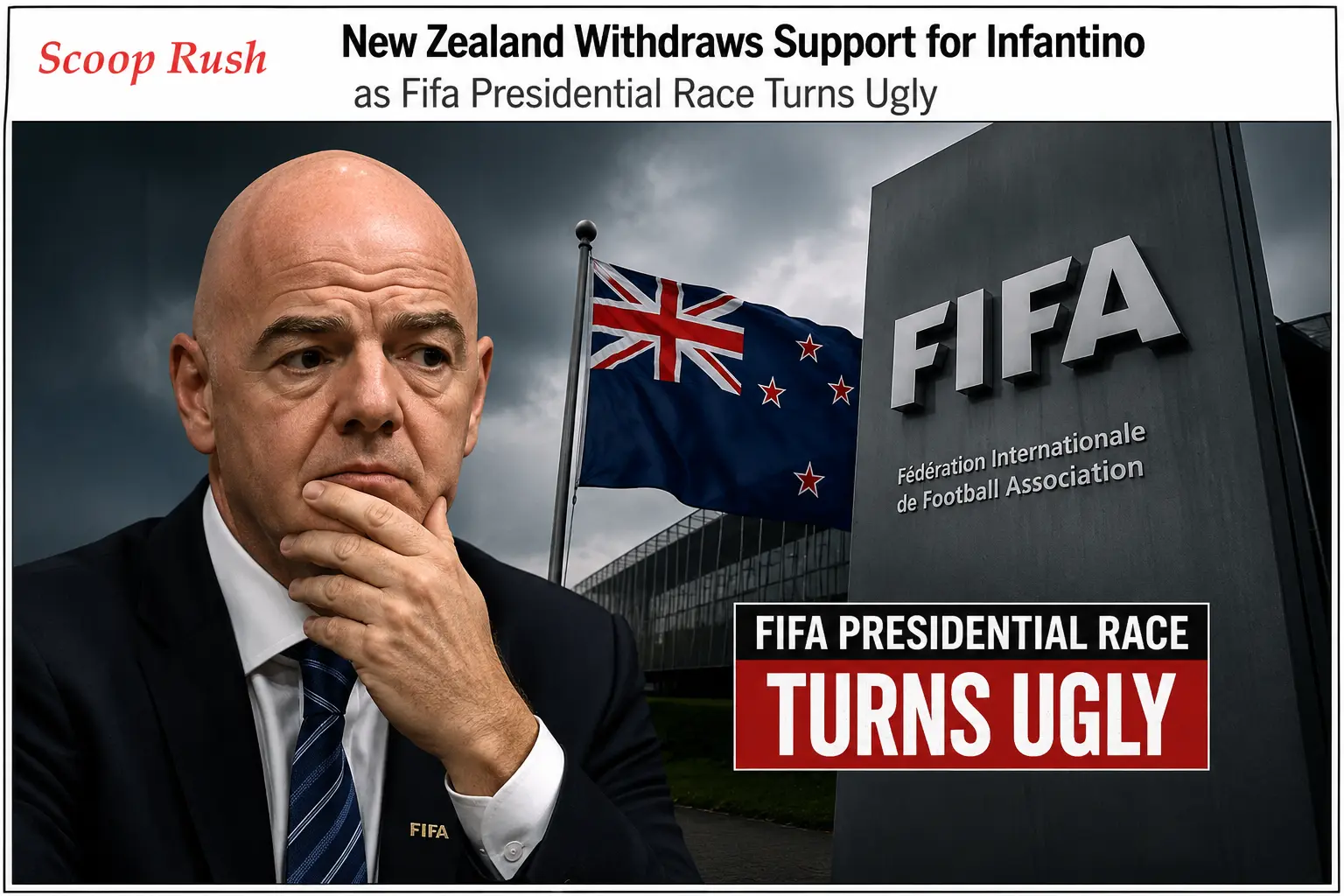
New Zealand Withdraws Support for Infantino in a Bold Break From Oceania
What happens when a national football body decides it can no longer stand behind the most powerful man in world football? New Zealand just answered that question. New Zealand Withdraws Support for Infantino, breaking ranks with the Oceania Football Confederation (OFC) and rejecting Gianni Infantino’s bid for a fourth term as Fifa president. The move adds real weight to a growing rebellion inside football’s governing body. It also signals that cracks in Infantino’s coalition now reach far beyond Europe.
New Zealand’s decision matters because it is not an isolated protest. It joins a widening list of confederations and national associations that have grown uneasy with how Infantino runs Fifa. The unease centres on a controversial plan involving the World Cup’s commercial future. For fans, administrators, and anyone who follows football politics, this story is a reminder that the World Cup is also big business, and that trust between Fifa and its member nations has limits.
Why New Zealand Withdraws Support for Infantino’s Re-Election
New Zealand Football (NZF) has become the latest national body to reject Infantino’s re-election bid. The decision breaks from the official position of the OFC, the regional confederation that represents New Zealand and ten other Pacific nations. That split matters. Regional confederations usually present a united front at Fifa Congress. So when a member breaks away publicly, it counts as a clear act of defiance.
NZF did not stop at withdrawing support. The organisation is also calling for an independent review into how Fifa developed the Fifa Forward Enterprise Scheme, known as FFE. This scheme sits at the centre of the controversy that has pushed several football bodies away from Infantino in recent weeks.
NZF explained its reasoning in a statement. The association said Fifa’s recent decisions had damaged trust. They had also increased division within international football. NZF argued that Fifa needs an independent review to restore confidence in how the game is governed. The statement added something else too. This moment gives all Fifa member associations a chance to push for stronger governance, accountability, and transparency.
NZF’s Chief Executive Explains the Infantino Support Withdrawal
NZF chief executive Andrew Pragnell spoke publicly about the decision. He explained why the association pushed for an outside review rather than an internal one. He wanted to avoid a situation where Fifa carried out what he called a sort of in-house quick washover of the issue. Pragnell noted that other confederations have also called for an independent review. He believes it will help rebuild lost trust.
His comment captures the mood among several Fifa member nations right now. Many want accountability that goes beyond Fifa investigating itself.
The World Cup Deal That Sparked the Infantino Backlash
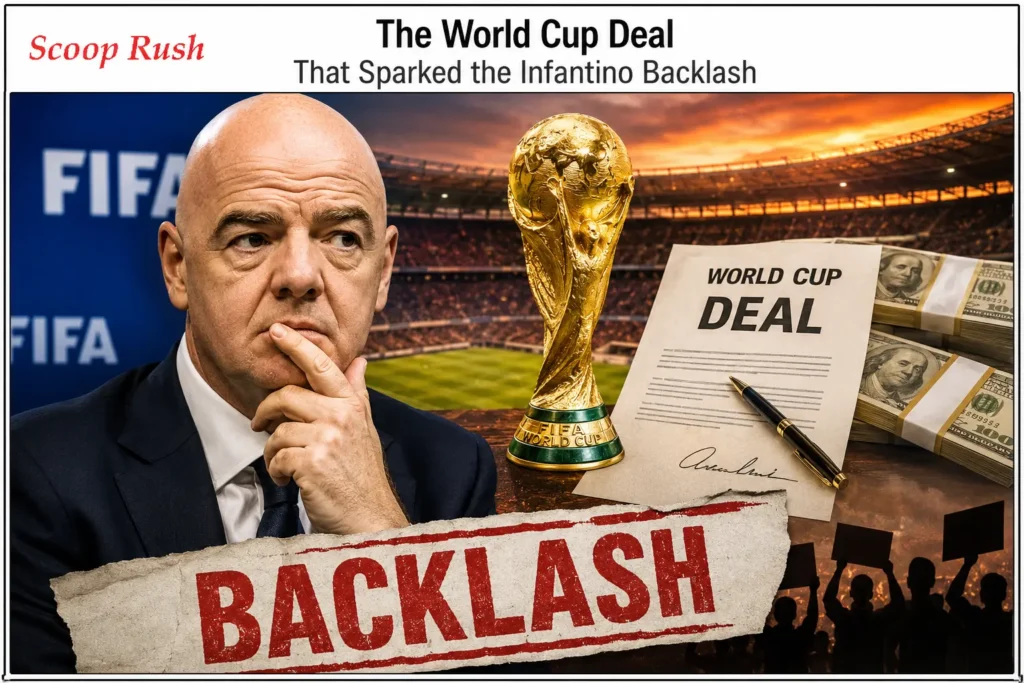
A plan to sell 20% of the World Cup’s commercial rights to private investors sits at the heart of this dispute. Fifa eventually abandoned the proposal. But the damage was already done. It hurt Infantino’s standing among some of football’s most powerful regional bodies.
Three major confederations have already withdrawn their support for Infantino over this issue. Uefa, European football’s governing body, stepped back first. The Asian Football Confederation followed. So did Concacaf, which represents North and Central America and the Caribbean. Losing three confederations at once is a serious blow for any Fifa president seeking re-election. That is why individual withdrawals like New Zealand’s are drawing so much attention.
National Associations Join the Push Against Infantino
Several national associations have also broken from their confederations to publicly reject Infantino’s bid. England, Wales, the Republic of Ireland, and Northern Ireland have all confirmed they will not support his re-election. Norway has done the same. These are not minor footballing nations, and their combined refusal adds real political pressure ahead of the vote.
Who Still Backs Infantino Despite the Growing Resistance
Infantino has not lost every ally. The Confederation of African Football and the South American governing body, Conmebol, have both confirmed their support for a fourth presidential term. That backing will prove crucial. Infantino needs 106 votes to win at the Fifa Congress in March.
Support within Concacaf is not entirely uniform, either. While the confederation as a whole has withdrawn its backing, some individual members have gone their own way. Mexico, Grenada, and St Kitts and Nevis have all confirmed they will support Infantino, despite their regional body’s official stance against him. Argentina, meanwhile, has aligned itself with Conmebol and continues to back the Fifa president.
This patchwork of support and opposition shows how fractured Fifa’s political landscape has become. Confederations no longer vote as single blocs, and national associations increasingly make their own decisions in public.
New Zealand’s Unique Position Inside the OFC
New Zealand’s decision carries extra weight because of its standing within the OFC. Of the confederation’s 11 member nations, New Zealand was the only one to qualify for the 2026 Fifa World Cup. That makes it, in practical terms, the most prominent footballing nation in the region. Its decision to break from the OFC’s stance sends a strong message.
Not every Pacific nation agrees with New Zealand’s position, however. New Caledonia has reaffirmed its support for Infantino. Even within the same small confederation, opinions on his leadership remain divided.
How the OFC Responded to Its Own Member’s Revolt
The OFC has taken a more cautious approach than New Zealand. Rather than declaring outright support or opposition, the confederation issued a statement welcoming Fifa’s decision to withdraw the FFE proposal. It also welcomed Fifa’s commitment to review the issues surrounding the project.
The OFC’s statement acknowledged the progress Oceania football has made over the last decade under Fifa’s leadership. At the same time, the confederation encouraged Fifa to use the upcoming review to identify and implement any necessary changes.
This measured tone contrasts with NZF’s more direct call for independent scrutiny. It highlights a broader tension in football politics today. Some organisations want to keep working constructively with Fifa’s existing leadership, while others believe real change requires outside oversight.
What the Infantino Support Fallout Means for the Fifa Congress
All of this sets the stage for a tense vote at the Fifa Congress in March. Infantino needs 106 votes to secure a fourth term, and the confederations that once formed reliable blocs of support can no longer guarantee they will vote together.
Uefa, the AFC, and Concacaf have all withdrawn official backing. National associations including England, Wales, Norway, and both Irish federations have made their opposition public. As a result, Infantino’s path to re-election looks far more complicated than it did a year ago. However, continued support from Caf and Conmebol, along with pockets of loyalty inside Concacaf, means the outcome remains far from settled.
For football fans, this may look like distant boardroom politics. Yet these decisions shape how Fifa runs the World Cup, who profits from it, and how transparently the sport operates. The aborted plan to sell a stake in the World Cup’s commercial rights touched a nerve. It raised questions about who truly controls the tournament’s future. As a result, national federations now demand more say. They want more accountability before they hand their support back to Infantino.
Key Takeaways
New Zealand Football has broken from the Oceania Football Confederation to withdraw its support for Gianni Infantino’s re-election as Fifa president. The association is also demanding an independent review of the Fifa Forward Enterprise Scheme, arguing that recent Fifa decisions have damaged trust across international football.
This move follows similar withdrawals from Uefa, the AFC, and Concacaf, along with individual nations including England, Wales, Norway, and the Republic and Northern Ireland football associations. Meanwhile, Caf and Conmebol continue to back Infantino, and pockets of support remain within Concacaf itself. New Zealand’s position stands out because it is the only OFC nation competing at the 2026 World Cup. That gives its stance extra weight, even though fellow OFC member New Caledonia has taken the opposite view.
With the Fifa Congress vote approaching in March, the fight over Infantino’s political future is far from over. What began as controversy over a single commercial proposal has grown into a much larger conversation about governance, trust, and who ultimately controls the direction of world football.
Frequently Asked Questions
1. Why did New Zealand withdraw support for Gianni Infantino?
New Zealand Football withdrew its backing after concluding that recent Fifa decisions had damaged trust and increased division in international football. The association is also calling for an independent review of the Fifa Forward Enterprise Scheme.
2. How many votes does Infantino need to win a fourth term as Fifa president?
Infantino needs 106 votes at the Fifa Congress in March to secure a fourth term.
3. Which confederations have withdrawn support for Infantino?
Uefa, the Asian Football Confederation, and Concacaf have all withdrawn official support. New Zealand Football has broken from the Oceania Football Confederation’s stance too, though the OFC itself has not formally declared a position either way.
4. Which countries still support Infantino’s re-election?
The Confederation of African Football and Conmebol continue to back Infantino. Within Concacaf, Mexico, Grenada, and St Kitts and Nevis support him despite their confederation’s official withdrawal, and Argentina has aligned with Conmebol in backing his bid.
5. What was the World Cup proposal that caused the controversy?
Infantino proposed selling 20% of the World Cup’s commercial rights to private investors. Fifa later abandoned the plan, but it triggered widespread criticism and led several confederations and national associations to withdraw their support for his re-election.

