
A Football World Divided Over One Man’s Future
Can one failed business deal really shake the foundations of world football? That question sits at the heart of the Infantino Fifa president crisis, a dispute now splitting confederations, angering major nations, and putting the 2026 World Cup under a cloud of uncertainty.
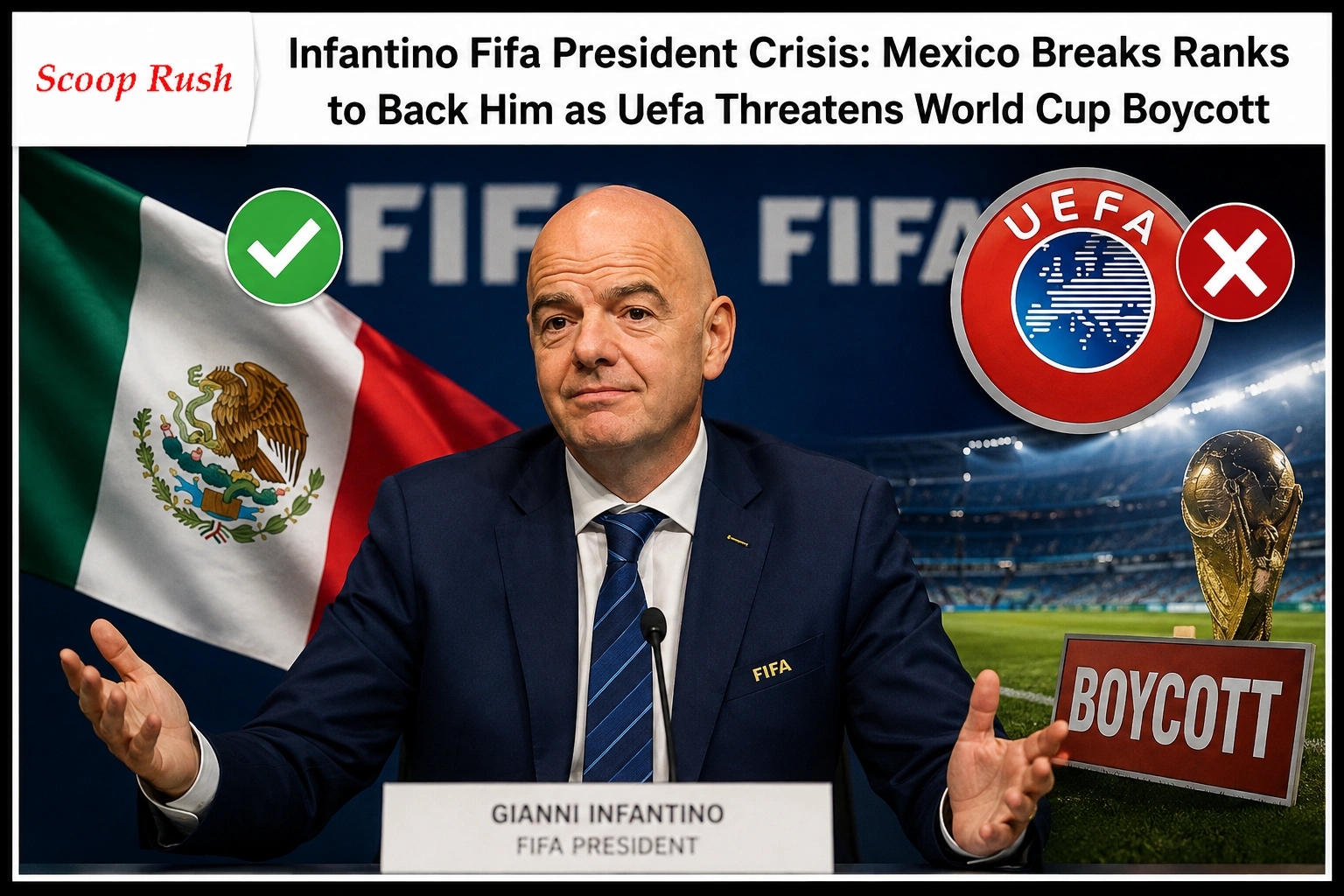
In a dramatic twist, Mexico has broken away from its own regional body, Concacaf, to publicly back Gianni Infantino. This move deepens the Infantino Fifa president crisis at a moment when the Fifa president is fighting to keep his job. Meanwhile, other associations are lining up against him, and Uefa has warned that a boycott of the 2026 World Cup remains firmly on the table.
This story matters to every football fan. The World Cup is the sport’s biggest event, and a leadership crisis at Fifa, just months before co-hosts United States, Canada, and Mexico welcome the world, could overshadow the tournament before a single ball is kicked.
What Sparked the Infantino Fifa President Crisis
The dispute began after Infantino pushed forward plans to sell stakes in the World Cup to private investors through a subsidiary called the Fifa Forward Enterprise, or FFE. Infantino reportedly offered every football association $40 million if they backed the plan, which would have opened Fifa’s flagship tournaments, including the men’s and women’s World Cups, to outside investment.
The backlash arrived quickly. Several confederations and national associations felt blindsided by how the plan surfaced, and they argued that Fifa pushed it through without proper consultation. Uefa did not hold back. European football’s governing body called the proposal a shabby, back room, and opaque deal, and it said it had lost all confidence in Infantino’s leadership.
Faced with mounting resistance, Infantino eventually withdrew the FFE proposal. However, for many critics, the damage had already spread. The way Fifa introduced the plan, rather than the plan itself, became the real issue driving the Infantino Fifa president crisis forward.
Concacaf Demands a Reckoning
Concacaf, which governs football across North and Central America and the Caribbean, did not soften its message. The confederation called for a comprehensive reckoning of Infantino’s presidency, arguing that the FFE episode reflected a recurring pattern of poor governance rather than a single mistake.
Interestingly, Concacaf stopped short of declaring it had lost confidence in Infantino outright, a line Uefa had already crossed. This distinction matters, because it shows that even Infantino’s critics disagree on how far to push the fight.
Mexico Stands Apart From Concacaf
Here the story takes an unexpected turn. Despite Concacaf’s tough stance, the Mexican Football Federation chose its own path. In an official statement, the FMF confirmed its support for Infantino, saying his leadership continues to strengthen football’s institutions and development.
The Mexican federation also made clear that it would reject any process to remove Infantino unless it followed proper Fifa procedure, involving a vote from all 211 member associations. This carries real weight, since Mexico co-hosts the 2026 World Cup alongside the United States and Canada.
Consequently, Mexico’s decision to publicly support Infantino, while its own regional confederation calls for a reckoning, shows just how deeply the Infantino Fifa president crisis has divided football’s governing bodies. It also suggests that host nations may want stability at Fifa’s top, especially with the tournament fast approaching.
Conmebol and Argentina Add Their Voice
Mexico stands with company. Conmebol, South America’s governing body, echoed similar views, insisting that any move to remove the Fifa president must follow proper institutional channels rather than a decision made unilaterally by a handful of associations.
At the same time, Conmebol raised some concern, noting unease about repeated unilateral actions taken without dialogue. This suggests that even Infantino’s supporters want Fifa to improve how it communicates and makes decisions internally.
Argentina, runners-up at the 2026 World Cup, praised Infantino directly. The Argentine football association commended him for owning his mistakes and apologising, and it described his decade in charge as focused on developing football worldwide through stable, transparent governance.
Why Uefa Refuses to Back Down
While several confederations rally around Infantino, Uefa remains firmly opposed. Even after Infantino scrapped the FFE plan, Uefa said its conditions for restoring confidence had not been met. The European body wants firm assurances that similar attempts to reshape the World Cup without consultation will never happen again.
Uefa’s frustration extends beyond the FFE proposal itself. Its statement made clear that support from Fifa staff, people whose careers depend on Infantino’s favour, changes nothing. This pointed remark suggests Uefa views some recent expressions of support as self-serving rather than genuine backing from independent stakeholders.
National Federations Turn Away From Infantino
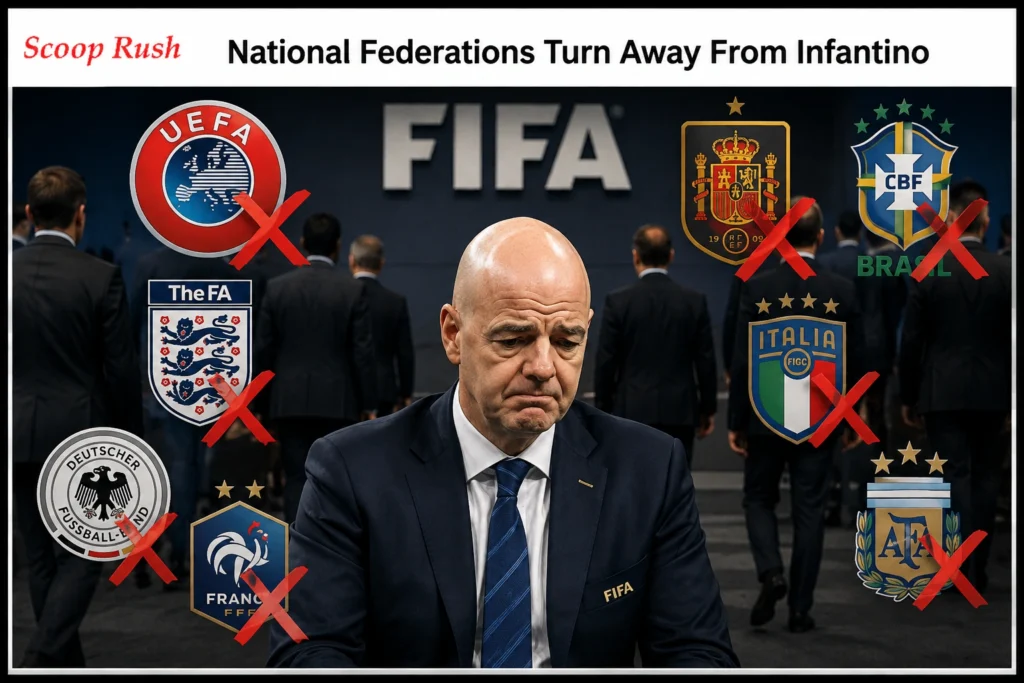
The rebellion against Infantino extends beyond entire confederations. Individual national associations have also started distancing themselves. The English Football Association sent a formal letter withdrawing its support for Infantino. Wales, Albania, and Croatia have similarly turned their backs on him.
This growing list of national federations adds real weight to Uefa’s position within the wider Infantino Fifa president crisis. It shows that opposition to his leadership goes beyond confederation politics and reflects genuine concern among individual football nations across Europe.
Where Other Confederations Stand
Not every confederation opposes Infantino. The Confederation of African Football, or CAF, unanimously backs him, giving him a solid base of support from the African continent. This backing carries weight, since CAF represents dozens of national associations.
The Asian Football Confederation took a more cautious stance earlier in the dispute. Before Infantino withdrew his proposal, the AFC said it stood in solidarity with Uefa and Concacaf against the plans. Whether the AFC’s position shifts now that Fifa scrapped the proposal remains unclear.
As a result, the football world currently splits into three broad camps. First, strong supporters like CAF, Conmebol, and now Mexico backed Infantino. Second, Uefa leads firm opposition. Third, Concacaf criticises Infantino heavily but stops short of demanding his removal outright.
Could Uefa Actually Boycott the World Cup
Perhaps the most alarming twist in the Infantino Fifa president crisis is the possibility of a European boycott of the 2026 World Cup. Uefa has stated clearly that a boycott may still go ahead, despite the withdrawal of the FFE plan. This threat is not small. A Uefa boycott would mean some of football’s biggest nations, and biggest stars, could miss the tournament entirely.
However, it helps to remember that a boycott of this scale has never happened in modern World Cup history. Therefore, while the threat sounds serious, many observers will watch closely to see whether Uefa’s tough talk turns into concrete action, or whether further negotiation eases tensions before kickoff.
Fifa’s Response So Far
During a meeting of Fifa executives held in Morocco, the organisation acknowledged that mistakes occurred regarding the FFE plan. Fifa admitted it never intended to make the Council and member associations feel excluded from the process, and it conceded that the situation should have unfolded differently.
Despite this admission, Uefa’s response stayed blunt. The organisation reiterated that its lack of confidence in Infantino remains unchanged, regardless of any apology or acknowledgment from Fifa’s side.
What This Means for the 2026 World Cup
With the tournament fast approaching, this leadership dispute could not arrive at a worse time for Fifa. Co-hosts Mexico, the United States, and Canada will want stability and unity heading into the World Cup, not infighting among the confederations responsible for sending teams to the tournament.
Meanwhile, fans keep wondering how this dispute will play out. Will Uefa follow through on its boycott threat? Will more national associations abandon Infantino? Or will the Fifa president smooth things over before kickoff? These questions remain unanswered for now, but the coming weeks will likely bring fresh developments in the Infantino Fifa president crisis.
Key Takeaways
The Infantino Fifa president crisis has exposed deep divisions across world football. Mexico’s decision to back Infantino, against the wishes of its own confederation Concacaf, shows how political this dispute has become. While CAF, Conmebol, and Mexico continue to support Infantino, Uefa remains firmly opposed and keeps the possibility of a World Cup boycott on the table.
Ultimately, the outcome of this crisis will shape not just Infantino’s future but the way Fifa governs football for years to come. As the 2026 World Cup draws closer, all eyes will stay fixed on how this dispute unfolds.
Frequently Asked Questions
1. Why are football associations calling for Gianni Infantino to resign?
The Infantino Fifa president crisis stems from his now-withdrawn plan to sell World Cup stakes to private investors through the Fifa Forward Enterprise. Several associations felt Fifa pushed the plan through without proper consultation, which fuelled widespread criticism of his leadership.
2. Why is Mexico supporting Infantino when Concacaf opposes him?
Mexico’s football federation issued its own statement backing Infantino, breaking from Concacaf’s call for a reckoning. As a co-host of the 2026 World Cup, Mexico appears to favour stability at Fifa’s top ahead of the tournament.
3. Could Uefa really boycott the 2026 World Cup?
Uefa says a boycott remains possible, since its conditions for restoring confidence in Infantino have not been met. However, a boycott of this scale would be unprecedented in modern World Cup history.
4. Which football confederations support Gianni Infantino?
The Confederation of African Football (CAF) backs Infantino unanimously, while Conmebol and Mexico also support him, provided any leadership decision follows Fifa’s official voting process involving all 211 member associations.
5. Which countries have withdrawn their support for Infantino?
England, Wales, Albania, and Croatia rank among the national football associations that formally withdrew support for Infantino, joining Uefa’s broader opposition to his leadership.

