
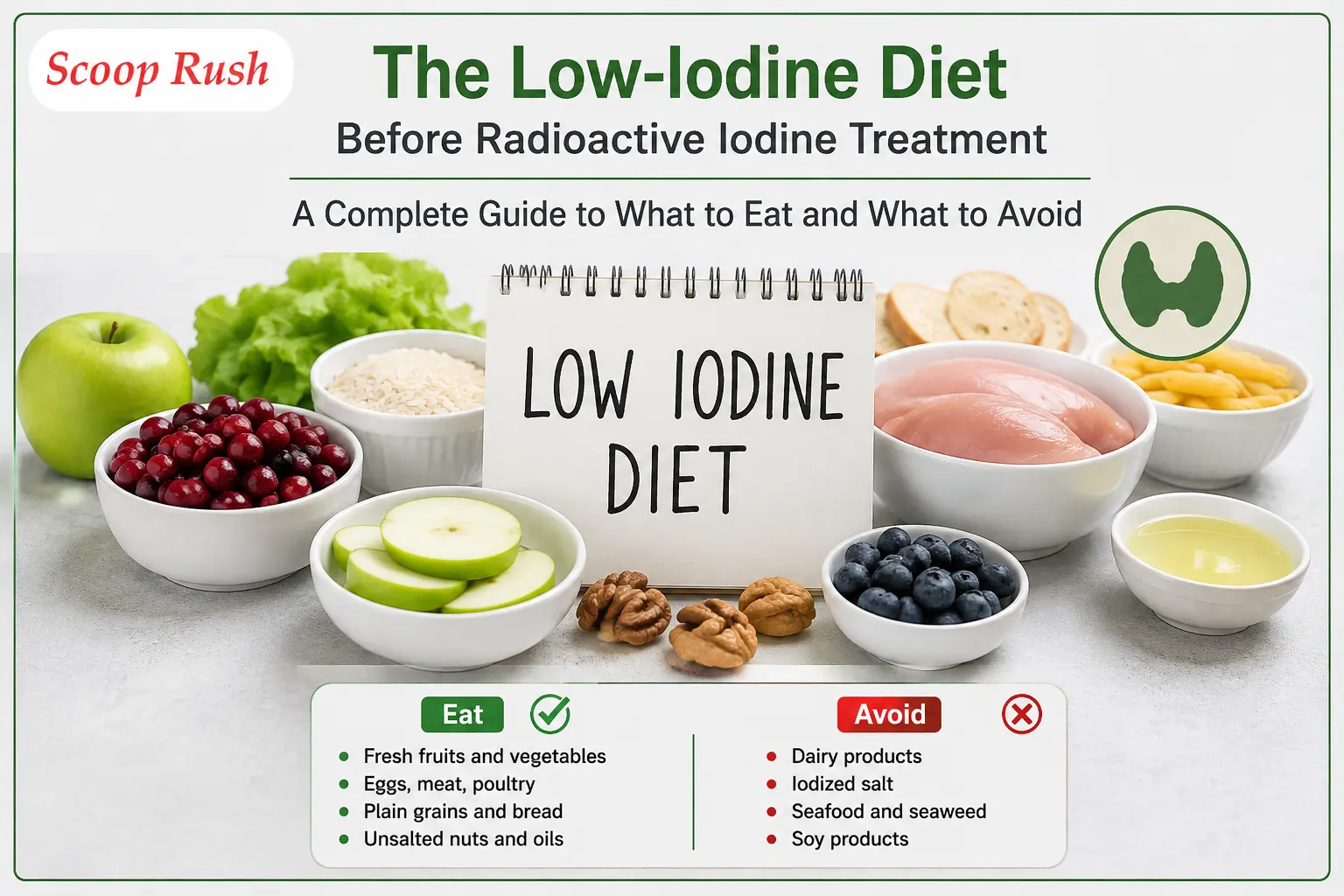
If your doctor has told you to follow a low-iodine diet before radioactive iodine treatment, it is normal to feel overwhelmed. One minute you are absorbing a thyroid cancer diagnosis, and the next you are handed a list of foods to avoid. On top of that, you may already be dealing with fatigue from stopping your thyroid medication.
The good news is that this diet is temporary. It is restrictive, but manageable. With a little planning, thousands of patients get through it successfully every year.
Why Doctors Recommend a Low-Iodine Diet
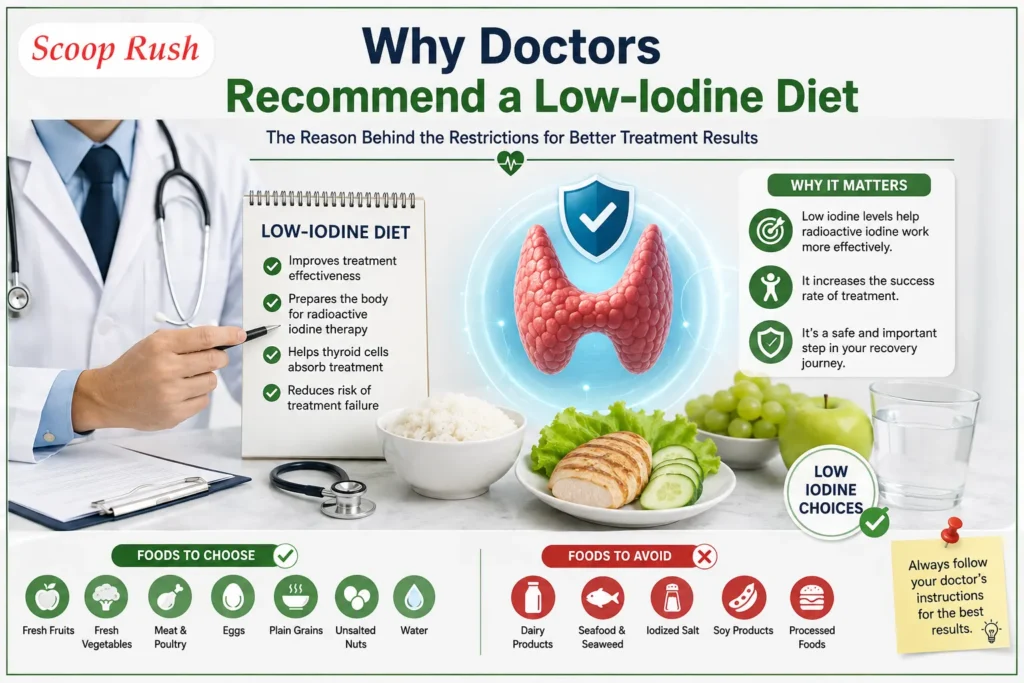
Your thyroid gland is essentially the only part of the body that actively absorbs iodine. It uses this mineral to make hormones that control metabolism, heart rate, and energy. Radioactive iodine treatment works by taking advantage of this natural behavior.
When your thyroid tissue is already full of iodine from food, it has little “room” left to absorb the radioactive form used in treatment. Cutting back on dietary iodine for a week or two beforehand makes the tissue hungrier for iodine. This helps it absorb the radioactive dose more fully when treatment day arrives.
Doctors note that the diet makes a meaningful, but not enormous, difference on its own. It works best alongside the rest of your treatment plan, including a temporary pause in thyroid hormone pills like levothyroxine.
How Long Should You Follow It?
Most care teams recommend following the diet for one to two weeks before treatment, and sometimes a day or two afterward. Exact timing depends on your treatment center and personal medical history.
Always confirm the details with your own doctor rather than relying only on general guidelines. If a dietitian is available on your team, a short consultation can help tailor the list to your lifestyle and cuisine.
If this is your first time following a short-term medical diet, it may help to know you’re not alone many patients also follow similarly structured plans like a colonoscopy diet or a clear liquid diet before other procedures, so the idea of temporarily eating around a strict list isn’t unfamiliar territory for most doctors’ offices.
Foods to Avoid on the Low-Iodine Diet
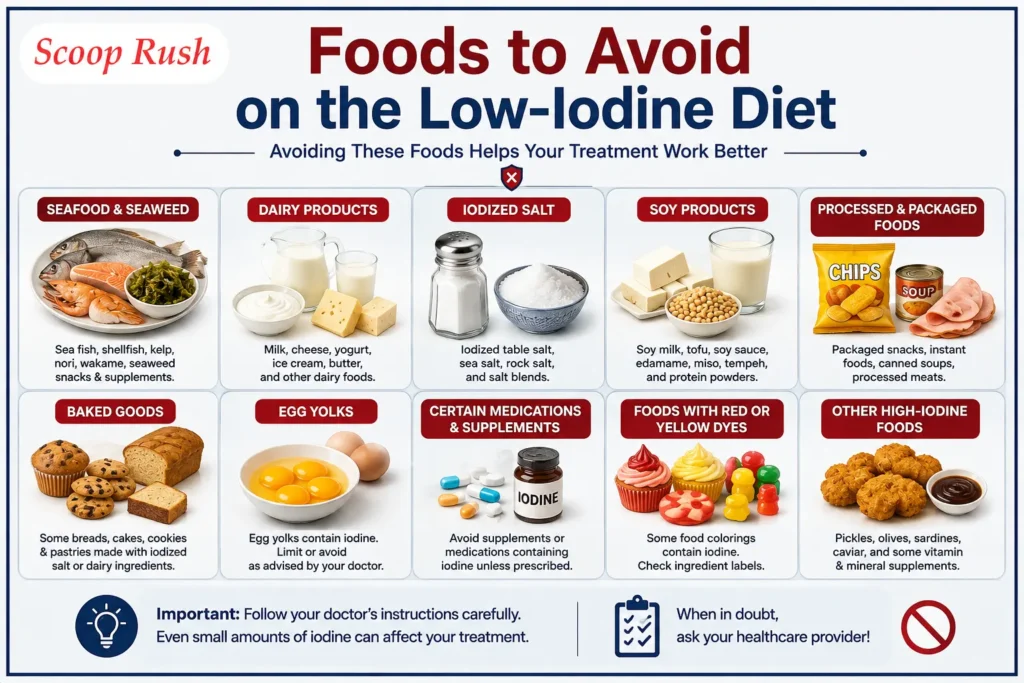
Iodine hides in more everyday foods than most people expect. Here is a quick-reference table of the main categories to avoid and why.
| Food Category | Why to Avoid | Common Examples |
| Dairy products | Iodine-based farm sanitizers and feed additives raise iodine levels | Milk, cheese, yogurt, butter, ice cream, milk chocolate |
| Iodized salt & processed foods | Iodized salt is added for public health; hard to detect once used in manufacturing | Table salt, canned soups, chips, spice blends, restaurant food |
| Seafood & sea vegetables | Ocean life naturally concentrates iodine | Fish, shellfish, sushi, seaweed, kelp, nori, fish sauce |
| Eggs (especially yolks) | Yolks are naturally iodine-rich | Whole eggs, baked goods made with whole eggs |
| Soy products | Naturally high in iodine | Tofu, soy milk, edamame, soy sauce |
| Bread & baked goods | Commercial dough conditioners often contain iodine | Most store-bought bread, pastries |
| Red dye #3 | Contains iodine (erythrosine) | Some candies, maraschino cherries, pink/red baked goods |
| Supplements | Many multivitamins add iodine | Prenatal vitamins, iodine-fortified supplements |
A few extra points worth keeping in mind:
- Bread labels are not always reliable a 2004 study found actual iodine content didn’t always match what was printed on the package.
- If a label mentions “salt” without specifying non-iodized, treat it as a risk.
- Ask your care team whether to pause your usual supplements entirely during this window this matters even more if you regularly take a multivitamin, since taking too many vitamins carries its own risks worth being aware of beyond just iodine content.
Foods You Can Enjoy
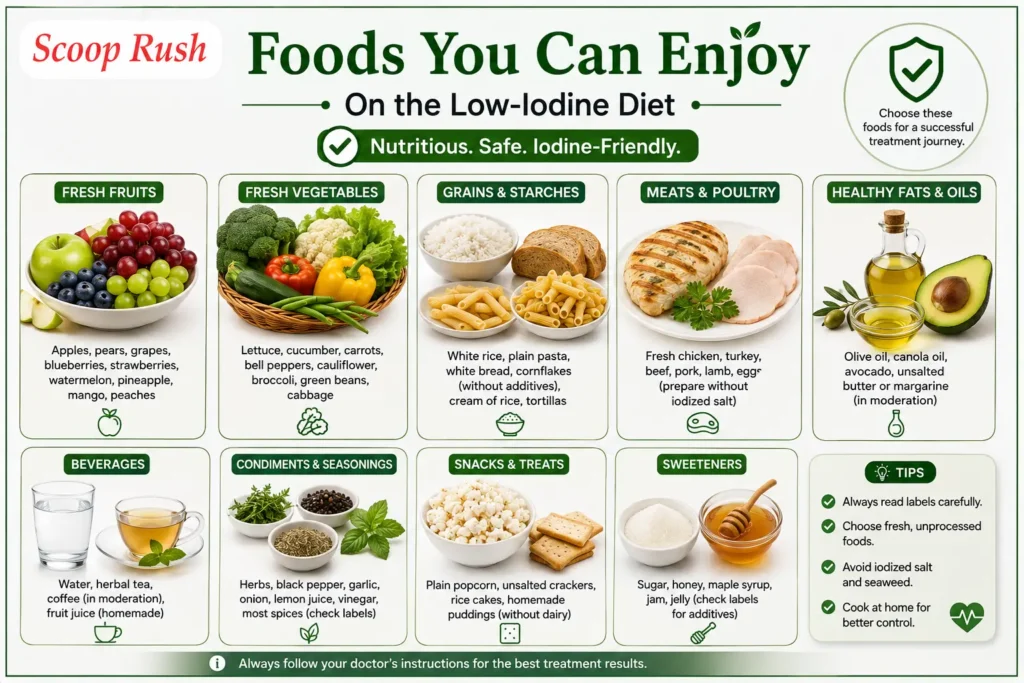
Once you get past the “avoid” list, there is still a wide range of satisfying meals available. The key is home cooking, fresh ingredients, and iodine-free substitutes like non-dairy spreads and plant milk.
Breakfast Ideas
- Toast with non-dairy spread and jam, honey, or marmite
- Porridge made with water or an iodine-free milk alternative, topped with fruit or honey
- Fresh fruit or fruit salad
- Cooked breakfast (no eggs): bacon, sausages, tomatoes, mushrooms, baked beans, toast
If you’d like more inspiration beyond the basics, several gluten-free breakfast ideas also happen to work well here, since many of them are naturally dairy- and egg-light to begin with.
Lunch Ideas
- Sandwich with non-dairy spread, filled with ham, chicken, or bacon and salad
- Salad with cucumber, lettuce, tomato, avocado, sweetcorn, and peas, topped with grilled chicken
- Jacket potato with baked beans or homemade chilli
- Homemade soup with fresh bread
- Couscous with chicken, chickpeas, or lean meat and roasted vegetables
Dinner Ideas
- Spaghetti bolognese
- Pork or lamb chops with potatoes and vegetables
- Steak with roasted mushrooms and grilled tomatoes
- Roasted meat, vegetables, and potatoes with gravy
- Chicken or vegetable stir-fry with rice
- Slow-cooked stew with potatoes, carrots, and swede
- Chilli con carne with rice and peas
- Risotto with chicken, butternut squash, peas, and sweetcorn
- Homemade curry dishes
Snacks & Desserts
- Fresh or stewed fruit
- Jelly, sorbet, or meringue
- Dairy-free custard or cream alternative
- Vegetable crudités with guacamole or tomato salsa
- Nuts (up to about 30g/1oz per day)
- Popcorn, potato crisps, or rice cakes
- Dark chocolate (high cocoa, no milk solids)
If you’re used to reaching for something more filling between meals, a few keto-friendly snack ideas overlap nicely with the low-iodine list, since both diets favor whole, unprocessed ingredients over packaged snack foods.
Practical Tips to Make the Diet Easier
Preparation is the single biggest factor in how smooth this diet feels. Cooking a batch of compliant meals in advance and freezing them means dinner is sorted even on low-energy days.
Reading labels needs to become a habit. If anything mentions iodine, iodate, or unspecified “salt,” it is safer to skip it.
Processed and canned foods are best avoided altogether, since there is usually no way to know if iodized salt was used. Spice blends deserve the same caution, as pre-mixed seasonings often contain iodized salt too.
Cooking from scratch puts you back in control of every ingredient. Many patients find this period becomes a good opportunity to pick up simple new recipes worth keeping long after treatment ends.
Sample One-Day Meal Plan
Sometimes it helps to see the diet laid out as an actual day of eating, rather than a long list of separate ideas. Here is one example of how a full day might look while following the low-iodine diet.
| Meal | What to Eat |
| Breakfast | Porridge made with iodine-free plant milk, topped with berries and a drizzle of honey |
| Mid-Morning Snack | Apple slices with a small handful of unsalted nuts |
| Lunch | Grilled chicken salad with cucumber, tomato, avocado, and olive oil dressing |
| Afternoon Snack | Rice cakes with homemade guacamole |
| Dinner | Beef stir-fry with rice, peppers, and broccoli, cooked with non-iodized salt |
| Dessert | Dairy-free sorbet or a square of dark chocolate |
This is only one example, and you can rotate in any of the breakfast, lunch, or dinner ideas from earlier in this guide to build a full week of varied meals. Repeating a small set of trusted, compliant dishes is completely fine and actually makes shopping and prep much simpler.
A Simple Low-Iodine Grocery List
Walking into the supermarket without a plan is where most low-iodine diet slip-ups happen. Keeping a short, trusted shopping list on your phone can take a lot of the guesswork out of each trip.
- Fresh meat, poultry, and unprocessed cuts (avoid pre-marinated or cured options)
- Fresh or frozen vegetables with no added sauce or seasoning
- Fresh or tinned fruit in natural juice, not syrup
- Rice, pasta, and plain oats
- Non-iodized or kosher salt
- Olive oil, vinegar, and fresh herbs for flavor
- Non-dairy spread and plant-based milk alternatives
- Unsalted or lightly salted nuts, popcorn, and rice cakes
- Homemade or specifically labeled non-iodized bread
Sticking close to the outer edges of the grocery store, where fresh produce, meat, and unprocessed staples are usually kept, naturally keeps you away from most of the packaged products that carry hidden iodine risks.
Eating Out and Social Occasions
Dining out is one of the trickiest parts of the low-iodine diet, simply because you cannot see what has gone into a restaurant dish or ask a kitchen to guarantee an ingredient wasn’t touched by iodized salt. Many patients choose to avoid restaurants altogether for the one to two weeks they are following the diet, and instead lean on the freezer meals they prepared in advance.
If a work lunch, family gathering, or other social event is unavoidable, a few strategies can help. Choosing simply grilled meat with a plain side salad, dressed only with oil and vinegar you bring yourself, is usually the safest order. Asking the kitchen directly whether a dish contains dairy, eggs, or seafood, and explaining briefly that you are following a strict medical diet, tends to get a more careful answer than a vague question about “healthy options.”
It also helps to eat something at home beforehand, so you are not arriving hungry and tempted to compromise on an uncertain dish. Most friends and family are understanding once they know the diet is short-term and tied to your treatment, and many are happy to help by hosting a low-iodine-friendly meal instead.
Coping With Fatigue While Following the Diet
Many patients are managing two challenges at once during this period: the low-iodine diet itself, and the fatigue, low mood, or brain fog that can come from pausing thyroid hormone medication in preparation for treatment. It is worth acknowledging that this combination is genuinely tiring, and giving yourself permission to keep things simple during this stretch.
Batch cooking before your restriction period begins is the single most effective way to protect your energy once symptoms set in. A weekend spent preparing and freezing a handful of go-to meals means that on the days you feel worst, dinner requires nothing more than reheating.
It can also help to keep a small list of “emergency” compliant snacks within easy reach, such as rice cakes, fresh fruit, or unsalted nuts, so that low energy never becomes an excuse to reach for something that is not diet-safe simply because it was convenient. Resting when you need to, and asking family or friends to help with cooking or errands during this window, is a reasonable and often necessary part of getting through treatment prep smoothly.
On days when you have a bit more energy, gentle movement can actually help rather than hurt research on the benefits of a 5-minute walk every hour suggests that short, low-effort activity breaks can ease fatigue and improve mood without being physically demanding.
How the Low-Iodine Diet Compares to Other Restrictive Diets
If you’ve followed a restrictive diet before for a different medical reason, some of this may already feel familiar. Plans like a bland diet, a low-sodium diet for Meniere’s disease, or a low-oxalate diet all follow the same basic principle: cut back sharply on one specific compound for a defined period, then return to normal eating once the medical goal has been reached.
Recognizing that pattern can make the low-iodine diet feel less like an isolated, confusing challenge and more like a familiar type of short-term adjustment your body and routine can handle.
Talk to Your Care Team First
Every patient’s situation is a little different, and this guide is a starting point rather than a replacement for your doctor’s instructions. Some care teams allow small exceptions that others do not.
If you have food allergies, follow a vegetarian diet, or find any part of this list unclear, ask your treatment team for a referral to a registered dietitian experienced with radioactive iodine patients.
The Bottom Line
A week or two of low-iodine eating can feel daunting layered on top of a cancer diagnosis. But once you understand the core categories to avoid dairy, iodized salt, seafood, egg yolks, soy, and most bread it becomes far more manageable.
Build meals around fresh meat, vegetables, fruit, rice, and homemade dishes, lean on batch-cooked freezer meals for tougher days, and stay in close contact with your care team throughout.
FAQs
Can I use any salt at all?
Yes. Plain kosher salt or sea salt without iodine added is fine to use freely in your cooking; it is only iodized salt that needs to be avoided.
Is a small amount of dairy or egg really a problem?
The diet is about lowering your overall iodine load rather than achieving a zero-iodine intake, which isn’t realistic. That said, it’s best to avoid dairy and egg yolks as consistently as you can during the restriction period, since they are some of the most concentrated sources.
What if I accidentally eat something on the avoid list?
Try not to worry too much about a single slip. Simply get back on track with your next meal and mention it to your care team if you have concerns, especially if it happened close to your treatment date.
Can I drink coffee or alcohol?
Plain black coffee is generally fine. Alcohol is usually allowed in moderation unless your doctor has told you otherwise, though it’s worth checking mixers and flavored drinks for dairy or other restricted ingredients.

