
Chelsea’s newest partnership is already creating huge excitement among supporters. Morgan Rogers has finally reunited with his close friend Cole Palmer after completing his move from Aston Villa, giving Xabi Alonso two of England’s brightest attacking talents to build around. The challenge now is turning that friendship into one of the Premier League’s most dangerous attacking combinations.
Both players enjoy playing in similar areas of the pitch. However, their different strengths could make them the perfect fit in Alonso’s tactical system. If the new Chelsea manager gets the balance right, Rogers and Palmer could become the driving force behind Chelsea’s attack this season.
Introduction
Chelsea’s signing of Morgan Rogers is an important step in Xabi Alonso’s plans to strengthen Chelsea’s attack. Rogers arrives after impressing in the Premier League, while Cole Palmer has already established himself as one of the team’s key creative players.
Rogers arrives after impressing at Aston Villa, where he developed into one of the Premier League’s most adaptable attacking players under Unai Emery. His performances earned widespread praise for his pace, direct running, and ability to influence matches from several positions.
The move also reunites Rogers with Cole Palmer, his former Manchester City academy teammate and one of his closest friends. Rogers admitted after joining Chelsea that Palmer had been encouraging him to make the move because they had always hoped to play together again.
Now Chelsea supporters are eager to see whether Morgan Rogers and Cole Palmer can become one of the league’s most exciting attacking partnerships under Alonso.
Why Chelsea Signed Morgan Rogers
Chelsea identified Morgan Rogers as a player capable of strengthening several attacking positions.
Unlike many wingers who remain fixed on one side of the pitch, Rogers constantly changes positions throughout matches. His movement makes him difficult to mark and creates additional space for teammates.
At Aston Villa, he usually started from the left side of attack before drifting into central areas where he could combine with teammates or attack defenders directly.
This freedom allowed him to showcase the qualities that attracted Chelsea.
He combines:
- Excellent ball control
- Powerful running
- Physical strength
- Intelligent movement
- Composure in attacking situations
These attributes allow Rogers to contribute in several different ways instead of relying only on goals.
Sometimes he attacks open spaces behind defenders.
At other times, he drops deeper to link attacks before driving forward with possession.
That versatility makes him an ideal fit for modern football.
Morgan Rogers Offers Tactical Flexibility
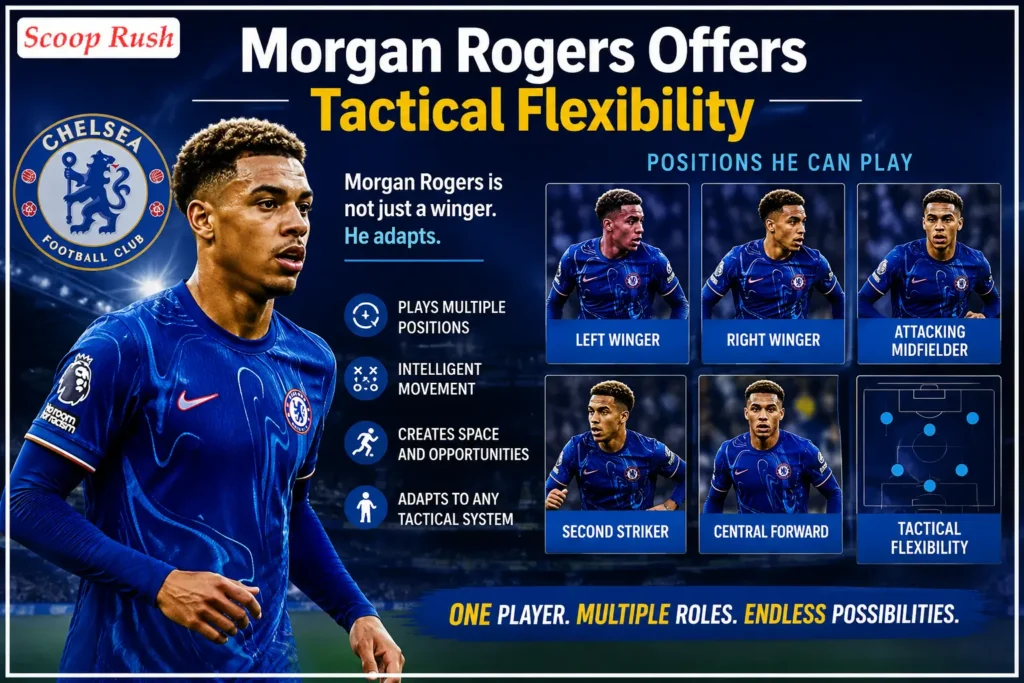
One of Rogers’ greatest strengths is his ability to perform multiple attacking roles.
He can comfortably play as:
- Left winger
- Right winger
- Attacking midfielder
- Second striker
- Central forward during attacking phases
This flexibility gives Chelsea far more tactical options during matches.
Rather than making substitutions, Xabi Alonso can simply rotate players into different positions depending on the opposition.
As a result, Chelsea become much less predictable.
Morgan Rogers and Cole Palmer Could Become Chelsea’s Biggest Strength
One of the most exciting aspects of Rogers’ arrival is his partnership with Cole Palmer.
The two players already understand each other’s game.
They progressed through Manchester City’s academy together and celebrated FA Youth Cup success before their careers took different paths.
Their friendship has remained strong.
After joining Chelsea, Rogers revealed that Palmer regularly called and texted him because both wanted the chance to become teammates once again.
However, this partnership is built on much more than friendship.
Both players possess the technical quality, intelligence, and creativity required to succeed in Alonso’s football.
Different Strengths Create Better Balance
Although both players enjoy attacking central areas, they influence matches differently.
Cole Palmer prefers controlling attacks through intelligent passing and creative decision-making.
Morgan Rogers adds power, pace, and direct running.
That contrast creates natural balance.
While Palmer looks for opportunities to unlock defences with clever passes, Rogers attacks the spaces those passes create.
Instead of competing for possession, they complement one another.
This combination could make Chelsea’s attack far more unpredictable throughout the season.
Why Xabi Alonso’s Tactical Philosophy Suits Both Players
Xabi Alonso has built his reputation on organised possession football. His teams aim to dominate matches through intelligent movement, quick passing, and strong positioning. However, Alonso also understands the importance of adapting against aggressive pressing teams.
One of the biggest strengths of Xabi Alonso’s tactics is positional flexibility. His system allows attacking players to rotate freely while maintaining possession and creating overloads in central areas. These Chelsea tactics suit both Morgan Rogers and Cole Palmer because of their versatility, technical quality, and intelligent movement.
Modern football often becomes a series of one-on-one battles across the pitch. Therefore, attackers who can protect possession, beat defenders, and carry the ball forward have become increasingly valuable. Morgan Rogers possesses all of those qualities. Meanwhile, Cole Palmer provides the creativity needed to connect midfield with attack…
Beating High Pressing Teams
Premier League teams increasingly use aggressive pressing to disrupt build-up play.
Instead of forcing short passes through crowded midfield areas, successful teams often look for players capable of receiving direct passes under pressure.
Morgan Rogers excels in these situations.
His physical strength helps him protect possession.
His acceleration allows Chelsea to attack quickly once space appears.
Consequently, Chelsea gain another important solution against opponents who defend aggressively.
How Cole Palmer Complements Morgan Rogers
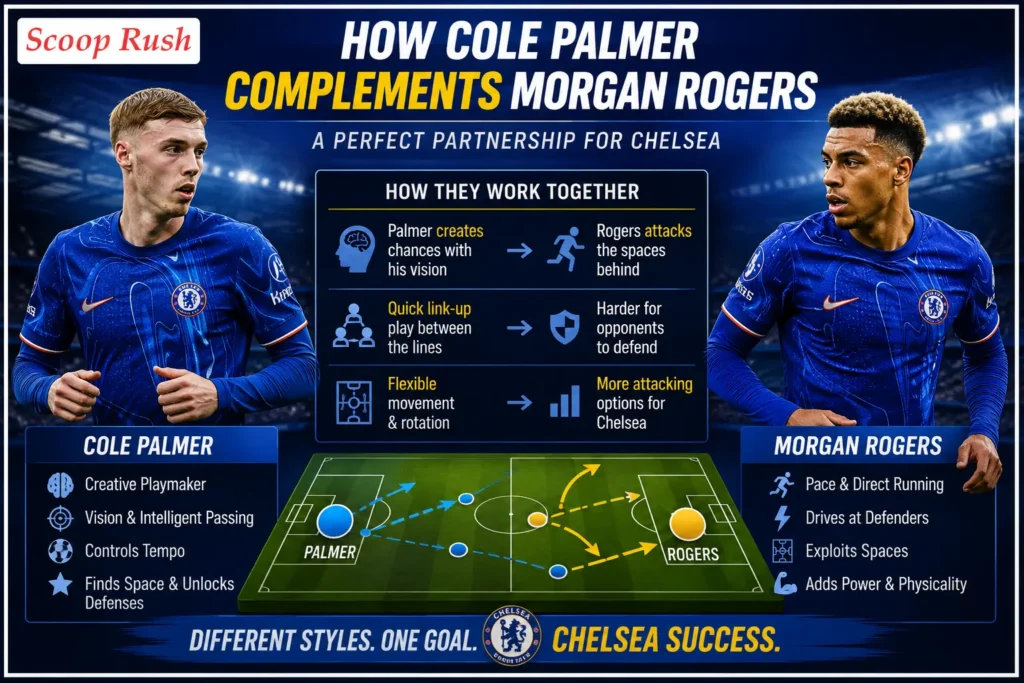
Cole Palmer has already established himself as Chelsea’s creative leader. His vision, technical ability, and composure allow him to control attacks from central areas rather than remaining close to the touchline.
Cole Palmer’s Chelsea career has continued to grow because of his creativity, composure, and ability to influence games in the final third. Playing alongside Morgan Rogers could give Chelsea another attacking dimension under Xabi Alonso, with both players capable of creating and finishing chances.
Instead of relying on pace alone, Palmer creates opportunities through intelligent movement and accurate passing. He constantly searches for spaces between the opposition’s midfield and defence before linking attacks with quick combinations.
Morgan Rogers naturally benefits from this style of play.
While Palmer prefers receiving possession in advanced central areas, Rogers enjoys making powerful runs beyond defenders or driving directly at them with the ball.
This combination creates natural balance.
Rather than occupying identical positions, both players can rotate throughout matches without disrupting Chelsea’s attacking shape.
As a result, defenders are forced to make difficult decisions about who to mark and when to step forward.
Why Their Different Strengths Could Make Chelsea Stronger
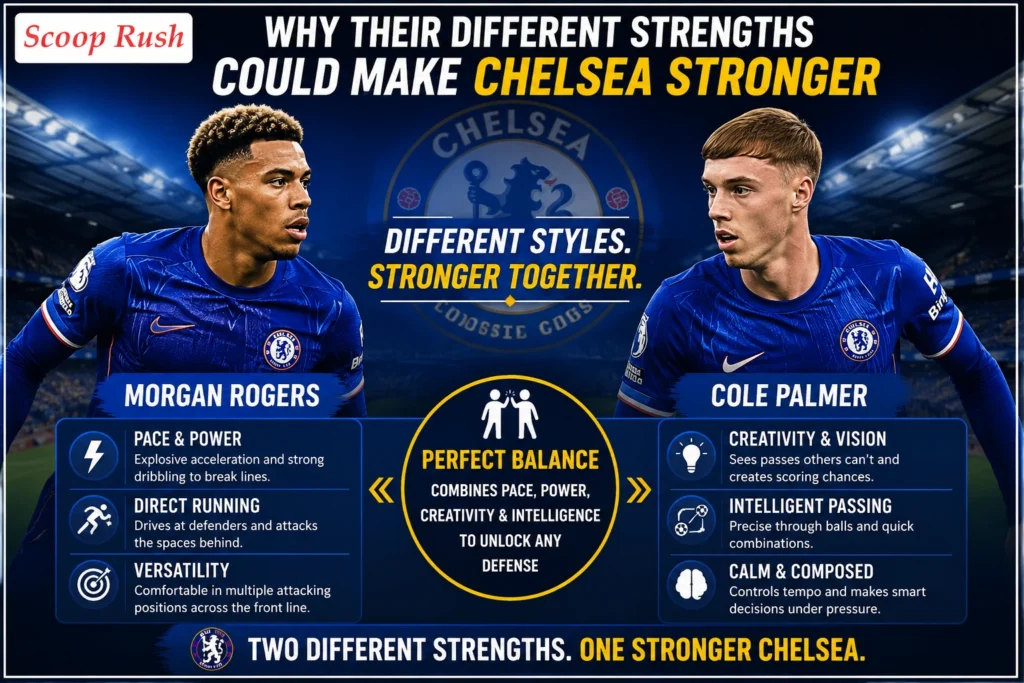
Although Rogers and Palmer are both creative attackers, they approach the game differently.
Cole Palmer controls the tempo.
Morgan Rogers increases the intensity.
Palmer looks for clever passes that unlock organised defences.
Meanwhile, Rogers attacks the spaces those passes create with pace and power.
This contrast gives Chelsea multiple ways to break down opponents.
Against teams sitting deep, Palmer’s creativity becomes invaluable.
Against teams pressing aggressively, Rogers’ ability to carry the ball forward offers another solution.
Consequently, Alonso gains two players capable of solving different tactical problems.
Xabi Alonso’s 3-2-2-3 System Explained
One of the defining features of Xabi Alonso’s football is his flexible attacking structure.
Although Chelsea may begin matches with either a back four or a back five, Alonso’s teams often reshape themselves once possession is secured.
During attacks, the structure usually resembles a 3-2-2-3 formation.
That system includes:
- Three defenders building attacks.
- Two midfielders controlling possession.
- Two attacking midfielders operating between the lines.
- Three advanced attackers stretching the opposition.
This setup allows Chelsea to dominate possession while keeping several passing options available at all times.
More importantly, it suits both Rogers and Palmer perfectly.
Rogers’ Best Position
Morgan Rogers produced many of his strongest performances at Aston Villa while attacking from the inside-left channel.
Rather than remaining close to the sideline, he regularly drifted into central positions where he could combine with teammates before attacking defenders directly.
That role could become even more effective under Alonso.
Chelsea’s full-back or wing-back can provide width, allowing Rogers to focus on influencing attacks closer to goal.
This positioning also places him much closer to Palmer.
The shorter distance between both players encourages quick passing combinations around the penalty area.
Palmer Controls the Right Side
Cole Palmer naturally prefers operating from the right half-space.
From there he can receive possession on his stronger foot before creating opportunities through passes or shots.
Together, Palmer and Rogers can control both sides of Chelsea’s central attack.
Meanwhile, Chelsea’s wide players stretch the opposition’s defensive line.
This balance makes Chelsea’s attacking shape much harder to defend.
Counter-Pressing Could Become Chelsea’s Biggest Strength
One of Alonso’s most important tactical principles is winning possession immediately after losing it.
Instead of dropping back into defensive positions, his players immediately pressure opponents high up the pitch.
Morgan Rogers is well suited to this style.
His strength, pace, and work rate allow him to close defenders quickly.
Meanwhile, Palmer’s intelligent positioning keeps him close enough to support the press whenever Chelsea lose possession.
This aggressive approach allows Chelsea to recover the ball before opponents can launch dangerous counter-attacks.
As a result, Chelsea can maintain sustained pressure throughout matches.
Why Tactical Flexibility Matters
Modern football rarely depends on fixed positions.
Successful teams constantly rotate players during attacks.
Morgan Rogers gives Chelsea exactly that flexibility.
He may begin on the left before moving into central areas.
Palmer can drop deeper before moving forward again.
Wide defenders provide attacking width while central attackers exchange positions.
These movements force defenders to constantly adjust their marking responsibilities.
Consequently, Chelsea become much more unpredictable.
What Chelsea Fans Can Expect
Chelsea supporters should expect an attack built around movement rather than fixed positions.
Morgan Rogers will not remain permanently on the left wing.
Cole Palmer will not always stay on the right.
Instead, both players will rotate throughout matches while looking to create space for one another.
Some attacks will begin through Palmer’s creativity.
Others will depend on Rogers’ direct running.
Together, they provide Chelsea with multiple attacking solutions against different opponents.
Why Morgan Rogers and Cole Palmer Could Transform Chelsea Under Xabi Alonso
Morgan Rogers and Cole Palmer could transform Chelsea under Xabi Alonso because they bring different strengths that complement each other.
Their long-standing understanding from their Manchester City academy days, combined with Rogers’ direct running and Palmer’s creativity, gives Chelsea a balanced attacking partnership. Alonso’s flexible tactical system also allows both players to rotate positions, create space between the lines, and perform effectively against high-pressing opponents.
Key reasons include:
- Strong understanding from their Manchester City academy days.
- Complementary attacking styles that balance creativity and direct play.
- Tactical flexibility within Xabi Alonso’s system.
- Intelligent movement between the lines to create chances.
- Ability to beat aggressive high-pressing teams.
Conclusion
Morgan Rogers and Cole Palmer have every opportunity to become one of Chelsea’s most exciting attacking partnerships under Xabi Alonso.
Rogers brings pace, strength, versatility, and intelligent movement after impressing in the Premier League with Aston Villa. Palmer already offers creativity, vision, and composure that make him one of Chelsea’s key attacking players.
Together, their different qualities complement each other naturally.
Alonso’s tactical philosophy, built around possession, flexibility, and intelligent positioning, provides an ideal environment for both players to succeed.
The partnership between Morgan Rogers at Chelsea and Cole Palmer at Chelsea could become one of the biggest strengths of Chelsea’s attack this season. If Xabi Alonso’s tactics continue to evolve, Chelsea may develop one of the most balanced and exciting attacking units in the Premier League.
Frequently Asked Questions
1. Why did Chelsea sign Morgan Rogers?
Chelsea signed Morgan Rogers because of his versatility, athleticism, and ability to play across several attacking positions.
2. Can Morgan Rogers and Cole Palmer play together?
Yes. Their different strengths complement each other, allowing both players to operate effectively in Chelsea’s attacking system.
3. What position will Morgan Rogers play under Xabi Alonso?
Rogers is expected to play mainly in the inside-left attacking role while remaining capable of operating across the front line.
4. What tactical system could Xabi Alonso use at Chelsea?
Alonso is expected to use a flexible system that often develops into a 3-2-2-3 shape during possession.
5. Why is the Rogers and Palmer partnership important?
Their existing understanding, combined with complementary playing styles, gives Chelsea two intelligent attackers capable of creating and finishing chances within Alonso’s tactical system.

