

Sometimes your body needs a break from solid food. Whether you’re recovering from surgery, dealing with swallowing difficulties, or preparing for a medical procedure, a full liquid diet can provide essential nutrition while giving your digestive system time to heal.
Although it may sound restrictive, this diet includes much more than just water or broth. From creamy soups and yogurt to protein shakes and smoothies, a well-planned full liquid diet can help support recovery and keep your energy levels up.
Why It’s Used
A full liquid diet is commonly recommended by healthcare providers for short periods when eating regular food isn’t possible or safe.
Unlike a clear liquid diet, it includes milk-based drinks, strained soups, pudding, yogurt, and other smooth foods that are liquid or become liquid at room temperature. These options provide more calories, protein, and nutrients, making the diet more suitable for healing and recovery.
A Short-Term Plan, Not a Lifestyle
A full liquid diet isn’t designed to be a long-term eating plan. While it offers more nutrition than a clear liquid diet, it still lacks enough fiber and several important vitamins and minerals.
That’s why it’s usually followed for only a few days, or until your healthcare provider recommends returning to soft or regular foods.
What This Guide Covers
In this complete guide, you’ll learn everything you need to know about a full liquid diet: who needs it, what foods you can eat, which foods to avoid, its benefits, possible risks, nutrition tips, and how to safely transition back to solid foods.
What Is a Full Liquid Diet?
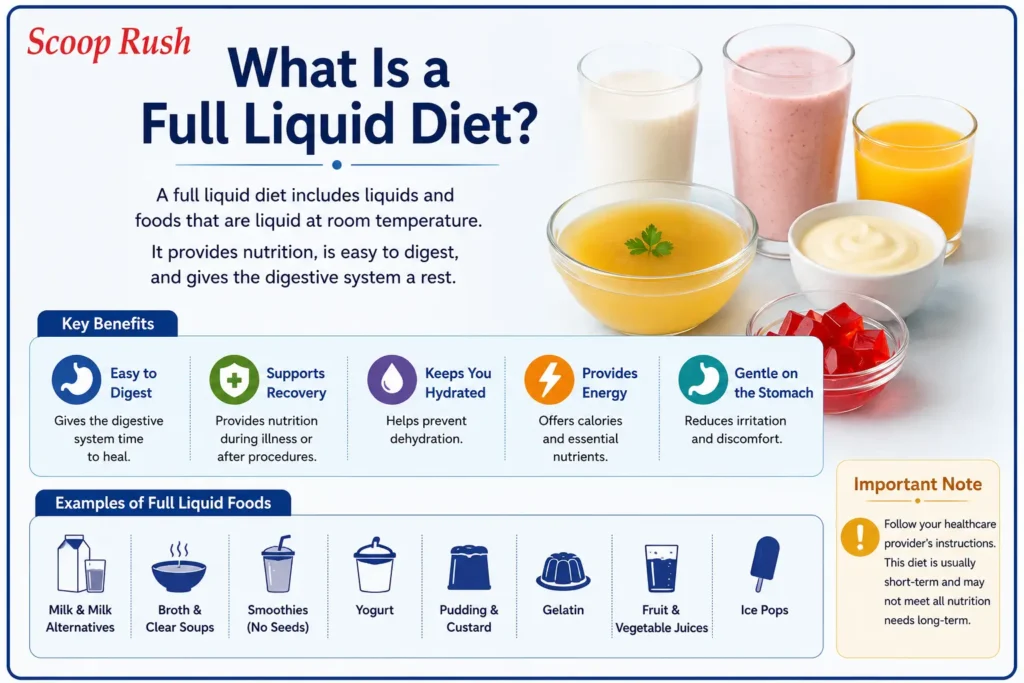
A full liquid diet is a temporary eating plan that includes foods and beverages that are liquid or become liquid at room temperature. Unlike a clear liquid diet, which only allows transparent liquids like broth and apple juice, a full liquid diet includes thicker, more nourishing foods such as milk, yogurt, pudding, strained soups, and nutritional shakes.
The goal is to provide enough calories, fluids, and protein while minimizing the work your mouth, throat, stomach, and intestines need to do during digestion.
Although you cannot eat solid foods, you can enjoy a wide variety of smooth liquids that are easy to swallow and digest. All foods should be free of chunks, seeds, pulp, nuts, or other solid pieces.
Healthcare providers often prescribe this diet for a short period during recovery from surgery, illness, or certain digestive conditions. Depending on your medical needs, your provider may recommend it for a few days, or up to a week, before transitioning to soft foods.
How Does a Full Liquid Diet Work?
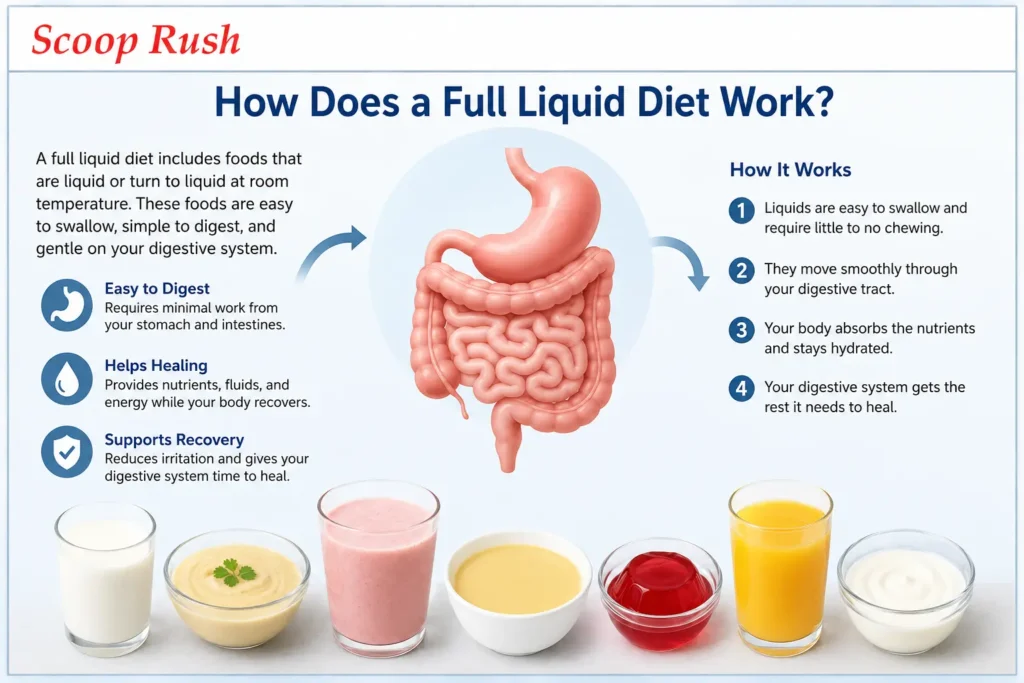
Your digestive system works hard to break down solid food. After surgery or during illness, this process may be uncomfortable or even unsafe. A full liquid diet reduces the amount of chewing and digestion required while still supplying fluids and nutrients.
Less Work for Your Digestive System
Because foods on this diet are already in liquid form or melt easily, they pass through the digestive system more gently than solid foods. This helps reduce irritation and allows healing after medical procedures involving the mouth, throat, stomach, or intestines.
Protein to Support Healing
Many full liquid foods also contain protein, which is essential for repairing tissues after surgery or illness. Milk, yogurt, protein shakes, and strained cream soups help maintain muscle and support recovery.
Built-In Hydration
Staying hydrated is easier on this diet because nearly every meal contributes to your daily fluid intake.
Who Needs a Full Liquid Diet?
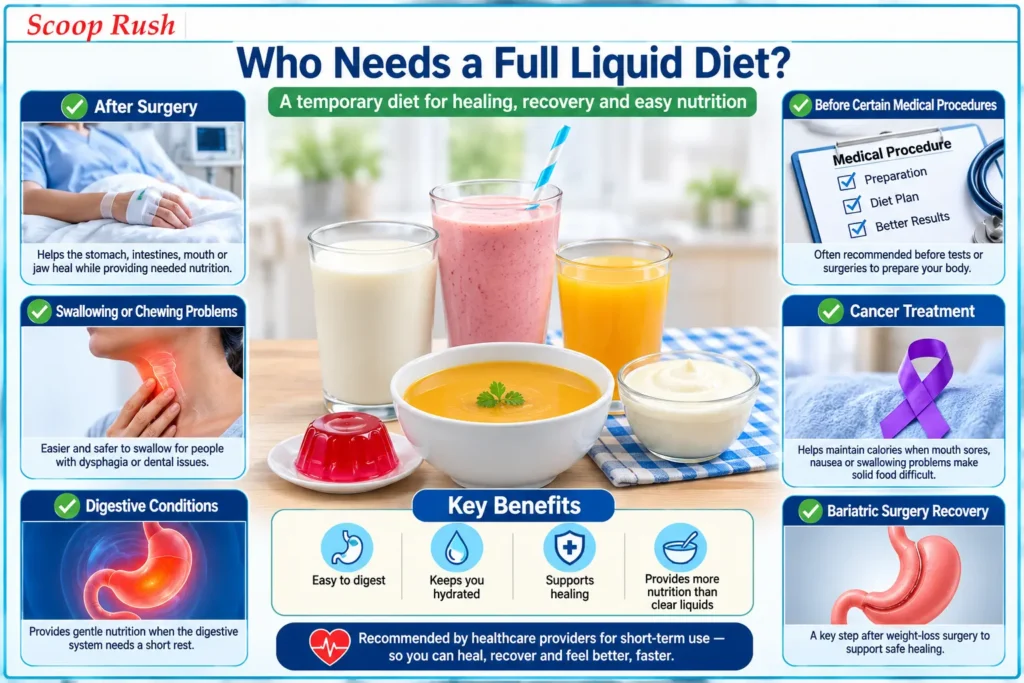
A healthcare provider may recommend a full liquid diet for several medical reasons. Every person’s situation is different, but common reasons include the following.
After Surgery
One of the most common reasons for following a full liquid diet is recovery after surgery. This is especially true after procedures involving the digestive tract, mouth, throat, or jaw.
Examples include:
- Bariatric (weight-loss) surgery
- Stomach surgery
- Intestinal surgery
- Dental surgery
- Jaw surgery
- Oral cancer surgery
Following surgery, your digestive system needs time to heal before handling regular food. Starting with liquids reduces stress on healing tissues and lowers the risk of complications.
Difficulty Chewing or Swallowing
People with swallowing disorders (dysphagia) or chewing problems often benefit from a full liquid diet.
Conditions that may cause swallowing difficulties include:
- Stroke
- Parkinson’s disease
- Multiple sclerosis
- Head and neck cancers
- Neurological disorders
- Severe dental problems
Smooth liquids are generally easier and safer to swallow than solid foods, reducing the risk of choking or aspiration.
Preparing for Medical Procedures
Some diagnostic procedures require your stomach or digestive tract to be relatively empty. Depending on the procedure, your provider may recommend a full liquid diet before transitioning to clear liquids.
Examples include:
- Certain gastrointestinal procedures
- Selected imaging studies
- Some surgeries requiring bowel preparation
Always follow your provider’s instructions carefully, as preparation guidelines vary depending on the procedure.
Digestive Conditions
A temporary full liquid diet may help when your digestive system needs rest due to illness or treatment. In some cases, your provider may move you toward a low-residue diet or a bland diet as a next step once you’re ready for more texture.
Examples include:
- Severe nausea and vomiting
- Certain inflammatory digestive conditions
- Recovery after bowel obstruction treatment
- Pancreatitis (only when recommended by your healthcare provider)
- Temporary digestive irritation
It is important not to start a full liquid diet on your own for digestive diseases without medical advice.
Cancer Treatment
Some people receiving chemotherapy or radiation therapy develop painful mouth sores, swallowing difficulties, or severe nausea that makes eating difficult.
A full liquid diet can provide nourishment while being easier to tolerate. High-calorie nutritional drinks, milkshakes, smoothies, and protein supplements often help maintain weight during treatment.
A registered dietitian may recommend additional protein or calorie supplements depending on individual needs.
Full Liquid Diet vs. Clear Liquid Diet
Many people confuse these two diets, but they serve different purposes.
| Feature | Full Liquid Diet | Clear Liquid Diet |
| Calories | Higher | Very low |
| Protein | Moderate | Very little |
| Dairy | Yes | Usually no |
| Cream soups | Yes | No |
| Milk | Yes | No |
| Yogurt | Yes | No |
| Nutritional shakes | Yes | Usually no |
| Broth | Yes | Yes |
| Purpose | Recovery and nutrition | Hydration and short-term digestive rest |
A clear liquid diet is usually used only for one or two days because it doesn’t provide enough nutrients. A full liquid diet offers significantly more nutrition and is often the next step before returning to soft foods.
Foods You Can Eat on a Full Liquid Diet
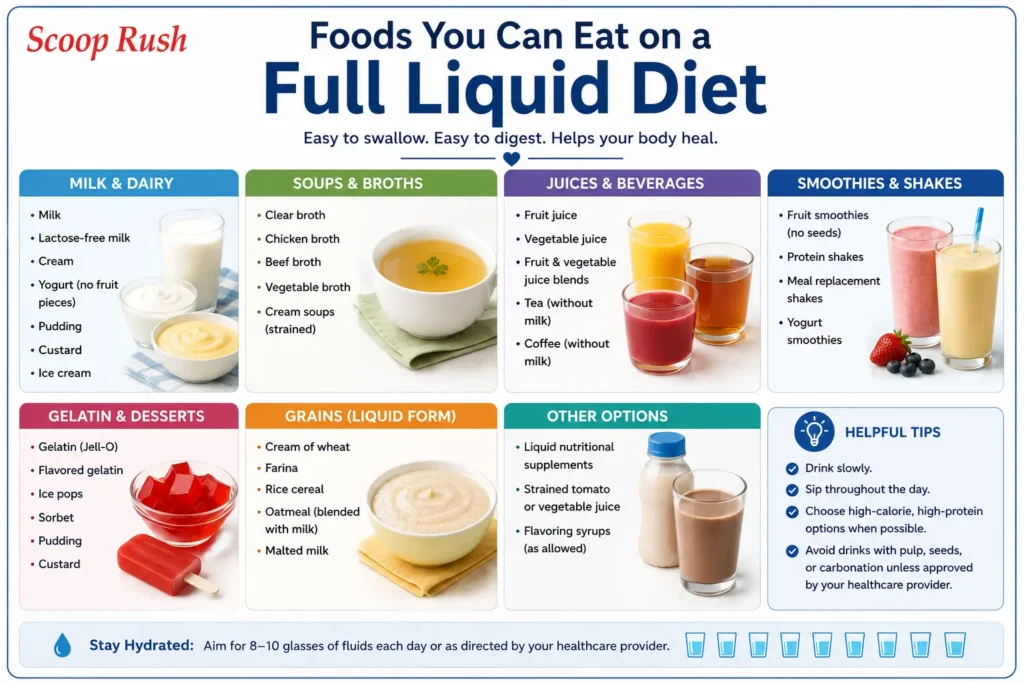
One of the biggest misconceptions about a full liquid diet is that it only includes water and soup. In reality, there are many foods you can enjoy, provided they are smooth and free of solid pieces. If necessary, blend foods until completely smooth and strain them to remove any lumps or seeds.
Dairy Products and Dairy Alternatives
Dairy foods are among the best choices because they provide protein, calcium, and vitamin D.
You can enjoy:
- Whole, low-fat, or skim milk
- Lactose-free milk
- Soy milk
- Almond milk
- Oat milk
- Rice milk
- Plain yogurt without fruit pieces
- Greek yogurt (thinned if needed)
- Kefir
- Cottage cheese blended until smooth (if approved)
- Smooth pudding
- Custard
- Ice cream without nuts, cookie pieces, or candy
- Frozen yogurt
- Sherbet
These foods can help you meet your daily protein and calorie needs while supporting recovery.
Soups and Broths
Soups are filling, comforting, and easy to digest. Choose soups that are completely smooth.
Good options include:
- Chicken broth
- Beef broth
- Vegetable broth
- Bone broth
- Bouillon
- Consommé
- Strained cream of chicken soup
- Strained cream of mushroom soup
- Cream of celery soup
- Cream of potato soup
- Pureed tomato soup
- Blended pumpkin soup
- Blended squash soup
- Pureed carrot soup
Avoid soups containing noodles, rice, beans, vegetables, corn, meat chunks, or herbs that aren’t blended.
Cooked Cereals
Certain refined cereals become smooth enough for this diet.
Suitable choices include:
- Cream of Wheat
- Cream of Rice
- Farina
- Grits (well cooked and strained if needed)
- Thin oatmeal (only if your provider allows)
Cook cereals with extra milk or water to create a smooth, pourable consistency.
Protein Drinks and Nutritional Supplements
Protein plays a vital role in wound healing and maintaining muscle mass something to watch closely if you’re already at risk of muscle loss during a period of reduced eating.
Excellent choices include:
- High-protein shakes
- Meal replacement drinks
- Protein smoothies
- Ready-to-drink nutrition supplements
- Homemade protein shakes
- Protein powder blended into milk or yogurt
These beverages are especially helpful after surgery or during cancer treatment when meeting nutritional needs can be difficult.
Beverages
Staying hydrated is just as important as getting enough calories.
Acceptable beverages include:
- Water
- Coffee
- Tea
- Decaffeinated coffee
- Fruit juice
- Vegetable juice
- Sports drinks
- Oral rehydration solutions
- Lemonade without pulp
- Apple juice
- Cranberry juice
- White grape juice
- Soda (if tolerated)
If citrus juices irritate your mouth after surgery, choose less acidic options. If coffee is part of your routine, keep in mind that drinking it on an empty stomach can be harder on a sensitive digestive system, so it’s worth pairing it with other liquids.
Desserts
A full liquid diet doesn’t have to be boring. Several desserts fit the guidelines.
You may enjoy:
- Plain gelatin
- Fruit ice
- Popsicles without fruit pieces
- Smooth pudding
- Custard
- Ice cream
- Frozen yogurt
- Sherbet
- Milkshakes
- Smooth mousse
These foods can increase calorie intake, especially if you’re struggling with a poor appetite.
Healthy Fats
Healthy fats add calories without increasing meal volume.
Consider adding small amounts of:
- Butter
- Margarine
- Olive oil
- Avocado oil
- Heavy cream
- Half-and-half
These can be mixed into soups or cereals if approved by your healthcare provider.
Foods to Avoid on a Full Liquid Diet
Anything that requires chewing or contains solid pieces should be avoided. Even tiny chunks can make swallowing difficult or interfere with healing.
Bread and Grains
- Bread
- Toast
- Rolls
- Bagels
- Crackers
- Rice
- Pasta
- Cereal flakes
- Granola
Fruits
- Apples
- Bananas
- Oranges
- Berries
- Grapes
- Pineapple
- Dried fruit
- Fruit cocktail
Even soft fruits like bananas or avocados usually aren’t allowed unless specifically blended into an approved consistency.
Vegetables
Avoid all whole vegetables, including:
- Potatoes
- Corn
- Peas
- Broccoli
- Spinach
- Carrots
- Green beans
- Salad vegetables
Vegetables are only allowed when completely blended and strained into smooth soups, if your healthcare provider approves.
Protein Foods
- Chicken
- Beef
- Turkey
- Fish
- Eggs (unless blended into approved recipes)
- Sausage
- Bacon
- Tofu chunks
- Beans
- Lentils
Dairy Products
Avoid dairy foods that contain solid pieces, including:
- Cheese slices
- Cheese cubes
- Yogurt with fruit
- Cottage cheese with curds
- Ice cream containing nuts or cookie pieces
Snacks
- Chips
- Pretzels
- Popcorn
- Cookies
- Cake
- Chocolate bars
- Nuts
- Seeds
Benefits of a Full Liquid Diet
Although it is temporary, a full liquid diet offers several important advantages during recovery.
1. Supports Healing
After surgery or illness, your body requires additional nutrients to repair damaged tissues. Protein-rich liquids help rebuild muscles, skin, and organs while supporting immune function.
2. Easier to Swallow
For people with swallowing difficulties, smooth foods lower the risk of choking and aspiration. This makes eating safer while ensuring adequate nutrition.
3. Gentle on the Digestive System
Liquids require much less work from your stomach and intestines. This allows inflamed or healing digestive organs to recover with less irritation.
4. Better Nutrition Than a Clear Liquid Diet
Compared with a clear liquid diet, a full liquid diet contains more protein, more calories, more calcium, more healthy fats, and greater variety overall. These nutrients help prevent excessive weight loss during recovery.
5. Helps Maintain Hydration
Most foods on the diet contain significant amounts of water. Proper hydration helps support circulation, prevent dehydration, improve digestion, reduce fatigue, and promote healing.
6. Easier Transition to Solid Foods
Instead of immediately returning to regular meals, a full liquid diet allows your digestive system to adjust gradually. This often reduces nausea, stomach discomfort, and digestive complications. Once you’re cleared for more texture, a soft food diet is usually the next stop before regular meals.
Risks and Limitations of a Full Liquid Diet
A full liquid diet is generally safe when followed for a short time and under medical guidance, but it isn’t without downsides.
Nutrient Gaps
Because the diet limits whole fruits, vegetables, grains, and meats, it’s low in fiber and can fall short on iron, vitamin B12, vitamin A, folate, zinc, and thiamine. Staying on it longer than recommended can lead to deficiencies over time.
Unintended Weight or Muscle Loss
If calorie and protein targets aren’t met, some people lose more weight or muscle than intended, especially older adults or those already weakened by illness.
Temptation to Over-Supplement
Some people try to close nutrient gaps by taking extra vitamins or supplements on their own. This isn’t always safe taking too many vitamins or supplements can cause its own health problems, so any supplementation should be guided by your provider or a dietitian.
Not Suitable for Everyone
People with certain conditions, such as poorly controlled diabetes or kidney disease, may need a modified version of this diet. Always follow your healthcare team’s specific instructions rather than a generic plan.
Nutritional Value of a Full Liquid Diet

While this diet offers more nutrition than clear liquids, it still has limitations.
A well-planned full liquid diet generally provides protein, calcium, vitamin D, healthy fats, carbohydrates, and fluids.
However, it may not provide enough:
- Fiber
- Iron
- Vitamin B12
- Vitamin A
- Folate
- Zinc
- Thiamine
Because of these nutritional gaps, healthcare providers usually recommend following this diet only for a short time unless it’s carefully planned with supplements.
Daily Calorie and Protein Needs
Your individual needs depend on your age, weight, medical condition, and activity level. However, many adults recovering from illness or surgery aim for approximately:
| Nutrient | General Daily Goal |
| Calories | 1,400–2,000+ calories |
| Protein | 45–70 grams |
| Fluids | 2–3 liters (unless restricted) |
Some people such as those recovering from major surgery, cancer treatment, or severe illness may need even more protein and calories. Your healthcare provider or dietitian can tailor recommendations to your specific needs.
How to Add More Calories and Protein
If you’re struggling to meet your nutritional needs, small changes can make a big difference.
Try these ideas:
- Blend protein powder into milk, smoothies, or pudding.
- Add nonfat dry milk powder to soups, cereals, or milkshakes.
- Stir heavy cream into soups for extra calories.
- Use whole milk instead of skim milk if appropriate.
- Add smooth peanut butter only if your healthcare provider says it’s safe and it can be blended to the correct consistency.
- Choose high-protein nutritional drinks between meals.
- Eat five or six small meals throughout the day instead of three large ones.
- Add healthy oils like olive oil to pureed soups for extra energy.
Sample One-Day Full Liquid Diet Meal Plan
This is a general example only. Always follow the specific plan and portions your healthcare provider or dietitian gives you.
Breakfast: Cream of Wheat made with whole milk, a glass of apple juice, and a protein shake.
Mid-Morning: Smooth yogurt or a milkshake.
Lunch: Strained cream of chicken soup, a glass of milk, and plain gelatin.
Afternoon: A nutritional supplement drink or blended fruit smoothie (if approved).
Dinner: Pureed vegetable soup, a milkshake, and custard for dessert.
Evening: Warm milk or a small protein drink before bed.
Transitioning Back to Solid Foods
Once your provider gives the go-ahead, food is usually reintroduced gradually rather than all at once. Many people move from a full liquid diet to a soft food diet, then to regular meals over several days. Light activity, such as a short walk every hour if you’re cleared for movement, can also support digestion during this transition. Introducing new textures slowly makes it easier to spot any foods that cause discomfort before they become a bigger problem.
Conclusion
A full liquid diet is a short-term tool, not a long-term way of eating. It gives your digestive system a break while still supplying the calories, protein, and fluids your body needs to heal whether you’re recovering from surgery, managing a swallowing problem, or getting through cancer treatment.
The key is following your healthcare provider’s specific instructions on how long to stay on the diet and when to move on to soft or regular foods. With the right mix of dairy, soups, protein drinks, and other smooth foods, it’s possible to eat well and support recovery, even without a single bite of solid food.
FAQs
How long can you stay on a full liquid diet?
Most people follow it for just a few days, and rarely more than one to two weeks. Because it’s low in fiber and several nutrients, staying on it longer without medical supervision isn’t recommended.
Can you lose weight on a full liquid diet?
Yes, unintentional weight loss is common if you don’t hit your daily calorie and protein targets. This diet is meant to support recovery, not for intentional weight loss.
Is oatmeal allowed on a full liquid diet?
Only thin, well-cooked oatmeal is sometimes allowed, and only if your provider approves it. Regular oatmeal is generally considered too thick and textured for this stage.
Can you drink coffee on a full liquid diet?
Coffee is usually allowed, though it’s best to check with your provider first, especially after digestive surgery, since caffeine and acidity can irritate a sensitive stomach.
What’s the difference between a full liquid diet and a pureed diet?
A full liquid diet includes only foods that are already liquid or melt into liquid at room temperature. A pureed diet is a step up it includes blended solid foods, like pureed meats and vegetables, that have a thicker, spoonable texture.
Can children follow a full liquid diet?
Yes, but calorie, protein, and fluid needs differ from those of adults. A pediatrician or pediatric dietitian should set the specific plan.

