Home Blog Page 51

Algae Bloom Explained: New Science Reveals Why Algae Die-Offs Happen

0

Introduction

A green wave has taken over one of America’s most famous landmarks. The Lincoln Memorial Reflecting Pool in Washington, D.C., which was expected to shine in an “American Flag blue” color after a major renovation, suddenly turned green because of a massive Algae Bloom. Now, scientists have uncovered new clues about why these algae outbreaks can suddenly collapse.

The latest research on algae blooms shows that a chemical process involving iron and hydrogen peroxide may trigger the rapid death of certain algae. This discovery helps scientists understand how large algae outbreaks disappear naturally, although it may not be enough to restore the Reflecting Pool’s original appearance.

Algae blooms are more than just a visual problem. When algae die in large numbers, they can affect oxygen levels in water and create environmental risks. Therefore, understanding how algae grow and collapse is important for protecting lakes, rivers, and urban water systems.

Algae Bloom Crisis at the Lincoln Memorial Reflecting Pool

The Lincoln Memorial Reflecting Pool became the center of attention after algae rapidly changed the appearance of the water. The pool had recently been renovated, but instead of showing the expected blue color, the water developed a thick green appearance.

Experts explained that several conditions created an ideal environment for algae growth. The pool is shallow, meaning sunlight can warm the water quickly. Additionally, the darker paint used during renovation may have increased heat absorption.

Meanwhile, the pool was refilled with water connected to the Potomac River system, bringing nutrients and microorganisms that supported algae growth.

As a result, the algae multiplied quickly and created an unexpected environmental challenge.

New Research Explains Algae Bloom Collapse

Scientists studying algae blooms have long questioned why millions of algae cells can grow together and then suddenly disappear. A new study published in Science provides a possible explanation.

Researchers focused on a process called ferroptosis. This process involves a reaction between ferrous iron and hydrogen peroxide inside algae cells.

The reaction creates reactive oxygen species, also known as free radicals. These molecules damage important parts of the cell, especially the membranes that protect the cell.

Eventually, the damaged cells break apart, causing a chain reaction that may spread to nearby algae.

How Ferroptosis Can Destroy Algae Cells

How Ferroptosis Can Destroy Algae Cells

Iron and Hydrogen Peroxide Trigger Algae Damage

Cyanobacteria, often called blue-green algae, need iron to survive. These organisms store extra iron inside their cells.

However, when hydrogen peroxide interacts with this iron, a chemical reaction called the Fenton reaction can happen.

This reaction produces unstable molecules that attack fatty materials inside the cell membrane. Once the membrane becomes damaged, the cell can no longer survive.

The study found that damaged algae cells release broken lipids, which can affect nearby cells and continue the destruction process.

Scientists Study Algae Collapse in China

Researchers studied a cyanobacteria bloom from Dianchi Lake in China’s Yunnan province in 2024.

Before the bloom ended, scientists noticed that the algae had increased oxidation levels and contained much higher amounts of ferrous iron than normal.

When researchers exposed Microcystis aeruginosa, one type of cyanobacteria, to hydrogen peroxide in laboratory tests, they observed increased free radicals and cell damage.

The findings suggest that ferroptosis could help explain why some algae blooms collapse rapidly.

Why Algae Blooms Can Become Dangerous

Why Algae Blooms Can Become Dangerous

Algae growth itself is not always harmful. However, when large blooms die, they can create serious problems.

Dead algae become food for other bacteria. These bacteria consume oxygen while breaking down the dead material.

Consequently, oxygen levels in water can drop, creating dangerous conditions for fish and other aquatic organisms.

Some cyanobacteria can also release toxins after dying. These toxins may affect water quality and create concerns for people, animals, and ecosystems.

Why New Science May Not Save the Reflecting Pool

Although the research provides important information about algae die-offs, scientists say it may not solve the Reflecting Pool problem.

Experts believe the algae currently dominating the pool may not be the same type studied in the research.

The study mainly focused on cyanobacteria such as Microcystis. However, the Reflecting Pool appears to contain more Scenedesmus, a different type of green algae.

Because of this difference, methods that affect cyanobacteria may have limited impact on other algae species.

Furthermore, scientists explain that the ecosystem inside the pool has changed during treatment efforts. Removing one type of algae may create conditions that allow another species to grow.

Natural Solutions for Controlling Algae Blooms

Why Algae Blooms Can Become Dangerous

Scientists studying freshwater ecosystems explain that nature-based solutions can sometimes provide better long-term results.

Small organisms such as Daphnia, also known as water fleas, naturally eat algae and can help control excessive growth.

Additionally, aquatic plants can absorb nutrients from water and reduce the chance of large algae outbreaks.

Instead of only using chemicals, experts suggest understanding how ecosystems work and supporting natural balance.

Why Chemical Treatments May Not Always Work

Chemical treatments can reduce algae quickly, but they may not solve the main cause of the problem.

When water conditions remain suitable for algae growth, another bloom can appear again.

Therefore, experts believe long-term solutions should focus on improving ecosystem health rather than only removing visible algae.

Conclusion

The recent Algae Bloom problem at the Lincoln Memorial Reflecting Pool has highlighted how complex water ecosystems can be. While scientists have discovered a possible explanation for why some algae suddenly die through ferroptosis, this knowledge may not immediately fix every algae outbreak.

The research provides valuable insight into how algae cells interact with chemicals inside their environment. However, experts believe that maintaining healthy ecosystems and using nature-based solutions may offer better long-term protection.

Understanding algae growth, collapse, and prevention can help communities manage future water quality challenges more effectively.

FAQs

What causes an Algae Bloom?

An algae bloom usually happens when water contains high levels of nutrients, warm temperatures, and conditions that allow algae to grow rapidly.

Why did the Lincoln Memorial Reflecting Pool turn green?

The Reflecting Pool turned green because algae grew quickly after conditions such as warm water and nutrient-rich water supported its expansion.

What is ferroptosis in algae?

Ferroptosis is a chemical process where iron and hydrogen peroxide create reactions that damage algae cells and may cause them to die.

Are algae blooms dangerous?

Some algae blooms can become harmful because dying algae may reduce oxygen in water and some species can release toxins.

Can nature control algae blooms?

Yes, natural systems including algae-eating organisms and aquatic plants can help maintain balance and reduce excessive algae growth.
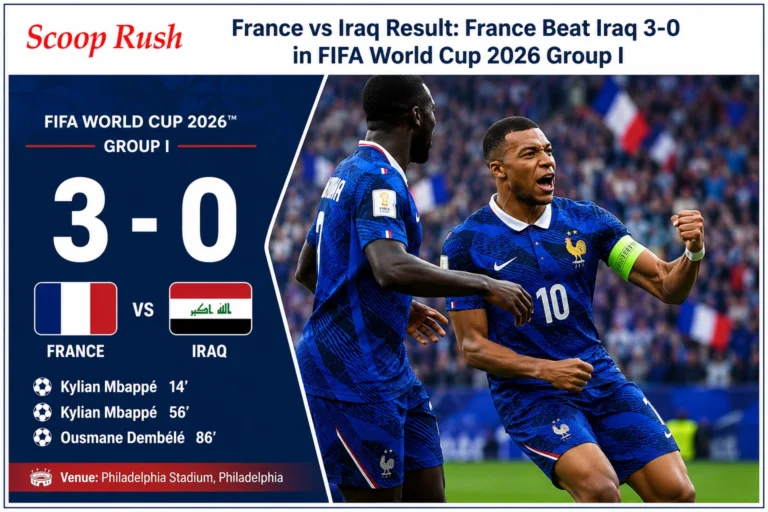
France vs Iraq Result: France Beat Iraq 3-0 in FIFA World Cup 2026 Group I

0

FIFA World Cup 2026™ – Group I
Full-Time:
France 3-0 Iraq
Date: 23 June
Venue: Philadelphia Stadium, Philadelphia

France vs Iraq Result A Clinical Performance Sends France to the Top Three goals, complete control, and another convincing victory. The France vs Iraq Result saw France defeat Iraq 3-0 in their FIFA World Cup 2026 Group I match on Tuesday, 23 June, securing maximum points after two games and strengthening their position at the top of the group.

France dominated possession, created far more chances, and converted their opportunities through Kylian Mbappé and Ousmane Dembélé. Iraq defended with determination for long periods but struggled to create attacking opportunities, failing to register a single shot on target throughout the match.

This result leaves France in an excellent position heading into the knockout stage, while Iraq exit the group stage without earning a point.

Match Overview

France entered the match looking to continue their strong Group I campaign, while Iraq hoped to keep their qualification hopes alive.

From the opening whistle, France controlled the tempo with patient possession and quick movement across midfield. Iraq remained compact defensively but found it difficult to stop France from creating chances around the penalty area.

France eventually broke through thanks to their attacking quality before adding two more goals to seal a comfortable victory.

Final Score
France 3–0 Iraq

Goals

  • Kylian Mbappé – 14′
  • Kylian Mbappé – 56′
  • Ousmane Dembélé – 86′

France Controlled the Match From Start to Finish

The statistics tell the story of a one-sided contest.

Match StatisticsFranceIraq
Shots194
Shots on Target90
Possession56%44%
Passes586420
Pass Accuracy91%86%
Fouls84
Yellow Cards01
Red Cards00
Offsides10
Corners42

France attempted nearly five times as many shots as Iraq and consistently forced the Iraqi defense into difficult situations.

Perhaps the most telling statistic was Iraq’s zero shots on target, highlighting France’s defensive organization alongside their attacking dominance.

Kylian Mbappé Leads France Once Again

France’s captain delivered another outstanding performance.

First Goal Sets the Tone

Mbappé opened the scoring in the 14th minute after France’s early pressure finally paid off. The early goal allowed France to settle into their preferred possession-based style while forcing Iraq to chase the game.

Second Goal Removes All Doubt

After halftime, Mbappé struck again in the 56th minute. His second goal effectively ended Iraq’s hopes of mounting a comeback and gave France complete control over the remainder of the match. Mbappé’s movement, pace, and finishing once again proved decisive on the biggest stage.

Ousmane Dembélé Finishes the Job

While Mbappé grabbed the headlines with his brace, Ousmane Dembélé also played an important role. His goal in the 86th minute rewarded another energetic attacking display and completed France’s convincing 3-0 victory. The late strike reflected France’s commitment to attacking until the final whistle rather than simply protecting their lead.

France’s Midfield Controlled Every Phase

France’s midfield dictated possession throughout the game. With over 580 completed passes and 91% passing accuracy, France consistently recycled possession while patiently searching for openings. Rather than forcing risky passes, France maintained control through intelligent positioning and quick ball circulation. This approach prevented Iraq from building momentum or launching sustained attacks.

France’s Defensive Organization Deserves Credit

Although much of the attention will focus on France’s attack, the defense quietly delivered another impressive performance. Iraq managed only 4 total shots and 0 shots on target. France’s defenders remained organized throughout the match, limiting space between the lines and quickly recovering possession whenever Iraq attempted to counterattack. Their disciplined structure allowed the goalkeeper and back line to enjoy one of their most comfortable evenings of the tournament.

Iraq Worked Hard but Could Not Threaten

Iraq showed commitment and defensive discipline during parts of the match. However, several factors limited their effectiveness: difficulty keeping possession, limited attacking support, few opportunities inside France’s penalty area, and no shots on target. Whenever Iraq regained the ball, France’s pressing quickly forced turnovers. Without sustained possession, Iraq struggled to create meaningful scoring opportunities.

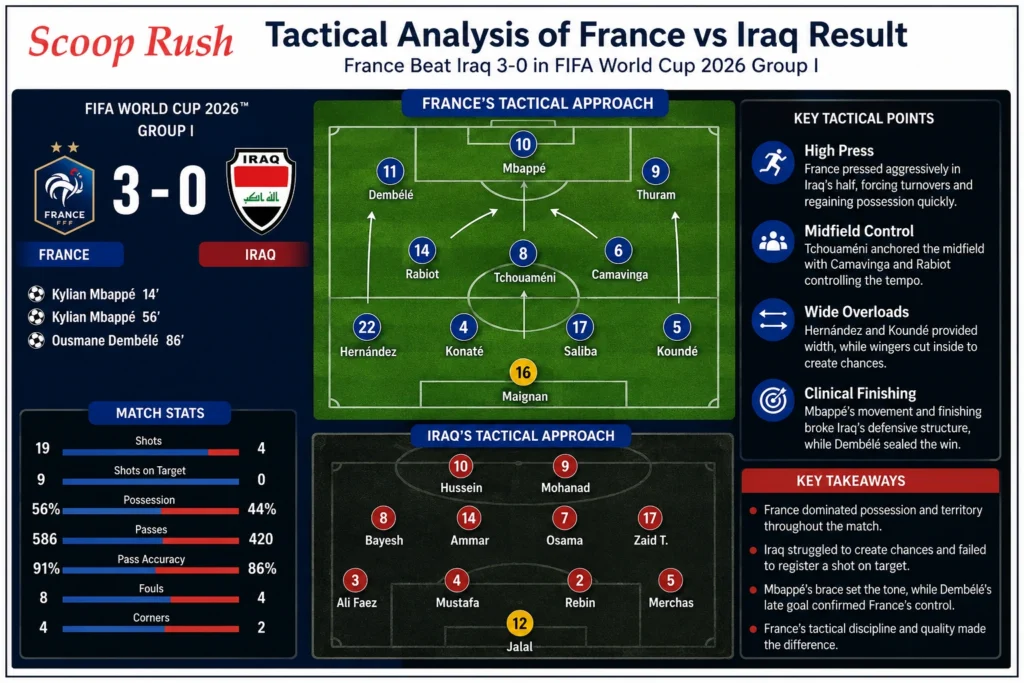
Tactical Analysis of France vs Iraq Result

Tactical Analysis of France vs Iraq Result

France’s High Press Paid Off

France pressed aggressively whenever possession was lost. This immediate pressure prevented Iraq from building attacks and frequently forced long clearances. Winning the ball high up the pitch enabled France to spend long periods in Iraq’s half.

Excellent Ball Circulation

France moved the ball quickly from defense into midfield before switching play to exploit wide areas. Their passing accuracy of 91% demonstrates how effectively they retained possession throughout the game. The combination of patience and quick attacking transitions repeatedly stretched Iraq’s defensive shape.

Iraq Defended Deep

Iraq often defended with many players behind the ball. While this limited space for periods, France’s technical quality eventually broke through. After conceding the opening goal, Iraq had to become slightly more adventurous, creating additional room for France’s attackers.

Key Match Moments

14′ – Mbappé Opens the Scoring — France converted early pressure into the first goal.

56′ – Mbappé Scores Again — The second goal gave France complete control.

86′ – Dembélé Adds the Third — France finished strongly with a late goal that reflected their dominance.

France’s Starting XI

France lined up in an attacking formation featuring: Mike Maignan, Theo Hernández, Ibrahima Konaté, William Saliba, Jules Koundé, Aurélien Tchouaméni, Eduardo Camavinga, Adrien Rabiot, Ousmane Dembélé, Kylian Mbappé, Marcus Thuram.

The lineup balanced defensive stability with attacking pace across the front line.

Iraq’s Performance in Perspective

Although the scoreline was disappointing, Iraq continued to compete until the final whistle. Their defensive effort limited France during certain periods, but the difference in attacking efficiency proved decisive. The inability to test France’s goalkeeper ultimately made it difficult to challenge one of the tournament favorites.

Group I Standings After the Match

Following this result:

TeamPlayedWinsDrawsLossesGFGAGDPoints
France220061+56
Norway220073+46
Senegal200236-30
Iraq200217-60

France finish the group stage with six points and maintain a superior goal difference, while Iraq conclude their campaign without earning a point.

What This Result Means

For France, the victory reinforces their status as one of the strongest teams in the competition. Two wins from two matches, six goals scored, and only one conceded underline both their attacking quality and defensive discipline.

For Iraq, the defeat marks the end of a difficult Group I campaign. Despite moments of determination, they were unable to convert their effort into goals or points against stronger opposition.

Conclusion

The France vs Iraq Result showcased France at their efficient best. A brace from Kylian Mbappé and a late goal from Ousmane Dembélé secured a deserved 3-0 victory after a performance built on possession, intelligent movement, and defensive organization.

France dominated nearly every statistical category, created the better chances, and prevented Iraq from registering a single shot on target. The result sends France into the next phase with confidence and momentum, while Iraq leave the tournament knowing they competed with determination but were ultimately outmatched by one of international football’s elite sides.

Uruguay vs Cabo Verde Result: Uruguay Rescue 2-2 Draw in FIFA World Cup 2026 Group H

0

Competition: FIFA World Cup 2026
Stage: Group H
Date: Monday, 22 June
Full-Time Score: Uruguay 2–2 Cabo Verde

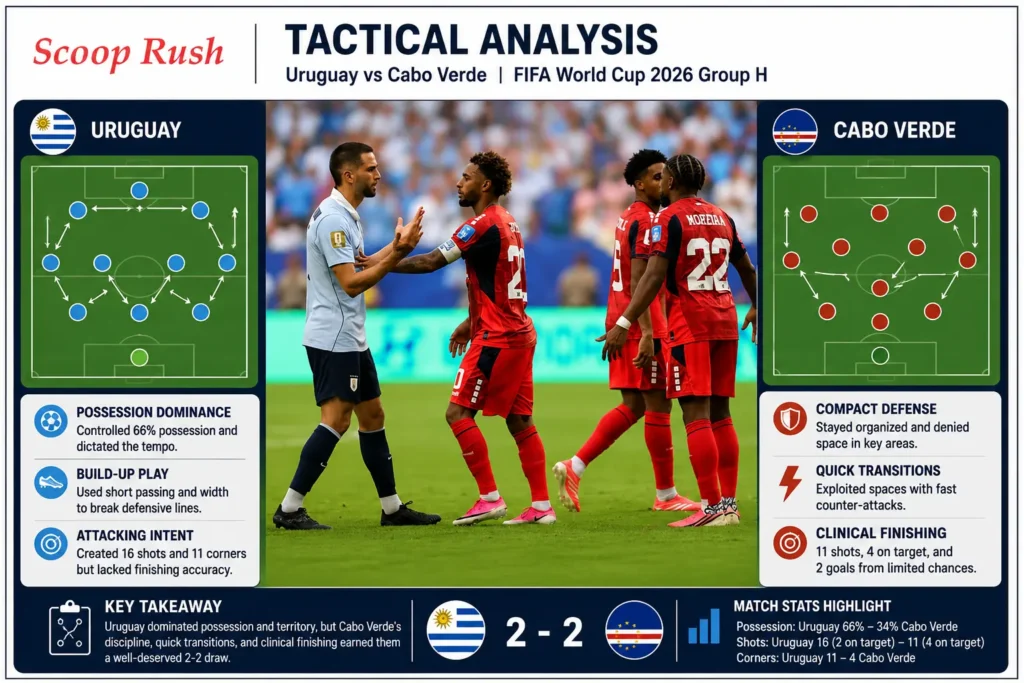
Uruguay vs Cabo Verde Result Delivers One of Group H’s Most Dramatic Matches. Few expected this Group H encounter to produce one of the most entertaining matches of the FIFA World Cup 2026 group stage. Yet the Uruguay vs Cabo Verde Result ended in a thrilling 2-2 draw after both teams exchanged goals in an action-packed contest that kept supporters engaged until the final whistle.

Uruguay twice came from behind to earn a valuable point, while Cabo Verde once again proved they can compete with one of South America’s strongest football nations. The result leaves Group H finely balanced and increases the excitement heading into the remaining fixtures.

For football fans following the World Cup, this was a reminder that no match can be taken for granted. Cabo Verde displayed impressive organization and attacking quality, while Uruguay showed resilience and determination to avoid defeat.

Match Overview

Goals

Uruguay
Maximiliano Araújo (44′)
Agustín Canobbio (45+6′)

Cabo Verde
Kevin Pina (21′)
Helio Varela (61′)

The match featured four goals, dramatic momentum swings, and intense battles across the pitch. Neither side could find the winning goal despite several attacking opportunities during the closing stages.

First Half: Cabo Verde Shock Uruguay Before Late Comeback

The opening stages were competitive, with both teams attempting to establish control in midfield.

Cabo Verde struck first in the 21st minute when Kevin Pina found the back of the net to give the African side an early advantage. The goal rewarded Cabo Verde’s disciplined start and immediately placed pressure on Uruguay.

Although Uruguay enjoyed more possession throughout the first half, they struggled to create clear scoring chances against Cabo Verde’s compact defensive shape.

Everything changed shortly before halftime.

Uruguay Equalize Before the Break

Maximiliano Araújo brought Uruguay level in the 44th minute with a crucial goal that shifted the momentum.

Deep into first-half stoppage time, Agustín Canobbio completed the turnaround by scoring in the 45+6th minute.

In the space of only a few minutes, Uruguay transformed a losing position into a 2-1 lead, heading into halftime with renewed confidence.

Second Half: Cabo Verde Respond Through Hélio Varela

Second Half: Cabo Verde Respond Through Hélio Varela

Uruguay entered the second half hoping to protect their lead, but Cabo Verde refused to back down.

Their persistence paid off in the 61st minute when Hélio Varela scored the equalizer, making it 2-2.

The goal reignited the contest and ensured both teams continued searching for a decisive winner during the remaining half hour.

Despite several attacking moves, neither side managed to break the deadlock again.

When the referee blew the final whistle, the points were shared after an entertaining four-goal contest.

Match Statistics

The statistics highlight an interesting contrast between Uruguay’s possession-based approach and Cabo Verde’s efficiency.

StatisticUruguayCabo Verde
Goals22
Shots1611
Shots on Target24
Possession66%34%
Passes468277
Pass Accuracy87%74%
Fouls114
Yellow Cards22
Red Cards00
Offsides30
Corners114

These numbers reveal that Uruguay dominated possession and territorial control but struggled to convert that advantage into shots on target.

Cabo Verde, by contrast, created fewer chances but tested Uruguay’s goalkeeper more frequently.

Uruguay Controlled Possession but Missed Efficiency

One of the biggest talking points from the Uruguay vs Cabo Verde Result is the difference between possession and productivity.

Uruguay controlled 66 percent of the ball while completing 468 passes at an impressive 87 percent accuracy.

However, despite registering 16 shots, only two were on target.

That lack of precision prevented Uruguay from turning their territorial dominance into a victory.

Their attacking movement created opportunities, but the final finish often failed to match the quality of the build-up.

Cabo Verde Made Their Chances Count

Cabo Verde produced an excellent counterattacking display.

Although they had only 34 percent possession, they remained dangerous whenever they advanced into Uruguay’s half.

Their 11 shots produced four efforts on target and two goals, demonstrating clinical finishing compared to their opponents.

The team’s disciplined defensive organization also frustrated Uruguay for long periods before launching quick attacks whenever space appeared.

Key Moments That Changed the Match

Several incidents shaped the outcome.

Kevin Pina Opens the Scoring
The opening goal in the 21st minute gave Cabo Verde confidence and forced Uruguay to chase the match.

Uruguay’s Stunning Late First-Half Response
Goals from Maximiliano Araújo and Agustín Canobbio within the closing moments of the first half completely changed the momentum. Instead of trailing at halftime, Uruguay entered the break with a lead.

Hélio Varela Restores Parity
The equalizer shortly after the hour mark ensured Cabo Verde remained firmly in contention for a positive result.

Defensive Discipline
Neither team received a red card despite an intense contest. Both sides collected two yellow cards while maintaining disciplined defensive performances during the closing stages.

Tactical Analysis

Tactical Analysis

Uruguay’s Strengths
Uruguay successfully controlled possession and circulated the ball confidently through midfield. Their passing accuracy allowed them to dictate large portions of the match while consistently pushing Cabo Verde deeper into their own half. They also earned 11 corner kicks, showing sustained attacking pressure.

Areas Uruguay Must Improve
The major concern remains finishing. Only two of Uruguay’s sixteen attempts tested the goalkeeper. Improving shot selection and accuracy will be essential in upcoming Group H fixtures.

Cabo Verde’s Tactical Success
Cabo Verde defended compactly before attacking quickly through transitions. They remained organized throughout the match and capitalized on their best opportunities. Their ability to score twice despite limited possession reflects an efficient and disciplined tactical approach.

What the Result Means for Group H

Following two group-stage matches, Group H remains extremely competitive.

Current standings:

TeamPoints
Spain4
Uruguay4
Cabo Verde2
Saudi Arabia1

With multiple teams still capable of advancing, every remaining Group H match becomes increasingly significant.

Uruguay remain well placed but cannot afford further missed opportunities.

Cabo Verde will take confidence from earning another valuable point against one of the tournament’s traditional powers.

Standout Performers

Maximiliano Araújo
Araújo’s equalizer just before halftime changed the momentum and gave Uruguay renewed belief.

Agustín Canobbio
His stoppage-time goal completed Uruguay’s comeback before the interval and looked set to become the match winner until Cabo Verde responded.

Kevin Pina
Opening the scoring against Uruguay demonstrated composure and helped Cabo Verde execute their game plan perfectly.

Hélio Varela
His second-half equalizer secured an important point and highlighted Cabo Verde’s determination throughout the contest.

Conclusion

The Uruguay vs Cabo Verde Result showcased everything football fans enjoy about the FIFA World Cup. Uruguay controlled possession, created pressure, and staged an impressive first-half comeback after falling behind. Cabo Verde, however, matched their opponents with discipline, efficiency, and resilience, responding strongly in the second half to secure a deserved 2-2 draw.

The statistics underline Uruguay’s dominance on the ball, but Cabo Verde demonstrated that effective finishing and organized defending can neutralize even the most possession-heavy teams.

With Group H still wide open, both nations remain firmly in contention, ensuring even greater drama in the matches to come.

Belgium vs Iran Result: Belgium Held to 0-0 Draw After Red Card in FIFA World Cup 2026                                  

0

Competition: FIFA World Cup 2026 – Group G

Full-Time Score: Belgium 0-0 Iran

Date: 22 June 2026

Venue: Los Angeles Stadium, Inglewood

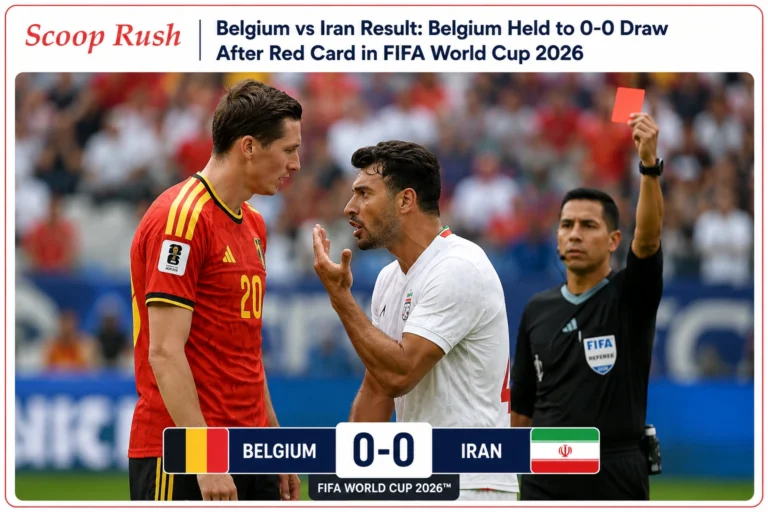
A dramatic Group G encounter ended without a goal, but it was anything but uneventful. The Belgium vs Iran Result FIFA World Cup 2026 Group G will be remembered for Belgium’s red card, relentless pressure, and a disciplined Iranian defensive display that secured an important point.

Although Belgium controlled large portions of the match, they failed to convert their dominance into goals. Iran, meanwhile, remained organized, defended with determination, and took advantage of Belgium playing with ten men during the contest. The result leaves Group G finely balanced heading into the remaining fixtures.

Belgium’s Red Card Changes Everything as Iran Earns a Valuable Point. A dramatic Group G encounter ended without a goal, but it was anything but uneventful. The will be remembered for Belgium’s red card, relentless pressure, and a disciplined Iranian defensive display that secured an important point.

Although Belgium controlled large portions of the match, they failed to convert their dominance into goals. Iran, meanwhile, remained organized, defended with determination, and took advantage of Belgium playing with ten men during the contest. The result leaves Group G finely balanced heading into the remaining fixtures.

Belgium finished the match with ten players after receiving a red card, making an already difficult contest even more challenging. Despite being reduced in numbers, Belgium still created more attacking opportunities and controlled possession for long periods. However, Iran’s disciplined defensive organization prevented the European side from finding the breakthrough.

For Iran, the draw represents another valuable point in a tightly contested group, while Belgium will likely feel frustrated after dominating many of the statistical categories without finding the winning goal.

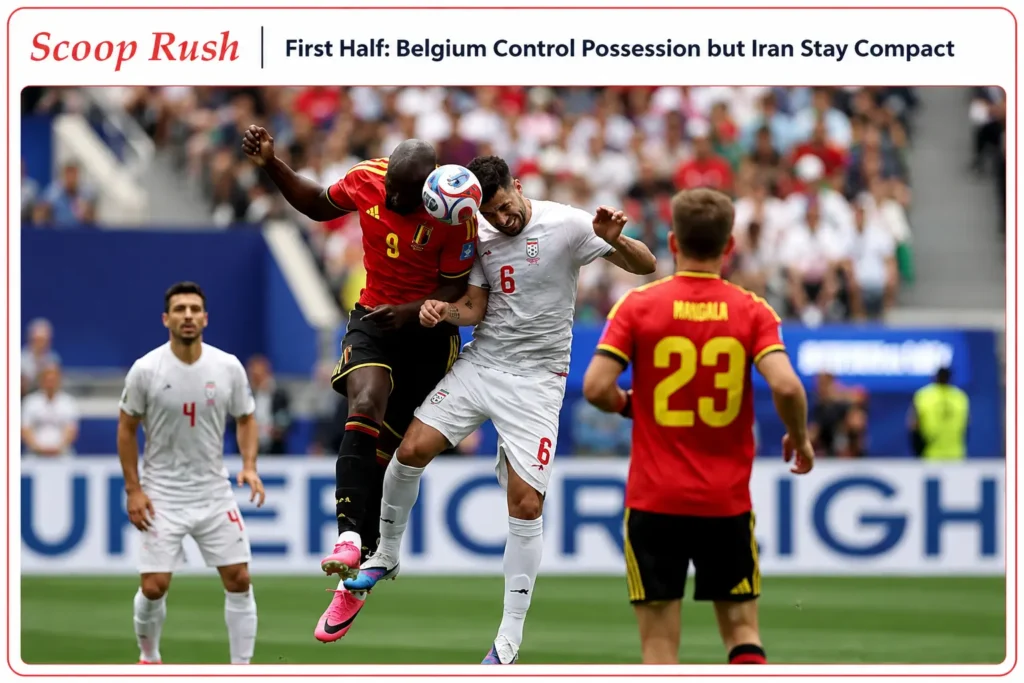
First Half: Belgium Control Possession but Iran Stay Compact

First Half: Belgium Control Possession but Iran Stay Compact
   

Belgium began the match looking to dictate possession and push Iran deeper into their own half. The European side circulated the ball confidently, attempting to stretch Iran’s defensive shape and create openings through patient build-up play.

Iran adopted a disciplined defensive approach, staying compact between the lines and forcing Belgium to take difficult shots rather than allowing clear-cut opportunities.

Although Belgium enjoyed the majority of possession, Iran’s defensive organization ensured that clear scoring chances remained limited throughout much of the opening half.

Neither goalkeeper was seriously overwhelmed as both defenses maintained their structure in an evenly contested first period.

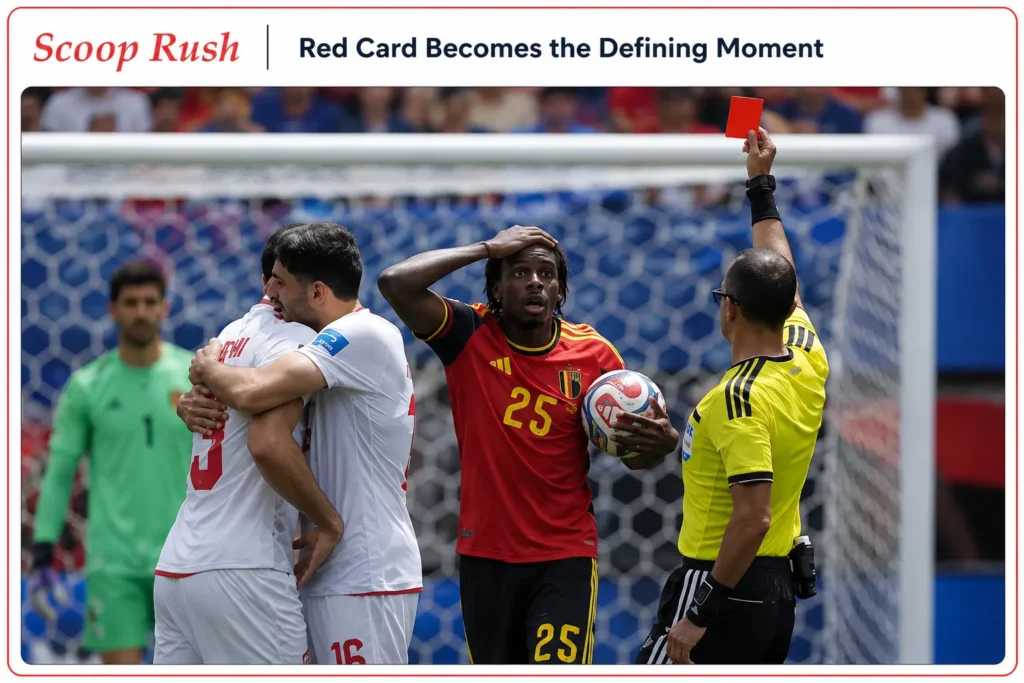
Red Card Becomes the Defining Moment

First Half: Belgium Control Possession but Iran Stay Compact

One of the biggest talking points of the match came when Belgium received a red card.

The dismissal immediately changed the balance of the game. Playing with ten men forced Belgium to become more cautious while Iran gained greater confidence in possession and looked for opportunities to capitalize on the numerical advantage.

Despite losing a player, Belgium continued to compete aggressively and refused to completely surrender control of the match. Their determination prevented Iran from fully dominating the contest.

The red card ultimately became the defining moment, influencing the tactical battle for the remainder of the game.

Belgium Continue Creating Chances Despite Playing with Ten Men

Even after the sending-off, Belgium continued producing attacking opportunities.

According to the match statistics:

  • Shots: Belgium 22 – Iran 7
  • Shots on target: Belgium 7 – Iran 3
  • Possession: Belgium 68% – Iran 32%
  • Passes: Belgium 575 – Iran 206
  • Pass Accuracy: Belgium 89% – Iran 73%
  • Fouls: Belgium 7 – Iran 9
  • Yellow Cards: Belgium 1 – Iran 1
  • Red Cards: Belgium 1 – Iran 0
  • Offsides: Belgium 3 – Iran 4
  • Corners: Belgium 4 – Iran 2

These numbers highlight Belgium’s overall control of possession and attacking play. However, football matches are decided by goals rather than statistics, and Belgium simply could not convert their dominance into a winning finish.

Iran’s Defensive Organization Makes the Difference

Compact Defending Frustrates Belgium

Iran’s greatest strength throughout the match was its disciplined defensive structure.

The defenders stayed organized, limiting Belgium’s space inside the penalty area while forcing attacks into less dangerous positions. Every Belgian opportunity was met with committed defending and strong positional awareness.

Iran also managed the tempo well after Belgium went down to ten players, avoiding unnecessary risks while remaining patient throughout the match.

Although Iran created fewer chances, they successfully executed their game plan by preventing Belgium from scoring.

Belgium Waste Several Promising Opportunities

Belgium generated significantly more offensive pressure than Iran.

Seven shots on target demonstrated that Belgium frequently tested Iran’s defense and goalkeeper. However, the final touch was consistently missing.

Several attacks ended with blocked efforts, missed finishes, or strong defensive interventions.

Their inability to convert opportunities ultimately proved costly, as one goal would likely have secured all three points despite the numerical disadvantage.

Tactical Battle Defines Group G Encounter Belgium vs Iran Result

This match showcased two contrasting tactical approaches.

Belgium relied on:

  • Long periods of possession
  • Quick passing combinations
  • Sustained attacking pressure
  • High pressing

Iran focused on:

  • Defensive discipline
  • Compact shape
  • Patient positioning
  • Limiting dangerous spaces

The contrast created an intriguing tactical battle that remained competitive until the final whistle.

Key Match Statistics

StatisticBelgiumIran
Goals00
Shots227
Shots on Target73
Possession68%32%
Passes575206
Pass Accuracy89%73%
Fouls79
Yellow Cards11
Red Cards10
Corners42
Offsides34

Group G Standings After the Draw

Following this result, Group G remains extremely competitive.

The standings shown after the match are:

  1. Egypt
  2. Iran
  3. Belgium
  4. New Zealand

Iran’s draw keeps them firmly in contention for qualification, while Belgium will need positive results in the remaining group-stage fixtures to strengthen their chances of progressing.

What This Result Means for Belgium

Belgium will likely leave the match with mixed emotions.

On one hand, playing much of the contest with ten players and still controlling possession demonstrates resilience and quality. On the other hand, failing to score despite registering 22 shots and dominating possession will be viewed as a missed opportunity.

The red card also raises concerns going into the next Group G fixture, as squad management and discipline could become important factors moving forward.

What This Result Means for Iran

Iran can be pleased with their defensive performance.

Holding Belgium scoreless despite sustained pressure represents a significant achievement. Their disciplined organization and collective effort earned an important point that could prove crucial in the race for qualification.

While attacking opportunities were limited, Iran successfully executed their defensive game plan and avoided costly mistakes throughout the match.

Match Takeaways

Several key moments shaped the outcome:

  • Belgium dominated possession with 68%.
  • The European side attempted 22 shots but failed to score.
  • Belgium received a decisive red card.
  • Iran remained defensively disciplined throughout.
  • Both teams earned one point after a goalless draw.
  • Group G qualification remains wide open.

Final Thoughts

The Belgium vs Iran Result: 10-Man Belgium Held to 0-0 Draw in FIFA World Cup 2026 Group G demonstrated that dominance in possession and chances does not always guarantee victory.

Belgium controlled much of the game statistically but could not overcome Iran’s disciplined defensive display or the setback of playing with ten men. Iran, meanwhile, executed a well-organized game plan and secured a valuable point that keeps them firmly in the Group G qualification race.

With the group still finely balanced, every remaining match will be crucial as Belgium and Iran continue their pursuit of a place in the FIFA World Cup 2026 knockout stage.

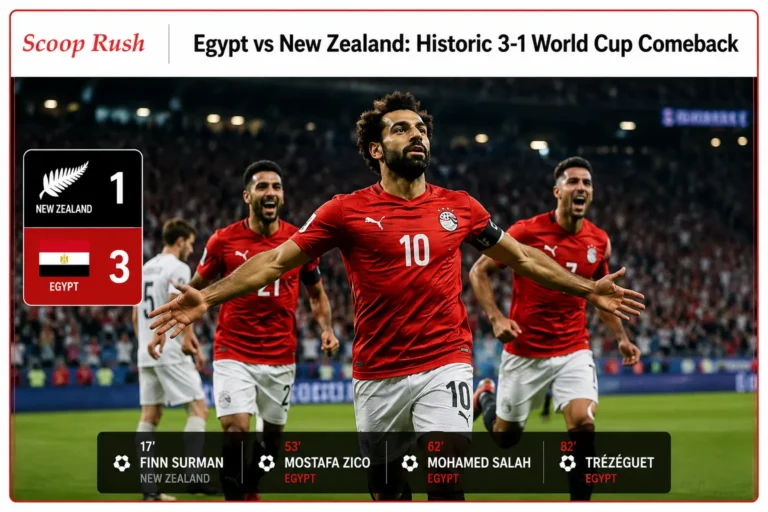
Egypt Secures Historic 3–1 Comeback Victory Over New Zealand in FIFA World Cup 2026

0

Competition: FIFA World Cup 2026 – Group G
Date: Monday, 22 June 2026
Venue: BC Place, Vancouver, Canada
Full-Time: New Zealand 1–3 Egypt

Egypt produced a remarkable second-half comeback to defeat New Zealand 3–1 in a crucial Group G encounter at the FIFA World Cup 2026. Although New Zealand controlled possession for long periods and entered halftime with the lead, Egypt responded with three unanswered goals after the break. As a result, the Pharaohs climbed to the top of Group G and boosted their hopes of reaching the knockout stage.

Egypt vs New Zealand Match Summary

The match began with New Zealand looking comfortable in possession and controlling the tempo through midfield. Meanwhile, Egypt remained patient and searched for opportunities on the counterattack.

New Zealand’s early pressure paid off in the 17th minute when Finn Surman powered home a header to give the All Whites a deserved 1–0 lead. They maintained their advantage throughout the remainder of the first half and went into the break ahead.

However, Egypt emerged from halftime with renewed energy and a far more aggressive approach. Their intensity quickly changed the momentum of the match.

Mostafa Zico equalized early in the second half before Mohamed Salah completed the turnaround with a superb finish. Later, Trézéguet added a third goal to cap off a memorable comeback and secure all three points for Egypt.

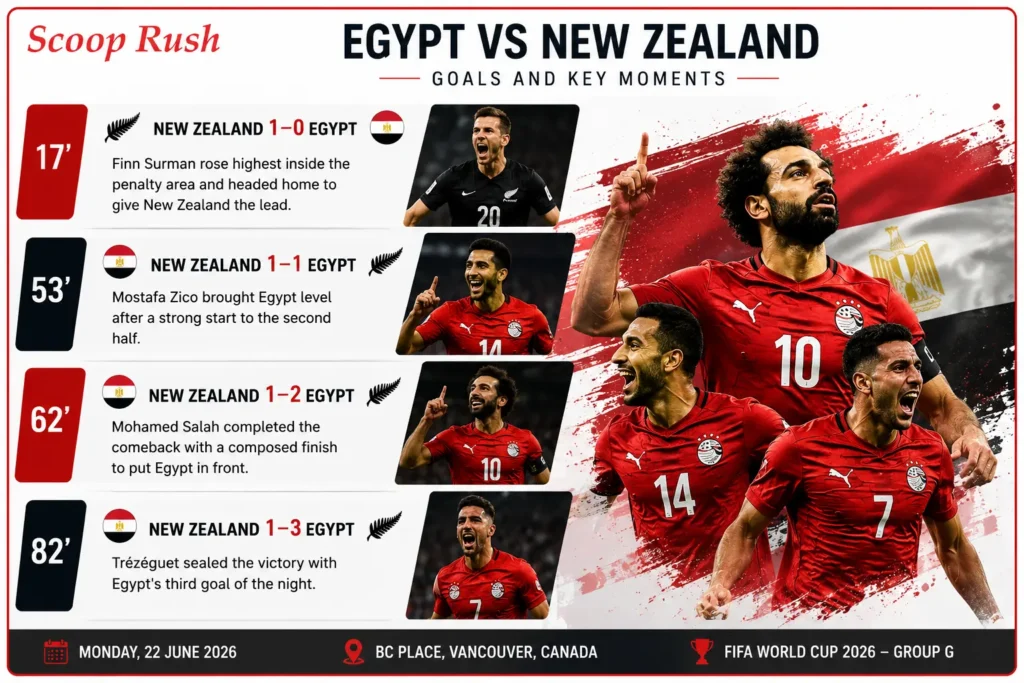
Egypt vs New Zealand Goals and Key Moments

Egypt-vs-New-Zealand-Goals-and-Key-Moments

17′ – New Zealand 1–0 Egypt
Finn Surman rose highest inside the penalty area and headed home to give New Zealand the lead.

53′ – New Zealand 1–1 Egypt
Mostafa Zico brought Egypt level after a strong start to the second half.

62′ – New Zealand 1–2 Egypt
Mohamed Salah completed the comeback with a composed finish to put Egypt in front.

82′ – New Zealand 1–3 Egypt
Trézéguet sealed the victory with Egypt’s third goal of the night.

Egypt vs New Zealand Match Statistics

The statistics reveal how Egypt made better use of their opportunities despite having less possession.

StatisticNew ZealandEgypt
Possession53%47%
Shots1313
Shots on Target410
Passes Completed588474
Pass Accuracy84%86%
Fouls128
Yellow Cards21
Red Cards00
Offsides30
Corners43

While New Zealand saw more of the ball, Egypt’s superior finishing proved to be the decisive factor.

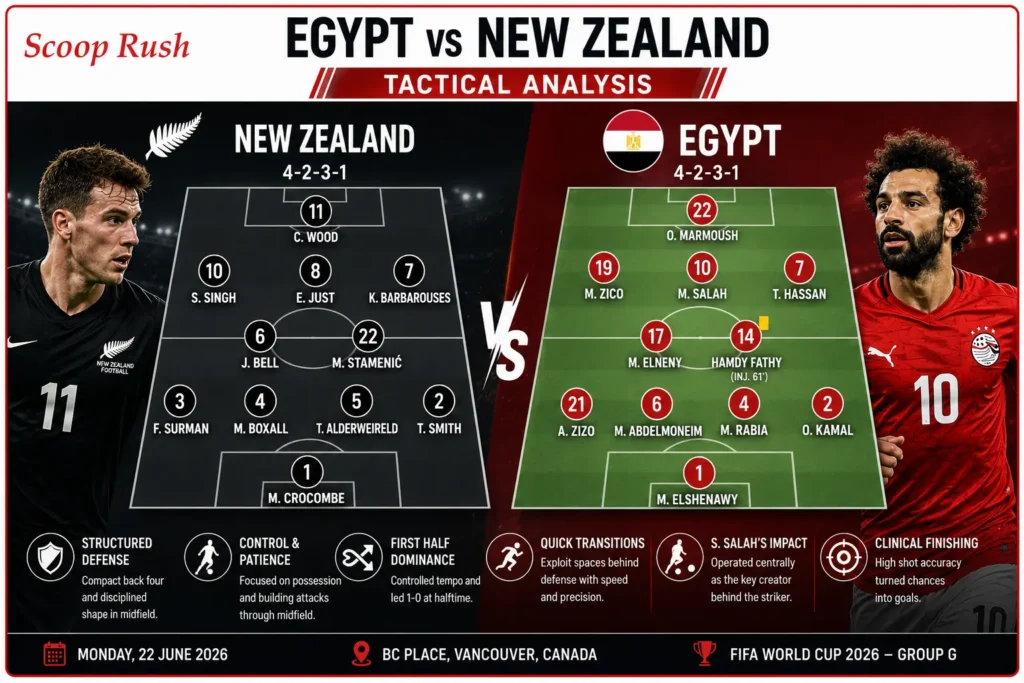
Egypt vs New Zealand Tactical Analysis

Egypt-vs-New-Zealand-Tactical-Analysis

Egypt vs New Zealand: New Zealand’s Strong First Half

New Zealand lined up in a 4-4-2 formation and controlled possession effectively during the opening 45 minutes. Their midfield dictated the pace of play, while their defensive structure limited Egypt’s attacking opportunities.

However, despite their strong start, New Zealand struggled to maintain the same intensity after halftime.

Egypt vs New Zealand: Egypt’s Second-Half Transformation

Egypt operated in a flexible 4-3-3 system and looked far more dangerous after the break. Mohamed Salah’s movement created problems for the New Zealand defense, while Egypt’s quick transitions opened up space in attacking areas.

As the game became more stretched, Egypt’s clinical finishing turned the contest completely in their favor.

Egypt vs New Zealand: What the Result Means for Group G

This victory moves Egypt to the top of Group G with four points from two matches. Furthermore, the result places them in a strong position heading into their final group-stage fixture.

The group remains highly competitive following the draw between Belgium and Iran.

Group G Standings After Matchday Two

PositionTeamPoints
1Egypt4
2Iran2
3Belgium2
4New Zealand1

Egypt now has one foot in the knockout stage but has not yet officially qualified.

Meanwhile, both Iran and Belgium remain firmly in contention. New Zealand, despite sitting bottom of the table, is still mathematically alive and can qualify for the Round of 32 with a positive result against Belgium on the final matchday.

Final Thoughts

The Egypt vs New Zealand clash will be remembered as a historic night for Egyptian football. After trailing at halftime, Egypt responded with a devastating second-half display, scoring three goals in just over 30 minutes to claim their first-ever FIFA World Cup victory.

With goals from Mostafa Zico, Mohamed Salah, and Trézéguet, Egypt completed an impressive comeback and moved into pole position in Group G. Meanwhile, New Zealand will now turn its focus to a must-win final group match against Belgium as the battle for knockout-stage qualification intensifies.

NASA Finds Possible Signs of Ancient Life on Mars After Perseverance Detects Complex Carbon

0

What if Mars once had life billions of years ago? NASA’s Perseverance rover has discovered new evidence that brings scientists closer to answering this question. The rover detected complex carbon molecules inside ancient Martian rocks, creating fresh interest in the search for past life on the Red Planet.

NASA finds possible signs of ancient life on Mars after Perseverance studied mudstone rocks from the Bright Angel outcrop in Jezero crater. The area was once connected to a river system that carried water billions of years ago.

However, scientists say this discovery is not confirmed proof of life. The carbon materials could have formed through ancient biological activity, but they could also come from natural geological processes.

The discovery gives researchers another important clue about whether Mars once had the right conditions for microbial life.

n is a key element found in all known life on Earth.

However, carbon can also form without life. Because of this, scientists are studying the discovery carefully before making conclusions.

NASA Finds Possible Signs of Ancient Life on Mars Through Perseverance Rover Discovery

NASA’s Perseverance rover has been exploring Jezero crater since landing on Mars in 2021. Scientists selected this location because it may preserve evidence from Mars’ ancient past. Billions of years ago, this area contained conditions that could help researchers understand the planet’s history. 

NASA’s Perseverance rover has been exploring Jezero crater since landing on Mars in 2021. Scientists selected this location because they believed it could preserve evidence from Mars’ ancient past.

Billions of years ago, Jezero crater may have contained a lake connected to rivers. Therefore, rocks in this area could hold information about the planet’s environment when water was present.

During its journey through Neretva Vallis, an ancient river valley, Perseverance examined mudstone rocks from the Bright Angel outcrop.

Using its SHERLOC instrument, the rover detected macromolecular carbon, also called MMC. This type of carbon is important because carbo

How NASA’s Perseverance Rover Found Possible Signs of Ancient Life on Mars

How NASA’s Perseverance Rover Found Possible Signs of Ancient Life on Mars

The Perseverance rover used its SHERLOC instrument to analyze the chemical makeup of Martian rocks.

The instrument uses ultraviolet laser technology to study minerals and organic materials on the surface of rocks.

Researchers found organic carbon in two mudstone samples from the Bright Angel area. The team reported hundreds of organic detections, making it one of the strongest organic material findings in Jezero crater.

Additionally, the carbon was found in rocks that had remained preserved for billions of years.

Scientists believe these rocks may provide valuable information about Mars’ ancient environment.

Complex Carbon Discovery Raises Questions About Ancient Life on Mars

The discovery of complex carbon has increased interest in the possibility that ancient microbial life may have existed on Mars.

On Earth, similar carbon materials can be found in ancient biological remains, including fossilized organic matter.

However, scientists explain that there are other possible explanations.

The carbon could have formed through chemical reactions between rocks and water. It could also have arrived from space through meteorites.

Therefore, researchers cannot confirm that the carbon came from living organisms.

Why NASA Scientists Are Studying Mars Organic Carbon Evidence

Why NASA Scientists Are Studying Mars Organic Carbon Evidence

Scientists are studying this organic carbon because it may reveal how Mars changed over time.

The discovery is important because NASA’s Curiosity rover previously found organic materials in Gale crater.

These two locations are thousands of kilometers apart. As a result, researchers believe organic materials may have existed across different areas of Mars billions of years ago.

Furthermore, the findings suggest that ancient Mars may have had environments where complex chemistry could happen.

Perseverance Rover Finds Organic Carbon in Ancient Mars Rocks

One of the most interesting rocks studied by Perseverance is called Cheyava Falls.

Earlier observations of this rock revealed unusual surface patterns known as “leopard spots.”

These markings attracted attention because similar patterns on Earth can sometimes be connected with microbial activity.

However, scientists also know that non-biological processes can create similar features.

The new carbon discovery adds more information, but researchers still need more evidence.

Could Organic Carbon Reveal Signs of Microbial Life on Mars?

The biggest question is whether ancient microbes created the carbon found by Perseverance.

Scientists say this possibility cannot be ruled out.

Macromolecular carbon can be linked with ancient biological materials on Earth, which makes the discovery exciting.

However, the rover does not have the ability to completely identify whether the carbon came from life or from natural processes.

Therefore, scientists believe the best way to solve this mystery is by studying Mars samples in laboratories on Earth.

Why NASA Wants Mars Samples Returned to Earth

Earth laboratories have more advanced equipment than the instruments currently available on Perseverance.

By studying Martian samples directly, scientists could examine the carbon structures in much greater detail.

Perseverance has already collected and stored rock samples for a possible future return mission.

However, bringing these samples back has faced challenges, and future plans are still being developed.


Conclusion: NASA Finds Possible Signs of Ancient Life on Mars, But the Mystery Continues

NASA’s Perseverance rover has provided one of the most exciting discoveries in the search for ancient life beyond Earth. The detection of complex carbon molecules in Martian rocks shows that Mars once had environments where important chemical ingredients existed.

However, scientists are still careful because these findings do not confirm that life existed on Mars. The carbon detected by Perseverance could have formed from ancient microbial activity, but it could also have developed through natural geological processes.

The discovery from the Bright Angel outcrop adds another important chapter to Mars exploration. Furthermore, future studies of collected Martian samples could help scientists finally understand whether these carbon materials are connected to ancient life or simply reveal the planet’s complex history.

Until then, Perseverance continues searching the Red Planet for more clues about its mysterious past.

FAQs

1. Did NASA find life on Mars?

No. NASA has not confirmed that life existed on Mars. The Perseverance rover found carbon materials that could be connected to ancient life, but more testing is needed.

2. What did Perseverance discover on Mars?

Perseverance detected complex carbon molecules inside mudstone rocks from the Bright Angel area of Jezero crater.

3. Why is carbon important for finding life on Mars?

Carbon is important because all known life on Earth is based on carbon chemistry. However, carbon can also exist without biological activity.

4. Could the Mars carbon come from microbes?

Scientists say it is possible, but they cannot confirm it yet. The carbon may also have formed through non-biological processes.

5. Will NASA study Mars rocks on Earth?

NASA hopes future missions can return collected Mars samples to Earth, where scientists can perform deeper analysis.

Spain 4-0 Saudi Arabia: La Roja Produce Dominant Display to Take Control of Group H

0

Match Details

Competition: FIFA World Cup 2026 – Group H
Full-Time Score: Spain 4–0 Saudi Arabia
Date: 21 June 2026
Venue: Atlanta Stadium, Atlanta, United States

Spain delivered a commanding performance to defeat Saudi Arabia 4-0 in their FIFA World Cup 2026 Group H encounter at Atlanta Stadium, strengthening their position in the race for a place in the knockout stage.

La Roja controlled proceedings from the opening whistle and never allowed Saudi Arabia to settle into the match. Goals from Lamine Yamal and Mikel Oyarzabal, along with an own goal from Hassan Altambakti, secured a convincing victory for the European giants.

Yamal Opens the Scoring Early

Yamal Opens the Scoring Early

Spain started brightly and were rewarded in the 10th minute when teenage sensation Lamine Yamal broke the deadlock. The young winger continued his impressive tournament form, giving Spain the perfect start and setting the tone for a dominant afternoon.

The goal increased Spain’s confidence as they dictated possession and pushed Saudi Arabia deeper into their own half.

Oyarzabal’s Quickfire Double Puts Spain in Control

Mikel Oyarzabal doubled Spain’s advantage in the 21st minute after a well-worked attacking move. Just three minutes later, the forward struck again to make it 3-0 and effectively put the match beyond Saudi Arabia’s reach before halftime.

Spain’s movement, passing quality and attacking combinations repeatedly caused problems for the Saudi defence, which struggled to cope with the pressure.

Own Goal Completes Comfortable Victory

Any hopes of a Saudi Arabian comeback disappeared shortly after the restart. In the 49th minute, defender Hassan Altambakti accidentally turned the ball into his own net while attempting to deal with a dangerous Spanish attack.

The own goal extended Spain’s lead to four goals and allowed Luis de la Fuente’s side to comfortably manage the remainder of the match.

Spain Dominate the Statistics

The match statistics highlighted Spain’s complete control throughout the contest.

Spain registered 21 shots compared to Saudi Arabia’s 3 and produced 9 shots on target while restricting their opponents to just one effort on goal. Possession was heavily in Spain’s favour at 65%, while they completed an impressive 639 passes with a remarkable 92% accuracy rate.

Saudi Arabia managed only 238 passes at 76% accuracy and struggled to create meaningful opportunities in attack.

Key Match Statistics

  • Possession: Spain 65% – 35% Saudi Arabia
  • Shots: Spain 21 – 3 Saudi Arabia
  • Shots on Target: Spain 9 – 1 Saudi Arabia
  • Passes: Spain 639 – 238 Saudi Arabia
  • Pass Accuracy: Spain 92% – 76% Saudi Arabia
  • Corners: Spain 6 – 1 Saudi Arabia
  • Fouls: Spain 10 – 2 Saudi Arabia

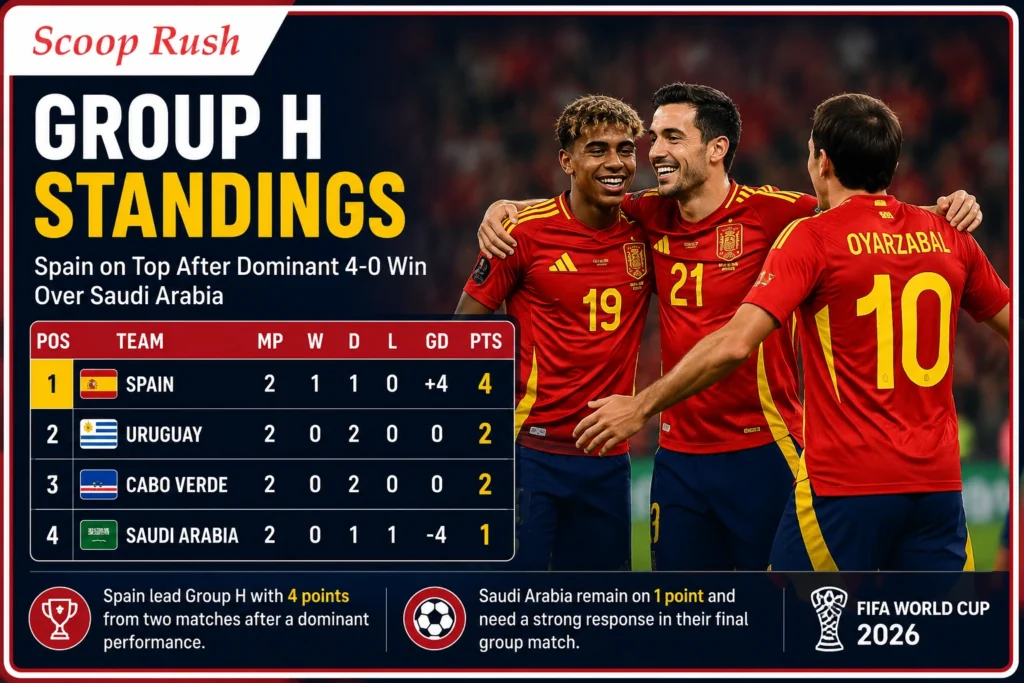
Group H Standings

Group H Standings, Spain 4-0 Saudi Arabia La Roja Produce Dominant Display to Take Control of Group H

Following the victory, Spain moved to the top of Group H with four points from two matches.

  1. Spain – 4 points
  2. Uruguay – 2 points
  3. Cabo Verde – 2 points
  4. Saudi Arabia – 1 point

The result leaves Spain in a strong position heading into their final group-stage fixture, while Saudi Arabia face a difficult challenge to keep their World Cup hopes alive.

What This Means

Spain’s performance was one of the most dominant displays of the tournament so far. Their attacking efficiency, midfield control and defensive solidity ensured a comfortable victory and boosted their goal difference significantly.

For Saudi Arabia, defensive mistakes and a lack of attacking threat proved costly. They will need a much-improved performance in their final group match if they hope to remain in contention for qualification.

Goals

  • 10′ – Lamine Yamal (Spain)
  • 21′ – Mikel Oyarzabal (Spain)
  • 24′ – Mikel Oyarzabal (Spain)
  • 49′ – Hassan Altambakti (Own Goal)

Spain now look well placed to advance from Group H, while Saudi Arabia must regroup quickly ahead of their decisive final group-stage encounter.

Final Thoughts

Spain’s emphatic 4-0 victory over Saudi Arabia was a clear demonstration of their quality and championship ambitions at the FIFA World Cup 2026. From Lamine Yamal’s early breakthrough to Mikel Oyarzabal’s clinical brace, La Roja controlled every aspect of the match and rarely looked troubled.

The result sends Spain to the top of Group H with four points and significantly boosts their chances of reaching the knockout stage. Their dominance in possession, passing accuracy, and chance creation underlined why they remain one of the tournament’s strongest contenders.

For Saudi Arabia, the defeat is a setback, but qualification hopes are not yet over. They will need a much-improved performance in their final group-stage match to keep their World Cup dream alive.

As Group H enters its decisive phase, Spain have momentum on their side, while Saudi Arabia face a must-deliver challenge in the race for qualification.

Heat and Humidity Risks for Seniors: What You Need to Know

0

Imagine stepping outside on a hot summer day and feeling as though the air is weighing you down. For many older adults, that feeling is more than simple discomfort. High humidity can make hot weather significantly more dangerous by placing extra strain on the body and increasing the risk of serious health problems.

While most people pay attention to temperature during the summer, humidity often receives far less attention. However, experts warn that the combination of heat and humidity can be especially harmful for older adults because the body’s ability to cool itself naturally declines with age. Certain medications commonly taken by seniors including those who may be unknowingly taking too many vitamins and supplements can further reduce the body’s ability to handle heat safely.

As hotter summers become more common, understanding how humidity affects older adults has never been more important.

Why Humidity and Older Adults Are a Risky Combination

Why Humidity and Older Adults Are a Risky Combination|scooprush

The human body has a built-in cooling system. When body temperature rises, sweat forms on the skin. As that sweat evaporates, it removes heat and helps keep the body cool.

However, humidity interferes with this process.

When there is too much moisture in the air, sweat cannot evaporate efficiently. As a result, the body struggles to release excess heat. This means a person can feel much hotter than the actual air temperature suggests.

For older adults, this challenge is even greater. Aging naturally reduces the body’s ability to regulate temperature. People tend to sweat less as they get older, making it harder to stay cool during hot and humid conditions.

As a result, older adults often face a double burden: reduced sweating and reduced cooling from the sweat they do produce.

How the Aging Body Responds to Heat and Humidity

Hot and humid weather affects everyone. However, older adults face unique challenges because their bodies respond differently to rising temperatures.

Reduced Ability to Cool Down

As people age, the body’s cooling mechanisms become less efficient. Sweat glands become less active, and blood circulation may not respond as quickly to heat.

Consequently, older adults can overheat faster than younger people, even when temperatures do not seem extreme.

In some cases, temperatures that appear manageable can still create serious health risks for seniors, especially those living with chronic medical conditions.

Increased Risk of Dehydration

Dehydration is one of the most common dangers during periods of hot and humid weather.

When the body works harder to cool itself, fluid loss increases. At the same time, many older adults may not feel thirsty even when dehydration is developing.

Certain health conditions can further reduce the body’s ability to recognize thirst, making dehydration more likely.

Common signs of dehydration include:

  • Dry mouth
  • Dizziness
  • Headaches
  • Fatigue
  • Weakness
  • Confusion

Without proper hydration, these symptoms can quickly become more serious. It is also worth noting that taking too many vitamins or supplements without medical guidance can sometimes affect kidney function and fluid balance, adding another layer of risk during hot weather.

Greater Stress on the Heart

Heat places extra demands on the cardiovascular system.

To release heat, the body increases blood flow to the skin. However, this process requires the heart to work harder.

For older adults with heart disease, high blood pressure, or circulation problems, hot and humid weather can increase the risk of serious complications.

In fact, many heat-related medical emergencies are linked to cardiovascular problems rather than heat stroke alone.

Respiratory Problems Can Become Worse

Humidity can also affect breathing.

Hot, humid air often feels heavier and more difficult to breathe. In addition, poor air quality commonly accompanies periods of extreme heat.

For people living with respiratory conditions, this combination can be particularly challenging.

Symptoms may include:

  • Shortness of breath
  • Wheezing
  • Persistent coughing
  • Chest tightness

Furthermore, humid environments can encourage the growth of mold, mildew, and other airborne irritants that may worsen breathing difficulties.

The Hidden Impact on Mental Health

The dangers of heat and humidity are not limited to physical health.

Many older adults spend long periods indoors during heat waves to avoid dangerous outdoor conditions. While this can protect them from heat exposure, it may also increase feelings of isolation and loneliness.

Additionally, extreme heat can affect cognitive function.

Older adults may experience:

  • Confusion
  • Difficulty concentrating
  • Increased irritability
  • Delirium
  • Memory-related challenges

Those living with dementia or other cognitive conditions may have trouble recognizing the risks associated with extreme heat or remembering important safety measures.

Poor sleep can make these issues worse. Hot and humid nights often interfere with rest, leaving people tired and less able to cope with daily activities. Even seemingly simple routines like how often you brush your hair can feel overwhelming when fatigue and heat take a toll on daily energy levels.

Certain Medications Can Increase Heat Sensitivity

Many commonly prescribed medications can make older adults more vulnerable during hot weather.

Some medications reduce the body’s ability to sweat. Others increase the risk of dehydration or affect how the body responds to heat.

Because of this, older adults should pay close attention to how they feel during hot and humid conditions.

Medication storage is another important consideration. Excessive heat may affect the effectiveness of some medications if they are not stored properly.

Keeping medications in a cool, suitable location can help maintain their effectiveness.

Why Heat Risks Are Growing

Why Heat Risks Are Growing|scooprush

The number of older adults is increasing in many communities. At the same time, hotter summers and more frequent heat waves are becoming a growing concern.

This combination means that more people may be exposed to dangerous heat and humidity in the years ahead.

Historically cooler regions are also experiencing periods of unusually hot weather. Many residents in these areas may not be fully prepared for extended heat events, especially if homes and buildings lack efficient cooling systems.

As a result, heat-related health risks are becoming a concern across a wider range of communities. Younger generations entering the healthcare and caregiving workforce including those drawn to purpose-driven careers with better pay  will play an increasingly important role in supporting aging populations through these challenges.

Warning Signs of Heat Exhaustion

Recognizing heat-related illness early can prevent a medical emergency.

Family members and caregivers should watch for symptoms such as:

  • Fatigue
  • Headache
  • Excessive sweating
  • Muscle cramps
  • Nausea
  • Vomiting
  • Rapid pulse
  • Dizziness
  • Confusion

If these symptoms appear, the person should be moved to a cooler environment immediately and encouraged to drink water if appropriate.

Prompt action can help prevent the condition from becoming more severe.

When Heat Stroke Becomes an Emergency

Heat stroke is a life-threatening condition that requires immediate medical attention.

Warning signs may include:

  • Very high body temperature
  • Hot or unusually red skin
  • Strong, rapid heartbeat
  • Severe headache
  • Fainting
  • Seizures
  • Loss of consciousness

Emergency medical help should be sought immediately if heat stroke is suspected.

Practical Ways Older Adults Can Stay Safe

Practical Ways Older Adults Can Stay Safe|scooprush

Fortunately, several simple steps can reduce the risks associated with heat and humidity.

Stay in a Cool Environment

Air conditioning remains one of the most effective ways to prevent heat-related illness.

If home cooling is unavailable, spending time in public buildings or community cooling spaces can provide relief.

Drink Plenty of Water

Staying hydrated is essential.

Older adults should drink water regularly throughout the day, even if they do not feel thirsty.

Alcohol should be limited because it can contribute to dehydration.

Wear Appropriate Clothing

Loose-fitting, lightweight clothing can help the body stay cooler.

Light-colored fabrics may also reduce heat absorption when spending time outdoors.

Limit Outdoor Activities

Whenever possible, outdoor activities should be scheduled during cooler morning or evening hours.

Avoiding prolonged exposure to direct sunlight can significantly reduce heat-related risks.

Check on Vulnerable Family Members

Regular wellness checks can make a major difference during periods of extreme weather.

Family members, neighbors, and caregivers should pay special attention to older adults who live alone or have mobility challenges.

Community Support Matters

Individual precautions are important, but community support also plays a critical role.

Accessible cooling centers, transportation assistance, emergency response plans, and public awareness campaigns can help protect vulnerable populations during periods of extreme heat.

Communities that prepare in advance are often better equipped to respond when dangerous weather arrives. Advances in preventive medicine such as the way the HPV vaccine has been shown to reduce cervical cancer deaths  remind us how much community-level health awareness can save lives before a crisis develops.

Conclusion

Humidity and heat create a challenging combination for older adults. As the body’s ability to regulate temperature naturally declines with age, hot and humid conditions can increase the risk of dehydration, heart problems, breathing difficulties, confusion, and other serious health concerns.

Understanding these risks is the first step toward prevention. By staying hydrated, keeping cool, recognizing warning signs early, and supporting vulnerable individuals, families and communities can help older adults stay safer during periods of extreme weather.

Taking simple precautions before temperatures rise can help older adults stay safer and avoid heat-related health problems.

FAQs

1. Why is humidity more dangerous for older adults?

Humidity prevents sweat from evaporating properly. Since older adults already sweat less than younger people, their bodies have a harder time cooling down.

2. What health conditions increase heat-related risks?

Heart disease, lung disease, kidney disease, diabetes, dementia, poor circulation, and other chronic health conditions can increase vulnerability during hot and humid weather. Conditions like type 1 diabetes require particularly careful management during extreme heat, as temperature and dehydration can affect blood sugar levels and medication effectiveness.

3. Can humidity affect sleep quality?

Yes. High humidity can make it difficult for the body to cool down at night, leading to restless sleep, fatigue, and reduced daytime energy.

4. What are the first signs of heat exhaustion?

Common signs include dizziness, fatigue, headache, nausea, muscle cramps, excessive sweating, and confusion.

5. How can older adults stay safe during humid weather?

Staying hydrated, using air conditioning, wearing lightweight clothing, limiting outdoor activities during peak heat, and seeking cooler environments can help reduce health risks.

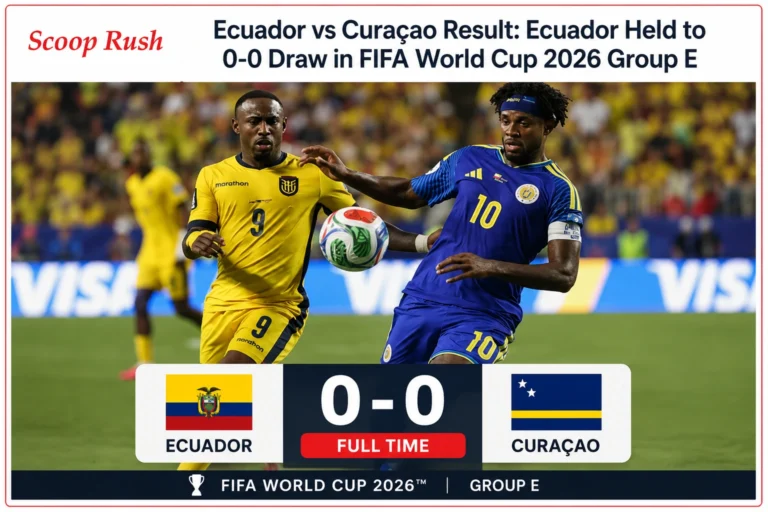
Ecuador vs Curaçao Result: Ecuador Held to 0-0 Draw in FIFA World Cup 2026 Group E 

0

FIFA World Cup 2026  

Date: Sunday, 21 June

 Result: Ecuador 0-0 Curaçao

That was exactly the case as the Ecuador vs Curaçao clash in the FIFA World Cup 2026 Group E ended in a tense 0-0 draw on Sunday. Despite dominating possession, creating more opportunities, and controlling much of the game, Ecuador failed to break through Curaçao’s disciplined defense.

The result leaves Group E finely balanced and keeps both teams with everything still to play for in the tournament. While Ecuador will feel disappointed after failing to convert their dominance into goals, Curaçao can celebrate a determined defensive performance that earned them a valuable point.

This match highlighted the importance of defensive organization, goalkeeping, and patience in tournament football, where every point can prove decisive.

Ecuador vs Curaçao Match Overview

Neither side managed to find the breakthrough during 90 minutes of football. Ecuador spent long periods on the attack, but Curaçao defended with discipline and composure to secure the draw.

The game featured several tactical battles, physical challenges, and late drama, yet neither goalkeeper was beaten.

First Half: Ecuador Controlled the Ball but Could Not Finish

Ecuador started brightly and immediately looked to dominate possession. Their midfield dictated the tempo, allowing the South American side to spend most of the opening period inside Curaçao’s half.

The numbers reflected Ecuador’s superiority with approximately 75% possession throughout the match. They completed 593 passes at an impressive 92% passing accuracy, showing confidence and patience while building attacks.

However, Curaçao defended deep and limited clear-cut chances despite Ecuador registering numerous attempts.

Although Ecuador managed 16 shots, only three tested the goalkeeper. Curaçao’s compact defensive shape frustrated Ecuador’s forwards, forcing many efforts from less dangerous positions.

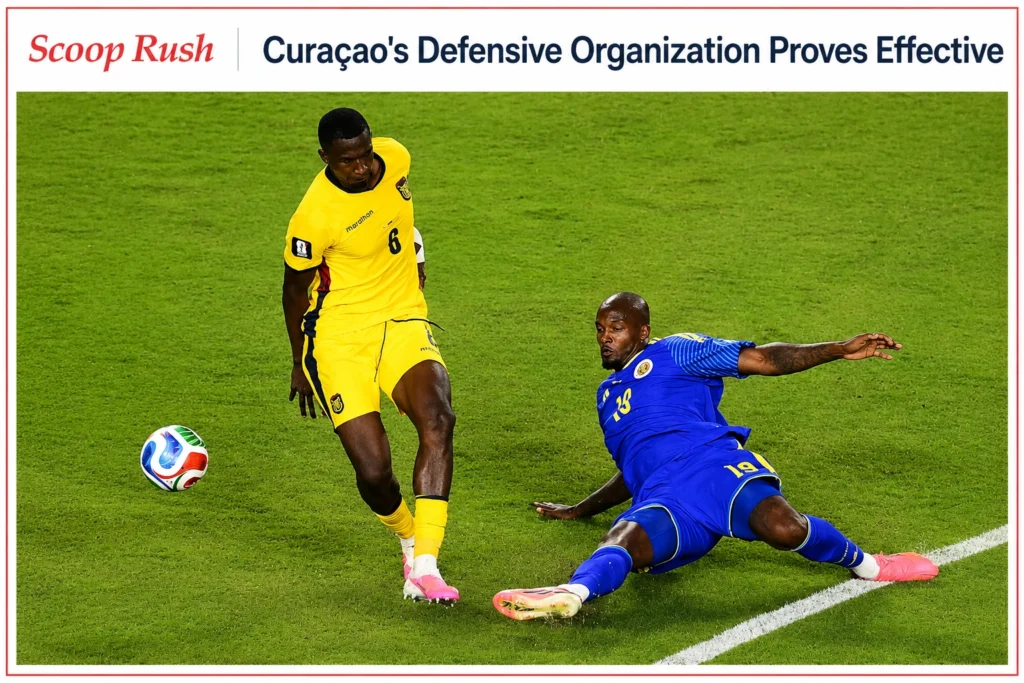
Curaçao’s Defensive Organization Proves Effective

Curaçao's Defensive Organization Proves Effective

While Ecuador controlled possession, Curaçao focused on staying compact defensively.

The Caribbean nation finished with only 25% possession but remained disciplined throughout the match. Rather than chasing the ball, Curaçao concentrated on protecting central areas and preventing Ecuador from creating high-quality scoring opportunities.

Their defenders consistently blocked crosses, tracked runners, and remained organized whenever Ecuador increased the pressure.

The strategy proved successful as Ecuador failed to find the decisive finish despite dominating nearly every statistical category.

Ecuador Dominated the Match Statistics

The overall numbers underline Ecuador’s dominance throughout the contest. They controlled possession, created significantly more chances, and consistently pushed forward, but Curaçao’s resilient defense ensured the match ended without a goal.

Team Statistics

StatisticEcuadorCuraçao
Shots2610
Shots on Target154
Possession75%25%
Passes593221
Passing Accuracy92%68%
Fouls710
Yellow Cards15
Red Cards00
Offsides12
Corners90

Ecuador dominated nearly every statistical category, finishing with 26 shots, 15 shots on target, and an impressive 75% possession. Their 593 completed passes at 92% accuracy reflected complete control of the game’s tempo. They also won nine corner kicks, keeping constant pressure on the Curaçao defense. Despite these overwhelming numbers, Ecuador were unable to find the breakthrough, while Curaçao relied on disciplined defending and limited Ecuador to a frustrating 0-0 draw.

Ecuador Created Pressure but Missed the Final Touch

One of Ecuador’s biggest frustrations came inside the penalty area.

They patiently built attacks from midfield, frequently advancing through wide positions before delivering crosses into dangerous areas.

Despite creating pressure with repeated attacks and winning numerous corners, Ecuador lacked the clinical finishing needed to convert their territorial dominance into goals.

Every promising move was either blocked by Curaçao’s defenders or comfortably dealt with by the goalkeeper.

Curaçao Made Every Attack Count

Unlike Ecuador, Curaçao rarely enjoyed long spells of possession.

Instead, they looked to capitalize on quick transitions whenever Ecuador lost the ball.

Although they produced only 10 total shots, four of those attempts forced saves, showing greater efficiency in front of goal.

Their disciplined defensive approach combined with selective counterattacks ensured they remained competitive throughout the contest.

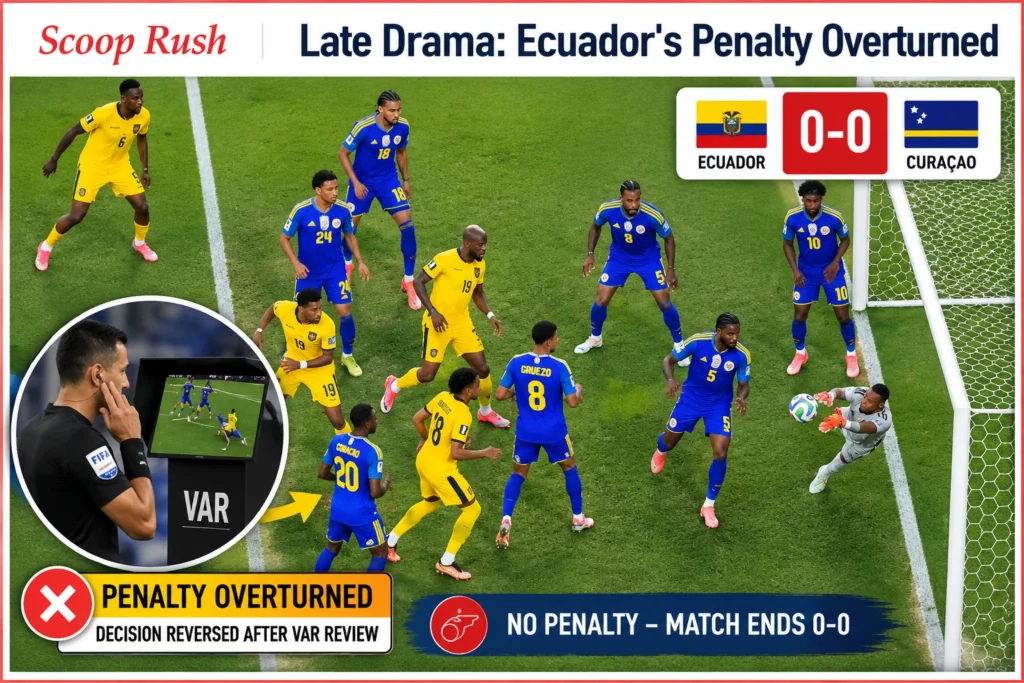
Late Drama: Ecuador’s Penalty Overturned

Late Drama: Ecuador's Penalty Overturned

One of the biggest moments arrived late in the match.

Ecuador were initially awarded a penalty after a VAR review, raising hopes of a dramatic winning goal.

However, after further review, the penalty decision was overturned, meaning Ecuador lost their best opportunity to secure all three points.

The reversal ensured the match remained goalless and preserved Curaçao’s valuable clean sheet.

Discipline Played an Important Role

The physical nature of the contest resulted in several bookings.

Curaçao accumulated five yellow cards, reflecting their aggressive defensive approach while attempting to slow Ecuador’s attacks.

Ecuador, despite spending most of the evening on the ball, received only one yellow card.

Neither side had a player sent off, allowing both teams to finish with eleven men.

Key Substitutions During the Second Half

Both managers introduced fresh legs in search of a breakthrough.

Ecuador attempted to inject additional creativity and attacking energy, while Curaçao focused on maintaining defensive stability and protecting the draw.

Despite the tactical adjustments, neither side managed to produce the decisive moment.

Ecuador’s Passing Game Was Outstanding

Ecuador’s Midfield Controlled the Tempo

One of Ecuador’s biggest positives was their impressive passing display.

Completing 593 passes at 92% accuracy demonstrates excellent composure and technical quality.

Their midfield consistently recycled possession and patiently searched for openings.

However, dominating possession alone does not guarantee victory. Ecuador struggled to transform control into clear scoring opportunities against Curaçao’s compact defensive block.

Curaçao Earn a Valuable Point

For Curaçao, this draw represents a significant achievement.

Facing a team that controlled possession for three-quarters of the match, remaining defensively organized required tremendous concentration and discipline.

Their players defended collectively, committed tactical fouls when necessary, and maintained their shape throughout the contest.

The clean sheet provides confidence heading into the remaining Group E fixtures.

Group E Standings After the Match

Following the goalless draw:

The standings show that qualification remains possible, but Ecuador now face increased pressure to secure victories in their remaining matches.

Tactical Analysis

Ecuador Controlled Territory

Ecuador’s strategy centered around:

  • Dominating possession
  • Building attacks patiently
  • Using width to stretch the defense
  • Winning set-piece opportunities

While the approach created sustained pressure, the finishing touch was missing.

Curaçao Focused on Defensive Discipline

Curaçao adopted a more conservative approach:

  • Compact defensive lines
  • Limited space between defenders
  • Quick counterattacks
  • Efficient defensive positioning

Their tactical discipline prevented Ecuador from turning possession into goals.

What This Result Means

For Ecuador, the result feels like two points dropped.

The South American side dominated possession, completed nearly 600 passes, and forced Curaçao to defend for long stretches. However, tournament football often rewards efficiency rather than possession, and Ecuador could not find the breakthrough.

For Curaçao, earning a point against a possession-dominant opponent represents a positive outcome. Their defensive resilience and collective organization were rewarded with an important clean sheet.

As Group E continues, every remaining fixture becomes increasingly important for both teams.

Final Thoughts

The Ecuador vs Curaçao encounter will be remembered as a match where statistics told only part of the story. Ecuador controlled possession, passes, corners, and attacking territory, but Curaçao’s disciplined defensive display prevented them from capitalizing.

A late overturned penalty added further drama to an already tense contest, ensuring the game finished exactly as it began without a goal.

Although spectators were denied a winning moment, the match demonstrated how determination, tactical discipline, and defensive organization can be just as valuable as attacking football in the FIFA World Cup.

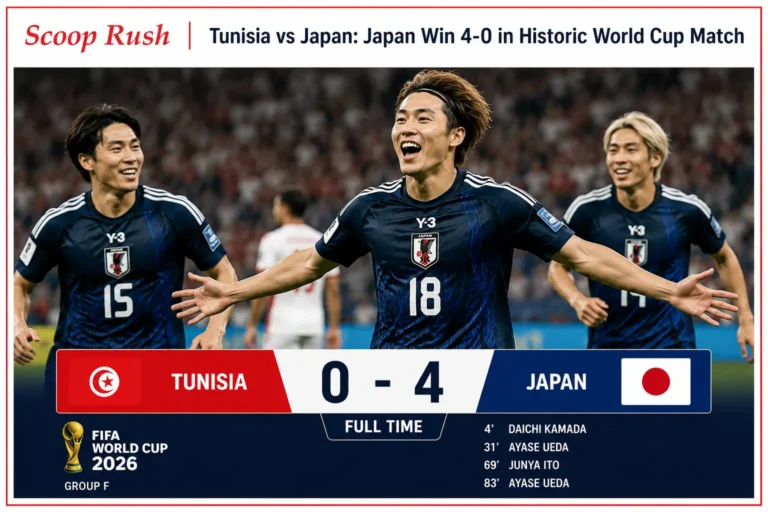
Tunisia vs Japan: Japan Cruise to 4-0 Victory in Historic FIFA World Cup Match

0

Competition: FIFA World Cup 2026 – Group F
Full-Time Score: Tunisia 0-4 Japan
Date: 21 June 2026
Venue: Estadio Monterrey, Mexico

Japan produced a dominant display in the Tunisia vs Japan FIFA World Cup 2026 encounter. The match carried extra significance as it marked the 1,000th game in FIFA World Cup history. Japan scored four goals, controlled possession, and secured a convincing victory. Consequently, they moved closer to the knockout stage, while Tunisia’s campaign came to an end.

Tunisia vs Japan: Match Summary

Japan made a dream start and opened the scoring after just four minutes. Keito Nakamura reached the byline and delivered a precise pass across goal, allowing Daichi Kamada to finish from close range. The goal became Japan’s fastest ever in a FIFA World Cup match.

The Asian side continued to dominate possession and create chances. Their pressure paid off again in the 31st minute when Ayase Ueda fired a powerful low strike from outside the box into the bottom corner, doubling Japan’s advantage before halftime.

Japan remained in control after the break. In the 69th minute, Ueda provided an excellent flick to release Junya Ito, who calmly finished to make it 3-0. Later, in the 83rd minute, Ueda completed his outstanding performance by heading home Kaishu Sano’s cross to seal a comprehensive 4-0 victory.

Tunisia vs Japan: Key Match Statistics

The statistics underline Japan’s superiority throughout the contest.

StatisticTunisiaJapan
Possession38%62%
Shots311
Shots on Goal05
Passing Accuracy80%89%
Corners35
Fouls815

While Tunisia struggled to create clear opportunities, Japan remained efficient in attack and organized in defense.

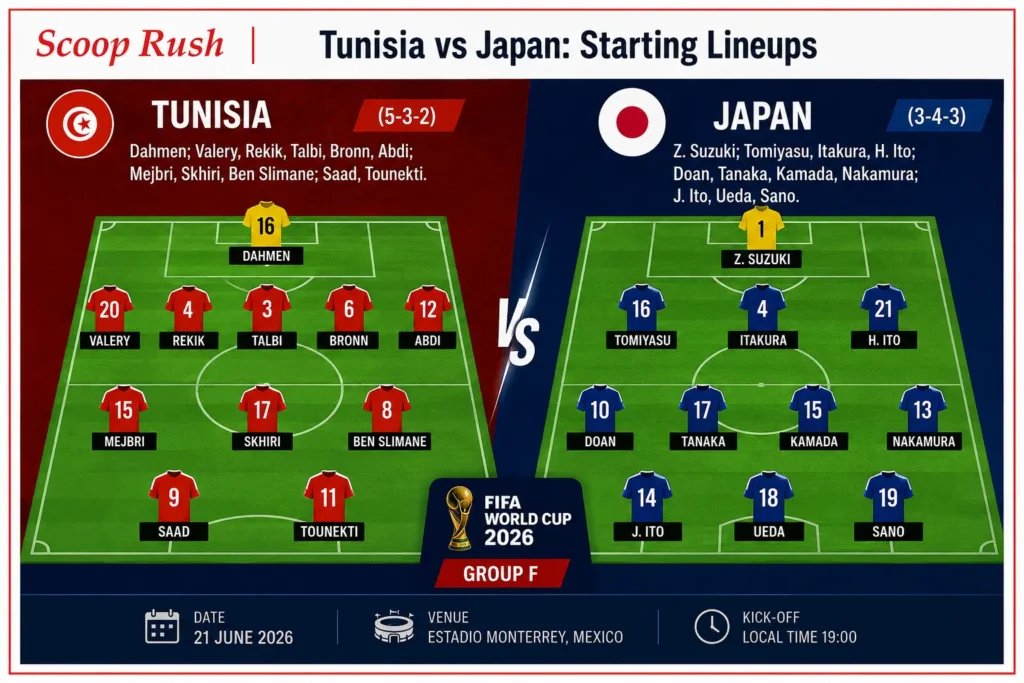
Tunisia vs Japan: Starting Lineups

Tunisia-vs-Japan-Starting-Lineups

Tunisia (5-3-2)

Dahmen; Valery, Rekik, Talbi, Bronn, Abdi; Mejbri, Skhiri, Ben Slimane; Saad, Tounekti.

Japan (3-4-3)

Z. Suzuki; Tomiyasu, Itakura, H. Ito; Doan, Tanaka, Kamada, Nakamura; J. Ito, Ueda, Sano.

Tunisia vs Japan: What the Result Means

This result moved Japan onto four points in Group F and placed them alongside the Netherlands near the top of the standings. Furthermore, the victory significantly improved their chances of reaching the Round of 32.

For Tunisia, however, the defeat proved costly. As a result, they were mathematically eliminated from the tournament after suffering consecutive losses in the group stage under manager Hervé Renard.

Tunisia vs Japan: Ueda Shines in Historic Victory

Ayase Ueda was the standout performer for Japan. The forward scored twice and registered an assist, playing a key role in all phases of the attack. Moreover, Japan’s midfield controlled the tempo, while the defense prevented Tunisia from registering a shot on target.

The combination of attacking efficiency and defensive discipline highlighted why Japan remain one of the strongest teams in the competition.

Final Thoughts

The Tunisia vs Japan clash will be remembered as a historic World Cup fixture. Not only was it the 1,000th match in tournament history, but it also showcased Japan’s quality and ambition. With a commanding 4-0 victory, Japan took a major step toward the knockout rounds, whereas Tunisia exited the competition after a disappointing group-stage campaign.