
FIFA World Cup 2026 Group F
Date: Saturday, 20 June
Venue: Houston Stadium, Houston
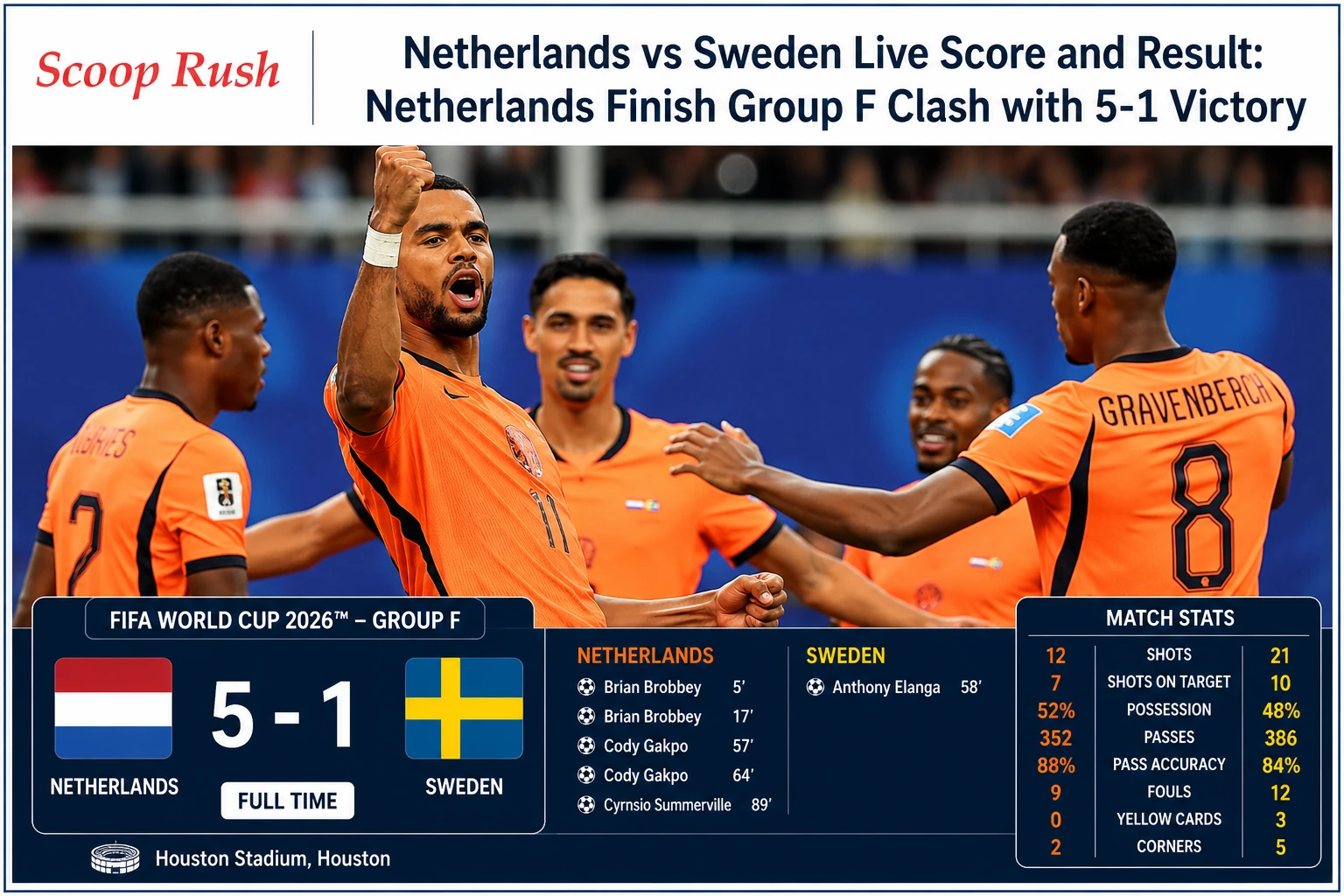
Final Score: Netherlands 5-1 Sweden
The Netherlands vs Sweden result delivered one of the most emphatic performances of the FIFA World Cup 2026 Group F stage as the Netherlands secured a commanding 5-1 victory over Sweden on Saturday, 20 June.
In a match packed with goals, attacking football, and clinical finishing, the Dutch side overwhelmed Sweden despite facing a determined opponent that managed to create numerous chances of its own. The victory strengthens the Netherlands’ position in Group F and highlights their impressive form in the tournament.
For football fans following the World Cup, this match showcased the Netherlands at their attacking best. From the opening minutes to the final whistle, the Dutch side maintained control of key moments and converted their opportunities with remarkable efficiency.
Why This Match Matters
World Cup group-stage matches can often define the course of a team’s tournament journey. A convincing victory not only boosts points and goal difference but also builds confidence heading into the knockout rounds.
The Netherlands achieved exactly that against Sweden. By scoring five goals and collecting three crucial points, they strengthened their standing in Group F while sending a message to potential future opponents teams like England, Spain, and Belgium who are also making their mark in the tournament.
Sweden, meanwhile, showed attacking intent and produced several dangerous moments, but defensive lapses proved costly against a ruthless Dutch attack.
Match Summary
Goalscorers
Netherlands
- Brian Brobbey 5′
- Brian Brobbey 17′
- Cody Gakpo 57′
- Cody Gakpo 64′
- Cyrnsio Summerville 89′
Sweden
- Anthony Elanga 58′
The scoreline reflects the Netherlands’ clinical finishing and ability to capitalize on key moments throughout the contest.
First Half: Netherlands Take Early Control
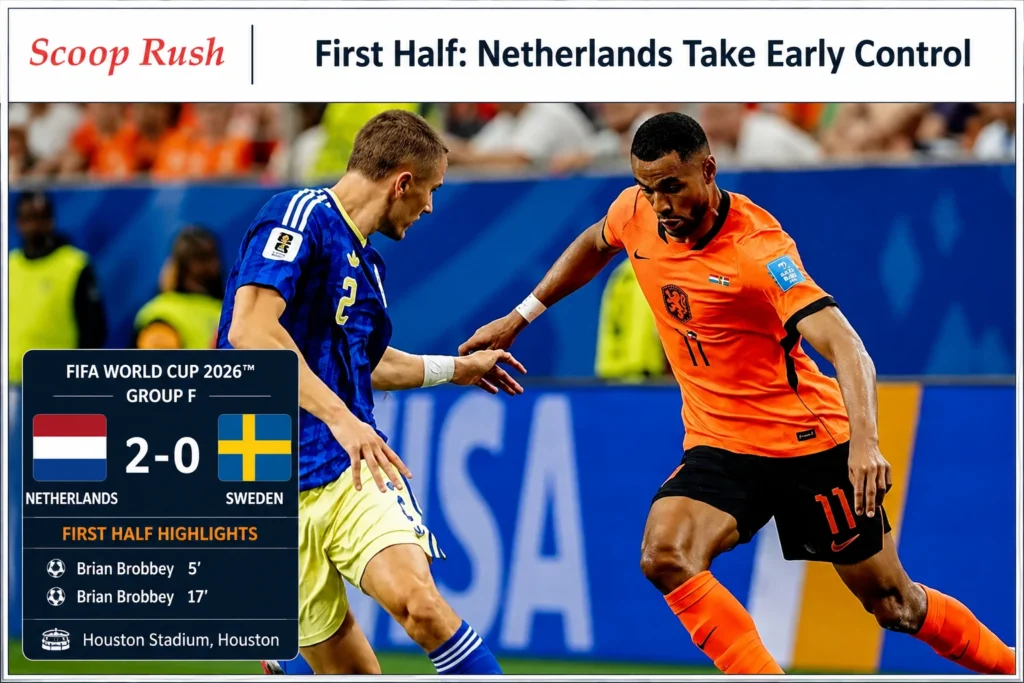
The Netherlands could hardly have asked for a better start.
Just five minutes into the match, Brian Brobbey found the breakthrough goal to give his side an early advantage. The goal immediately put Sweden under pressure and allowed the Dutch team to dictate the tempo.
Rather than sitting back, the Netherlands continued pushing forward. Their aggressive attacking approach paid off again in the 17th minute when Brobbey struck for a second time, doubling the lead and putting Sweden in a difficult position before the halfway mark.
Despite trailing, Sweden continued to search for openings and generated opportunities of their own. The match statistics later showed that Sweden actually recorded more total shots and more shots on target than the Netherlands.
However, the difference in the first half was efficiency. The Dutch side converted their opportunities, while Sweden struggled to find a way past the Netherlands’ defense and goalkeeper.
At halftime, the Netherlands held a comfortable 2-0 lead and looked firmly in control.
Second Half: Goals Continue to Flow
The second half produced even more excitement.
The Netherlands extended their lead in the 57th minute when Cody Gakpo got on the scoresheet. His goal appeared to put the match beyond Sweden’s reach and gave the Dutch a commanding 3-0 advantage.
Sweden responded almost immediately. Just one minute later, Anthony Elanga pulled a goal back in the 58th minute. The quick reply offered Sweden a glimmer of hope and briefly injected new energy into the contest.
However, any thoughts of a comeback were quickly extinguished. Cody Gakpo struck again in the 64th minute, restoring the Netherlands’ three-goal cushion and reaffirming their dominance. The Dutch attack continued to create problems for Sweden’s defense as the match progressed.
Late in the game, Cyrnsio Summerville added the fifth goal in the 89th minute to complete a memorable performance and put the finishing touch on a comprehensive victory.
When the final whistle arrived, the scoreboard read 5-1 in favor of the Netherlands.
Netherlands’ Clinical Finishing Made the Difference
One of the most striking aspects of the match was the contrast between the teams’ efficiency in front of goal.
Team Statistics
| Statistic | Netherlands | Sweden |
| Shots | 12 | 21 |
| Shots on Target | 7 | 10 |
| Possession | 52% | 48% |
| Passes | 352 | 386 |
| Pass Accuracy | 88% | 84% |
| Fouls | 9 | 12 |
| Yellow Cards | 0 | 3 |
| Red Cards | 0 | 0 |
| Offsides | 3 | 3 |
| Corners | 2 | 5 |
Looking at the numbers, Sweden actually attempted more shots and registered more efforts on target than the Netherlands.
However, the Dutch side demonstrated outstanding finishing quality. They converted five goals from seven shots on target, while Sweden managed only one goal despite producing ten shots on target.
That level of efficiency often determines the outcome of major tournament matches. It is a quality seen in other strong performers at this World Cup, including Brazil and Argentina, who have also impressed with their clinical displays.
Netherlands vs Sweden Result Highlights Dutch Efficiency
The Netherlands vs Sweden result illustrates a fundamental truth in football: creating chances is important, but converting them is what wins matches.
Sweden’s attacking numbers suggest they were involved in the game and consistently threatened the Dutch defense. Recording 21 shots and 10 shots on target is normally enough to produce a competitive scoreline.
The Netherlands, however, maximized their opportunities. With only 12 total shots and 7 on target, they still managed to score five times. Such clinical finishing can be devastating for opponents and is a sign of a team capable of competing deep into a World Cup tournament just as Portugal and Switzerland have also shown in their respective group matches.
Brian Brobbey Sets the Tone
Brian Brobbey played a crucial role in the victory.
His two early goals transformed the match and placed Sweden on the back foot from the start. By scoring in the 5th and 17th minutes, he gave the Netherlands breathing room and forced Sweden to chase the game.
Early goals can dramatically alter tactical approaches, and Brobbey’s contributions allowed the Netherlands to play with confidence and control.
His performance will undoubtedly be remembered as one of the key factors behind the Dutch victory.
Cody Gakpo Delivers in the Second Half
If Brobbey laid the foundation, Cody Gakpo ensured the result was secured.
His goals in the 57th and 64th minutes came during a crucial period of the match. Sweden had begun pushing forward in search of a comeback, and Anthony Elanga’s goal briefly gave them momentum.
Gakpo’s response effectively ended any realistic hopes of a Swedish recovery. By scoring twice within seven minutes, he restored Dutch control and shifted the momentum back in favor of his team.
Anthony Elanga Provides Sweden’s Bright Moment
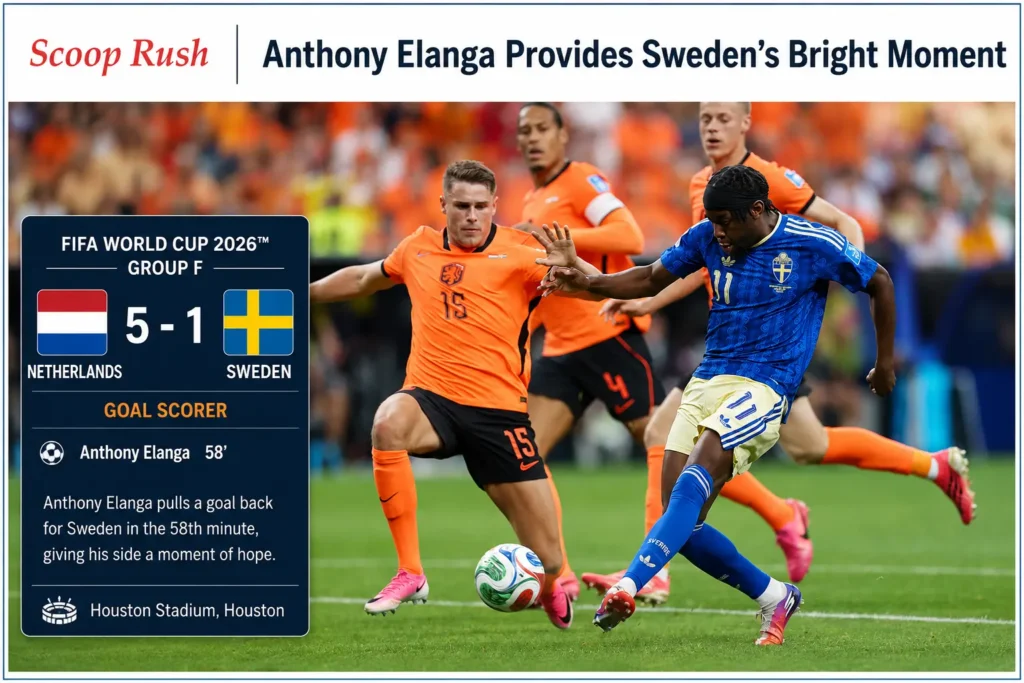
Although the result was disappointing for Sweden, Anthony Elanga’s goal stood out as a positive moment.
His strike in the 58th minute rewarded Sweden’s attacking efforts and demonstrated their willingness to continue fighting despite trailing.
The goal briefly energized Sweden and offered supporters something to celebrate during an otherwise difficult evening.
Tactical Overview
From a tactical perspective, the match featured two teams willing to attack.
Sweden’s 21 shots and 10 efforts on target indicate they were not passive participants. They consistently pushed forward and tested the Dutch defense throughout the game.
The Netherlands, however, displayed superior efficiency in the final third. Their passing accuracy of 88% helped maintain control in important phases, while their finishing quality turned a relatively balanced statistical contest into a one-sided scoreline.
Discipline also favored the Dutch side. The Netherlands completed the match without receiving a yellow card, while Sweden collected three cautions. This kind of composure is something other disciplined sides such as Mexico, Ghana, and Austria have also demonstrated in the group stage.
Group F Implications
The victory has significant implications for Group F.
According to the standings shown after the match:
- Netherlands 7 points
- Japan 4 points
- Sweden 3 points
- Tunisia 0 points
The Netherlands strengthened their position at the top of the group and improved their goal difference with a five-goal performance.
For Sweden, the defeat represents a setback, but their position in the group means there is still work to be done in the remaining fixtures. Elsewhere in the tournament, teams like Saudi Arabia and Uruguay, Norway, Scotland, Australia, and Paraguay are also battling for crucial points in their respective groups.
Every point matters during the World Cup group stage, making the outcome of this match particularly important.
Key Takeaways From the Match
- Netherlands Were Ruthlessly Efficient The Dutch converted their chances at an exceptional rate and made every major opportunity count.
- Brian Brobbey Made an Immediate Impact His two early goals established control and set the tone for the rest of the match.
- Cody Gakpo Finished the Job Two second-half goals ensured Sweden never mounted a serious comeback.
- Sweden Created Chances Despite the heavy defeat, Sweden generated more shots and more shots on target than the Netherlands.
- Group F Race Remains Important The result strengthens the Netherlands’ position while increasing pressure on Sweden in upcoming matches.
Conclusion
The Netherlands vs Sweden result will be remembered as one of the most convincing performances in FIFA World Cup 2026 Group F action. The Netherlands produced a clinical attacking display, defeating Sweden 5-1 at Houston Stadium and reinforcing their status as one of the standout teams in the group.
Brian Brobbey’s early double provided the perfect start, Cody Gakpo added two more after halftime, and Cyrnsio Summerville completed the scoring late in the match. Sweden showed determination and created numerous opportunities, but Anthony Elanga’s goal proved to be their only reward.
While the statistics suggest a more competitive contest than the scoreline indicates, the difference ultimately came down to finishing quality. The Netherlands seized their chances and delivered a performance that could prove crucial as the World Cup group stage continues.

