
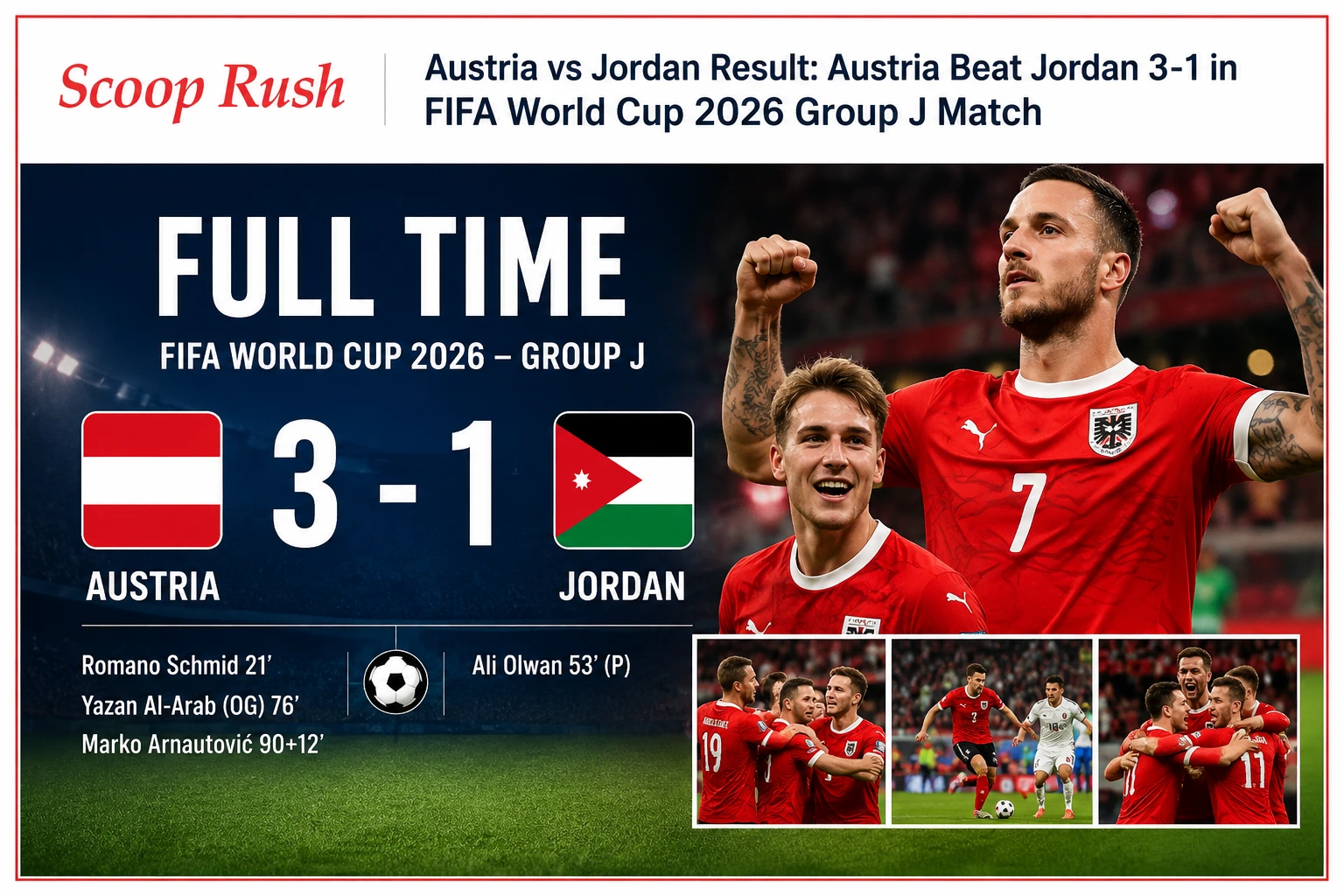
FIFA World Cup 2026™ – Group J
Full-Time: Austria 3-1 Jordan
Date: Wednesday, 17 June
Venue: San Francisco Bay Area Stadium, Santa Clara
Austria made a strong start to their FIFA World Cup 2026 Group J campaign with a convincing 3-1 victory over Jordan on Wednesday, 17 June, at San Francisco Bay Area Stadium in Santa Clara. The match showcased Austria’s attacking efficiency, dominance in possession, and ability to capitalize on key moments, while Jordan fought hard but ultimately could not overcome the European side’s control of the game.
The result places Austria near the top of Group J after Matchday One, while Jordan will look to recover in their upcoming fixtures. Goals from Romano Schmid, Yazan Al-Arab’s own goal, and Marko Arnautović secured all three points for Austria, while Ali Olwan scored Jordan’s lone goal from the penalty spot.
Austria Start Brightly and Take Early Control
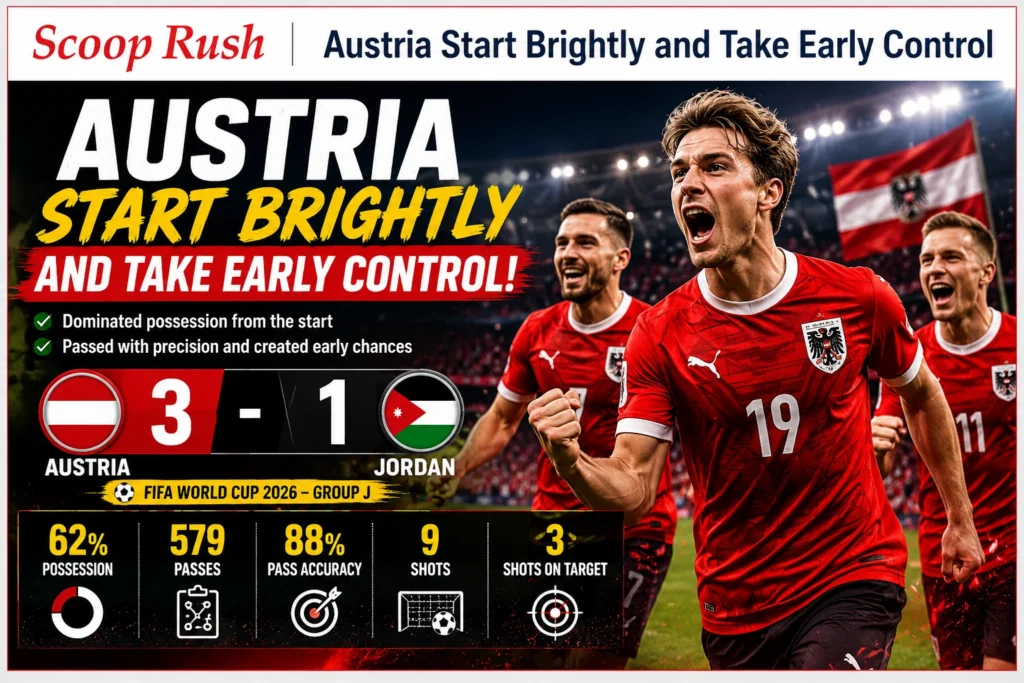
From the opening whistle, Austria looked determined to impose their style of play. Their midfield controlled possession, and their passing accuracy allowed them to dictate the tempo throughout much of the contest.
The statistics reflected Austria’s dominance. They finished with 62% possession compared to Jordan’s 38%, while also completing significantly more passes. Austria recorded 579 passes with an impressive 88% accuracy rate, compared to Jordan’s 325 passes and 77% accuracy.
Austria’s control quickly translated into opportunities. Their attackers frequently pushed forward, forcing Jordan’s defensive line to remain compact and organized. The pressure eventually paid off when Austria opened the scoring through Romano Schmid.
The early breakthrough gave Austria confidence and allowed them to continue playing on the front foot. Jordan attempted to stay disciplined and search for opportunities on the counterattack, but Austria’s organized shape made it difficult for them to create sustained pressure.
Romano Schmid Opens the Scoring
Austria’s first goal came from Romano Schmid, who found the net to give his side a deserved lead. The goal rewarded Austria’s positive start and reflected their superiority during the opening stages.
With the lead secured, Austria continued attacking rather than sitting back. Their willingness to press high and maintain possession prevented Jordan from building momentum.
The Austrian midfield remained influential throughout the first half, linking defense and attack effectively. Jordan’s players worked hard to close down space, but Austria’s movement and passing created several dangerous situations around the penalty area.
Jordan Find a Way Back Through Ali Olwan
Despite Austria’s strong start, Jordan remained competitive and eventually found a route back into the match. Their persistence earned them a penalty opportunity, which Ali Olwan converted successfully.
The penalty brought Jordan level and briefly shifted the momentum. At 1-1, the match became more balanced, and Jordan gained confidence knowing they had responded to Austria’s early advantage.
Ali Olwan’s goal highlighted Jordan’s determination and gave their supporters hope that an upset could be possible. However, Austria responded well to the setback and quickly regained control of possession.
The equalizer also demonstrated Jordan’s ability to capitalize on important moments even when they were seeing less of the ball.
A Crucial Own Goal Restores Austria’s Advantage
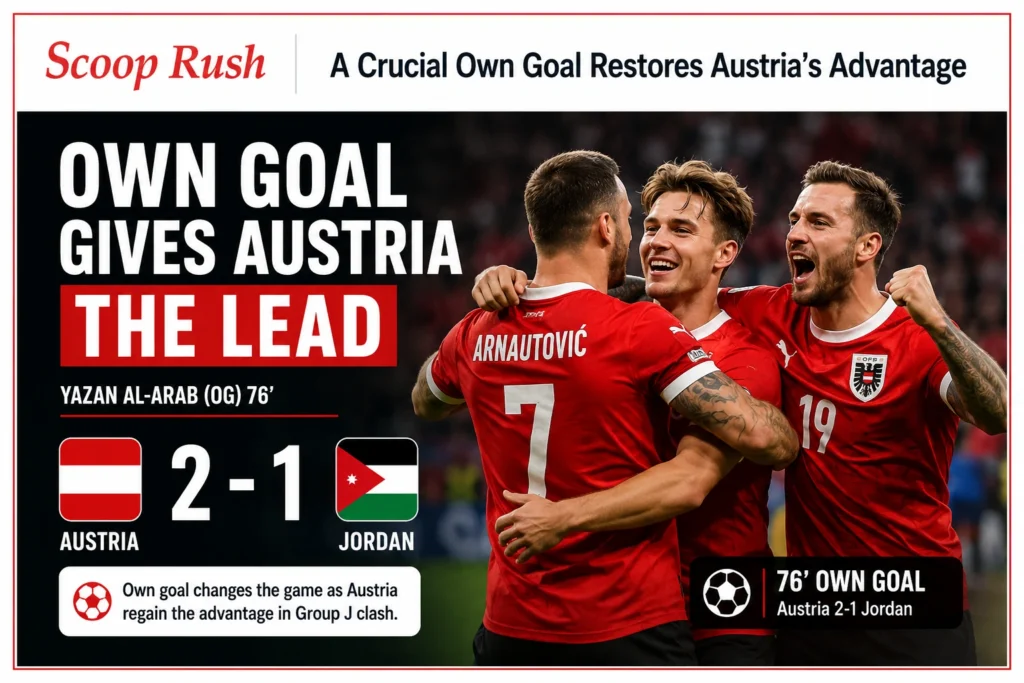
Austria’s pressure continued after Jordan’s equalizer, and the breakthrough arrived in unfortunate circumstances for the Asian side.
Yazan Al-Arab scored an own goal, restoring Austria’s lead and changing the complexion of the match once again. The own goal came at a critical stage and handed Austria a significant psychological boost.
With the score now 2-1, Austria returned to a position of control. Jordan attempted to respond, making changes from the bench in an effort to find another equalizer, but Austria’s defensive structure remained solid.
The Austrian back line dealt effectively with Jordan’s attacks and ensured that clear scoring opportunities remained limited.
VAR Drama and Missed Opportunity
One of the key moments of the match came when a penalty awarded to Austria was reviewed by VAR.
Initially, Austria appeared set to receive an excellent chance to extend their lead from the spot. However, following the video review, the penalty decision was overturned.
The incident added drama to the contest and temporarily kept Jordan within touching distance. Nevertheless, Austria remained composed and continued searching for a decisive third goal.
Rather than allowing frustration to affect their performance, Austria maintained their attacking focus and continued creating chances in the final third.
Marko Arnautović Seals the Victory
Austria eventually found the goal that effectively ended Jordan’s hopes of a comeback.
Veteran forward Marko Arnautović scored Austria’s third goal in the 90th minute, ensuring the match would finish 3-1. According to the match report, Arnautović struck from the left side of the box after being set up by Patrick Wimmer.
The late goal provided the perfect finish to Austria’s performance. It rewarded their persistence and confirmed a well-earned three points.
For Jordan, conceding so late was disappointing after working hard throughout the match, but Austria’s overall superiority made the result difficult to argue with.
Arnautović’s goal also highlighted the importance of experience in major tournaments, as the striker delivered when his team needed a decisive moment.
Austria’s Statistical Advantage
The final statistics underline why Austria emerged as deserved winners.
Team Statistics
| Statistic | Austria | Jordan |
| Shots | 9 | 11 |
| Shots on Target | 3 | 4 |
| Possession | 62% | 38% |
| Passes | 579 | 325 |
| Pass Accuracy | 88% | 77% |
| Fouls | 12 | 6 |
| Yellow Cards | 1 | 0 |
| Red Cards | 0 | 0 |
| Offsides | 3 | 1 |
| Corners | 4 | 3 |
Interestingly, Jordan actually recorded more total shots and more shots on target than Austria. However, Austria proved far more clinical in front of goal and made better use of their opportunities.
Possession and passing statistics heavily favored Austria, demonstrating their ability to control the flow of the game and limit Jordan’s time on the ball.
Tactical Setup and Key Performers
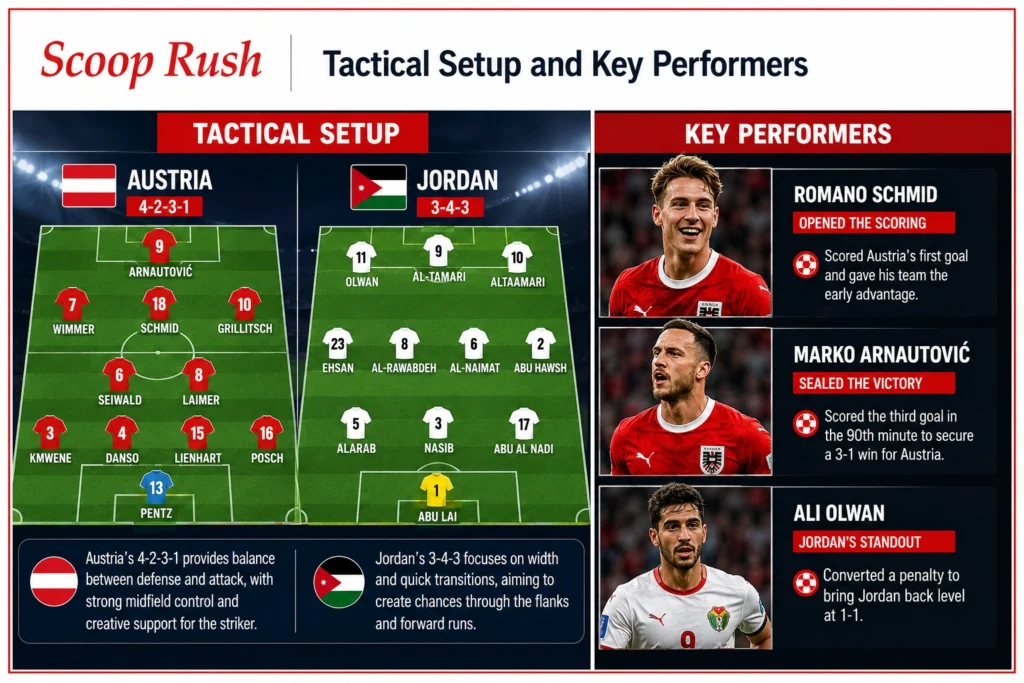
Austria lined up in a 4-2-3-1 formation, giving them balance between attack and defense. The formation allowed their midfielders to maintain possession while supporting forward movements.
Jordan used a 3-4-3 setup, aiming to provide width and create opportunities through quick transitions. While the system produced several attempts on goal, Austria’s organization limited the effectiveness of many attacks.
Several Austrian players played important roles in the victory. Romano Schmid opened the scoring, Marko Arnautović delivered the decisive late goal, and Patrick Wimmer contributed with the assist for the final strike.
Jordan’s standout moment came through Ali Olwan, whose successful penalty kept his side competitive for much of the contest.
Group J Standings After Matchday One
Following the opening round of fixtures, Group J presents an interesting early picture.
- Argentina – 3 points
- Austria – 3 points
- Jordan – 0 points
- Algeria – 0 points
Austria’s victory places them level on points with Argentina and provides an excellent foundation for the remainder of the group stage.
Jordan, meanwhile, remain within reach of qualification possibilities but will need positive results in their upcoming matches to improve their position.
What the Result Means
Austria’s 3-1 win over Jordan represents an ideal beginning to their FIFA World Cup 2026 campaign. They demonstrated composure, possession-based control, and efficiency in key moments. While Jordan showed determination and created opportunities of their own, Austria’s overall quality ultimately proved decisive.
The match featured several important moments, including Romano Schmid’s opener, Ali Olwan’s penalty equalizer, Yazan Al-Arab’s unfortunate own goal, a VAR-overturned penalty, and Marko Arnautović’s late finish.
For Austria, the victory provides momentum and confidence heading into the next round of Group J fixtures. For Jordan, there were still encouraging signs despite the defeat, particularly their ability to compete against a strong opponent and create chances.
As the FIFA World Cup 2026 group stage continues, Austria will be pleased with a professional opening performance, while Jordan will aim to learn from this result and respond strongly in the matches ahead.

