
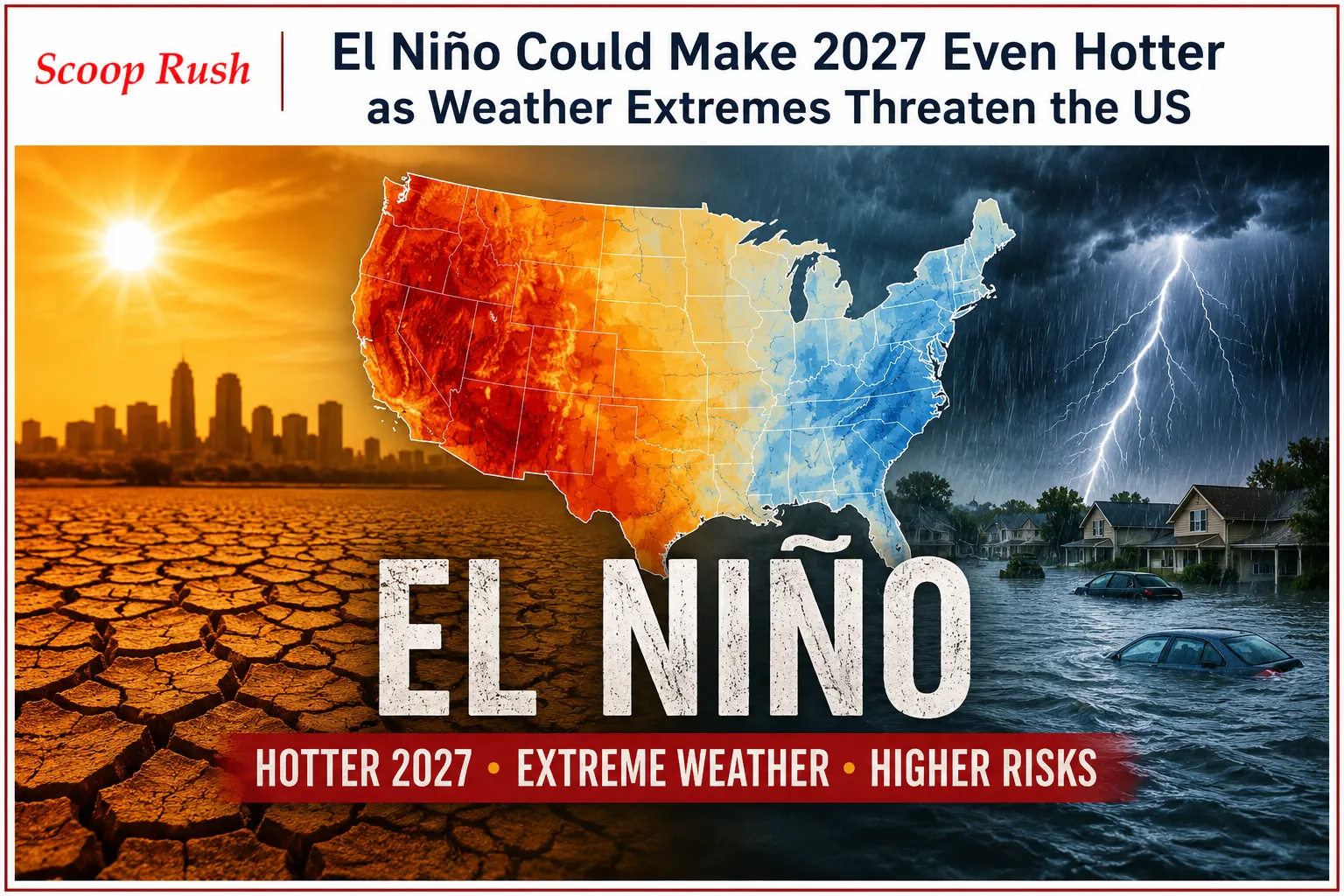
Scientists have warned that a powerful climate pattern returning to the Pacific Ocean could make 2027 even hotter while increasing the risk of extreme weather across the United States. El Niño has officially developed, and experts say this natural weather event could push global temperatures higher while creating more chances of heatwaves, storms, droughts, and flooding.
The National Oceanic and Atmospheric Administration (NOAA) has confirmed that El Niño conditions are now developing in the tropical Pacific Ocean. Forecasts suggest the event could become a very strong El Niño, which may rank among the strongest recorded events. As the planet is already experiencing rising temperatures, experts warn that the warming effect from El Niño could make future weather conditions more extreme.
Meteorologists believe 2027 could become hotter than 2026 because the strongest warming effects of El Niño often appear after the year when the climate pattern begins. For the United States, this could mean changing weather patterns, including heavy rainfall, flooding risks, drought conditions, and increased wildfire concerns.
What Is El Niño and Why Does It Matter?
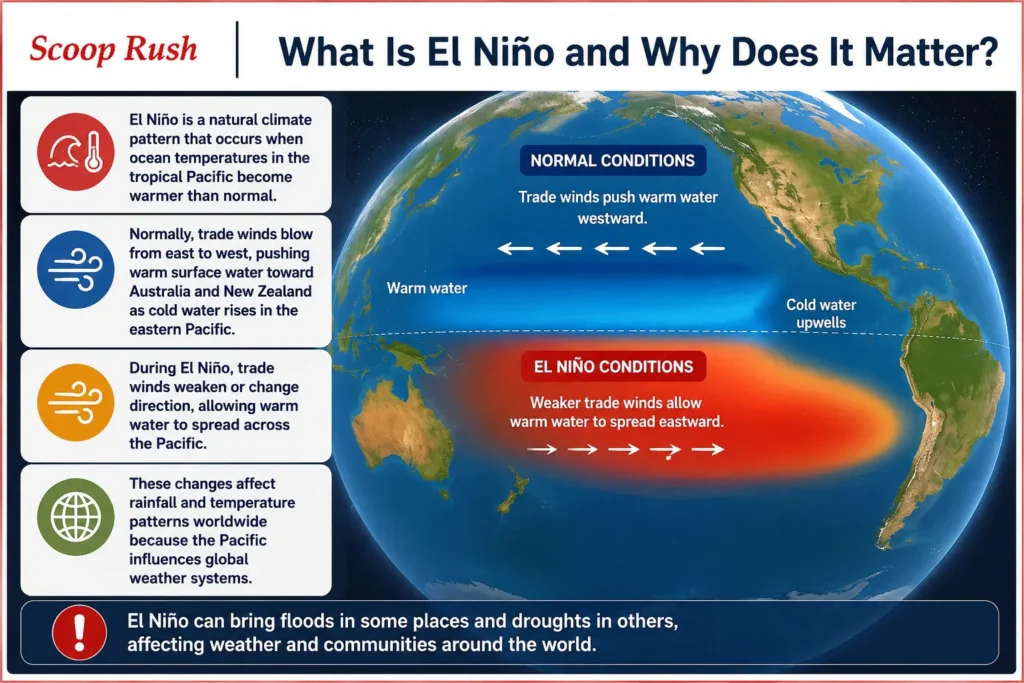
El Niño is a natural climate pattern that occurs when ocean temperatures in the tropical Pacific become warmer than normal.
Normally, trade winds blow from east to west across the Pacific Ocean. These winds push warm surface water toward areas near Australia and New Zealand. At the same time, colder water rises from deeper parts of the ocean near the eastern Pacific.
However, during an El Niño event, these trade winds weaken or change direction. As a result, warm water spreads across the Pacific, changing rainfall and temperature patterns around the world.
Because the Pacific Ocean is connected to global weather systems, these changes can influence climates thousands of miles away.
El Niño Could Make 2027 Even Hotter
Scientists say the biggest concern is that El Niño is happening on top of an already warming planet.
A strong El Niño can increase global air temperatures by releasing ocean heat into the atmosphere. Therefore, the warming effect from El Niño can add extra heat to the temperatures already rising because of climate change.
Meteorologists suggest that 2027 may experience stronger warming because global temperatures usually respond most strongly after El Niño develops.
According to experts, the combination of a strong El Niño and long-term warming could create another year of unusually high temperatures.
Why Experts Are Watching 2027 Closely
Weather experts say the strongest effects of El Niño often appear months after the event begins.
Chad Merrill, a senior meteorologist at AccuWeather, explained that global temperatures usually become warmer following the year when El Niño develops.
This means that although 2026 is already expected to be extremely hot, 2027 could potentially become even warmer.
Scientists are especially concerned because higher temperatures can increase pressure on communities, agriculture, water supplies, and ecosystems.
How El Niño Could Affect the United States
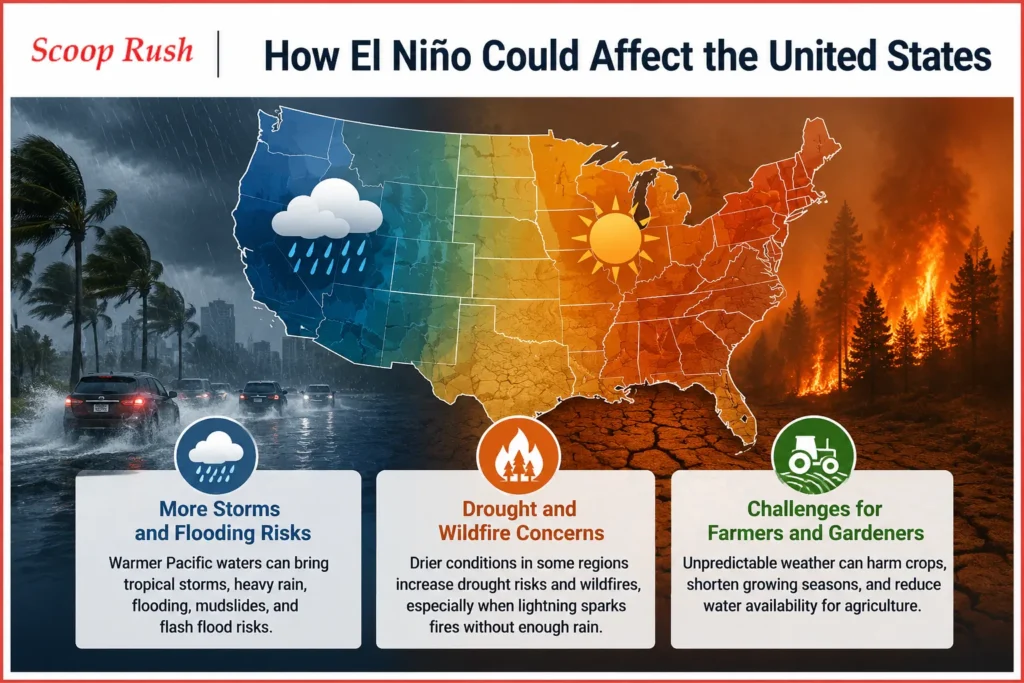
The United States is expected to feel some of the impacts because of its large Pacific coastline.
According to meteorologists, El Niño could bring different effects to different regions.
More Storms and Flooding Risks
The warmer Pacific waters could increase the possibility of tropical systems developing near the eastern Pacific.
For areas such as Southern California and the southwestern United States, this could bring heavier rainfall and increase flooding risks.
However, while rain may temporarily reduce drought conditions, sudden heavy rainfall can also create problems such as flash floods and mudslides.
Drought and Wildfire Concerns
Meanwhile, other areas may face the opposite problem.
Parts of the western and northern United States could experience drought conditions, increasing concerns about wildfires.
Dry conditions combined with thunderstorms can create dangerous situations because lightning may start fires without producing enough rainfall to reduce the risk.
Challenges for Farmers and Gardeners
El Niño can also affect agriculture.
Farmers depend on predictable weather patterns, but changing rainfall and temperature conditions can make growing seasons more difficult.
Experts warn that unexpected cold periods in spring could damage crops planted early, while drought conditions could reduce water availability.
Weather Whiplash Could Become More Common
Meteorologists describe the changing conditions linked to El Niño as “weather whiplash.”
This means regions may experience rapid shifts between extreme conditions, such as heavy rainfall followed by dry periods.
For example, one area may deal with flooding while another region struggles with drought at the same time.
Therefore, communities may need to prepare for unpredictable weather patterns as El Niño continues.
Could La Niña Follow El Niño?
Scientists also warn that El Niño may eventually be followed by La Niña.
La Niña is considered the opposite phase of El Niño because it usually involves cooler Pacific Ocean temperatures.
However, La Niña can also create extreme weather conditions, including droughts, flooding, and unusual rainfall patterns.
Experts say strong El Niño events are sometimes followed by a return to neutral conditions or a shift toward La Niña.
This means the global weather system may continue experiencing unusual patterns even after El Niño weakens.
Scientists Predict Stronger Climate Extremes
Researchers are studying whether climate change could influence the strength of future El Niño and La Niña events.
Some studies suggest that these climate patterns may become stronger in the future, creating bigger impacts in regions far away from the Pacific.
Scientists have warned that stronger climate swings could increase risks such as flooding, drought, and agricultural disruption.
However, researchers continue studying the exact relationship between climate change and these natural weather cycles.
How El Niño Impacts the Rest of the World
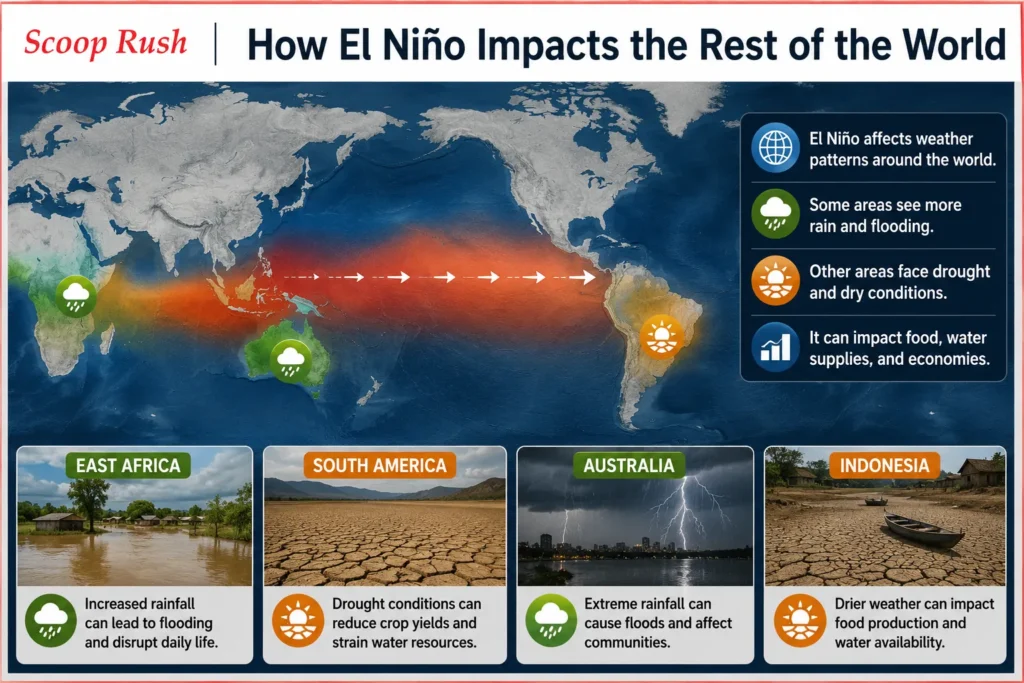
El Niño does not only affect the United States.
Different regions experience different consequences.
Some areas may receive increased rainfall and flooding, while others may face drought conditions.
For example, parts of East Africa, South America, Australia, and Indonesia can experience major weather changes during El Niño events.
These disruptions can affect food production, water supplies, and local economies.
What People Should Know About the Future
The arrival of El Niño does not mean every location will experience the same weather conditions.
Experts explain that each El Niño event has its own characteristics. However, stronger events generally increase the possibility of extreme outcomes.
Communities can monitor forecasts, prepare for changing conditions, and stay aware of local weather risks.
Conclusion
El Niño has officially returned, and scientists are closely watching its possible effects on global temperatures and weather patterns.
Experts believe the strongest warming impacts may appear in 2027, potentially making it hotter than 2026. In the United States, the event could bring a mix of storms, flooding risks, drought conditions, and wildfire concerns.
Although El Niño is a natural climate pattern, its effects are becoming more important in a world already experiencing rising temperatures.
Understanding El Niño and preparing for extreme weather will remain essential as scientists continue monitoring the planet’s changing climate.
FAQs
1. What is El Niño?
El Niño is a natural climate pattern where ocean temperatures in the tropical Pacific become warmer than normal, affecting weather patterns around the world.
2. Why could El Niño make 2027 hotter?
El Niño often increases global temperatures after it develops because heat stored in the ocean moves into the atmosphere.
3. How will El Niño affect the US?
The US could experience more extreme weather, including flooding, droughts, storms, and wildfire risks depending on the region.
4. Is El Niño caused by climate change?
El Niño is a natural climate event. However, scientists say a warmer planet can increase the impact of El Niño-related temperature changes.
5. Can La Niña happen after El Niño?
Yes. Strong El Niño events are sometimes followed by La Niña, which can also create unusual weather patterns.

