
Introduction
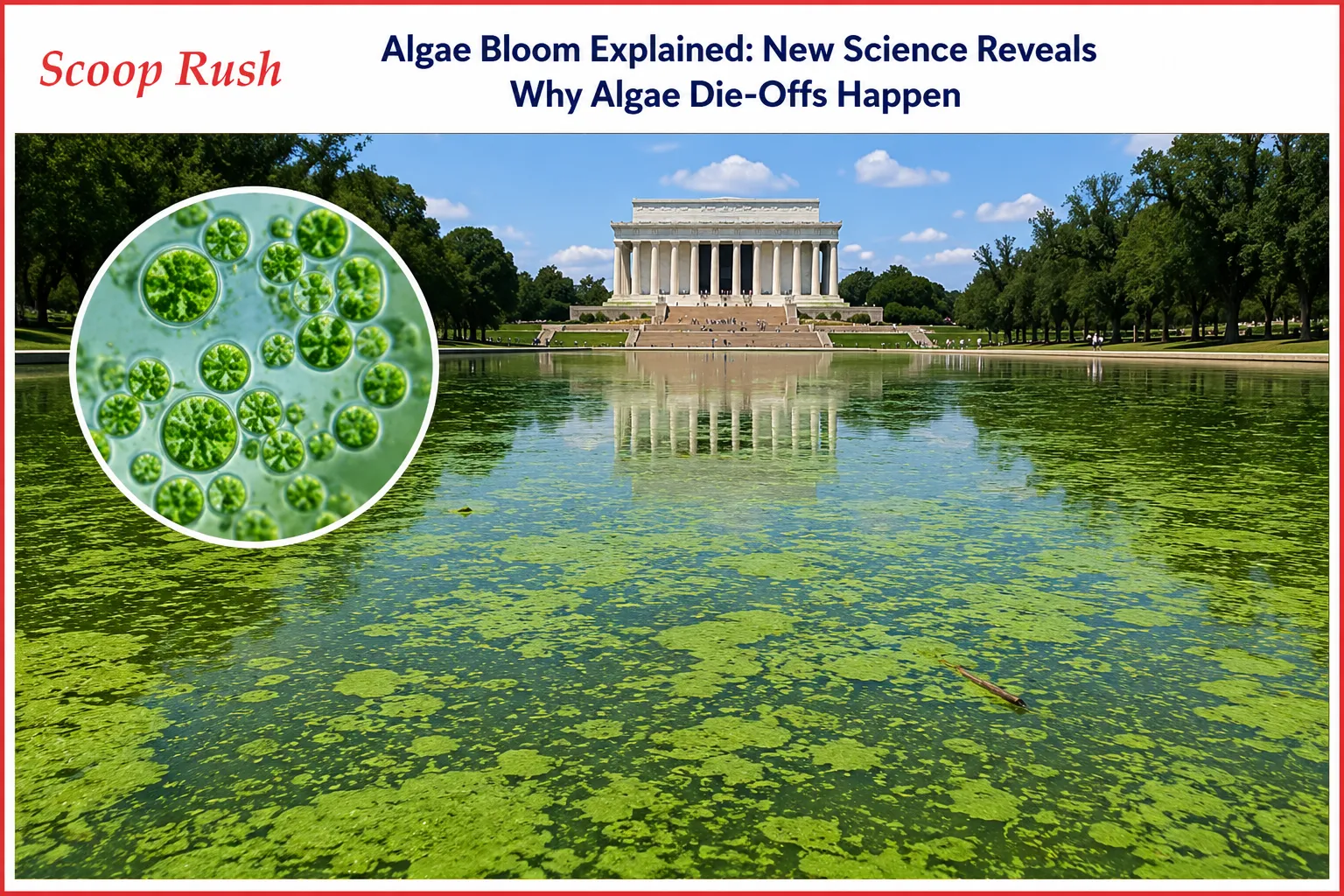
A green wave has taken over one of America’s most famous landmarks. The Lincoln Memorial Reflecting Pool in Washington, D.C., which was expected to shine in an “American Flag blue” color after a major renovation, suddenly turned green because of a massive Algae Bloom. Now, scientists have uncovered new clues about why these algae outbreaks can suddenly collapse.
The latest research on algae blooms shows that a chemical process involving iron and hydrogen peroxide may trigger the rapid death of certain algae. This discovery helps scientists understand how large algae outbreaks disappear naturally, although it may not be enough to restore the Reflecting Pool’s original appearance.
Algae blooms are more than just a visual problem. When algae die in large numbers, they can affect oxygen levels in water and create environmental risks. Therefore, understanding how algae grow and collapse is important for protecting lakes, rivers, and urban water systems.
Algae Bloom Crisis at the Lincoln Memorial Reflecting Pool
The Lincoln Memorial Reflecting Pool became the center of attention after algae rapidly changed the appearance of the water. The pool had recently been renovated, but instead of showing the expected blue color, the water developed a thick green appearance.
Experts explained that several conditions created an ideal environment for algae growth. The pool is shallow, meaning sunlight can warm the water quickly. Additionally, the darker paint used during renovation may have increased heat absorption.
Meanwhile, the pool was refilled with water connected to the Potomac River system, bringing nutrients and microorganisms that supported algae growth.
As a result, the algae multiplied quickly and created an unexpected environmental challenge.
New Research Explains Algae Bloom Collapse
Scientists studying algae blooms have long questioned why millions of algae cells can grow together and then suddenly disappear. A new study published in Science provides a possible explanation.
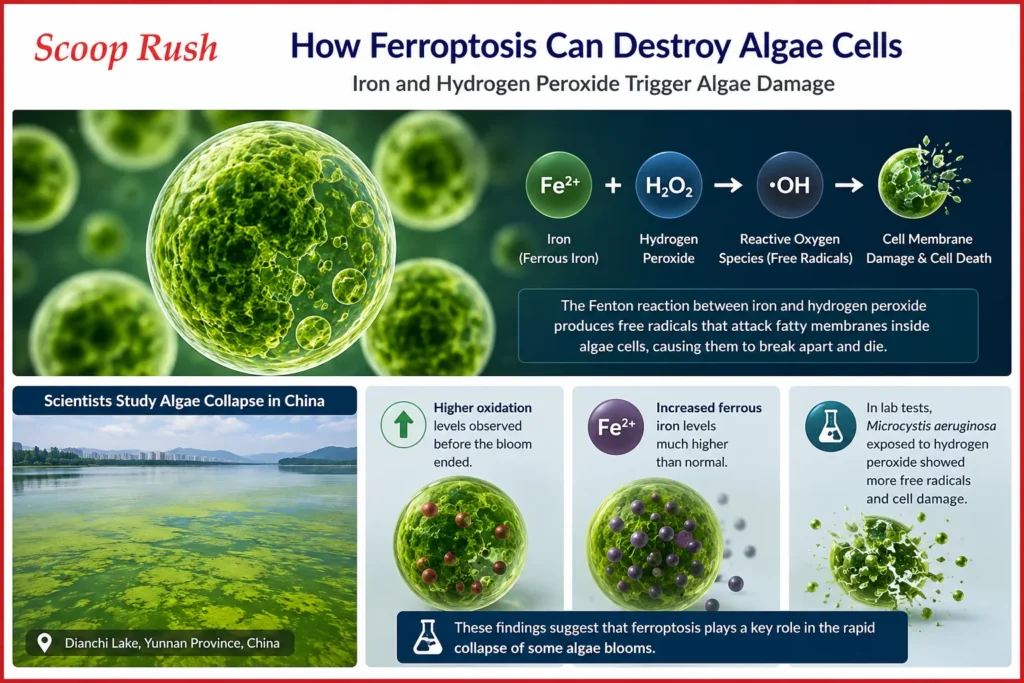
Researchers focused on a process called ferroptosis. This process involves a reaction between ferrous iron and hydrogen peroxide inside algae cells.
The reaction creates reactive oxygen species, also known as free radicals. These molecules damage important parts of the cell, especially the membranes that protect the cell.
Eventually, the damaged cells break apart, causing a chain reaction that may spread to nearby algae.
How Ferroptosis Can Destroy Algae Cells
Iron and Hydrogen Peroxide Trigger Algae Damage
Cyanobacteria, often called blue-green algae, need iron to survive. These organisms store extra iron inside their cells.
However, when hydrogen peroxide interacts with this iron, a chemical reaction called the Fenton reaction can happen.
This reaction produces unstable molecules that attack fatty materials inside the cell membrane. Once the membrane becomes damaged, the cell can no longer survive.
The study found that damaged algae cells release broken lipids, which can affect nearby cells and continue the destruction process.
Scientists Study Algae Collapse in China
Researchers studied a cyanobacteria bloom from Dianchi Lake in China’s Yunnan province in 2024.
Before the bloom ended, scientists noticed that the algae had increased oxidation levels and contained much higher amounts of ferrous iron than normal.
When researchers exposed Microcystis aeruginosa, one type of cyanobacteria, to hydrogen peroxide in laboratory tests, they observed increased free radicals and cell damage.
The findings suggest that ferroptosis could help explain why some algae blooms collapse rapidly.
Why Algae Blooms Can Become Dangerous
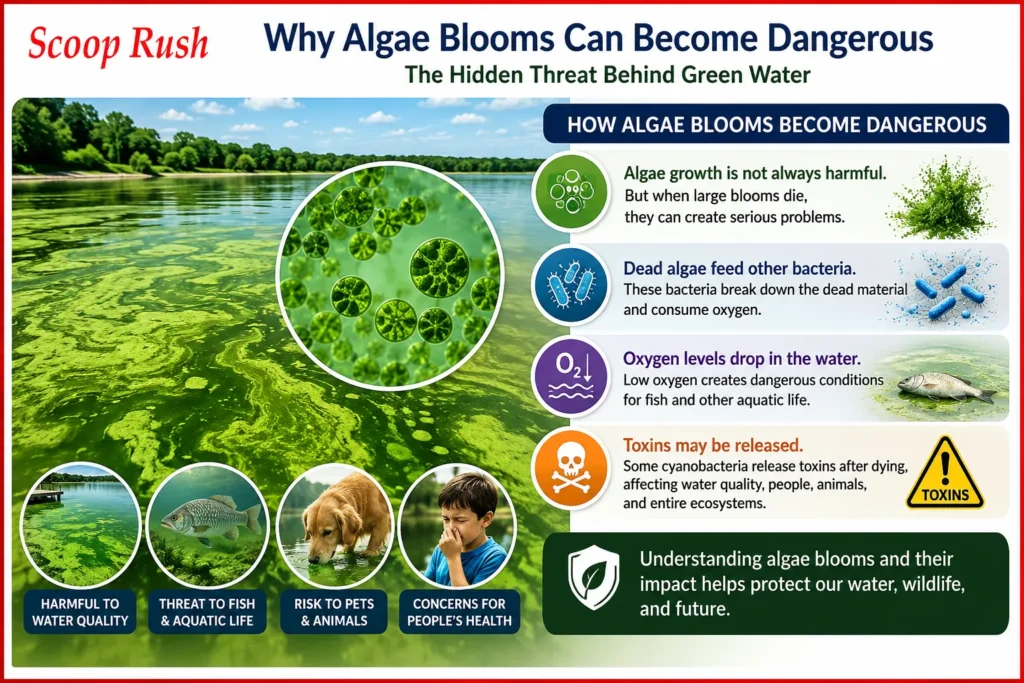
Algae growth itself is not always harmful. However, when large blooms die, they can create serious problems.
Dead algae become food for other bacteria. These bacteria consume oxygen while breaking down the dead material.
Consequently, oxygen levels in water can drop, creating dangerous conditions for fish and other aquatic organisms.
Some cyanobacteria can also release toxins after dying. These toxins may affect water quality and create concerns for people, animals, and ecosystems.
Why New Science May Not Save the Reflecting Pool
Although the research provides important information about algae die-offs, scientists say it may not solve the Reflecting Pool problem.
Experts believe the algae currently dominating the pool may not be the same type studied in the research.
The study mainly focused on cyanobacteria such as Microcystis. However, the Reflecting Pool appears to contain more Scenedesmus, a different type of green algae.
Because of this difference, methods that affect cyanobacteria may have limited impact on other algae species.
Furthermore, scientists explain that the ecosystem inside the pool has changed during treatment efforts. Removing one type of algae may create conditions that allow another species to grow.
Natural Solutions for Controlling Algae Blooms
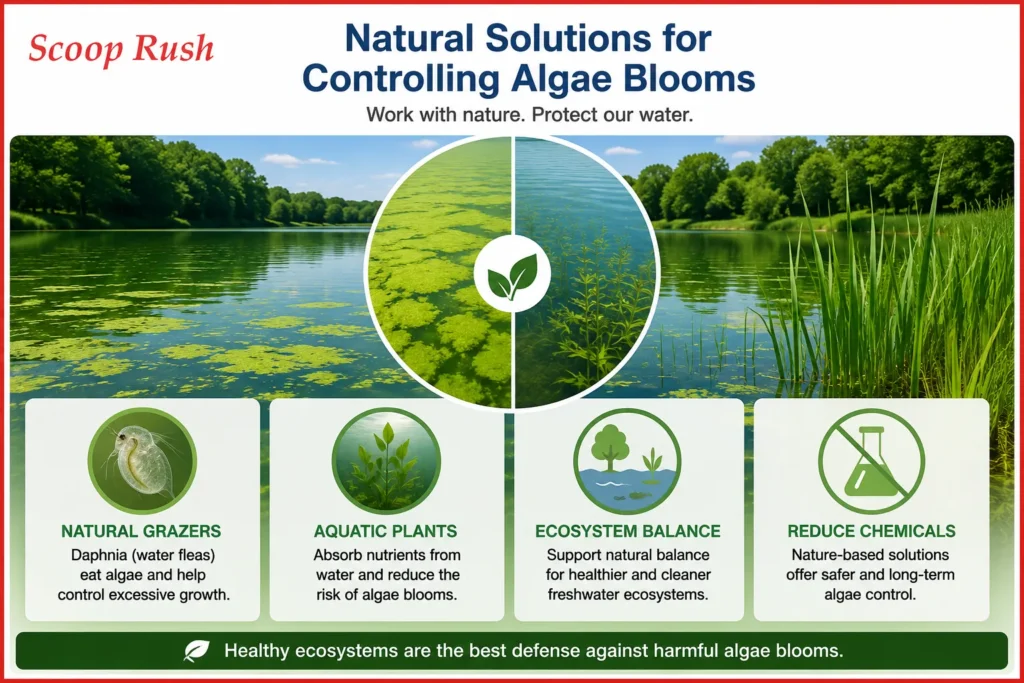
Scientists studying freshwater ecosystems explain that nature-based solutions can sometimes provide better long-term results.
Small organisms such as Daphnia, also known as water fleas, naturally eat algae and can help control excessive growth.
Additionally, aquatic plants can absorb nutrients from water and reduce the chance of large algae outbreaks.
Instead of only using chemicals, experts suggest understanding how ecosystems work and supporting natural balance.
Why Chemical Treatments May Not Always Work
Chemical treatments can reduce algae quickly, but they may not solve the main cause of the problem.
When water conditions remain suitable for algae growth, another bloom can appear again.
Therefore, experts believe long-term solutions should focus on improving ecosystem health rather than only removing visible algae.
Conclusion
The recent Algae Bloom problem at the Lincoln Memorial Reflecting Pool has highlighted how complex water ecosystems can be. While scientists have discovered a possible explanation for why some algae suddenly die through ferroptosis, this knowledge may not immediately fix every algae outbreak.
The research provides valuable insight into how algae cells interact with chemicals inside their environment. However, experts believe that maintaining healthy ecosystems and using nature-based solutions may offer better long-term protection.
Understanding algae growth, collapse, and prevention can help communities manage future water quality challenges more effectively.
FAQs
What causes an Algae Bloom?
An algae bloom usually happens when water contains high levels of nutrients, warm temperatures, and conditions that allow algae to grow rapidly.
Why did the Lincoln Memorial Reflecting Pool turn green?
The Reflecting Pool turned green because algae grew quickly after conditions such as warm water and nutrient-rich water supported its expansion.
What is ferroptosis in algae?
Ferroptosis is a chemical process where iron and hydrogen peroxide create reactions that damage algae cells and may cause them to die.
Are algae blooms dangerous?
Some algae blooms can become harmful because dying algae may reduce oxygen in water and some species can release toxins.
Can nature control algae blooms?
Yes, natural systems including algae-eating organisms and aquatic plants can help maintain balance and reduce excessive algae growth.

