
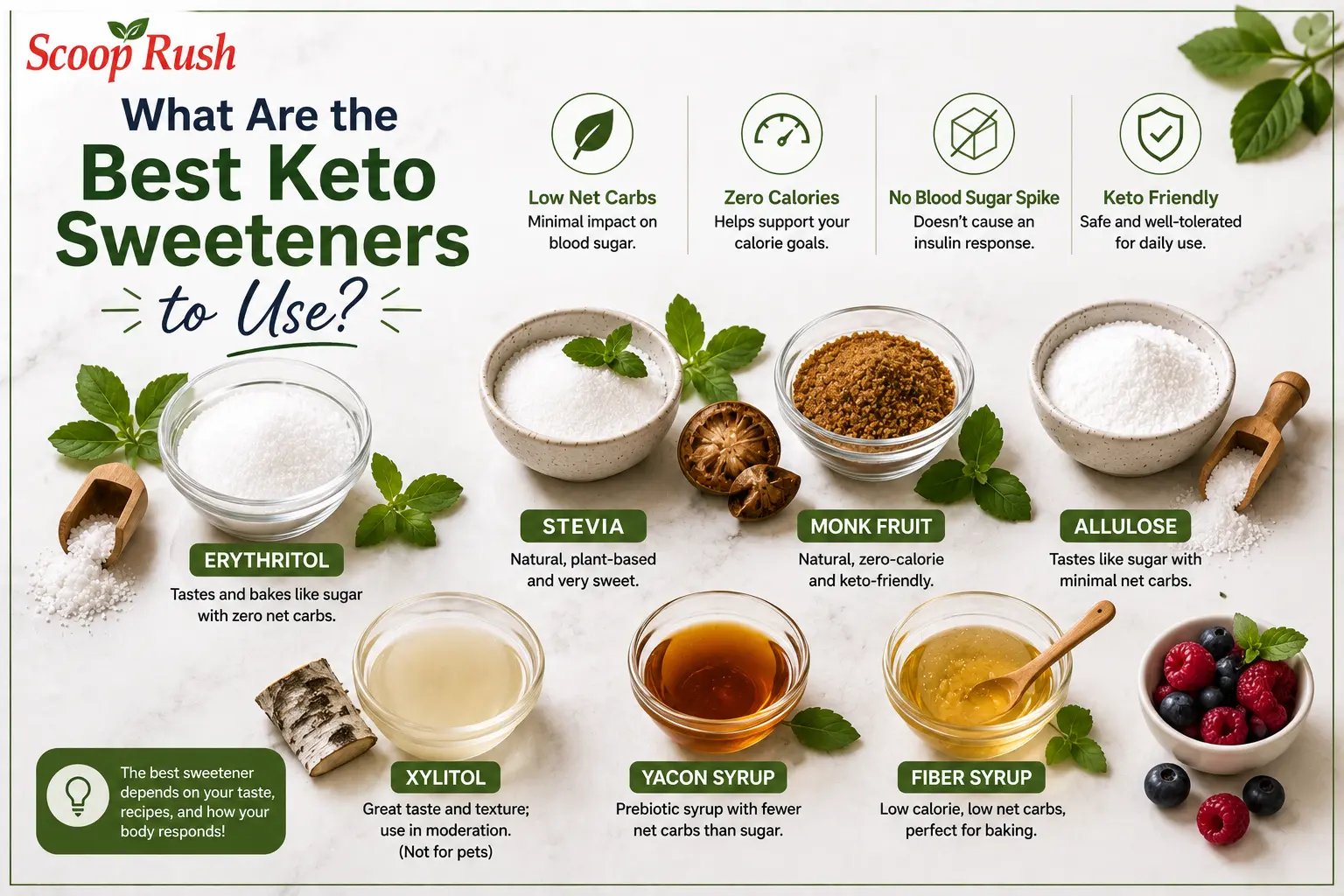
Giving up sugar is often the hardest part of starting a keto diet. The good news is that you don’t have to give up sweetness altogether.
Dozens of sugar substitutes now line grocery store shelves, and not all of them are created equal. Some keep your blood sugar flat and your ketosis intact. Others sneak in hidden carbs or trigger digestive chaos.
This guide breaks down the best keto sweeteners, the ones worth avoiding, and how to tell the difference when you’re standing in the baking aisle wondering which bag to grab.
What Makes a Sweetener “Keto-Friendly”?
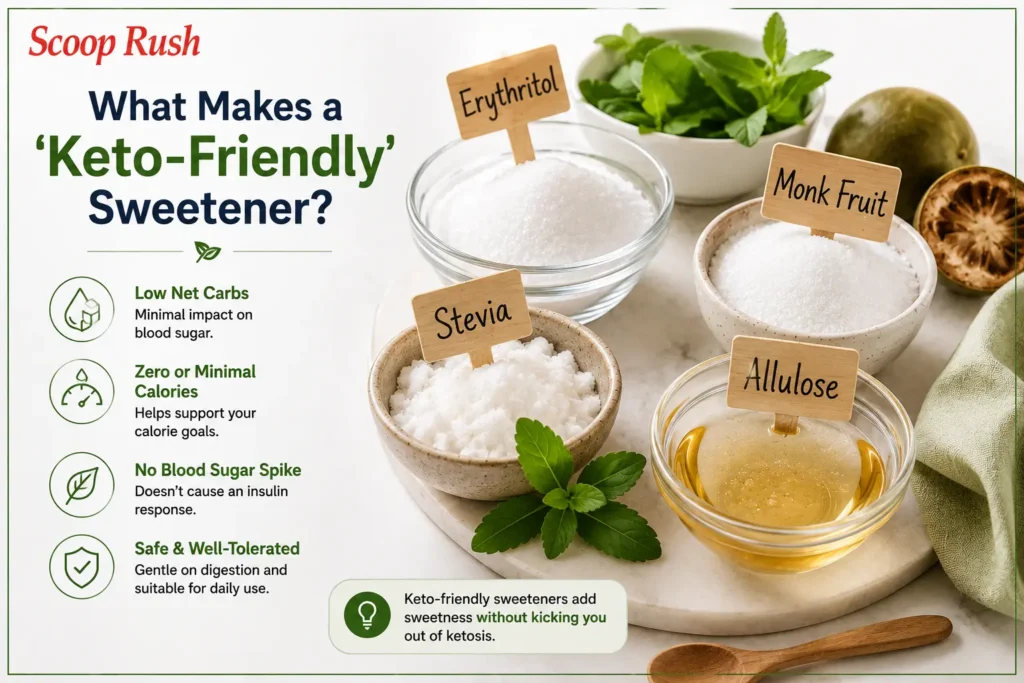
A sweetener earns keto approval when it has little to no effect on blood sugar and insulin levels. That’s the whole point of the diet: keeping insulin low enough that your body keeps burning fat for fuel instead of glucose.
Carbs matter too. Even a “sugar-free” label doesn’t guarantee zero carbs, since many products are padded with fillers like dextrose or maltodextrin.
Taste and texture matter for day-to-day use, but they’re secondary. A sweetener that spikes your blood sugar isn’t keto-friendly no matter how good it tastes in your coffee.
If you’re still weighing whether the eating style is right for you at all, it helps to first understand the broader benefits and risks of a low-carb diet before worrying about which sweetener to pick.
The Top Keto-Approved Sweeteners
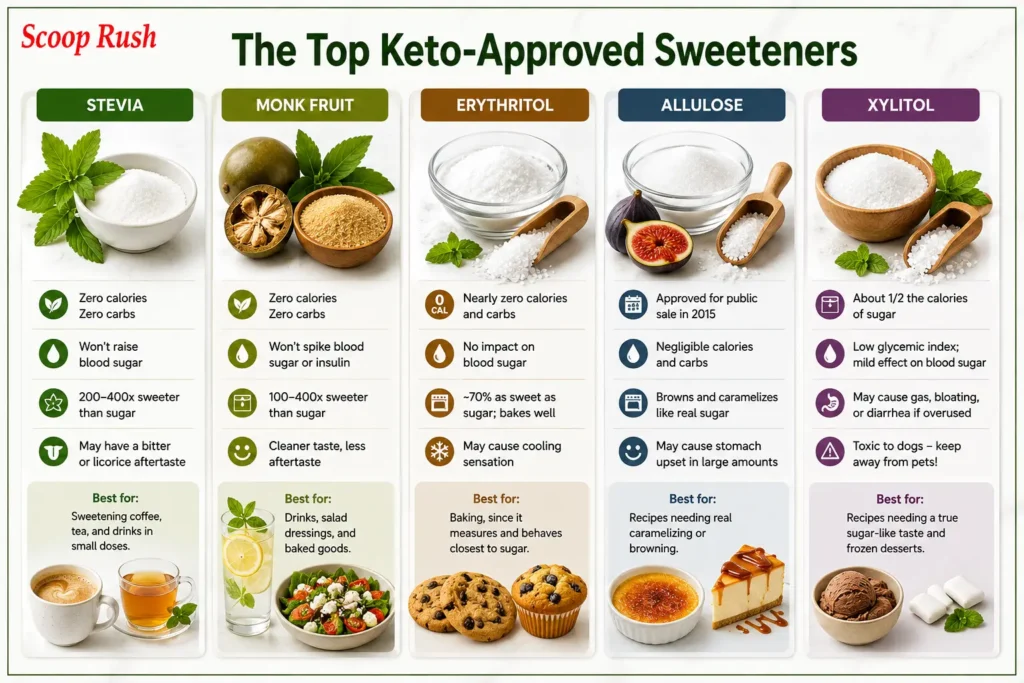
If you want a short list to remember at the store, these are the ones dietitians and low-carb communities consistently recommend.
Stevia
Stevia comes from the leaves of a South American plant, and it’s one of the most widely used natural sweeteners on the market. You’ll recognize it under brand names like Truvia and PureVia.
It contains zero calories and zero carbs, and it won’t raise your blood sugar. The U.S. Food and Drug Administration classifies refined stevia extract as generally recognized as safe.
The catch is taste. Stevia is intensely sweet roughly 200 to 400 times sweeter than table sugar but many people notice a bitter, licorice-like aftertaste, especially in larger amounts.
It also behaves differently than sugar in baking, so it doesn’t always swap in evenly for recipes that rely on sugar’s bulk and browning properties.
Best for: sweetening coffee, tea, and drinks in small doses.
Monk Fruit
Monk fruit, also called luo han guo, has a long history in Chinese herbal medicine. Its sweetness doesn’t come from sugar at all, but from antioxidant compounds called mogrosides.
Like stevia, monk fruit has zero calories and won’t spike blood sugar or insulin. It’s roughly 100 to 400 times sweeter than sugar, depending on the extract’s concentration.
Most people find monk fruit has a cleaner taste than stevia, with less of a lingering aftertaste. That’s why it’s often blended with stevia or erythritol to smooth out both products.
Watch out for “proprietary blends,” since some products use very little actual monk fruit extract alongside cheaper fillers.
Best for: drinks, salad dressings, and baked goods.
Erythritol
Erythritol is a sugar alcohol that occurs naturally in small amounts in foods like pears, grapes, and mushrooms. Commercially, it’s usually made by fermenting corn.
Your body absorbs very little of it, and what is absorbed passes into urine unused. That means it has a negligible effect on blood sugar, calories, and carbs.
It measures about 70% as sweet as table sugar and works well in baking, which is why it shows up in so many keto dessert recipes. It also appears to be gentler on digestion than other sugar alcohols.
The main downside is a cooling sensation on the tongue, which some people love and others find distracting. A small 2023 study also raised questions about a possible link between erythritol and cardiovascular risk, though the data was weak and more research is needed.
Best for: baking, since it measures and behaves closest to real sugar.
Allulose
Allulose is a newer entrant, approved for public sale in 2015. It’s classified as a “rare sugar” because it naturally occurs in only a few foods, including figs, raisins, and wheat.
Structurally, it’s almost identical to fructose, but your body can’t metabolize it. Nearly all of it passes through unused, contributing negligible calories and carbs.
What sets allulose apart is how closely it mimics real sugar in cooking. It dissolves, browns, and caramelizes the way sugar does, which sugar alcohols like erythritol typically can’t do.
It’s about 70% as sweet as sugar, and it’s pricier and less widely available than older sweeteners. Large amounts may cause stomach upset in some people.
Best for: recipes where you need real caramelizing or browning, like sauces and baked goods.
Xylitol
Xylitol is the sweetener behind most sugar-free gum and mints. It’s a sugar alcohol extracted from corn cobs or birch trees.
It tastes almost exactly like sugar and can typically replace it one for one in recipes, with about half the calories. It has a low glycemic index and a mild effect on blood sugar in small amounts.
The tradeoff is digestive. Since your body only absorbs about half of what you eat, the rest ferments in your gut, which can cause gas, bloating, or diarrhea if you overdo it.
One serious warning: xylitol is highly toxic to dogs. Even a small amount can cause a life-threatening reaction, so keep xylitol-sweetened products well away from pets.
Best for: recipes that need a true sugar-like taste, and foods that need to stay soft when frozen, like homemade ice cream.
Sweeteners That Deserve a Closer Look
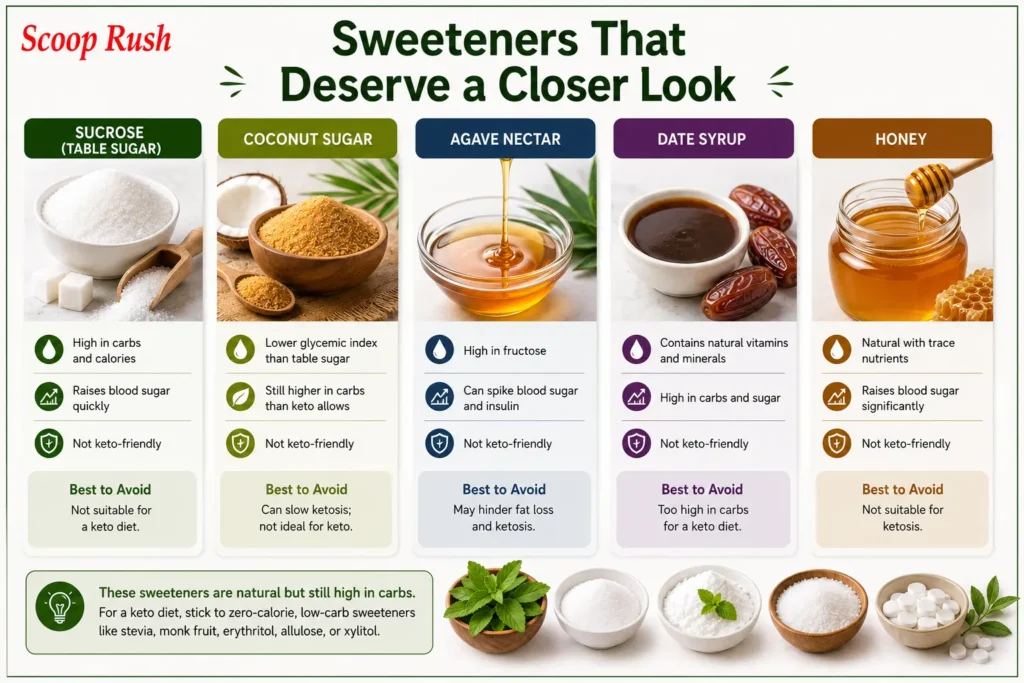
Not every “low-carb” sweetener is a clear yes. These fall into a gray zone technically usable, but with real drawbacks.
Maltitol
Maltitol shows up constantly in “sugar-free” candy and chocolate because it behaves so much like real sugar in manufacturing. That’s exactly why it’s a poor keto choice.
Research shows maltitol can raise both blood sugar and insulin levels, which works against the entire point of a ketogenic diet. It also carries about three-quarters of the calories of sugar.
Roughly half of what you eat ferments in the colon, which often leads to noticeable bloating and digestive discomfort, especially with regular use.
Yacon Syrup
Yacon syrup comes from a South American root plant and has a flavor similar to molasses. Part of its content is indigestible fiber, which gives it a lower glycemic index than sugar.
Despite that, it still contains meaningful digestible carbs. A couple of tablespoons can add up quickly, making it a poor fit for strict keto macros.
Inulin
Inulin is a plant fiber, most commonly sourced from chicory root, and it’s often blended into low-carb sweeteners as a bulking agent rather than used alone.
Because it isn’t digested, it contributes minimal usable carbs and has GRAS status from the FDA. But it ferments rapidly in the gut, which frequently causes gas and bloating, especially in larger servings.
Isomalto-Oligosaccharide (IMO)
IMO is a corn-derived carbohydrate added to many “keto” protein bars and low-carb syrups. It’s often listed as fiber on nutrition labels, which can be misleading.
Studies show IMO is actually partially digested and absorbed, and it can cause meaningful spikes in blood sugar and insulin. Products relying heavily on IMO often contain more usable carbs than the label suggests.
Artificial Sweeteners: Where They Stand on Keto
Artificial, or synthetic, sweeteners are lab-made and typically calorie-free. They technically won’t knock you out of ketosis, but they come with their own considerations.
Sucralose
Sucralose is the sweetener in Splenda, made by chemically modifying sugar so it’s no longer digestible. It’s about 600 times sweeter than table sugar.
Most research shows it doesn’t affect blood sugar on its own, though some studies suggest it may behave differently when eaten alongside carbohydrates. One trial linked it to increased appetite in some groups.
Aspartame
Aspartame is best known under the brand name Equal, and it remains one of the most debated sweeteners in circulation. Pure aspartame has no calories or carbs and doesn’t appear to raise blood sugar in most research.
The FDA considers it safe in moderation, though some people report headaches or other symptoms after consuming it, and researchers continue to study its long-term effects.
Saccharin
Saccharin, sold as Sweet’N Low, is the oldest synthetic sweetener still in use, dating back to 1878. It’s roughly 300 times sweeter than sugar and known for a bitter aftertaste.
Early rodent studies once linked it to bladder cancer, an association never confirmed in humans. Current research on its broader health effects remains mixed.
Acesulfame K
Acesulfame K, often labeled Ace-K, is common in flavored waters and diet drinks. It has no calories or carbs and generally doesn’t affect blood sugar, though a small number of studies suggest it might in some individuals.
Sweeteners to Avoid Completely on Keto
Some sweeteners are simply off the table if you’re aiming to stay in ketosis, regardless of how “natural” they’re marketed as.
Table sugar in any form white, brown, coconut, date, or maple syrup is close to 100% carbohydrate and will interfere with ketosis.
High-fructose sweeteners deserve special caution. Honey, agave syrup, molasses, and high-fructose corn syrup are loaded with fructose, which research links to fatty liver, insulin resistance, and unhealthy cholesterol patterns over time.
Agave syrup is particularly deceptive. It’s often marketed as “low glycemic,” but its very high fructose content more than 60% may make it worse for long-term metabolic health than plain sugar.
The “Zero Calorie” Label Trap
Here’s something most people don’t realize: many packets labeled “zero calories” aren’t actually calorie-free.
The FDA allows any product with less than 4 calories and less than 1 gram of carbs per serving to be labeled “zero calorie.” That leaves room for manufacturers to sneak in nearly a gram of carbs from dextrose or maltodextrin per packet.
Popular brands like Splenda, Equal, Sweet’N Low, and Stevia in the Raw packets often fall into this category. Individually, it seems negligible. Consumed multiple times a day, it adds up.
The lesson: always check the ingredient list, not just the front-of-package label.
Do Sweeteners Trigger Sugar Cravings?
This is one of the more overlooked issues with keto sweeteners. Even zero-calorie options can keep your brain wired to crave sweet flavors.
Sweeteners are typically used to recreate foods keto eliminates sodas, cookies, candy, and pastries. Reaching for a “keto-friendly” version of these treats regularly may prevent your palate from adjusting to less sweet, whole foods.
For some people, occasional indulgence works fine, similar to having a glass of wine with dinner. For others, sweet-tasting foods of any kind can trigger overeating or a slide back into old habits.
The encouraging part: many people find their sweet cravings naturally fade the longer they stay on a low-carb diet.
What About Diet Soda on Keto?
Diet soda technically won’t kick you out of ketosis, since it’s sweetened with zero-calorie options. But that doesn’t mean it’s a smart daily habit.
Some research suggests regular diet soda consumption may make weight loss harder, possibly through effects on hormones, appetite signals, or gut bacteria. A number of industry-funded studies claiming otherwise have also been criticized for bias.
If you’re serious about long-term keto success, water, sparkling water, unsweetened tea, and black coffee remain the safer default choices.
If you’re trying to decide between specific diet drinks, it’s worth comparing Diet Coke vs. Coke Zero side by side, since their sweetener blends and flavor profiles aren’t identical even though both are sugar-free.
It’s also worth digging deeper into whether diet soda actually helps or hurts weight loss before making it a daily habit, since the research is more mixed than most soda marketing suggests.
How Do Keto Sweeteners Fit Into Other Low-Carb Diets?
Keto isn’t the only eating style built around cutting carbs, and sweetener rules can shift depending on which plan you’re following.
If you’re curious how ketogenic eating stacks up against other approaches, it helps to look at the wider benefits and risks of low-carb diets as a category, since sweetener tolerance often depends on your overall carb ceiling.
Some people eventually transition from keto into stricter plans like the carnivore diet, which eliminates plant-based sweeteners entirely, or an animal-based diet that limits processed ingredients of any kind, including most sugar substitutes.
If you’re simply looking for practical snack ideas that use these sweeteners the right way, a list of keto-friendly snacks is a useful next stop.
Do Sweeteners Interact With Weight-Loss Medications?
More people on keto today are also using GLP-1 medications for weight management, which raises a fair question: do sugar substitutes interfere with these drugs?
There’s no strong evidence that keto-approved sweeteners like stevia, monk fruit, or erythritol interact directly with GLP-1 medications. That said, appetite changes from these drugs can shift how your body handles sweet tastes and cravings.
If you’re on a GLP-1 and trying to preserve muscle while losing weight, it’s worth reading up on the connection between GLP-1 use and muscle loss, since adequate protein intake matters more than which sweetener you choose.
Should You Be Careful Mixing Sweeteners With Supplements?
Many keto dieters also take supplements to fill nutritional gaps, from electrolytes to vitamin D. It’s worth knowing that more isn’t always better.
Overdoing certain vitamins and minerals, especially fat-soluble ones, can cause its own set of problems. Before stacking supplements on top of a sweetener-heavy keto routine, it’s worth understanding the risks of taking too many vitamins.
Building Sustainable Habits Beyond Sweeteners
Sweeteners are a tool, not a strategy. Long-term success on keto or any eating style usually comes down to consistent, boring habits rather than finding the perfect sugar substitute.
Simple changes like better sleep, regular movement, and steady meal timing tend to matter more over months and years than which brand of monk fruit you buy. For a broader look at habits worth building in your 20s and 30s that support metabolic health long after your keto phase ends, see this guide to healthy habits for your 20s and 30s.
How to Choose the Right Sweetener for You
There’s no single “best” answer here it depends on what you’re using it for.
- For coffee or tea: stevia or monk fruit drops work well in small doses.
- For baking: erythritol or allulose hold up best under heat.
- For a true sugar-like texture and taste: xylitol is closest, but keep it far away from pets.
- For caramelizing or browning: allulose is the standout option.
- For sensitive digestion: start with small amounts of any sugar alcohol, since tolerance varies widely from person to person.
If you have diabetes or take blood sugar medication, it’s worth testing your glucose levels the first few times you try a new sweetener, even one considered “keto-approved.”
FAQs
Which keto sweetener tastes the most like real sugar?
Allulose and xylitol both come closest to sugar’s actual taste and texture. Allulose has the added benefit of browning and caramelizing like sugar, which most other substitutes can’t do.
Can keto sweeteners stall weight loss?
For some people, yes. Sweet-tasting foods, even calorie-free ones, can keep cravings alive and make it harder to reduce overall intake. Others tolerate them with no issue at all. Tracking how your own body responds over a few weeks is the most reliable way to know.
Is it better to avoid sweeteners entirely on keto?
Not necessarily. Some people do best cutting sweet flavors out completely, while others find that moderate use of a keto-approved sweetener makes the diet easier to sustain long-term. Neither approach is objectively “more keto” than the other.
Are natural sweeteners always better than artificial ones?
Not automatically. “Natural” just describes the source, not the health impact. Stevia and monk fruit happen to be both natural and low-impact on blood sugar, but plenty of natural sweeteners, like honey and agave, are worse for keto than some artificial options.
Do sugar alcohols count toward net carbs?
Most sugar alcohols are typically subtracted from total carbs when calculating net carbs, since they’re only partially absorbed. Erythritol is usually treated as having zero net carb impact, while others like maltitol should be counted more conservatively since more of it gets absorbed.
The Bottom Line
Stevia, monk fruit, erythritol, and allulose currently stand out as the most reliable keto sweeteners, offering sweetness with minimal impact on blood sugar, insulin, or ketosis.
Sugar alcohols like maltitol, along with fructose-heavy syrups like agave and honey, are best avoided entirely on a strict ketogenic diet.
Ultimately, deciding whether to use sweeteners at all is a personal call. Some people do best cutting sweet flavors out completely and letting their taste buds reset. Others find that a little keto-friendly sweetness makes the lifestyle sustainable for the long haul.
Whichever path you choose, reading ingredient labels carefully not just front-of-package claims will serve you better than any chart alone.

