
Growing a baby is, in many ways, a full-time job for your bloodstream. Your body has to manufacture significantly more blood than usual to keep both you and your growing baby supplied with oxygen and that process depends on one mineral more than almost any other: iron. Yet iron is also one of the most commonly under-consumed nutrients during pregnancy, which is why so many expecting parents hear the word “anemia” at some point during their prenatal visits.
The good news is that with a little planning, getting enough iron doesn’t have to be complicated. This guide walks through why iron matters so much in pregnancy, exactly how much you need, which foods deliver the most bang for your nutritional buck, and practical strategies for making sure your body actually absorbs what you eat.
Why Iron Becomes So Important During Pregnancy
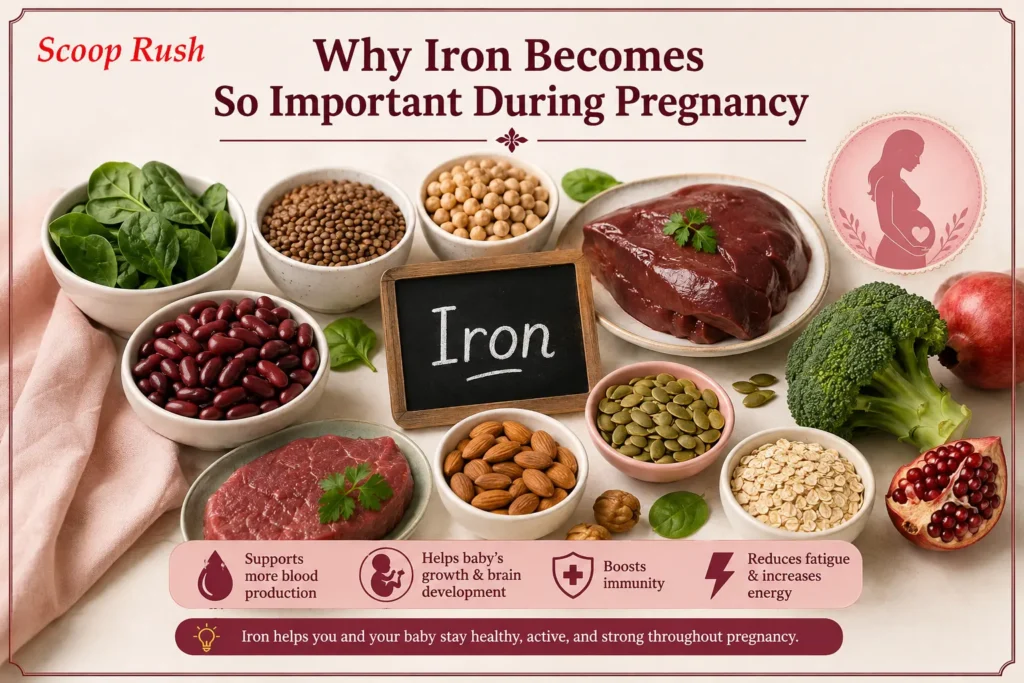
Iron’s main job in the body is to help make hemoglobin, the protein inside red blood cells that carries oxygen from your lungs to every other tissue in your body. During pregnancy, your total blood volume climbs by roughly 40 to 50 percent to support your growing uterus, placenta, and baby. All of that extra blood needs extra iron to function properly.
There are three main reasons your iron needs go up:
Building your own expanded blood supply. More blood volume means your bone marrow needs more raw material to produce additional red blood cells.
Supplying oxygen to your baby. Everything your baby needs, including oxygen, travels through the placenta from your bloodstream. Adequate iron helps ensure that supply line stays strong throughout the pregnancy.
Stocking your baby’s own iron reserves. Babies are born with iron stores that carry them through roughly the first several months of life, before they start eating iron-containing solid foods. Much of that reserve comes directly from what you consume during pregnancy.
Preparing your body for delivery. Childbirth, whether vaginal or by cesarean, involves blood loss. Entering labor with healthy iron stores helps your body recover more easily afterward.
If you’re carrying multiples, your iron requirements climb even further, since your body is supporting more than one developing baby at once.
How Much Iron Do You Actually Need?
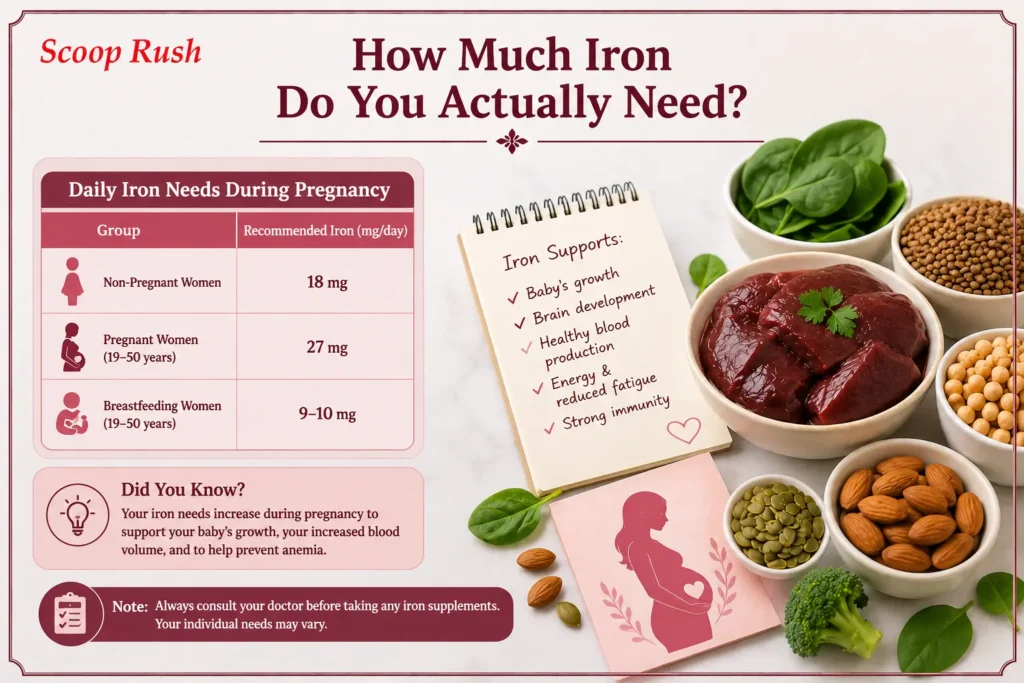
Iron needs vary by life stage, and pregnancy represents one of the biggest jumps. Non-pregnant women between the ages of 19 and 50 generally need about 18 milligrams of iron per day. Once pregnancy begins, that recommendation rises to approximately 27 milligrams a day a substantial increase that reflects just how much extra blood-building work is happening.
It’s worth noting that many prenatal vitamins do contain iron, but not all of them contain the full recommended amount. Some manufacturers assume the difference will be made up through diet, so it’s worth checking the label on your specific prenatal vitamin rather than assuming it automatically covers your needs. Because iron requirements and any supplementation beyond what’s in a prenatal vitamin are individual, this is a conversation worth having directly with your OB-GYN or midwife, especially since your provider will typically screen your iron levels with routine bloodwork over the course of your pregnancy.
Heme vs. Non-Heme Iron: Why the Source Matters
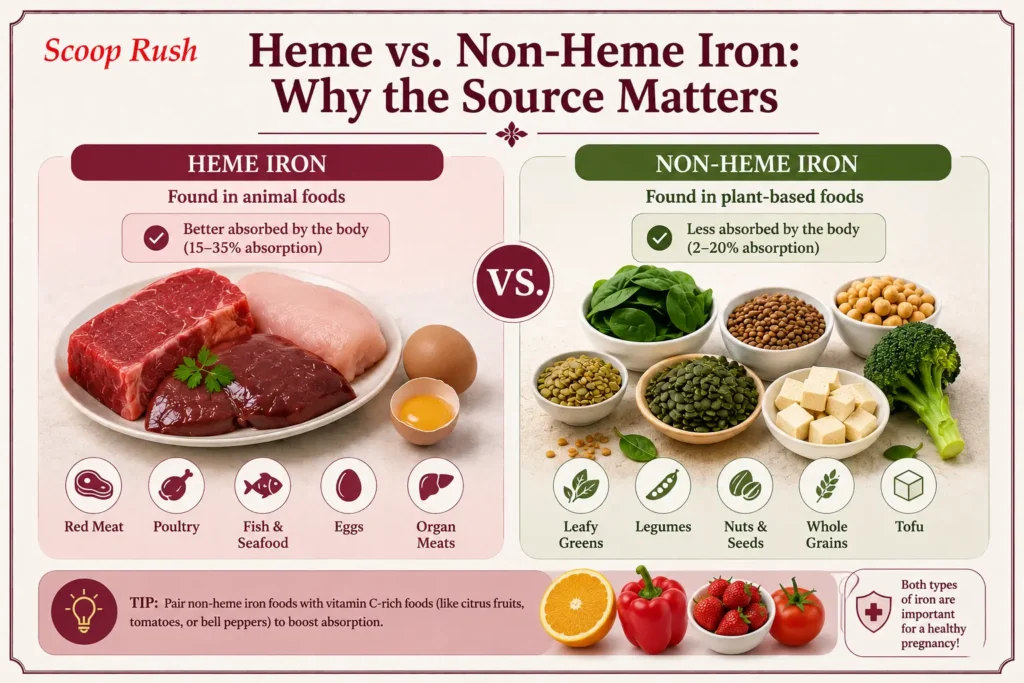
Not all dietary iron is absorbed by the body equally well, and understanding the difference can help you build smarter meals.
Heme iron comes from animal sources red meat, poultry, and fish. This form of iron is absorbed efficiently by the body, with some estimates suggesting the body can take up as much as 15 to 30 percent of the heme iron consumed.
Non-heme iron comes from plant sources, along with iron-fortified foods like cereals and grains. It’s a valuable source of iron, especially for those eating plant-forward diets, but the body absorbs it far less efficiently, often somewhere in the range of 2 to 10 percent.
This doesn’t mean plant-based iron sources aren’t worth eating quite the opposite. It simply means that if non-heme iron makes up a large share of your diet, pairing it strategically with other nutrients (more on that below) becomes especially important.
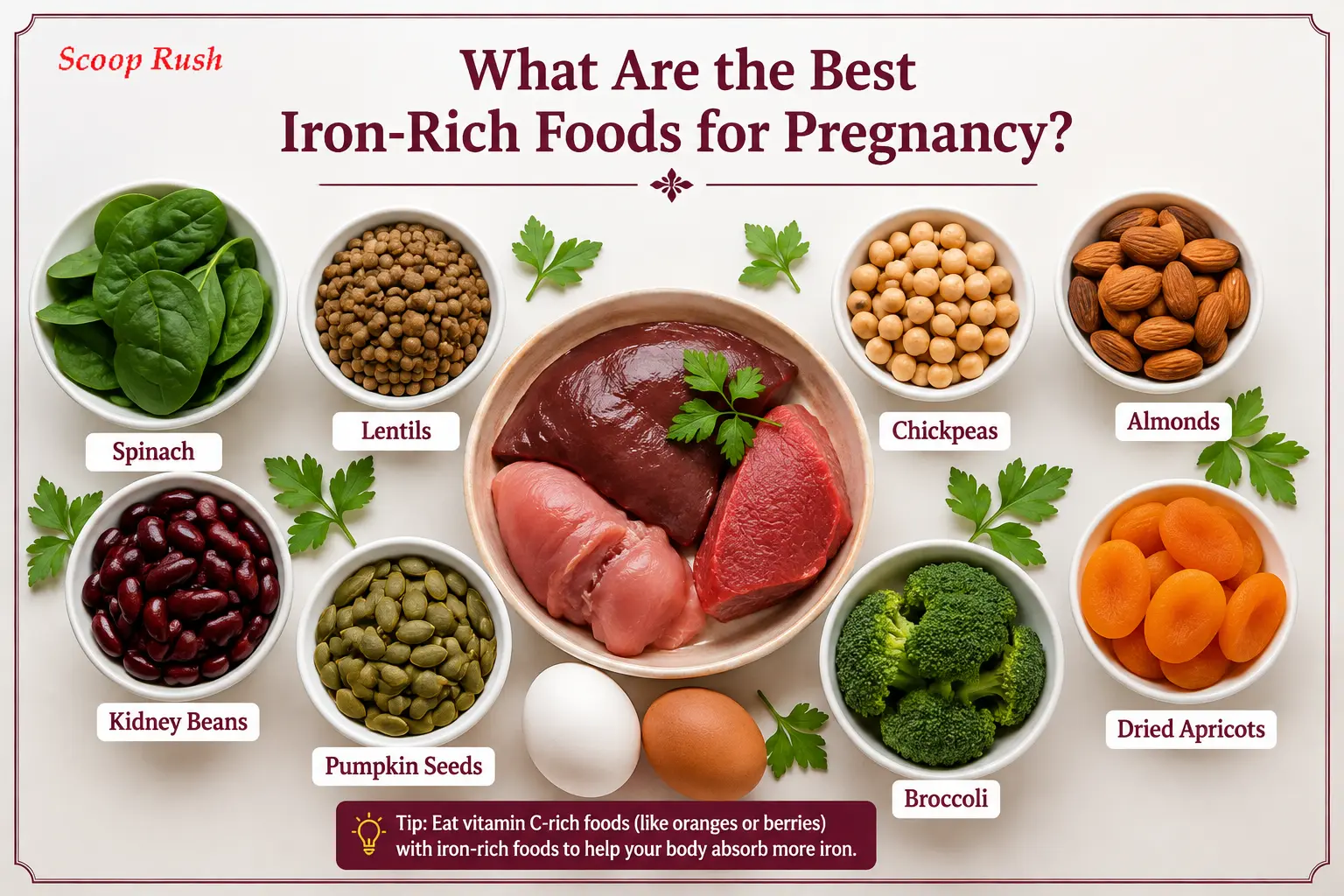
The Best Iron-Rich Foods for Pregnancy
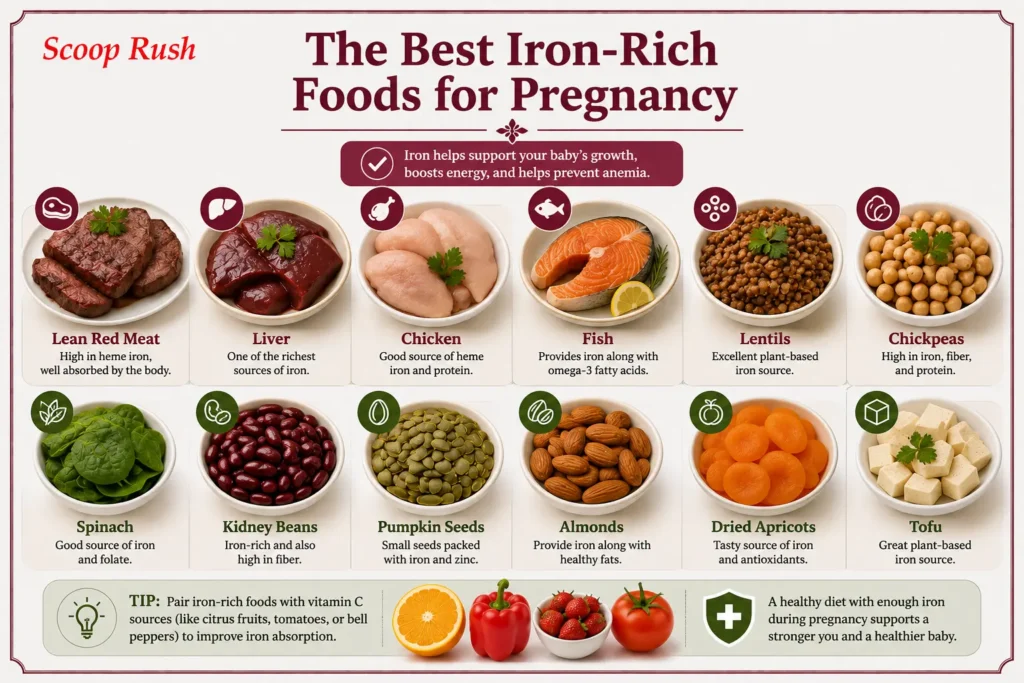
Meat, Poultry, Fish, and Eggs
Animal proteins remain some of the most concentrated and well-absorbed sources of iron available, which is part of why an animal-based diet tends to make heme iron easy to come by. Good options include:
- Lean beef and lamb
- Chicken and turkey (dark meat tends to have more iron than white meat)
- Pork and veal
- Shellfish such as shrimp, clams, and cooked oysters
- Eggs
A note on liver: while organ meats are extremely high in iron, liver also contains very high levels of vitamin A, and excessive vitamin A intake during pregnancy has been linked to birth defects. Most healthcare providers recommend limiting or avoiding liver during pregnancy, so it’s best to get guidance from your provider before adding it to your routine.
Fish deserves a mention of its own here too many varieties of fish and shellfish are excellent iron sources, but pregnant people are generally advised to limit high-mercury fish and stick to no more than about 6 ounces of higher-mercury varieties per week, favoring lower-mercury options instead.
Vegetables
Dark, leafy greens are the standout stars of the plant-based iron world:
- Spinach (cooked spinach concentrates the iron content significantly compared to raw)
- Kale
- Swiss chard
- Collard greens
- Beet greens
- Dandelion greens
- Broccoli
- Green peas and green beans
- Canned or stewed tomatoes
- Sweet potatoes
Fruit
Several fruits, particularly dried varieties, pack a surprising iron punch:
- Dried apricots
- Prunes and dried peaches
- Raisins
- Figs
- Strawberries
- Watermelon
Beans, Legumes, and Nuts
Plant-based proteins are a fantastic way to combine iron with fiber and other nutrients:
- Lentils
- Chickpeas (garbanzo beans)
- Kidney beans, black beans, and white beans
- Dried peas
- Soybeans and soy products like tofu
- Cashews and pistachios
- Pumpkin and squash seeds
Breads, Cereals, and Grains
If you’re avoiding gluten, plenty of these gluten-free breakfast ideas can still be built around iron-fortified options.
- Whole wheat bread (if you’re curious whether your loaf fits a plant-based diet, this guide to dairy-free, high-protein bread breaks down what to look for)
- Fortified breakfast cereals (some are fortified enough to cover a large share of daily needs in a single serving)
- Oat and bran cereal
- Enriched pasta and rice
- Baked potatoes with the skin on
- Cornmeal
A Sweeter Source
Dark chocolate is one of the more delightful entries on any list of iron-rich foods. In moderation, it can be a tasty way to sneak a bit more iron into your day.
Top Iron-Rich Foods at a Glance
Here’s a quick-reference table of common iron-rich foods, their approximate iron content, and roughly how much of your daily 27mg pregnancy target a typical serving provides. Values are approximate and can vary by brand, preparation method, and portion size.
| Food | Serving Size | Approx. Iron | Type | % of 27mg Daily Need |
| Fortified breakfast cereal | 1 cup | 18 mg | Non-heme | ~67% |
| Cooked lentils | 1 cup | 6.6 mg | Non-heme | ~24% |
| Beef, lean ground | 3 oz | 2.3 mg | Heme | ~9% |
| Spinach, cooked | 1 cup | 6.4 mg | Non-heme | ~24% |
| Chickpeas, cooked | 1 cup | 4.7 mg | Non-heme | ~17% |
| Tofu, firm | 1/2 cup | 3.4 mg | Non-heme | ~13% |
| Dark chocolate (70–85%) | 1 oz | 3.4 mg | Non-heme | ~13% |
| Cooked oysters | 3 oz | 8 mg | Heme | ~30% |
| Chicken, dark meat | 3 oz | 1.1 mg | Heme | ~4% |
| Pumpkin seeds, roasted | 1 oz | 2.5 mg | Non-heme | ~9% |
| Dried apricots | 1/2 cup | 1.7 mg | Non-heme | ~6% |
| Egg, large | 1 whole | 0.9 mg | Heme | ~3% |
| Kidney beans, cooked | 1 cup | 3.9 mg | Non-heme | ~14% |
| Baked potato, with skin | 1 medium | 1.9 mg | Non-heme | ~7% |
| Raisins | 1/2 cup | 1.5 mg | Non-heme | ~6% |
A quick way to use this table: pick one or two higher-iron items per meal (like fortified cereal at breakfast or lentils at lunch), then layer in smaller contributors throughout the day a handful of pumpkin seeds here, a square of dark chocolate there and the milligrams add up faster than you might expect.
How to Help Your Body Absorb More Iron
Eating iron-rich foods is only half the equation absorption matters just as much, especially for non-heme, plant-based iron. Here’s how to make the most of what you eat.
Pair Plant-Based Iron with Vitamin C
Vitamin C significantly boosts the body’s ability to absorb non-heme iron. Try combining iron-rich plant foods with vitamin C sources such as:
- Bell peppers
- Oranges and orange juice
- Kiwi
- Broccoli
- Strawberries
- Brussels sprouts
- Cantaloupe
- Tomatoes
- Grapefruit
- Guava
- Papaya
A simple example: adding sliced bell peppers and a squeeze of lemon juice to a lentil salad, or drinking a glass of orange juice alongside a bowl of fortified cereal.
Combine Plant and Animal Iron Sources in the Same Meal
Eating heme iron (meat, poultry, fish) alongside non-heme iron (plant sources) in the same meal can help improve how much of the plant-based iron your body absorbs. A stir-fry with chicken and broccoli, or a taco with ground beef and black beans, accomplishes this naturally.
Be Mindful of Tea and Coffee Timing
Compounds in tea and coffee, including decaffeinated versions, can interfere with iron absorption, particularly when consumed alongside meals. It’s also worth knowing the effects of drinking coffee on an empty stomach, since timing matters for more than just iron absorption. If you’re managing lower iron levels, it’s generally best to enjoy tea or coffee between meals rather than with them. This is also a good moment to remember that caffeine intake overall should be limited during pregnancy, so this is one more reason to be mindful of how much you’re drinking.
Recognizing Iron Deficiency and Anemia
Because iron demands increase so much during pregnancy, iron deficiency and the resulting anemia is relatively common. Symptoms to watch for include:
- Persistent fatigue or lack of energy
- Shortness of breath
- A rapid, fluttering, or pounding heartbeat
- Skin that looks paler than usual (this can look different depending on your natural skin tone)
- Dizziness or lightheadedness
- Difficulty concentrating
Because many of these symptoms overlap with normal pregnancy fatigue, it’s easy to dismiss them. That’s exactly why routine bloodwork during prenatal visits typically includes iron level screening. If a test shows your levels are low, your provider may recommend an iron supplement in addition to (or instead of) what’s in your prenatal vitamin.
If your levels are within a normal range, you generally do not need an additional iron supplement beyond your prenatal vitamin more isn’t automatically better, and it’s worth understanding the risks of taking too many vitamins and supplements before adding anything extra on your own. Iron supplementation should be guided by your provider rather than self-prescribed.
Managing Iron Supplement Side Effects
If your doctor does recommend an iron supplement, it’s helpful to know that gastrointestinal side effects are common. These can include:
- Constipation
- Stomach discomfort or cramping
- Nausea
- Darkened stool (this is a normal, harmless effect of extra iron and not a cause for alarm on its own)
To manage constipation from supplemental iron, consider these strategies:
- Increase fiber intake through fruits, vegetables, whole grains, and legumes
- Drink plenty of water throughout the day
- Stay physically active, with your provider’s approval even something as simple as taking a 5-minute walk every hour can help keep things moving
- Ask your provider whether a different iron formulation might be gentler on your system, since some types are better tolerated than others
If constipation from iron supplements progresses to hemorrhoids, a diet tailored for hemorrhoid relief can help ease the discomfort alongside your provider’s other recommendations.
Always loop your doctor in before adjusting your supplement routine, dosage, or diet in any significant way what works well for one pregnancy or one person may not be the right fit for another.
Sample Ideas for an Iron-Rich Day
While everyone’s tastes and dietary needs differ, here’s a general sense of what a day built around iron-rich foods might look like:
Breakfast: A bowl of iron-fortified cereal with milk and sliced strawberries, or scrambled eggs with spinach and a side of orange slices.
Lunch: A grain bowl with quinoa, chickpeas, roasted broccoli, and a lemon vinaigrette, or a sandwich made with lean roast beef and a side salad of dark leafy greens.
Dinner: Baked salmon or another lower-mercury fish with a side of sautéed Swiss chard and sweet potato, or a stir-fry combining chicken, beef, or shrimp with broccoli and bell peppers over rice.
Snacks: A handful of pumpkin seeds and dried apricots, hummus with vegetable sticks, or a small square of dark chocolate with a handful of cashews. If you’re also watching carbs, several keto-friendly snack options double as solid iron sources too.
Rotating through a mix of animal and plant sources, and pairing plant-based iron with vitamin C-rich foods, makes it much easier to hit that 27-milligram daily target without feeling like you’re eating the same three meals on repeat.
Your Iron Needs, Trimester by Trimester
Iron isn’t a “set it and forget it” nutrient during pregnancy your body’s demand for it actually shifts as your pregnancy progresses, and knowing what’s happening at each stage can help explain why your energy, appetite, or bloodwork results might change along the way. Building strong nutritional habits doesn’t start in pregnancy either; many of the same healthy habits worth building in your 20s and 30s lay the groundwork for how your body handles these increased demands.
First trimester: Ironically, this is often when iron needs are the easiest to meet and the hardest to act on. Your blood volume hasn’t expanded dramatically yet, so your baseline requirement is closer to your pre-pregnancy needs. But this is also prime nausea territory, and if you’re living on crackers and ginger ale some days, iron-rich foods can understandably fall by the wayside. If that’s you, don’t panic focus on whatever iron-containing foods you can tolerate, even in small amounts, and lean on your prenatal vitamin to fill gaps until your appetite stabilizes.
Second trimester: This is typically when things ramp up. Your blood volume is expanding quickly to keep pace with your growing baby and placenta, and your iron requirement climbs right along with it. Many providers screen for anemia around this window precisely because this is when deficiencies start to show up on bloodwork, even in people who felt totally fine in the first trimester. Nausea has often eased by now too, which makes it a great time to double down on iron-rich meals while your appetite cooperates.
Third trimester: Demand stays high as your baby builds their own iron reserves for after birth, and your body continues preparing for the blood loss that comes with delivery. This is also when fatigue can spike, which makes it easy to write off tiredness as “just late pregnancy” when it might actually be worth mentioning to your provider, especially if it’s paired with other anemia symptoms like dizziness or a racing heart.
Right before delivery: Going into labor with solid iron stores isn’t just about your recovery some research suggests it can also influence how you tolerate blood loss during delivery itself. It’s one more reason providers tend to keep a closer eye on iron levels as your due date approaches.
Iron Myths vs. Facts: Setting the Record Straight
Iron advice during pregnancy can get confusing fast, partly because so much of it circulates as secondhand tips from well-meaning friends and family. Here’s a quick reality check on some of the most common claims.
Myth: “If you’re not anemic, you don’t need to think about iron at all.” Fact: Even with normal bloodwork, your iron needs are still elevated throughout pregnancy. A normal result today doesn’t guarantee you’ll stay that way three months from now, which is exactly why providers re-check levels rather than testing just once.
Myth: “More iron is always better, so extra supplements can’t hurt.” Fact: Taking in more iron than your body needs can cause uncomfortable side effects and, in excess, isn’t automatically safe. Supplementation should be guided by actual bloodwork, not a “just in case” mentality.
Myth: “Red meat is the only real way to get enough iron.” Fact: While red meat is an efficient source, plenty of people meet their iron needs through a combination of poultry, seafood, legumes, fortified grains, and leafy greens — especially when those plant sources are paired thoughtfully with vitamin C.
Myth: “Iron-rich foods and dairy can be eaten together without any issue.” Fact: Calcium can interfere with iron absorption when eaten at the exact same time in large amounts. You don’t need to avoid dairy altogether, but if your iron levels are on the lower side, spacing calcium-rich foods away from your main iron sources can help your body absorb more.
Myth: “Pica cravings — like wanting to chew ice or eat non-food items are just quirky pregnancy cravings.” Fact: Unusual cravings for non-nutritive substances, a pattern known as pica, have actually been associated with iron deficiency in some cases. It’s not something to self-diagnose, but it is worth mentioning to your provider if you notice it, since it can be a signal worth checking with bloodwork.
Myth: “Once you deliver, your iron needs go back to normal immediately.” Fact: As covered in the FAQ above, postpartum iron needs stay elevated for a while, particularly if you lost a significant amount of blood during delivery or are breastfeeding. Many people benefit from continuing some form of iron support well past their due date.
The Bottom Line
Iron plays an outsized role in supporting a healthy pregnancy from building the extra blood your body needs, to supplying oxygen to your growing baby, to stocking the iron reserves your newborn will rely on in those first months of life. Because the recommended intake nearly doubles compared to non-pregnant needs, and because not every prenatal vitamin fully covers that gap, it’s worth paying close attention to the iron-rich foods on your plate.
Focus on a mix of heme and non-heme sources, pair plant-based iron with vitamin C whenever you can, and keep the conversation open with your healthcare provider about your bloodwork and whether additional supplementation makes sense for you. With a bit of intention, meeting your iron needs can become just one more manageable part of a healthy, well-rounded pregnancy diet.
This article is intended for general informational purposes and is not a substitute for personalized medical advice. Always consult your doctor or midwife about your individual nutritional needs, supplement use, and any symptoms of concern during pregnancy.
FAQs
How much iron do I need per day during pregnancy?
Most pregnant women need about 27 milligrams of iron per day, up from 18 milligrams before pregnancy. Your provider may recommend a different target based on your bloodwork, especially if you’re carrying multiples or have a history of anemia.
Can I get enough iron from food alone, without a supplement?
It’s possible, especially if you regularly eat iron-rich meats, fortified cereals, legumes, and leafy greens, paired with vitamin C sources. That said, many people find it difficult to consistently hit 27mg through diet alone, which is part of why prenatal vitamins typically include some iron. Whether you need an additional supplement on top of that depends on your bloodwork, so it’s a conversation for your provider rather than a decision to make alone.
What are the first signs of low iron in pregnancy?
Fatigue, shortness of breath, a fast or fluttering heartbeat, dizziness, and looking paler than usual are common early signs. Because fatigue is also just a normal part of pregnancy, low iron can be easy to miss without a blood test, which is why routine screening matters.
Is it safe to take an iron supplement without a doctor’s recommendation?
It’s best not to self-prescribe extra iron beyond what’s in your prenatal vitamin. Taking in too much iron can cause its own problems, including gastrointestinal discomfort, and supplementation decisions should be based on your actual bloodwork rather than guesswork.
Does cooking food in a cast-iron skillet actually add iron?
Yes, to a modest degree. Cooking acidic foods (like tomato sauce) in a cast-iron pan can increase the iron content of the dish slightly, though it shouldn’t be relied on as a primary iron strategy.
Why does my iron supplement turn my stool black?
This is a normal, harmless side effect of extra iron passing through your digestive system and isn’t a cause for concern on its own. If you notice black stool alongside stomach pain, or you’re unsure whether what you’re seeing is normal, check in with your provider to be safe.
Are there foods or drinks I should avoid to protect my iron levels?
You don’t need to eliminate anything entirely, but drinking tea or coffee with meals can reduce how much iron you absorb, so spacing them away from meals is a simple fix if your levels run low. Calcium supplements taken at the exact same time as iron-rich meals can also interfere with absorption, so many providers suggest spacing those out as well.
Is it normal for iron needs to differ if I’m pregnant with twins?
Yes. Carrying multiples increases blood volume even further, which typically means higher iron needs. Your provider will usually monitor your levels more closely and may adjust supplementation accordingly.
Will my iron needs change after I give birth?
Iron needs generally decrease after delivery compared to the pregnancy peak, but they don’t disappear, especially if you lost a significant amount of blood during birth or are breastfeeding. Many providers recommend continuing an iron-containing supplement for some time postpartum, particularly if you were anemic during pregnancy.

