
Bilibili just made its biggest international play yet, and the Bilibili vs YouTube 2026 debate is now impossible to ignore. When it comes to Bilibili vs YouTube 2026, Bilibili is not starting from zero. Reports place its monthly active user base at around 376 million, giving it a massive existing audience and content library.
Introduction
What happens when one of China’s largest video platforms suddenly makes itself accessible to the entire world? That question is no longer hypothetical. The Bilibili vs YouTube 2026 debate is unfolding right now, and it could reshape where creators choose to publish their work.
Bilibili, often described as China’s version of YouTube, has relaunched its international Android app, removed the passport verification rule that once blocked most overseas sign-ups, and started hiring staff across major global cities. For creators, this matters. It could mean a new audience, a new revenue channel, and a genuine alternative to relying on a single platform, at a time when many are already asking will AI replace your job and rethinking where their income comes from.
However, several important pieces of this rollout are still missing. Therefore, understanding what has actually launched, and what remains unfinished, is essential before anyone decides to invest serious time into the platform.
What Is Bilibili?
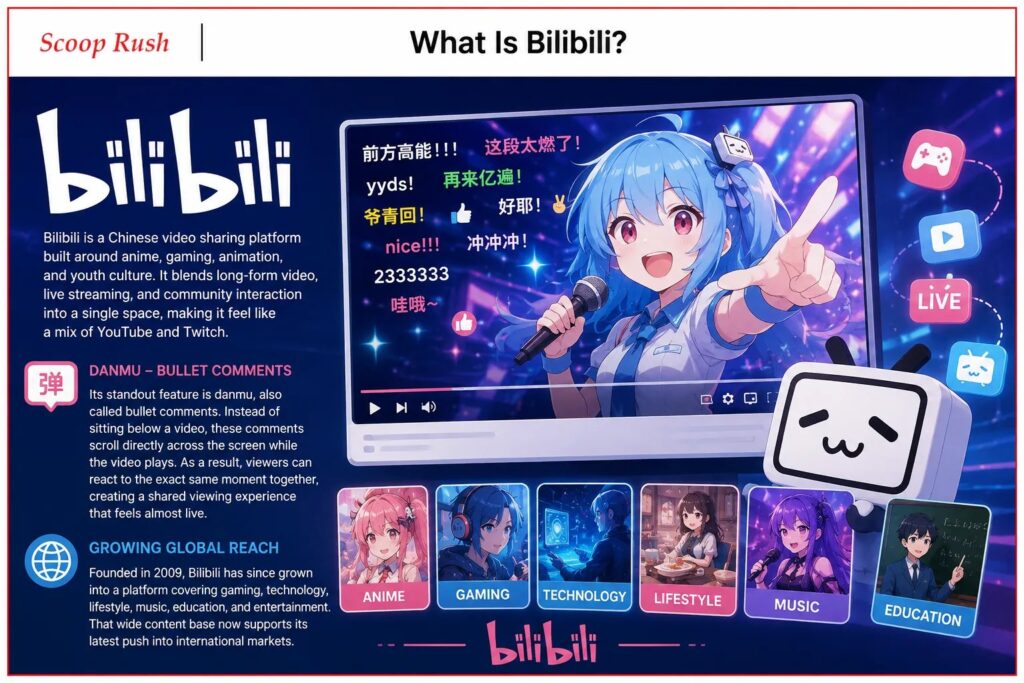
Bilibili is a Chinese video sharing platform built around anime, gaming, animation, and youth culture. It blends long-form video, live streaming, and community interaction into a single space, making it feel like a mix of YouTube and Twitch.
Its standout feature is danmu, also called bullet comments. Instead of sitting below a video, these comments scroll directly across the screen while the video plays. As a result, viewers can react to the exact same moment together, creating a shared viewing experience that feels almost live.
Founded in 2009, Bilibili has since grown into a platform covering gaming, technology, lifestyle, music, education, and entertainment. That wide content base now supports its latest push into international markets.
Bilibili Global Expansion 2026: What Has Actually Changed?
The Bilibili global expansion 2026 is not a completely new product. An earlier international app existed before and was later shut down. This time, though, the company appears to be backing the effort with real infrastructure and long-term planning.
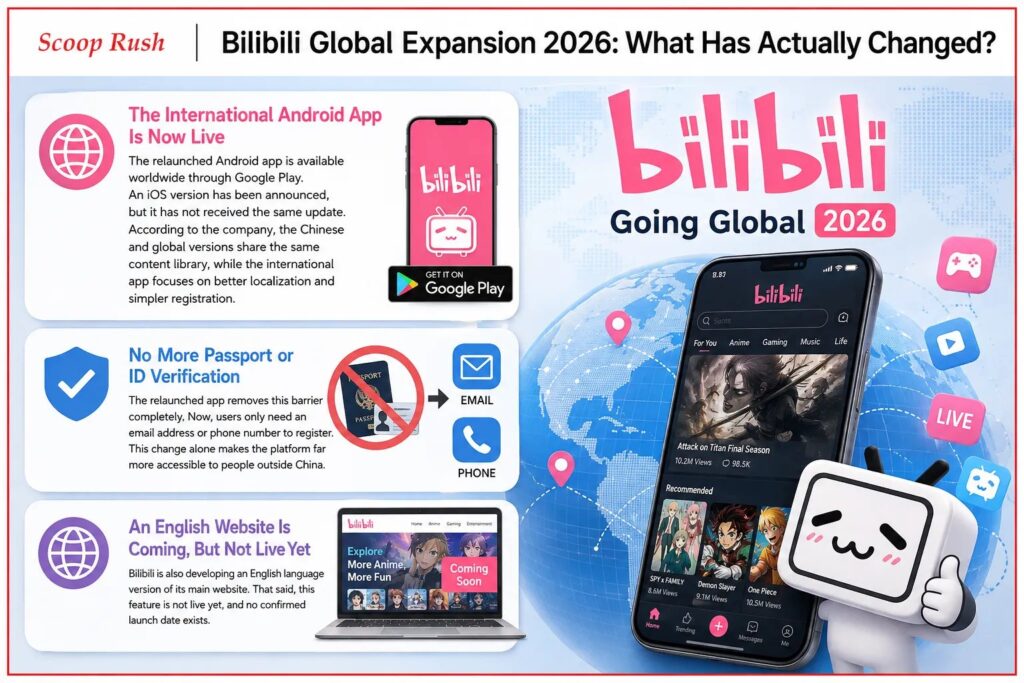
The International Android App Is Now Live
The relaunched Android app is available worldwide through Google Play. This is the clearest signal yet that Bilibili is serious about competing internationally, much like how iPhone 18 Pro leaks signal Apple’s own next big product push.
An iOS version has been announced, but it has not received the same update. Consequently, Android users currently have the easiest way into the platform. According to the company, the Chinese and global versions share the same content library, while the international app focuses on better localization and simpler registration.
No More Passport or ID Verification
Previously, international users often needed to submit a passport or government ID just to sign up or upload content. That single requirement stopped many potential creators before they even started.
The relaunched app removes this barrier completely. Now, users only need an email address or phone number to register. This change alone makes the platform far more accessible to people outside China, though it also raises the kind of data and privacy questions already seen with tools like period tracker apps.
An English Website Is Coming, But Not Live Yet
Bilibili is also developing an English language version of its main website. That said, this feature is not live yet, and no confirmed launch date exists.
This distinction matters for anyone planning ahead. The Android app is real and usable today. The English website, however, remains a future promise rather than a current option.
Why Bilibili Is Targeting International Creators
A global platform needs creators, not just viewers. Bilibili has reportedly started hiring community managers in Los Angeles, London, Mexico City, São Paulo, Istanbul, and Tokyo.
This hiring pattern suggests Bilibili wants local support teams in place, not just a translated app. The company’s goal appears to go beyond simply making its Chinese platform available abroad. Instead, Bilibili seems to be actively courting creators who already produce content for global audiences, the same kind of creator economy shift seen in stories like the mom who built a $10K a month Etsy side hustle.
Anime, Gaming, and Animation Creators May Have the Advantage
Bilibili’s roots run deep in anime, gaming, and animation communities. Naturally, creators working in these spaces may find the platform especially welcoming.
Gaming creators could use it for gameplay videos, reviews, and guides. Animation and VFX artists may find an audience already interested in visual storytelling. Meanwhile, anime commentators and fandom creators already share cultural common ground with Bilibili’s existing user base.
Even so, the platform is not limited to these categories. Technology, lifestyle, education, and entertainment creators all have room to grow there too.
How Bilibili’s Danmu Comments Set It Apart From YouTube
Danmu comments are one of the biggest differences between Bilibili and YouTube. Instead of appearing below a video, comments scroll live across the screen in real time.
For example, a viewer watching a tense gaming moment might see a wave of reactions appear at that exact timestamp. Similarly, a funny scene can trigger a flood of comments while the video keeps playing. This turns solo viewing into a shared, communal experience.
As a result, Bilibili is not simply another upload-and-watch website. Its community culture sits at the center of its identity, and that identity plays a major role in its international pitch.
Bilibili’s Creator Marketplace and Monetization Plans
Bilibili is also building a creator-brand marketplace meant to connect creators with sponsors for paid content. However, this marketplace remains in development, and no launch date has been confirmed.
Bilibili’s creator pitch materials reportedly describe its audience as Gen Z coded, affluent, and well educated. The company has also mentioned revenue sharing and virtual gifting as future monetization tools. Still, none of these structures have been fully finalized or made public, a gap not unlike the uncertainty around how AI tokenomics make paying for AI tricky.
What About the Reported $0.70 Per 1,000 Views Payout?
Reports have circulated online claiming Bilibili could pay creators around $0.70 per 1,000 views, or roughly Rs 60 to Rs 66. However, Bilibili has not officially confirmed any fixed payout rate.
This distinction matters. Treat the figure as an unconfirmed report, not a guaranteed number. Actual payouts likely depend on factors such as audience location, content category, and advertising demand, none of which Bilibili has detailed for international creators yet.
Separately, some reports suggest that creators hoping to join the monetization program may need at least 100 subscribers and 2,000 valid public views, along with checks for originality and copyright compliance. Still, this does not confirm what international creators will actually earn.
Bilibili’s Existing Scale and Global Reach
Bilibili is not starting from zero. Reports place its monthly active user base at around 376 million, giving it a massive existing audience and content library.
Its creator infrastructure includes bilibili Studio, a global creator services center. One standout feature automatically translates creator videos into Chinese. Instead of hiring subtitlers or dubbing services, creators can let the platform handle that translation layer, similar in spirit to how Meta Muse’s AI coding agent automates work creators would otherwise do by hand.
Translation quality can vary, especially for nuanced narration, humor, or culturally specific jokes. Even so, this feature gives creators a low-effort way to reach a massive Chinese-speaking audience without producing a separate version of every video.
Why the Built-In Translation Feature Matters
Reaching a new language market usually costs time and money. Creators typically need subtitles, translators, or full dubbing work to make that happen.
Bilibili’s translation system removes much of that friction. A creator does not have to choose between YouTube and Bilibili. Instead, Bilibili can simply become another distribution channel for content that already exists. This could especially help filmmakers, animators, and VFX artists whose work tends to translate well across language barriers.
Bilibili vs YouTube: How Do the Two Platforms Compare?
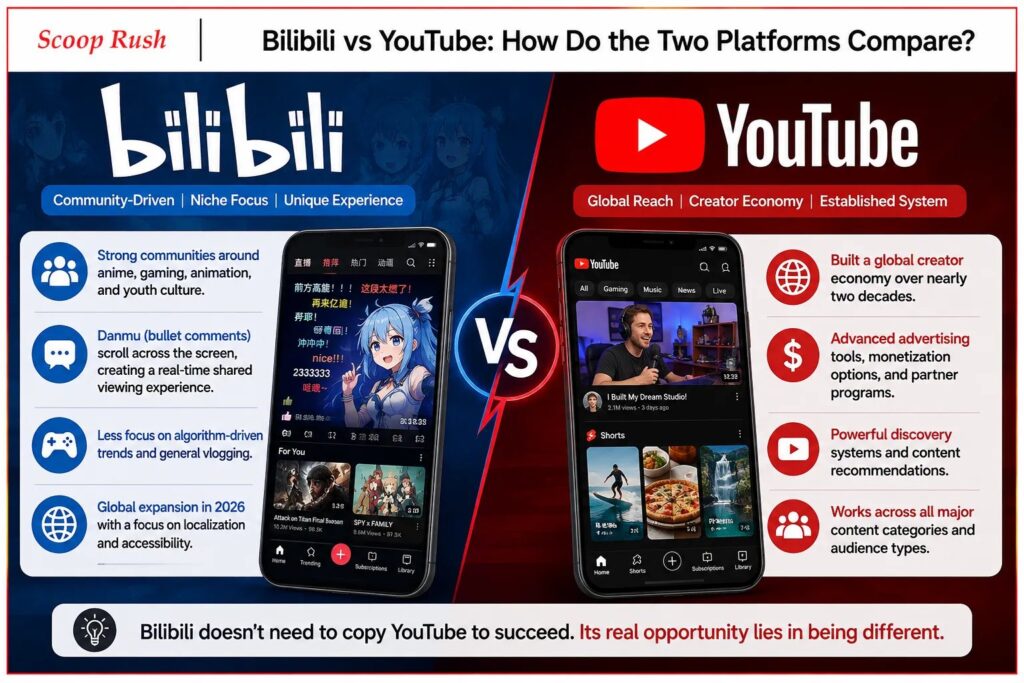
Calling Bilibili “China’s YouTube” is a simple way to explain it, but the Bilibili vs YouTube 2026 comparison goes far deeper than that. YouTube has built a global creator economy over nearly two decades, complete with advertising tools, discovery systems, and established monetization options.
Bilibili’s identity comes from a different place entirely. Its strongest communities formed around anime, gaming, animation, and youth culture, not general vlogging or algorithm-driven trends. The danmu comment system also creates a completely different viewing experience compared to YouTube’s traditional comment section.
Therefore, Bilibili does not need to copy YouTube to succeed. Its real opportunity may come from simply offering something different.
Challenges Bilibili Still Needs to Overcome
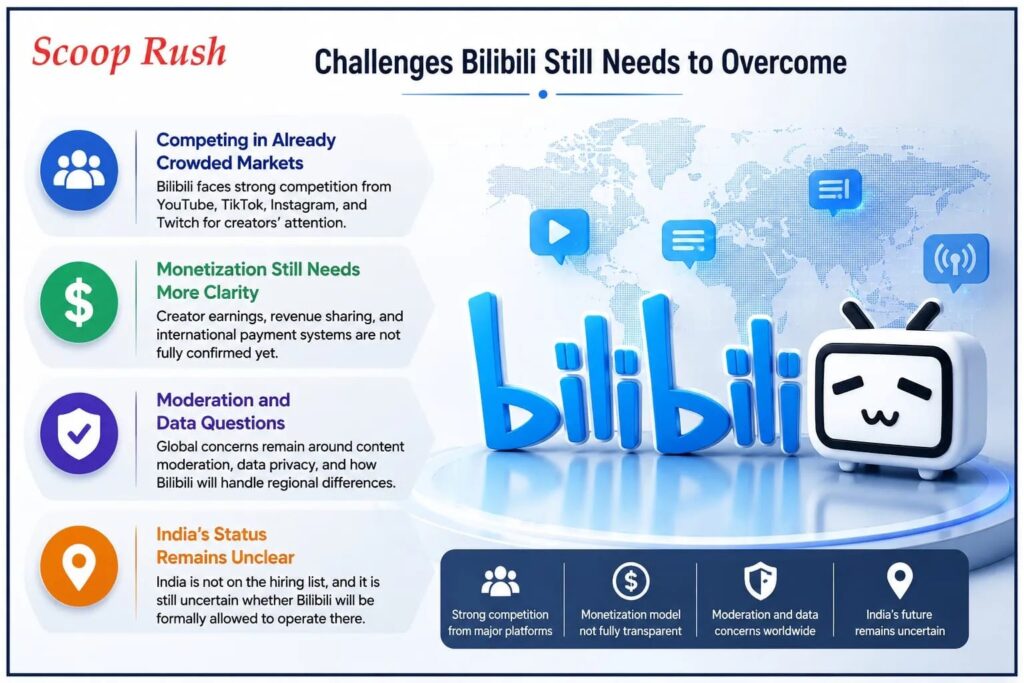
Competing in Already Crowded Markets
Bilibili is entering markets where creators already have plenty of established options. YouTube dominates long-form video. TikTok owns short-form content. Instagram has its own creator community, and Twitch remains the top choice for live streaming.
As a result, Bilibili must convince creators that the extra publishing effort is genuinely worth it.
Monetization Still Needs More Clarity
Professional creators care about income above almost everything else. While Bilibili has discussed creator-brand deals and revenue sharing, its international payment system is not fully confirmed yet. Since the reported $0.70 per 1,000 views figure remains unofficial, creators should avoid building an entire strategy around it, the same caution worth applying to any platform where companies are still not profiting from AI in 2026.
Moderation and Data Questions Remain Open
Because Bilibili originates from China, its global expansion naturally invites comparisons to other Chinese platforms that have faced regulatory scrutiny abroad. However, nothing confirms that Bilibili will face the same outcome.
What is confirmed is that Bilibili is actively building moderation infrastructure. A Singapore-based role reportedly focuses on AI-powered content moderation for the international platform, echoing broader efforts like the UK threatening big tech with penalties over child safety features. Even so, the company has not fully explained how it will handle content differences across regions.
India’s Status Remains Unclear
India represents one of the largest online video markets in the world, yet it is notably missing from Bilibili’s list of hiring cities. One report noted that a representative could access the Bilibili website from India as of August 24, 2026, with videos playing normally. However, it remains unclear whether Bilibili will be formally permitted to operate in the country going forward.
What the Bilibili Global Expansion Means for Creators
For most creators watching the Bilibili vs YouTube 2026 race, diversification makes more sense than an all-in bet. Instead of abandoning YouTube, creators can treat Bilibili as an additional distribution channel worth testing carefully, similar to how businesses now weigh .AI social listening tools before switching their entire workflow over.
A creator could start by publishing a small batch of videos and tracking:
- Views
- Watch time
- Followers
- Engagement
- Audience response
- Monetization opportunities as they roll out
This approach provides real performance data before making a bigger commitment. It makes particular sense for creators already working in gaming, anime, animation, technology, film, or education, since those categories align closely with Bilibili’s existing community.
Interestingly, some international creators have already tested the waters. MrBeast reportedly built a following of 8.8 million on the platform after joining in 2024, proving that large creators can find an audience there even before the full international rollout is complete.
Even so, simply uploading videos will not guarantee success. Strong content, clear titles, solid thumbnails, and consistent publishing still matter just as much on Bilibili as anywhere else, much like organically earning more Google reviews takes consistent effort rather than a quick fix.
Conclusion
The Bilibili vs YouTube 2026 story marks a genuine turning point for a platform that already commands hundreds of millions of users across China. The relaunched Android app, simplified registration, and active hiring push all point to a company that is serious about global growth this time around.
At the same time, major pieces remain unfinished. The English website has not launched. The iOS update is still pending. The creator-brand marketplace remains in development, and the reported payment rate has not been officially confirmed by the company.
For creators, the smartest move is to watch closely and test carefully rather than restructuring an entire channel around unfinished promises. Bilibili does not need to replace YouTube overnight. If its international push gains real traction, it could simply become another valuable place to publish, distribute, and grow an audience.
FAQs
Is Bilibili’s international app available right now?
Yes. The relaunched international Android app is live globally on Google Play. An iOS version has been announced but has not received the same update yet.
Do international users still need a passport to sign up for Bilibili?
No. The passport and ID verification requirement has been removed for the relaunched international app. Users can now register with just an email address or phone number.
How much does Bilibili pay creators per 1,000 views?
Reports suggest a figure of around $0.70, or roughly Rs 60 to Rs 66, per 1,000 views. However, Bilibili has not officially confirmed this rate, so it should not be treated as guaranteed.
Is Bilibili available in India?
This remains unclear. India is not among the cities where Bilibili is currently hiring, and it has not been confirmed whether the platform will formally operate there.
Should creators leave YouTube for Bilibili?
No. There is no indication that creators should abandon YouTube. Bilibili is best treated as an additional platform to test and diversify onto, not a replacement.

