
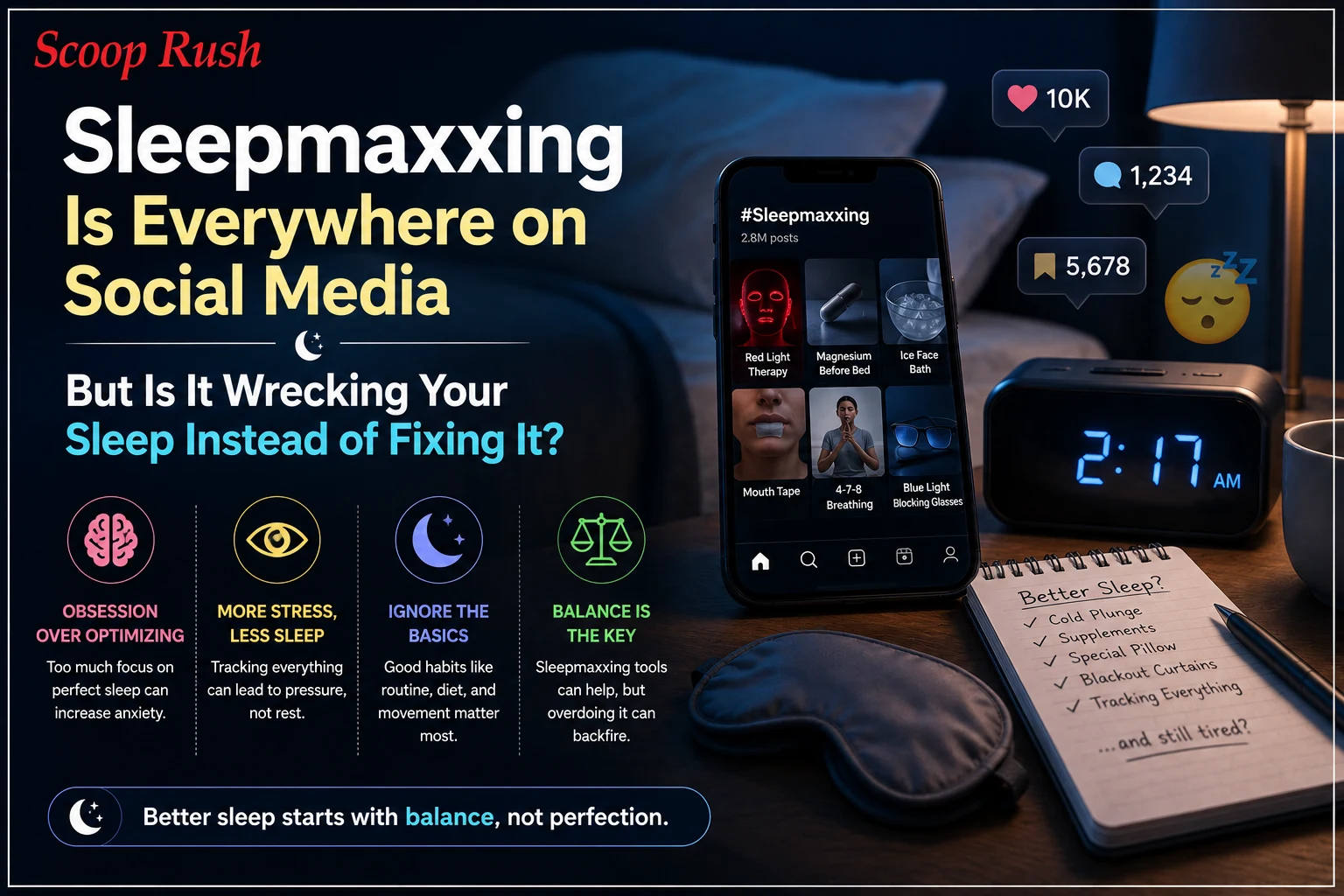
You wake up. Before your feet hit the floor, you check your ring.
- Not your best. Not your worst.
You start doing mental math. Too much screen time? That glass of wine? By the time you’ve finished your coffee, you’ve decided today is going to be rough.
Thirty seconds ago, before you saw the number, you felt fine.
This is sleepmaxxing in its most common form. And sleep doctors say it might be exactly what’s wrecking your rest.
What Is Sleepmaxxing?
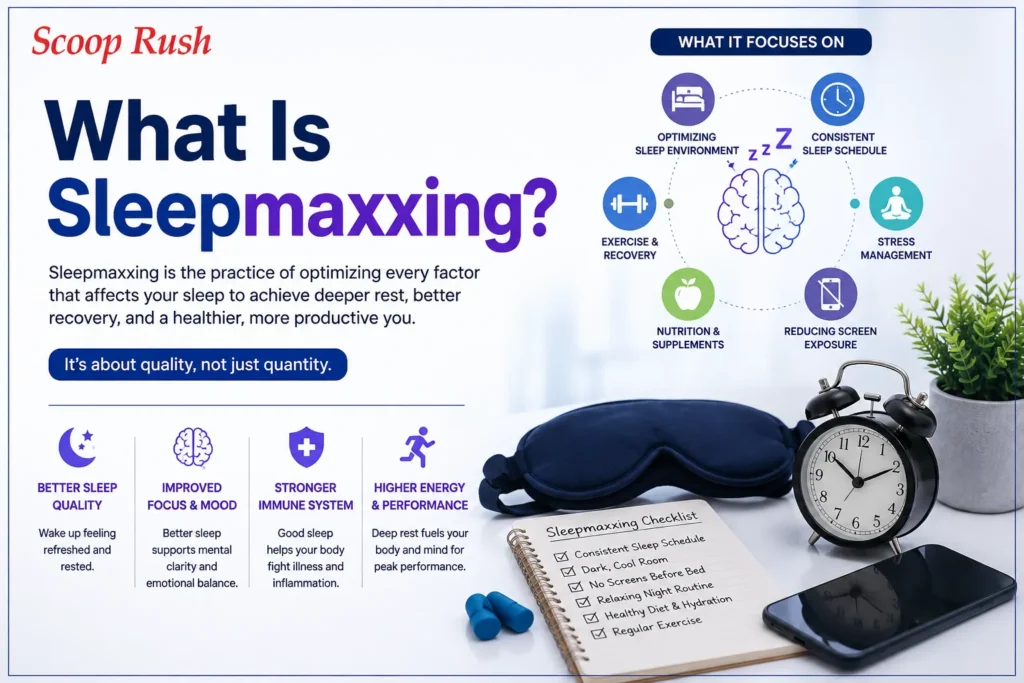
Sleepmaxxing is the social-media-era obsession with “perfecting” sleep.
Mouth tape. Magnesium stacks. Weighted blankets. Chin straps. A ring that grades every night like a report card.
Some of it works. Others are just harmless theater. And a few practices, doctors warn, are actively backfiring.
It’s not a real medical term. But sleep specialists say they see its effects constantly patients showing up with months of tracker data, convinced something’s wrong, even when every test says otherwise.
Orthosomnia: When “Perfect Sleep” Becomes the Problem
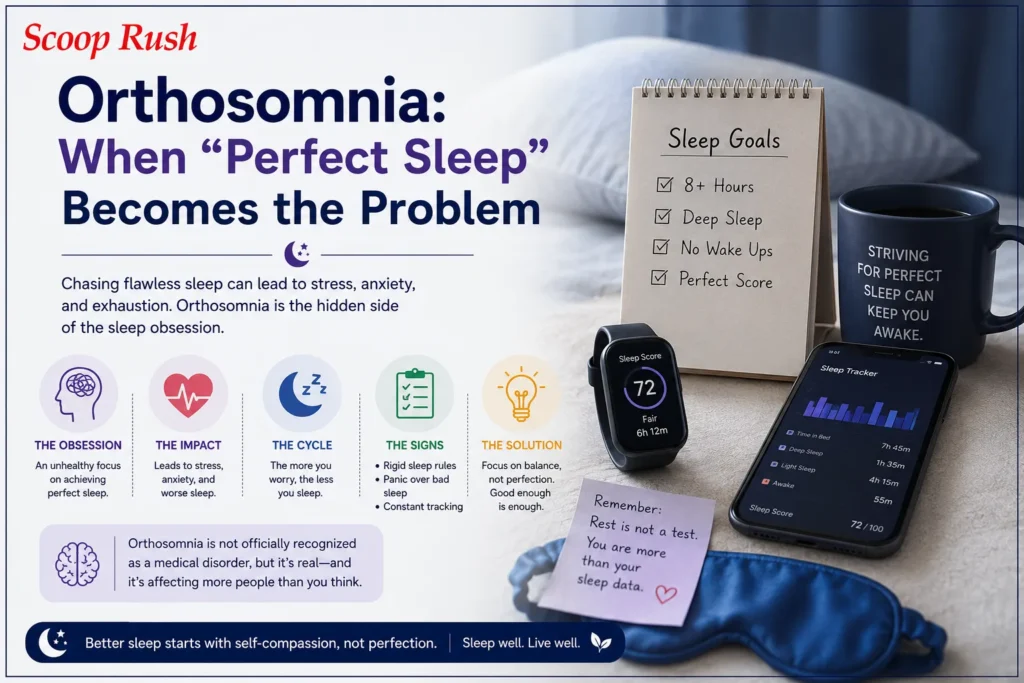
There’s a clinical name for this spiral: orthosomnia.
Coined in the Journal of Clinical Sleep Medicine, it describes an unhealthy obsession with flawless sleep metrics one that often makes sleep worse, not better.
“I’ve noticed more patients coming to me with data from various trackers, with lots of questions about sleep that… is probably contributing to their sleep difficulties,” says Dr. Alanna Hare, a sleep medicine consultant at London’s Royal Brompton Hospital.
Even reassuring test results don’t always calm the anxiety, she notes.
The pattern is familiar:
- Buy a tracker with good intentions
- Start checking the score every morning
- Let that number dictate how you expect to feel
- Start dreading the checking itself
Doctors call this sleep effort. The harder you try to sleep “correctly,” the more arousal you create and the harder sleep becomes.
Learning general ways to relieve stress during the day can lower that baseline arousal before it ever reaches your bedroom.
Why Your Sleep Score Might Be Fiction
Here’s the uncomfortable part: that satisfying number on your wrist may not mean much at all.
“There’s nothing recognised in sleep science that is a ‘sleep score,'” Dr. Hare says. “That’s just been created by manufacturers.”
Real sleep-stage detection needs an EEG brainwave monitoring, only available in a clinical lab.
Wearables can’t do that. They estimate sleep stages from movement and heart rate, run through a private algorithm.
Dr. Nathaniel Gordon, a sleep specialist at Old Dominion University’s EVMS Medical Group, notes these algorithms usually aren’t independently validated by outside researchers.
That gap has landed in court. A lawsuit filed against Oura in San Francisco alleges its rings can’t reliably measure sleep quality, leaning instead on AI estimates the suit compares to a coin flip.
Oura disagrees, saying it stands behind its science and is working to clarify what the ring measures versus estimates.
Fake Scores, Real Damage
A University of Oxford study makes the point sharply.
Researchers gave participants trackers with a nightly score. The scores were random — no connection to actual sleep.
People told they’d slept badly reported more fatigue. They scored worse on focus tests. Slower reaction times.
Nothing about their real sleep had changed. The number alone did the damage.
One Woman, Three Years, One Number
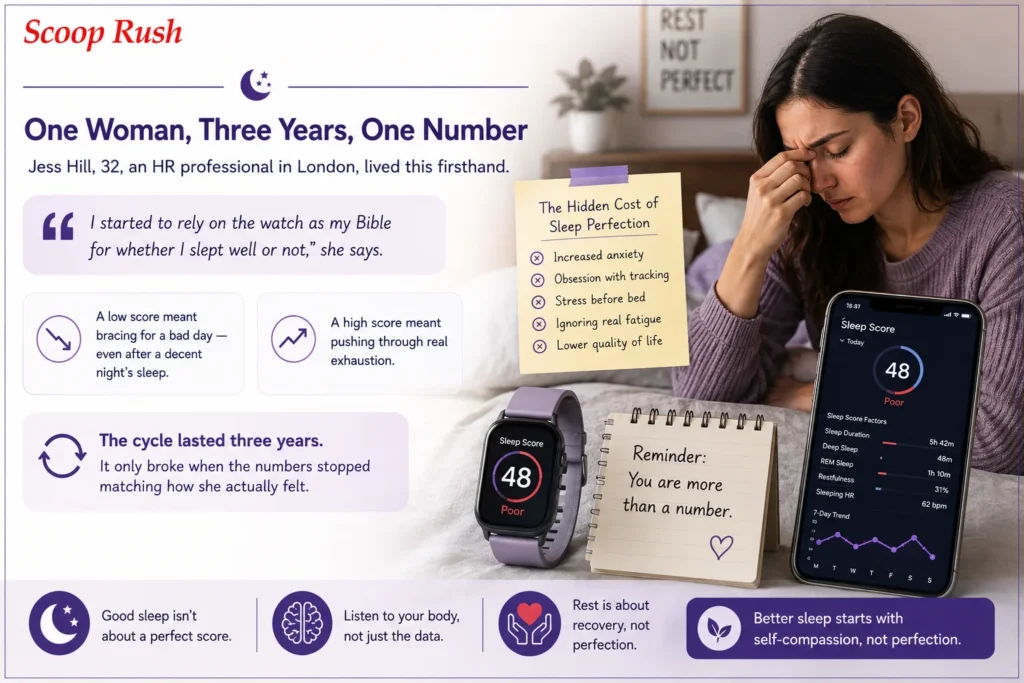
Jess Hill, 32, an HR professional in London, lived this firsthand.
“I started to rely on the watch as my Bible for whether I slept well or not,” she says.
A low score meant bracing for a bad day even after a decent night’s sleep. A high score meant pushing through real exhaustion.
The cycle lasted three years. It only broke when the numbers stopped matching how she actually felt.
What Sleepmaxxing Actually Gets Right
Not everything about the trend deserves eye-rolls. Some of it is solid, decades-old science.
| Habit | Why It Works |
| Consistent wake time (even weekends) | Anchors your circadian rhythm central to CBT-I, the gold-standard insomnia treatment |
| Morning light exposure | Suppresses leftover melatonin, shifts your clock earlier |
| Cool bedroom (mid-60s°F) | Supports the natural body-temperature drop before sleep |
| Cutting back on alcohol | Speeds falling asleep but fragments deeper sleep later |
| Earlier caffeine cutoff | Caffeine’s 5–7 hour half-life means a 3pm coffee is still active at 9pm — timing matters as much as whether you’re drinking coffee on an empty stomach |
Where Sleepmaxxing Goes Off the Rails
- Supplement stacks. Magnesium, L-theanine, ashwagandha, glycine often taken together. Stacking too many at once carries its own supplement risks, and none of them fix the behavioral patterns behind chronic insomnia.
- Melatonin misuse. It’s not a sedative. It shifts your body clock, but doesn’t force sleep. Nightly users are often still struggling.
- Mouth taping. Nasal breathing has real benefits, but taping shut isn’t a substitute for ruling out sleep apnea especially if you snore or feel excessively sleepy.
- Obsessive tracking. Treating a nightly score like a report card is one of the fastest routes into orthosomnia.
The Billion-Dollar Business Behind Sleepmaxxing
Sleepmaxxing didn’t appear out of nowhere. It grew inside a sleep economy worth tens of billions of dollars a year.
Mattress companies. Supplement brands. Wearable tech makers. All of them profit when you feel unsure about your sleep.
That’s not a conspiracy theory it’s just incentives. A confident sleeper doesn’t buy a new pillow spray.
Influencers play a role too. Many partner with sleep brands, earning commissions on every ring, gummy, or blanket sold through their link.
That doesn’t make every product useless. Some genuinely help.
But it does mean the loudest voices telling you what your sleep needs often have a financial reason to keep you shopping not just resting.
Worth remembering next time a video insists you need six products to fall asleep like a “good sleeper.”
Common Sleepmaxxing Products, Reviewed Honestly
Here’s a quick, no-nonsense breakdown of the products that show up again and again in sleepmaxxing content.
Weighted blankets. Some people find the pressure calming, similar to a hug. Evidence is modest but positive for anxiety-related sleep issues. Low risk, worth trying.
Blue-light glasses. The theory is solid blue light in the evening can delay melatonin release. But simply dimming screens or using night-mode settings achieves much the same effect for free.
Cooling mattress pads. Genuinely useful if you run hot at night. Ties directly into the well-supported “cool bedroom” principle pairing one with simple home cooling tips for hot weather can make a bigger difference than the pad alone.
Sleep gummies and “nighttime blends.” Often a mix of melatonin, herbs, and sugar. Effects vary wildly person to person. Not a replacement for addressing why you’re not sleeping in the first place.
Smart alarm clocks that track light sleep. Marketed to wake you at your “lightest” sleep stage. The tech behind this is far from precise expect hit-or-miss results.
Aromatherapy diffusers. Lavender scent has some small studies behind it for relaxation. Pleasant, low-risk, unlikely to be a game-changer on its own.
The pattern across almost all of these: modest, individual, and never a substitute for the basics consistent schedule, light exposure, temperature, and a calm mind at bedtime.
Sleepmaxxing Myths vs. Facts
| Myth | Fact |
| “A higher sleep score means better sleep.” | Sleep scores aren’t a recognized clinical measurement — they’re brand-specific estimates. |
| “Everyone needs exactly 8 hours.” | Sleep needs vary by person; consistency in timing matters more than hitting a fixed number. |
| “Supplements can fix chronic insomnia.” | Supplements work at the edges; chronic insomnia usually needs behavioral treatment like CBT-I. |
| “Trackers measure sleep stages accurately.” | Trackers infer stages from movement and heart rate — not brain activity so accuracy is limited. |
| “Mouth taping is safe for everyone.” | It can mask undiagnosed sleep apnea symptoms if not medically evaluated first. |
| “Trying harder to fall asleep helps.” | Trying harder increases arousal, which typically makes falling asleep harder, not easier. |
Sleepmaxxing for Different Kinds of Sleepers
Not everyone struggling with sleep has the same problem. A few common profiles:
The anxious tracker. Checks their score daily, lets it dictate mood. Best move: hide the score screen, or check trends monthly instead of daily.
The night owl forcing an early bedtime. Tries to sleep at 10pm because content says so, lies awake for hours. Best move: only go to bed when actually sleepy, and shift wake time gradually instead.
The supplement collector. Has a nightstand full of bottles, still sleeps poorly. Best move: talk to a doctor about what’s actually needed, drop the rest.
The genuinely undiagnosed sleeper. Snores loudly, wakes gasping, feels exhausted no matter what they try. Best move: skip the trend altogether and see a sleep specialist this isn’t a hygiene problem.
Recognizing which category you fall into matters more than any single product on the market.
Sleepmaxxing Practices at a Glance
| Practice | Evidence | Verdict |
| Consistent wake time | Strong | ✅ Do it |
| Morning light exposure | Strong | ✅ Do it |
| Cool bedroom | Strong | ✅ Do it |
| Less alcohol | Strong | ✅ Do it |
| Early caffeine cutoff | Strong | ✅ Do it |
| Wind-down routine | Strong | ✅ Do it |
| White noise / blackout curtains | Modest | 🟡 Maybe |
| Magnesium glycinate | Modest | 🟡 Ask a doctor |
| Cooling bedding | Modest | 🟡 Maybe |
| Nightly high-dose melatonin | Weak | 🟠 Caution |
| Mouth taping (unevaluated) | Weak/risky | 🔴 Avoid |
| Obsessive score-checking | Harmful | 🔴 Avoid |
| Big supplement stacks | Weak | 🔴 Not a fix |
Sleep Doesn’t Respond to Effort
Here’s the paradox: sleep is one of the few body functions that gets worse the harder you try to control it.
Think of it like breathing. Automatic. Involuntary. It happens when your body is ready not when you will it to.
Picture this: perfect bedroom, lights off, eyes closed. You start counting minutes.
Frustration builds. Worry creeps in. Suddenly the phone charger’s glow feels unbearable.
Your focus on sleeping “right” just created the exact arousal that keeps you awake.
A calming technique like box breathing for stress can help interrupt that spiral in the moment, without adding another gadget to the routine.
Good sleepers rarely think about sleep at all. Ask one how they do it they’ll shrug. For them, it’s effortless.
How to Sleep Better Without the Extra Work
- Only get in bed when tired. Lying awake trains your brain to link bed with wakefulness.
- Keep it simple. Steady schedule, morning light, earlier caffeine cutoff, cool dark room.
- Move during the day. Even a 5-minute walk every hour can improve sleep quality more than most nighttime rituals.
- Stop fearing bad nights. One rough night isn’t dangerous and can even help you sleep better the next.
- Treat trackers as background noise. Check monthly trends, not daily grades.
- Know the red flags. Loud snoring, gasping, daytime exhaustion, or persistent trouble sleeping despite good habits see a doctor.
When Sleepmaxxing Isn’t Enough
Environmental tweaks can only go so far.
For chronic insomnia, the real issue usually isn’t the mattress or the melatonin. Instead, it’s learned patterns: hypervigilance, dread of a bad night, and a bedroom tied to frustration instead of rest.
That’s where Cognitive Behavioral Therapy for Insomnia (CBT-I) comes in.
It’s the gold-standard treatment more effective long-term than medication, because it targets the root cause, not the surroundings.
If weeks of good habits haven’t helped, the problem likely runs deeper than any gadget can fix.
The Bottom Line
Sleepmaxxing isn’t all bad. Consistent wake times, morning light, a cool room, less alcohol genuinely useful, well-researched habits.
But the scoring, the tracking, the endless supplement shelf? That’s where it turns on you.
The real secret to sleeping well isn’t a longer routine or a higher number on a ring.
It’s remembering your body already knows how to do this.
Sleep is just one piece of the puzzle pairing it with other healthy habits in your 20s and 30s does more for long-term energy than any single sleep hack ever will.
FAQs
Is sleepmaxxing the same as good sleep hygiene?
Not quite. Sleep hygiene is a small set of proven habits. Sleepmaxxing adds trendier, less-proven extras some of which backfire.
What is orthosomnia?
An unhealthy fixation on “perfect” sleep, usually driven by tracker data. Not a formal diagnosis, but doctors see it often.
Are sleep trackers accurate?
Decent for total sleep time. Weak for specific sleep stages they estimate from movement and heart rate, not brain activity.
Should I stop using my tracker?
Not necessarily. Useful for spotting long-term patterns. Risky only if you obsess over daily scores.
Does melatonin help you fall asleep faster?
It shifts your circadian timing, not a sedative. Talk to a physician about dosing.
When should I see a doctor?
If you notice loud snoring, gasping, daytime sleepiness, or persistent trouble sleeping despite good habits, it’s time to get checked.
Is sleepmaxxing dangerous?
Most of it isn’t dangerous on its own. However, obsessive tracking and unsupervised supplement stacking can worsen anxiety and delay proper diagnosis of real sleep disorders.
Why do influencers push so many sleep products?
Largely because many earn commissions on the products they recommend. That said, this doesn’t mean every product is bad — it’s just worth remembering the advice isn’t always neutral.
Can weighted blankets actually help me sleep?
Some people find the pressure calming, and there’s modest evidence supporting it for anxiety-related sleep trouble. It’s low-risk and worth trying if it appeals to you.
Is it bad to check my sleep score at all?
Occasional checking isn’t the issue daily obsession is. Look at monthly trends instead of grading yourself every morning.

