
Nearly 7 out of 10 consumers won’t even consider a business rated below four stars, which is exactly why so many local businesses are focused on how to get more Google reviews in 2026. Read that again, because it changes how you should think about every single review sitting on your Google Business Profile right now.
If you want to get more Google reviews but your profile is thin, outdated, or silent, you’re not just missing a few stars. You’re missing customers who never gave you a chance to earn their business in the first place.
That single fact explains why so many local business owners are asking the same question in 2026: how do you get more Google reviews without breaking the rules or wasting time on tactics that don’t actually work? The good news is that the answer isn’t complicated, and it doesn’t require gimmicks or shortcuts. It just requires consistency, the right timing, and a system you can realistically stick to over the long run.
This guide walks through what actually moves the needle. It’s based on how Google’s algorithm evaluates reviews today and what real local businesses are doing to grow their profiles the right way, without risking suspension or losing the trust they’ve spent years building.
Why Organic Google Reviews Matter More Than Ever
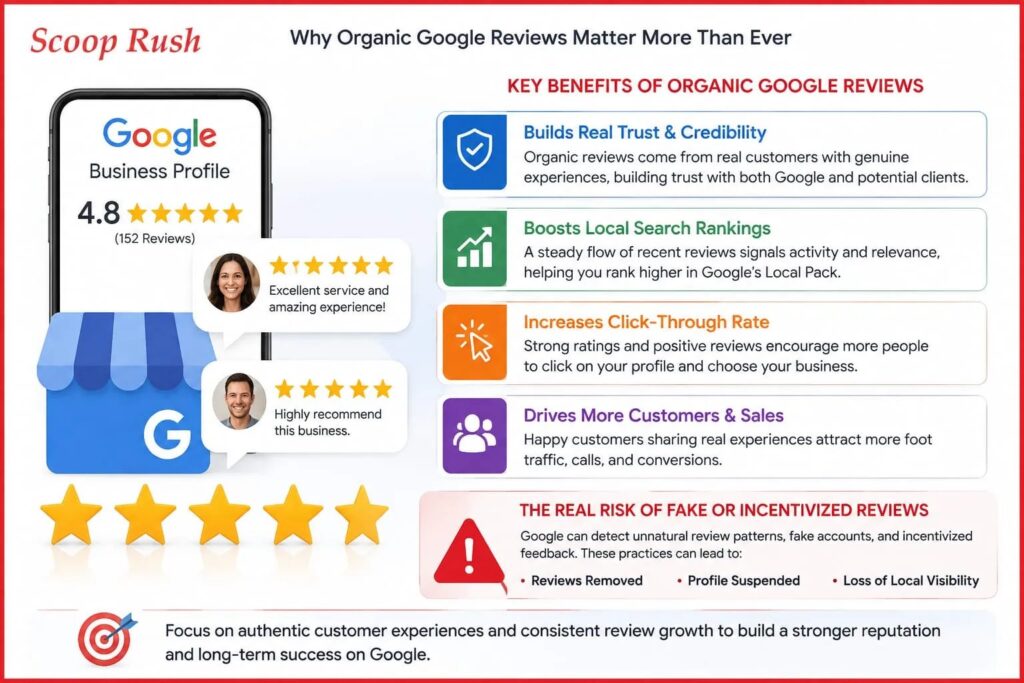
Google’s algorithm has become increasingly sophisticated at detecting unnatural review patterns. Sudden spikes, repetitive language, or reviews from accounts with no real activity history can all trigger red flags. Consequently, businesses that get caught risk having reviews removed, profiles suspended, or losing the local search visibility they’ve spent years building.
Organic reviews, on the other hand, come with real names, real stories, and real credibility. They tell Google, and your customers, that you’re a business people genuinely trust. As a result, that trust translates directly into higher click-through rates, better local pack rankings, and more foot traffic through your door.
Before someone ever calls your business or walks inside, they’re almost certainly scrolling through your Google Business Profile first. They’re judging your star rating and reading what actual people have to say about you. Therefore, a weak or outdated review profile can quietly cost you customers you never even knew you lost.
There’s also a ranking angle worth understanding. Google’s local algorithm rewards businesses with a steady, consistent flow of recent reviews. A profile with regular monthly activity signals that a business is active and relevant to its community. Meanwhile, a profile that goes silent for months starts to look stale, even if the business itself is doing perfectly well — much like any small business, whether it’s a local shop or a growing side hustle, needs steady, visible momentum to keep customers coming back.
The Real Risk of Fake or Incentivized Reviews
It’s tempting to shortcut the process, but Google has gotten far better at spotting unnatural activity. Offering discounts or freebies in exchange for reviews violates Google’s policies, regardless of whether the incentive is tied to a positive rating. Similarly, review gating, which means filtering out unhappy customers before asking for public feedback, carries the same risk. Both practices can damage the lasting trust that keeps customers coming back.
How to Get More Google Reviews the Right Way
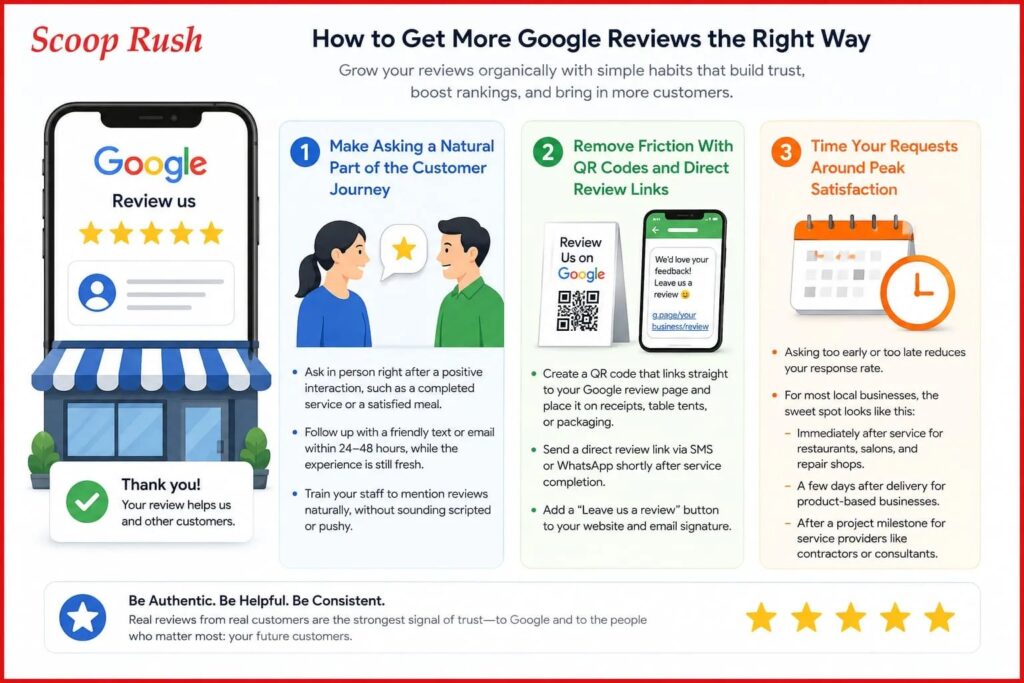
Growing your review count doesn’t require paid tricks. It requires a handful of habits, applied consistently, week after week.
1. Make Asking a Natural Part of the Customer Journey
The single biggest reason businesses don’t get enough Google reviews isn’t bad service. It’s that they simply forget to ask. Customers who had a great experience are usually happy to leave a review; they just need a gentle nudge at the right moment.
A few ways to build this into your routine:
- Ask in person right after a positive interaction, such as a completed service or a satisfied meal
- Follow up with a friendly text or email within 24 to 48 hours, while the experience is still fresh
- Train your staff to mention reviews naturally, without sounding scripted or pushy
2. Remove Friction With QR Codes and Direct Review Links
The easier you make it to leave a review, the more reviews you’ll get. Customers rarely search for your business manually just to find the review button, so hand it to them directly instead.
Consider these approaches:
- Create a QR code that links straight to your Google review page and place it on receipts, table tents, or packaging
- Send a direct review link via SMS or WhatsApp shortly after service completion
- Add a “Leave us a review” button to your website and email signature
3. Time Your Requests Around Peak Satisfaction
Timing changes everything here. Asking too early, before the customer has fully experienced your product or service, reduces your response rate significantly. Asking too late does the same, since the memory has already faded.
For most local businesses, the sweet spot looks like this: immediately after service for restaurants, salons, and repair shops; a few days after delivery for product-based businesses; and after a project milestone for service providers like contractors or consultants.
Respond to Every Google Review, Good or Bad
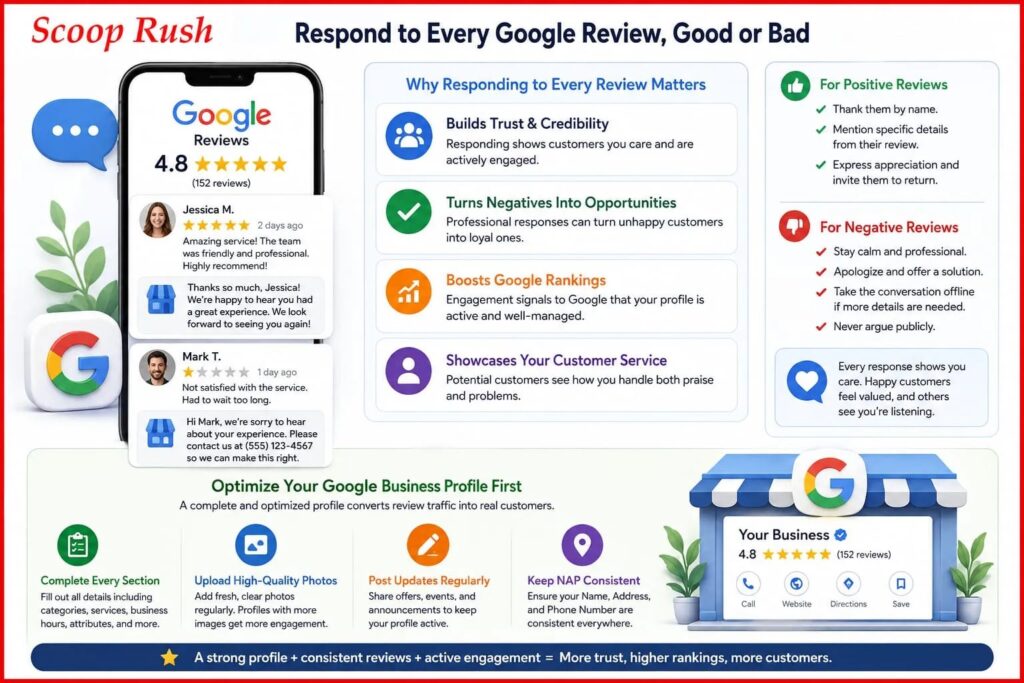
Nothing builds trust faster than a business that actively engages with its customers. Responding to reviews shows prospective customers that you’re present, attentive, and genuinely care about their experience.
Thank happy reviewers by name and mention specific details from their review. Meanwhile, address negative reviews calmly and professionally, with a clear path toward resolution. Never argue publicly. If a conversation needs detail, take it offline through a call or email instead.
This kind of engagement doesn’t just look good to customers. It’s also a strong signal to Google that your profile is active and well-managed, which can support your local ranking over time.
Optimize Your Google Business Profile First
Before you even start collecting reviews, make sure your Google Business Profile is fully optimized. A polished, complete profile converts review traffic into actual customers far more effectively than a half-finished one.
Fill out every section: categories, services, business hours, attributes, and photos. Additionally, upload fresh, high-quality photos regularly, since profiles with more images tend to see noticeably higher engagement. Post updates, offers, and events consistently to keep your profile looking active rather than abandoned.
One more detail matters more than people expect: keep your business name, address, and phone number consistent across every platform where your business appears.
Stay Consistent With Review Management Tools
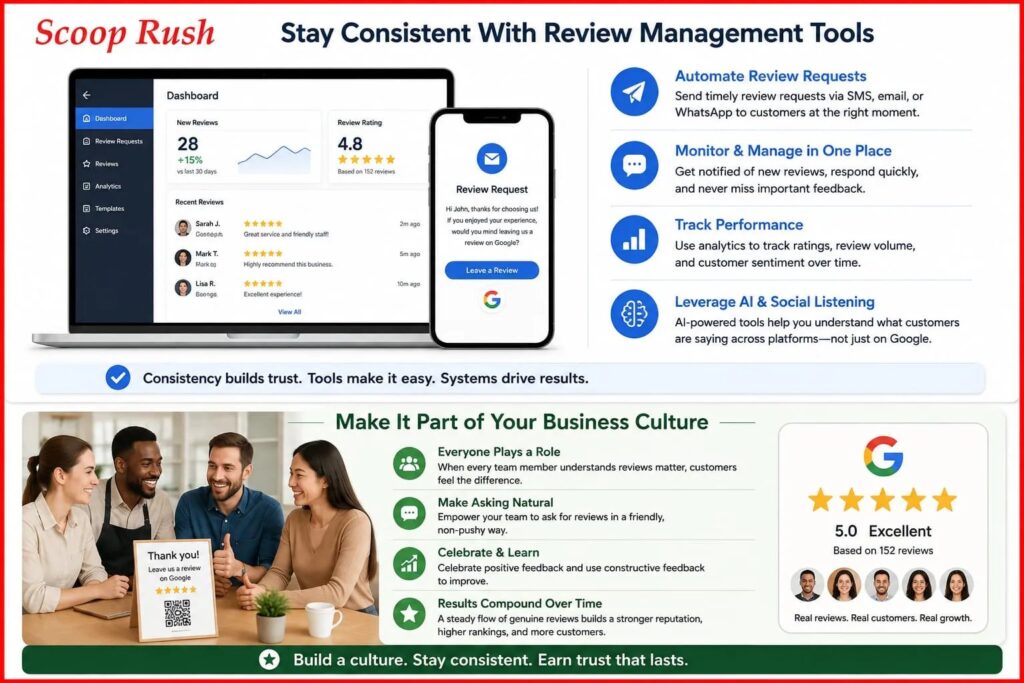
Manually tracking review requests, follow-ups, and responses across dozens or hundreds of customers gets overwhelming fast, and inconsistency is exactly what kills momentum. This is where a dedicated review management platform can make a real difference.
Tools built for this purpose help local businesses streamline the entire review lifecycle, from sending timely requests to monitoring new reviews and staying on top of feedback in one place. Many businesses now pair this with AI-powered social listening tools to track what customers are saying across platforms, not just on Google. Instead of chasing reviews manually, you get a system that keeps the process consistent and easy to track over time.
Make It Part of Your Business Culture
The businesses that dominate local search aren’t the ones that ran a one-time review campaign. They’re the ones that built review collection into their everyday operations. When every team member understands that reviews matter and knows how to ask naturally, the results compound month after month.
Key Takeaways
Building a strong Google review profile isn’t about finding a quick trick. It’s about creating consistent, genuine touchpoints where happy customers get an easy, natural opportunity to share their experience.
Focus on great service, remove friction from the review process, respond with genuine care, and use the right tools to stay consistent. Do this well, and you won’t just rank higher. You’ll build the kind of trust that keeps customers coming back and brings new ones through the door.
FAQs
1. Is it okay to ask customers for a Google review?
Yes. Asking is encouraged, as long as you do it ethically. That means giving every customer the same opportunity to leave feedback, rather than filtering based on satisfaction.
2. Can I offer a discount for a Google review?
No. Offering any kind of incentive in exchange for a review violates Google’s policies, even if it isn’t tied to a positive rating.
3. What should I do if I get a negative review?
Respond calmly and promptly. Acknowledge the concern, apologize for the experience, and offer to resolve things through a private channel like phone or email.
4. How often should I be getting new Google reviews?
There’s no fixed number, but consistency beats volume. A steady trickle of new reviews each month looks far healthier than a big batch followed by months of silence.
5. Should I respond to positive reviews too, or just negative ones?
Definitely respond to both. Thanking happy customers by name shows you value their feedback and keeps your profile looking active.

